Saturday, June 27, 2009

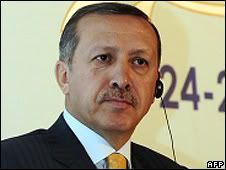
BBC: Turkey has urged France and Germany to back its bid to join the EU, rejecting calls for a special partnership rather than full membership.
"We will never give up," Turkish Prime Minister Recep Tayyip Erdogan told reporters in Brussels.
Turkey's EU accession talks are going at a glacial pace and risk suspension if Ankara fails to open its ports and airports to Cyprus this year.
France and Germany want to give Turkey a "privileged partnership" with the EU.
But Mr Erdogan insisted "our goal is full membership".
He also said it was "populist and wrong" to use Turkey's bid as an election issue.
Some right-wing parties opposed to Turkey's bid made gains in the recent European Parliament elections. >>> | Friday, June 26, 2009

EURONEWS: In Brussels, Mahinur Ozdemir, 26, has become the first deputy wearing a Muslim headscarf to be sworn into the regional parliament.
Coming the day after French President Nicolas Sarkozy said the burqa was not welcome in France, Ozdemir’s colleagues said it was about personal choice.
After the ceremony, Ozdemir, from the Democrat Humanist Centre, said she wanted to be recognised for her achievements and not her headwear.
“Unfortunately, I have been reduced to nothing more than this scarf, and frankly it is hard to remove yourself from it,” she said. “Underneath this veil there is a personality, there is someone who is engaged, who wants things to change, who wants to move forward and execute lots of projects for the people of Brussels.”
During her election campaign, Ozdemir was targeted by hardline activists due to her headscarf. She served as a member of the municipal council in Shaerbeek, which is known as the “Turkish neighbourhood” of Brussels. [Source: euronews] | Wednesday, June 24, 2009
NZZ Online: Belgien wieder voll im Kopftuch-Dilemma: Streit um Antwerpener Schulen und eine Abgeordnete mit dem Hijab
In Belgien ist die Diskussion um das Kopftuch muslimischer Frauen wieder voll entbrannt. Während in Antwerpen Muslime gegen das Kopftuchverbot an einer Schule protestierten, legte im Brüsseler Regionalparlament die erste Abgeordnete im Kopftuch ihren Eid ab.
Zwei Ereignisse haben in Belgien die Diskussionen um das Kopftuchtragen muslimischer Frauen wieder voll entbrennen lassen. Im Brüsseler Regionalparlament legte die türkischstämmige Christlichsoziale Mahinur Özdemir ihren Eid als Abgeordnete im Hijab ab – eine absolute Premiere in Belgien. Dies rief natürlich in Teilen der politischen Landschaft Widerspruch hervor; die französischsprachigen Liberalen vom Mouvement réformateur (MR) wollten gar die Möglichkeit prüfen, mit einem Vorstoss das Tragen von «religiösen und philosophischen Symbolen» in den Sitzungen aller belgischen Parlamente zu verbieten. Die flämischen Liberalen wiederum fanden, das Parlament sei keine Amtsstelle, und nahmen deshalb am Kopftuch der Abgeordneten Özdemir keinen Anstoss. >>> win. Brüssel | Thursday, June 25, 2009
TIMES ONLINE: A hardline cleric close to the Iranian regime demanded the execution of leading demonstrators yesterday as the opposition ended the week in disarray.
In a televised sermon at Friday prayers in Tehran, Ayatollah Ahmad Khatami called on the judiciary to “punish leading rioters firmly and without showing any mercy to teach everyone a lesson”. He said that those leaders were backed by the United States and Israel. They should be treated as mohareb — people who wage war against God — and deserved execution.
In a clear warning to all other dissenters, he declared: “Anybody who fights against the Islamic system or the leader of Islamic society, fight him until complete destruction.” Leading demonstrators must be executed, Ayatollah Khatami demands >>> Martin Fletcher | Saturday, June 27, 2009
Friday, June 26, 2009
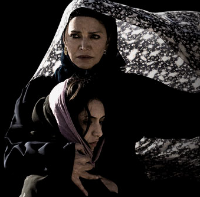
LOS ANGELES TIMES: 'The Stoning of Soraya M.' vividly depicts the violent execution of a woman condemned by religion distorted.
"The Stoning of Soraya M." lives up to its title quite literally -- and rightly so, for it is important to understand just how cruel and drawn-out this ancient form of execution is and how prevalent it remains, not just in Iran, the film's setting, but in countries throughout the Middle East and sub-Saharan Africa that follow Islamic Sharia law.
The timing of the film's release is apt, for it serves as a metaphor for the current protests in Iran against the long-standing oppressiveness of the Islamic Republic.
Based on a true story recounted in the late Freidoune Sahebjam's book, "The Stoning of Soraya M." was filmed in a remote mountain village in an undisclosed Middle Eastern country. Jim Caviezel is cast as Sahebjam, an eminent Iranian journalist based in France who is passing through the village when he is accosted by a distraught woman, Zahra (Shohreh Aghdashloo), who prevails upon him to tape the terrible story she has to tell.
Only the day before, her niece Soraya (Mozhan Marnò) was executed in the town square by stoning. Her husband, Ali (Navid Negahban), who has the village leaders in his thrall, had concocted a flimsy and completely false charge of adultery against Soraya, the mother of their four children, so that he can be free to marry a 14-year-old girl; Soraya had refused to divorce Ali because she had no other means of support. >>> Kevin Thomas | Friday, June 26, 2009
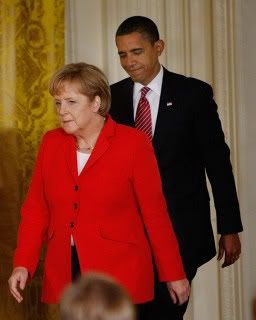
WELT ONLINE: US-Präsident Barack Obama hat Deutschland als unverzichtbaren Partner für sein Land bezeichnet. Gemeinsam mit Kanzlerin Merkel bekundete er im Weißen Haus den Willen, die Probleme der Welt anzugehen – von der Lage im Iran bis zum Klimaschutz. Und die Kanzlerin bekam ein ganz persönliches Lob zu hören.
Bundeskanzlerin Angela Merkel (CDU) und US-Präsident Barack Obama haben bei ihrem Treffen in Washington eine enge Abstimmung in internationalen Fragen vereinbart.
Unter den goldenen Kandelabern des East Rooms im Weißen Haus stellte ein sichtlich erschöpfter Obama klar, dass an den Gerüchten über gegenseitige Antipathien zwischen ihm und der deutschen Bundeskanzlerin nichts dran sei.
Er betrachte Deutschland als „einen unserer engsten Verbündeten und als unverzichtbaren Partner“, sagte Obama nach dem Vier-Augen-Gespräch mit Merkel. Die Bundeskanzlerin sagte bei dem gemeinsamen Presseauftritt, sie wolle gemeinsam mit den USA Probleme lösen, „die nicht von einem allein zu bewältigen sind“. Unter anderem wolle man die Friedensbemühungen im Nahost-Konflikt, den Klimaschutz und die Wirtschaftskrise angehen.
Während der Pressekonferenz betonten Merkel und der amerikanische Präsident ihre Einigkeit speziell in Sachen Iran. Auf die Frage, ob er der Forderung des iranischen Präsidenten nach einer Entschuldigung nachkommen werde, erklärte Obama: "Ich nehme Präsident Ahmadinedschad nicht besonders ernst. Er sollte sich vor allem fragen, was er seinem eigenen Volk schuldet“.
Angela Merkel erklärte, man werde sehr genau nach den inhaftierten Demonstranten fragen. Aus ihrer Zeit in der DDR erinnere sie sich sehr genau, wie wichtig es sei, dass die Welt Anteil nehme. >>> Von Mariam Lau | Freitag, 26. Juni 2009
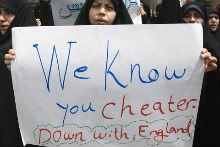
WELT ONLINE: Schuld an den Unruhen sind die Briten – diese simple Behauptung verbreiten die Machthaber in Teheran gern und oft. Sie wurzelt in einer tiefen Feindschaft gegenüber der einstigen De-facto-Kolonialmacht. Die langen Versuche Londons, sich den Iran als Einflusssphäre zu sichern, bieten den Mullahs eine Steilvorlage.
Kein Mittel verstehen die Machthaber in Teheran besser einzusetzen als das tief in der nationalen Psyche verankerte Vorurteil, hinter den Unruhen im Iran stecke nichts weiter als die bekannte Hand der Briten, die sich permanent in die iranischen Angelegenheiten einmischen und eingemischt haben. Das beherrscht die Köpfe der Regierenden in Teheran geradezu wie eine Paranoia.
Den Ursprung des England-Hasses muss man im 19. Jahrhundert ansiedeln, als Persien zur Trophäe wurde im „Großen Spiel“ zwischen dem zaristischen Russland und dem britischen Weltreich um das Herzland Eurasien: Afghanistan, Kaukasus, Persien. >>> Von Thomas Kielinger | Freitag, 26. Juni 2009

TIMES ONLINE: Silvio Berlusconi faced mounting pressure to come clean about his private life yesterday after revelations that he entertained about 20 women, including two lesbian escort girls, until dawn during a private party at his house in Rome.
Patrizia D’Addario, the Bari prostitute who claims to have recorded footage that proves her encounters with the Prime Minister, gave more details of her first meeting with Mr Berlusconi, saying: “It felt like a harem. And there was only one sheikh. Him.”
She also spoke of the “strange burglary” in which her underwear, computer and the dress she wore to the party were allegedly stolen from her home days after she told a friend of the secret recordings.
It is understood that the video recordings, taken on her mobile phone, show Ms D’Addario in the Prime Minister’s bedroom. She claims that the four-poster bed with white drapes and duvets were given to him as a present by his friend Vladimir Putin, the Russian Prime Minister. A Kremlin spokesman denied that Mr Putin had ever given the Italian leader a bed. >>> Lucy Bannerman in Bari | Friday, June 26, 2009
TIMES ONLINE: Senior Roman Catholic Bishop Calls for Silvio Berlusconi to Resign
A Roman Catholic bishop called for the resignation of Silvio Berlusconi, the first time that such a senior figure of the Church has done so, adding to a growing sense that the crisis over the beleaguered Italian Prime Minister’s private life is out of control.
Monsignor Domenico Mogavero, Bishop of Mazara del Vallo in Sicily and a former senior official in the Italian Bishops' Conference, said that Mr Berlusconi should “consider whether it is opportune to resign in the interests of the country”.
The Prime Minister was further criticised by the Church when Archbishop Angelo Bagnasco of Genoa, head of the Conference, warned against “men drunk on a delirium of their own greatness, who touch the illusion of omnipotence and distort moral values”. >>> Richard Owen in Rome | Friday, June 26, 2009
THE NEW YORK TIMES: Around the country and the world Friday, legions of grief-stricken fans of the King of Pop mourned the sudden death of Michael Jackson with spontaneous flower-laden memorials and emotional tributes, as the autopsy to determine the cause of his mysterious death was scheduled to begin in Los Angeles.
The autopsy would take several hours Friday, but toxicology results could take six to eight weeks, the Los Angeles County assistant chief coroner Lt. Ed Winter told reporters.
Mr. Jackson’s brother Jermaine said on Thursday that the preliminary cause of death was cardiac arrest. The singer, 50, had been rushed to the hospital, a six-minute drive from the rented Bel-Air home where he was living, shortly after noon local time by paramedics for the Los Angeles Fire Department. He was pronounced dead at 2:26 pm.
The Los Angeles Police Department opened an investigation, as a formality and because of Mr. Jackson’s enormous celebrity, a police spokesman said, and detectives began their search of Mr. Jackson’s house Thursday.
Brian Oxman, a former lawyer of Mr. Jackson’s and a family friend, gave interviews expressing his concerns about Mr. Jackson’s health, and saying that prescription drugs might have been a factor in his death Thursday. >>> Sharon Otterman and Liz Robbins | Friday, June 26, 2009
THE TELEGRAPH: Michael Jackson's Family Feared Morphine Overdose
THE TELEGRAPH:
Michael Jackson 'Converts to Islam and Changes Name to Mikaeel' >>> Graham Tibbetts | Friday, November 21, 2008
TIMES ONLINE: Michael Jackson: Martin Bashir Interview Damaged Him Deeply

When Michael Jackson agreed to give the television journalist Martin Bashir unprecedented access to his personal life, he believed that it would help him win public sympathy and repair a reputation that had become heavily tarnished over the years.
It had, after all, worked with Diana, Princess of Wales, a figure with whom Jackson identified closely and who had scored a momentous public relations coup with her Panorama interview with Bashir in 1995.
It was to prove a calamitous error of judgement on Jackson’s part.
The admissions he made in the interview about sleeping with children at his Neverland ranch in California would eventually lead to criminal charges and a trial which, despite his acquittal, would cause him a level of damage from which he would never recover.
Jackson was initially persuaded to let Bashir become part of his entourage for eight months by his friend Uri Geller, who said: “Michael liked Martin and he was happy to have him around. I said to him, ‘Michael, maybe it’s time to open up to the world.’”
Jackson did exactly that; and the world did not like what it heard. >>> Valentine Low | Friday, June 26, 2009
YOUTUBE: Thriller
YOUTUBE: Moon Walk
YOUTUBE: Dirty Diana
YOUTUBE: Billy Jean
YOUTUBE: Bad >>>
YOUTUBE: Black or White >>>
YOUTUBE: Don't Stop 'Til You Get Enough >>>
YOUTUBE: Off the Wall >>>
YOUTUBE: In the Closet >>>
YOUTUBE: Dangerous >>>
YOUTUBE: Liberian Girl >>>
LOS ANGELES TIMES: Obama is making the same mistake as other presidents -- the only answer is regime change.
Since Iran's controversial and disputed election, President Obama has been noticeably restrained in his reaction. He has flashed his empathy, saying on Tuesday that he was "appalled and outraged" by the regime's brutality, but he has been equally emphatic about not being perceived as meddling in Iran's internal affairs. Despite increasing political heat, even from Democrats and the usually adulatory U.S. media, Obama persists in his low-key approach, clinging to emotive generalizations.
But it is the president's underlying policies that are wrong, not just his rhetoric. Saying that he does not want the "debate" inside Iran to be about the United States is disingenuous at best. Obama's real objective is to launch negotiations with Iran over its nuclear program, in the belief that he can talk Iran out of its 20-year effort to acquire deliverable nuclear weapons. He said it during the 2008 campaign, during his inaugural address and repeatedly thereafter.
Viewed in the light of this near-religious obsession with negotiation, Obama's reticence is entirely understandable: He does not want to jeopardize the chance to sit with the likes of Iranian supreme leader Ayatollah Ali Khamenei, President Mahmoud Ahmadinejad or the Islamic Revolutionary Guard.
In fact, everything we know about the regime indicates that Iran, and the Revolutionary Guard in particular, will never voluntarily give up its nuclear program, so Obama's policy is doomed to failure. (Inevitably, of course, if negotiations start, Obama would change the definition of success to include accepting a "peaceful" Iranian uranium- enrichment program, which means Tehran would retain its "breakout" capability to quickly produce nuclear weapons -- but exploring this further Obama failure has to wait for another day.)
Accordingly, it is Obama's policy errors, not his rhetorical ones, that should be opposed. Rhetoric itself is not policy but only the adjunct of policy, albeit often an important one. Obama's reticence reflects his larger misjudgment -- the dangerous misconception that there is a negotiated solution to Iran's nuclear threat that can satisfy both Iran and the United States.
Pursuing that objective is perilous for America, its allies and its friends -- in Europe, Israel and the Arab world alike. Moreover, Obama rarely mentions Iran's continuing role as the world's central banker for terrorist groups such as Hamas and Hezbollah, yet this is another threat that negotiation will not eliminate.
Obama's policy, and that of the United States, should be the overthrow of the Islamic revolution of 1979. The massive resistance to the June 12 elections is just another fact supporting that conclusion. >>> John R. Bolton | Friday, June 26, 2009
John R. Bolton, former U.S. ambassador to the United Nations, is a senior fellow at the American Enterprise Institute and the author of "Surrender Is Not an Option."

TIMES ONLINE: A hardline cleric seen as a mouthpiece of the Iranian regime today demanded that opposition demonstrators be punished “without mercy”.
Even as Ayatollah Ahmad Khatami delivered his uncompromising message at Tehran’s Friday prayers, foreign ministers of the world’s leading industrialised nations issued a statement deploring the regime’s violent crackdown on the protestors and demanded it “stop immediately”.
Mr Khatami’s televised sermon came at the end of a week in which the regime has brutally suppressed all streets protests and rounded up hundreds of opponents for daring to question President Ahmadinejad’s re-election. It conveyed the unmistakable message that no dissent would be tolerated, and that the crackdown would, if anything, intensify.
“I want the judiciary to ... punish leading rioters firmly and without showing any mercy to teach everyone a lesson,” Mr Khatami told worshippers at Tehran university.
He said the judiciary should treat the leading “rioters” as “mohareb” - people who wage war against God. “Based on Islamic law, whoever confronts the Islamic state ... should be convicted as mohareb,” he said. “They should be punished ruthlessly and savagely" to deter others. Hardliner says Iran protesters should be punished 'without mercy' >>> Martin Fletcher | Friday, June 26, 2009

THE WALL STREET JOURNAL: Unrest in Iran has opened a theological rift within the Shiite sect of Islam, undermining the Iranian regime's founding dogma that is shared by millions of fellow Shiites across the Middle East.
The concept, known as wilayat al-faqih -- literally "guardianship by a jurist" -- holds that, in an Islamic state, a divinely anointed scholar of Islamic law must exercise unquestioned authority over elected officials and the rest of the government.
Iran's current such incumbent, Supreme Leader Ayatollah Ali Khamenei, isn't just the top arbiter of the country's affairs. He also serves as the marjaa, or spiritual guide, for many Shiites outside Iran. Mr. Khamenei's image graces billboards in south Beirut, mosques in Shiite shantytowns of eastern Saudi Arabia and Bahrain, and the walls of Shiite lawmakers' offices in Kuwait.
But, in recent weeks, this moral authority -- and the wilayat al-faqih ideology that underpins it -- has been shaken by Ayatollah Khamenei's handling of Iran's disputed June 12 presidential elections.
The Shiites, a minority sect of Islam, split from majority Sunnis some 14 centuries ago. Iran has long been the world's leading Shiite power; 90% of its 66 million people follow the Shiite faith.
With his open support of President Mahmoud Ahmadinejad, Ayatollah Khamenei has departed from his traditional role as a neutral arbiter and consensus-builder. While opposition candidates have alleged fraud during the vote, Ayatollah Khamenei has hailed Mr. Ahmadinejad's re-election as a "divine assessment" and ordered an end to protests. >>> Yaroslav Trofimov in Istanbul and Gina Chon in Najaf, Iraq | Friday, June 16, 2009
PRINCETON UNIVERSITY:
Wilayat al-Faqih (Supreme Jurist Leadership) >>>
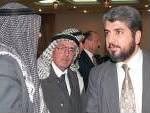
LePARISIEN.fr: Le chef en exil du Hamas palestinien, Khaled Mechaal, s'est déclaré jeudi favorable à un «dialogue direct et sans condition» avec les Etats-Unis. Il a annoncé la reprise «dans deux jours» des discussions interpalestiniennes au Caire.
«Nous saluons le nouveau discours de Barack Obama à l'égard du Hamas, il s'agit d'un premier pas vers un dialogue direct et sans condition» entre Washington et le mouvement palestinien, a déclaré Khaled Mechaal lors d'un discours attendu à Damas, où il réside.
«Le Hamas ne se fait pas d'illusions face aux discours», a-t-il toutefois ajouté, tout en précisant: «Nous aspirons à un changement sur le terrain qui mette fin à l'occupation» israélienne.
Dans un discours au Caire le 4 juin, le président américain a pressé l'Etat hébreu de cesser la colonisation dans les territoires palestiniens et exprimé son engagement en faveur d'un Etat palestinien aux côtés d'Israël. >>> Leparisien.fr | Jeudi 25 Juin 2009
BERLINER ZEITUNG: Paris - Die arabischen Länder wollen mit einer arabischen Strategie gegen islamische Terroristen vorgehen. Insbesondere sollen die Geldströme der Terroristen schärfer ins Visier genommen werden, teilte das Sekretariat des Rats der Innenminister der Arabischen Liga in Tunis mit.
Dazu sei am Freitag eine «arabische Strategie des Kampfes gegen die Geldwäsche und die Finanzierung des Terrorismus» beschlossen worden. Die arabischen Länder wollen insbesondere Geldtransfers über das Internet schärfer kontrollieren und Schenkungen und Stiftungen für angeblich karitative Organisationen besser überwachen. Auch auf die Internetkriminalität soll dabei ein schärferes Auge geworfen werden. >>> © dpa | Freitag, 26. Juni 2009

BERLINER ZEITUNG: Berlin - Die DDR wird von einer Mehrheit der Ostdeutschen heute positiv beurteilt. Dies habe eine repräsentative Umfrage des Emnid-Institutes im Auftrag der Bundesregierung ergeben, berichtet die «Berliner Zeitung».
49 Prozent vertreten demnach die Auffassung, die DDR habe «mehr gute als schlechte Seiten» gehabt. Weitere acht Prozent meinen, man habe damals dort glücklicher und besser gelebt als heute.
Von den befragten Westdeutschen wurde die DDR dagegen mit deutlicher Mehrheit negativ beurteilt. Befragt worden seien 1208 Menschen. Die Entwicklung seit dem Mauerfall werde im Osten eher negativ, im Westen dagegen eher positiv[.] [Quelle: BerlinerZeitung] © dpa | Freitag, 26. Juni 2009
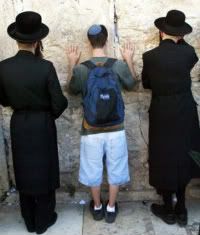
THE INDEPENDENT: Judges rule that London school's strict admissions policy is in breach of Race Discrimination Act
Britain's Jewish faith schools may have to revise their admission policies after the Court of Appeal ruled that the widely used criteria for selecting pupils breached the Race Discrimination Act.
In a far-reaching judgment, three judges found the well known JFS (formerly the Jews' Free School) in Brent, north-west London, racially discriminated against a 12-year-old boy by denying him a place at the school because his mother was not a recognised Jew.
The ruling was immediately attacked by the Chief Rabbi, Jonathan Sachs, who said he supported an appeal to the House of Lords to try to overturn the judgment so that Jews could "be true to the Jewish faith" by upholding the existing criteria for membership of the Jewish religion. >>> By Robert Verkaik, Law Editor | Friday, June 26, 2009

LE FIGARO: Zbigniew Brzezinski, ancienne personnalité du parti démocrate américain, assure au Figaro qu'il n'y a pas d'alternative à la main tendue par le président américain.
«Nous devons à la fois montrer de la sympathie pour les aspirations du peuple iranien à la démocratie, tout en affichant notre volonté de négocier avec Téhéran, quels que soient ceux qui sont au pouvoir.» Pour Zbigniew Brzezinski, ex-conseiller à la sécurité nationale de Jimmy Carter entre 1977 et 1981, et qui a aujourd'hui l'oreille de Barack Obama, la politique d'engagement tracée par le nouveau chef de la Maison-Blanche est appelée à se poursuivre, en dépit des dramatiques événements en Iran.
«La ligne a été tracée de façon très claire et très intelligente», estime ce mentor démocrate en géopolitique, âgé aujourd'hui de 81 ans. Il a toujours son bureau au Centre pour les études internationales et stratégiques (CSIS), l'un des principaux think-tanks de Washington. «L'important, insiste-t-il, c'est de ne pas interférer dans la politique intérieure iranienne car cela donnerait aux dirigeants conservateurs de Téhéran des arguments pour accroître la répression contre le mouvement démocratique.» >>> Alain Barluet, envoyé spécial du Figaro à Washington | Jeudi 25 Juin 2009
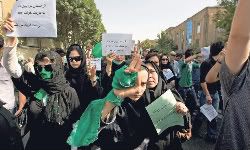
TAGES ANZEIGER: Junge, Alte, Frauen, Männer, Arbeiter, Akademiker – die grüne Bewegung gegen Ahmadinejad und die herrschenden Mullahs umfasst alle Schichten des Iran.
Seit zwei Stunden versucht Mashid ihre Tochter Shirin in Teheran zu erreichen. Sie ist voller Sorge. Aus dem Fernsehen weiss sie, was in der Hauptstadt los ist. Endlich nimmt jemand den Hörer ab. Es ist das Kindermädchen. «Shirin ist nicht zu Hause», sagt sie aufgeregt, «sie ist zu den Moussavi-Leuten gegangen.» Im Hintergrund schreien Shirins Zwillinge. Die Mutter ist entsetzt. «Sie geht zur Demonstration?», ruft sie. Als das Fernsehen später berichtet, dass der Marsch der Opposition gewaltlos verlaufen sei, beruhigt sich Mashid. Sie lacht über das ganze Gesicht. Tränen rollen über ihre Wangen.
Vor 30 Jahren auch demonstriert
Mashid ist 63, doch jetzt sieht sie plötzlich viel jünger aus. «Vor dreissig Jahren habe ich auch demonstriert», sagt sie, «gegen den Schah. Shirin war noch ein Baby.» Angst hatte Mashid damals nicht. Es waren Zehntausende, die auf die Strasse gingen. Sie riefen: «Nieder mit dem Schah!» Manche trugen auch Bilder von Ayatollah Khomeini. Mashid ging oft mit Freunden, weil ihr Mann, ein Architekt, arbeiten musste. Sie wohnten in einem besseren Stadtteil von Mashhad, der zweitgrössten Stadt des Iran, in einem schönen Haus mit einem gepflegten Garten. Als Khomeini über den Schah siegte, war Mashid Feuer und Flamme. An diesem Abend im Januar 1979 feierte die Familie mit Freunden den Sieg der islamischen Revolution mit versteckten Restbeständen von Wodka und Whisky. Was die Zukunft bringen würde, kümmerte sie damals nicht. Hauptsache, der Schah war verschwunden.
Mashid lebt noch heute in ihrem Haus. Als ihr Mann vor zwei Jahren an Krebs starb, erbte sie Bargeld und Grundstücke. Die Erbschaft hat Mashid bei einer privaten Bank für fünf Jahre fest angelegt. Von den Zinsen können sie und ihre Kinder sorglos leben. >>> Von Ahmad Taheri, Teheran | Donnerstag, 25. Juni 2009
Thursday, June 25, 2009
BBC: The recent death of a female protestor in Iran has become a rallying cry for people across the country and echoes the populist anger seen in the late 1980s at the stoning of a woman for a adultery. Now, the events leading up to her death have been made into a film 'The Stoning of Soraya M'.
We spoke to the Iranian-American actress Shohreh Aghdashloo who stared in the movie and asked her about the political importance of her cinematic performance. Watch BBC video here >>> | Tuesday, June 23, 2009
BBC: The doctor who tried to save an Iranian protester as she bled to death on a street in Tehran has told the BBC of her final moments.
Dr Arash Hejazi, who is studying at a university in the south of England, said he ran to Neda Agha-Soltan's aid after seeing she had been shot in the chest.
Despite his attempts to stop the bleeding she died in less than a minute, he said.
Video of Ms Soltan's death was posted on the internet and images of her have become a rallying point for Iranian opposition supporters around the world.
Dr Hejazi also told how passers-by then seized an armed Basij militia volunteer who appeared to admit shooting Ms Soltan.
Dr Hejazi said he had not slept for three nights following the incident, but he wanted to speak out so that her death was not in vain.
He doubted that he would be able to return to Iran after talking openly about Ms Soltan's killing. >>> | Thursday, June 25, 2009

NZZ Online: Der iranische Oppositionsführer Moussavi wird nach eigenen Angaben von der Regierung zunehmend unter Druck gesetzt, seine Forderung nach einer Annullierung der umstrittenen Präsidentschaftswahl aufzugeben. Nach Oppositionsangaben ist es zu einer Verhaftungswelle gekommen.
Moussavi solle seine Vorwürfe des Wahlbetrugs fallenlassen und werde auch zunehmend abgeschirmt, hiess es am Donnerstag auf der offiziellen Website des Politikers. Sein Zugang zum Volk sei «völlig eingeschränkt», und er werde zunehmend der Zusammenarbeit mit dem Ausland bezichtigt.
Moussavi will dem Druck jedoch nicht nachgeben und Ahmadinejads Sieg nicht anerkennen. «Es kann keine Lösung sein zu erwarten, dass ich etwas äussere, woran ich nicht glaube», erklärte er auf seiner Website. Nach Angaben der Opposition wurden unterdessen 70 Hochschulprofessoren nach einem Treffen mit Moussavi festgenommen. Über ihren Verbleib sei nichts bekannt. Beobachter werteten die Festnahmen als weiteres Zeichen eines verschärften Vorgehens der Behörden gegen die Oppositionsbewegung. Seit Beginn der Proteste wurden bereits Hunderte von Demonstranten festgenommen. >>> (ap)/bbu | Donnerstag, 25. Juni 2009
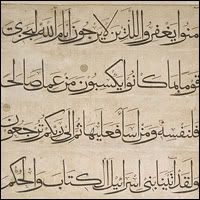
BALTIMORE NEWS: Four men from Somalia have had their hands cut off for stealing phones and guns.
Hardline Islamists carried out the sentences on the men after they had been convicted in a Sharia court earlier this week.
Mainly women and children watched as masked men cut off a hand and foot of each of the men with machetes.
Witnesses have said the four men cried for help during and after the amputations.
The four men had reportedly admitted to the robberies, but were given no appeal against their sentence.
The amputations were carried out by members of the al-Shabab group, which controls much of the south of the country.
Most Somalis traditionally practise a more tolerant form of Islam but President Sheikh Sharif Sheikh Ahmed, who took office in January, immediately allowed Sharia law. [Source: BaltimoreNews.net] | Thursday, June 25, 2009
Comment: here >>>
THE TELEGRAPH:
Somali Islamists carry out public double amputation on 'thieves': Hardline Somali Islamists amputated a leg and a hand from each of four alleged thieves in a public punishment held in the middle of Mogadishu >>> Mike Pflanz in Nairobi | Thursday, June 25, 2009
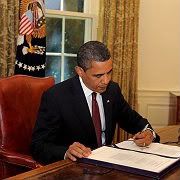
SPIEGELONLINE INTERNATIONAL: The occupant of the White House may have changed recently. But the amount of ill-advised ideology coming from Washington has remained constant. Obama's list of economic errors is long -- and continues to grow.
The president may have changed, but the excesses of American politics have remained. Barack Obama and George W. Bush, it has become clear, are more similar than they might seem at first glance.
Ex-President Bush was nothing if not zealous in his worldwide campaign against terror, transgressing human rights and breaking international law along the way. Now, Obama is displaying the same zeal in his own war against the financial crisis -- and his weapon of choice is the money-printing machine. The rules the new American president is breaking are those which govern the economy. Nobody is being killed. But the strategy comes at a price -- and that price might be America's position as a global power.
In his fight against terrorism, Bush had the ideologue Dick Cheney at his side. "We must take the battle to the enemy," he said -- and sent out the bomber squadrons toward Iraq on the basis of mere suspicion. The result of the offensive is well known.
Obama's Cheney
Obama's Cheney is named Larry Summers. He is Obama's senior-most economic advisor, and like the former vice president, he is a man of conviction. The financial crisis may be large, but Summers' self-confidence is even larger. More importantly, President Barack Obama follows him like a dog does its master.
The crisis, Summers intoned last week at a conference of Deutsche Bank's Alfred Herrhausen Society in Washington, was caused by too much confidence, too much credit and too many debts. It was hard not to nod along in agreement.
But then Summers added that the way to bring about an end to the crisis was -- more confidence, more credit and more debt. And the nodding stopped. Experts and non-experts alike were perplexed. Even in an interview following the presentation, Summers was unable to supply an adequate explanation for how a crisis caused by frivolous lending was going to be solved through yet more frivolity. >>> Gabor Steingart | Thursday, June 25, 2009
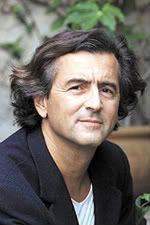
THE HUFFINGTON POST: Whatever happens from this point on, nothing will ever be the same in Tehran.
Whatever happens, if the protest gains momentum or loses steam, if it ends up prevailing or if the regime succeeds in terrorizing it, he who should now only be called president-non-elect Ahmadinejad will only be an ersatz, illegitimate, weakened president.
Whatever happens, whatever the result of this crisis provoked two weeks ago by the enormity of a fraud that serious-minded people can no longer doubt, no Iranian leader can appear on the global scene, or in any negotiation with Obama, Sarkozy, or Merkel, without being haloed, not by the nimbus of light dreamed of by Ahmadinejad in his 2005 speech to the United Nations, but by the cloud of sulphur that crowns cheaters and butchers.
Whatever happens, the Ayatollah Khamenei, Khomeini's successor and Supreme Leader of the regime, tutelary authority of the President, father of the people, will have lost his role as arbiter, will have shamelessly sided with one faction over the others, and will have therefore lost what remained of his authority: "Only God knows my vote," he carefully replied four years ago to those who were already calling upon him to denounce the fraud--"in the name of merciful God, I armor, I hammer, and I dissolve the people," he has responded this time to the naïve who believed he was there to uphold the Constitution.
Whatever happens, the block of ayatollahs who had always succeeded in maintaining a united front, whatever their differences and divergent interests, will have put their ferocious divisions on display: the ones behind Khamenei, approving of the decision to crush the movement with blood; the others, like the ex-President Rafsanjani, leader of the very powerful Assembly of Experts, warning that if the wave of protests were not taken seriously, veritable "volcanoes" of anger would erupt. Others still like the Grand Ayatollah Montazeri who, since his house arrest in Qom, has been calling for a recount and for national mourning for the victims of the repression; and without mentioning the leading religious experts of the "Office of Theological Seminaries" who no longer fear proposing the possibility--what passed for heresy not long ago--of Khamenei's resignation and of his replacement by a "Guidance Council."
Whatever happens, and beyond these internal conflicts, the people will be dissociated from an anemic and fatally wounded regime. >>> Bernard-Henri Lévy, French philosopher and writer | Monday, June 22, 2009
Translated from French by Sara Phenix.
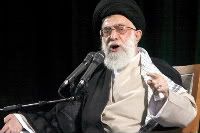
WELT ONLINE: Hinter der Protestwelle seit der Präsidentschaftswahl steht nach Ansicht des iranischen Innenministeriums nicht Unzufriedenheit mit der Regierung – sondern der US-Geheimdienst CIA. Die Demonstranten fordern inzwischen nicht nur Neuwahlen, sondern kritisieren die Herrschenden, sogar den geistlichen Führer Chamenei.
Das geistliche Oberhaupt des Iran, Ayatollah Ali Chamenei, hat sich angesichts der Proteste gegen das Wahlergebnis unnachgiebig gezeigt. Die Führung werde nicht „zurückweichen“, erklärte Chamenei am Mittwoch. „Weder das System noch das Volk werden nachgeben.“
Das iranische Innenministerium warf den Demonstranten vor, Unterstützung von den USA, insbesondere dem Geheimdienst CIA, sowie von den Volksmudschaheddin zu beziehen. Viele „Aufständische“ hätten Kontakte dorthin und erhielten finanzielle Unterstützung, erklärte Innenminister Sadegh Massuli nach Angaben der Nachrichtenagentur Fars.
US-Präsident Barack Obama bezeichnete die Vorwürfe als „falsch und absurd“. Teheran versuche mit „einer alten Strategie“ und der Schaffung von Sündenböcken davon abzulenken, dass das iranische Volk um seine Zukunft ringe, sagte Obama. „Das iranische Volk hat ein universelles Recht auf Versammlungs- und Redefreiheit.“
Chamenei hatte sich vergangene Woche deutlich hinter Amtsinhaber Mahmud Ahmadinedschad gestellt, dessen Sieg bei der Präsidentenwahl die anderen Kandidaten anzweifeln. >>> AP/dpa/Reuters/AFP/ks | Mittwoch, 24. Juni 2009
THE GUARDIAN: Manifested Glory Ministries denies any wrongdoing but gay advocates demand an investigation
An American church has been condemned over a video showing a 16-year-old boy apparently being exorcised by church leaders trying to cast a "homosexual demon" from his body.
The 20-minute video posted on YouTube shows the teenager lying on the floor, his body convulsing, as elders of a small Connecticut church shout "Rip it from his throat!" and "Come on, you homosexual demon! You homosexual spirit, we call you out right now! Loose your grip, Lucifer!"
Later, the teenager is seen coughing and apparently vomiting into a bag before lying on the ground, limp and covered in a white sheet.
Gay and youth advocates claim the film depicts abuse and are demanding an investigation. But a spokeswoman from Manifested Glory Ministries, which posted the video on YouTube, this week denied any wrongdoing.
"We believe a man should be with a woman and a woman should be with a man," the Rev Patricia McKinney told the Associated Press. "We have nothing against homosexuals. I just don't agree with their lifestyle."
McKinney denied the ritual was an exorcism, describing it instead as a casting out of spirits. She said the church took care of the youth, providing him with clothes. >>> Helen Pidd and agencies | Thursday, June 25, 2009
YOU TUBE: Controversial ‘Gay Exorcism’ by Connecticut Church
TIMES ONLINE: At about 9pm each day Nushin, a young housewife, performs the same curious ritual. She climbs up the stairs to the roof of her Tehran home and begins shouting into the night. Allahu akbar,” she cries, and sometimes “Death to the dictator”.
She is not alone. Across the darkened city, from rooftops and through open windows, thousands of others do the same to form one great chorus of protest — a collective wail of anger against a reviled regime that no amount of riot police and Basiji militia can stop. “It sounds like the wailing of wolves,” said one Tehrani.
And each night, as the street demonstrations are crushed with overwhelming force and the regime cracks down on all other forms of dissent, it grows steadily louder and more insistent, not just in Tehran but in other densely populated cities of the Islamic Republic.
“It’s the way we reassure ourselves that we are still here and we are still together,” says Nushin, a woman who has never dared to rebel before.
“This is what people did before the revolution and I hope it warns the regime about what could happen if it doesn’t change its way.
“And because I’m a religious person the sound resonating in the neighbourhood makes me feel better. Even my little daughter joins me, and I can see how she feels that she is part of something bigger. It is our unique way of civil disobedience and what’s interesting is that it increases every time they do something that makes people angrier.” >>> Martin Fletcher | Thursday, June 25, 2009

THE TELEGRAPH: Using colourful bras donated by employees at Victoria's Secret, a group of 26 mostly Saudi women completed the first course of its kind to be offered in the kingdom – how to fit, stock and sell underwear.
The training organisers hope will help boost a campaign to lift the ban on women selling underwear in the kingdom.
The graduates held a small ceremony at a college in the western seaport of Jiddah this week, capping 40 hours of instruction during which they learned to overcome their embarrassment at doing bra fittings, deal with customer complaints and display the stock in an appealing manner.
"It was a beautiful experience," said Faten Abdo, a 32-year-old coordinator in the offices of a lingerie company.
"The most shocking thing for me was the bra sizes," she added. "We didn't know how to get proper measurements before."
The 10-day course comes three months after a group of Saudi women launched a campaign to boycott lingerie stores until they employ women. Almost all the stores in the kingdom are staffed by men. The only exceptions are a few women-only boutiques, some of them inside popular shopping centres. >>> | Thursday, June 25, 2009
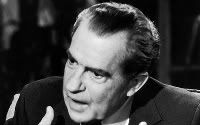
THE TELEGRAPH: President Richard Nixon believed it was 'necessary' to abort mixed-race babies, newly released tapes have revealed.
Commenting privately on the landmark 1973 Supreme Court ruling Roe vs Wade, which decriminalised abortion in the US, the then-president said he worried that access to a legal abortion could lead to "permissiveness" because "it breaks the family" but thought them justified in certain cases.
"There are times when an abortion is necessary," he told his aide Chuck Colson. "I know that. When you have a black and a white." Mr Colson offered that rape might also make an abortion legitimate, prompting Mr Nixon to respond: "Or a rape."
The comments were revealed in more than 150 hours of tape and 30,000 pages of documents made public this week by the Nixon Presidential Library, part of the United State National Archives.
They were recorded by secret microphones in the Oval Office from January and February 1973 and provide fresh insights into Mr Nixon's tumultuous presidency, which ended with his resignation in August 1974 over the Watergate scandal.
Mr Nixon was widely believed at the time to be privately opposed to abortion rights, though he declined to take a public stance on the issue.
The tapes capture mundane conversations about daily life in the White House but also offer new insight into changes in US society. >>> Toby Harnden in Washington | Wednesday, June 24, 2009
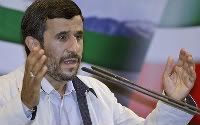
THE TELEGRAPH: Mahmoud Ahmadinejad, the president of Iran, has harshly criticised President Barack Obama's condemnation of the country's "iron fist" response to demonstrations over its disputed election.
The Iranian leader denounced Britain for meddling in the election aftermath and said that Mr Obama had fallen into the same trap.
"They (The British) already have a bad record in these matters," he said, describing Downing Street as being run by "political retards". "But why did the US president fall into their trap?"
He advised Mr Obama to take a different approach from his predecessor President George W Bush.
"I hope you (Obama) will avoid interfering in Iran's affairs and express regret in a way that the Iranian people are informed of it," Mr Ahmadinejad said.
"Will you use this language with Iran (in any future dialogue)? If this is your stance, there will be nothing left to talk about. Do you think this behaviour will solve the problem for you? This will not have any result except that the people will consider you somebody similar to Bush." >>> Damien McElroy, Foreign Affairs Correspondent | Thursday, June 25, 2009
Wednesday, June 24, 2009
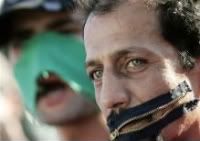
REUTERS: TEHRAN - Iran's Supreme Leader Ayatollah Ali Khamenei declared on Wednesday that a disputed election result would stand, despite street protests that Iranian officials say Britain and the United States have incited.
(EDITORS' NOTE: Reuters and other foreign media are subject to Iranian restrictions on their ability to report, film or take pictures in Tehran.)
The opposition refused to be bowed. Reformist cleric Mehdi Karoubi, who came last in the June 12 presidential election, called the new government "illegitimate" and around 200 protesters braved the security crackdown near parliament.
Riot police later used teargas to break up the protest.
Police and militia have largely succeeded in taking back control of the streets this week after the biggest anti-government protests since the 1979 Islamic revolution. The hardline leadership is refusing to give ground.
"I had insisted and will insist on implementing the law on the election issue," said Khamenei, the most powerful figure in Iran. "Neither the establishment nor the nation will yield to pressure at any cost."
Iran is blaming the discontent on foreign powers.
"Britain, America and the Zionist regime (Israel) were behind the recent unrest in Tehran," Interior Minister Sadeq Mahsouli said, according to the semi-official Fars news agency. >>> © Thomson Reuters 2009 All rights reserved / Additional reporting by Parisa Hafezi, Fredrik Dahl and Hashem Kalantari; Editing by Jon Hemming | Wednesday, June 24, 2009

NZZ Online: Die iranische Führung fährt weiter eine harte Linie gegen die Proteste im Land. Das geistliche Oberhaupt der Islamischen Republik, Ayatollah Ali Khamenei, bekräftigte am Mittwoch die unnachgiebige Haltung der Regierung und stellte sich erneut deutlich hinter Amtsinhaber Ahmadinejad.
Das geistliche Oberhaupt des Irans hat ein Einlenken der Regierung gegenüber der Opposition ausgeschlossen und damit die Tür für einen Kompromiss im Streit um den Ausgang der Präsidentenwahl praktisch zugeschlagen. «Weder das System noch das Volk werden dem Druck nachgeben, um keinen Preis», sagte Ayatollah Ali Khamenei im staatlichen Fernsehen mit Blick auf die Proteste gegen das amtliche Wahlergebnis.
Zuvor war auf der Website des offiziell unterlegenen Reformkandidaten Mir-Hossein Moussavi für Mittwochnachmittag auf dem Platz vor dem Parlament in Teheran zu einer Demonstration aufgerufen worden. Ungeachtet eines massiven Aufgebots von Sicherheitskräften versammelten sich am Abend auf dem Platz vor dem Parlament nach Berichten von Augenzeugen hunderte Menschen und trotzten dem von der Regierung verhängten Demonstrationsverbot. In den umliegenden Strassen sei es zu Zusammenstössen gekommen. Drei Augenzeugen berichteten der Nachrichtenagentur AP, Polizisten prügelten mit Schlagstöcken auf Demonstranten und gingen mit Tränengas gegen sie vor. Ausserdem seien Schüsse in die Luft abgefeuert worden.
Bei den Protesten der Moussavi-Anhänger, die von massivem Wahlbetrug sprechen, sind nach Regierungsangaben allein in Teheran mindestens 627 Menschen festgenommen worden. Die offiziellen Angaben zur Zahl der Todesopfer im Zusammenhang mit den Unruhen schwanken zwischen 17 und 27. >>> ap/sda/Reuters/afp/dpa | Mittwoch, 24. Juni 2009
YOU TUBE: Iranian Snipers Taking Out Protesters
YOU TUBE: Police Brutality in Iran
Hat tip: JihadWatch >>>
THE TELEGRAPH: Violence Flares Again on the Streets of Tehran
Violence has flared on the streets of Tehran after the wife of defeated Iranian presidential candidate, Mir-Hossein Mousavi, called on Iranians to defend their right to protest.

Demonstrators and riot police clashed in the streets around Iran's parliament as hundreds of people converged in defiance of government orders to end their demands for new presidential election.
A video posted on YouTube showed a crowd of several hundred stone-throwing demonstrators confronting a police barricade. Security forces appeared to vastly outnumber the demonstrators and beat back crowds with batons and tear gas canisters and fired rounds of ammunition into the air.
One video showed men and women throwing rocks and pushing barricades in the street. Others shouted: "Death to the dictator."
Reports on the social networking site, Twitter, said there was deliberate brutality as police dispersed the crowd. "Just in from Baharestan Sq – situation today is terrible – they beat the ppls like animals," said one entry. Another added: "In Baharestan we saw militia with axe chopping ppl like meat – blood everywhere – like butcher."
In a sign that the authorities were increasingly targeting Mr Mousavi's inner circle, 25 staff at one of his newspapers were put under arrest. The newspaper Kalemeh Sabz (Green Word) was shut down by the authorities in the wake of the disputed election that returned Mr Ahmadinejad to power.
It came as Mr Mousavi's wife, Zahra Rahnavard, a prominent professor, demanded the immediate release of people detained since the election and criticised the presence of armed forces in the streets. "It is my duty to continue legal protests to preserve Iranian rights," she declared on the campaign website.
The regime issued a series of statements reiterating its unbending resolve in the face of popular defiance. The Supreme Leader Ayatollah Ali Khamenei declared the disputed election result would stand and Iran would resist foreign interference. "On the current situation, I was insisting and will insist on implementation of the law. That means, we will not go one step beyond the law," he said. "Neither the system nor the people will yield to pressure at any price. >>> Damien McElroy, Foreign Affairs Correspondent | Wednesday, June 24, 2009
YNET NEWS: Hundreds of protesters gather near parliament building Wednesday afternoon, unofficial reports say. Rally violently broken off by Revolutionary Guard forces firing tear gas, live bullets at crowd. One woman reportedly wounded
Security forces in Iran violently clashed with protesters near parliament house in the capital of Tehran Wednesday afternoon, unofficial reports said.
Police officers are said to have used live ammunition against the crowd attending a rally protesting the disputed election results. According to one report, a young woman has been shot by security forces and could not be evacuated to a hospital.
Other protesters have been beaten with batons and the cellular network in the area has been completely cut off, to prevent participants from reporting about the violence or send images to others.
Sources in Tehran said that the protesters attempted to move towards Baharestan Square near parliament while holding hands. Many were wearing black bracelets in memory of Neda Soltani, the young woman who was shot to death by security forces last Saturday and became a symbol for the opposition's struggle. Other carried pictures of Soltani, or candles. >>> Dudi Cohen | Wednesday, June 24, 2009

TIMES ONLINE: Riot Police Crush Protests in Tehran Amid Allegations of Brutality
It was a far cry from the massive demonstrations of last week. Today, just a few hundred protesters converged on Baharestan Square, opposite the Iranian Parliament, and they were brutally repulsed.
It was an exercise in courageous futility, not a contest. Thousands of riot police and militiamen flooded the area. They used teargas, batons and overwhelming force. Helicopters hovered overhead. Nobody was allowed to stop or to gather, let alone exercise their constitutional right to protest.
A video clip posted on YouTube showed young men and women, their faces concealed behind bandanas, throwing stones by a burning barricade and chanting “Death to the Dictator”.
Twitter was flooded with lurid messages. “They pull away the dead — like factory — no human can do this,” said one. “They catch people with mobile — so many killed today — so many injured,” said another. “In Baharestan we saw militia with axe chopping ppl like meat — blood everywhere,” said a third.
There was no way of confirming such reports. It was unclear how many people were injured and arrested, or whether anyone was killed. The handful of foreign reporters left in Tehran are barred from rallies, and all but the bravest Iranians now steer well clear of them.
All that can be said for certain is the regime has finally recaptured the streets through strength of numbers and the unrestrained use of violence. Thirty years after the Iranian revolution it no longer rules with consent, but with military might, and it is cracking down with all means at its disposal.
“Neither the system nor the people will give in to pressures at any price,” Ayatollah Ali Khamenei, Iran’s Supreme Leader, declared on state-controlled television today. “I will insist on implementation of the law.”
Saeed Mortazavi, an Iranian prosecutor notorious for his abuse of prisoners, has been put in charge of arresting and investigating dissidents. >>> Martin Fletcher | Wednesday, June 24, 2009

Yasmine Etemad Amini was born in Tehran, Iran on July 26, 1968. Her family left Iran in the late 1970's in response to the turmoil that plagued the country. Her early years were spent in California in the U.S. with her parents.
In 1986 she met Prince Reza Pahlavi. Following a brief courtship, they were married on June 12, 1986. Despite the many responsibilities of her new role, Princess Yasmine continued her education, receiving a Bachelor of Arts (BA) in political science from George Washington University in Washington DC - Consequently, she received her doctorate in jurisprudence (JD) from George Washington University and was admitted to the Bar in 1998.
Princess Yasmine's professional career culminated in a position as an attorney at The Children's Law Center. This exceptional organization provides legal protection to abused children. The Law Center is recognized for its important work in protecting some of the most vulnerable members of society.
Princess Yasmine Pahlavi lives in the United States with her husband and her three daughters, Princess Noor, born on April 3, 1992 and Princess Iman born on September 12, 1993 and Princess Farah, born on January 17th, 2004. As the spouse of Prince Reza Pahlavi the well being of her compatriots in her homeland is a matter close to her heart as it is to many of the members of the Diaspora. She has also dedicated her life to her own children, as well as the children in her motherland, and those in her immediate community, reflecting her personal and profound commitment to future generations and the opportunities for civil and peaceful coexistence for all people. [Source: The Foundation for the Children of Iran] | Undated
Subscribe to:
Posts (Atom)