Sunday, July 05, 2009

Saudis Give Nod to Israeli Raid on Iran

Photobucket
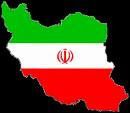
Map: Google Images

THE SUNDAY TIMES: The head of Mossad, Israel’s overseas intelligence service, has assured Benjamin Netanyahu, its prime minister, that Saudi Arabia would turn a blind eye to Israeli jets flying over the kingdom during any future raid on Iran’s nuclear sites.

Earlier this year Meir Dagan, Mossad’s director since 2002, held secret talks with Saudi officials to discuss the possibility.
The Israeli press has already carried unconfirmed reports that high-ranking officials, including Ehud Olmert, the former prime minister, held meetings with Saudi colleagues. The reports were denied by Saudi officials.

“The Saudis have tacitly agreed to the Israeli air force flying through their airspace on a mission which is supposed to be in the common interests of both Israel and Saudi Arabia,” a diplomatic source said last week.

Although the countries have no formal diplomatic relations, an Israeli defence source confirmed that Mossad maintained “working relations” with the Saudis.

John Bolton, the former US ambassador to the United Nations who recently visited the Gulf, said it was “entirely logical” for the Israelis to use Saudi airspace.

Bolton, who has talked to several Arab leaders, added: “None of them would say anything about it publicly but they would certainly acquiesce in an overflight if the Israelis didn’t trumpet it as a big success.” >>> Uzi Mahnaimi in Tel Aviv and Sarah Baxter | Sunday, July 05, 2009
Iran's British Stooges Are Staring Right at You

THE SUNDAY TIMES: Zahra, an Iranian woman studying at an English university, is in a state of terror. Her husband, an activist in the cause of the defeated Iranian presidential candidate Mir Hossein Mousavi, was arrested a fortnight ago, and has not been seen since. Zahra, whose eyes are lined in green, the colour of the country’s reformist opposition, told the BBC: “Why should he be in jail? What was wrong with what we did in Tehran? It was the basic right of all Iranians to take part in the election.” She went on: “They don’t let my husband call me . . . this is torture.”

It is torture for Zahra because she has a good idea of what is happening to her husband. The Iranian state media have been broadcasting a series of “confessions” by demonstrators against the alleged rigging of the presidential vote in favour of the incumbent, Mahmoud Ahmadinejad. They all tend to say the same thing: “I admit that I demonstrated under the influence of the BBC, the Voice of America and other foreign media.”

Their identities are not discernible, because their faces have been obscured. The reason for this was made horribly clear by remarks in The Guardian from a shopkeeper friend of an 18-year-old who had been “questioned” by the Iranian security services: “You could tell straight away he had just been released. His face was bruised all over. His teeth were broken and he could hardly open his eyes . . . [Later] the doctor told me that he had suffered rupture of the rectum.”

The shopkeeper quoted his 18-year-old friend to the effect that he had not “confessed” despite several days of beating while being hung from a ceiling with his hands and feet tied together. At that point two men tore his clothes off while a third “did it” – that is, inflicted the assault that ruptured his rectum. He was raped several times in this way, in front of four other detainees, but continued to refuse to sign a confession along the lines suggested by his interrogators.

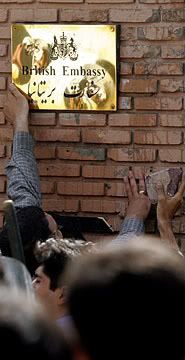
So when we hear Ayatollah Jannati, chief of the Guardian Council, say of arrested Iranian employees of the British embassy in Tehran, “Naturally they will be put on trial, they have made confessions,” we should be only too aware of what will have been happening to some of Her Majesty’s servants. >>> Dominic Lawson | Sunday, July 05, 2009
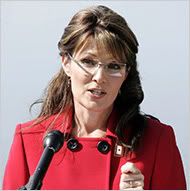
Sarah Palin Says She Is Fed Up with Politics

THE SUNDAY TIMES: Sarah Palin, the failed 2008 vice-presidential candidate tipped to run for the White House in 2012, has told close friends she is “out of politics, period” after astounding the Republican party with a theatrical resignation as governor of Alaska.

Palin, 45, burst onto the national political scene less than a year ago as the “thriller from Wasilla” — a moose-hunting ice-hockey mom with five children including Trig, a Down’s syndrome baby — and electrified the party’s Christian conservative base as Senator John McCain’s running mate.

In a bizarre, erratic news conference outside her lakeside home on Friday, Palin held out the promise of a national role in politics when she said she hoped to “fight for all our children’s future from outside the governor’s office”.

Yesterday it emerged that she had told “very close friends” she had no intention of running for president. “She is fed up with politics. She doesn’t like her life. She feels that she needs to raise her family,” said Andrea Mitchell, an NBC News reporter who is married to Alan Greenspan, former chairman of the Federal Reserve.

“She really does not want to run for higher office,” Mitchell added. “This is not a case where she is stepping down in order to clear the way for a presidential run.”

Palin’s sudden decision to resign caught some family members by surprise, as well as bewildered staff and supporters. “She didn’t even tell her brother,” said John Coale, a Washington lawyer and political consultant who is close to the governor. A spokeswoman for Palin said quitting the governorship was a “liberating feeling . . . she can’t get out of there fast enough”. >>> Sarah Baxter in Washington | Sunday, July 5, 2009
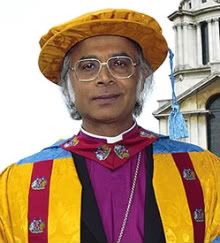
Change and Repent, Bishop Tells Gays

THE TELEGRAPH: A senior Church of England bishop has called on homosexuals to repent and "be changed" in comments that have infuriated equality campaigners.

The Bishop of Rochester, Dr Michael Nazir-Ali, has defended traditional biblical teachings on homosexuality and said the Church should not be "rolled over by culture".

Dr Nazir-Ali spoke as tens of thousands of people, including Sarah Brown, the Prime Minister’s wife, joined the annual Pride London march to celebrate homosexual culture. A war of words broke out between Labour and the Conservatives over the issue of homosexuality last week after a minister accused the Tories of having a "deep strain of homophobia" running through the party.

The bishop’s controversial comments will reignite the battle over homosexuality in the Church of England ahead of what promises to be a divisive week for Anglicanism.

Tomorrow, a new coalition of evangelical and Anglo-Catholic parishes, backed by Dr Nazir-Ali, will get under way, which critics have claimed is an attempt to create a "church within the church".

The organisers said The Queen, the Supreme Governor of the Church of England, had sent a message to the leaders of the movement saying she understood their concerns about the future of the Anglican Communion. Next weekend the General Synod of the Church of England is meeting at York University. The following week, the Episcopal Church in America is expected to endorse liturgies for single sex marriage and allow more homosexuals to be made bishops.

In an interview with The Sunday Telegraph, Dr Nazir-Ali said: "We want to uphold the traditional teaching of the Bible. We believe that God has revealed his purpose about how we are made.

"People who depart from this don’t share the same faith. They are acting in a way that is not normative according to what God has revealed in the Bible.

"The Bible’s teaching shows that marriage is between a man and a woman. That is the way to express our sexual nature.

"We welcome homosexuals, we don’t want to exclude people, but we want them to repent and be changed." >>> Jonathan Wynne-Jones, Religious Affairs Correspondent | Saturday, July 04, 2009

Saturday, July 04, 2009

En Iran, 20 pendaisons en un jour pour trafic de drogue

LIBÉRATION.fr: Le nombre des exécutions a augmenté ces dernières années, en Iran, en raison d'une campagne censée améliorer la sécurité. Au moins 161 personnes y auraient été exécutées depuis le début de l'année

Vingt personnes, condamnées pour trafic de drogue, ont été pendues en une seule journée, samedi, dans une prison près de Téhéran, a rapporté l'agence semi-officielle Fars.

Les exécutions ont eu lieu dans la matinée, au sein de la prison de Rajaie Shahr, située à Karaj, à une cinquantaine de kilomètres à l'ouest de Téhéran, selon l'agence. Agés de 35 à 48 ans, les condamnés auraient été arrêtés dans une période allant de cinq mois à un an avant leur pendaison.

Fars ajoute qu'ils avaient été interpellés en possession de plus de 700 kg de drogues, dont de l'héroïne, de la cocaïne et de l'opium.

L'Iran est le second pays au monde par le nombre d'exécutions derrière la Chine, selon l'organisation de défense des droits de l'Homme, Amnesty International, mais il est rare qu'autant de condamnés soient exécutés en une seule journée. Il faut remonter au 27 juillet 2008 pour trouver un chiffre plus important: à cette date, 29 personnes avaient été exécutées en Iran pour trafic de drogue, meurtre et viol, selon la télévision.

Les 20 pendaisons de samedi portent à au moins 161 le nombre de personnes exécutées en Iran depuis le début de l'année, selon un décompte de l'AFP effectué à partir de sources de presse. >>> AFP | Samedi 04 Juillet 2009
Barack Obama on Gay Marriage


YOU TUBE: Brian Williams Ask President Obama About Gay Marriage


YOU TUBE: Obama Biden Support No Same-sex Marriage

Weekly Address: On the 4th of July, Overcoming America’s Challenges

Tribute to Neda and All Other Brave Iranian Women

Indian Muslim Leaders Issue Declaration Against Taliban's Imposition of 'Jizia' (Islamic Poll Tax) on Pakistani Sikhs

MEMRI: After the Taliban militants recently ordered Sikhs in Pakistan's tribal region to pay Jizia (Islamic poll tax on non-Muslims), a number of Muslim leaders in India issued a declaration criticizing the militants for not following the true spirit of Islam.

"Imposition of … Jizia is Nothing More Than Extortion By an Armed and Lawless Gang Which Does Not Constitute a Sovereign Government or State"

"We, religious, political and community leaders of the Indian Muslims, are alarmed at the reports coming out of Pakistan's tribal areas about the Pakistani Taliban's kidnapping, extortion of huge amounts of money from their Sikh compatriots as Jizia, and demolition of the houses and shops of those who fail to pay the demanded sums.

"We would like to say that Jizia is a tax paid in an Islamic state for exemption from military service by healthy non-Muslim adults who are free to follow their vocations without restriction or fear, and that there is no other tax payable by them after paying this tax - unlike Muslims who have to pay various taxes including Zakat and who have to perform military service as well.

"Jizia was payable by non-Muslims only in lands conquered by Muslims, like Egypt, Syria and Iraq, but not in unconquered areas like Madina, where, during the time of the Holy Prophet, no Jizia was ever imposed on non-Muslim citizens, who enjoyed equal rights and duties under the Constitution of Madina. >>> Memri.org | Sunday, July 5, 2009
7/7 Ripple Effect: The “Documentary” which Blames “the British and Israeli Secret Services” for the 7/7 Bombings


Hat tip: JihadWatch >>>
'Jewish Ahmadinejad' Blogger Arrested

THE JERUSALEM POST: The Iranian blogger who claimed President Mahmoud Ahmadinejad has Jewish roots is being detained by the authorities after he was arrested along with 150 university students earlier this week, according to sources in Teheran.

Dr. Mehdi Khazali, who reportedly participated in several recent opposition demonstrations, was reportedly summoned to a special court convened for religious figures, detained and transferred to an unknown location.

The son of a prominent, conservative pro-Ahmadinejad ayatollah, Khazali wrote on his Web site earlier this year that the president - a Holocaust denier and relentless critic of Israel - was of partially Jewish origin, asserting that Ahmadinejad had changed his family name from Saburjian, and calling for the origins of the Saburjian family in the town of Aradan to be investigated.

The assertion featured in the bitter presidential election campaign, when rival reformist candidate Mehdi Karroubi challenged Ahmadinejad in a live TV debate, reportedly stating: "My full name is Mehdi Karroubi. What is your full name?"

Ahmadinejad gave his full name, according to an Al-Arabiya TV report, but left out one surname which is said to indicate Jewish ancestry. >>> Sabina Amidi | Friday, July 03, 2009

Hat tip: JihadWatch >>>
Homophobic Harassment During Gay Pride

Diplomatischer Konflikt: EU plant Einreiseverbot für iranische Regimevertreter

SPIEGEL ONLINE: Die Europäische Gemeinschaft will Geschlossenheit demonstrieren: Alle 27 Mitgliedstaaten haben sich auf ein Stufenmodell geeinigt, mit dem Iran bewegt werden soll, Mitarbeiter der britischen Vertretung freizulassen. Ein gemeinsamer Abzug der EU-Botschafter aus Teheran bleibt allerdings umstritten.

Hamburg - Deutschland und die übrigen EU-Staaten planen neue Sanktionen, falls die iranische Regierung ihren Umgang mit Regimegegnern nicht ändert. Die Politischen Direktoren der EU-Staaten haben für die Vorgehensweise nach Informationen des SPIEGEL ein Stufenmodell vereinbart.

Zunächst wurden am Freitag die iranischen Botschafter in die Außenministerien der EU-Mitglieder einbestellt. Iran wurde aufgefordert, sofort zwei inhaftierte Mitarbeiter der britischen Botschaft freizulassen. Wenn der diplomatische Appell nicht fruchtet, will die EU ab nächster Woche Reisebeschränkungen vorbereiten. >>> cai/hen/dpa/Reuters/AFP | Samstag, 04 Juli 2009
Répression en Iran: les pays de l'UE haussent le ton

TRIBUNE DE GENÈVE: BRUXELLES | Les pays de l'Union européenne convoquent tous les ambassadeurs ou chargés d'affaires iraniens pour protester contre la détention d'employés locaux de l'ambassade britannique à Téhéran.

La décision a été arrêtée lors d'une réunion d'ambassadeurs des 27 pays de l'UE à Bruxelles. "Nous allons convoquer les ambassadeurs iraniens dans l'Union européenne et nous examinerons comment la situation va évoluer la semaine prochaine concernant le personnel local de l'ambassade britannique", a souligné une source proche de la présidence suédoise de l'UE.

Pour la suite, "on garde toutes les options ouvertes", a-t-elle ajouté, dans une allusion aux autres mesures actuellement à l'étude au sein de l'Union européenne.

Il s'agit d'une part de restrictions sur l'octroi de visas à certains dignitaires iraniens, et d'autre part du rappel temporaire des ambassadeurs de l'UE en Iran.

Dans l'immédiat, le message qui sera transmis aux ambassadeurs d'Iran en Europe est que les Européens "sont tous solidaires avec les Britanniques", que le maintien en détention de personnels locaux de l'ambassade du Royaume-uni à Téhéran est "inacceptable" et qu'il s'agit d'une mesure affectant "toute l'Union européenne" et pas seulement le Royaume-uni, a indiqué une autre source diplomatique européenne. >>> AFP | Vendredi 03 Juillet 2009
Investigative Reporter Offers Murder Theory Over Death of Jörg Haider

TIMES ONLINE: When Jörg Haider died in a car crash last year, many Austrians mourned the complex, fast-living populist. He may have been an admirer of Hitler’s employment policies, but he seemed to many rightwingers, frustrated with the Vienna Establishment, to hold the key to a new Austria.

Now pressure is growing to reopen the investigation into his death, and at least one investigative reporter is asking whether the 58-year-old politician was murdered.

“There are too many open questions,” said Gerhard Wisniewski, the author of the book Jörg Haider: Accident, Murder or Assassination? that has been selling quickly in Austria since it was launched last Tuesday. “After eight months of research I am convinced that it is highly probable that Haider was the victim of a politically motivated assassination.”

Neither the Haider family nor his political associates go quite that far, but they have been appealing this week for a more thorough look at the events of the night of October 10 last year.

“This case has to be reopened with an independent prosecutor . . . and with the involvement of international experts,” said Stefan Petzner, the former spokesman for Mr Haider and a leading figure in the right-wing BZOe party, the Alliance for the Future of Austria. He is threatening to mobilise a referendum on the issue unless the Justice Minister complies.

Mr Haider’s wife, Claudia, has also joined in the critical chorus, questioning the narrative provided by the police investigation team in the week after the crash. The police version, much of it leaked to the press before the official report, was that Mr Haider had visited various bars, including a reputedly gay hangout, on the night of Saturday October 10, in the town of Klagenfurt. He had drunk the equivalent of a bottle of vodka, according to blood sampling, and had driven at 142 kilometres per hour. >>> Roger Boyes in Berlin | Saturday, July 04, 2009
Revealed: The First Naturist B&B in Europe

TIMES ONLINE: In the heart of the Swedish countryside the guests shed their inhibitions and their clothes

My husband looks doubtful. “Why the suitcase?” He has a point. I am going for two days to the first naturist B&B in Europe.

I normally find packing quite a trial; what to wear for dinner, for walks, even for lunch? This time it is easy — “nothing” is the answer to all the above questions. But one thing is worrying me: where to keep my notebook?

I arrive at Hylteberga gård, deep in the Swedish countryside, at about 6pm. I crane my neck to view the yellow farmhouse along the gravel road.

I scan the horizon, as if on an African safari, and I half expect to see naked people leaping through the cornfields like nymphs.

Then I park and knock on the door. I am nervous; shamefully, still fully dressed. The advice on the internet was to leave all your clothes at the door. Should I have stripped off?

The door is opened by a man. He is wearing a grin, but also shorts and a shirt. His wife is behind him, also dressed. “Welcome to Hylteberga,” Steffen Brummer Pind says.

His wife, Eva, shakes my hand warmly. They show me to my room. En route we pass a man who, let’s say, hasn’t held back on the pies — a bit of a fatty — and he is naked.

The man looks away from the television and says hello. I try not to stare at his private parts, although my eyes are inextricably drawn. Luckily his bits are more or less hidden by his belly. It is a sad fact that naturist resorts seldom attract those to whom Nature has been kindest. >>> Helena Frith Powell | Saturday, July 04, 2009
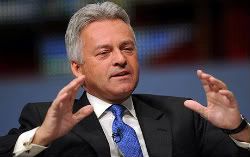
MPs' Expenses: Alan Duncan Claimed £63,000 in Mortgage 'Flip'

THE TELEGRAPH: Alan Duncan, a senior Conservative MP, has claimed tens of thousands of pounds in mortgage interest on his designated second home – even though he had owned the property outright for more than a decade, The Daily Telegraph can disclose.

Mr Duncan, the shadow leader of the House of Commons, bought a country house in Rutland in 1992 without a mortgage being secured against the property.

He designated the house as his “second home” for the purposes of claiming parliamentary expenses.

However, it was not until early 2004 that the multi-millionaire MP took out a £271,000 mortgage on the house. Since then, Mr Duncan has claimed £1,400 a month in mortgage interest payments on the house. In total, he has claimed more than £63,000 for the cost of interest on the mortgage.

The arrangement will lead to questions over whether Mr Duncan, a former oil trader, is milking the parliamentary allowances system. He has been appointed by David Cameron to lead the Conservative campaign to clean up the system. >>> Holly Watt | Friday, July 04, 2009

Friday, July 03, 2009

EU Resolve Hardens as British Workers Face Iran Show Trial

TIMES ONLINE: Iranian employees of the British Embassy in Tehran face the prospect of a show trial after the regime said that they had admitted conspiring against the Islamic Republic.

The announcement, made by Ayatollah Ahmad Jannati, 83, the head of Iran’s powerful Guardian Council, at Friday prayers, was a sharp escalation of the confrontation with Britain.

The British Government said that the charges against the arrested local staff were “wholly without foundation” and William Hague, the shadow Foreign Secretary, called a show trial of British embassy staff in Tehran "utterly unacceptable".

The European Union’s 27 member states summoned the Iranian ambassadors in all EU capitals to make formal protests and stopped issuing visas to Iranian officials. A senior European diplomat insisted that the dramatic step of withdrawing EU ambassadors en masse from Tehran was still “very much on the table”.

Two of the nine Iranians arrested last weekend were still being held last night. Ayatollah Jannati did not say how many would be tried or on what charges, but the penalty for extreme cases of treason is execution. The Foreign and Commonwealth Office said that it was seeking urgent clarification on his announcement.

Officials feared that the employees’ “confessions” might have been extracted under duress or torture. British diplomats have not been given access to the two employees still held. >>> Martin Fletcher | Saturday, July 04, 2009
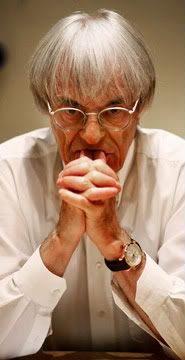
Hitler? He got things done, says Formula One chief Bernie Ecclestone

TIMES ONLINE: Bernie Ecclestone, the Formula One chief, said yesterday that he preferred totalitarian regimes to democracies and praised Adolf Hitler for his ability to “get things done”.

In an outspoken interview with The Times, the 78-year-old billionaire chastised contemporary politicians for their weakness and extolled the virtues of strong leadership.

Mr Ecclestone said: “In a lot of ways, terrible to say this I suppose, but apart from the fact that Hitler got taken away and persuaded to do things that I have no idea whether he wanted to do or not, he was in the way that he could command a lot of people, able to get things done.

“In the end he got lost, so he wasn’t a very good dictator because either he had all these things and knew what was going on and insisted, or he just went along with it . . . so either way he wasn’t a dictator.” He also rounded on democracy, claiming that “it hasn’t done a lot of good for many countries — including this one [Britain]”. >>> Steve Bird, Ruth Gledhill and Sam Coates | Saturday, July 04, 2009
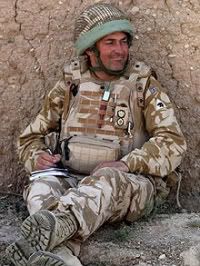
Death of British Army Officer 'Heartbreaking', Says Prince of Wales

THE TELEGRAPH: The Prince of Wales has paid tribute to Lieutenant Colonel Rupert Thorneloe, the British officer killed in Afghanistan, saying his death was "completely heartbreaking".

Lt Col Thorneloe, the commanding officer of the 1st Battalion Welsh Guards, was killed by a roadside bomb near Lashkar Gah in Helmand province, southern Afghanistan, on Wednesday along with 18-year-old Trooper Joshua Hammond, of 2nd Royal Tank Regiment.

The Prince of Wales, who knew the officer, paid tribute to him and Trooper Hammond. The Prince, who is colonel of Lt Col Thorneloe's regiment the Welsh Guards, said he had been "mortified" when he heard of the deaths.

Gordon Brown, the Prime Minister, also paid tribute to Lt Col Thorneloe, the most senior British Army officer to be killed in action since the Falklands War.

The Prime Minister, speaking on a visit to the Christie Hospital in Manchester, said: "I think the whole country will be mourning today."

And Defence Secretary Bob Ainsworth paid tribute to Lt Col Thorneloe saying he was a "leader of men".

The Prince, during a visit to Cornwall, said: "Having been colonel-in-chief of the Welsh Guards for the last 34 years, as you can imagine it is a wonderful family regiment and having been involved for those 34 years I've seen sons and grandsons go through the regiment," he said.

"As you can imagine, the shock and horror that has affected the whole of the regiment family was quite dramatic.

"I was horrified to say the least about both deaths, Trooper Hammond as well. >>> Thomas Harding, Defence Correspondent | Friday, July 03, 2009
Palin to Resign as Governor of Alaska

THE NEW YORK TIMES: Gov. Sarah Palin of Alaska announced Friday that she would step down by the end of the month and not seek a second term as governor, fueling speculation that she is seriously weighing whether to seek the Republican nomination for president in 2012.

Ms. Palin, who was Senator John McCain’s vice presidential running mate last year and solidified the support of the party’s conservative base, explained her decision at a news conference at her home in Wasilla, Alaska, accompanied by her husband, Todd, and other family members.

“We know we can affect positive change outside of government,” she said in making the announcement.

Known as Sarah Barricuda when she played basketball in high school, Ms. Palin used point guard analogy in explaining her decision, saying she knows “exactly when to pass the ball so the team can win.”

She said that she planned to hand over the reins of the state government to Lt. Gov. Sean Parnell, who would be sworn in at the governor’s picnic in Fairbanks on July 25.

“This decision came after much consideration,” Ms. Palin told reporters gathered at her home, and added, “I really don’t want to disappoint anyone with this announcement.” >>> Mitchell L Blumenthal | Friday, July 03, 2009
Haram Iran


Haram iran >>>
Iran Realities And Perspectives

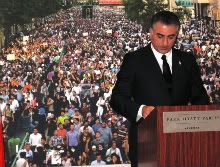
REZA PAHLAVI (رضا پهلوی): Press Conference – Paris, France / Opening Remarks

Ladies and Gentlemen:

Thank you for coming. Thank you for your time, and attention to the cry for freedom and democracy in Iran. The past three weeks, my brave compatriots have paid in blood the price of ripping the façade of acceptability of the regime in Iran, and its legitimacy to speak for the people of Iran abroad. The ensuing murderous oppression can silence the streets, and media blackout can reduce world attention. In the West you may see headlines declaring the end of the protests. Some will say a family quarrel inside the Islamic regime is over and Mr. Ahmadinejad will govern Iran for another four year term. But they misread the situation. Although more demonstrations may pop up, and the 10th anniversary of the student uprising on July 9th is a date to watch, phase one, that is election-related mass demonstrations is over. But let me clarify what phase two, which is the phase of national resistance, will look like:

Viewed as a usurper in his second term, Mr. Ahmadinejad's increasing insecurity at home will compel him to invent foreign enemies, further isolating Iran. Compounded with low oil prices, the need for slower liquidity growth to limit spiraling inflation, with massive capital flight and a drained stock market, and a further hemorrhage of skilled managers, just to name a few problems, he will face insurmountable obstacles in running the day to day affairs of government. He will need a minimal cooperation of the people for the ship of state to sail on. Instead he will find burgeoning resistance everywhere, until his government grinds to a halt.

Disappointed and alarmed, influential clerics, important parliamentary factions and other institutions will question his ability to cope and undermine his authority from within the Islamist state. That final paralysis will mark the end of the second phase.

It is hard to predict the third phase. Will a part of the Revolutionary Guards move in to fill the vacuum created by a collapse of authority and a functioning government? If so, the regime will be reduced to an unsustainably narrow base of support, expediting its fall. Will strikes spread and re-energized mass demonstrations sweep the country, compelling the authorities to yield to public pressure toward a new democratic order? No exact scenario can be written at this stage, but the end is clear.

Fast rewind to today, let's acknowledge that the path is perilous. The regime has just appointed a three-man commission to punish those involved in recent demonstrations. The commissioners are men responsible for tortures and summary executions of thousands of my countrymen some twenty years ago. After all of these years, the sounds of rape, torture and dying in Iran's prisons haunt my countrymen. And now those men are back. Ladies and Gentlemen: >>> Reza Pahlavi | Thursday, July 02, 2009
Life, the Gift We Treasure Most, Yet Refuse to Bestow on Others

THE TELEGRAPH: Why does an educated, prosperous society choose not to reproduce itself, asks Charles Moore.

Our village is unusual in having a mainline railway station. Each day, a small number of people walk up from the station and past our house on their way to work. It is quite a long walk – perhaps a mile and a half – but I imagine they walk because they do not earn enough to own cars. They are virtually all foreign. They are on their way to serve as carers and nurses in an old people's home, whose inmates are virtually all British.

This procession is a daily visual illustration of what happens to a country when it lives and, increasingly, dies, under an illusion.

If you raise the subject of population with British people, most will tell you that the problem is overpopulation. There are too many people in the world, they say, and our own island is overcrowded.

Certainly, population growth causes problems, of which the greatest is the contest for resources, which can lead to war. But, as we are rediscovering with the recession, something frightening happens when what promised to go up, goes down.

Even quite marginal change has big effects. If you are getting 2 or 3 per cent richer each year, you can see a path of widening opportunity ahead. If you are getting 2 or 3 per cent poorer (let alone, as is currently the case, nearly 5 per cent), the future prospect narrows.

So it is with population; and the change is not marginal, but drastic. In 1960, OECD countries had a fertility rate of 3.2 children. Today, they have one of 1.6, well below the "replacement rate" of 2.1. So the rate has halved in my lifetime, moving from fast increase to steady decline. We in the West are collectively deciding not to bestow on others the gift which we most value for ourselves – life. >>> Charles Moore | Friday, July 03, 2009
Wimbledoon Semi-Finals: Live – Murray v Roddick

Watch here
Turkey Tries to Revive EU Membership Bid

NRC HANDELSBLAD INTERNATIONAL: Despite the slow progress, Turkey is reminding Brussels that it is still very much intent on joining the European Union.

For once, the topic is not democracy, human rights or gas pipelines. Turkish diplomats are in Brussels since Tuesday to discuss tax reform with the European Commission. If Turkey wants to join the European Union one day, it will also have to adapt its tax system to the European rules.

But the most important message coming out of Brussels and Ankara is that negotiations, which began in 2005 after Turkey was officially recognised as a candidate for membership in 1999, are in fact still ongoing.

Very slowly Turkey is edging closer to EU membership, despite the fact that French president Nicolas Sarkozy and German chancellor Angela Merkel have said they don't want Turkey to join, and despite the fact that many extreme-right parties did well in the European parliament elections in June by campaigning against Turkish membership.

With the elections out of the way, the Turkish government found it necessary to remind the EU countries that it is still intent on joining the EU as promised. Last week, Turkey sent its prime minister and its foreign and European affairs ministers to Brussels to repeat this loudly - much louder than is customary among EU officials and Turkish diplomats.

During a breakfast meeting with journalists, prime minister Recep Tayyip Erdogan called those European politicians opposing Turkish membership "narrow-minded" and "populist". It was "wrong", he said, to use Turkey as a campaign tool. Erdogan: "We will never give up. We do our homework and we're making progress." >>> Petra de Koning in Brussels | Wednesday, July 01, 2009
Find God, Win a Trip to Mecca (or Jerusalem, or Tibet)

THE GUARDIAN: Turkish gameshow enlists imam, Greek Orthodox priest, rabbi and monk to try to convert atheists, with pilgrimage as reward

Photobucket
Penitents Compete could send someone to Mecca. Photo: The Guardian

It sounds like the beginning of a joke: what do you get when you put a Muslim imam, a Greek Orthodox priest, a rabbi, a Buddhist monk and 10 atheists in the same room?

Viewers of Turkish television will soon get the punchline when a new gameshow begins that offers a prize arguably greater than that offered by Who Wants to be a Millionaire?

Contestants will ponder whether to believe or not to believe when they pit their godless convictions against the possibilities of a new relationship with the almighty on Penitents Compete (Tovbekarlar Yarisiyor in Turkish), to be broadcast by the Kanal T station. Four spiritual guides from the different religions will seek to convert at least one of the 10 atheists in each programme to their faith.

Those persuaded will be rewarded with a pilgrimage to the spiritual home of their newly chosen creed – Mecca for Muslims, Jerusalem for Christians and Jews, and Tibet for Buddhists.

The programme's makers say they want to promote religious belief while educating Turkey's overwhelmingly Muslim population about other faiths. >>> Robert Tait in Istanbul | Thursday, July 02, 2009
British Calls for Diplomatic Walkout from Iran Are Rejected by EU Partners

TIMES ONLINE: British calls for a mass walkout of European Union ambassadors from Tehran were shot down by more cautious nations led by Germany and Italy yesterday as the carefully constructed European consensus on responding to Iran came under intense strain.

Britain, backed by the outgoing Czech presidency of the EU, had pushed for the dramatic step of a temporary withdrawal of ambassadors to pile pressure on Tehran to free local British Embassy staff from custody.

With the release of all but two of the nine staff by yesterday afternoon, the incoming Swedish presidency of the EU, which took the reins on Wednesday, struck a less aggressive diplomatic note, more in tune with Berlin and a number of other EU capitals.

Carl Bildt, Sweden’s Foreign Minister, said last night that the EU had called on Iran to release all the British Embassy employees, but added that the EU was still awaiting a response from Tehran. Suggesting that it was too early to recall the ambassadors, Mr Bildt said: “We are taking this step by step.” >>> David Charter in Stockholm | Friday, July 03, 2009

Thursday, July 02, 2009

Pahlavi : «C'est le début de la fin» du régime iranien actuel

LE FIGARO: Le fils du Shah d'Iran, qui vit en exil depuis 1979, estime qu'aucune solution à la crise ne pourra plus être trouvée au sein de ce régime «usurpateur». «Le pays entre dans une phase de résistance, de désobéissance civile».


leJDD.fr: L'Iran vu par le fils du shah

De passage à Paris jeudi, le fils du shah d'Iran a évoqué devant les journalistes la crise politique qui secoue son pays depuis trois semaines. Convaincu que le mouvement de protestation contre le pouvoir entraînera à terme la chute de la République islamique installée en 1979, Reza Pahlavi, partisan d'un Iran laïc et démocratique, appelle ses concitoyens "à l'unité".

Il veut croire "au commencement de la fin". A la rencontre des médias ce jeudi à Paris, Reza Pahlavi n'a eu de cesse de marteler que le régime islamique instauré en 1979 en Iran était voué à disparaître, affaibli, selon lui, par la crise politique qui secoue le pays depuis trois semaines. Invité de l'European American Press club, le fils du dernier shah d'Iran, en exil depuis trente ans, s'est toutefois bien gardé d'annoncer une mort à bien des égards prématurée. En revanche, "son Altesse", porte-parole en Occident d'un Iran débarrassé de la théocratie, est intimement convaincue que la vague de protestation né du verdict - faussé - des urnes lors du scrutin présidentiel du 12 juin dernier "n'allait pas mourir", et ce, malgré un certain essoufflement constaté. "Un mouvement a pris naissance", a-t-il au contraire déclaré avec gravité dans l'auditorium feutré d'un hôtel de luxe parisien. "Il s'agit d'un nouveau-né qu'il faut protéger, afin qu'il devienne un homme... ou une femme." >>> Par Nicolas MOSCOVICI, leJDD.fr | Jeudi 02 Juillet 2009
Barack Obama: Vladimir Putin Is 'Living in the Past'

THE TELEGRAPH: Barack Obama yesterday accused Vladimir Putin, the Russian prime minister, of "living in the past" and indulging in Cold War thinking on the eve of his first trip to Russia as US president.

Mr Obama described the former president, who remains the country's dominant political force, as someone who still has "one foot in the old ways of doing business and one foot in the new".

He said one reason he will meet Mr Putin, as well as Dmitry Medvedev, the Russian president, during his visit next week is that he wanted Mr Putin to know that "the old Cold War approaches" to relations with the United States were "outdated".

The US president told the Associated Press that he was developing a "very good relationship" with Mr Medvedev, whom he met in London at the G20 summit in April.

At the time, the two leaders readily agreed to move quickly to hammer out an accord for shrinking their countries' nuclear arsenals, a pact that would replace the 1991 Start I treaty that expires in December.

Both sides have been tight-lipped about preparatory talks, but negotiators are expected to narrow differences enough to allow the leaders to possibly announce a framework for a deal next week.

However, also at stake is the credibility of the Obama administration's pledge to "press the reset button" on US-Russia relations, which sank to a post-Cold War low under George W Bush and Mr Putin.

Mr Obama's forthright remarks were a strong signal that he expects Moscow to match his commitment to improving the tone in the two sides' conversation. >>> Alex Spillius in Washington | Thursday, July 02, 2009
Massive US Assault to Seize Taleban Heartland

Photobucket
It is the biggest Marine operation since the storming of Fallujah in Iraq in 2004. Photo: TimesOnline

TIMES ONLINE: Thousands of US Marines stormed into an Afghan river valley by helicopter and land early today, launching the first major military offensive of Barack Obama's presidency with an assault deep into Taleban-held territory.

Operation Khanjar, which the Marines call simply "the decisive op", is intended to seize virtually the entire lower Helmand River valley, a heartland of the Taleban insurgency and the world's biggest heroin producing region.

It is the biggest operation launched by the US Marines Corps since the retaking of Fallujah in 2004 and seeks to break the grinding stalemate between Nato forces and the Taleban in the province.

US commanders stressed this morning their desire to move quickly and decisively with overwhelming force to seize the entire southern Helmand River valley from Taleban control ahead of the delayed Afghan Presidential elections on August 20.

"Where we go we will stay, and where we stay, we will hold, build and work toward transition of all security responsibilities to Afghan forces," Marine Corps Brigadier General Larry Nicholson, commander of the Marines in southern Afghanistan said in a statement.

He told his staff before the operation: "The intent is to go big, go strong and go fast, and by doing so we are going to save lives on both sides." >>> Tom Coghlan in Kabul | Thursday, July 02, 2009
Benedict Brogan: Cutting Britain's Defence Budget to Pay Other Bills Is a False Economy

THE TELEGRAPH: Benedict Brogan believes both the main parties are missing the point of maintaining a nuclear deterrent

A free people, George Washington said, must be constantly awake against the insidious wiles of foreign influence. At any moment, from any quarter, trouble may pounce to put the sovereignty of the nation under threat. Defending the realm demands eternal vigilance.

Yet in this particular kingdom we are nodding off, distracted by the agonies of a financial crisis and the positioning of leaders vying for power. A time of great uncertainty abroad is met by political indifference at home.

From climate change and resource shortages, to cyber-warfare and disorderly states, to Islamist terrorism and international criminal networks, the dangers are multiplying. And then there are the unknown unknowns, the things we don't know that we don't know that kept Donald Rumsfeld up at night. Thirty years from now, who is to say that Russia will not have reverted to its expansionist ways, or that a nuclear-armed Caliphate of Waziristan will not be parked where Pakistan used to be?

Which is what makes British foreign policy, and our capacity to implement it, such a vital part of what a government does. It remains essential to us that our diplomatic effort be played out in the international premier league.

Listen to the whispers coming out of the chancelleries of Europe or the US state department, however, and the talk is of relegation. Britain is slipping down the rankings as Gordon Brown focuses on a domestic fight for survival. Ominously, there is no sign that the prospect of having David Cameron in charge will do anything to reverse the trend.

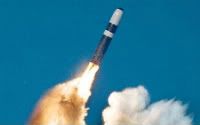
As so often with a national share price, it is a concatenation of decisions and behaviours that drives it downwards. Financial mismanagement, the prospect of a debt downgrade, an inability to produce the necessary resources in Iraq or Afghanistan, loose talk of defence cuts and an end to Trident, speculation about giving up our permanent seat on the UN Security Council, the threat of legal action against serving intelligence officers, and confusion over the Iraq inquiry have helped contribute to a steady loss of credibility.

The strength of our commitment to future defence is this week's wobble. Having frittered away billions since 1997, Mr Brown, with the tacit support of the Conservatives, is eyeing up those cash-draining Cold War programmes. It is tempting to detect the hand of his friends in the unions behind the well-timed leaks about cost over-runs on the two planned aircraft carriers, while the top brass fall over each other to volunteer the weapons programmes of rival services for the chop. >>> Benedict Brogan | Wednesday, July 01, 2009
New York City Council, Bloomberg at Odds Over Call for Muslim School Holidays

FOX NEWS: The New York City Council overwhelmingly passed a resolution Tuesday calling for two Muslim holidays to be added to the school calendar, despite mayoral objections.

The New York City Council is at odds with Mayor Michael Bloomberg over a resolution calling for the school system to observe two Muslim holidays.

The council overwhelmingly passed the resolution Tuesday, citing the city's growing Muslim population and the fact that the system observes comparable Jewish and Christian holidays.

But Bloomberg has spoken out against the measure, saying the school year will get too short if the calendar includes too many holidays.

Now it's unclear whether the proposal will become policy, as the council does not have direct authority over the school year -- yet Bloomberg just relinquished control of the school system to a newly appointed board of education.

"Right now the degree of control the mayor has over the education system is completely unclear," said Councilman G. Oliver Koppell, the only council member to vote against the resolution Tuesday.

Bloomberg could still block the measure. Though the city just reappointed its board of education, the state Senate could take action soon to hand Bloomberg back the reins.

Bloomberg predicted as much Wednesday, saying the new board would "serve until Albany rectifies its inaction and reauthorizes mayoral control."

And the new city school board is considered to be largely aligned with Bloomberg anyway.

Koppell, who sides with Bloomberg, said he's concerned that the calendar change would only benefit a relatively small fraction of the student body at the expense of the school year.

"If we accommodate every group's wishes to have off on religious days, we'll have a huge number of days on which kids are off from school," he said. "This is a slippery slope which we'll be going down. ... In my view, the school year's too short as it is." >>> FoxNews.com | Wednesday, July 01, 2009
Islam: Truths Obama Conveniently Forgot in Cairo (Part 1)

EXAMINER.COM: Even crazy Benito Mussolini reacted like a normal human being when a group of Arab ambassadors informed him of their desire to build a mosque in Rome . “There will be a mosque in Rome ,” the Fascist ruler said, “only when a Roman Catholic Church is permitted in Mecca .”

In the city of St Peter , off the foot of Monte Antenne, now stood an edifice that has been called the largest mosque in Europe . Its main hall can take two thousand worshipers. Its significance did not escape Abdul Qayuum Khan, the Pakistani Director of the Islamic Cultural Center in Rome given the right to build the mosque. He told the New York Times that, “Even if it is not the largest … it is the most important mosque in Europe . The simple fact that it is the only one located in the heart of Christianity, in the Mecca of Catholicism, you might say.”

The Catholic Church initial objection to building a mosque in Rome was dropped after the Second Vatican Council in 1965. Thereafter, permission to build was granted by the Italian government to the Islamic Center and a 7-5 acre undeveloped lot was donated. The $40 million building was financed by Islamic countries like Saudi Arabia.

“For centuries, Islam and Christianity were in conflict,” said Paolo Portoghesi, the Chief Architect of the project to the Times. “This is an expression of the opening of dialogue among the different religions.”

This dialogue recently reached its zenith when King Abdullah of Saudi Arabia visited Pope Benedict XV1 at the Vatican . It was the first of such visits ever. And to top it up, President Obama visited Cairo, Egypt and gave a speech aimed at beginning a new conversation with Muslims across the world.

I feel it is a perfect time to discuss Islam and the rest of us. I am psyched that maybe this time, the discussion will be fruitful. As against the discussion we usually have after some Muslims massacre Christians on their streets, burn up churches, hotels and stone foreign embassies because either the moon woke up on the wrong side of the sky or a cartoonist in a cold room in Sweden drew Prophet Mohammed without putting in parenthesis, sallallaahu 'alaihi wa sallam, Peace Be Upon Him.

Interestingly, King Abdullah can wake up, hop into his private jet and visit the Pope in Vatican but the Pope cannot visit King Abdullah in Mecca . In fact, non-Muslims are not allowed to visit Mecca . King Abdullah can worship in a mosque in Rome but the Pope cannot worship in a church in all of Saudi Arabia . In fact, there is no church in all of Saudi Arabia .

In an article published in the October 18, 2003 edition of La Civilta Cattolica, a journal edited by a group of Jesuits in Rome , the situation of Christians in Muslim countries were described as one burdened by discrimination and often bloody persecution. The article described Islam in all of its history as being in perpetual warlike poise pushing to conquer all it ever came in contact with.

If history can be our guide, the journal tells us that Libya , Tunisia , Algeria , Morocco and Egypt once had vibrant Christian communities from which emerged several important personalities of the early church. These North African countries produced church heavy weights theologians and philosophers like Saint Cyprian, Saint Augustine, Saint Fulgentius, Bishops of Carthage, Hippo and Ruspe respectively. With the conquest of Islam came the total annihilation of Christians in these North African countries, except for Egypt where a tiny Coptic Orthodox Christian community still exist. >>> Rudolf Okonkwo | Wednesday, June 01, 2009

Part 2 >>>
Op-Ed Contributor: Ban the Burqa

THE NEW YORK TIMES: NEW YORK — I am a Muslim, I am a feminist and I detest the full-body veil, known as a niqab or burqa. It erases women from society and has nothing to do with Islam but everything to do with the hatred for women at the heart of the extremist ideology that preaches it.

We must not sacrifice women at the altar of political correctness or in the name of fighting a growingly powerful right wing that Muslims face in countries where they live as a minority.

As disagreeable as I often find French President Nicolas Sarkozy, he was right when he said recently, “The burqa is not a religious sign, it is a sign of the subjugation, of the submission of women. I want to say solemnly that it will not be welcome on our territory.” It should not be welcome anywhere, I would add.

Yet his words have inspired attempts to defend the indefensible — the erasure of women.

Some have argued that Sarkozy’s right-leaning, anti-Muslim bias was behind his opposition to the burqa. But I would remind them of comments in 2006 by the then-British House of Commons leader Jack Straw, who said the burqa prevents communication. He was right, and he was hardly a right-winger — and yet he too was attacked for daring to speak out against the burqa. >>> Mona Eltahawy | Thursday, July 02, 2009

Mona Eltahawy is an Egyptian-born commentator on Arab and Muslim issues.
Islam: What the West Needs to Know – Full Movie

To the movie >>>
A Picture Paints a Thousand Words!

Photobucket
Found near a mosque in Edinburgh. Photo: MailOnline
Indian Court Decriminalises Homosexuality in Delhi

THE GUARDIAN: Sex between people of same gender has been illegal in India since British colonial era

An Indian court today decriminalised homosexuality – but only in the country's capital, Delhi.

The Delhi high court ruled that treating consensual gay sex as a crime was a violation of fundamental rights protected by India's constitution.

The ruling is the first of its kind in the deeply conservative country.

"We've finally entered the 21st century," said Anjali Gopalan, the executive director of the Naz Foundation (India) Trust, a sexual health organisation that filed a petition calling for decriminalisation eight years ago.

The verdict can be challenged in India's supreme court.

Sex between people of the same gender has been illegal in India since a British colonial era law classified it as "against the order of nature".

According to the law, gay sex is punishable by 10 years in prison. While actual criminal prosecutions are few, the legislation has frequently been used to harass people.

It can only be amended by the Indian parliament, but the court's verdict should protect Delhi's gay community from criminal charges and police harassment.

While the ruling is not binding on courts in India's other states, Tripti Tandon, a lawyer for the Naz Foundation, said she hoped it would have a "persuasive" effect. >>> Associated Press | Thursday, July 02, 2009

Listen to BBC audio: Anjali Gopalan, head of the Naz Foundation which filed the petition that prompted the ruling, she said she was ecstatic >>>
Radical Muslim Dentist May Be Struck Off

MAIL Online: A dentist faces being struck off after refusing to treat Muslim patients unless they wore Islamic dress.
Dr Omer Butt ordered female patients to wear headscarves and forced men to take off gold jewellery before allowing them into the dentists' chair.

He even kept a box full of hijabs at his practice so he could lend them to women before checking their teeth.

Butt enforced his religious dress code despite previously being warned by the General Dental Council for the same offence.

The dentist ordered two women to wear head scarves before he would see them and their families, the professional conduct committee of the GDC found.

One woman was forced to leave the clinic in pain after refusing to cover her head while another wore the garment but was outraged after Butt asked her son if he prayed.

The panel concluded that Butt, of Prestwich, Greater Manchester, sought to impose a dress code on Muslim patients while working at the Unsworth Smile Clinic in Bury, Greater Manchester, between April 2005 and June 2007. Radical Muslim dentist refused to treat patients unless they wore traditional Islamic dress >>> | Thursday, July 02, 2009
Cameron Apologises to Gays

MAIL Online: David Cameron has issued an extraordinary apology on behalf of the Conservative Party for legislation banning the promotion of homosexuality in schools.

He said the party had 'got it wrong' when it introduced Section 28 in the late 1980s.

It is one of a series of apologies Mr Cameron has made for his party's actions in government.

The Scots received one in 2006 for having the poll tax imposed on them a year before it was introduced in England.

The Tory leader's latest remarks, during an appearance at a Gay Pride event, were attacked last night by traditionalists on the Right of his party.

They pointed out that as recently as 2003, when Tony Blair axed the clause, Mr Cameron voted for a Tory amendment described by gay rights groups as 'Section 28 by the back door'.

Former party chairman Lord Tebbit said he suspected the apology had been driven by 'focus group findings'.

The gay vote - estimated at 2.65 million people - will be a key political battleground ahead of an election expected next May.
Gordon Brown is hosting a gathering of leading gay and lesbian figures in Downing Street on Saturday, and his wife Sarah is joining a Gay Pride march.

Section 28 was introduced by Margaret Thatcher's government in response to evidence of Left-wing councils promoting gay relationships in schools.

It prevented councils and schools from intentionally promoting homosexuality, but became a focal point for anger for gay rights campaigners.

Mr Cameron insisted he was making his apology because the legislation had been ' offensive to gay people'.

'I'm sorry for Section 28. We got it wrong. It was an emotional issue. We have got to move on and we have moved on,' he said.

He insisted that under his leadership the party was embracing gay rights and predicted it would produce Britain's first gay Prime Minister. Cameron apologises to gays for Section 28: Law to ban promotion of homosexuality in schools was wrong, says Tory leader >>> James Chapman | Thursday, July 02, 2009
Iran : «La crise a révélé les fissures au sein du régime»

LE FIGARO: INTERVIEW - Pour le professeur Farhad Khosrokhavar, spécialiste de l'Iran, «rien ne sera plus comme avant : la peur du guide suprême est retombée».

Spécialiste de l'Iran, professeur de sociologie à l'École des hautes études en sciences sociales à Paris, Farhad Khosrokhavar vient de passer six semaines en Iran pendant la crise. Il est l'auteur d'Avoir vingt ans au pays des ayatollahs *.

LE FIGARO. - Comment expliquer le récent «coup d'État» iranien ? Pouvait-on s'y attendre ?

Farhad KHOSROKHAVAR. - Depuis sa création, il y a 30 ans, la République islamique a toujours eu deux dimensions : l'une théocratique et non élective, avec le guide suprême et, entre autres, l'armée, le pouvoir judiciaire ; l'autre, symbolisée par des organes élus directement par le peuple, comme le Parlement ou le président. Avec l'élection d'un réformiste, Khatami, en 1997, on a pu assister à l'essor de différents mouvements sociaux : les intellectuels, les étudiants, les femmes, les minorités ethniques. Ces derniers ont commencé à inquiéter le pouvoir dominant, c'est-à-dire ce que j'appelle le «duo au pouvoir» - le guide et la hiérarchie supérieure des pasdarans. Pour eux, il fallait trouver le moyen de se débarrasser de la dimension républicaine de la République islamique, qui mettait en péril le système. Une fois élu en 2005, Mahmoud Ahmadinejad, le candidat favori d'Ali Khamenei, a rapidement entrepris de désarticuler l'appareil d'État et de lui retirer sa relative autonomie. Il a fait changer trois fois le gouverneur de la Banque centrale, il a fait jouer la planche à billets, en ignorant les objections du Parlement. En parallèle, il a systématiquement réprimé la société civile. De quoi satisfaire le guide.

La victoire d'Obama, aux États-Unis, a-t-elle encouragé cette reprise en main ?
Les élections américaines ont déstabilisé le pouvoir. Face à la rhétorique belliqueuse de George Bush, le régime iranien savait comment s'y prendre. À l'axe du mal, il opposait son propre axe du diable. Mais, face à la nouvelle politique de Barack Obama, le guide ne savait trop comment réagir. La reconduction d'Ahmadinejad se présentait donc comme la meilleure solution pour la survie du système.

Pendant les deux semaines précédant le scrutin, la campagne électorale avait paradoxalement créé une ambiance démocratique inédite…

Pendant cette élection, le guide n'avait qu'une obsession : le fort taux de participation. Il a donc, d'abord, favorisé l'expression publique, en laissant les coudées franches aux jeunes, qui se déversèrent tous les soirs dans la rue, dans une ambiance festive, parfois jusqu'à trois heures du matin. Du jamais vu en Iran. En fait, Khamenei pensait qu'après avoir voté ils rentreraient docilement chez eux. Mais c'est révélateur d'une méconnaissance totale de sa société. Deuxième faux pas : l'organisation inédite de débats télévisés entre les différents candidats. Au lieu de favoriser Ahmadinejad, ils ont poussé de nombreux Iraniens à s'identifier à son adversaire principal, Mir Hossein Moussavi. >>> Propos recueillis par Delphine Minoui | Mercredi 01 Juillet 2009
Happy Birthday, Canada!

Photobucket
Map: Google Images

Canadians across the country are celebrating Canada's 142nd birthday.

THE GLOBE AND MAIL: To the photo gallery >>>
Hussein Pointed to Iranian Threat: Specter of Arms Allowed Him to Appear Strong, He Told U.S.

THE WASHINGTON POST: Saddam Hussein told an FBI interviewer before he was hanged that he allowed the world to believe he had weapons of mass destruction because he was worried about appearing weak to Iran, according to declassified accounts of the interviews released yesterday. The former Iraqi president also denounced Osama bin Laden as "a zealot" and said he had no dealings with al-Qaeda.

Hussein, in fact, said he felt so vulnerable to the perceived threat from "fanatic" leaders in Tehran that he would have been prepared to seek a "security agreement with the United States to protect [Iraq] from threats in the region."

Former president George W. Bush ordered the invasion of Iraq six years ago on the grounds that Hussein possessed weapons of mass destruction and posed a threat to international security. Administration officials at the time also strongly suggested Iraq had significant links to al-Qaeda, which carried out the Sept. 11, 2001, attacks on the United States.

Hussein, who was often defiant and boastful during the interviews, at one point wistfully acknowledged that he should have permitted the United Nations to witness the destruction of Iraq's weapons stockpile after the 1991 Persian Gulf War. >>> Glenn Kessler, Washington Post Staff Writer | Thursday, July 02, 2009
Iran Opposition Leaders Speak Amid Crackdown

THE WALL STREET JOURNAL: BEIRUT -- Iranian opposition figures re-emerged to accuse the government of a virtual coup against its people and plan a new political party, even as the regime hardened its crackdown on opponents and accused them of endangering national security.

The tensions within Iran reignited just as Tehran's diplomatic conflict with the European Union heated up, with the government threatening to cut off relations with EU countries unless they apologize for considering pulling their ambassadors out of Iran.

Increasingly, the government has been seeking to cast its opponents as outlaws. Opposition leader Mir Hossein Mousavi has been blamed for the blood spilled during the clashes between protestors and security forces over the outcome of the presidential election, in which the government says he came in a distant second to the incumbent, President Mahmoud Ahmadinejad.

On Wednesday a student wing of the Basij -- plainclothes militia responsible for crushing protestors with guns, batons and chains -- asked Tehran's chief prosecutor to investigate Mr. Mousavi's role in "destabilizing national security." If charged and convicted, Mr. Mousavi could face a maximum 10 years in prison.

Mr. Mousavi lashed back, joined by former President Mohammad Khatami, an influential cleric who has supported Mr. Mousavi's campaign but who had become quiet as the regime made clear it wouldn't accept further opposition to the election results.

In a statement posted on his Web site, Mr. Khatami accused Iran's leadership of a "velvet coup against the people and democracy" and criticized what he called "a poisonous security situation" in the wake of violent street protests.

Mr. Mousavi announced that he plans to form a political party with a group of like-minded intellectuals. He said the party would make public all the allegations of vote fraud that he and their candidates have made, and pursue their complaints through the judiciary.

"They keep asking me to forgive and forget. I will not compromise nor negotiate over the vote and the right of the public," Mr. Mousavi said in his statement, his ninth since election unrest began, posted on his personal Web site.

The post-election unrest over the disputed presidential vote has created the worst crisis in the Islamic republic's 30-year history. As security forces crushed street protests, the regime began pursuing the line that the turmoil was conceived by reformers and funded by Westerners -- namely Americans and British. >>> Farnaz Fassihi with contributions from Marc Champion in Brussels | Thursday, July 02, 2009

Wednesday, July 01, 2009

Setback for Tony Blair's Ambition to Be President of Europe

THE GUARDIAN: Former prime minister, who is believed to be considering bidding for the post, faces stiffening opposition from Sweden and Spain

Tony Blair's ambition to become Europe's first president have been set back by stiffening opposition from Sweden and Spain, the two countries chairing the EU for the next year.

Senior officials in Stockholm, which assumed the six-month rotating presidency of the EU today, said they feared a President Blair would be a divisive figure, triggering friction between small and large European countries, and added that José Luis Rodríguez Zapatero, the Spanish prime minister, was even more strongly opposed to Blair securing the post and usurping Madrid's running of the union next year.

The decision to appoint a new sitting European president, for a maximum of five years, is to be taken before the end of the year if Ireland votes yes in October in a referendum on the Lisbon treaty streamlining the way the EU is run and also creating the new post.

Fredrik Reinfeldt, the Swedish prime minister, made clear his aversion to Blair securing the plum post, without mentioning the former prime minister by name.

"The small countries don't want a strong leader because they fear he will be run by the big [EU] countries," said Reinfeldt.

European governments had to decide whether the post ought to be turned into "a strong leader for Europe" or whether the president's role should be limited to chairing EU summits and "not putting the [European] commission president in the shadow," said the Swedish prime minister. >>> Ian Traynor in Stockholm | Wednesday, July 01, 2009
Moussavi bietet dem Regime in Iran weiter die Stirn: Miliz fordert Ermittlungen gegen Oppositionsführer

NZZ Online: Trotz drohender Strafverfolgung bietet der iranische Oppositionsführer Moussavi der Staatsführung weiter die Stirn. Er bekräftigte am Mittwoch seinen Widerstand gegen die Wiederwahl von Präsident Ahmadinejad. Die Basij-Miliz forderte unterdessen strafrechtliche Ermittlungen gegen Moussavi.

Die Präsidentenwahl vom 12. Juni sei illegitim gewesen, erklärte der nach offizieller Lesart unterlegene Kandidat in einer Internetbotschaft. Ausserdem forderte Moussavi die Freilassung aller politischen Gefangenen sowie Pressefreiheit und eine Wahlrechtsreform. >>> ap | Mittwoch, 01. Juli 2009

THE TELEGRAPH: Mir-Hossein Mousavi Calls Iran Election Illegitimate in Renewed Defiance of Ayatollah

Iran's reform leader Mir-Hossein Mousavi urged his supporters on Wednesday to continue to fight for "the rights of the people" in his first rallying cry since the regime validated the results of the country's disputed presidential election.

Mr Mousavi reasserted his claim that the June 12 election was illegitimate, and demanded that Iran's hardline government release all political prisoners and institute electoral reforms and press freedom.

His latest defiance came as the Basij militia accused the opposition leader of undermining national security and asked a prosecutor to investigate his role in violent protests.

The move came amid heightened tensions between Tehran and the West.

On Wednesday, a senior Iranian military official suggested that nuclear negotiations between Tehran and the West would be further stalled in the wake of the protests, which the regime has accused European powers of masterminding.

Iran has particularly targeted Britain as an instigator of the protests, and on Monday arrested nine local employees of Britain's embassy in Tehran. Five were released on Monday night.

"It's not yet too late," said Mr Mousavi, who has slipped from public view in recent days. "It's our historic responsibility to continue our complaint and make efforts not to give up the rights of the people." >>> | Wednesday, July 01, 2009
Murray through to Wimbledon Semis

Watch BBC video: Murray wraps up impressive quarter-final victory >>> | Wednesday, July 01, 2009
The EU Should Have a Workable Policy on Economic Migrants

THE TELEGRAPH (VIEW): It is not the UN who should be sorting out the mess at Calais.

The decision of the United Nations High Commissioner for Refugees to re-establish a full-time presence in Calais where large numbers of migrants are living in squalid encampments is a sad reflection on France's unwillingness to deal with the problem.

The migrants are in Calais for only one reason - they want to come to this country. The UK Borders Agency says they are there not because they are queuing to get in but because they have been "locked out". That is a moot point. But if they have been locked out, it is up to the French authorities to deal with them. They are reluctant to do so, which has prompted the UNHCR to intervene. >>> | Wednesday, July 01, 2009
Ahmadinejad prangert die Dominanz der USA an: Erster Auftritt des iranischen Präsidenten nach Bestätigung durch Wächterrat

NZZ Online: Die Worte sind noch immer die gleichen: Der iranische Präsident Ahmadinejad hat sich erstmals seit der Bestätigung seines Wahlsieges durch den Wächterrat offiziell geäussert. Dabei prangerte er die Vorherrschaft der USA und weiterer westlicher Länder an.

In seiner ersten Rede nach der offiziellen Bestätigung seines Wahlsiegs durch den Wächterrat hat der iranische Präsident Mahmud Ahmadinejad die Vorherrschaft der USA und anderer westlicher Länder angeprangert. «Wir wollen eine Interaktion mit dem Rest der Welt», sagte Ahmadinejad am Dienstag laut der Nachrichtenagentur Irna bei einem Besuch im Geheimdienstministerium.

Gegen die Vorherrschaft
In diesem Zusammenhang werde Iran alle «Kapazitäten nutzen, um die Dominanz der Weltmacht zu zerstören», sagte er in Anspielung auf die USA und den Westen. Die Vorherrschaft der Grossmächte im wissenschaftlichen und militärischen Bereich müsse ein Ende haben, sagte er. >>> sda/afp/Reuters | Dienstag, 30 Juni 2009

lePARISIEN.fr: Ahmadinejad veut «détruire la domination» de l'Occident

Le président iranien Mahmoud Ahmadinejad veut «détruire la domination» des grandes puissances. Dans sa première déclaration après la confirmation officielle de sa réélection controversée, Ahmadinejad a affirmé : «nous voulons avoir une interaction avec le reste du monde fondée sur le changement, et, dans ce contexte, nous devons utiliser toutes les capacités pour détruire la domination de la puissance mondiale».

Faisant clairement allusion aux Etats-Unis et à l'Occident, le président iranien a ajouté que le monopole des grandes puissances dans les domaines scientifique et militaire devait également cesser, selon l'agence officielle iranienne Irna.

Ahmadinejad, un ultraconservateur s'était attiré pendant son premier mandat de quatre ans le courroux des grandes puissances à cause de sa rhétorique agressive à l'égard particulièrement des Etats-Unis et d'Israël.

Le Conseil des gardiens de la Constitution a confirmé la réélection de M. Ahmadinejad pour un nouveau mandat de quatre ans, malgré les protestations des candidats de l'opposition qui demandaient l'annulation du scrutin. La repression contre l'opposition qui a constesté sa réelection lui a valu des condamnations de la communauté internationale. >>> Leparisien.fr | Mardi 30 Juin 2009
Western Man: The Shadow of His Former Self! Al-Qaeda Members, Go Snigger Up the Sleeves of Your Dishdashas!

PhotobucketPhotobucket
Men's style trends from Paris Fashion Week

To the photo gallery >>>
Presenter Nick Ferrari Quits Iran Press TV over ‘Bias’ after Election

TIMESONLINE: It is called Press TV, is funded by the Iranian regime, and opponents say that from its nondescript offices off Hanger Lane in northwest London the 24-hour news station is beaming pro-Tehran propaganda into homes across Britain.

Nick Ferrari, a leading British radio presenter, quit his show on the station yesterday in protest at the regime crushing dissent after the Iranian elections, but Press TV continues to employ plenty of other Britons — including MPs and Cherie Blair’s sister.

It operates freely in this country, even as foreign journalists are ejected from Iran. It advertises on London buses.

The regime set up Press TV two years ago to break the “stranglehold” of the Western media — and its coverage of the election and the aftermath has certainly been different.

Stories featured on its website yesterday carried headlines such as “Ahmadinejad vows to break global monopoly”, “Ahmadinejad orders probe into Neda’s ‘suspicious’ death”, and “Guardian Council closes file on Iran election”.

Ofcom, the broadcast regulator, is investigating a complaint that Press TV has breached its duty to be accurate and impartial, and many Iranians living in Britain are appalled that it can operate so freely.

“They’re the mouthpiece of a vicious regime. Their motto is, ‘We give voice to the voiceless’. In fact, they give voice to liars and murderers,” says Potkin Azarmehr, a popular blogger. >>> Martin Fletcher | Wednesday, July 1, 2009
Warum Irans Milizen das Volk prügeln

TAGES ANZEIGER: Mit dem Kampf gegen die Opposition verteidigen die freiwilligen Milizen der Basiji auch ihre eigenen Privilegien. Denn für viele bedeuten sie den sozialen Aufstieg.

Sie knüppeln Demonstranten nieder, treten Haustüren ein, verwüsten Satellitenantennen und zertrümmern Autos. Viele Amateurvideos aus Teheran zeigen Mitglieder der freiwilligen Basiji-Milizen (übersetzt «Mobilisierung»), wie sie in diesen Tagen brutal gegen jede Regung der grünen Opposition vorgehen. Sie verbreiten Angst und Schrecken. Ihre Einschüchterungstaktiken haben tatsächlich bewirkt, dass sich nur noch wenige Iraner auf die Strasse getrauen, wenn die Oppositionsführer dazu aufrufen. Der schlimmste Vorwurf gegen die Milizen lautet, sie sollen schuld am Tod der jungen Neda sein, die zum Symbol der Demonstranten geworden ist.

Die Basiji wissen, wofür die kämpfen. Seit Ahmadinejad Präsident ist, geht es ihnen so gut wie seit langem nicht mehr. Er hat Basiji und Mitglieder der Revolutionsgarden zu Ministern, Gouverneuren und andern wichtigen Funktionsträgern gemacht und ihr Budget dramatisch aufgestockt. In diesen Zahlen sind andere Vergünstigungen wie die bevorzugte Behandlung bei der Verteilung von Studienplätzen, Jobs und Wohnungen ebenso wie Mobiltelefone und Kredite nicht enthalten. Diese materiellen Anreize würden eigentlich der Idee der Freiwilligkeit zuwiderlaufen. Tatsächlich würden seit langem junge Männer der Organisation beitreten, um aufzusteigen, schreibt die iranische Politologin Fatemeh Sadeghi. >>> Von Astrid Frefel, Kairo | Mittwoch, 01. Juli 2009
Défense électronique: EADS devient le gardien de l'Arabie saoudite

LE POINT: Au terme de tractations qui durent depuis 1996, c'est finalement EADS qui devrait installer la barrière de défense électronique aux frontières de l'Arabie saoudite. Le contrat a été signé mardi dans la soirée à Djedda, capitale d'été du Royaume, en présence du ministre de l'Intérieur le prince Nayef. Un communiqué officialisant la nouvelle devrait être publié mercredi après-midi. >>> Par Patrick Bonazza | Mercredi 01 Juillet 2009