Thursday, June 25, 2009

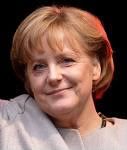
Obama’s Mistakes: Chancellor Merkel Visits the Debt President

SPIEGELONLINE INTERNATIONAL: The occupant of the White House may have changed recently. But the amount of ill-advised ideology coming from Washington has remained constant. Obama's list of economic errors is long -- and continues to grow.

The president may have changed, but the excesses of American politics have remained. Barack Obama and George W. Bush, it has become clear, are more similar than they might seem at first glance.

Ex-President Bush was nothing if not zealous in his worldwide campaign against terror, transgressing human rights and breaking international law along the way. Now, Obama is displaying the same zeal in his own war against the financial crisis -- and his weapon of choice is the money-printing machine. The rules the new American president is breaking are those which govern the economy. Nobody is being killed. But the strategy comes at a price -- and that price might be America's position as a global power.

In his fight against terrorism, Bush had the ideologue Dick Cheney at his side. "We must take the battle to the enemy," he said -- and sent out the bomber squadrons toward Iraq on the basis of mere suspicion. The result of the offensive is well known.

Obama's Cheney

Obama's Cheney is named Larry Summers. He is Obama's senior-most economic advisor, and like the former vice president, he is a man of conviction. The financial crisis may be large, but Summers' self-confidence is even larger. More importantly, President Barack Obama follows him like a dog does its master.

The crisis, Summers intoned last week at a conference of Deutsche Bank's Alfred Herrhausen Society in Washington, was caused by too much confidence, too much credit and too many debts. It was hard not to nod along in agreement.

But then Summers added that the way to bring about an end to the crisis was -- more confidence, more credit and more debt. And the nodding stopped. Experts and non-experts alike were perplexed. Even in an interview following the presentation, Summers was unable to supply an adequate explanation for how a crisis caused by frivolous lending was going to be solved through yet more frivolity. >>> Gabor Steingart | Thursday, June 25, 2009
Saberi: Iran Can't Go Back: Freed U.S. journalist Roxana Saberi talks with Anderson Cooper about being jailed in Iran and the current protests

Iran developments: June 25: CNN's Ivan Watson reports on the latest developments in Iran

Reporter's Last Hours in Iran: CNN's Reza Sayah discusses what it was like to cover the tension and turmoil in Tehran and his last hours there

The Swan Song of the Islamic Republic

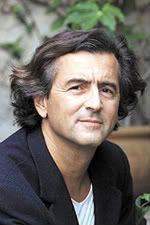
THE HUFFINGTON POST: Whatever happens from this point on, nothing will ever be the same in Tehran.

Whatever happens, if the protest gains momentum or loses steam, if it ends up prevailing or if the regime succeeds in terrorizing it, he who should now only be called president-non-elect Ahmadinejad will only be an ersatz, illegitimate, weakened president.

Whatever happens, whatever the result of this crisis provoked two weeks ago by the enormity of a fraud that serious-minded people can no longer doubt, no Iranian leader can appear on the global scene, or in any negotiation with Obama, Sarkozy, or Merkel, without being haloed, not by the nimbus of light dreamed of by Ahmadinejad in his 2005 speech to the United Nations, but by the cloud of sulphur that crowns cheaters and butchers.

Whatever happens, the Ayatollah Khamenei, Khomeini's successor and Supreme Leader of the regime, tutelary authority of the President, father of the people, will have lost his role as arbiter, will have shamelessly sided with one faction over the others, and will have therefore lost what remained of his authority: "Only God knows my vote," he carefully replied four years ago to those who were already calling upon him to denounce the fraud--"in the name of merciful God, I armor, I hammer, and I dissolve the people," he has responded this time to the naïve who believed he was there to uphold the Constitution.

Whatever happens, the block of ayatollahs who had always succeeded in maintaining a united front, whatever their differences and divergent interests, will have put their ferocious divisions on display: the ones behind Khamenei, approving of the decision to crush the movement with blood; the others, like the ex-President Rafsanjani, leader of the very powerful Assembly of Experts, warning that if the wave of protests were not taken seriously, veritable "volcanoes" of anger would erupt. Others still like the Grand Ayatollah Montazeri who, since his house arrest in Qom, has been calling for a recount and for national mourning for the victims of the repression; and without mentioning the leading religious experts of the "Office of Theological Seminaries" who no longer fear proposing the possibility--what passed for heresy not long ago--of Khamenei's resignation and of his replacement by a "Guidance Council."

Whatever happens, and beyond these internal conflicts, the people will be dissociated from an anemic and fatally wounded regime. >>> Bernard-Henri Lévy, French philosopher and writer | Monday, June 22, 2009

Translated from French by Sara Phenix.
Demonstrationen: Iranische Machthaber beschuldigen jetzt die CIA

WELT ONLINE: Hinter der Protestwelle seit der Präsidentschaftswahl steht nach Ansicht des iranischen Innenministeriums nicht Unzufriedenheit mit der Regierung – sondern der US-Geheimdienst CIA. Die Demonstranten fordern inzwischen nicht nur Neuwahlen, sondern kritisieren die Herrschenden, sogar den geistlichen Führer Chamenei.

Das geistliche Oberhaupt des Iran, Ayatollah Ali Chamenei, hat sich angesichts der Proteste gegen das Wahlergebnis unnachgiebig gezeigt. Die Führung werde nicht „zurückweichen“, erklärte Chamenei am Mittwoch. „Weder das System noch das Volk werden nachgeben.“

Das iranische Innenministerium warf den Demonstranten vor, Unterstützung von den USA, insbesondere dem Geheimdienst CIA, sowie von den Volksmudschaheddin zu beziehen. Viele „Aufständische“ hätten Kontakte dorthin und erhielten finanzielle Unterstützung, erklärte Innenminister Sadegh Massuli nach Angaben der Nachrichtenagentur Fars.

US-Präsident Barack Obama bezeichnete die Vorwürfe als „falsch und absurd“. Teheran versuche mit „einer alten Strategie“ und der Schaffung von Sündenböcken davon abzulenken, dass das iranische Volk um seine Zukunft ringe, sagte Obama. „Das iranische Volk hat ein universelles Recht auf Versammlungs- und Redefreiheit.“

Chamenei hatte sich vergangene Woche deutlich hinter Amtsinhaber Mahmud Ahmadinedschad gestellt, dessen Sieg bei der Präsidentenwahl die anderen Kandidaten anzweifeln. >>> AP/dpa/Reuters/AFP/ks | Mittwoch, 24. Juni 2009
New Dark Age Alert! YouTube Video Shows Church 'Exorcism' of Gay Teenager

THE GUARDIAN: Manifested Glory Ministries denies any wrongdoing but gay advocates demand an investigation

An American church has been condemned over a video showing a 16-year-old boy apparently being exorcised by church leaders trying to cast a "homosexual demon" from his body.

The 20-minute video posted on YouTube shows the teenager lying on the floor, his body convulsing, as elders of a small Connecticut church shout "Rip it from his throat!" and "Come on, you homosexual demon! You homosexual spirit, we call you out right now! Loose your grip, Lucifer!"

Later, the teenager is seen coughing and apparently vomiting into a bag before lying on the ground, limp and covered in a white sheet.

Gay and youth advocates claim the film depicts abuse and are demanding an investigation. But a spokeswoman from Manifested Glory Ministries, which posted the video on YouTube, this week denied any wrongdoing.

"We believe a man should be with a woman and a woman should be with a man," the Rev Patricia McKinney told the Associated Press. "We have nothing against homosexuals. I just don't agree with their lifestyle."

McKinney denied the ritual was an exorcism, describing it instead as a casting out of spirits. She said the church took care of the youth, providing him with clothes. >>> Helen Pidd and agencies | Thursday, June 25, 2009

YOU TUBE: Controversial ‘Gay Exorcism’ by Connecticut Church

'Wailing of Wolves' in Iran as Cries of Allahu Akbar Ring from Roofs

TIMES ONLINE: At about 9pm each day Nushin, a young housewife, performs the same curious ritual. She climbs up the stairs to the roof of her Tehran home and begins shouting into the night. Allahu akbar,” she cries, and sometimes “Death to the dictator”.

She is not alone. Across the darkened city, from rooftops and through open windows, thousands of others do the same to form one great chorus of protest — a collective wail of anger against a reviled regime that no amount of riot police and Basiji militia can stop. “It sounds like the wailing of wolves,” said one Tehrani.

And each night, as the street demonstrations are crushed with overwhelming force and the regime cracks down on all other forms of dissent, it grows steadily louder and more insistent, not just in Tehran but in other densely populated cities of the Islamic Republic.

“It’s the way we reassure ourselves that we are still here and we are still together,” says Nushin, a woman who has never dared to rebel before.

“This is what people did before the revolution and I hope it warns the regime about what could happen if it doesn’t change its way.

“And because I’m a religious person the sound resonating in the neighbourhood makes me feel better. Even my little daughter joins me, and I can see how she feels that she is part of something bigger. It is our unique way of civil disobedience and what’s interesting is that it increases every time they do something that makes people angrier.” >>> Martin Fletcher | Thursday, June 25, 2009
Saudi Women Trained to Sell Bras for First Time

THE TELEGRAPH: Using colourful bras donated by employees at Victoria's Secret, a group of 26 mostly Saudi women completed the first course of its kind to be offered in the kingdom – how to fit, stock and sell underwear.

The training organisers hope will help boost a campaign to lift the ban on women selling underwear in the kingdom.

The graduates held a small ceremony at a college in the western seaport of Jiddah this week, capping 40 hours of instruction during which they learned to overcome their embarrassment at doing bra fittings, deal with customer complaints and display the stock in an appealing manner.

"It was a beautiful experience," said Faten Abdo, a 32-year-old coordinator in the offices of a lingerie company.

"The most shocking thing for me was the bra sizes," she added. "We didn't know how to get proper measurements before."

The 10-day course comes three months after a group of Saudi women launched a campaign to boycott lingerie stores until they employ women. Almost all the stores in the kingdom are staffed by men. The only exceptions are a few women-only boutiques, some of them inside popular shopping centres. >>> | Thursday, June 25, 2009
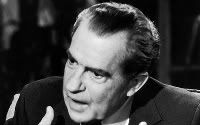
President Richard Nixon Said It Was 'Necessary' to Abort Mixed-race Babies, Tapes Reveal

THE TELEGRAPH: President Richard Nixon believed it was 'necessary' to abort mixed-race babies, newly released tapes have revealed.

Commenting privately on the landmark 1973 Supreme Court ruling Roe vs Wade, which decriminalised abortion in the US, the then-president said he worried that access to a legal abortion could lead to "permissiveness" because "it breaks the family" but thought them justified in certain cases.

"There are times when an abortion is necessary," he told his aide Chuck Colson. "I know that. When you have a black and a white." Mr Colson offered that rape might also make an abortion legitimate, prompting Mr Nixon to respond: "Or a rape."

The comments were revealed in more than 150 hours of tape and 30,000 pages of documents made public this week by the Nixon Presidential Library, part of the United State National Archives.

They were recorded by secret microphones in the Oval Office from January and February 1973 and provide fresh insights into Mr Nixon's tumultuous presidency, which ended with his resignation in August 1974 over the Watergate scandal.

Mr Nixon was widely believed at the time to be privately opposed to abortion rights, though he declined to take a public stance on the issue.

The tapes capture mundane conversations about daily life in the White House but also offer new insight into changes in US society. >>> Toby Harnden in Washington | Wednesday, June 24, 2009
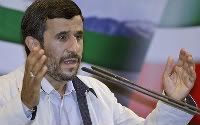
Iran's Mahmoud Ahmadinejad Hits Out at Barack Obama

THE TELEGRAPH: Mahmoud Ahmadinejad, the president of Iran, has harshly criticised President Barack Obama's condemnation of the country's "iron fist" response to demonstrations over its disputed election.

The Iranian leader denounced Britain for meddling in the election aftermath and said that Mr Obama had fallen into the same trap.

"They (The British) already have a bad record in these matters," he said, describing Downing Street as being run by "political retards". "But why did the US president fall into their trap?"

He advised Mr Obama to take a different approach from his predecessor President George W Bush.

"I hope you (Obama) will avoid interfering in Iran's affairs and express regret in a way that the Iranian people are informed of it," Mr Ahmadinejad said.

"Will you use this language with Iran (in any future dialogue)? If this is your stance, there will be nothing left to talk about. Do you think this behaviour will solve the problem for you? This will not have any result except that the people will consider you somebody similar to Bush." >>> Damien McElroy, Foreign Affairs Correspondent | Thursday, June 25, 2009
Roxana Saberi on Iran Protests

Watch BBC Newsnight interview: Journalist Roxana Saberi talks to Newsnight's Jeremy Paxman about her imprisonment in Iran earlier this year, and her views about the protests in Iran over the disputed elections. >>>

Wednesday, June 24, 2009

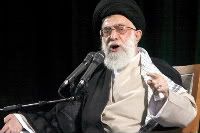
Khamenei Vows No Retreat on Iran Election Result

REUTERS: TEHRAN - Iran's Supreme Leader Ayatollah Ali Khamenei declared on Wednesday that a disputed election result would stand, despite street protests that Iranian officials say Britain and the United States have incited.

(EDITORS' NOTE: Reuters and other foreign media are subject to Iranian restrictions on their ability to report, film or take pictures in Tehran.)

The opposition refused to be bowed. Reformist cleric Mehdi Karoubi, who came last in the June 12 presidential election, called the new government "illegitimate" and around 200 protesters braved the security crackdown near parliament.
Riot police later used teargas to break up the protest.

Police and militia have largely succeeded in taking back control of the streets this week after the biggest anti-government protests since the 1979 Islamic revolution. The hardline leadership is refusing to give ground.

"I had insisted and will insist on implementing the law on the election issue," said Khamenei, the most powerful figure in Iran. "Neither the establishment nor the nation will yield to pressure at any cost."

Iran is blaming the discontent on foreign powers.

"Britain, America and the Zionist regime (Israel) were behind the recent unrest in Tehran," Interior Minister Sadeq Mahsouli said, according to the semi-official Fars news agency. >>> © Thomson Reuters 2009 All rights reserved / Additional reporting by Parisa Hafezi, Fredrik Dahl and Hashem Kalantari; Editing by Jon Hemming | Wednesday, June 24, 2009
National Anthem of Imperial Iran

Irans Führung bleibt kompromisslos: Oppositionsfront bröckelt - Neue Zusammenstösse in Teheran

NZZ Online: Die iranische Führung fährt weiter eine harte Linie gegen die Proteste im Land. Das geistliche Oberhaupt der Islamischen Republik, Ayatollah Ali Khamenei, bekräftigte am Mittwoch die unnachgiebige Haltung der Regierung und stellte sich erneut deutlich hinter Amtsinhaber Ahmadinejad.

Das geistliche Oberhaupt des Irans hat ein Einlenken der Regierung gegenüber der Opposition ausgeschlossen und damit die Tür für einen Kompromiss im Streit um den Ausgang der Präsidentenwahl praktisch zugeschlagen. «Weder das System noch das Volk werden dem Druck nachgeben, um keinen Preis», sagte Ayatollah Ali Khamenei im staatlichen Fernsehen mit Blick auf die Proteste gegen das amtliche Wahlergebnis.

Zuvor war auf der Website des offiziell unterlegenen Reformkandidaten Mir-Hossein Moussavi für Mittwochnachmittag auf dem Platz vor dem Parlament in Teheran zu einer Demonstration aufgerufen worden. Ungeachtet eines massiven Aufgebots von Sicherheitskräften versammelten sich am Abend auf dem Platz vor dem Parlament nach Berichten von Augenzeugen hunderte Menschen und trotzten dem von der Regierung verhängten Demonstrationsverbot. In den umliegenden Strassen sei es zu Zusammenstössen gekommen. Drei Augenzeugen berichteten der Nachrichtenagentur AP, Polizisten prügelten mit Schlagstöcken auf Demonstranten und gingen mit Tränengas gegen sie vor. Ausserdem seien Schüsse in die Luft abgefeuert worden.

Bei den Protesten der Moussavi-Anhänger, die von massivem Wahlbetrug sprechen, sind nach Regierungsangaben allein in Teheran mindestens 627 Menschen festgenommen worden. Die offiziellen Angaben zur Zahl der Todesopfer im Zusammenhang mit den Unruhen schwanken zwischen 17 und 27. >>> ap/sda/Reuters/afp/dpa | Mittwoch, 24. Juni 2009
Brutality in Iran! The World Must Stand Up Against Such Brutality!


YOU TUBE: Iranian Snipers Taking Out Protesters


YOU TUBE: Police Brutality in Iran


Hat tip: JihadWatch >>>

THE TELEGRAPH: Violence Flares Again on the Streets of Tehran

Violence has flared on the streets of Tehran after the wife of defeated Iranian presidential candidate, Mir-Hossein Mousavi, called on Iranians to defend their right to protest.

Photobucket
Images: The Telegraph

Demonstrators and riot police clashed in the streets around Iran's parliament as hundreds of people converged in defiance of government orders to end their demands for new presidential election.

A video posted on YouTube showed a crowd of several hundred stone-throwing demonstrators confronting a police barricade. Security forces appeared to vastly outnumber the demonstrators and beat back crowds with batons and tear gas canisters and fired rounds of ammunition into the air.

One video showed men and women throwing rocks and pushing barricades in the street. Others shouted: "Death to the dictator."

Reports on the social networking site, Twitter, said there was deliberate brutality as police dispersed the crowd. "Just in from Baharestan Sq – situation today is terrible – they beat the ppls like animals," said one entry. Another added: "In Baharestan we saw militia with axe chopping ppl like meat – blood everywhere – like butcher."

In a sign that the authorities were increasingly targeting Mr Mousavi's inner circle, 25 staff at one of his newspapers were put under arrest. The newspaper Kalemeh Sabz (Green Word) was shut down by the authorities in the wake of the disputed election that returned Mr Ahmadinejad to power.

It came as Mr Mousavi's wife, Zahra Rahnavard, a prominent professor, demanded the immediate release of people detained since the election and criticised the presence of armed forces in the streets. "It is my duty to continue legal protests to preserve Iranian rights," she declared on the campaign website.

The regime issued a series of statements reiterating its unbending resolve in the face of popular defiance. The Supreme Leader Ayatollah Ali Khamenei declared the disputed election result would stand and Iran would resist foreign interference. "On the current situation, I was insisting and will insist on implementation of the law. That means, we will not go one step beyond the law," he said. "Neither the system nor the people will yield to pressure at any price. >>> Damien McElroy, Foreign Affairs Correspondent | Wednesday, June 24, 2009
Iran Report: Security Forces Open Fire at Protesters

YNET NEWS: Hundreds of protesters gather near parliament building Wednesday afternoon, unofficial reports say. Rally violently broken off by Revolutionary Guard forces firing tear gas, live bullets at crowd. One woman reportedly wounded

Security forces in Iran violently clashed with protesters near parliament house in the capital of Tehran Wednesday afternoon, unofficial reports said.

Police officers are said to have used live ammunition against the crowd attending a rally protesting the disputed election results. According to one report, a young woman has been shot by security forces and could not be evacuated to a hospital.

Other protesters have been beaten with batons and the cellular network in the area has been completely cut off, to prevent participants from reporting about the violence or send images to others.

Sources in Tehran said that the protesters attempted to move towards Baharestan Square near parliament while holding hands. Many were wearing black bracelets in memory of Neda Soltani, the young woman who was shot to death by security forces last Saturday and became a symbol for the opposition's struggle. Other carried pictures of Soltani, or candles. >>> Dudi Cohen | Wednesday, June 24, 2009

Photobucket
Map of Tehran: Courtesy of the BBC

TIMES ONLINE: Riot Police Crush Protests in Tehran Amid Allegations of Brutality

It was a far cry from the massive demonstrations of last week. Today, just a few hundred protesters converged on Baharestan Square, opposite the Iranian Parliament, and they were brutally repulsed.

It was an exercise in courageous futility, not a contest. Thousands of riot police and militiamen flooded the area. They used teargas, batons and overwhelming force. Helicopters hovered overhead. Nobody was allowed to stop or to gather, let alone exercise their constitutional right to protest.

A video clip posted on YouTube showed young men and women, their faces concealed behind bandanas, throwing stones by a burning barricade and chanting “Death to the Dictator”.

Twitter was flooded with lurid messages. “They pull away the dead — like factory — no human can do this,” said one. “They catch people with mobile — so many killed today — so many injured,” said another. “In Baharestan we saw militia with axe chopping ppl like meat — blood everywhere,” said a third.

There was no way of confirming such reports. It was unclear how many people were injured and arrested, or whether anyone was killed. The handful of foreign reporters left in Tehran are barred from rallies, and all but the bravest Iranians now steer well clear of them.

All that can be said for certain is the regime has finally recaptured the streets through strength of numbers and the unrestrained use of violence. Thirty years after the Iranian revolution it no longer rules with consent, but with military might, and it is cracking down with all means at its disposal.

“Neither the system nor the people will give in to pressures at any price,” Ayatollah Ali Khamenei, Iran’s Supreme Leader, declared on state-controlled television today. “I will insist on implementation of the law.”

Saeed Mortazavi, an Iranian prosecutor notorious for his abuse of prisoners, has been put in charge of arresting and investigating dissidents. >>> Martin Fletcher | Wednesday, June 24, 2009
Obama Toughens His Talk on Iran: President Obama says he 'strongly condemns' the 'threats, beatings and imprisonments' in Iran

Wife of Crown Prince Reza Pahlavi: Yasmine Etemad Amini

Yasmine Etemad Amini was born in Tehran, Iran on July 26, 1968. Her family left Iran in the late 1970's in response to the turmoil that plagued the country. Her early years were spent in California in the U.S. with her parents.

In 1986 she met Prince Reza Pahlavi. Following a brief courtship, they were married on June 12, 1986. Despite the many responsibilities of her new role, Princess Yasmine continued her education, receiving a Bachelor of Arts (BA) in political science from George Washington University in Washington DC - Consequently, she received her doctorate in jurisprudence (JD) from George Washington University and was admitted to the Bar in 1998.

Princess Yasmine's professional career culminated in a position as an attorney at The Children's Law Center. This exceptional organization provides legal protection to abused children. The Law Center is recognized for its important work in protecting some of the most vulnerable members of society.

Princess Yasmine Pahlavi lives in the United States with her husband and her three daughters, Princess Noor, born on April 3, 1992 and Princess Iman born on September 12, 1993 and Princess Farah, born on January 17th, 2004. As the spouse of Prince Reza Pahlavi the well being of her compatriots in her homeland is a matter close to her heart as it is to many of the members of the Diaspora. She has also dedicated her life to her own children, as well as the children in her motherland, and those in her immediate community, reflecting her personal and profound commitment to future generations and the opportunities for civil and peaceful coexistence for all people. [Source: The Foundation for the Children of Iran] | Undated
BBC Crown Prince Reza Pahlavi: Interview with BBC World Service

Farah Diba - Style Icon of a Century

A Royal 'We Shall Overcome' for Iran

REZA PAHLAVI (رضا پهلوی):It seems somewhat unlikely that a resident of Potomac will be the next ruler of Iran. But Reza Pahlavi, son of the shah and the country's former crown prince, is not ruling out anything.

As Tehran's streets fill with death-to-the-dictator chants, Pahlavi went to the National Press Club yesterday and, in front of 17 television cameras, said he would serve if elected.

"My sole objective is to help my compatriots reach freedom," Pahlavi said. But if and when that happens, he went on, "I'd like to be able to be in my country one day, come behind such a podium, talk to my people and every other candidate . . . let the people decide."

Whatever the Iranian demonstrators are seeking, there is little evidence from their Twitter feeds that they are seeking the restoration of the monarchy -- and Pahlavi, who was a teenager getting flight training in Texas during the Islamic revolution, was shrewd enough not to propose it. "This is not about restitution of an institution," he said. But should a democratic Iran "choose to have me play a more prominent role," he added, "let that be their choice."

That will be for another day. Yesterday, the 48-year-old son of a dictator was merely voicing his hopes that what his countrymen have begun over the last 10 days will become a revolution. "However, I often don't use the word 'revolution,' because I think revolution has a very negative connotation in everybody's collective memory."

Particularly Pahlavi's. His family had lived a life of great extravagance until Ayatollah Khomenei deposed the shah in 1979, a year after Jimmy Carter hailed the monarch as "an island of stability." Even yesterday, the former crown prince was defensive about those days. "They had orders not to hit -- fire on people," he said of his father's troops, who, whatever their orders, managed to kill thousands.

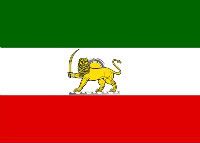
The Pahlavi family's love of the ballot box also is somewhat recent; his father, Mohammad Reza Shah Pahlavi, was installed in a CIA coup in 1953 in place of Iran's democratically elected government. But the younger Pahlavi spoke yesterday of the good old days of his father's rein. Before he came out to speak, somebody fiddled with the Iranian flag behind him to reveal the pre-revolution lion symbol. Pahlavi talked about how, under his father, Iran would have had nuclear fuel and reactors by 1983. "The regime is responsible for us having lost that right, and only them," he said.

Still, there could be no doubting the former crown prince's passion. As he spoke of Iran's "cry for freedom and democracy," he was himself, within minutes, crying for his beloved country. "No one -- no one -- will benefit from closing his or her eyes to knives and cables cutting into faces of mouths, of our young and old," he said, and then, choking up, he took a sip of water. "Or from bullets piercing our beloved Neda," he went on, before a sob escaped his mouth at the mention of the girl shot in the protests. Some in the audience applauded to buy him time as he took out a handkerchief to wipe his face. Finally, gripping the lectern determinedly, he vowed that "a movement was born" that "will not rest until it achieves unfettered democracy and human rights in Iran."

The exiled prince accused Iran's supreme ruler of "an ugly moment of disrespect for both God and man," and he spoke, perhaps a bit prematurely, of "this sinking Titanic that the regime is." The Revolutionary Guard Corps, he claimed, is becoming sympathetic to the demonstrators. "This is well beyond elections now," the optimistic exile said. "The moment of truth has arrived in Iran." >>> Dana Milbank, Washington Post | Tuesday, June 23, 2009
In Iran Today No One Is Safe

NRC HANDELSBLAD INTERNATIONAL: Iran has shown that a regime that is not afraid to use violence against its own citizens can crush a protest even when it has broad popular support.

Iran's supreme leader, ayatollah Ali Khamenei, was categorical: the protests against the controversial outcome of the presidential election had to stop, he said in a speech after last Friday's prayer.

That was all the Revolutionary Guard and the Baseej street fighters needed. When supporters of opposition candidate Mir Hossein Mousavi took to the streets again on Saturday, they were mercilessly bludgeoned into submission or even shot dead.

The Iranian authorities have acknowledged that at least ten people - "terrorists" they called them - were killed on Saturday. Unconfirmed reports suggest the real death toll may be higher.

For the powers that be in Iran, namely ayatollah Khamenei, who has the last word in the Islamic republic, and his protege Mahmoud Ahmadinejad, the situation is crystal clear. The people have spoken - even if they disagree about what they said - and they have chosen Ahmadinejad over Mousavi with 63 to 34 percent. This result, Khamenei said in his speech, cannot be questioned.

And so anyone who disobeys the order of the supreme leader, can now be beaten off the street or arrested. The events of the past weekend show that a regime that is not afraid to use violence against its own citizens can indeed crush a protest - even when it has broad popular support. There are historic precedents in the region: in Syria in 1981, president Hafez al-Assad ordered the town of Hama bombed to quell a revolt by Islamic fundamentalists there. Thousands of people were killed, but the rebellion was crushed. >>> Carolien Roelants | Monday, June 22, 2009
US-Israel Talks in Paris Aborted

BBC: A meeting between Israel's prime minister and a senior US envoy has been cancelled amid growing differences over settlement building in the West Bank.

Israeli newspaper Yediot Aharonot said the US put off the meeting in response to Benjamin Netanyahu's refusal to heed US demands to halt settlement activity.

But Mr Netanyahu's aides say it was the prime minister who cancelled Thursday's meeting with George Mitchell in Paris.

They said "more professional work" was needed, without adding further details.

Instead, Israeli Defence Minister Ehud Barak is now scheduled to travel to Washington on Monday to meet Mr Mitchell.

Mr Netanyahu has arrived in Paris from Rome, on his first trip to Europe since he took office.

He is promoting his hawkish line on Iran, seeking harsher sanctions over its nuclear programme.

US State Department officials confirmed that the bilateral talks in Paris had been postponed, but they did not explain why it was necessary for their envoy to see Mr Barak on Monday instead. >>> | Wednesday, June 24, 2009
Unruhen in Iran: Iran jagt Oppositionelle auch im Netz

ZEIT ONLINE: Das demokratische Schwert Internet ist zweischneidig: Öffentlichkeit ist für Proteste wichtig. Gleichzeitig bedeuten Fotos eine Gefahr für jene, die darauf zu sehen sind

Im Juni 2001 veröffentlichte die Berliner Polizei Fahndungsplakate, auf denen die Fotos von 85 Steinewerfern der Maikrawalle abgedruckt waren. Zum ersten Mal nutzte sie damit die Bilder, die Videoteams der Polizei während der Einsätze gedreht hatten, für eine öffentliche Ermittlung der Gefilmten. So erfolgreich war das Konzept, dass die Berliner Staatsanwaltschaft trotz Protesten seit dem jedes Jahr solche Plakate drucken lässt.

Auch im Internet hat die Berliner Polizei schon versucht, Fotos für die Fahndung zu finden. Doch wie wirksam und bedrohlich diese Idee tatsächlich ist, zeigt gerade die iranische Regierung. So groß ist die Flut der Fotos und Filme, die via Plattformen wie flickr oder YouTube in aller Welt verbreitet werden, dass sie eine gigantische Datenbank der Protestierer darstellen. Eine Datenbank, die einerseits die Brutalität des Regimes belegt, die Öffentlichkeit herstellt für die Proteste und Zusammenhalt erzeugt unter den Demonstranten. Die aber andererseits genauso gut dafür benutzt werden kann, Oppositionelle zu identifizieren und zu verfolgen.

"In staatlichen iranischen Medien werden Videos aus dem Netz gezeigt mit dem Aufruf: Wenn Sie diese Person kennen, melden Sie sich, sie ist ein Terrorist", sagt Anja Viohl von Reporter ohne Grenzen. Eingeblendet werde dazu die Nummer der Polizei. Auch im Netz selbst soll es "Steckbriefe" von Fotografierten geben, die entsprechende Seite aber ist derzeit nicht erreichbar. >>> Von Kai Biermann | Mittwoch, 24. Juni 2009
Out of Iran, Still Afraid: Two women who witnessed the protests and violence in post-election Iran are in the U.S. CNN's Ted Rowlands reports

Clerics Join Iran's Anti-government Protests: A group of clerics taking part in an anti-government protest represents a blatant act of defiance

Wie wird man Ayatollah?

TAGES ANZEIGER: Die Unruhen im Iran haben Machthaber Ayatollah Khamenei ins Rampenlicht gerückt. Doch was macht ein Ayatollah genau? Und wie wird man das? Tagesanzeiger.ch /Newsnetz beantwortet die wichtigsten Fragen.

Was ist ein Ayatollah? Ayatollah bedeutet «Zeichen Gottes» und ist ein hoher Rang in der Hierarchie der schiitischen Rechtsgelehrten. Im Iran gibt es rund zwei Dutzend Ayatollahs in der führenden Geistlichkeit, Machthaber Ali Khamenei ist auch einer. Die Schiiten glauben, der verschwundene zwölfte Imam – ein Nachfahre des Propheten Mohammed – werde als Retter wiederkehren. Bis dieser «Verborgene Imam» zurückkehrt, sind die islamischen Geistlichen sozusagen seine Stellvertreter. Die Aufgabe der Ayatollahs ist es nun, islamisches Recht zu interpretieren und auszulegen. Sie sind jedoch nicht unfehlbar, ihre Entscheidungen gelten nur zu Lebzeiten und könnten von den Nachfolgern revidiert werden.

Wie wird man Ayatollah? Anders als im Christentum sind die islamischen Geistlichen keine Priester mit Weihe, sondern Gelehrte. Ihr Studium besteht zu einem grossen Teil aus Rechtskunde. Im Laufe der Zeit, mit wachsendem Ansehen, steigen die Rechtsgelehrten die Hierarchieleiter hoch; und nach jahrzehntelangem Studium können sie sich Ehrentitel erwerben. Der erste nennt sich «Autorität des Islams und der Muslime», die nächste Stufe ist der Rang des Ayatollahs. Für die Vergabe dieser Würden gibt es jedoch keine Regeln: Der Geistliche wird von seinen Anhängern sogenannt, und die Anrede setzt sich durch oder nicht. Letztlich wird die Stellung eines Rechtsgelehrten bei den Schiiten von den Gläubigen bestimmt. Je mehr Anhänger er hat, desto einflussreicher ist er. >>> Von Claudio Habicht | Mittwoch, 24. Juni 2009
US Moves to Isolate Iran with Full Syria Embassy

TIMES ONLINE: The United States is to appoint a new ambassador to Syria after a gap of four years, the strongest sign yet of President Obama’s desire to re-engage the pariah state and draw it away from the influence of Iran.

The move to a fully staffed embassy will be an important boost to Syria, which has suffered years of diplomatic isolation because of its strong trade and strategic ties with Iran.

The US Administration hopes that engaging with Damascus will encourage it to further pursue peace talks with Israel, most recently held under the previous Israeli Government of Ehud Olmert.

George Mitchell, the US Middle East envoy, has described Syria as playing and [sic] “integral role” in the peace process. Syria has called for America to act as mediator in any future direct talks between it and Israel, in which it is demanding a return of the Golan Heights, a strategic border plateau captured by Israel in 1967.

Syria is still under US sanctions over its support of Islamist insurgents crossing into Iraq to fight the US-backed Government there. Washington withdrew its last ambassador in 2005 after the assassination of the former Lebanese prime minister Rafiq Hariri, in which Syria was believed to have played a role.

The new Administration believes that wooing Syria back into the diplomatic fold may encourage it to withdraw its support to insurgents in Iraq, loosen its ties with Iran and prevent the flow of weapons from Iran to Hezbollah, the Shia militia that operates as a state-within-a-state inside Lebanon. The US also hopes that forging ties with the Syrian Government may put pressure on the Hamas leadership in exile in Damascus. >>> James Hider, Middle East Correspondent | Wednesday, June 24, 2009
A Civilization in Conflict

YNET NEWS: Islam faces internal clash that may fundamentally change region

With the end of the cold war in late 1989, marked by the fall of the Berlin wall and the end of the bipolar world order, two major, yet contrasting, views of the paradigm to come were raised.

One view advocated "The End of History," whereby the world would be immune from ideological wars and future conflicts would be very limited, effectively posing no substantial threat to Western civilization. Others advocated the view that ethnically volatile regions previously viewed as stable satellite entities of the Soviet Union would inevitably erupt, leading to a "Clash of Civilizations."

Future historians will eventually conclude which thesis was more accurate, but today - with the pictures coming out of Iran and from other Middle East areas - it seems that Islam is more in clash with itself than it is with other civilizations.

"Moderates" are clashing with "Militants" in the Islamic world, as civilians who seek liberty, personal freedom, peace and prosperity clash with regimes that prop up the Islamic pillar of jihad.

We have recently witnessed a potentially fundamental shift in the region, with the election results in Lebanon and the yet-to-be-settled aftermath of the Iranian vote. This does not mean that we have reached "the end of history" but it does mean that change may be on its way. It would seem that people do indeed have the power. >>> Ophir Falk | Tuesday, June 23, 2009
Why I, as a British Muslim Woman, Want the Burkha Banned from Our Streets

MAIL Online: Shopping in Harrods last week, I came across a group of women wearing black burkhas, browsing the latest designs in the fashion department.

The irony of the situation was almost laughable. Here was a group of affluent women window shopping for designs that they would never once be able to wear in public.

Yet it's a sight that's becoming more and more commonplace. In hardline Muslim communities right across Britain, the burkha and hijab - the Muslim headscarf - are becoming the norm.

In the predominantly Muslim enclaves of Derby near my childhood home, you now see women hidden behind the full-length robe, their faces completely shielded from view. In London, I see an increasing number of young girls, aged four and five, being made to wear the hijab to school.

Shockingly, the Dickensian bone disease rickets has reemerged in the British Muslim community because women are not getting enough vital vitamin D from sunlight because they are being consigned to life under a shroud.

Thanks to fundamentalist Muslims and 'hate' preachers working in Britain, the veiling of women is suddenly all-pervasive and promoted as a basic religious right. We are led to believe that we must live with this in the name of 'tolerance'.

And yet, as a British Muslim woman, I abhor the practice and am calling on the Government to follow the lead of French President Nicolas Sarkozy and ban the burkha in our country.

The veil is simply a tool of oppression which is being used to alienate and control women under the guise of religious freedom.

My parents moved here from Kashmir in the 1960s. They brought with them their faith and their traditions - but they also understood that they were starting a new life in a country where Islam was not the main religion.

My mother has always worn traditional Kashmiri clothes - the salwar kameez, a long tunic worn over trousers, and the chador, which is like a pashmina worn around the neck or over the hair.

When she found work in England, she adapted her dress without making a fuss. She is still very much a traditional Muslim woman, but she swims in a normal swimming costume and jogs in a tracksuit.

I was born in this country, and my parents' greatest desire for me was that I would integrate and take advantage of the British education system.

They wanted me to make friends at school, and be able to take part in PE lessons - not feel alienated and cut off from my peers. So at home, I wore the salwar kameez, while at school I wore a wore a typical English school uniform.

Now, to some fundamentalists, that made us not proper Muslims. Really?

I have read the Koran. Nowhere in the Koran does it state that a woman's face and body must be covered in a layer of heavy black cloth. Instead, Muslim women should dress modestly, covering their arms and legs.

Many of my adult British Muslim friends cover their heads with a headscarf - and I have no problem with that.

The burkha is an entirely different matter. It is an imported Saudi Arabian tradition, and the growing number of women veiling their faces in Britain is a sign of creeping radicalisation, which is not just regressive, it is oppressive and downright dangerous.

The burkha is an extreme practice. It is never right for a woman to hide behind a veil and shut herself off from people in the community. But it is particularly wrong in Britain, where it is alien to the mainstream culture for someone to walk around wearing a mask. >>> Saira Khan | Wednesday, June 24, 2009
Muslim Feathers Ruffled Over Sarkozy’s Sensible Burqa Ban Proposal

THE TELEGRAPH: Muslim leaders in Britain have warned that President Nicolas Sarkozy's calls for the burqa to be banned in France risk fuelling hostility towards Islam.

Photobucket
Photo: The Guardian

The Muslim Council of Britain (MCB) said Mr Sarkozy's claim that the head-to-toe garments worn by Islamic women signify subservience were "patronising and offensive".

Its criticism comes after Mr Sarkozy used a policy speech on Monday to declare the burqa was "not welcome" in France.

In a move which threatens to reignite the debate over religious clothing in the country, Mr Sarkozy said: "The burqa is not a sign of religion, it is a sign of subservience.

"We cannot accept to have in our country women who are prisoners behind netting, cut off from all social life, deprived of identity."

The MCB reacted by calling on Mr Sarkozy to "desist from engaging in and promoting divisive politics" towards France's Muslim population.

Dr Reefat Drabu, assistant secretary general of the MCB, said in a statement: "It is patronising and offensive to suggest that those Muslim women who wear the burqa do so because of pressure or oppression by their male partners or guardians."

Speaking for the umbrella group of more than 500 Muslim organisations including mosques, charities and community groups, she added: "Such suggestions can legitimately be perceived as antagonistic towards Islam.

"Instead of taking a lead in promoting harmony and social cohesion amongst its people, the French President appears to be initiating a policy which is set to create fear and misunderstanding and may lead to Islamophobic reaction not just in France but in the rest of Europe too."

Mr Sarkozy's presidential address to a joint session of France's two houses of parliament stood in stark contrast to comments made by US President Barack Obama earlier this month. Muslim leaders condemn Sarkozy over burqa ban >>> Murray Wardrop | Wednesday, June 24, 2009
La tension monte entre l'Iran et le Royaume-Uni

Photobucket
Un manifestant brandit une pancarte anti-britannique, devant l'ambassade du Royaume-Uni à Téhéran, le 15 juin. Photo : L’Express

L’EXPRESS.fr: Après avoir dénoncé l'ingérence occidentale dans le mouvement anti-Ahmadinejad, Téhéran cible Londres, promu ennemi numéro un du régime.

Aux grandes heures de la Révolution islamique, en 1979, l'ayatollah Khomeini dénonçait le "Grand Satan" américain. Si la rhétorique n'a pas évolué, la cible est mouvante. Désormais, son successeur Ali Khamenei s'emporte contre l'"Angleterre diabolique". Dans son prêche à l'Université de Téhéran, le 19 juin, le Guide suprême s'en est ouvertement pris au gouvernement britannique, qu'il accuse de téléguider les manifestations.

"Ils montrent leur vraie hostilité envers l'Etat islamique iranien, et le plus mauvais d'eux est le gouvernement britannique", s'est-il offusqué. Dans l'assistance, les "Marg bar Ingles" [mort à l'Angleterre, ndlr] ont vite résonné dans une clameur. Dans un élan de conspirationnisme décati, il a renchéri: "[Ce sont] des loups affamés en embuscade, prêts à retirer le masque diplomatique de leur visage. Ne négligez pas ces gens-là!".

Talion diplomatique

Loin d'être une surprise, cette escalade verbale ne fait que raviver des plaies toujours ouvertes entre les deux pays. Depuis plus de 50 ans, l'Iran et le Royaume-Uni nourrissent un ressentiment partagé. De la lutte pour le contrôle du pétrole à la fatwa lancée par Khomeini contre Salman Rushdie, leurs relations bilatérales sont au mieux exécrables, au pire inexistantes.

Comme un écho à la "chasse aux bouc-émissaires étrangers" que déplore le Guardian, le régime a commencé à expulser en début de semaine les sujets de sa Majesté un peu trop entreprenants à son goût. >>> Par Olivier Tesquet | Mardi 23 Juin 2009
BNP Ordered to Accept Ethnic Minority Members or Face Prosecution

THE TELEGRAPH: The British National Party has been ordered to accept members from ethnic minorities and employ black and Asian staff or face prosecution.

In a letter from the Equality and Human Rights Commission, Nick Griffin, the BNP leader, was told that he had less than a month to provide written undertakings that the party would abide by race relations legislation.

John Wadham, legal director of the Commission, said that the watchdog was concerned that the BNP's constitution and membership criteria could be in breach of the law.

Party membership was said by the Commission to be restricted to those with white skin and a small number of other ethnic groups.

In a statement, the watchdog added: "This exclusion is contrary to the Race Relations Act which the party is legally obliged to comply with.

The Commission therefore thinks that the BNP may have acted, and be acting, illegally."

There were further concerns over the requirement on new staff to be party members, and fears that elected BNP representatives would be unwilling to provide help and support to non-white constituents.

If the BNP does not provide written undertakings by July 20 that it will make the changes required by the Commission voluntarily, then the watchdog said that it would apply for a legal injunction which would compel them to comply.

Any breach of a court order would be a criminal offence and leave the party's leaders open to prosecution. >>> Rosa Prince, Political Correspondent | Tuesday, June 23, 2009

BNP NEWS: BNP Membership: Nick Griffin Rejects Equalities Commission ‘PR Stunt’

The Equalities Commission hysteria over British National Party membership is nothing but a PR stunt which has no legal grounding whatsoever, said BNP leader Nick Griffin MEP.

Reacting to the news that the Equality and Human Rights Commission, headed up by black arch-racist Trevor Phillips, had written to the BNP demanding that it change its membership and employment criteria, Mr Griffin said it was obvious that the whole thing was just a publicity stunt engineered by the far left and Labour Party front organisations.

“It is all a bit of liberal hysteria couched in legal terms,” Mr Griffin told BNP News. “The fact that the letter was served on us through the mass media shows that it is actually not legal in intent at all.”

Mr Griffin said the BNP was an exempted organisation under Section 25 and Section 26 of the Race Relations Act which allow for exclusive ethnic organisations with a membership of 50 or more. “The BNP has never been in breach of any of the provisions of the law in terms of its membership and Mr Phillips knows this to be the case,” he said. >>> | Tuesday, June 23, 2009
Iranian Regime Targets Family of 'Angel of Freedom' Neda Agha Soltan

THE TELEGRAPH: Iranian security officials have begun pulling down posters of Neda Agha Soltan, the young woman who has become the face of the country's pro-democracy uprising after her death in Tehran was captured on video.

Relatives said images of Neda Agha Soltan, 27, who has been described as Iran's "Angel of Freedom" after she was apparently shot dead on Saturday, had been targeted by plain-clothed officials.

They had removed any material commemorating the 27-year-old student that had been erected near her home by sympathisers in the Iranian capital.

Miss Agha Soltan was shot in the chest after she joined a protest near Azadi (Freedom) Square. Within hours an Iranian exile in Europe had posted pictures shot on mobile phones online and the scenes have been viewed by millions since.

Relatives said the authorities had insisted Miss Agha Soltan was buried in a cemetery plot reserved for slain "rioters" and that attempts to hold memorial services had been banned. >>> Damien McElroy, Foreign Affairs Correspondent | Tuesday, June 23, 2009
Iran Football Players 'Banned' after Mahmoud Ahmadinejad Protest

THE TELEGRAPH: The Iranian football players who wore green wristbands to protest against the re-election of Mahmoud Ahmadinejad have reportedly been banned from the team for life.

Photobucket
Photo: The Telegraph

A pro-government newspaper reported they had been "retired" from the national team after several members wore green tape on their wrists in a World Cup qualifier against South Korea in Seoul.

Other newspapers said the players were retiring voluntarily, reportedly because of their age, but at least one suggested they were forced out. >>> | Wednesday, June 24, 2009

Tuesday, June 23, 2009

Stupid Bastard! Ahmadinejad Says There Are No Homosexuals in Iran!

Iranian Wears Brazen Clothing: CNN's Ivan Watson reports on a new video showing a woman in Iran without a head scarf, wearing a revealing dress

Burka Debate in France: This Is CNN at Its Most STUPID! Paula Newton Shows that She DOES NOT Understand the Issues Involved Here

Mr Toughie Himself! Obama on Iran

Obama Assails Iran for Violent Response to Protests

THE NEW YORK TIMES: WASHINGTON — President Obama harshly condemned the Iranian crackdown against demonstrations on Tuesday, declaring the rest of the world “appalled and outraged” and dismissing what he called “patently false and absurd” accusations that the United States instigated the protests.

In his sharpest and most expansive comments on the crisis in Tehran since the June 12 elections that the opposition called rigged, Mr. Obama deplored the violence that has killed some protesters, including a young woman whose death was captured on a video that has been played around the world.

“While this loss is raw and painful,” the president said, “we also know this: those who stand up for justice are always on the right side of history.” >>> Jeff Zeleny and Peter Baker | Tuesday, June 23, 2009
Israeli Premier Praises Courage of Iran Protesters

ASSOCIATED PRESS: ROME — Israeli Prime Minister Benjamin Netanyahu praised the courage of Iranian protesters on Tuesday and called the Tehran authorities the greatest threat to peace.

During his first European visit since being elected, Netanyahu also said he briefed Italian Premier Silvio Berlusconi on his peace plan, which calls for a demilitarized Palestinian state alongside Israel.

Berlusconi endorsed the plan, saying a demilitarized Palestinian state was "absolutely necessary." But he urged Netanyahu to send "significant signals" to stop construction of settlements, which he called an obstacle to peace.

Both leaders stressed their warm bilateral ties, with Netanyahu calling Berlusconi a "great friend" of Israel.

Italy is perhaps Israel's greatest ally in Europe, but at the same time is Iran's No. 1 European trading partner, accounting for some 26 percent of total import-export trade between EU countries and Tehran.

Last year alone, Italian imports from Iran amounted to euro4.1 billion ($5.73 billion) and Italian exports amounted to euro1.8 billion, according to the Italy-Iranian Chamber of Commerce and Industry.

Berlusconi said Tuesday that Italy's economic ties to Tehran had always had the blessing of Israel and the United States, and would continue as long as Washington approved. >>> Steve Weizman | Tuesday, June 23, 2009
Britain Expels Two Iranian Diplomats in Tit-for-Tat Response

THE GUARDIAN: Gordon Brown announces move to parliament after Tehran's 'unjustified' expulsion of two UK diplomats

Britain has ordered the expulsion of two Iranian diplomats, in tit-for-tat response to the expulsion of two British diplomats from Tehran yesterday.

The Iranian government said it was throwing out the two Britons, who have not been named, for "activities incompatible with their diplomatic status" – a claim Gordon Brown described as "unjustified".

This morning, the Iranian ambassador to London, Rasoul Movahedian Attar, was summoned to be informed of Britain's response by the permanent under-secretary at the Foreign Office, Sir Peter Ricketts. The Iranian diplomats, who have also not been identified, have been given a week to leave the country.

"I am disappointed that Iran has placed us in this position but we will continue to seek good relations with Iran and to call for the regime to respect the human rights and democratic freedoms of the Iranian people," Brown told the House of Commons.

The prime minister said Britain expected Iran to "meet its obligations to the international community", and said "the onus is on Iran to show the Iranian people" that the presidential elections this month were credible.

A Foreign Office spokeswoman said: "The government of Iran is seeking to blame the UK and other outsiders for what is an Iranian reaction to an Iranian issue. This has a potential impact on our staff's safety and is unacceptable." >>> Julian Borger, diplomatic editor | Tuesday, 23, 2009
Bravo, Monsieur Sarkozy ! Nicolas Sarkozy au congres de Versailles - La Burqa

Sarkozy Backs Ban on Muslim Burqas

Shah's Son Backs Iranian Protesters

Photobucket
Reza Pahlavi, Iran's former crown prince, becomes emotional as he talks at the National Press Club in Washington about the uprising in Iran over the disputed presidential election. Photo: TIME

TIME: Thirty years after his father was overthrown by a popular uprising, the former crown prince of Iran has a unique perspective on the demonstrations gripping Iran these days. On Monday, at a Washington press conference, Reza Pahlavi, the onetime heir to the peacock throne, condemned Iran's controversial presidential election of June 12 as "an ugly moment of disrespect for both God and man" and called on the Tehran regime to allow for "freedom, democracy, human rights [and] the right to choose." Pahlavi believes that the situation in Iran has eroded dramatically, charging that the issues go "well beyond election. This is about the sanctity of the ballot box and the legitimacy of the regime as a whole."

It was the first public appearance since the protests in Iran for the man who was once next in line to be Shah. Speaking with nearly unaccented English, the graduate of the University of Southern California seemed proud to support the movement that is "already invested with the blood of my brave countrymen." Confident that the opposition will succeed, he believes that the upheaval "will not rest until it achieves unfettered democracy and human rights in Iran." >>> By Sophia Yan | Monday, June 22, 2009
Caspian Makan, Neda’s Fiancé, Tells of Neda’s Last Moments

Burqa Ban: What Barack Obama Could Learn from Nicolas Sarkozy about Islam

TELEGRAPH BLOGS – James Delingpole: Almost every idea that ever came out of France has been bad for America, from the structuralist philosophical gibberish which has poisoned US academe to the grotesquely over-regulated tax and spend socialism which is now ruining the US economy. But if there's one area where the French do get it SO right it's in their uncompromising approach to Islam.

President Sarkozy once again showed the way yesterday when in a presidential address to France's two houses of parliament, he said the burqa is not welcome in his country and should be banned.

As he rightly went on to say the full-body garment which makes women in Afghanistan look like a cross between a prison cell and a walking tent is "not a sign of religion" but a "sign of subservience." He added: "We cannot have in our country women who are prisoners behind netting, cut off from all social ife, deprived of identity."

Compare and contrast, the appalling cultural appeasement of President Obama's speech in Cairo on June 4 when he boasted that the United States prized freedom of religion and would not "tell people what to wear." And there was I thinking it was the French who were supposed to be the surrender monkeys, not the Americans.

Was there ever greater proof that, where the great clash of civilisations is concerned, President Obama is turning out to be the Islamists' useful idiot par excellence?

Does Barack Hussein Obama really not understand that supposed "freedom" he is granting US Muslim women to wear the veil is in fact the most surefire way of guaranteeing their continued subservience to their men folk and their failure to integrate with the broader society?

It's for precisely this reason - would that the rest of Europe had the courage! - that France bans religious head coverings in state schools. France understands, as so many in the pusillanimous, multi-culti West do not, that female Muslim girls of school age need protecting from the heavy pressure put on them by male relatives to wear the veil. Banning the veil in French schools is not the sign of an oppressive state taking away religious freedom. It is a rare example of a government setting a moral example and standing up for freedom: a girl's freedom to choose whether she wants to spend the rest of her life in a kind of religious apartheid or whether she wants to integrate more closely with the host culture. >>> James Delingpole | Tuesday, June 23, 2009
Iran Elections: 'Boyfriend' of 'Angel of Freedom' Urged Her Not to Attend Protests

THE TELEGRAPH: A man identifying himself as the boyfriend of the 'Angel of Freedom' whose grisly death in Iran's post-election protests was captured on video and posted on YouTube has said that she only wanted democracy and freedom for the people of Iran.

Photobucket
Neda Agha Soltan. Photo: The Telegraph

In the video, Neda Agha Soltan, is lying on the ground as blood appears to flow from her mouth and nose. Her apparent last moments spread around the world on YouTube, Facebook, blogs and Twitter, turning her into an icon in the clash between Iran's cleric-led government and protesters.

"She only ever said that she wanted one thing, she wanted democracy and freedom for the people of Iran," Caspian Makan said.

Makan, a 37-year-old photojournalist in Tehran, said he met the 27-year-old music student several months ago on a trip outside the country. Foreign media are banned from covering the demonstrations and the authenticity of the video cannot be verified.

Makan provided photographs of himself with a woman he identified as Soltan and also had her as a friend on his Facebook page and said he had intended to marry her. "I still feel her, I still talk to her," he said.

Makan said that they had argued in the days before her death about her decision to attend the protests, which were part of the self-described "green wave" movement that claims hardline President Mahmoud Ahmadinejad stole his June 12 re-election.

He said he had asked her not to go out for fear she would be arrested or shot. "I tried to dissuade her from going out in the streets because I'd seen in my work as a journalist that, unfortunately, there are a lot of merciless behaviours," Makan said. >>> | Tuesday, June 23, 2009

THE TELEGRAPH: Iran Elections: Video of 'Angel of Freedom's' Death Will Haunt the Iranian Regime

Neda Agha Soltan’s importance is that her death has vividly demonstrated how far the Iranian regime stands in violation of its own values, writes Damien McElroy.

The video of a woman dying in the streets of Tehran is a historic turning point that will haunt the Iranian regime for as long as it remains unreconstructed.

That governments should not turn guns on its own people is a universal truth of powerful force. Twenty years on from the great convulsion against Communism in 1989, the world is shaped by that principle. Those states that did not, like Poland, have been transformed into mostly free democracies. Those that did, like China, have for all the gloss, merely postponed a process of historic reckoning.

What doubles the impact of the image for Iran is the hold that martyrdom - death for a cause - has exerted on the national imagination. The blood that defines the seconds of mobile phone footage that shows Neda Agha Soltan losing her life is central to the character of the Iranian nation. >>> Damien McElroy | Tuesday, June 23, 2009

TIMES ONLINE: Iranian Authorities Scramble to Negate Neda Soltan 'Martyrdom'

The Iranian authorities have ordered the family of a student shot dead in Tehran to take down mourning posters as they struggle to stop her becoming the rallying point for protests against the presidential election.

Neda Salehi Agha Soltan, 26, was killed as she watched a pro-democracy protest, and mobile phone footage of her last moments have become a worldwide symbol of Iran's turmoil.

The authorities had already banned a public funeral or wake and have prevented gatherings in her name while the state-controlled media has not mentioned Miss Soltan's death.

Today it was reported that they had also told her family to take down the black mourning banners outside their home in the Tehran suburbs to prevent it becoming a place of pilgrimage. They were also told they could not hold a memorial service at a mosque.

Nevertheless posters of Miss Soltan's face have started to appear all over Tehran.

The attempted crackdown came as friends present as Miss Soltan died came forward to detail what happened.

Hamid Panahi, her friend and music teacher, told the Los Angeles Times how Miss Soltan was shot as they and two others were making their way to a demonstration in Freedom Square in central Tehran. Their car became stuck in traffic on Karegar Street and they got out for some air.

Mr Panahi said that he heard a distant crack and saw Miss Soltan instantly collapse to the ground.

"We were stuck in traffic and we got out and stood to watch and, without her throwing a rock or anything, they shot her," he said. "It was just one bullet."

He later heard other witnesses claiming that the gunman was not a police officer but one of a group of plainclothes officials or Basiji militia.

He recalled watching in horror as blood came out of her chest and then began to bubble from her nose and mouth - footage that bystanders captured on their mobile phones and posted on the internet, where she has become a global phenomenon.
Mr Panahi said that Neda's last words before she slipped into unconsciousness were: "I'm burning! I'm burning!" >>> Jenny Booth | Tuesday, June 23, 2009

CNN: Fighting Tears, Shah's Son Calls Crisis a 'Moment of Truth'

WASHINGTON -- The son of the former shah of Iran called Monday for solidarity against Iran's Islamic regime, warning that the democratic movement born out of the election crisis might not succeed without international support.

"The moment of truth has arrived," Reza Shah Pahlavi said at Washington's National Press Club. "The people of Iran need to know who stands with them."

Pahlavi has lived in exile since 1979, when his father, Mohammad Reza Shah Pahlavi, was overthrown during the Islamic Revolution. Under the shah's regime, Iran saw nationalization of its oil and a strong movement toward modernization. Still, his secular programs and recognition of Israel cost him the support of the country's Shiite clergy, sparking clashes with the religious right and others who resented his pro-West views.

The son now lives in the United States with his family, where he spends much of his time talking about the Islamic regime in Iran.

During his remarks, he broke into tears when he spoke of "bullets piercing our beloved Neda," a woman killed Saturday by Iranian police at a protest in Tehran, whose death has become a rallying cry among demonstrators in Iran.

The Iranian regime, he said, was a "sinking Titanic" that might not survive the demands for democracy and human rights reverberating through the country.

Citing anecdotes from people inside the Iranian establishment, Pahlavi said he had heard that security forces have begun to distance themselves from the regime.

"It has already started," he said, citing reports that members of the security forces have gone home after their shifts ended and changed into plain clothes to join the protesters.

"Many, many elements within the security forces, within the Revolutionary Guard, are showing discontent," Pahlavi said. "There is an amazing reflection that is happening. ... This is a movement that has blown out of proportion." >>> By Elise Labott, CNN State Department Producer | Monday, June 22, 2009
Monday, June 22, 2009

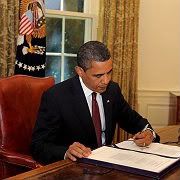
Obama Signs Landmark Anti-Smoking Bill

Photobucket
Photo: Neue Zürcher Zeitung

FOX NEWS: The law allows the regulatory Food and Drug Administration to reduce nicotine in tobacco products, ban candy flavorings and block labels such "low tar" and "light."

Photos of Obama smoking >>>

President Obama on Monday signed a landmark anti-smoking bill which he said will reduce the number of children who take up smoking and ultimately save American lives.

The bill would give the federal government unprecedented authority to regulate tobacco. The law allows the regulatory Food and Drug Administration to reduce nicotine in tobacco products, ban candy flavorings and block labels such "low tar" and "light." Tobacco companies also will be required to cover their cartons with large graphic warnings.

"Today ... the decades-long effort to protect our children from the harmful effects of tobacco has emerged victorious. Today change has come to Washington," Obama said.

The law, called the Family Smoking Prevention and Tobacco Control Act, won't let the FDA ban nicotine or tobacco outright, but the agency will be able to regulate the contents of tobacco products, make public their ingredients and prohibit marketing campaigns, especially those geared toward children.

"It is a law that will save American lives and make Americans healthy," Obama said, calling it a "victory for bipartisanship" as well as a victory for health care reform.

The president said the legislation should reduce some of the billions the nation spends on treating tobacco-related illnesses, "the leading cause of preventable death in the United States."

Anti-smoking advocates looked forward to the bill after years of attempts to tame an industry so fundamental to the U.S. that carved tobacco leaves adorn some parts of the Capitol.

Opponents from tobacco-growing states argued that the FDA has proven through a series of food safety failures that it's not up to the job. They also said that instead of unrealistically trying to get smokers to quit or to prevent others from starting, lawmakers should ensure that people have other options, like smokeless tobacco.

As president, George W. Bush opposed the legislation and threatened a veto after it passed the House last year. The Obama administration, by contrast, had issued a statement declaring strong support for the measure.

Obama talked about his own struggles breaking a cigarette habit Monday, noting that he picked up smoking at an early age.
"I know how difficult it can be to break this habit," Obama said. [Source: Fox News] | Monday, June 22, 2009

FOX NEWS: President Wants You to Kick Habit; But Stuggles Himself as a Smoker

Twice in as many weeks, President Obama has spoken out about the evils of smoking and heralded efforts to prevent kids from picking up the habit, but as far as the American public knows, Mr. Obama has yet to kick his own smoking habit.Mr. Obama didn't use either occasion - last week applauding the Congress for passing the Family Smoking Prevention and Tobacco Control Act or today at the Rose Garden bill signing -- to acknowledge and use his own habit as an example to the American public.

"I was one of these teenagers," Mr. Obama mentioned as he alluded to his past in his remarks today, "and so I know how difficult it can be to break this habit when it's been with you for a long time." But that was the only reference to his own experience.

Inquiring minds want to know - is the President still a smoker?

"I think the president has, on any number of occasions, discussed the struggle that the vice of smoking -- what that's -- what that's done to him and that he struggles with it every day. I don't, honestly, see the need to get a whole lot more specific than the fact that it's a continuing struggle," explained press secretary Robert Gibbs. [Source: FoxNews] | Monday, June 22, 2009
Comment here >>>
International Criticism of Iranian Government Actions Grows

VOICE OF AMERICA: International criticism of Iran's handling of a disputed presidential vote and subsequent protests is mounting, after Iranian media reported the arrest of former President Hashemi Rafsanjani's eldest daughter. 


German Chancellor Angela Merkel added her voice to a growing chorus of Western leaders demanding respect for civil liberties in Iran.


"Human rights and citizens' rights are inseparable, and that is why Germany stands behind the people, and peaceful demonstrations in Iran, who want to make use of their freedom of speech and who want to gather peacefully. I, therefore, demand that Iran's leaders allow peaceful demonstrations, allow free reporting of events, stop the use of violence against demonstrators and free imprisoned people."


Ms. Merkel urged a full recount of Iran's contested presidential vote. Official results showed President Mahmoud Ahmadinejad winning re-election in a landslide.


Iranian Foreign Minister Manouchehr Mottaki denounced Western criticism as "treacherous" and "unjust," and accused foreign governments of fomenting unrest in his country. Responding, British Foreign Secretary David Miliband said he "categorically" rejects any suggestion that foreign countries are manipulating protesters in Iran.


Meanwhile, authorities in Tehran say they have arrested Faezeh Hashemi - the eldest daughter of former President Rafsanjani. Last week, Hashemi was seen addressing supporters of presidential candidate Mir Hossein Mousavi, who alleges massive fraud in the June 12 ballot and is calling for a new election. >>> By Michael Bowman, Washington | Monday, June 22, 2009