The EU should be stronger and more united. Great Britain should belong to the Union.
Die EU sollte stärker und geeinter sein. Großbritannien sollte der Union angehören.
L'UE devrait être plus forte et plus unie. La Grande-Bretagne devrait appartenir à l'Union.
Friday, June 19, 2009
Khamenei Tells Mousavi to Toe the Line over Election or Be Cast Out
TIMES ONLINE: The moderate Iranian leader who says that he was robbed of victory in last week’s presidential election faces a fateful choice today: support the regime or be cast out.
Ayatollah Ali Khamenei, Iran’s Supreme Leader, has told Mir Hossein Mousavi to stand beside him as he uses Friday prayers at Tehran University to call for national unity. An army of Basiji — Islamic volunteer militiamen — is also expected to be bussed in to support the Supreme Leader.
The demand was made at a meeting this week with representatives of all three candidates who claim that the poll was rigged, and it puts Mr Mousavi on the spot. He has become the figurehead of a popular movement that is mounting huge demonstrations daily against the “theft” of last Friday’s election by President Ahmadinejad, the ayatollah’s protégé.
Mr Mousavi, 67, is a creature of the political Establishment — a former revolutionary and prime minister who would like to liberalise Iranian politics but has never challenged the system in the way his followers are doing. It was unclear last night what he would do or even whether the protests would die away if he backed down. Yesterday tens of thousands of demonstrators packed into the Imam Khomeini Square in Tehran — named after the founder of the Islamic Republic — for another massive rally, this one to mourn protesters killed in Monday’s clashes with pro-government militias. >>> Ella Flaye in Tehran, Catherine Philp and Martin Fletcher | Friday, June 19, 2009
Qui sont les femmes qui portent la burqa en France ?
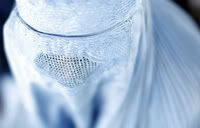
Elles seraient quelques milliers en France à porter un voile intégral, avec ou sans tissu grillagé au niveau des yeux. Crédits photo : Le Figaro
LE FIGARO: Le gouvernement n'exclut pas de légiférer sur le port de ce voile, dont les adeptes en France sont souvent jeunes et proches du mouvement salafiste qui prône un islam rigoriste.
Si certaines femmes souffrent de ce voile qui les ensevelit de la tête au pied, «la majorité a volontairement adopté cette tenue», tranche Bernard Godard, spécialiste de l'islam (1). «Beaucoup ont la nationalité française. Et l'on compte pas mal de converties dans leurs rangs», ajoute cet ancien du Bureau des cultes au ministère de l'Intérieur. «Elles deviennent salafistes comme on entre dans une secte», poursuit-il.
Les salafistes, tenant d'un islam radical, restent minoritaires en France. Ils seraient entre 30 000 et 50 000. Mais ils progressent régulièrement, dopés par leur opposition à l'Occident. Un fondamentalisme qui, comme le tabligh, attire justement des jeunes en mal d'absolu, dont des femmes. Comme dans les sectes, leurs membres passent des heures à peaufiner les règles, à revoir les sourates, mais aussi les milliers de hadiths, ces paroles rapportées du Prophète qu'ils entendent respecter à la lettre. Or ces hadiths sont aussi riches que contradictoires.
Majoritaire en France, l'islam malékite ne prescrit pas de voile intégral. Ce grand voile n'appartient ni aux obligations religieuses classiques ni aux traditions du Maghreb. Pourtant, seul le recteur de la Grande Mosquée de Paris, qui dépend de l'Algérie, s'est clairement prononcé contre ce niqab. Les autres mouvements paraissent gênés, analyse-t-on à la Direction centrale du renseignement intérieur, car ils composent avec une frange fondamentaliste en leur sein. >>> Cécilia Gabizon | Vendredi 19 Juin 2009
History Suggests the Coup Will Fail
THE INDEPENDENT: Patrick Cockburn, who reported from Iran during the 1979 revolution, reflects on the fall of the Shah and explains why the current uprising is very different
At first sight, what is happening in Tehran today looks very like the extraordinary events of the Islamic Revolution 30 years ago. But how deep do the similarities go? On 2 December 1978, two million Iranians filled the streets of central Tehran to demand an end to the rule of the Shah and the return of Ayatollah Khomeini. It was the most popular revolution in history. At night, people gathered on rooftops to chant "Allahu Akbar – God is Great". In the daytime, mass rallies commemorated as martyrs the protesters who had been killed by the security forces.
The methods of protest are very similar. This is hardly surprising because the demonstrators seeking to get rid of President Mahmoud Ahmadinejad understandably hope the type of unarmed mass protest that worked against the Shah will succeed again. Mass rally and public martyrdom are part of the Iranian revolutionary tradition, just as the barricade is part of the tradition in France. A difference between 1978-9 and today is that the Iranian government has no intention of letting history repeat itself.
Nor is it likely to do so. The Iranian revolution was carried out by a broad coalition from right to left which had religious conservatives at one end and Marxist revolutionaries at the other. The Shah and his regime had a unique ability to alienate simultaneously different parts of the Iranian population which had nothing in common. His cruel but poorly informed Savak security men convinced themselves that communists and revolutionary leftists were the danger to the throne and not the Shia clergy. They were not alone in their delusion. President Jimmy Carter recalls an August 1978 CIA memo, drafted five months before the Shah took flight, firmly concluding that Iran "is not in a revolutionary or even a pre-revolutionary situation".
Crucially, the Iranian revolution had a messianic leader in Ayatollah Khomeini who was a visible alternative to the Shah, a leader whose claims to legitimacy were compromised even before he came to the throne: his father Reza Shah, an army general who seized power in the 1920s, was deposed by British and Soviet troops in 1941. His son was forced to flee in 1953 when Mohammed Mossadeq was elected prime minister, only to be restored by a CIA-run coup for which President Barack Obama has apologised. >>> Patrick Cockburn | Friday, june 19, 2009
U.S. Fortifies Hawaii to Meet Threat From Korea
THE WALL STREET JOURNAL: WASHINGTON -- The U.S. is moving ground-to-air missile defenses to Hawaii as tensions escalate between Washington and Pyongyang over North Korea's recent moves to restart its nuclear-weapon program and resume test-firing long-range missiles.
Defense Secretary Robert Gates said on Thursday that the U.S. is concerned that Pyongyang might soon fire a missile toward Hawaii. Some senior U.S. officials expect a North Korean test by midsummer, even though most don't believe the missile would be capable of crossing the Pacific and reaching Hawaii.
Mr. Gates told reporters that the U.S. is positioning a sophisticated floating radar array in the ocean around Hawaii to track an incoming missile. The U.S. is also deploying missile-defense weapons to Hawaii that would theoretically be capable of shooting down a North Korean missile, should such an order be given, he said.
"We do have some concerns if they were to launch a missile...in the direction of Hawaii," Mr. Gates said. "We are in a good position, should it become necessary, to protect American territory." >>> By Yochi J. Dreazen | Friday, June 19, 2009
Blackout: The Great MPs' Expenses Cover-up
THE TELEGRAPH: MPs face universal condemnation over “disgraceful” censorship of their expenses claims.
MPs expenses: What data published by the Telegraph shows.
Party leaders struggled to explain the decision to publish heavily blacked-out versions of MPs’ claims as public anger mounted.
Despite a pledge from Gordon Brown that “transparency” was the only way to restore public faith in democracy, the files released by the Commons authorities withheld details that would have exposed the worst abuses of the expenses system.
The parliamentary expenses files do not expose MPs who have “flipped” their designated second homes and many of the most controversial claims have been completely blacked out in the documents.
Details that would have allowed the public to identify interest claimed on so-called “phantom mortgages” — such as in the case of Elliot Morley, the former environment minister — or MPs who were able to avoid paying capital gains tax on the sale of properties — such as Kitty Ussher, the Treasury minister forced to resign — were also excluded.
Controversial claims by Tory MPs for the cleaning of a moat and the purchase of a floating duck island were also omitted. >>> By Robert Winnett and James Kirkup | Thursday, June 18, 2009
MAIL Online: As the Nation Fumes at Expenses 'Blackwash' Scandal MPs Are Rewarded with £10,000 Pay Rise
Shameless MPs are set to provoke fresh public anger by pocketing a staggering £10,000-a-year pay rise.
The salary hike comes as MPs faced a backlash today over their blatant attempt to cover up expenses scams.
After weeks of public fury at leaked details, Commons officials unlocked their files yesterday - with crucial details covered in thick black ink.
It meant MPs who 'flipped' homes to claim on different properties - or charged for services such as moat-cleaning - were spared further embarrassment.
Despite growing fury among voters, it has now been revealed that they are to be rewarded for their greed with a £10,000 pay rise.
The head of the body that will now set their pay said they were underpaid by '10 to 15 per cent'.
The astonishing rise - up to five times the rate of inflation - comes as millions of workers across Britain face the threat of redundancy, salary freezes and even pay cuts. >>> By James Chapman | Friday, June 19, 2009
History in the Making: Spark of a New Revolution in Iran
New Dark Age Alert! Bubonic Plague Reported in Libya
BBC: The World Health Organization (WHO) is sending an expert to Libya to look into a reported outbreak of bubonic plague not far from the Egyptian border.
Libyan officials say at least one person has died and several more have been infected in the town of Tubruq.
Cases of the disease, which was known as the Black Death in medieval Europe, are reported quite frequently in sub-Saharan Africa.
Bubonic plague can be treated with antibiotics if diagnosed early.
The WHO received a request from Libya to investigate the suspected cases in Tubruq on Tuesday, spokeswoman Aphaluck Bhatiasevi said.
An expert is on his way to Tubruq where he will help a government team study epidemiological data and check the reported cases.
If confirmed, it would be the first outbreak in that part of Libya for about 25 years, Ms Bhatiasevi said.
The Associated Press news agency quoted a Libyan official as saying that two people had been treated and sent home, and 10 others turned out not to have the disease.
Plague primarily affects wild rodents, and is spread between them by fleas.
Humans who contract the plague through flea bites normally develop a bubonic form - in other words, a form that enters via the skin.
Besides Africa, cases have also been reported in some Asian countries and in the US in recent years. [Source: BBC] | Wednesday, June 17, 2009
Khamenei Tells Mousavi to Toe the Line Over Election or Be Cast Out
TIMES ONLINE: The moderate Iranian leader who says that he was robbed of victory in last week’s presidential election faces a fateful choice today: support the regime or be cast out.
Ayatollah Ali Khamenei, Iran’s Supreme Leader, has told Mir Hossein Mousavi to stand beside him as he uses Friday prayers at Tehran University to call for national unity. An army of Basiji — Islamic volunteer militiamen — is also expected to be bussed in to support the Supreme Leader.
The demand was made at a meeting this week with representatives of all three candidates who claim that the poll was rigged, and it puts Mr Mousavi on the spot. He has become the figurehead of a popular movement that is mounting huge demonstrations daily against the “theft” of last Friday’s election by President Ahmadinejad, the ayatollah’s protégé.
Mr Mousavi, 67, is a creature of the political Establishment — a former revolutionary and prime minister who would like to liberalise Iranian politics but has never challenged the system in the way his followers are doing. It was unclear last night what he would do or even whether the protests would die away if he backed down. Yesterday tens of thousands of demonstrators packed into the Imam Khomeini Square in Tehran — named after the founder of the Islamic Republic — for another massive rally, this one to mourn protesters killed in Monday’s clashes with pro-government militias. >>> Ella Flaye in Tehran, Catherine Philp and Martin Fletcher | Friday, June 19, 2009
Thursday, June 18, 2009
Schah-Sohn erwartet Machtwechsel in Teheran
TAGES ANZEIGER: Der frühere Kronprinz von Persien, Reza Pahlewi, sieht die Tage des Regimes im Iran gezählt.
Die Protestbewegung im Iran habe genügend Schubkraft entwickelt, um das Regime ins Wanken bringen zu können, sagte der 48-jährige Reza Pahlewi dem deutschen «Handelsblatt». «Wir haben bereits in vielen Ländern einen Prozess des zivilen Ungehorsams erlebt, wie wir ihn auch heute in Iran sehen, und das war dann nur das Vorspiel zu einem fundamentalen Wandel.» >>> vin/ap | Donnerstag, 18. Juni 2009
HANDELSBLATT: Thronfolger träumt vom Sieg: Schah-Sohn plant Umsturz im Iran
Resa Pahlavi, Sohn des letzten Schah im Iran, will nach 28 Jahren im Exil an die Spitze der Oppositionsgruppen rücken, um den Widerstand gegen das iranische Regime zu organisieren. Seine eigene Rolle in einem neuen Iran lässt er jedoch offen.
HB INNSBRUCK. Von ganz links und schräg unten aus gesehen, reckt sich der Habsburgische Doppeladler direkt über dem Haupt Seiner Majestät. Natürlich ist das garantiert ein Zufall, aber eben einer mit Symbolgehalt. Der Mann sitzt in einem wie ein Glaswürfel konstruierten Gebäude gegenüber der alten Hofburg von Innsbruck. Beifall von vielleicht 20 Gästen, vorwiegend Österreichern und zwei, drei Iranern hat ihn an diesem Morgen, an dem die Berge rundum schon tief verschneit sind und Innsbruck verschlafen wie das Tor zur Provinz daliegt, begrüßt. Reza Pahlavi strahlt.
Reza – wer? Der 48-jährige Mann im taillierten Nadelstreifenanzug, dessen dunkles Haar so akkurat sitzt, als hätte heute Morgen noch sein Hoffriseur Hand angelegt, trägt eine Anstecknadel am Revers mit den Farben des Irans: Grün, Weiß und Rot. In der derzeit verwendeten Version der Flagge lassen sich oberhalb und unterhalb des weißen Streifens der Ruf „Gott ist groß“ lesen sowie das stetig wiederholte Datum der Rückkehr des Religionsführers Ajatollah Khomeini. In der Fahnenmitte befinden sich eigentlich vier angedeutete Halbmonde, die für die Ausbreitung des Islams stehen. Ein Schwert demonstriert Stärke. Bei Reza Pahlavis Version prangt anstelle des Halbmonds und der Schrift ein goldener Löwe auf der Anstecknadel.
Pahlavi ist der Sohn des letzten Schahs von Iran, der den gleichen Namen trug. Der Thronfolger ist auf Einladung des renommierten Management Center Innsbruck hierhergekommen, um vor handverlesenen Gästen seine Vorstellung über die Zukunft jenes Landes auszubreiten, dessen Regime durch sein Atomprogramm, seine Attacken gegen die USA und Israel und seine Äußerungen zum Holocaust die Welt in Atem hält. „Demokratie ist – bei Gott – auch das Beste für uns“, sagt Pahlavi. >>> Von Pierre Heumann und Oliver Stock |Mittwoch, 31. Oktober 2007
Ali Khamenei, l'énigme iranienne
LE FIGARO: PORTRAIT - Il contrôle l'armée, la justice, la télévision, les gardiens de la révolution et les milices. Le guide suprême de la République islamique iranienne va devoir trancher pour mettre un terme aux manifestations qui secouent Téhéran.
Il incarne tous les mystères du régime iranien. Aucun journaliste étranger n'a pu le rencontrer depuis vingt ans. L'ayatollah Ali Khamenei ne reçoit jamais les ambassadeurs accrédités en Iran. Et sa parole est des plus rares. Derrière ses lunettes en écaille, sa barbe blanche et son turban noir des descendants du Prophète, c'est pourtant ce personnage énigmatique qui est au centre de la République islamique - son très officiel Guide suprême - depuis la mort en 1989 de son fondateur, l'ayatollah Khomeyni. Ce septuagénaire, amateur de marche en montagne, doit trouver une issue à la pire crise politique qu'ait connue l'Iran depuis 1979, après la réélection contestée de Mahmoud Ahmadinejad, vendredi, à la présidence de la République. Accéder aux demandes du perdant, Mir Hossein Moussavi, de faire revoter les Iraniens ? Ou céder au rouleau compresseur de la répression, quitte à pousser le vaincu dans la dissidence, en l'érigeant comme chef de l'opposition ?
L'heure du choix va bientôt sonner. Or, choisir n'est pas son fort. Sur le papier, pourtant, le numéro un du régime dispose des quasi-pleins pouvoirs. Il contrôle l'armée, la justice, la télévision, les gardiens de la révolution - donc le nucléaire -, sans oublier les milices bassidjs en charge de la défense du régime. Mais comme en Iran rien n'est jamais simple, le guide est entouré d'une armée de conseillers - 1 700 environ - et placé sous le regard d'une demi-douzaine d'instances de régulation du système. «Khamenei n'est en fait que le primus interpares (le premier parmi les égaux)», souligne un diplomate occidental. En clair, l'ultime arbitre entre factions rivales au sommet de l'État, le défenseur d'un consensus minimum pour sauver un régime, contesté dans la rue depuis bientôt une semaine. >>> Georges Malbrunot, envoyé spécial à Téhéran | Mercredi 17 Juin 2009
When Nahid Persson Sarvestani, an Iranian exile, set out to make a documentary about Farrah, the wife of the shah of Iran, she expected to encounter her opposite. As a child, Persson Sarvestani had lived in dire poverty, watching Farrah’s wedding as if it were a fairy tale. As a teenager, she joined the Communist faction of Khomeini’s revolution that deposed the shah, sending him and his family volleying from country to country. When Khomeini betrayed his promise for democracy, imposing more violent measures than the shah had, Persson Sarvestani was also forced to flee. Thirty years later, she needs key questions answered and goes directly to the source. Surprisingly, Queen Farrah welcomes her as a fellow refugee from their beloved homeland, granting unprecedented access. Over the next year and a half, Persson Sarvestani enters the queen’s world, planning to challenge the shah’s ideology; instead, she must rethink her own. When Persson Sarvestani’s prior opposition to the shah surfaces, the queen shuts down filming. Yet, in the struggle to understand each other’s experiences, an unlikely friendship has blossomed. Confronting Farrah about the shah’s repression has become not only a political conflict but a personal one, and Persson Sarvestani’s objectivity is shaken.In this gripping, poignant consideration of subjectivity as truth, we learn that people write history. And can also heal it. The Queen and I couldn’t be more relevant as we reach across our own political aisles. [Source: 7th Art Releasing]
«Le régime iranien veut gagner du temps»
Pahlavi interviewé en vidéo, à l'occasion de la sortie de son livre
This is a blog entry that was written by a participant in the pro-reformist demonstrations staged by supporters of the opposition in Iran. This dispatch was sent to relatives with an explicit request to disseminate it to as wide an audience as possible, thus circumventing the draconian censorship imposed by Iranian authorities on journalists, particularly foreign correspondents.
BBC: The Basij militia is an Iranian volunteer force of Islamic government loyalists which is often called out onto the streets at times of crisis to dispel dissent.
The force was originally set up by Ayatollah Khomeini in 1979 as a resistance force during the Iran-Iraq war.
They received limited training and were used for "human wave" attacks, for example being asked to clear Iraqi minefields by walking across them.
The size of the militia is an open question.
Many Iranian officials cite 20m - the number that Ayatollah Khomeini once suggested would be an invincible force - but independent estimates put the force at as little as 400,000.
A 2005 study by the Centre for Strategic and International Studies in the United States, estimated 90,000 full-time, uniformed, active-duty Basij members and 300,000 reservists.
There are also believed to about a million affiliates who can could be mobilized if need be.
The Basij-e Mostaz'afin, (literally Mobilization of the Oppressed in Farsi), officially known as the Basij Resistance Force (Nirouye Moqavemate Basij), has branches in every town.
It is commanded by a senior cleric and is an auxiliary arm of the powerful Iranian Revolutionary Guard. >>> | Thursday, June 18, 2009
Iran: Two Opposition Rallies Planned for Thursday (June 18, 2009)
On Agenda, Gays Ask, but Obama's Not Telling
TIME: On Jan. 9, the President-elect's spokesman, Robert Gibbs, gave a rare one-word answer. Asked if Barack Obama would "get rid" of the military's "Don't ask, don't tell" policy, which prohibits gays from serving openly, Gibbs replied firmly, "Yes."
Ever since, the relationship between the President and his gay and lesbian supporters has gotten more complicated. Soldiers continue to be discharged from the military for being openly gay, and activists have voiced increasing concern over the Administration's lack of action on other key issues. "The particular and generalized concern is, What's the plan?" says Robert Raben, a Democratic lobbyist for several gay and lesbian groups.
Last week, concern burst into outrage. When the Justice Department filed a legal brief arguing against gay marriage, the head of Human Rights Campaign — the largest gay-rights group in the U.S. — accused the Administration of failing to recognize the "humanity" of homosexuals. Barney Frank called the White House to protest, and several other gay Democrats announced plans to boycott an upcoming fundraiser, forcing the treasurer of the Democratic National Committee, Andrew Tobias, who is also gay, to write donors saying that he understood "all the hurt and anger."
Gays have no real political alternative — it's not like anger will send them running to the warm embrace of the GOP. But the Administration realizes it has angered a crucial constituency and is intent on signaling that it will make good. On June 17, Obama held a signing ceremony in the Oval Office to announce new policies that made a number of minor changes to the benefits offered to the same-sex partners of federal employees and foreign-service officers, including sick leave and long-term-care insurance rights. But the core of the President's message was that work on gay and lesbian equality is just beginning. "We've got more work to do to ensure that government treats all its citizens equally; to fight injustice and intolerance in all its forms; and to bring about that more perfect union," the President announced with a group of gay-rights activists standing at his side. "I'm committed to these efforts." >>> Michael Scherer, Washington | Thursday, June 18, 2009
YOUTUBE: Obama Extends Benefits for Same-sex Partners
Interview: «Man glaubt dieser Führung nicht mehr»: Studenten, Ayatollahs und das «Volk» – Systemkrise in Iran
NZZ Online: Das iranische Regime hat sich mit der offenkundigen Wahlfälschung das Vertrauen grosser Bevölkerungsteile verscherzt. Der Zürcher Orientalist Urs Gösken gibt im Gespräch mit NZZ Online eine Einschätzung der Kräfte, die jetzt aufeinander prallen.
NZZ Online: Sie haben Kontakt mit Leuten in Iran. Was erzählen die? Urs Gösken: Zuletzt habe ich mit einer Lehrerin in Isfahan telefoniert. Sie berichtet, dass dort die Lage gleich ist wie in Teheran. Es wird protestiert, die Demonstrationen werden verboten, die Spannung ist gross. In allen iranischen Millionenstädten, auch etwa in Täbris oder Shiraz, gab es in den letzten Tagen Massenproteste.
Die Sicherheitskräfte haben offenkundig Mühe, die Proteste zu unterdrücken. Das wird nicht so einfach sein. Es werden jetzt Protesttraditionen wiederbelebt, die man vor dreissig Jahren beim Aufstand gegen den Shah gesehen hat. Es gibt Aufrufe, auf jeden Fall täglich auf die Strasse zu gehen, also die Strassen mit Menschen zu füllen, auch wenn regelrechte Demonstrationszüge nicht möglich sind. Abends um neun stehen die Leute wieder auf den Dächern der Häuser und rufen: «Gott ist grösser» – das kann niemand verbieten. Es wird auch schon ein Massen-Sit-in am Grabe des Revolutionsführers Khomeiny im Süden von Teheran angekündigt für den Fall, dass Demonstrationen in Teheran nicht mehr möglich sein sollten. Die Polizei kann nicht Pilger vom Grabe Khomeinys vertreiben.
«Die Studenten sind entscheidend»
Wer sind eigentlich die Demonstranten und die Gegendemonstranten? Auf beiden Seiten ist es ein stark gemischtes Publikum. Für Moussavi demonstrieren Leute, die die islamische Republik reformieren wollen. Und zudem auch Leute, die die islamische Republik ganz abschaffen wollen. Auf der Gegenseite sind es Leute, die in den letzten vier Jahren von Ahmadinejads Herrschaft profitierten, also Günstlinge des Regimes, Beamte, auch Arme, die Geschenke erhielten. Und dazu Leute, die Ahmadinejad schätzen, weil er den Feinden der islamischen Republik im Ausland die Stirn bietet. >>> Interview mit Urs Göskin*: Andres Wysling | Donnerstag, 18. Juni 2009
Urs Gösken ist Doktorand am Orientalischen Seminar der Universität Zürich.
Iran Regime Arrests Ailing Reformer Ebrahim Yazdi in Hospital Bed
TIMES ONLINE: The Iranian regime has arrested an elderly and ailing reformist while he underwent medical tests in a Tehran hospital in its latest attempt to repress protests against electoral fraud.
Unable to find him when they called at his home, officials tracked down Ebrahim Yazdi, the 78-year-old leader of the banned but officially tolerated Freedom Movement, as he was undergoing stomach tests and took him away to Evin prison, his family and colleagues say.
Mr Yazdi was the foreign minister in Iran's first government after the 1979 revolution but has been sidelined since hardliners took control.
Mehdi Noorbaksh, Mr Yazdi’s son-in-law who lives in Harrisburg, Pennsylvania, confirmed that he was arrested at Pars Hospital at around 3pm and taken to Evin Prison, near the Iranian capital. Information was scant because phone lines had been cut off, he added.
Hadi Ghaemi, director of the New York-based International Campaign for Human Rights, said that Mr Yazdi was arrested in the intensive care unit. >>> Jenny Booth, Martin Fletcher and Ella Flaye in Tehran | Thursday, June 18, 2009
Iran: Mussawi taugt nur bedingt zum Freiheitshelden
WELT ONLINE: Den oppositionellen Demonstranten im Iran gilt er als Held: Mir Hussein Mussawi galt als Zögling Ayatollah Khomeinis in den frühen Tagen der Revolution, dann zog er sich aus der Öffentlichkeit zurück. Nun ist er wieder da und hat revolutionäre Ideen im Gepäck. Er könnte den Iran verändern wie kaum jemand sonst.
Zwanzig Jahre lang hat er geschwiegen, jetzt plötzlich, innerhalb von Tagen, hat die Schockwelle einer zweiten iranischen Revolution den 67-jährigen Mir Hussein Mussawi ins Rampenlicht der Weltaufmerksamkeit katapultiert. Mussawi, ein Kaufmannssohn aus der Provinz Aserbaidschan, ist ein völlig anderes Kaliber als das, was man bisher an Reformern im Iran erlebt hat. Ihn identifiziert man nicht mit den Studenten und Intellektuellen, sondern mit den „Barfußjahren“ der Revolution.
Er war der Lieblingssohn von Ayatollah Ruhollah Khomeini in den wüsten, finsteren Jahren des Kriegs gegen den Irak. Er war Ministerpräsident während dieser Zeit – ein Amt, das es heute gar nicht mehr gibt. In Stadt und Land erinnert man sich an das System von Rationierung und Lebensmittelkarten, mit dem er die iranische Wirtschaft, die jetzt vollends in Trümmern liegt, durch die Kriegsjahre steuerte. Familien, nicht nur die der „Märtyrer“, die ihre Söhne zu Hunderttausenden auf die Schlachtfelder schickten, hatten nicht zuletzt durch ihn immer etwas zu essen; das haben sie nicht vergessen.
„Er ist womöglich der einzige Mensch auf der politischen Bühne im Iran, der es von der politischen Statur her mit dem Obersten Revolutionsführer Chamenei aufnehmen kann“, meint die Iran-Expertin Laura Secor. Die Khomeini-Anhänger in den Machtapparaten respektieren ihn, aber auch die Revolutionsgarden und die höhere Geistlichkeit. Traditionelle, religiöse Menschen unterstützen ihn auch.
Mussawi kommt aus dem Milieu der radikalen iranischen Linken; derjenigen, die Ende der Siebzigerjahre an der Seite der Mullahs für den Sturz des Schahs kämpften. „Bei ihnen verband sich Misstrauen gegen den Westen und gegen die Marktwirtschaft“– nicht zuletzt wegen der Erfahrungen mit British Oil und amerikanischen Ölgesellschaften, aber auch wegen der Rolle der CIA beim Sturz des frei gewählten Präsidenten Mossadegh 1953 – ein Ereignis, dessen Bedeutung für die späteren Beziehungen zwischen dem Iran und dem Westen man gar nicht hoch genug veranschlagen kann. >>> Von Mariam Lau | Mittwoch, 17. Juni 2009
Waffentests: Fliegt Nordkoreas nächste Rakete Richtung Hawaii?
WELT ONLINE: In gut zwei Wochen könnte in Nordkorea alles bereit sein für einen weiteren Waffentest. Eine Rakete mit mehr als 6000 Kilometer Reichweite soll von einem Testzentrum im Nordwesten des Landes gestartet werden. Die Flugbahn soll einem Bericht zufolge in Richtung der US-amerikanischen Hawaii-Inseln führen.
Nordkorea könnte einem japanischen Zeitungsbericht zufolge Anfang Juli eine ballistische Langstreckenrakete Richtung Hawaii abschießen. Die Rakete mit einer Reichweite von bis zu 6500 Kilometern würde vom Tentestzentrum Dongchang Ni im Nordwesten des Landes gestartet, berichtete die Zeitung „Yoimuri“. Das Blatt berief sich auf eine Analyse des Verteidigungsministeriums in Tokio und Geheimdienstinformationen.
Als Starttermin komme die Zeit zwischen 4. und 8. Juli infrage, hieß es weiter. Das japanische Verteidigungsministerium äußerte sich nicht zu dem Bericht, und das Verteidigungsministerium und der Geheimdienst in Seoul konnten ihn nicht bestätigen. >>> AP/cn | Donnerstag, 18. Juni 2009
WELT ONLINE: Warnung an Amerika: Nordkorea droht mit "gnadenlosem Militärschlag"
Nordkorea will im Fall eines Angriffs auf seine Souveränität "tausendfache Vergeltung" an den USA und deren Verbündeten üben. Das kündigte das Regime in seiner staatlichen Zeitung an. Südkoreanischen Medienberichten zufolge soll Nordkorea zudem seine Konten im Ausland plündern.
Nordkorea hat den USA und den Verbündeten Amerikas für den Fall eines Angriffs mit tausendfacher Vergeltung gedroht. Sollte die Souveränität Nordkoreas auch nur ein bisschen verletzt werden, würden die Streitkräfte eine „hundert- oder tausendfache Vergeltung mit einem gnadenlosen Militärschlag“ ausführen, hieß es in der staatlichen Zeitung "Minju Joson".
Der Zeitungskommentar, den die amtliche nordkoreanische Nachrichtenagentur KCNA verbreitete, nannte US-Präsident Barack Obama auch einen "Heuchler“. Er werbe für eine Welt ohne Atomwaffen und verfolge zu Hause ein ehrgeiziges Atomprogramm.
Obama, der am Dienstag in Washington mit dem südkoreanischen Präsidenten Lee Myung Bak zusammengetroffen war, hatte das Regime in Pjöngjang als große Bedrohung bezeichnet. Die jüngst vom UN-Sicherheitsrat in Reaktion auf den nordkoreanischen Atomwaffentest beschlossenen Sanktionen sollten mit Nachdruck umgesetzt werden, sagte Obama.
Der UN-Sicherheitsrat hatte am vergangenen Freitag seine Strafmaßnahmen gegen das Land verschärft. Einstimmig votierten die 15 Ratsmitglieder in New York für stärkere Kontrolle von Frachtlieferungen nach und aus Nordkorea sowie für neue Finanzsanktionen. Das UN-Gremium forderte das Land außerdem auf, sein Atomprogramm zu stoppen. >>> AP/AFP/ks | Mittwoch, 17. Juni 2009
La burqa en débat
leJDD.fr: Une soixantaine de députés de tous bords ont réclamé mercredi la création d'une commission parlementaire sur le port de la burqa en France. Les élus souhaiteraient que ce vêtement porté par certaines musulmanes, et qui les couvre de la tête au pied, soit interdit dans les lieux publics. Dalil Boubakeur, recteur de la Grande mosquée de Paris, a dit son soutien, mais craint "un conflit des lois".
La burqa sera-t-elle bientôt interdite dans les lieux publics en France? Une soixantaine de députés de tous bords (trois communistes, sept socialistes, 43 UMP, deux Nouveau Centre et trois non-inscrits) le souhaitent vivement. Ils ont déposé mercredi à l'initiative de communiste André Gérin une demande de création d'une commission parlementaire sur le sujet. Composée de 30 députés, elle aurait pour mission de "définir des propositions afin de lutter contre ces méthodes qui constituent une atteinte aux libertés individuelles sur le territoire national".
"Nous sommes aujourd'hui confrontés, dans les quartiers de nos villes, au port par certaines femmes musulmanes de la burqa, voilant et enfermant intégralement le corps et la tête dans de véritables prisons ambulantes", écrit André Gérin dans sa proposition. "Il y en a de plus en plus, non seulement dans les grandes villes, mais aussi dans le monde rural. Il faut sortir d'une sorte de silence des responsables politiques de ce pays, a ajouté le député-maire de Vénissieux sur France Info. Il faut qu'on puisse ouvrir un dialogue tout à fait loyal et franc avec l'ensemble des musulmans, avec la question de la place de l'islam dans ce pays (...) par rapport à la dérive fondamentaliste et intégriste". >>> Par R.D (avec Reuters), leJDD.fr | Jeudi 18 Juin 2009
Islamist Al-Muhajiroun Relaunch Ends in Chaos Over Segregation Attempt
Anjem Choudary at the Al-Muhajiroun meeting. Photo: The Guardian
THE GUARDIAN: An attempt to relaunch the controversial Islamist group Al-Muhajiroun ended in chaotic scenes after the management of the London venue that was to host the group's first meeting in five years cancelled proceedings, complaining "fundamentalist thugs" had tried to enforce the segregation of men and women.
Supporters of the group, which wants sharia law in Britain and has praised the 9/11 terrorists as the "Magnificent 19", were ordered to leave Conway Hall in Holborn on Wednesday night when it emerged that Al-Muhajiroun had placed bouncers on the doors and were not letting women into the main hall.
Speakers who had been invited to share a platform with Anjem Choudary, the group's leader, accused Al-Muhajiroun of inviting them under false pretences.
Douglas Murray, director of the Centre for Social Cohesion, said the platform of the planned debate was "completely unacceptable". "I'm perfectly willing to debate Anjem Choudary and Al-Muhajiroun's ideas," he said. "His ideas are not difficult.
They do not stand up. But it's very clear that this debate is not neutral. This was a segregated event, policed by Al-Muhajiroun's guards."
He said he had been invited to the event by a student society, Global Issues Society, but the Islamist group had hijacked proceedings.
Giles Enders, chairman of the South Place Ethical Society which runs the hall, took to the stage and explained that the terms and conditions of Conway Hall do not stipulate segregation. He then declared the meeting cancelled. >>> Robert Booth | Thursday, June 18, 2009
Iran: Green Revolution
Revolution in Iran?
A Lesson from History for Iranian Ideologues Stuck in the Middle Ages
TIMES ONLINE: Beware the end of the decade in Iran. In 1979 it was the Shah who succumbed to the protests and was driven from power. In 1989 it was Ayatollah Khomeini, the father of the Islamic revolution, who died after a long illness. In 2009 his successor is fighting to save the regime from its gravest challenge since Saddam Hussein’s tanks crossed the frontier in 1980.
Ayatollah Ali Khamenei, Iran’s Supreme Leader, spent years in the Shah’s prisons, had his right arm paralysed by a bomb and has led Iran through many crises over the past two decades. But tomorrow, when he mounts the steps to the small stage at Tehran University to deliver the sermon at weekly prayers, he faces the toughest test of his almost 70 years.
If it was the “Great Satan”, as America is known, or even the “Little Satan”, as Britain is named, who were behind the challenge, then the regime would know how to protect itself. The Revolutionary Guards would be deployed along the borders, the Basij, a volunteer force, would patrol the streets. Instead, the challenge comes from within and from people that the Supreme Leader barely has contact with, using unfamiliar weapons — tweets, blogs, satellite television and text messages — that undermine him in ways he cannot imagine.
Two thirds of Iranians are under 30, meaning that they have no direct experience of the Revolution and [a] only passing knowledge of the Iran-Iraq war, which did more than anything to shape the modern country. What they have experienced is a life of missed opportunities caused by an aging clerical leadership, massive corruption and a regime that is increasingly dictatorial.
The mullahs once rigidly controlled access to information but their grasp has slipped. One third of Iranians have internet access. There are satellite dishes on every apartment block in Tehran, even though they are banned. Music channels beam in from California to show young Iranians how other young Iranians live half a world away.
The rulers may be living in the Middle Ages but their children and grandchildren are wired to the 21st century. >>> Richard Beeston, Foreign Editor | Thursday, June 18, 2009
Iran in Tumult: Tehran Energized and Enraged, Unsure and Hopeful
TIMES ONLINE: The Iranian opposition dashed the regime’s hopes that its protests would gradually fade away by staging another huge demonstration against electoral fraud yesterday and calling for an even bigger show of strength today as unrest spread across the country.
The demonstrators’ defiance of bans, violent repression and official pleas for unity is driving the regime towards increasingly extreme measures to enforce President Ahmadinejad’s hotly disputed re-election last Friday. Security forces have arrested dozens of prominent opposition figures in the past two days, detained hundreds of students in raids on universities and threatened legal action against “deviant” websites and bloggers who provoked unrest.
“Everyone is so energised and pumped up but no one knows how it will end,” one Tehran resident said. “The city is burning with equal doses of energy and rage and thugs who look like they’ve been unleashed from the city jail roam the streets wielding sticks and batons. We cannot decide whether to rejoice or despair.”
In an attempt to sway public opinion, the regime is blaming the protests on Western intelligence agencies. Last night it accused the United States — the “Great Satan” — of “intolerable” interference in Iranian affairs. The senior prosecutor in the province of Isfahan threatened demonstrators with execution, claiming that they were controlled by foreigners. Iranian Opposition Vows to Keep Pressure on Regime with Shows of Strength >>> Martin Fletcher and Ella Flaye in Tehran | Thursday, June 18, 2009
Reformist Leaders Arrested as Protesters Continue to Defy Marching Ban
THE TELEGRAPH: Iran's regime arrested leading reformist politicians yesterday as thousands defied an official ban by staging another march against the outcome of last week's presidential election.
Ayatollah Ali Khamenei, the Supreme Leader, appeared on state television to urge "unity" and calm. But another demonstration against President Mahmoud Ahmadinejad's re-election filled central Tehran on the fifth day of protests, with a river of people stretching through the city to Vali Asr Square.
Earlier, the security forces carried out a series of arrests, detaining Mohammed Atrianfar, a leading reformist politician and a close ally of Ali Akbar Hashemi Rafsanjani, a former president who remains one the regime's most powerful figures. Saeed Laylaz, an economist who gives frequent interviews to Western journalists and had predicted bloodshed in the wake of the election, was also arrested.
Reformists fear the regime is trying to weaken protests by silencing their leading voices and Mr Atrianfar's arrest signals that people with powerful connections are not immune. The intelligence ministry said 26 alleged "masterminds" of the post-election unrest had been detained yesterday alone.
Members of the pro-regime Basij militia have also conducted overnight raids on university dormitories, with several students reported to have been killed.
But Mir-Hossein Mousavi, the opposition's leading candidate in last week's election, urged his supporters to gather again today (THURS) and mourn those who have been killed. He asked for a "peaceful rally" against the "shameful fraud" of last week's election.
This openly defies Ayatollah Khamenei, who wields ultimate power in Iran. On Sunday, the Supreme Leader met Mr Mousavi and urged him to refrain from calling any more protests while the Council of Guardians, a committee of hardline clerics, investigated his claims of vote rigging.
But in a blunt letter to the Supreme National Security Council, released on his website, Mr Mousavi also accused pro-regime militias of "savage acts and killing of people who only want to get their rights".
They had attacked peaceful demonstrators with "batons, chains, iron bars or sometimes firearms," said Mr Mousavi, adding that "plainclothes forces" had been responsible for "this evil phenomenon". >>> By David Blair, Diplomatic Editor | Wednesday, June 17, 2009
President Obama Sets Out Biggest Overhaul of Wall Street in Decades
THE TELEGRAPH: President Barack Obama has set out the biggest overhaul of the regulation of Wall Street in more than 50 years in an effort to prevent a repeat of the financial crisis.
President Barack Obama delivers remarks on the new comprehensive regulatory reform plan, Wednesday, June 17, 2009, in the East Room of the White House. Photo: The Telegraph
The central elements of the plan unveiled on Wednesday are:
• An extra layer of regulation for the biggest financial firms in America • A new agency to scrutinise financial products sold to consumers • Bringing hedge and private equity funds under federal scrutiny
At the White House, President Obama said that the financial crisis had been a "failure of the entire system." The President went on that "an absence of oversight engendered systematic, and systemic, abuse.”
The proposals, which have been put together by the Treasury, are likely to trigger a political fight in Congress. The financial crisis and the subsequent recession helped propel Obama into the White House and he has said that a 'sweeping overhaul' of the system is one of his top priorities. >>> By Telegraph staff | Wednesday, June 17, 2009
Wednesday, June 17, 2009
Iran Elections: Mousavi Supporters Protest
THE TELEGRAPH: Iran's opposition held another rally and stepped up its challenge to the Islamic regime, as the authorities intensified a crackdown on the media to try to contain the biggest crisis since the 1979 revolution.
Supporters of Iranian Presidential candidate Mir Hossein Mousavi stage a protest against the election results in Iran near the Iranian embassy in Ankara. Photo: The Telegraph
Tens of thousands of supporters of the defeated Iranian presidential candidate Mir Hossein Mousavi took part in what was billed as a "silent" protest rally, marching through central Tehran, witnesses said.
Wearing green wrist- and headbands in the colour of Mousavi's campaign, the demonstrators carried placards accusing re-elected President Mahmoud Ahmadinejad of having "stolen" their votes in Friday's poll.
Iranian state television broadcast footage of the rally. >>> By The Telegraph’s Foreign Staff | Wednesday, June 17, 2009
TIMES ONLINE: More Than 100,000 Join Defiant Silent Protest in Tehran
This picture, posted on Twitter, claims to show the crowd in Krimkhan St today. Photo: TimesOnline
At least 100,000 demonstrators marched silently through the streets of Tehran tonight in a direct challenge to the authority of Iran's clerical regime.
Witnesses said that the protesters, both young and old and many accompanied by children, marched through central Tehran Haft-e Tir square towards Vali Asr square in the heart of the city.
The rally was called by the defeated presidential candidate Mir Hossein Mousavi to protest against the "shameful fraud" that saw Mahmoud Ahmadinejad re-elected by a landslide in last Friday's election.
Mr Mousavi's appeal to supporters, issued via his website, flew in the face of a declaration by Ayatollah Ali Khamenei, Iran's Supreme Leader, that the former prime minister should pursue his objectives through the electoral system and not on the streets. >>> Ella Flaye in Tehran and Philippe Naughton | Wednesday, June 17, 2009
New Dark Age Alert! Shameful! Racist Attacks Against Romanians in Northern Ireland
THE TELEGRAPH: More than 100 Romanians sought shelter in a church hall after fleeing their homes in Belfast because of racist attacks.
Romanians flee homes
Around 20 families were helped by police to evacuate their homes in the Lisburn Road area of south Belfast and seek safety on Tuesday night.
Police and community leaders condemned racism in the area which culminated in an attack on a rally in support of the east European migrants on Monday night.
Youths hurled bottles and made Nazi salutes at those taking part in the anti-racism rally.
The men, women and children, including a five-day-old baby girl, first sought shelter in a house where they thought they would be safe.
But there were so many trying to cram in a local church offered them the use of the church hall.
Pastor Malcolm Morgan claimed the church had been happy to help, saying: "It is a sad indictment of our society, but hopefully we can show them a different side to Northern Ireland and a caring side to Northern Ireland."
Comment les journalistes peuvent travailler en Iran
Depuis mardi, les autorités iraniennes ont interdit aux journalistes travaillant pour des médias étrangers de sortir dehors pour couvrir les manifestations. Georges Malbrunot, envoyé spécial du Figaro à Téhéran explique de quels autres moyens les journalistes disposent pour continuer à suivre les événements
Iran: Mousavi Spoke to Al Jazeera Before the Contested Election
Third March Planned in Iran as Reformists Are Arrested
THE TELEGRAPH: Iran's opposition movement has called for a third major public rally in Tehran as pressure builds on the Islamic regime over President Mahmoud Ahmadinejad's fiercely-contested re-election.
Mobile phone footage of Iran protests
Grappling with the biggest wave of public anger since the 1979 Islamic revolution, Iran has lashed out at enemy "plots," hauling in foreign ambassadors, rounding up scores of reformists and clamping down on the media.
World governments voiced increasing alarm about the situation in Iran, but US President Barack Obama, while raising "deep concerns" over the election, said Washington would not interfere in the affairs of the country.
Supporters of defeated presidential candidate Mir Hossein Mousavi, who has accused the regime of vote-rigging, said they have called another rally in Tehran this afternoon, despite a ban on such gatherings.
Reformists also reported that another two prominent academics and journalists had been arrested by the authorities. Hamid Reza Jalaipour, a sociologist and Mousavi campaigner, and Saeed Laylaz, a political and economist analyst, were both arrested at home[d].
Iran's most powerful military force has also warned online media of a crackdown over their coverage of the country's election crisis.
The Revolutionary Guards, an elite body answering to the supreme leader, says Iranian websites and bloggers must remove any materials that "create tension" or face legal action. >>> | Wednesday, June 17, 2009
TIMES ONLINE: Mousavi Issues Direct Challenge with Rally Call over 'Shameful Fraud' in Iran
Iran's defeated presidential candidate Mir Hossein Mousavi issued a direct challenge to the country’s clerical regime today, calling for a mass rally to protest against the "shameful fraud" that saw Mahmoud Ahmadinejad re-elected by a landslide.
Mr Mousavi's appeal to supporters, issued via his website, flew in the face of a declaration last night by Ayatollah Ali Khamenei, Iran's Supreme Leader, that the former prime minister should pursue his objectives through the electoral system and not on the streets.
It also came despite a demand from the powerful Revolutionary Guard that websites and bloggers should remove any materials that "create tension". >>> Phillipe Naughton | Wednesday, June 17, 2009
REZA PAHLAVI (رضا پهلوی): WASHINGTON - The growing street protests over Iran's disputed presidential election mark the biggest threat to its ruling clerics since they took power in 1979 with the U.S.-backed shah's fall, the shah's son said on Tuesday.
Reza Pahlavi, the former crown prince of Iran who now lives in the United States, said the protests almost have reached the level of a revolution that could usher in major reforms.
"It is clear that the genie is out of the bottle," Pahlavi, 48, said in an interview with Reuters Television.
But he declined to predict whether the end result would be the toppling of the political leadership of Shi'ite Muslim clerics installed after his father lost power.
"Today, the people are, in reality, challenging the whole system," added Pahlavi, who describes himself as an advocate for democracy and human rights in Iran.
He said he does not believe the protests are only over the disputed election, but reflect a widespread desire for reform and more freedoms three decades after the revolution.
Supporters of Iran's defeated presidential candidate, Mirhossein Mousavi, have taken to the streets to dispute the outcome of last week's election in which hard-line President Mahmoud Ahmadinejad was declared the runaway winner. Iran's Supreme Leader Ayatollah Ali Khamenei favored Ahmadinejad.
"Today, especially the younger generation has had it. They are risking their lives in the streets of Iran to demonstrate to the regime that they are not going to take it any more. But (they are) also telling the whole world, 'Hey, what are you going to do? Are you going to finally side with us, or are you continuing to focus only on the regime?'" he added. >>> By Will Dunham, Reuters | Tuesday, June 16, 2009
New Media Empowers Iran Opposition
YNET NEWS: On Twitter, Facebook, YouTube, Flickr and via text messages: An inside look on how the Iranian political struggle is really being fought
The name Ahmed Maher may not mean much to the average Iranian, but there is a direct link between the 25-year-old Egyptian engineer and the events of the last 48 hours in Iran. Maher was one of the organizers of the 80,000 people-strong rally in Cairo last April that also became know as "the bread riots." This protest was organized mainly through Facebook.
In Iran, where Facebook has been blocked for two weeks, it was Twitter. Anyone following the recent elections in Iran and the clashes that ensued could not overlook the central role the internet and the new media played in the events, especially at the hands of the opposition.
In an interview to al-Jazeera, Saeed Shariati, one of president Mahmoud Ahmadinejad's reformist opponents, said: "For us the internet is like the air force in a military operation. It bombards the enemy's outposts and lays the ground for the invasion of the infantries – our activists, to win the battle."
By this time Shariati has most likely been locked up and silenced.
But nevertheless, it is impossible to keep everyone quiet, especially given the fact that about half of the 46 million voters in the Iranian elections were under the age of 30, the age group that comprises the majority of internet users in a country where the technology's penetration rate has already reached, by some estimates, to 34%.
110 million text messages a day
The Iranian authorities didn't take any chances: Ahead of the elections any website that was deemed likely to jeopardize the regime – from Facebook to Ynetnews – has been blocked. The opponents then turned to another effective mass media tool: The text message, which allowed them to organize rallies supporting the opposition and to update their Twitter accounts, in which they told the world of the developments taking place behind the Persian iron curtain.
However, the government quickly blocked this channel of communication as well, after more than 110 million text messages had been sent on a daily basis in the days preceding the vote.
This was when Twitter, the hottest update service in the Western hemisphere, was recruited for a more noble purpose: Protecting freedom of speech and freedom of choice.
Iranians who own smartphones (like Israelis, the Iranians are big technology buffs), or surfers using services that bypass the blocking imposed on internet providers, continued to use Twitter to organize mass protests against what was later perceived as election fraud by the regime.
Iranian web activists have also managed to develop Twitter navigation tools like the twazzup website, which concentrates all Iran-relevant updates according to categories. >>> Niv Lilien, Nir Boms | Tuesday, June 16, 2009
Niv Lilien, editor-in-chief of Ynet's Computers and Internet channel
Nir Boms, vice president of the Center for Freedom in the Middle East
YNET NEWS: As opposition protest continues in post-election Iran, Revolutionary Guard announces websites and bloggers must remove any materials that 'create tension' or face legal action
Iran's opposition announced a third day of street demonstrations Wednesday as the country's most powerful military force warned of a crackdown against online media in its first pronouncement on the deepening election crisis.
Blogs and websites such as Facebook and Twitter have been vital conduits for Iranians to inform the world about protests over Friday's disputed election.
The web became more essential after the government barred foreign media Tuesday from leaving their offices to report on demonstrations on the streets of Tehran.
The Revolutionary Guard, an elite military force answering to Supreme Leader Ayatollah Ali Khamenei, said through the state news service that Iranian websites and bloggers must remove any materials that "create tension" or face legal action.
The Guards are a separate military with enormous domestic influence and control of Iran's most important defense programs. They are one of the key sources of power for a cleric-led establishment that has been pushed by the crisis into an extraordinary public defense of the Islamic ruling system. >>> Associated Press | Wednesday, June 17, 2009
Stomach Butterflies, Cold Feet, and Chicken
This would be America’s chance of helping the youth of Iran to break their corrupt, stifling régime. The young of Iran are crying out for freedom; and they are crying out for help, too. Obama could help them find their freedom; and he could also respond to their cries for help. The weaknesses of the Iranian political system, weaknesses in the régime which are so self-evident, could be exploited. After all, it would be better to be rid of the mullocracy than have to go to war with a nuclearized regional power at a later date. But what does Obama do? He chickens out. How are his feet? Cold. What’s the state of his stomach? Fluttery.
Obama does not want to ‘meddle’ in Iran’s election
Kommentar: Gegen Twitter & Co. kommen die Mullahs nicht an
WELT ONLINE: Das Regime im Iran tut sein Möglichstes, um die Welt vom Geschehen im Land auszuschließen. Doch das Internet können die Mullahs nicht aussperren. Über Twitter und andere Plattformen verbreitet sich die Aufruf zum Widerstand im Land und jenseits der Grenzen. Das weckt Erinnerungen an die Revolution von 1979.
Auch wenn sie durch Wahlen leidlich legitimiert sind: Diktaturen haben stets den Hang, den freien Fluss der Meinungen zu unterbinden. Spätestens dann, wenn es für sie gefährlich wird. Einiges weist darauf hin, dass das komplexe Regime des Iran diesen Punkt erreicht haben könnte.
So rätselhaft das triumphale Abschneiden von Präsident Ahmadinedschad schon im ersten Wahlgang war, so überraschend war die Wucht des Protestes, der auf den Straßen Teherans losbrach.
Dass nun der Wächterrat eine teilweise Nachzählung der Wahlergebnisse angeordnet hat, ist ebenso ein Beweis für die Not der Machthaber wie der Umstand, dass die ausländischen Medien fortan nicht mehr über die anhaltenden Proteste berichten dürfen.
Solche Nervosität war dem Regime bisher fremd. Doch was in China während der Olympischen Spiele im vergangenen Jahr noch mühelos gelang, gelingt dem Mullah-Regime nun nicht mehr. >>> Von Thomas Schmid | Dienstag, 16. Juni 2009
Teheran: Regime-Gegner im Iran wollen weiter demonstrieren
WELT ONLINE: Am dritten Tag in Folge wollen Iranische Oppositionelle das Demonstrationsverbot brechen und ihre Proteste gegen den Ausgang der Präsidentenwahl fortsetzen. Per SMS riefen Anhänger des unterlegenen Kandidaten Mir Hussein Mussawi dazu auf, sich zu einer Kundgebung im Zentrum von Teheran zu versammeln.
Anhänger des iranischen Oppositionsführers Mir Hussein Mussawi wollen ihre Proteste gegen das Ergebnis der Präsidentenwahl auch heute fortsetzen. Erneut kündigten sie Kundgebungen im Zentrum der iranischen Hauptstadt an, um gegen die nach ihrer Meinung manipulierte Wiederwahl von Präsident Mahmud Ahmadinedschad zu demonstrieren. Trotz Polizeigewalt und Unterdrückung einer unabhängigen Berichterstattung waren auch am Dienstag wieder Zehntausende im Norden Teherans friedlich gegen Ahmadinedschad auf die Straße gegangen. >>> dpa/Reuters/AFP/ks | Mittwoch, 17. Juni 2009
Recount Set as Iran Seethes
Protests in Tehran by supporters of defeated candidate Mir Hossein Mousavi turned violent late Tuesday. Photo: The Wall Street Journal
THE WALL STREET JOURNAL: TEHRAN -- Pro-government and opposition demonstrators poured into the streets of Iran's capital Tuesday for a fourth day of sometimes-violent rallies, as the country's religious leaders agreed to a partial recount of Friday's disputed presidential vote.
Amid the unrest, and more shooting by government-backed militia, authorities arrested prominent opposition leaders and clamped down on media covering the crisis. The demonstrations came hours after state media reported the top religious oversight council would examine Friday's vote, which saw President Mahmoud Ahmadinejad trounce opposition candidate Mir Hossein Mousavi and two other challengers.
The plan by the Guardian Council for a targeted recount -- aimed at specific voting sites where fraud was alleged -- is the first direct action by authorities to address claims of irregularities by rivals of Mr. Ahmadinejad. Supreme Leader Ayatollah Ali Khamenei, who has the final say on state matters, said Monday he asked the Guardian Council to look into those allegations.
Such a recount appears to be unprecedented, and it wasn't immediately clear when it would begin, or how many voting sites would be included.
Mr. Mousavi and the other two candidates announced the recount wouldn't be acceptable to them. Representatives of the three candidates had met with the spokesperson of the Guardian Council on Tuesday morning and asked that the results be annulled and new elections be held. Alternatively, they asked that an independent committee, made of up of clerics, lawmakers and experts, review the charges of vote rigging.
"After these elections the public no longer trusts the Interior Ministry or the Guardian Council, therefore they can't trust their vote recounts, either," said cleric Ali Akbar Mohtashamipour, a spokesman for Mr. Mousavi's camp.
Mr. Khamenei called for national unity, and was quoted on state television saying, "In the elections, voters had different tendencies, but they equally believe in the ruling system and support the Islamic Republic." >>> By Farnaz Fassihi | Wednesday, June 17, 2009
Iran Bans Rally Coverage
Iran's government has banned foreign journalists from covering election rallies
Robert Fisk: Fear Has Gone in a Land That Has Tasted Freedom
THE INDEPENDENT: In defiance of the ban on foreign reporters, The Independent's Middle East correspondent ventures out to witness an extraordinary stand-off on the streets of Tehran
The fate of Iran rested last night in a grubby north Tehran highway interchange called Vanak Square where – after days of violence – supporters of the official President Mahmoud Ahmadinejad at last confronted the screaming, angry Iranians who have decided that Mirhossein Mousavi should be the president of their country. Unbelievably – and I am a witness because I stood beside them – just 400 Iranian special forces police were keeping these two armies apart. There were stones and tear gas but for the first time in this epic crisis the cops promised to protect both sides.
"Please, please, keep the Basiji from us," one middle-aged lady pleaded with a special forces officer in flak jacket and helmet as the Islamic Republic's thug-like militia appeared in their camouflage trousers and purity-white shirts only a few metres away. The cop smiled at her. "With God's help," he said. Two other policemen were lifted shoulder-high. "Tashakor, tashakor," – "thank you, thank you" – the crowd roared at them.
This was phenomenal. The armed special forces of the Islamic Republic, hitherto always allies of the Basiji, were prepared for once, it seemed, to protect all Iranians, not just Ahmadinejad's henchmen. The precedent for this sudden neutrality is known to everyone – it was when the Shah's army refused to fire on the millions of demonstrators demanding his overthrow in 1979.
Yet this is not a revolution to overthrow the Islamic Republic. Both sets of demonstrators were shouting "Allahu Akbar" – "God is Great" – at Vanak Square last night. But if the Iranian security forces are now taking the middle ground, then Ahmadinejad is truly in trouble. >>> Robert Fisk | Wednesday, June 17, 2009
Lesbian Albatrosses and Bisexual Bonobos Have Last Laugh on Darwin
A Laysan albatross grooms his mate. Females often form same-sex pairings to raise their chicks co-operatively. Photo: TimesOnline
TIMES ONLINE: Charles Darwin argued that sexual preferences can shape the progress of evolution, creating displays, such as the peacock’s tail, that are inexplicable by natural selection alone.
It’s safe to say, however, that he did not anticipate the lesbian albatrosses of Hawaii. Nor bisexual bonobos. Let alone sadomasochistic bat bugs or the gay penguins of New York.
Homosexuality is so widespread among some animal species that it can reshape their social dynamics and even change their DNA, according to the first peer-reviewed survey of research on the subject.
From mammals to snails, and even nematode worms, homosexual behaviour is almost universal across the animal kingdom, and Californian scientists argue that it should be considered a selective force in its own right.
“The variety and ubiquity of same-sex sexual behaviour in animals is impressive — many thousands of instances of same-sex courtship, pair bonding and copulation have been observed in a wide range of species, including mammals, birds, reptiles, amphibians, insects, molluscs and nematodes,” write Nathan Bailey and Marlene Zuk of the University of California, Riverside. >>> Chris Smyth | Wednesday, June 17, 2009
Iran: Behörden reagieren mit voller Härte auf Proteste
WELT ONLINE: Die Gegner des iranischen Regimes geben nicht auf. Erneut gehen zehntausende Menschen auf die Straßen. Die Regierung reagiert mit einem großen Polizeiaufgebot und scharfer Zensur: Ausländische Medien können kaum noch frei berichten. Zudem organisierten die Behörden eine Demonstration von Ahmadinedschad-Anhängern.
Bild: Welt Online
Irans Führung begegnet den ungebrochenen Protesten gegen Präsident Mahmud Ahmadinedschad mit Polizei-Gewalt und Unterdrückung einer unabhängigen Berichterstattung. Auch am Dienstag trafen sich zehntausende Anhänger der Opposition um Mir Hussein Mussawi in der Hauptstadt Teheran und anderen Städten, um gegen die zweifelhafte Wiederwahl Ahmadinedschads zu demonstrieren.
Dabei hatte Mussawis selbst die Menschen aufgefordert, die Proteste zu beenden und nicht ihr Leben zu riskieren. Er und seine Anhänger werden dem amtierenden Präsidenten Mahmud Ahmadinedschad massiven Wahlbetrug vor.
In Teherans Straßen stand ein massives Polizeiaufgebot bereit. Mitarbeitern ausländischer Medien war untersagt, über nicht autorisierte Kundgebungen zu berichten. Mindestens sieben Menschen sollen bereits am Montag bei Protesten getötet worden sein.
Viele Gegner Ahmadinedschads trugen nach Angaben von Augenzeugen schwarz als Zeichen der Trauer. Ziel des zwei Kilometer langen Zuges war offensichtlich das Gebäude des staatlichen Fernsehsenders IRIB. Dieser gilt als wichtiger Propagandakanal Ahmadinedschads. Mussawi forderte von dem Sender Redezeit. >>> AP/dpa/cn | Dienstag, 16. Juni 2009