Thursday, July 02, 2009

Iran Opposition Leaders Speak Amid Crackdown

THE WALL STREET JOURNAL: BEIRUT -- Iranian opposition figures re-emerged to accuse the government of a virtual coup against its people and plan a new political party, even as the regime hardened its crackdown on opponents and accused them of endangering national security.

The tensions within Iran reignited just as Tehran's diplomatic conflict with the European Union heated up, with the government threatening to cut off relations with EU countries unless they apologize for considering pulling their ambassadors out of Iran.

Increasingly, the government has been seeking to cast its opponents as outlaws. Opposition leader Mir Hossein Mousavi has been blamed for the blood spilled during the clashes between protestors and security forces over the outcome of the presidential election, in which the government says he came in a distant second to the incumbent, President Mahmoud Ahmadinejad.

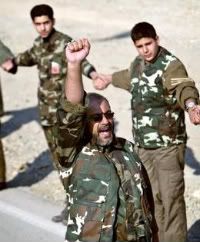
On Wednesday a student wing of the Basij -- plainclothes militia responsible for crushing protestors with guns, batons and chains -- asked Tehran's chief prosecutor to investigate Mr. Mousavi's role in "destabilizing national security." If charged and convicted, Mr. Mousavi could face a maximum 10 years in prison.

Mr. Mousavi lashed back, joined by former President Mohammad Khatami, an influential cleric who has supported Mr. Mousavi's campaign but who had become quiet as the regime made clear it wouldn't accept further opposition to the election results.

In a statement posted on his Web site, Mr. Khatami accused Iran's leadership of a "velvet coup against the people and democracy" and criticized what he called "a poisonous security situation" in the wake of violent street protests.

Mr. Mousavi announced that he plans to form a political party with a group of like-minded intellectuals. He said the party would make public all the allegations of vote fraud that he and their candidates have made, and pursue their complaints through the judiciary.

"They keep asking me to forgive and forget. I will not compromise nor negotiate over the vote and the right of the public," Mr. Mousavi said in his statement, his ninth since election unrest began, posted on his personal Web site.

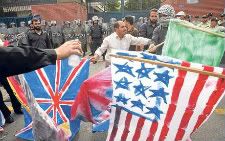
The post-election unrest over the disputed presidential vote has created the worst crisis in the Islamic republic's 30-year history. As security forces crushed street protests, the regime began pursuing the line that the turmoil was conceived by reformers and funded by Westerners -- namely Americans and British. >>> Farnaz Fassihi with contributions from Marc Champion in Brussels | Thursday, July 02, 2009

Wednesday, July 01, 2009

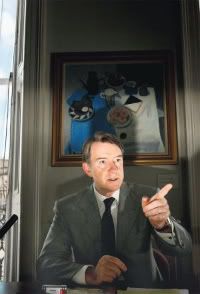
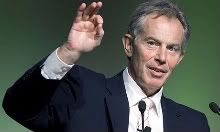
Setback for Tony Blair's Ambition to Be President of Europe

THE GUARDIAN: Former prime minister, who is believed to be considering bidding for the post, faces stiffening opposition from Sweden and Spain

Tony Blair's ambition to become Europe's first president have been set back by stiffening opposition from Sweden and Spain, the two countries chairing the EU for the next year.

Senior officials in Stockholm, which assumed the six-month rotating presidency of the EU today, said they feared a President Blair would be a divisive figure, triggering friction between small and large European countries, and added that José Luis Rodríguez Zapatero, the Spanish prime minister, was even more strongly opposed to Blair securing the post and usurping Madrid's running of the union next year.

The decision to appoint a new sitting European president, for a maximum of five years, is to be taken before the end of the year if Ireland votes yes in October in a referendum on the Lisbon treaty streamlining the way the EU is run and also creating the new post.

Fredrik Reinfeldt, the Swedish prime minister, made clear his aversion to Blair securing the plum post, without mentioning the former prime minister by name.

"The small countries don't want a strong leader because they fear he will be run by the big [EU] countries," said Reinfeldt.

European governments had to decide whether the post ought to be turned into "a strong leader for Europe" or whether the president's role should be limited to chairing EU summits and "not putting the [European] commission president in the shadow," said the Swedish prime minister. >>> Ian Traynor in Stockholm | Wednesday, July 01, 2009
Moussavi bietet dem Regime in Iran weiter die Stirn: Miliz fordert Ermittlungen gegen Oppositionsführer

NZZ Online: Trotz drohender Strafverfolgung bietet der iranische Oppositionsführer Moussavi der Staatsführung weiter die Stirn. Er bekräftigte am Mittwoch seinen Widerstand gegen die Wiederwahl von Präsident Ahmadinejad. Die Basij-Miliz forderte unterdessen strafrechtliche Ermittlungen gegen Moussavi.

Die Präsidentenwahl vom 12. Juni sei illegitim gewesen, erklärte der nach offizieller Lesart unterlegene Kandidat in einer Internetbotschaft. Ausserdem forderte Moussavi die Freilassung aller politischen Gefangenen sowie Pressefreiheit und eine Wahlrechtsreform. >>> ap | Mittwoch, 01. Juli 2009

THE TELEGRAPH: Mir-Hossein Mousavi Calls Iran Election Illegitimate in Renewed Defiance of Ayatollah

Iran's reform leader Mir-Hossein Mousavi urged his supporters on Wednesday to continue to fight for "the rights of the people" in his first rallying cry since the regime validated the results of the country's disputed presidential election.

Mr Mousavi reasserted his claim that the June 12 election was illegitimate, and demanded that Iran's hardline government release all political prisoners and institute electoral reforms and press freedom.

His latest defiance came as the Basij militia accused the opposition leader of undermining national security and asked a prosecutor to investigate his role in violent protests.

The move came amid heightened tensions between Tehran and the West.

On Wednesday, a senior Iranian military official suggested that nuclear negotiations between Tehran and the West would be further stalled in the wake of the protests, which the regime has accused European powers of masterminding.

Iran has particularly targeted Britain as an instigator of the protests, and on Monday arrested nine local employees of Britain's embassy in Tehran. Five were released on Monday night.

"It's not yet too late," said Mr Mousavi, who has slipped from public view in recent days. "It's our historic responsibility to continue our complaint and make efforts not to give up the rights of the people." >>> | Wednesday, July 01, 2009
Murray through to Wimbledon Semis

Watch BBC video: Murray wraps up impressive quarter-final victory >>> | Wednesday, July 01, 2009
The EU Should Have a Workable Policy on Economic Migrants

THE TELEGRAPH (VIEW): It is not the UN who should be sorting out the mess at Calais.

The decision of the United Nations High Commissioner for Refugees to re-establish a full-time presence in Calais where large numbers of migrants are living in squalid encampments is a sad reflection on France's unwillingness to deal with the problem.

The migrants are in Calais for only one reason - they want to come to this country. The UK Borders Agency says they are there not because they are queuing to get in but because they have been "locked out". That is a moot point. But if they have been locked out, it is up to the French authorities to deal with them. They are reluctant to do so, which has prompted the UNHCR to intervene. >>> | Wednesday, July 01, 2009
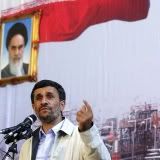
Ahmadinejad prangert die Dominanz der USA an: Erster Auftritt des iranischen Präsidenten nach Bestätigung durch Wächterrat

NZZ Online: Die Worte sind noch immer die gleichen: Der iranische Präsident Ahmadinejad hat sich erstmals seit der Bestätigung seines Wahlsieges durch den Wächterrat offiziell geäussert. Dabei prangerte er die Vorherrschaft der USA und weiterer westlicher Länder an.

In seiner ersten Rede nach der offiziellen Bestätigung seines Wahlsiegs durch den Wächterrat hat der iranische Präsident Mahmud Ahmadinejad die Vorherrschaft der USA und anderer westlicher Länder angeprangert. «Wir wollen eine Interaktion mit dem Rest der Welt», sagte Ahmadinejad am Dienstag laut der Nachrichtenagentur Irna bei einem Besuch im Geheimdienstministerium.

Gegen die Vorherrschaft
In diesem Zusammenhang werde Iran alle «Kapazitäten nutzen, um die Dominanz der Weltmacht zu zerstören», sagte er in Anspielung auf die USA und den Westen. Die Vorherrschaft der Grossmächte im wissenschaftlichen und militärischen Bereich müsse ein Ende haben, sagte er. >>> sda/afp/Reuters | Dienstag, 30 Juni 2009

lePARISIEN.fr: Ahmadinejad veut «détruire la domination» de l'Occident

Le président iranien Mahmoud Ahmadinejad veut «détruire la domination» des grandes puissances. Dans sa première déclaration après la confirmation officielle de sa réélection controversée, Ahmadinejad a affirmé : «nous voulons avoir une interaction avec le reste du monde fondée sur le changement, et, dans ce contexte, nous devons utiliser toutes les capacités pour détruire la domination de la puissance mondiale».

Faisant clairement allusion aux Etats-Unis et à l'Occident, le président iranien a ajouté que le monopole des grandes puissances dans les domaines scientifique et militaire devait également cesser, selon l'agence officielle iranienne Irna.

Ahmadinejad, un ultraconservateur s'était attiré pendant son premier mandat de quatre ans le courroux des grandes puissances à cause de sa rhétorique agressive à l'égard particulièrement des Etats-Unis et d'Israël.

Le Conseil des gardiens de la Constitution a confirmé la réélection de M. Ahmadinejad pour un nouveau mandat de quatre ans, malgré les protestations des candidats de l'opposition qui demandaient l'annulation du scrutin. La repression contre l'opposition qui a constesté sa réelection lui a valu des condamnations de la communauté internationale. >>> Leparisien.fr | Mardi 30 Juin 2009
Western Man: The Shadow of His Former Self! Al-Qaeda Members, Go Snigger Up the Sleeves of Your Dishdashas!

PhotobucketPhotobucket
Men's style trends from Paris Fashion Week

To the photo gallery >>>
Presenter Nick Ferrari Quits Iran Press TV over ‘Bias’ after Election

TIMESONLINE: It is called Press TV, is funded by the Iranian regime, and opponents say that from its nondescript offices off Hanger Lane in northwest London the 24-hour news station is beaming pro-Tehran propaganda into homes across Britain.

Nick Ferrari, a leading British radio presenter, quit his show on the station yesterday in protest at the regime crushing dissent after the Iranian elections, but Press TV continues to employ plenty of other Britons — including MPs and Cherie Blair’s sister.

It operates freely in this country, even as foreign journalists are ejected from Iran. It advertises on London buses.

The regime set up Press TV two years ago to break the “stranglehold” of the Western media — and its coverage of the election and the aftermath has certainly been different.

Stories featured on its website yesterday carried headlines such as “Ahmadinejad vows to break global monopoly”, “Ahmadinejad orders probe into Neda’s ‘suspicious’ death”, and “Guardian Council closes file on Iran election”.

Ofcom, the broadcast regulator, is investigating a complaint that Press TV has breached its duty to be accurate and impartial, and many Iranians living in Britain are appalled that it can operate so freely.

“They’re the mouthpiece of a vicious regime. Their motto is, ‘We give voice to the voiceless’. In fact, they give voice to liars and murderers,” says Potkin Azarmehr, a popular blogger. >>> Martin Fletcher | Wednesday, July 1, 2009
Warum Irans Milizen das Volk prügeln

TAGES ANZEIGER: Mit dem Kampf gegen die Opposition verteidigen die freiwilligen Milizen der Basiji auch ihre eigenen Privilegien. Denn für viele bedeuten sie den sozialen Aufstieg.

Sie knüppeln Demonstranten nieder, treten Haustüren ein, verwüsten Satellitenantennen und zertrümmern Autos. Viele Amateurvideos aus Teheran zeigen Mitglieder der freiwilligen Basiji-Milizen (übersetzt «Mobilisierung»), wie sie in diesen Tagen brutal gegen jede Regung der grünen Opposition vorgehen. Sie verbreiten Angst und Schrecken. Ihre Einschüchterungstaktiken haben tatsächlich bewirkt, dass sich nur noch wenige Iraner auf die Strasse getrauen, wenn die Oppositionsführer dazu aufrufen. Der schlimmste Vorwurf gegen die Milizen lautet, sie sollen schuld am Tod der jungen Neda sein, die zum Symbol der Demonstranten geworden ist.

Die Basiji wissen, wofür die kämpfen. Seit Ahmadinejad Präsident ist, geht es ihnen so gut wie seit langem nicht mehr. Er hat Basiji und Mitglieder der Revolutionsgarden zu Ministern, Gouverneuren und andern wichtigen Funktionsträgern gemacht und ihr Budget dramatisch aufgestockt. In diesen Zahlen sind andere Vergünstigungen wie die bevorzugte Behandlung bei der Verteilung von Studienplätzen, Jobs und Wohnungen ebenso wie Mobiltelefone und Kredite nicht enthalten. Diese materiellen Anreize würden eigentlich der Idee der Freiwilligkeit zuwiderlaufen. Tatsächlich würden seit langem junge Männer der Organisation beitreten, um aufzusteigen, schreibt die iranische Politologin Fatemeh Sadeghi. >>> Von Astrid Frefel, Kairo | Mittwoch, 01. Juli 2009
Défense électronique: EADS devient le gardien de l'Arabie saoudite

LE POINT: Au terme de tractations qui durent depuis 1996, c'est finalement EADS qui devrait installer la barrière de défense électronique aux frontières de l'Arabie saoudite. Le contrat a été signé mardi dans la soirée à Djedda, capitale d'été du Royaume, en présence du ministre de l'Intérieur le prince Nayef. Un communiqué officialisant la nouvelle devrait être publié mercredi après-midi. >>> Par Patrick Bonazza | Mercredi 01 Juillet 2009

Tuesday, June 30, 2009

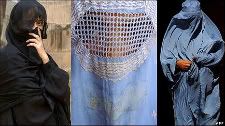
Burqa: Al-Qaïda menace la France

leJDD.fr: Al-Qaïda s'est invité mardi dans le débat sur le port de la burqa en France. En réaction notamment à la position de Nicolas Sarkozy, qui a affirmé le 22 juin que ce voile intégral n'était "pas le bienvenu" dans l'Hexagone, la branche maghrébine de la nébuleuse terroriste a en effet menacé, mardi via des forums internet relayé par le centre américain SITE, de s'en prendre à la France. [Source: leJDD.fr] | Mardi 30 Juin 2009

LE FIGARO: Burqa : al-Qaida menace
la France

La branche maghrébine d'al-Qaida promet de se «venger» après les propos de Nicolas Sarkozy sur le port du voile intégral en France. Le président français avait déclaré que la burqa n'était «pas la bienvenue» sur le territoire français.

Le sujet avait créé la polémique et la réaction islamiste ne s'est pas fait attendre. Selon le centre américain de surveillance des sites islamistes SITE, citant des forums djihadistes sur internet, la branche maghrébine d'al-Qaida a menacé de se venger de la France après l'opposition de Nicolas Sarkozy au port de la burqa en France. «Nous nous vengerons de la France et de ses intérêts par tous les moyens à notre disposition, pour l'honneur de nos filles et de nos sœurs», a affirmé le dirigeant d'al-Qaida au Maghreb islamique (AQMI) Abou Moussab Abdoul Wadoud, cité par le SITE Intelligence Group. Créé en 2002, le Search for International Terrorist Entities (SITE) Intelligence Group est spécialisé dans la recherche et le dépistage de l'activité sur internet des organisations terroristes.

Al-Qaida a également appelé les musulmans à réagir à «l'hostilité de la France contre leur communauté religieuse» et ses tentatives pour empêcher, selon le groupe extrémiste, la pratique de l'islam. «Nous, les moujahidines, ne resterons pas silencieux face à de telles provocations et injustices», a déclaré Abdoul Wadoud. D'après le chef islamiste, les cinq millions de musulmans de France sont «de plus en plus préoccupés par les pratiques des hommes politiques et des dirigeants français et leur harcèlement».

Al-Qaida au Maghreb islamique a revendiqué de nombreux attentats meurtriers en Algérie. Le groupe était anciennement connu sous le nom de Groupe salafiste pour la prédication et le combat (GSPC) avant de faire allégeance à la nébuleuse al-Qaida. >>> Mathieu Szeradzki (lefigaro.fr) avec AFP | Mardi 30 Juin 2009

IC PUBLICATIONS: Qaeda Warns of Revenge on France for Burka Warning

Al-Qaeda's North Africa wing threatened on Tuesday to take revenge on France after President Nicolas Sarkozy said the Islamic burka was not welcome, the US monitoring service SITE Intelligence reported.

"Yesterday was the hijab (the Islamic headscarf long banned in French schools) and today, it is the niqab (the veil)," the leader of Al-Qaeda in the Islamic Maghreb Abu Musab Abdul Wadud was quoted as saying.

"We will take revenge for the honour of our daughters and sisters against France and against its interests by every means at our disposal." [Source: ICPublications] | AFP | Tuesday, June 30, 2009
French-Israeli Spat over Comments

”You need to get rid of this man... You need to remove him from this position” – Attributed to President Nicolas Sarkozy


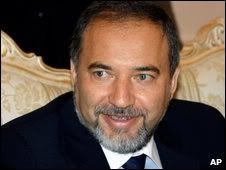
BBC: Israel's foreign ministry has accused France of unacceptable meddling in its internal affairs over a reported comment by President Nicolas Sarkozy.

He was quoted by Israeli TV calling for Foreign Minister Avigdor Lieberman, who leads a far-right party, to be sacked.

The plea, which has not been confirmed nor denied by officials, was allegedly made during a meeting with Israeli premier Benjamin Netanyahu last week.

Israeli Arab leaders have accused the foreign minister of anti-Arab racism.

Ahmed Tibi, a member of the Israeli parliament for the United Arab List, welcomed President Sarkozy's comments, saying: "The international community has started to absorb the danger of the fascism" coming from Mr Lieberman.

However, the deputy leader of Mr Lieberman's Yisrael Beiteinu party called the comments "grave and unacceptable".

Mr Lieberman's office said: "If this report is correct then this is an unacceptable interference in internal Israeli affairs."

Mr Netanyahu's office issued a statement saying the PM voiced his "full confidence" in Mr Lieberman during a meeting with ambassadors from European Union countries. >>> | Tuesday, June 30, 2009
Iran Mulls Death Penalty for Offensive Blogs (March 24, 2009)

Torture in Iran

The Situation in Iran

Iran Protesters May Have Last Laugh on Ageing Regime

THE NATIONAL (UAE): Some years ago, Hashemi Rafsanjani, a former Iranian president, revealed something that speaks volumes about the bare-knuckled quality of politics currently on display in Tehran.


In late 1978, with protests mounting against his abusive reign, Shah Mohammad Reza Pahlavi went on television and expressed contrition. “He admitted to past transgressions and past sins and said ‘I’ve heard the voice of your revolution’,” Karim Sadjadpour, an expert on the Middle East republic, told a conference held recently at the Carnegie Endowment for International Peace. He believed that was going to appease the crowds and silence the unrest.

On the contrary. In hard-boiled Iran, the Shah's mea culpa was a fatal show of vulnerability. "That's when we smell blood", said Mr Rafsanjani. "That's when we pounce."


Mr Rafsanjani’s aside explains the uncompromising stance staked out by Ayatollah Ali Khamenei, the Iranian supreme leader, as his regime faces the most serious threat to its legitimacy since the Shah’s removal. “What Khamenei has long believed is that you never compromise when you’re under siege,” Mr Sadjadpour said at the Carnegie briefing. “That projects weakness, which invites even more pressure.”

The Iranian regime is indeed weak, and has been long before it struggled to win the latest election with president Mahmoud Ahmadinejad apparently receiving more votes cast. If anything, the events of the past 10 days have revealed the Iranian government to be the hollow shell that it is, and not a rising power as it was so ludicrously portrayed by George W Bush, the former US president, and his neoconservative cadres. >>> Stephen Glain | Sunday, June 28, 2009
Artist Flees Turkey after Brush with Leader

THE INDEPENDENT: An artist who was cleared of mocking Turkey's prime minister by portraying him as a dog in a collage has fled the country after hearing his acquittal has been overturned.

Michael Dickinson, 59, returned home to County Durham after hearing a late-night TV report last week saying the acquittal had been quashed and a new trial was pending.

"I was shocked. I couldn't believe it. I was told by a woman, whose husband had seen it, and I said 'He must be dreaming'," he said.

"I caught a plane out as soon as I could, leaving most of my possessions behind, including my books, furnishings and computer.

"I was sad to leave after 23 years in Turkey, but I don't fancy another taste of Turkish hospitality in incarceration." >>> Rod Minchin, Press Association | Tuesday, June 30, 2009

EURACTIV: EU Tells Turkey: No 'Cruise Control' on Accession

As leading EU countries are advocating alternatives to full EU membership for Turkey, Enlargement Commissioner Olli Rehn told Turkish Prime Minister Recep Tayyip Erdogan last week that Ankara should speed up reform instead of breeding unrealistic expectations during its accession process.

"No one should be mistaken: There is no cruise control in the accession negotiations. Each step forward requires hard work and intense preparations by the candidates for EU membership," Rehn said, speaking at forum held in Brussels on Friday (26 June).

The enlargement commissioner acknowledged progress made by Turkey in the accession process, but stressed that no such advance was visible in the last six months.

He stressed the "pressing need" to reform the legal and constitutional framework governing the closure of political parties, as well of guaranteeing freedom of expression and the independence and pluralism of the media.

Recent reports by the European Commission and the Parliament have warned of a continuous slowdown in the reform process in Turkey (EurActiv 12/02/09). >>> | Monday, June 29, 2009
The Fight for Iran’s Future Is Far from Over

TIMES ONLINE: The Islamic Republic is dead. But will it be replaced by a Taleban-style emirate or democracy?

As the post-election crisis in Iran enters its third week, one thing is clear: the oxymoron that was the Islamic Republic is already dead.

If the radical faction led by Ali Khamenei, the Supreme Leader, wins the power struggle, Iran will drop its “republican” pretensions to become an Islamic emirate or an imamate. But if the opposition wins, the theocratic aspect of the regime will end, allowing Iran to become a normal republic in which power belongs to the people.

For 30 years, Iran has suffered from a split personality: trying to remain faithful to the late Ayatollah Khomeini’s ersatz version of Islam while pretending to have a people-based system of government.

The moment of truth for the death of the Islamic Republic came when Ayatollah Khamenei broke with tradition and declared Mahmoud Ahmadinejad the victor in the election even before the polls had closed. Over the past two weeks he has ignored demands for a rerun of the controversial election or even a complete recount of the votes, insisting that Mr Ahmadinejad is President not because the people elected him but because the Supreme Leader says so.

Over the past 30 years the Islamic Republic has organised 30 elections at various levels, from local to presidential. In every case the Supreme Leader merely endorsed the results once they had been established and announced by the Government. That kept alive the fictitious claim that the Islamic part of the system recognised the republican element. This time, however, that separation disappeared, as Ayatollah Khamenei not only announced the results but also stated publicly that he had wanted Mr Ahmadinejad to win.

The government-controlled media have highlighted the change in the nature of the regime. They now refer to Ayatollah Khamenei’s speech endorsing Mr Ahmadinejad’s re-election as “Fasl el-Khitab”, a theological term that means “end of the discussion”. Propaganda now refers to the ayatollah as “Emir al-Momeneen” (Commander of the Faithful), a title initially used for Ali ibn Abi-Talib, the Prophet’s cousin and son-in-law and the first imam of Shiaism.

An editorial last week in Kayhan, whose editor is appointed by the Ayatollah, put the new situation in graphic terms: “Imam Ali is back, the Commander of the Faithful. But this time he is not alone!” The editorial said that Iran was now ruled by “the Vicar of Allah” in a “pure Muhammadan system”. >>> Amir Taheri | Tuesday, June 30, 2009

Amir Taheri is author of The Persian Night: Iran under the Khomeinist Revolution
Honour Killings in Pakistan: Adherents of the Religion of Peace, Love, Compassion and Mercy Have Been Trying to Prove Islam’s Superiority Again!

THE TELEGRAPH: Dozens of relatives of a Pakistani teenager who eloped against her parents' wishes shot her dead on Monday in a raid on her new home which also left her husband and in-laws dead, police said.

Relatives dressed in police uniforms stormed the bridegroom's house in the district of Charsadda, in North West Frontier Province.

"The assailants took the bridegroom out while some of the attackers climbed the wall and entered the house. They killed the bride, the mother and sister of the bridegroom," said Saleem Jan, a police official for the Charsadda district.

"They beat them first and then shot them dead," he told AFP news agency.

The groom's father was also killed, another police official told AFP.

Police said the bride, who was 18 or 19 years old, came from the deeply conservative Mardan district next to Charsadda. She had run away and married her boyfriend, who was around 30, without telling her parents.

"Both the girl and man married some weeks ago," Misal Khan, the bridegroom's uncle, told reporters at the scene.

Police said the main suspects were two uncles and a cousin.

Human rights groups have strongly condemned the practice of honour killings in Pakistan, which claim the lives of hundreds of women each year. Pakistani family shot dead in 'honour killing' after wedding >>> | Monday, June 29, 2009
Iran Election: Faces of the Dead and Detained

If you’d like to help The Guardian put a face to the dead or detained in Iran in the recent uprisings, click here
La communauté gay s'affirme dans la société turque

LE FIGARO: Malgré un îlot de tolérance à Istanbul, le pays reste profondément réfractaire à l'égalité des droits des homosexuels.

Sous la pression des slogans «Nous ne nous tairons pas», «Nous existons, il va falloir s'y habituer», le cordon de policiers s'est finalement résolu à laisser le champ libre à la Marche des fiertés homosexuelles.

Dimanche, environ deux mille personnes ont descendu l'avenue de l'Istiklal, à Istanbul, dans un joyeux brouhaha, rythmé par les percussions et les coups de sifflet. Comparé à l'exubérance des fêtes programmées dans les villes européennes, le défilé est resté sage. Mais, profitant de la démocratisation du pays, il a pris de l'assurance : en 2003, une cinquantaine de militants seulement, dont une bonne partie avec le visage dissimulé, avait osé participer au premier rassemblement gay et transgenre. Dans le monde musulman, la Turquie tient une place à part. L'homosexualité n'est pas condamnée par la loi, des artistes affichent leur identité sexuelle et des drapeaux aux couleurs de l'arc-en-ciel flottent à l'entrée des bars gays du quartier de Beyoglu, à Istanbul. En dehors de cet îlot de tolérance, les actes de violence restent cependant répandus et l'homophobie est toujours profondément ancrée dans les mentalités : une étude de la Tesev, un think-tank turc, montre par exemple que près de sept personnes sur dix refuseraient des voisins homosexuels. >>> Laure Marchand, à Istanbul | Mardi 30 Juin 2009

Monday, June 29, 2009

Saudi Royal Denounces His Brother

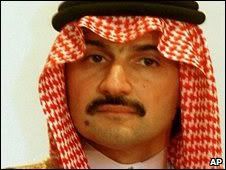
BBC: A member of the Saudi royal family has called for the assets of his brother to be frozen.

Prince Khaled bin Talal denounced his brother's media empire in an unprecedented public attack from within the ruling family.

Prince Khaled accused Prince Walid bin Talal of disseminating vice and violating the rules of Islamic Sharia in the conservative kingdom.

Prince Walid is one of the richest businessmen in the world.

It has long been known that there is a split within the ranks of Saud family between liberals and conservatives.

But, until now, they have always managed to keep a lid on the problem.

Prince Khaled said he had been forced to speak out after quiet efforts to advise his brother to mend his ways had fallen on deaf ears.

Prince Walid, known for his liberal lifestyle, owns a media empire which features entertainment channels that have long angered conservative Saudis.

Prince Khaled, told an Arabic website that his brother's plan to introduce cinema into Saudi society was the straw that broke the camel's back. >>> | Monday, June 29, 2009
EU Threatens Mass Pullout of Ambassadors from Tehran

THE GUARDIAN: European Union members are threatening the collective withdrawal of their ambassadors from Iran to secure the release of the British embassy employees being held by the authorities.

EU diplomats said tonight all the envoys could be recalled "temporarily" in solidarity with staff from the British mission in Tehran who have been accused – entirely falsely, UK officials insist – of involvement in protests over the "stolen" presidential election.

Five of the nine Iranians, who were arrested on Saturday, were freed today, but four others, understood to be the most senior, were still being questioned. None of them have been named.

As the row with Britain continued, Iran's guardian council, the country's top legislative body, confirmed Mahmoud Ahmadinejad's victory in the disputed poll after a partial recount, finally dashing hopes of a different outcome.

Gordon Brown underlined concern over the embassy incident when he called it unacceptable and unjustifiable that the employees were being held. The prime minister was speaking in London alongside the European commission president, José Manuel Barroso, who expressed full solidarity with the UK.

Yesterday, EU foreign ministers warned Iran that any "harassment or intimidation" of embassy staff would be met with a "strong and collective" response. Most of the 27 EU member states have their own ambassadors in Tehran. >>> Ian Black, Middle East editor | Monday, June 29, 2009
Why Iran Hates Britain So Much

THE TELEGRAPH: Britain has taken America's place as Tehran's most loathed nation. The antipathy goes back centuries, says Con Coughlin.

Not so long ago, Britain was held in such low esteem in Iran that it was simply dismissed as the "little Satan". So far as the ayatollahs were concerned, the real enemy was America, the "great Satan", whose love of liberty and free market capitalism was thought to pose the gravest threat to the Islamic revolution's survival.

It was for this reason that the American embassy, rather than the British, was occupied by the Revolutionary Guards in Tehran soon after Ayatollah Khomeini seized power in 1979, and its 66 staff held hostage. The expansive grounds of Britain's diplomatic mission, which hosted Winston Churchill during the Tehran conference in 1943, were briefly occupied by the Guards during Iran's revolutionary turmoil, but then evacuated because the mullahs did not regard Britain as being of sufficient importance to hold it to ransom.

But 30 years later it seems all that has changed as it is now Britain, rather than America, that finds itself on the receiving end of the ayatollahs' ire. After initiating last week's tit-for-tat diplomatic expulsions, which saw two middle-ranking British diplomats expelled from Tehran for allegedly fomenting anti-government demonstrations, the Iranian authorities have arrested a further nine British embassy employees. Although some of the workers have since been released, there has been no let-up in the regime's anti-British rhetoric.

After Ayatollah Ali Khamenei, Iran's supreme leader, launched the initial anti-British tirade by denouncing Britain as the "most treacherous" of the regime's enemies, there has been no shortage of prominent Iranians lining up to denounce the "devious" British. At the heart of the dispute is Tehran's insistence that British spies have been responsible for stirring up the worst street protests Iran has experienced since 1979.

Manouchehr Mottaki, Iran's Foreign Minister, even went so far as to accuse Britain of sending planes filled with agents to Iran "with special intelligence and security ambitions".

In the past, Iran's purges and executions have been directed against those accused of spying for America or Israel. But the emergence of Britain as the mullahs' latest bête noire [sic] suggests Anglo-Iranian relations are about to undergo another period of intense strain. >>> Con Coughlin | Monday, June 29, 2009

Con Coughlan is the author of 'Khomeini's Ghost: Iran Since 1979', published by Macmillan
'Stonewall Gave Me New Gay Role Models'

Photobucket
A protest in San Francisco, California, against the Catholic Church's policies. Photo: BBC

BBC: The Stonewall uprisings 40 years ago brought the gay rights movement to the forefront of American culture. Writer and historian David Carter assesses what progress has been made since that pivotal moment and how far the quest for equal rights has to go.

The end of this month marks the 40th anniversary of the Stonewall Uprising, an anniversary that has been duly marked by a number of events, including a White House reception on Monday.

But because the history of the gay civil rights movement has generally not been taken seriously by educators nor by the media, people are often uncertain about what exactly Stonewall was: why did the Stonewall Riots occur and what do they mean?

There had been a homosexual rights movement in Germany since the 19th century, a movement that regained some momentum after the setback caused by World War I. The movement spread in Europe, including Russia, during the 20th century and suffered further setbacks under Nazi and Communist dictatorships.

After World War II homosexual rights movements made progress in Western democracies. The homosexual rights movement began in an organized way in the United States after World War II during the Cold War when the Mattachine Society was founded.

While there was progress toward decriminalizing homosexuality in Canada and Europe, progress in the US was much slower. But in Europe, severe prejudice against homosexuality remained even in those societies where homosexual sex acts were not illegal.

It was the massive and sustained uprising against the police that erupted at the end of June 1969 when the New York City police raided a popular gay bar named the Stonewall that eventually changed the situation worldwide.

Because the riots broke out in the late 1960s after the successes of the US anti-Vietnam War movement and the black civil rights movement, the organizations that emerged immediately after Stonewall were cast in a New Left mould, which also meant a militant consciousness.

The most successful of these organizations, the Gay Activists Alliance, modelled its actions on guerrilla theatre and added camp humour to create "zaps", demonstrations that were highly creative, highly subversive, and designed to get media attention. The result was that gay people were seen over and over in the media acting from positions of power: challenging power and unafraid. >>> | Monday, June 29, 2009

David Carter is the author of Stonewall: the riots that sparked the gay revolution. He is a consultant for the BBC Radio 2 programme Stonewall: The Riots That Triggered The Gay Revolution, which will be broadcast on Tuesday 30 June 2009 at 2230BST.
Saudi Arabia: Free Wedding for Quitting Smoking

BBC: A charity in the Saudi capital Riyadh has come up with a novel incentive to encourage young men to quit smoking - an all-expenses-paid wedding.

Hundreds of men have expressed interest in the anti-smoking drive, including a non-smoker who was ready to start the habit just so he could take part.

Banners in Riyadh are advertising the campaign slogan: "Kicking the habit is on you, and marriage is on us."

In much of the Arab world, the groom alone bears the cost of a wedding.

The charity Purity says participants will complete a seven-day course to quit smoking. >>> | Monday, June 29, 2009
President Ahmadinejad Orders Inquiry into 'Suspicious' Death of Neda

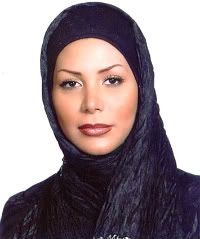
TIMES ONLINE: President Mahmoud Ahmadinejad of Iran has ordered an inquiry in to the "suspicious" death of Neda Soltan, the woman shot by government militiamen during a protest in Tehran.

The President sent a letter to the chief of Iran's judiciary, Ayatollah Mahmoud Hashemi Shahroudi, requesting a serious investigation to help to identify and prosecute “the elements” behind the killing earlier this month.

“Given the many fabricated reports around this heartbreaking incident and the widespread propaganda by the foreign media... it seems there is clear interference by the enemies of Iran who want to misuse the situation politically and tarnish the clean image of the Islamic republic,” the president wrote.

“Therefore I am asking you to order the judicial authorities to probe the killing of this woman with utmost seriousness and identify and prosecute the elements behind the killing." >>> Joanna Sugden | Monday, June 29, 2009
Life in Iran Will Be Worse Than Before the Election

TIMES ONLINE: That's that then. The massive street demonstrations have been crushed. Iran's security and intelligence services have locked up thousands of opponents. Opposition newspapers, websites and bloggers are being systematically shut down. The regime's Orwellian mouthpieces have shamelessly declared the election to be an epic milestone in the 30-year history of the Islamic Republic, and the US and European Union want to resume talks about Iran's nuclear ambitions.

For the millions of Iranians who campaigned with such exuberance before the election, and who are convinced that Mir Hossein Mousavi was robbed of the presidency by blatant electoral fraud, the only way left to vent their anger is to go up to their roofs at night and shout 'Allahu Akbar' (God is great) in one collective wail of despair. Even that is becoming dangerous, with reports that basiji - Islamic volunteer militiamen - are storming the homes of those who dare to sing God's praises.

Those millions do not face a return to the status quo ante, however. Henceforth their lives will be far worse than they were before the June 12 ballot. An extreme, fundamentalist faction has staged a coup against a relatively moderate and pragmatic revolutionary old guard. It controls the security forces, judiciary, media and machinery of government. The social repression of President Ahmadinejad's first term will look mild compared to what is coming, for that is the only way this severely weakened regime can now maintain power.

The authority of Ayatollah Ali Khamenei, the Supreme Leader, has been destroyed. Once regarded as the infallible lynchpin of the entire system, he is now seen as just another ruthless political conspirator. He rules through military, not moral, might. His edicts have been defied. Iranians chant "Death to Khamenei" - unthinkable a month ago. >>> Martin Fletcher: analysis | Monday, June 29, 2009
Iran 'Has Arrested 2,000’ in Violent Crackdown on Dissent

TIMES ONLINE: More than 2,000 Iranians have been arrested and hundreds more have disappeared since the regime decided to crush dissent after the disputed presidential election, a leading human rights organisation said yesterday.

“A climate of terror and of fear reigns in Iran today,” the International Federation for Human Rights, an umbrella body for 155 human rights organisations, said as it released the startling figures.

Last night 3,000 protesters tried to gather outside a mosque in Tehran where they believed that Mir Hossein Mousavi, the defeated presidential candidate, was going to speak. The police rapidly dispersed them and Mr Mousavi never appeared.

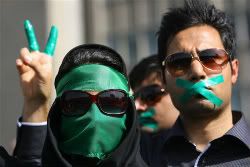
Having largely suppressed such protests, the security forces are engaged in a purge of dissidents in an apparent effort to decapitate Mr Mousavi’s so-called green movement.

Prominent Iranian actors, actresses, writers and singers are believed to have been seized at the weekend for supporting the demonstrators. Several opposition bloggers have fallen silent, probably because they have been detained. Almost anyone who dares to challenge President Ahmadinejad’s re-election is now considered an enemy of the state.

At least one senior Mousavi aide and other unidentified Iranians have appeared on state television to “confess” that the demonstrations were part of a foreign conspiracy against the Islamic Republic.

Human Rights Watch says that the Basiji — volunteer Islamic militiamen — are raiding houses, beating civilians and destroying their cars and other property in an effort to silence the nightly rooftop chanting that has become the opposition’s last means of peaceful protest. “The Basiji entered our neighbourhood and started firing live rounds into the air, in the direction of the buildings from which they believe the shouting of ‘Allahu akbar’ [God is greatest] is coming from,” a middle-aged Tehran resident said. >>> Martin Fletcher | Monday, June 29, 2009
Bone Fragments Confirmed to Be Saint Paul

THE TELEGRAPH: Fragments of bone which have been kept in an underground sarcophagus for nearly 2,000 years have been identified as the remains of St Paul.

Pope Benedict XVI said scientific tests confirmed shards found in the underground chamber at the church of St Paul's-Outside-the-Walls in Rome were from the apostle.

Saint Paul was said to have been buried with Saint Peter in a catacomb on the Via Appia, one of the Roman roads which leads out of the city, before being moved to a basilica which was erected in his honour.

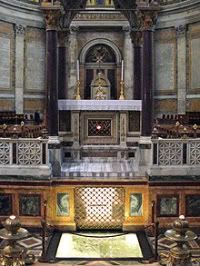
For centuries it was believed that his remains were buried beneath the basilica's main altar, which was covered with a slab of marble inscribed in Latin with the words Paulo Apostolo Mart – "Paul, apostle and martyr".

The theory gained credence in 2006, when Vatican archeologists discovered a white marble sarcophagus hidden beneath the floor of the basilica – the largest in Rome after St Peter's at the Vatican – after four years of excavations.

It took three years for archeologists to subject the remains to the first ever scientific tests and establish that they belonged to Saint Paul, a Jewish Roman citizen from Tarsus, in what is now Turkey.

Pope Benedict XVI announced the findings during a service at the basilica, as Rome prepared to celebrate the Feasts of Saint Peter and Saint Paul.

"This seems to confirm the unanimous and undisputed tradition that these are the mortal remains of the Apostle Paul," he said. >>> Nick Squires in Rome | Monday, June 29, 2009

TIMES ONLINE: Oldest Known Portrait of St Paul Revealed by Vatican Archaeologists

Photobucket
The 4th-century portrait was found in the catacombs of St Thecla, not far from the Basilica of St Paul's Outside the Walls. Image: TimesOnline

Vatican archaeologists have uncovered what they say is the oldest known portrait of St Paul. The portrait, which was found two weeks ago but has been made public only after restoration, shows St Paul with a high domed forehead, deep-set eyes and a long pointed beard, confirming the image familiar from later depictions.

L'Osservatore Romano, the Vatican newspaper, which devoted two pages to the discovery, said that the oval portrait, dated to the 4th century, had been found in the catacombs of St Thecla, not far from the Basilica of St Paul’s Outside the Walls, where the apostle is buried. The find was “an extraordinary event”, said Monsignor Gianfranco Ravasi, head of the Pontifical Council for Culture.

Barbara Mazzei, a restorer, said that centuries of grime had been removed with a laser. Fabrizio Bisconti, Professor of Christian Iconography at Rome University and a member of the team that made the discovery, said that it appeared to have decorated the tomb of a nobleman or high church official. >>> Richard Owen in Rome | Monday, June 29, 2009
Analysis: Time for the Queen to Cut the Royal Cloth

TIMES ONLINE: Read the Queen’s financial accounts, published today, at face value and you may assume that the Sovereign needs more money to keep her, and her entourage, in the manner born. But if Her Majesty reads the looks on the faces of those thousands of subjects enduring financial hardship just now, she will conclude that she must cut the Royal cloth.

The documents posted today suggest that the Royal household, just like any well-run business, shows some signs of wanting to be leaner and meaner. Analysis is complicated by the fact that Queen's cash comes from several sources, but it is clear that the Royal household can be, and should be, more lean and more mean.

Take travel. Exactly 12 months ago today, on the June 30, 2008, the Queen spent £11,258 on a charter flight from RAF Northolt to Edinburgh. Leave aside the question of whether she needed to take up residence at Holyroodhouse. Just wonder why the exercise cost the equivalent of six months’ pay for the average working Briton.

And what about those palaces? No doubt the royal properties are national treasures, in need of repair and maintenance. Fees collected from tourists also provide a welcome cash crutch. But if money is tight, and it is, why risk public outrage? Would it not be better to quietly get the mothballs out? A total of £8 million was spent last year on Buckingham Palace – 35 per cent more than the year before. Did we really have to spend another £1.7 million down the road at St James Palace? >>> Robert Cole | Monday, June 29, 2009
Ecône ordonne des prêtres au mépris des ordres de Rome

TRIBUNE DE GENÈVE: CATHOLICISME | La Conférences des évêques suisses n'est pas surprise: «C'est un signe que la Fraternité n'est pas en lien avec le pape», déclare son porte-parole.

La Fraternité Saint-Pie X a procédé lundi a des ordinations de prêtres, malgré la déclaration du Vatican qui les juge «illégitimes». La Conférence des évêques suisses (CES) n'est pas étonnée que la cérémonie ait eu lieu.

«C'est un signe que la Fraternité n'est pas en lien avec Rome et le pape, dans la situation actuelle», a indiqué Walter Müller, attaché de presse de la CES. «Nous verrons si les entretiens prévus à Rome feront évoluer la situation.» >>> ATS | Lundi 29 Juin 2009
Neue Attacken des Iran auf den Westen

WELT ONLINE: Acht Mitarbeiter der britischen Botschaft festgenommen - Demonstration in Teheran

Teheran - Die iranischen Oppositionsanhänger bieten trotz aller Repressalien der Regierung offenbar weiter die Stirn. In Teheran kam es am Sonntag nach Berichten von Augenzeugen zu Zusammenstößen zwischen etwa 3000 Demonstranten und der Polizei. Diese habe Tränengas und Schlagstöcke eingesetzt, um die Menge aufzulösen, hieß es. Für Empörung im Westen sorgte unterdessen die Festnahme mehrerer Mitarbeiter der britischen Botschaft.

Die Demonstration, an der den Berichten zufolge mehrere tausend Oppositionsanhänger teilnahmen, fand im Norden von Teheran statt. Dieser Teil der iranischen Hauptstadt gilt als eine der Hochburgen des nach offizieller Darstellung unterlegenen Präsidentschaftskandidaten Mir Hossein Mussawi. Es war die erste größere Protestaktion seit fünf Tagen. >>> | Montag, 29. Juni 2009
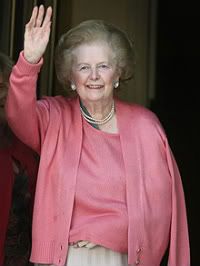
Baroness Thatcher Returns Home from Hospital

THE TELEGRAPH: Baroness Thatcher, the former Prime Minister, has returned to her London home after 17 days in hospital with a broken arm.

The former Tory party leader smiled broadly and waved enthusiastically with her right arm to a small crowd who had gathered outside her Belgravia house.

Lady Thatcher, 83, whose left arm is in a sling after she fractured her upper shoulder after a heavy fall, underwent surgery at Chelsea and Westminster Hospital after the injury failed to heal.

Even though the operation, involving the insertion of a surgical pin, was a success, doctors insisted on keeping Lady Thatcher in hospital for observation.

Among the regular visitors was her son, Sir Mark, who saw her in hospital before she returned home. Doctors have urged Lady Thatcher to scale back on her engagements and to rest as much as possible to ensure there are no complications with the fracture. >>> Andrew Pierce | Monday, June 29, 2009

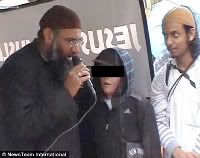
Anjem Choudary Converts Young, White Schoolboy to the Religion of Peace, Love, Compassion and Mercy at Birmingham Roadshow

MAIL Online: This is the shocking picture of a young, white schoolboy being converted to Islam by a cleric linked to a radical Muslim hate preacher.

The bewildered 11-year-old, who gives his name as Sean was filmed repeating Arabic chants and swearing allegiance to Allah.

The boy is prompted throughout by controversial cleric Anjem Choudary, a follower of exiled hate-preacher Omar Bakri Mohammed.

The incident was filmed during a demonstration by Choudary's Ahlus Sunnah Wal Jama'ah group in Birmingham city centre earlier this month.

Choudary, 42, was one of the masterminds behind the protests at the homecoming parade of heroic British soldiers in Luton earlier this year.

He praised protesters who branded British troops 'murderers' and later appeared at a press conference flanked by thugs who took part in the demo.

Choudary defended the young boy's 'reversion' to Islam but admitted his parents were not with him and were not consulted.
He said: 'The child was genuinely interested in Islam.'

'The boy told us he wanted to become a Muslim and, of course, some people are intellectually more mature than they are physically. I don't see there is any harm in this. The shocking picture of a white boy aged 11 being 'converted' to Islam by radical preacher >>> | Monday, June 29, 2009
Britain Has 85 Sharia Courts: The Astonishing Spread of the Islamic Justice Behind Closed Doors

MAIL Online: At least 85 Islamic sharia courts are operating in Britain, a study claimed yesterday.
The astonishing figure is 17 times higher than previously accepted.

The tribunals, working mainly from mosques, settle financial and family disputes according to religious principles. They lay down judgments which can be given full legal status if approved in national law courts.

However, they operate behind doors that are closed to independent observers and their decisions are likely to be unfair to women and backed by intimidation, a report by independent think-tank Civitas said.

Commentators on the influence of sharia law often count only the five courts in London, Manchester, Bradford, Birmingham and Nuneaton that are run by the Muslim Arbitration Tribunal, a body whose rulings are enforced through the state courts under the 1996 Arbitration Act.

But the study by academic and Islamic specialist Denis MacEoin estimates there are at least 85 working tribunals.

The spread of sharia law has become increasingly controversial since its role was backed last year by Archbishop of Canterbury Dr Rowan Williams and Lord Phillips, the Lord Chief Justice who stepped down last October.

Dr Williams said a recognised role for sharia law seemed 'unavoidable' and Lord Phillips said there was no reason why decisions made on sharia principles should not be recognised by the national courts.

But the Civitas report said the principles on which sharia courts work are indicated by the fatwas - religious decrees - set out on websites run by British mosques.

Mr MacEoin said: 'Among the rulings we find some that advise illegal actions and others that transgress human rights standards as applied by British courts.'

Examples set out in his study include a ruling that no Muslim woman may marry a non-Muslim man unless he converts to Islam and that any children of a woman who does should be taken from her until she marries a Muslim.

Further rulings, according to the report, approve polygamous marriage and enforce a woman's duty to have sex with her husband on his demand.

The report added: 'The fact that so many sharia rulings in Britain relate to cases concerning divorce and custody of children is of particular concern, as women are not equal in sharia law, and sharia contains no specific commitment to the best interests of the child that is fundamental to family law in the UK.

'Under sharia, a male child belongs to the father after the age of seven, regardless of circumstances.'

It said: 'Sharia courts operating in Britain may be handing down rulings that are inappropriate to this country because they are linked to elements in Islamic law that are seriously out of step with trends in Western legislation.' >>> Steve Doughty | Monday, June 29, 2009

Sunday, June 28, 2009

Iran Takes Step Towards Scrapping Death Penalty for Apostasy and Stoning [sic]

THE CHRISTIAN POST: In a “positive development” Iran’s parliamentary committee has recommended to remove articles stipulating the death penalty for apostasy from the Islamic Penal Code Bill.
The recommendation has been made by the Iranian Government’s Parliamentary Committee, a UK-based Christian Solidarity Worldwide (CSW) reported.

Ali Shahrokhi of the Legal and Judicial Committee of the Parliament reportedly told the Iranian state news agency (IRNA) of this pronouncement according to a BBC Persian news service report on 23 June.

Mr Shahrokhi also stated that stoning was not ‘in the interest of the regime’. He told IRNA that “Islam has set a strict set of conditions for the implementation of punishments such as stoning, that they can rarely be proven. Hence the legal and judicial commission members concluded that some of these laws are unnecessary to mention.” >>> Robert Williams, Christian Post Correspondent | Saturday, June 27, 2009
Ban the Burqa!


Hat tip: The Anti-Jihadist >>>

TIMES ONLINE:
Why not read this ridiculous article by Daisy Goodwin while you’re at it? >>>
The IoS Pink List 2009

THE INDEPENDENT ON SUNDAY: It's back - as controversial and, we believe, as necessary as ever. Here is this year's roster of the 101 most influential gay and lesbian people in Britian today

Before we started work on the 10th annual Independent on Sunday Pink List, we asked ourselves again whether we should be doing it at all. After all, in 2009, equal rights are enshrined in law and there are ‘out’ gay men and women at the top of every profession - or rather, they might argue, just men and women at the top of their professions. So, is the list anachronistic? Is it patronising to gay people? We feared it might be - and went in search of a leading gay or lesbian figure to say so. None of those we contacted wanted to. Their verdict? The Pink List remains indispensable, a celebration of a community that is integral to the British way of life.

On the 40th anniversary of the Stonewall riots - and in the week when the National Portrait Gallery launches a major new exhibition of Gay Icons, this list is a celebration of those people who have struggled to get us from there to here. As such, you won’t see anyone “outed” in these pages. If you don't see someone you think should be on the list, it may be that they have asked not to appear. It is also possible that - believe it or not - we have erred and they have been overlooked. >>> | Sunday, June 28, 2009
Miliband Condemns Iran's 'Imtimidation' [sic] Tactics

THE INDEPENDENT ON SUNDAY: Foreign Secretary David Miliband condemned Iran's "intimidation" tactics today amid reports that eight British embassy staff have been arrested.

Mr Miliband insisted the action against the UK's "hard-working" local employees in Tehran was "quite unacceptable".

"This is harassment and intimidation of a kind which is completely unacceptable," he said.

Mr Miliband indicated that "strong action" would follow if the detentions did not stop.

The comments, at a meeting of foreign ministers in Corfu, came as the diplomatic spat between the UK and Iran intensified in the wake of contested elections.

Tehran has accused the UK and the US of seeking to interfere in its internal affairs after they criticised the heavy-handed reaction to protests by opposition supporters. >>> PA | Sunday, June 28, 2009
Britain's Iranians Add Their Voices

THE INDEPENDENT ON SUNDAY: The brutal security crackdown on the streets of Tehran inflamed feelings on the streets of London last week. Hundreds of demonstrators from the UK's Iranian community besieged Iran's embassy in west London in protest at the repression imposed on their compatriots at home.

Overseas Iranians have rallied in response to the violence in their home country, but the embassy has been the focus of protesters' frustration. Each night, hundreds gathered to denounce Iran's Supreme Leader, Ayatollah Khamenei. Their message was clear. "Down with Khamenei, death to Khamenei," they chanted loudly.

Their numbers have swelled since the turmoil that has enveloped Iran after the 12 June election. The crowds that congregated last week included a mixture of youths, refugees and professional people.

Even as Ayatollah Khamenei blamed everyone from the British Government to the BBC for the bloodshed, several hundred students rallied in Piccadilly Circus in London in a show of solidarity with their Iranian counterparts. Many held candles for the "the martyrs of the election" – those who have died in the recent violence.

If the embassy witnessed the most fervent protests, elsewhere reaction to events did not lack vehemence. Iranian-owned businesses strung green lights and hung posters declaring support for the democracy movement. >>> By Tim Persinko | Sunday, June 28, 2009
New Dark Age Alert! Britain Is No Longer a Christian Nation The Void Islam Has Been Hoping to Fill!

THE TELEGRAPH: If recent trends are any guide, many Church of England parishes will have been cheered by higher attendances at Easter services. The last published statistics for 2006/7 show rises of 7 and 5 per cent in church going at Christmas and Easter.

But these figures are just about the only signs of hope for the church and certainly not the first green shoots of a revival. Other statistics make for gloomy reading.

Annual decline in Sunday attendance is running at around 1 per cent. At this rate it is hard to see the church surviving for more than 30 years though few of its leaders are prepared to face that possibility.

In the short term we are likely to see more closures of buildings as the church battles to meet a big pension bill, pay clergy, and maintain a large bureaucracy.

To its credit, the church has been successful at getting members to give, but larger donations cannot offset the fall in numbers. At present the church is struggling to maintain 16,200 buildings, many of them old and listed with 4,200 listed Grade I.

If decline continues, Christian Research has estimated that in five years' time church closures will accelerate from their present rate of 30 a year to 200 a year as dwindling congregations find the cost of keeping them open too great.

Perhaps the most worrying set of statistics for the Church of England is the decline in baptisms. Out of every 1,000 live births in England in 2006/7 only 128 were baptised as Anglicans. >>> Rt Rev Paul Richardson | Saturday, June 27, 2009
Abaya Gets a Makeover from John Galliano and Blumarine

THE TELEGRAPH: Top European fashion labels, including John Galliano and Blumarine, have sent models in couture abayas down the runway in an effort to lure wealthy Muslim women.

Photobucket
The Saks Fifth Avenue Riyadh and Jeddah fashion show at the George V hotel in Paris. Photo: The Telegraph

A horsewoman in a flowing, made-to-measure Islamic gown atop a snorting steed opened the fashion show on Thursday at the George V Hotel in Paris.

Abayas are the body-covering black robes some Muslim women don over their clothing in public, usually accompanied by a head scarf or niqab, the face veil that covers all but the eyes.

Designers who tried their hand at making over the abaya, which is required in Saudi Arabia, included Christian Dior's artistic director John Galliano, French luxury labels Nina Ricci and Jean Claude Jitrois and Italian houses Blumarine and Alberta Feretti.

The show began with a bang, as the carrot-topped cavaliere - decked out in a Galliano-designed abaya exploding with firework of coloured sequins and dangling fringe - rode her mount into the hotel's subterranean salon.

Twenty models followed on foot, wearing abayas heavy with rhinestones or airy in gauzy fabrics.

"I realised that most of the Saudi clients are wearing designer brands, but they're covered by a black abaya," said Dania Tarhini, the show's organiser and a general manager of Saks Fifth Avenue in Saudi Arabia. "It is an obligation to wear the abaya there, but let them feel good about it."

The timing of the Paris show was propitious: four days earlier, Nicolas Sarkozy, the French president, struck a nerve in the Muslim world by declaring that full-body veils such as the burka are "not welcome" in France, saying they make women prisoners. A top Muslim group in Britain called Mr Sarkozy "patronising and offensive." Lebanon's most influential Shia cleric called on Mr Sarkozy to reconsider his comments. >>> | Friday, June 26, 2009

Saturday, June 27, 2009

Ahmadinejad warnt den Westen: Reaktionen auf Forderungen der G-8-Staaten nach Ende der Gewalt

NZZ Online: Iran hat die Forderung des Westens, die fundamentalen Menschenrechte zu achten, in scharfem Ton zurückgewiesen. Die Einmischung in die inneren Angelegenheiten seines Landes sei eine Beleidigung, sagte Präsident Ahmadinejad.

«Ohne jeden Zweifel wird die neue iranische Regierung dem Westen entschiedener und machtvoller begegnen», erklärte Ahmadinejad am Samstag laut der staatlichen Nachrichtenagentur Irna. Beobachter gehen davon aus, dass er damit deutlich machen wollte, dass die Kompromissbereitschaft Teherans bei Streitthemen wie dem iranischen Atomprogramm oder der Nahostpolitik geringer als je zuvor sein werde.

Die führenden Industriestaaten und Russland (G-8) hatten sich am Freitag besorgt über die Gewalt gegen Demonstranten geäussert und die iranische Regierung aufgefordert, den Konflikt nach den Wahlen mit friedlichen Mitteln zu lösen. >>> sda/dpa/ap | Samstag, 27. Juni 2009
Jailed Iran Reformists 'Tortured to Confess Foreign Plot'

THE GUARDIAN: Amnesty reports apparent attempt to implicate defeated presidential candidate in conspiracy to overthrow regime

Jailed Iranian reformists are believed to have been tortured in an attempt to force them into TV "confessions" of a foreign-led plot against the Islamic regime.

According to Iranian websites, the "confessions" are aimed at implicating Mir Hossein Mousavi and Mehdi Karroubi, the defeated reformist candidates in this month's presidential poll, in an alleged conspiracy.

Mostafa Tajzadeh, Abdollah Ramezanzadeh and Mohsen Aminzadeh, all Mousavi supporters, are reported to have undergone "intensive interrogation" sessions in Tehran's notorious Evin prison since being arrested in a mass round-up of opposition figures following Mahmoud Ahmadinejad's disputed re-election.

The three, who all served in the government of the former reformist president, Mohammad Khatami, are among several hundred activists, academics, journalists and students detained in a crackdown coinciding with the brutal suppression of street protesters who believe the election was stolen.

Fellow prisoners are reported to have heard screams of pain from Tajzadeh, a former deputy interior minister, and Ramezanzadeh, who was Khatami's government spokesman, during interrogations at Evin's section 209, which is reserved for political prisoners and run by the hardline intelligence ministry. >>> Robert Tait | Friday, June 26, 2009
A Case of Dogma Trumping Truth? Polar Bear Expert Barred by Global Warmists

THE TELEGRAPH: Dr Taylor, who has studied the animals for 30 years, was told his views 'are extremely unhelpful’, reveals Christopher Booker.

Photobucket
According to the world’s leading expert on polar bears, their numbers are higher than they were 30 years ago. Photo: The Telegraph

Over the coming days a curiously revealing event will be taking place in Copenhagen. Top of the agenda at a meeting of the Polar Bear Specialist Group (set up under the International Union for the Conservation of Nature/Species Survival Commission) will be the need to produce a suitably scary report on how polar bears are being threatened with extinction by man-made global warming.

This is one of a steady drizzle of events planned to stoke up alarm in the run-up to the UN's major conference on climate change in Copenhagen next December. But one of the world's leading experts on polar bears has been told to stay away from this week's meeting, specifically because his views on global warming do not accord with those of the rest of the group.

Dr Mitchell Taylor has been researching the status and management of polar bears in Canada and around the Arctic Circle for 30 years, as both an academic and a government employee. More than once since 2006 he has made headlines by insisting that polar bear numbers, far from decreasing, are much higher than they were 30 years ago. Of the 19 different bear populations, almost all are increasing or at optimum levels, only two have for local reasons modestly declined.

Dr Taylor agrees that the Arctic has been warming over the last 30 years. But he ascribes this not to rising levels of CO2 – as is dictated by the computer models of the UN's Intergovernmental Panel on Climate Change and believed by his PBSG colleagues – but to currents bringing warm water into the Arctic from the Pacific and the effect of winds blowing in from the Bering Sea. >>> Christopher Booker | Saturday, June 27, 2009
Fundamentalist Fervour

Watch Journeyman Pictures video: here >>>