Sunday, September 06, 2009

Streit um US-Umweltpolitik: Obamas Berater für "grüne Jobs" tritt zurück

ZEIT ONLINE: Rückschlag für Obamas Umweltpolitik: Nach zahlreichen Attacken der Republikaner gegen seinen Berater Van Jones, räumt dieser seinen Beraterposten

Photobucket
Van Jones, Obamas Berater für "grüne Jobs", hat seinen Rücktritt erklärt. Bild: Zeit Online

Er war der Mann für die "grünen Jobs" in der Regierung Obama: Van Jones, Experte in ökologischen Wirtschaftsfragen und Gründer mehrerer gemeinnütziger Organisationen, die sich für Menschenrechte und Umweltschutz einsetzen. Nach andauernden Querelen um seine Person hat der Berater des Präsidenten nun seinen Rücktritt erklärt. "Ich kann nicht guten Gewissens meine Kollegen bitten, ihre kostbare Zeit und Energie dafür zu verwenden, meine Vergangenheit zu verteidigen", teilte Jones mit. Er sprach von einer "bösartigen Schmierenkampagne". Zu den Aufgaben des Beraters hatte vor allem die Vorbereitung zur Schaffung von Arbeitsplätzen in umweltfreundlichen Branchen gehört. >>> | Sonntag, 06. September 2009

CNN: White House adviser resigns amid 9/11 controversy >>> | Sunday, September 06, 2009

États-Unis : Le conseiller du président Obama pour l'environnement démissionne

LE POINT: Le conseiller spécial du président américain Barack Obama pour les questions de l'environnement a démissionné, sous la pression des républicains, après une controverse sur ses déclarations à propos du 11-Septembre, a annoncé dimanche le Washington Post . Van Jones, un ancien militant californien des droits civiques, travaillait depuis mars dernier auprès de la Maison-Blanche sur les problèmes de l'environnement. "Ma démission est effective à compter d'aujourd'hui", a-t-il déclaré au journal, tout en s'estimant victime d'une "campagne vicieuse de dénigrement". >>> Avec AFP | Dimanche 06 Septembre 2009

Van Jones Resigns

Watch AP video: Obama advisor resigns: President Barack Obama's adviser has resigned amid controversy over past inflammatory statements, the White House said early Sunday. >>> | Sunday, September 06, 2009
Israël: Obama regrette

leJDD.fr: Le président américain a fait savoir vendredi qu'il regrettait le projet israélien de construire de nouveaux logements dans les colonies de Cisjordanie.

Un conseiller de Benjamin Netanyahou a révélé vendredi matin que le Premier ministre israélien avait l'intention d'avaliser la construction de nouveaux logements dans les colonies juives de Cisjordanie et de Jérusalem-Est. "Plusieurs centaines", a-t-il précisé sous couvert d'anonymat.

Une annonce qui a provoqué l'ire de la Maison blanche. Depuis son entrée en fonction, l'administration de Barack Obama réclame en effet la cessation de toute activité de colonisation mais n'a arraché jusqu'à présent aucun engagement clair au chef du gouvernement israélien, qui est sous pression de son propre parti, le Likoud et de ses partenaires de gouvernement plus à droite encore. >>> Europe1.fr | Vendredi 04 Septembre 2009
Libya and Britain: The New Special Relationship

“Libya has genuinely become an important international partner for the UK on many levels. For example, Libya is now a vital partner for the UK in guaranteeing a secure energy future for the UK and is also a key partner in the fight against terrorism.

While I recognise that this will be of little comfort to you, it is vital for the UK’s present and future security that this continues.”
– Rammell at the Foreign Office to Ganesh on BP’s investment in Libya, November 2008


THE SUNDAY TIMES: At 7.01pm on February 9, 1996, a huge lorry bomb exploded at South Quay in London’s Docklands, killing two people and injuring more than 100 others. The blast ripped a 32ft crater and caused £85m of damage.

Jonathan Ganesh, 37, a security guard from east London, was buried alive in the rubble. His two friends, Inam Bashir and John Jeffries, were killed in the news kiosk where they worked.

For Ganesh, the blame for the attack lies not only with the IRA, which planted the bomb, but also with Libya, which is suspected of supplying the Semtex plastic explosive used in it. He is among the bomb victims and their families who want compensation from Tripoli.

“The government has let the Libyans off scot-free,” he said. “The money doesn’t bother me. But I can’t let my friends die like that. They were blown to pieces. They couldn’t even be identified.”

The compensation campaign involving 200 British victims has been frustrated to date by the government’s reluctance to support the case — even though Libya agreed to pay a small number of Americans who were victims of IRA terror attacks.

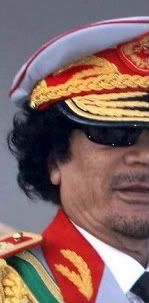
Ministerial letters obtained by The Sunday Times reveal this reluctance is partly explained by fears of jeopardising relations with the newly rehabilitated regime of Colonel Muammar Gadaffi. In a letter to the victims’ lawyers dated October 7, 2008, Gordon Brown wrote: “Libya would not support or be prepared to discuss a bilateral settlement of these cases and doing so would entail substantial risks.”

Another letter from Bill Rammell, then a Foreign Office minister, dated November 6, 2008, also says the government will not intervene in negotiations, explaining that Libya is a vital partner for a “secure energy future” and in the fight against terrorism.

The letters provide new damning evidence of the government’s eagerness to maintain good relations with Libya, in which trade appears to weigh more heavily on ministers’ minds than the plight of British victims of terrorism. >>> | Sunday, September 06, 2009
BNP Gets a Slot on BBC's Question Time

THE SUNDAY TIMES: THE BBC has provoked controversy by giving the British National party a platform for the first time on Question Time, its top current affairs programme.

Nick Griffin, the BNP leader who was elected to the European parliament in June, is expected to be on the show in October. The corporation has decided that the far-right party deserves more airtime because it has demonstrated “electoral support at a national level”.

The move has caused consternation among politicians, with some Labour MPs and at least one cabinet minister pledging to boycott Question Time. They fear the BNP will use the publicity to promote a racist agenda.

The change in policy has also triggered dissent within the BBC. One senior correspondent, who did not want to be named, said: “It’s barmy ... Public servants can be sacked for membership of the BNP and yet the BBC wants to give them airtime with the main political parties.”

The BBC changed its position after the party won two seats at the European elections. Its share of the national vote at that poll was 6.2%. “They got across a threshold that has given them national representation and that fact will be reflected in the level of coverage they will be given,” said Ric Bailey, the BBC’s chief adviser on politics. “This is not a policy about the BNP. It’s a policy about impartiality.” >>> Marie Woolf, Whitehall Editor | Sunday, September 06, 2009
Gordon Brown Vetoes Libyan Payout to IRA Victims

Time to go, Gordon. The British don’t want you leading them any longer. You have brought enough shame on us already. We can’t take anymore. You were never elected to lead us, anyway. Oh, and by the way, it is seventy years now that the long-suffering Brits had to put up with Chamberlain. He went, eventually; and has a special place in world history – as the great appeaser. You, too, Gordon, will have a special place in world history. You’ll be known as the unelected Prime Minister who traded oil for justice, let down 270 innocent victims of the Lockerbie disaster, did shady deals with a tinpot dictator, and chose a ‘special relationship’ with Libya over our staunch friend and ally, the United States of America. – © Mark

THE SUNDAY TIMES: GORDON BROWN personally vetoed an attempt to force Colonel Muammar Gadaffi to compensate IRA bomb victims because it might have jeopardised British oil deals with Libya.

Documents passed to The Sunday Times reveal how the prime minister took a close interest in a campaign to secure payouts for the 2,500 families of those blown up by the Libyan-supplied Semtex explosive used by republican bombers.

However, Brown refused to help the victims because of government concerns that putting pressure on Gadaffi might lead to Libya withdrawing co-operation over trade and the war against Islamic terrorism.

The documents will cause embarrassment for Brown as he faces new questions over the early release of the convicted Lockerbie bomber Abdelbaset Ali Mohmed al-Megrahi.

In a further damaging twist, Jack Straw, the justice secretary, was last night accused by the Tories of misleading the public over the prime minister’s role in talks about the decision to free the terminally ill Libyan terrorist.

The Sunday Times has established that Straw wrote to Brown warning the Libyans might block a multi-million-pound BP oil deal unless the bomber was released. The disclosure contradicts remarks Straw made in a newspaper interview published yesterday in which he insisted there had been “no paper trail” to No 10.

Campaigners claim the official letters about IRA compensation highlight the government’s preoccupation with trading relations with Libya at the expense of bomb victims. >>> Jonathan Oliver, David Leppard and Hala Jaber in Tripoli | Sunday, September 06, 2009
In the Megrahi Affair, the More We Learn, the Worse It Gets

This sordid tale makes me feel ashamed to call myself British. I always knew that the British establishment stank; now, it is clear to me that it stinks to high heaven! – © Mark

THE TELEGRAPH: Telegraph view: The way the Lockerbie bomber gained his release brings shame upon Britain.

Abdelbaset Ali Mohmed al-Megrahi is the only person to have been convicted of planting the bomb that destroyed Pan Am Flight 103 over Lockerbie. Megrahi murdered 270 people, including 51 British citizens. His release from a Scottish jail has caused fresh pain to many of the relatives of those he killed. It has tarnished Britain's reputation abroad, because in spite of the fact that the Scottish Executive has insisted that it took the decision to free Megrahi on its own, there is increasing evidence, including the story we publish today, that the British Government had, at the very least, a powerfully influential role in the decision.

Across the world, there is little doubt that the British Government is perceived as responsible for the Megrahi affair. Diplomatic relations with America have been strained, because Britain has broken a promise given to the US government that the Libyan would not be released before he had served his minimum tariff of 20 years. Worse, Britain is now identified with a policy of preferring money to justice, and being prepared to sell criminals in exchange for trade deals and concessions. That sets an ominous precedent.

The Government is now making the case for Megrahi's release by insisting that contracts with Libya – including BP's £545 million deal involving exploration for new oil reserves in that country – depended on it: not in the sense that there was a formal agreement with Libya stating "we free Megrahi and you give us the oil deal", but in the sense of an informal understanding that the one gesture would be reciprocated by the other. Jack Straw has stated that Megrahi's release was also important to the war on terrorism: Libya's co-operation on intelligence matters required it.

The Government's argument has been greeted with horror in some quarters, on the grounds that justice should never be compromised, no matter how great the costs of holding rigorously to it. We do not accept that principle. There can be cases in which it is reasonable, when the national interest clashes with justice, to prefer protecting the former. The Government has dismally failed, however, to provide a persuasive argument that the release of Megrahi is one of those cases. The Libyan was responsible for one of the worst terrorist outrages perpetrated in peace-time. His guilt has been upheld by the numerous Scottish judges who examined the evidence. He was certainly not solely responsible. But the fact that he had accomplices, and that others ordered the explosion, does not lessen his culpability for it.

Even if it were true that the future of BP's contracts in Libya depended on Megrahi's repatriation, the heinousness of his crime would make most people pause before concluding that that was the correct path to take. The logic of the Government's case seems to be that £545 million, or whatever sum shall eventually be gained from the deals with Libya, covers the murder of 270 people: the money is enough to forgive and forget the crime. >>> Telegraph view | Saturday, September 05, 2009
Revealed: Libya Paid for Medical Advice that Helped Lockerbie Bomber's Release

“It showed the relations between Britain and Libya are strong and deep. We in Libya appreciate this and Britain will find it is rewarded.” – Abdul Majeed al-Dursi, chief spokesman for the régime

THE TELEGRAPH: The British, Scottish and Libyan governments connived to free Abdelbaset Ali Mohmed al-Megrahi on compassionate grounds The Sunday Telegraph can disclose.

Photobucket
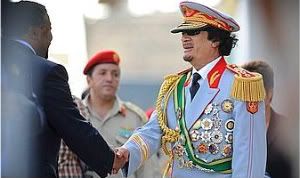
Gordon Brown meets Libyan leader Muammar Gaddafi. Photo: The Telegraph

Medical evidence that helped Megrahi, 57, to be released was paid for by the Libyan government, which encouraged three doctors to say he had only three months to live.

The life expectancy of Megrahi was crucial because, under Scottish rules, prisoners can be freed on compassionate grounds only if they are considered to have this amount of time, or less, to live.

Megrahi is suffering from terminal prostate cancer. Two of the three doctors commissioned by the Libyans provided the required three-month estimates, while the third also indicated that the prisoner had a short time to live.

This contrasted with findings of doctors in June and July who had concluded that Megrahi had up to 10 months to live, which would have prevented his release.

Professor Karol Sikora, one of the examining doctors and the medical director of CancerPartnersUK in London, told The Sunday Telegraph: “The figure of three months was suggested as being helpful [by the Libyans].

“To start with I said it was impossible to do that [give a three-month life expectancy estimate] but, when I looked at it, it looked as though it could be done – you could actually say that.” He said that he and a second doctor, a Libyan, had legitimately then estimated Megrahi’s life expectancy as “about three months”. A third doctor would say only that he had a short time to live.

This weekend it was reported that Megrahi was moved out of an emergency care unit in Tripoli.

The prognosis from the three doctors – two from Britain – was used as part of the evidence by Kenny MacAskill, the Scottish Justice Secretary, last month when he concluded that Megrahi should be released on compassionate grounds. Our investigation also reveals that:

Mousa Kousa, a senior Libyan politician who was expelled from Britain in 1980 for boasting of a plot to kill Libyan dissidents in London, played a key role in the talks to free Megrahi, and threatened serious consequences if the prisoner died in jail. Mr Kousa, now the Libyan foreign minister, was once implicated in planning the Lockerbie bombing – a claim he vehemently denies. According to the minutes of a meeting on Jan 22 between Libyan and Scottish officials: “Mr Kousa stated that Mr al-Megrahi’s death in Scotland would not be viewed well by the Muslims or Arabs. Nor would it be good for relations.” >>> Andrew Alderson, Chief Reporter, Robert Mendick and Damien McElroy in Tripoli, with additional reporting by Leonard Doyle in Washington | Saturday, September 05, 2009

Saturday, September 05, 2009

Anti-fascists Clash with Right-wing Protesters in Birmingham

MAIL ONLINE: There were angry clashes in a city centre today as right-wing protesters fought with anti-fascist campaigners in a busy shopping street.

A planned demonstration by The English Defence League in central Birmingham descended into violence as the group charged along New Street, close to the city's main train station.

More than 20 men have been arrested.

'There were about 250 people in total, fighting and throwing bottles at each other,' one onlooker said.

The disorder spilled onto the adjoining Bennetts Hill, a street lined with a number of pubs, popular with shoppers.

Dozens of riot police worked to contain the disturbance and a police helicopter hovered overhead.

A police spokeswoman said there had been 'pockets' of trouble. West Midlands Police said it would deal with anti-social behaviour or criminal activity connected to the protests 'robustly' after a demonstration last month turned violent. >>> | Saturday, September 05, 2009
Binyamin Netanyahu Pushes Barack Obama into a Corner with Settlement Plan

TIMES ONLINE: Israel’s plans to have one last burst of settlement building in the West Bank before agreeing to a temporary, partial freeze is a slap in the face to the Obama Administration and a warning to the Palestinians that it intends to fight for every inch of land.

Binyamin Netanyahu’s refusal to include east Jerusalem — captured in the Six Day War — in any future settlement freeze suggests that Israel is trying to push the Palestinians into a checkmate situation.

The Palestinians demand east Jerusalem, still predominantly populated by Palestinians, as their future capital. An expansion of settlements ringing the city could cut it off from the Palestinian hinterland and slice the West Bank in two.

From the outset relations between the Netanyahu and Obama administrations have been testy. The new Israeli Government was at first shocked by Washington’s insistence on a total settlement freeze — something that has never happened in 16 years of peace negotiations, during which the Jewish communities in the West Bank have grown inexorably.

Israel has tried to persuade Washington to allow “natural growth” in the settlements, where about 300,000 people live in neat, red-tiled villas perched on strategic hilltops across the West Bank, known to Israelis as Judea and Samaria. When that failed it tried to rebrand “natural growth” as “normal life” but the Americans still refused. The latest announcement puts Washington in a difficult position — >>> James Hider: Analysis | Saturday, September 05, 2009
Die Schweiz am Gängelband Gadhafis

DIE PRESSE: Libyens Diktator treibt seit Juli 2008 ein böses Spiel mit der Schweiz und hält zwei Geschäftsleute seit mittlerweile 414 Tagen als Geiseln fest. Der Zorn der Eidgenossen über die Demütigungen wächst.

Seit mittlerweile 414 Tagen sitzen zwei Schweizer Geschäftsleute in Libyen fest. Und nichts deutet darauf hin, dass sich der bizarre Wüstendiktator Muammar al-Gadhafi dazu erweichen lassen könnte, seine beiden Geiseln zurück in ihre Heimat zu lassen. Im Gegenteil: Gadhafi spielt weiter Katz und Maus mit der Schweiz, er beleidigt die Eidgenossen als „Weltmafia“ oder „Verbrecherkartell“ und will vor der UNO gar die Auflösung der Schweiz erreichen.

Dort aber werden Wut und Zorn über die ständigen Demütigungen aus Tripolis immer größer. Die rechte Partei „Liga der Tessiner“ forderte jetzt gar, Libyen den Krieg zu erklären und die festgehaltenen Landsleute mit Waffengewalt zu befreien. Und in Genf fanden am Freitag die ersten Solidaritätskundgebungen für die beiden Schweizer Geschäftsleute statt.

Am Ufer des Genfer Sees. Dort, in Genf, hat Anfang Juli 2008 alles begonnen. Im Luxushotel „President Wilson“ stiegen illustre Gäste ab: der Sohn von Libyens Staatschef Gadhafi, Hannibal, seine hochschwangere Frau Aline, der dreijährige Sohn samt Gefolge. Die Familie belegte mehrere Suiten in der Nobelherberge direkt am Ufer des Genfer Sees, um dort die Zeit bis zur Geburt des Kindes zu verbringen. Wenige Tage später erhielt die Genfer Polizei einen verzweifelten Telefonanruf aus dem Hotel: Zwei Hausangestellte der Gadhafis berichteten von schweren Misshandlungen durch ihre Dienstgeber. Sie seien geschlagen, getreten und mit heißem Wasser verbrüht worden.

Kurz darauf stürmten rund 20 Polizisten mit vorgehaltener Waffe die Luxussuite des Ehepaars Gadhafi. Hannibal wurde in Handschellen abgeführt, seine schwangere Frau unter Polizeischutz ins Spital gebracht. Das Ehepaar bestreitet die Misshandlungsvorwürfe vehement und behauptet, die Bediensteten hätten die Übergriffe erfunden, um in der Schweiz Asyl zu erhalten.

„Aug und Aug, Zahn um Zahn“. Doch die Genfer Justiz erließ einen Haftbefehl gegen die Gadhafis. Erst nach der Bezahlung einer Kaution von einer halben Million Schweizer Franken wurden Hannibal und Aline freigelassen. Schwer gekränkt, schworen die Gadhafis Rache: Und zwar „Aug um Aug, Zahn um Zahn“, drohte Hannibals Schwester Aischa, bevor die Familie die Schweiz – wohl für immer – verließ.

Was dieser biblische Ausspruch einer in ihrer Ehre verletzten arabischen Herrscherfamilie bedeutet, muss die Schweiz seither bitter erfahren. Gadhafi ließ Büros Schweizer Firmen in Libyen schließen und die Swiss nicht mehr nach Tripolis fliegen. Später stoppte er die Öllieferungen in die Schweiz und transferierte sein auf helvetischen Konten liegendes Milliardenvermögen ins Ausland. >>> Von Carola Schneider | Samstag, 05. September 2009

Schweiz: Rechte Partei will Libyen Krieg erklären

DIE PRESSE: Ein 22-jähriger Abgeordneter des Tessiner Großrates verlangt einen Angriff, um zwei inhaftierte Geschäftsleute zu befreien. Damit würden die Rechte und die Ehre der Schweiz gewahrt.

Im Konflikt zwischen der Schweiz und Libyen ist jetzt die rechte Partei Lega dei Ticinesi (Liga der Tessiner) so weit gegangen, einen Krieg zu fordern. Die Schweiz solle Libyen den Krieg erklären. Die seit über einem Jahr in Tripolis festgehaltenen Schweizer Geschäftsleute müssten mit Waffengewalt befreit werden, erklärte der Lega-Politiker Boris Bignasca, Mitglied des Tessiner Großrates (Kantonsparlament), in einer Resolution.

Bignasca, der 22-jährige Sohn des Lega-Parteichefs Giuliano Bignasca, verlangt von den Tessiner Behörden, dass sie sich vor der aus beiden Parlamentskammern bestehende Bundesversammlung für diese "außergewöhnliche, aber unausweichliche Initiative" stark machen. Die Schweizer müssten die Risiken und Opfer eines bewaffneten Konflikts mit Entschlossenheit angehen. Schweizer Soldaten könnten in einer Blitzaktion die festgehaltenen Geiseln befreien. Damit würden die Rechte, Interessen und nicht zuletzt auch die Ehre der Schweiz gewahrt.

Die Schweiz dürfe sich nicht gefallen lassen, dass der "Tyrann Gaddafi" die Aufteilung der Schweiz an die Nachbarländer Deutschland, Frankreich und Italien fordere und somit die Souveränität des Landes angreife. Bignasca hofft, dass das Tessiner Kantonsparlament die Resolution noch im September behandeln wird, wie er am Freitagabend gegenüber dem Lokalsender "TeleTicino" sagte. Nervenkrieg um Geschäftsleute >>> Ag. | Samstag, 05. September 2009

Hotel President Wilson >>>
Frankreich: Morddrohung an Sarkozy – Elf Personen verhaftet

WELT ONLINE: Nach anonymen Todesdrohungen gegen Staatspräsident Nicolas Sarkozy und andere französische Politiker sind im Süden Frankreichs elf Verdächtige festgenommen worden. Die Drohbriefe mit Gewehrkugeln waren in den vergangenen Monaten aus der Nähe von Montpellier abgeschickt worden.

Photobucket
Frankreichs Präsident Nicolas Sarkozy. Bild: Welt Online

Die französische Polizei hat Justizkreisen zufolge elf Personen wegen Morddrohungen an Frankreichs Präsidenten Nicolas Sarkozy verhaftet. Es handelt sich um Ladenbesitzer, Ex-Soldaten und Mitglieder eines Schützenvereins in der Nähe von Montpellier im Südwesten des Landes. Wie ein Justizsprecher bestätigte, wurden die Personen im Département Hérault im Süden des Landes aufgegriffen.

Neben Sarkozy erhielten zwei Minister, der Bürgermeister von Bordeaux und andere Mitte-Rechts-Politiker erstmals im März Briefe mit Kugeln. Seitdem tauchten sporadisch weitere Morddrohungen in den Posträumen von Politikern auf. Der letzte an Sarkozy adressierte Brief wurde im August von einem Postbeamten in Montpellier abgefangen. Bei Durchsuchungen der Wohnungen der Verdächtigen sind Polizeikreisen zufolge aber zunächst keine belastbaren Beweise sichergestellt worden. >>> Reuters/AP/AFP/fas | Freitag, 04. September 2009
Sarkozy et Abbas dénoncent la colonisation israélienne

Photobucket
Nicolas Sarkozy, qui considère une relance rapide des pourparlers de paix comme l'une de ses priorités diplomatiques, s'est entretenu avec son homologue palestinien, vendredi à l'Élysée. Crédits photo : Le Figaro

LE FIGARO: Le rendez-vous entre le président de l'Autorité palestinienne et Nicolas Sarkozy, vendredi à l'Élysée, s'est déroulé sous la pression des dernières déclarations israéliennes.

C'est peu dire que la rencontre entre Mahmoud Abbas et Nicolas Sarkozy, vendredi à l'Élysée, s'est déroulée dans un contexte de pessimisme. L'annonce, le jour même, par les Israéliens de leur intention de donner un coup d'accélérateur à la colonisation en Cisjordanie avant tout gel partiel touche en effet le problème crucial sur la route d'une improbable relance de pourparlers de paix israélo-palestiniens. «Ce n'est pas acceptable. Nous voulons un gel de la colonisation et également le lancement des négociations de la phase finale», a réagi Mahmoud Abbas à l'issue de sa discussion d'environ une heure avec le président de la République. Cette étape parisienne, souhaitée par le président palestinien, s'inscrivait dans les préparatifs de l'Assemblée générale de l'ONU qui débutera dans quelques jours. À cette occasion, il serait question d'une rencontre organisée à New York entre le dirigeant palestinien et le premier ministre israélien. Mais vendredi, Mahmoud Abbas a été clair en indiquant qu'une éventuelle rencontre «dépendra des pas, des mesures qui l'auront précédée concernant le gel de la colonisation». Le principal négociateur palestinien Saëb Erakat a, pour sa part, jugé «totalement inacceptable» le projet israélien d'extension des colonies juives. «La seule chose qui sera suspendue après ces annonces, c'est le processus de paix», a-t-il ajouté.

Paris a également condamné «sans aucune ambiguïté» l'accélération de la colonisation israélienne. Lors de l'entretien avec son homologue palestinien, Nicolas Sarkozy a «souligné qu'il était déterminant, pour permettre la reprise du processus de paix, que cessent les activités de colonisation ainsi que le demande l'ensemble de la communauté internationale», selon un communiqué de l'Élysée. Obama attendu à l'ONU >>> Alain Barluet | Vendredi 04 Septembre 2009
Libyan Foreign Minister, Musa Kasa, Defends UK Government Over Lockerbie

So, the day has come when Libya now has to defend the United Kingdom against its American critics!

Gordon Brown and his merry band of crooks have severed our once glorious special relationship with the US and traded it in for a ‘special relationship’ with a tinpot dictator! Why? Because there’s money to be made. Oil money. Big money.

Not only is this as absurd as it is dangerous, but it also signifies a significant shift towards the realisation of Eurabia. Remember this: Gaddafi has made no secret of the fact that he wants Islam to take over Europe. Alas, we have got into bed with vipers! And Gordon Brown and his profiteering cronies have fallen for the ruse hook, line, and sinker!
– © Mark


TIMES ONLINE: A top Libyan official once expelled from Britain for plotting the deaths of exiled dissidents rode to the defence of the British Government over Lockerbie yesterday.

In one of the few interviews he has given, Musa Kusa, the Libyan Foreign Minister and long-time member of Colonel Muammar Gaddafi’s inner circle, told The Times that he was astonished by the controversy over the release of Abdul Baset Ali al-Megrahi, the Lockerbie bomber.

“Where is the human rights, the compassion and mercy? The man is on the verge of death,” Mr Kusa said in a midnight conversation in his plush, chilled office in the centre of baking Tripoli.

He flatly denied any link between al-Megrahi’s release and British commercial interests in his oil-rich state and said that Libya was grateful to the British and Scottish governments for their humanity. “You should not do an injustice to the British Government. It was nothing to do with trade,” he said. “If we wished to bargain we would have done it a long time ago.”

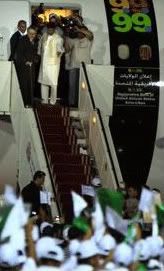
Mr Musa, likewise, said that the row over al-Megrahi’s rapturous reception at Tripoli airport was the result of a cultural misunderstanding: such greetings were a Libyan custom. “I can’t say to [al-Megrahi’s] friends and tribe, ‘Don’t go there’,” he said. Not one Libyan official went to the airport, he added, and the reception was, by Libyan standards, “low key”.

He emphasised that Libya was eager to strengthen its relationship with Britain despite the present friction.

Mr Kusa, the Libyan foreign intelligence chief for 15 years before becoming Foreign Minister, is the embodiment of his country’s transition from rogue state to something approaching international respectability.

In 1980, when he was head of the Libyan diplomatic mission in London, he was expelled from Britain for allegedly organising the killing of exiled opponents of Colonel Gaddafi’s regime. In later years he was accused of complicity in the 1998 Lockerbie bombing, the destruction of a French airliner over Niger in 1989, the Berlin disco bombing that led to the US bombing of Tripoli in 1986 and much else besides. He was high on the British and US terrorism blacklists.

Today Mr Kusa is received at the highest levels in London and Washington. He negotiated the conditions of Libya’s $2.7 billion compensation payment to families of the Lockerbie victims. In the refined surroundings of the Travellers Club in Pall Mall, he negotiated the dismantling of Libyan weapons of mass destruction. He co-operates with British and American intelligence agencies in their fight against a mutual enemy — Islamic terrorism. >>> Martin Fletcher in Tripoli | Saturday, September 05, 2009
Schweiz auf mögliche Schmährede Ghadhafis vorbereitet: Uno-Botschafter Maurer kennt Inhalt des libyschen Briefs

NZZ ONLINE: «Wir wissen, was in dem Schreiben steht.» Dies sagt der Schweizer Uno-Botschafter Peter Maurer zum inzwischen abgeschmetterten Vorstoss Ghadhafis zur Auflösung der Schweiz. Sollte Ghadhafi in seiner Rede vor der Uno trotzdem zum Schlag gegen die Schweiz ausholen, wisse die Schweiz, was zu tun ist.

Der Schweizer Uno-Botschafter in New York hat die Existenz eines Briefes an die Uno, in dem Libyen die Auflösung der Schweiz fordert, bestätigt. Wir wissen, dass es ein Schreiben gibt und wir wissen, was der Inhalt ist, sagte Peter Maurer der Nachrichtenagentur SDA am Freitag in New York. Das Dokument orientiere sich an der Muammar Ghadhafis Rede vom Juli am G-8-Gipfel im italienischen L'Aquila und bringe keine neue Begründung des Vorstosses.

Ghadhafi hatte gemäss Angaben der libyschen Nachrichtenagentur Jana beim Gipfel in L'Aquila und beim Blockfreientreffen in Sharm as-Sheik die Schweiz scharf angegriffen: Sie sei kein Staat, sondern eine Terroristen-Finanziererin. Um das Land an seinem Tun zu hindern, müsse es deshalb unter den drei grossen Nachbarn Deutschland, Frankreich und Italien aufgeteilt werden.

Schreiben ging an Ban

Laut Maurer richtet ein Land, das ein Traktandum in die Generalversammlung einbringen will, die Bitte um Aufnahme des Vorschlages an den Generalsekretär. Dieser leitet ihn nach einer Prüfung an das Komitee zur Programmplanung weiter.

Im Falle des Antrages aus Libyen brauche man aber keine lange diplomatische Ausbildung um zu erkennen, dass ein solcher Vorstoss keine Chance habe, sagte der Schweizer Diplomat. Vorschläge könne man an der Uno auf viele Arten einbringen, am Schluss müsse man aber immer eine Mehrheit finden.

Der Sprecher des Generalsekretärs, Farhan Haq, hatte gegenüber der SDA schon am Donnerstag deutlich gemacht, dass der libysche Vorschlag der Uno-Charta völlig widerspreche und deshalb weder zirkuliert noch veröffentlicht werde. Kein Uno-Mitglied dürfe in seiner Existenz bedroht werden. >>> sda | Samstag, 05. September 2009
«Montrer que la Suisse n’est pas dupe»

LE TEMPS: Luis Martinez, directeur de recherche au Centre d’études et de recherches internationales (CERI) de Sciences Po à Paris, est l’un des spécialistes les plus respectés de la Libye. Il porte un regard acéré sur la crise qui oppose Berne à Tripoli. Il a publié The Libyan Paradox*.

Le Temps: Comment appréciez-vous la manière dont les autorités suisses ont géré cette crise avec la Libye?

Luis Martinez: En observateur extérieur, j’avais été étonné, dans l’affaire de l’arrestation d’Hannibal Kadhafi et de sa femme, par la volonté d’être aussi formel vis-à-vis de l’enfant d’un chef d’Etat comme le colonel Kadhafi dans le contexte actuel de la Libye. Le même événement ne m’aurait absolument pas choqué il y a dix ans à Genève, Oslo ou Madrid. La Libye aurait rappelé Hannibal et aurait dit: «Ce n’est pas le moment de faire des bêtises, on a assez de problèmes avec le Conseil de sécurité.»

Mais avec la Libye d’aujourd’hui, qui depuis 2003 revient sur la scène et affiche clairement ses prétentions, j’ai trouvé que cette arrestation avait un côté peut-être courageux mais aussi très risqué. Même s’il est tout à fait respectable de venir en aide à deux employés maltraités, dans le contexte actuel, les autorités ont manqué de tact et surtout de débriefing: la Libye d’aujourd’hui n’est pas la Libye d’avant.

– Mais comment comprendre que la Libye se soit sentie à ce point humiliée?

– Ce point est très important. Ce petit monde des enfants de pétro-Etats autoritaires est un peu comme celui des acteurs de Holly­wood. Tout le monde se connaît, on fréquente les mêmes villes, les mêmes palaces. Les Libyens font leur retour dans ces endroits depuis 2003, et vis-à-vis des autres grandes familles, il est vraiment gênant d’apparaître comme ceux que l’on maltraite, au même titre que des Soudanais ou des Syriens. Deux employés marocains arrivent à faire arrêter le fils de Kadhafi: dans ce petit monde-là, cela veut dire que Kadhafi ne vaut rien. La réaction libyenne est proportionnelle à son humiliation. Il s’agit de faire comprendre que cela coûte très cher d’agir ainsi avec un enfant Kadhafi. >>> Angélique Mounier-Kuhn | Samedi 05 Septembre 2009

*The Libyan Paradox (Columbia/Hurst) (Hardcover) >>>
Unadulterated Dhimmitude! Boris Johnson Calls for a Day of Fasting to 'Help Understand Muslims'

You fast if you want to; this gentleman’s not for fasting! – Mark

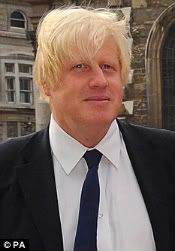
MAIL ONLINE: London Mayor Boris Johnson today encouraged people to undergo a day of fasting to help them gain a better understanding of their 'Muslim neighbour'.

Speaking during a visit to the East London Mosque and London Muslim Centre he said Muslims in the capital were 'challenging traditional stereotypes' to show they wanted to be part of the mainstream.

Mr Johnson's visit coincided with the holy period of Ramadan in which participating Muslims fast from dawn until sunset.

He said: 'Whether it's in theatre, comedy, sports, music or politics, Muslims are challenging the traditional stereotypes and showing that they are, and want to be, a part of the mainstream community.

'That's why I urge people, particularly during Ramadan, to find out more about Islam, increase your understanding and learning, even fast for a day with your Muslim neighbour and break your fast at the local mosque.

'I would be very surprised if you didn't find that you share more in common than you thought.'

He added: 'Muslims are at the heart of every aspect of society. Their contribution is something that all Londoners benefit from.

'Muslim police officers, doctors, scientists and teachers are an essential part of the fabric of London.

'Islamic finance is contributing to the economy by changing the way Londoners invest, save, borrow and spend. >>> | Friday, September 04, 2009
Jack Straw Admits Lockerbie Bomber's Release Was Linked to Oil

THE TELEGRAPH: Jack Straw has reignited the row over the release of the Lockerbie bomber by admitting for the first time that trade and oil were an essential part of the Government’s decision to include him in a prisoner transfer deal with Libya.

The Justice Secretary said he was unapologetic about including Abdelbaset al Megrahi in the agreement, citing a multi-million-pound oil deal signed by BP and Libya six weeks later.

The admission directly contradicts Gordon Brown's insistence only days ago that oil deals were not a factor in the prisoner's release.

In an interview with The Daily Telegraph, Mr Straw also suggested that Kenny MacAskill, the Scottish justice minister, released the terminally-ill bomber on compassionate grounds earlier than the British Government would have done.

Mr Brown has been accused of putting Britain’s trade interests before justice for the Lockerbie victims.

Earlier this week, the outcry forced him to say: “There was no conspiracy, no cover-up, no double dealing, no deal on oil, no attempt to instruct Scottish ministers, no private assurances.” >>> Mary Riddell, Simon Johnson and Andrew Porter | Friday, September 04, 2009

NEW YORK DAILY NEWS:
Brown the Betrayer: Britain’s Sellout Prime Minister Has Broken Faith and Ties with the U.S. >>> Editorial | Wednesday, September 02, 2009

Friday, September 04, 2009

War Declaration on Nazis Recalled

BBC: The moment Britain finally declared war on Nazi Germany exactly 70 years ago is being remembered.

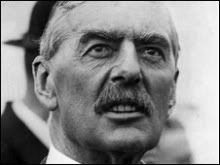
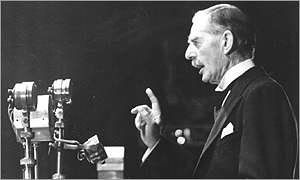
Prime Minister Neville Chamberlain made his sombre radio broadcast at 11.15am on 3 September 1939, two days after German forces attacked Poland.

France followed suit hours after the historic address at 10 Downing Street.

There are no official events to mark the anniversary, but war-related re-unions and debates are being held in northern England and London.

A group of land girls who worked together on farms in Lincolnshire during the war will be reunited in Grimsby - some for the first time in 70 years. >>> | Thursday, September 03, 2009

Prime Minister Chamberlain Declares War

BBC: With Hitler's invasion of Poland on 1 September the British Prime Minister Neville Chamberlain's policy of appeasement had clearly failed.

In the face of a revolt from members of his Cabinet and a growing feeling in the country that Hitler must be tackled, he had little choice but to declare war.

At a little after 1100 on 3 September he made this broadcast.
I am speaking to you from the Cabinet Room at 10 Downing Street.

This morning the British Ambassador in Berlin handed the German Government a final note stating that, unless we hear from them by 11 o'clock that they were prepared at once to withdraw their troops from Poland, a state of war would exist between us. I have to tell you now that no such undertaking has been received, and that consequently this country is at war with Germany.

You can imagine what a bitter blow it is to me that all my long struggle to win peace has failed. Yet I cannot believe that there is anything more or anything different that I could have done and that would have been more successful.

Up to the very last it would have been quite possible to have arranged a peaceful and honourable settlement between Germany and Poland, but Hitler would not have it. He had evidently made up his mind to attack Poland, whatever happened, and although he now says he put forward reasonable proposals which were rejected by the Poles, that is not a true statement.

The proposals were never shown to the Poles, nor to us, and though they were announced in a German broadcast on Thursday night, Hitler did not wait to hear comments on them but ordered his troops to cross the Polish frontier the next morning.

His action shows convincingly that there is no chance of expecting that this man will ever give up his practice of using force to gain his will. He can only be stopped by force.

We and France are today, in fulfilment of our obligations, going to the aid of Poland, who is so bravely resisting this wicked and unprovoked attack upon her people. We have a clear conscience - we have done all that any country could do to establish peace.

The situation in which no word given by Germany's ruler could be trusted, and no people or country could feel itself safe, has become intolerable. And now that we have resolved to finish it I know that you will play your part with calmness and courage.
At such a moment as this the assurances of support which we have received from the empire are a source of profound encouragement to us.

When I have finished speaking, certain detailed announcements will be made on behalf of the government. Give these your closest attention. The government have made plans under which it will be possible to carry on work of the nation in the days of stress and strain that may be ahead...

Now may God bless you all. May He defend the right. For it is evil things that we shall be fighting against - brute force, bad faith, injustice, oppression and persecution - and against them I am certain that right will prevail. [Source: BBC] | Wednesday, September 01, 1999

Hitler's Address to the Reichstag

BBC: At dawn on 1 September, German troops invaded Poland, unleashing Blitzkrieg or 'lightning war' on the world for the first time.

The Nazi invasion of Poland was entirely unprovoked and the German dictator, Adolf Hitler, gave no ultimatum or declaration of war to the Polish government.

Instead the Nazi leader simply issued a proclamation to the army saying that Poland had refused the "peaceful settlement" desired by him, but which in reality he had never worked for.

Later that morning the German High Command issued the order: "Soldiers of the German Army - after all other means have failed - weapons must decide."

Hitler addressed the German Parliament, the Reichstag, later that day.

Here are some extracts from his speech which have been translated from the original German.
For months we have been suffering under the torture of a problem which the Versailles 'Diktat' created. A problem which has deteriorated until it has become intolerable for us.

Danzig was and is a German city . The [Polish] Corridor was and is German. Danzig was separated from us. The corridor was annexed by Poland. As in other German territories [outside Germany] the east German minorities have been ill-treated in the most distressing manner... I attempted to bring about, by making proposals for revisions, an alteration in this intolerable position.

It is a lie when the outside world says that we only tried to carry our revisions through by pressure. I have, not once but several times, made proposals for the revision of intolerable conditions.

All these proposals have been rejected... In the same way I have also tried to solve the problem of Danzig, the Corridor etc... by proposing peaceful discussion... I then formulated at last the German proposals, and I must repeat that there is nothing more modest and loyal than these proposals.

These answers have been refused. Not only were they answered first with mobilisation, but with increased terror against our German compatriots and with a slow strangling of the Free City of Danzig - economically, politically, and in recent weeks by military and transport means.

I made one more final effort to accept a proposal for mediation on the part of the British Government. They proposed, not that they themselves should carry on the negotiations, but rather that Poland and Germany should come into direct contact and once more pursue negotiations.

I accepted this proposal and worked out a basis for those negotiations which are known to you. For two whole days I sat with my government and waited to see if it was convenient for the Polish Government to send a plenipotentiary or not. Last night they did not send us a plenipotentiary, but instead informed us through their ambassador that they were still considering whether and to what extent they were in a position to go into the British proposals...

If the German Government and its leader patiently endured such treatment Germany would deserve only to disappear from the political stage. I therefore, decided late last night, and informed the British Government that, in these circumstances I can no longer find any willingness on the part of the Polish Government to conduct serious negotiations with us...

When statesmen in the West declare that this affects their interests, I can only regret such a declaration. We ask nothing of these Western states and will never ask anything. I have declared that the frontier between France and Germany is a final one. I have repeatedly offered friendship and the closest co-operation to Britain, but this cannot be offered from one side only...

I will not make war against women and children. I have ordered my airforce to restrict itself to attacks on military objectives. If, however, the enemy thinks he can from that draw 'carte blanche' on his side to fight by other methods he will receive an answer that will deprive him of hearing and sight. [Source: BBC] | Friday, September 03, 1999]
Clinic for Internet Addicts Opens in US

THE GUARDIAN: reSTART offers counseling and psychotherapy – and up to 45 days 'cold turkey' away from the web

If you have to take a quick break from reading this article to check your Blackberry, send a text or reboot your Xbox 360 before you reach the end of this paragraph, then the good news is that help is at hand.

reSTART has been opened outside Seattle, the rain-soaked north-western town where high-tech companies are as common as cattle are in Texas. It claims to be America's first residential detox centre for internet addicts.

For a little over $14,000, up to six people at a time can spend 45 days sweating out their insatiable urge to be umbilically connected to cyberspace. Think cold turkey as experienced by heroin junkies, and you get the general idea.

Residents are given counselling and psychotherapy, as well as encouraged to bond as a group in activities such as household chores, walks in the grounds and exercising.

The centre, in five acres about 30 miles out of Seattle, is the brainchild of Hilarie Cash, a therapist who had until this summer been treating patients with presumed internet addiction but only on a day-by-day basis.

She recorded her first case in 1994, with a patient so glued to video games that he forfeited his marriage and two jobs. >>> Ed Pilkington | Friday, September 04, 2009
Schweizer in Libyen müssen vor Gericht

WELT ONLINE: Der diplomatische Streit zwischen Libyen und der Schweiz geht weiter: Weil sie Einreise-Bestimmungen verletzt hätten, werden die beiden festgehaltenen Schweizer in Libyen vor Gericht gestellt. Gestern hatte der libyschen Diktator Gaddafi bei der UN gefordert, die Schweiz aufzulösen. Der Antrag wurde abgelehnt.

Die beiden in Libyen festgehaltenen Schweizer werden in Libyen vor Gericht gestellt. Das erklärte der libysche Außenminister Musa Kusa einem Journalisten der britischen „Times“, wie das Schweizer Fernsehen berichtete.

Sie hätten unter anderem libysche Einreise-Bestimmungen verletzt. „Dem libyschen Rechtssystem kann niemand etwas vorschreiben. Es entscheidet frei“, sagte der Minister in dem ausgestrahlten Telefoninterview. Er ließ offen, wann das Verfahren stattfindet.

Unterdessen teilte nach Schweizer Medienberichten ein UN-Sprecher in New York mit, der Antrag des libyschen Revolutionsführers Muammar al-Gaddafi an die Vereinten Nationen, die Schweiz aufzulösen, sei schon vor Wochen abgelehnt worden. Am 15. September übernimmt Libyen turnusgemäß für ein Jahr den Vorsitz der UN-Vollversammlung. >>> dpa/dcs | Freitag, 04. September 2009