Tuesday, December 08, 2009

Minarets suisses : premiers appels à annuler le vote

Manifestation contre les résultats du vote, le 1er décembre à Lausanne. Crédits photo : Le Figaro

LE FIGARO: Un avocat a décidé de saisir la Cour européenne des droits de l'homme.

Et si on annulait la votation ? Complètement déboussolée après le succès de l'initiative antiminarets, approuvée le 29 novembre par plus de 57 % des votants, la classe politique suisse étudie toutes les pistes : faut-il saisir la Cour européenne des droits de l'homme, comme le souhaitent les Verts, soutenus par Daniel Cohn-Bendit, ou bien lancer une «contre-initiative», comme le proposent les radicaux ? Deux plaintes ont déjà été déposées au Tribunal fédéral. L'avocat Antoine Boesch, qui se dit soutenu par des clients de tous horizons et de toutes confessions, a, pour sa part, décidé de saisir la Cour européenne des droits de l'homme. Quant au Club helvétique, composé d'une vingtaine d'intellectuels, de juristes et de responsables politiques, il suggère de remplacer l'interdiction des minarets dans la Constitution par une «disposition sur la tolérance» . >>> Stéphane Kovacs | Mardi 08 Décembre 2009
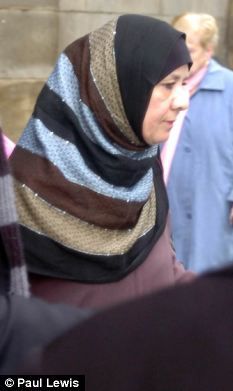
Christian Hotel Manager in Court Accused of Asking Hijab-wearing Guest: 'Are You a Terrorist and a Murderer?'

MAIL ONLINE: Two Christian hoteliers went on trial yesterday accused of insulting a Muslim convert by branding Mohammed a 'warlord' and telling her she was living in 'bondage'.

Ben and Sharon Vogelenzang allegedly asked 60-year-old guest Ericka Tazi if she was a terrorist and a murderer after she came down to breakfast wearing an Islamic headscarf.

The white, British-born grandmother, who was staying at the couple's hotel while undergoing medical treatment, told a court the pair had shouted abuse at her, leaving her shocked and traumatised.

However the couple's barrister challenged her account, suggesting she had worn Islamic dress to provoke the Vogelenzangs and that they merely engaged in a legitimate discussion about their faiths.

The couple, who run The Bounty House 
Hotel in Aintree, Liverpool, both deny the unusual charge of committing a religiously aggravated public order offence, which carries a maximum fine of £5,000.

Christians gathered outside Liverpool magistrates' court to support the couple.

Mrs Tazi, who suffers from the chronic pain condition fibromyalgia, spent a month at the hotel earlier this year while attending a course of therapy at a nearby hospital.

The former Roman Catholic from Warrington, who converted to Islam last year, gave evidence after swearing an oath to Allah and kissing the Koran. >>> | Tuesday, December 08, 2009
Record Level of British Population Is Foreign-born

THE TELEGRAPH: More than one in 10 people living in Britain today were born abroad, a record level, new figures show.

The proportion of the population who are foreign-born has almost doubled in the past two decades to 11 per cent, or 6.7million people.

One of the key factors behind Britain’s population increase has been the flow of migrant workers from Poland, Lithuania and six other Eastern European countries that joined the EU in 2004.

At the same time, the percentage of children being born to foreign mothers has also reached new levels, reported Jil Matheson, the national statistician.

The Office for National Statistics figures showed that in 2008 some 11 per cent of the population were born abroad, up from around 8 per cent in 2001 and 6.7 per cent in 1991. Figures are not available for 1997 when Labour came to power but, based on trends, is likely to have been just over 7 per cent.

Britain’s population is on course to pass 70 million in around two decades, Ms Matheson warned. She said projections based on past demographic trends suggest a 17 per cent increase in population over the next 25 years to hit 71.6 million by 2033. >>> Tom Whitehead, Home Affairs Editor | Tuesday, December 08, 2009

Because He Ain’t Worth It!

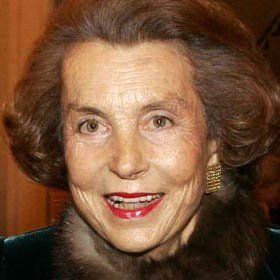
THE TELEGRAPH: A French judge will examine whether Europe's richest woman, the elderly heiress to the L'Oreal cosmetics fortune, should be stripped of the right to manage her own affairs after she showered gifts worth almost $1.5 billion on a friend.

Liliane Bettencourt, 87, says she was in full possession of her wits when she lavished cash, artworks and life insurance on photographer and socialite Francois-Marie Banier, 62, but her daughter disagrees and has taken her objections to the courts.

Lawyer Olivier Metzner, who represents the daughter, said that he had launched a civil procedure to try and have Mrs Bettencourt declared irresponsible and placed under the authority of a court-designated tutor.

The move is in addition to a separate criminal case in which the daughter, Francoise Bettencourt-Meyers, is pressing charges against Mr Banier, accusing him of taking advantage of an old lady's weakness to extort staggering sums from her.

"We have already taken action against the predator. Now we are taking action to protect my client's mother, to show that she is nothing more than a victim," said Mr Metzner. L'Oreal heiress facing scrutiny over $1.5bn gifts to male friend >>> | Tuesday, December 08, 2009

Sarkozy nimmt Schweizer Stimmbürger in Schutz: Frankreichs Präsident fordert von allen Religionen Verzicht auf Provokationen

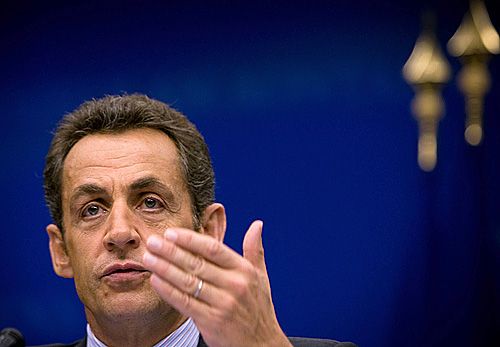
NZZ ONLINE: Frankreichs Präsident Nicolas Sarkozy hat nach der Schweizer Volksabstimmung über Minarette zur Zurückhaltung bei der Ausübung jeglicher Religion aufgerufen. Er rief Muslime und andere Religionsgemeinschaften zum Verzicht auf «jede Provokation» auf.

Jeder müsse «seinen Kult mit der demütigen Diskretion ausüben», die die Achtung der Andersdenkenden bezeuge, erklärte Sarkozy in einem vorab veröffentlichten Beitrag für die französische Zeitung «Le Monde» vom Mittwoch.

Sarkozy verteidigte darin auch die Schweizer Bevölkerung: Es sei «verblüffend», welche «übertriebene und zuweilen karikaturenhafte Reaktionen» die Entscheidung zu den Minaretten «in bestimmten Bereichen der Medien und Politik» ausgelöst hätten.

Verstehen statt «Irrationaler Argwohn»

Dahinter stehe aus seiner Sicht auch ein «irrationaler Argwohn» gegenüber Volksabstimmungen. «Anstatt das Schweizer Volk endgültig zu verurteilen, sollten wir auch verstehen, was es ausdrücken wollte und was so viele Völker in Europa fühlen, darunter das französische Volk.»

Europa sei tolerant. Aber seine Völker wollten nicht, «dass ihr Lebensrahmen, ihre Denkweise und ihre sozialen Beziehungen entstellt werden». >>> sda/dpa/afp | Dienstag, 08. Dezember 2009

Point de view – Nicolas Sarkozy : "Respecter ceux qui arrivent, respecter ceux qui accueillent"

LE MONDE: Dans une tribune publiée par Le Monde, dans son édition datée du 9 décembre, Nicolas Sarkozy, s'exprime pour la première fois publiquement après le référendum en Suisse sur les minarets. Le président de la République rappelle les valeurs de tolérance et d'ouverture de la France et appelle au respect mutuel entre "ceux qui arrivent" et "ceux qui accueillent".

Par référendum, le peuple suisse vient de se prononcer contre la construction de nouveaux minarets sur son territoire. Cette décision peut légitimement susciter bien des interrogations. Le référendum impose de répondre à la question posée par oui ou par non. Peut-on répondre par oui ou par non à une question aussi compliquée, qui touche à des choses aussi profondes ? Je suis convaincu que l'on ne peut que susciter des malentendus douloureux, un sentiment d'injustice, blesser les âmes en apportant une réponse aussi tranchée à un problème qui doit pouvoir être résolu au cas par cas dans le respect des convictions et des croyances de chacun.

Mais comment ne pas être stupéfait par la réaction que cette décision a suscitée dans certains milieux médiatiques et politiques de notre propre pays ? Réactions excessives, parfois caricaturales, à l'égard du peuple suisse, dont la démocratie, plus ancienne que la nôtre, a ses règles et ses traditions, qui sont celles d'une démocratie directe où le peuple a l'habitude de prendre la parole et de décider par lui-même ?

Derrière la violence de ces prises de position se cache en réalité une méfiance viscérale pour tout ce qui vient du peuple. La référence au peuple, c'est déjà, pour certains, le commencement du populisme. Mais c'est en devenant sourd aux cris du peuple, indifférent à ses difficultés, à ses sentiments, à ses aspirations, que l'on nourrit le populisme. Ce mépris du peuple, car c'est une forme de mépris, finit toujours mal. Comment s'étonner du succès des extrêmes quand on ne prend pas en compte la souffrance des électeurs ?

Ce qui vient de se passer me rappelle comment fut accueilli le rejet de la Constitution européenne en 2005. Je me souviens des paroles parfois blessantes qui ont été proférées contre cette majorité de Français qui avait choisi de dire non. C'était opposer irréductiblement la France du oui à celle du non, ouvrir une fracture qui, si elle avait dû se creuser davantage, n'aurait jamais permis à la France de reprendre sa place en Europe.

Pour réconcilier la France du oui et celle du non, il fallait d'abord essayer de comprendre ce qu'avaient voulu exprimer les Français. Il fallait admettre que cette majorité ne s'était pas égarée, mais qu'elle avait, comme la majorité des Irlandais ou la majorité des Néerlandais, exprimé ce qu'elle ressentait et rejeté en toute connaissance de cause une Europe dont elle ne voulait plus parce qu'elle donnait le sentiment d'être de plus en plus indifférente aux aspirations des peuples.

Ne pouvant changer les peuples, il fallait changer d'Europe. La France du non a commencé à se réconcilier avec celle du oui à partir du moment où, au lieu de la juger, on a cherché à la comprendre. C'est alors que, dépassant ce qui la divisait, la France a pu prendre la tête du combat pour changer l'Europe. >>> LeMonde.fr | Mardi 08 Décembre 2009

Nicolas Sarkozy: Muslims Must Be Discreet about Faith

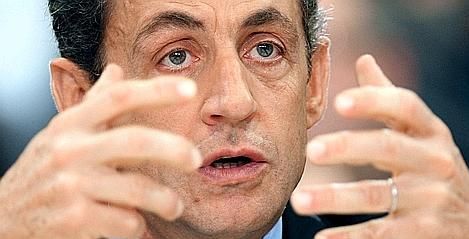
TIMES ONLINE: Nicolas Sarkozy stoked the debate over immigration today with a warning to Muslims to practise their religion discreetly or face rejection by moderate Islam in France.

The President voiced sympathy for Swiss voters who opted last week to ban minarets as he tried to reassert himself in a debate over national identity which he launched last month but that has since spiralled out of his control.

Over the past week, Mr Sarkozy had appeared to retreat from his original comments following a backlash over the way that they were being used against immigrants, particularly Muslims.

But in a column for Le Monde, Mr Sarkozy returned to his theme and said that the result of the Swiss referendum showed how important it was for France to define its identity.

"Instead of condemning the Swiss out of hand, we should try to understand what they meant to express and what so many people in Europe feel, including people in France," he wrote. "Nothing would be worse than denial."

Mr Sarkozy called for tolerance and underlined France's respect for all faiths, but his message was intended primarily to reassure those who are unhappy about what they see as a threatening Muslim presence in the country.

"Christians, Jews, Muslims, all believers regardless of their faith, must refrain from ostentation and provocation and ... practice their religion in humble discretion," Mr Sarkozy wrote.

Addressing himself to Muslims, he wrote that anything that could appear as a challenge to France's Christian heritage and republican values would "doom to failure" a moderate Islam in France.

In taking this line, Mr Sarkozy implicitly rejected attacks from the Left, the intellectual world and some senior figures in his own Gaullist camp over what they see as a ploy that stigmatises immigrants. Al hamdu lillah for Nicolas! >>> Charles Bremner in Paris | Tuesday, December 08, 2009


France : Les musulmans de France priés de respecter la laïcité

LE TEMPS: Le président français Nicolas Sarkozy, a affirmé mardi que la France devait pouvoir accepter, «au cas par cas», la construction de nouveaux minarets. Il appelle les musulmans à continuer de respecter le caractère laïc du pays et ses racines chrétiennes

Dix jours après la votation suisse sur les minarets, Nicolas Sarkozy a pour la première fois, dans les colonnes du quotidien Le Monde, réagit sur le résultat helvétique. Celui-ci avait provoqué une onde de choc dans toute l’Europe, ainsi qu’en France, où la classe politique débat actuellement sur la question de l’identité nationale.

«Peut-on répondre par oui ou par non à une question aussi compliquée, qui touche à des choses aussi profondes?», s’interroge Nicolas Sarkozy. «Je suis convaincu que l’on ne peut que susciter des malentendus douloureux […] en apportant une réponse aussi tranchée à un problème qui doit pouvoir être résolu au cas par cas dans le respect des convictions et des croyances de chacun», explique-t-il.

Le président français rend cependant hommage à la démocratie suisse, «plus ancienne que la nôtre», et stigmatise «les réactions excessives, parfois caricaturales» que le vote a provoquées en France. Question sensible >>> AFP | Mardi 08 Décembre 2009

THE GUARDIAN: Sarkozy defends Switzerland minaret ban: President calls for France's Muslims to practice a 'discreet' form of the religion >>> Ian Traynor, Europe editor | Tuesday, December 08, 2009

LE TEMPS: Revue de presse – Sarkozy, l’ami de la Suisse : Le président de la République recadre le débat français sur l’identité nationale en s’appuyant sur la votation contre les minarets. Question d’exprimer son empathie envers les peuples inquiets >>> Olivier Perrin | Mercredi 09 Décembre 2009
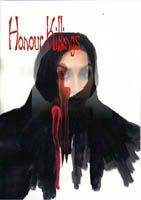
Islamic Fundamentalism: Honour Killings Up by 40%

MAIL ONLINE: Police have seen 'honour' crime surge by 40 per cent due to rising fundamentalism, new figures show.

Honour-based violence, including crimes like murder, rape and kidnap has rocketed in London during the past year.

Reported instances of intimidation and attempts at forced marriage have also increased by 60 per cent.

A report into the scale of the problem by Scotland Yard found there were 161 honour-based incidents recorded in 2007-8, of which 93 were criminal offences.

But in 2008/9 the number of incidents had risen to 256, with 132 being criminal offences.

The latest figures indicate that the trend is continuing, with 211 incidents reported in the last six months until October, of which 129 were offences - more than double the number in the same period last year.

Police define honour crimes as offences motivated by a desire to protect the honour of a family or community.

Diana Nammi, of the Iranian and Kurdish Women's Rights Organisation, said the group is now dealing with four times more complaints relating to honour than two years ago.

She said: 'More women are coming forward. They are becoming more aware of their rights in the UK, that there is help available and they feel confident enough to report matters to the police.

'But I also think cases and violence are increasing.

'One reason is the rise in fundamentalism. The problem is increasing in communities around the UK.

'We are seeing a rise not only in honour killings, but also in female genital mutilation and polygamy.' Honour crime up by 40% due to rising fundamentalism >>> Rebecca Camber | Monday, December 07, 2009

Monday, December 07, 2009


Battered Not Beaten: Iranian Opposition Plays the Long Game

TIMES ONLINE: The Iranian opposition is brave and inspiring. Its members repeatedly risk their limbs, lives and liberty by taking to the streets in defiance of the regime and its ruthless security forces. They do so despite six months of arrests, beatings, torture and show trials that have resulted in death penalties and years of incarceration. But are they achieving anything?

The demonstrations are smaller than they were. The grip of the security forces has never looked seriously threatened. Western governments, preoccupied with the nuclear issue, appear to have accepted President Ahmadinejad’s re-election and written off the "green" movement.

Opposition activists are not discouraged, however. They insist they are playing a long game the goal of which is gradually to win over the provinces, the small towns, members of the basij volunteer militia; to eat away at whatever support the regime still has until eventually it topples.

They scribble anti-government slogans on banknotes, daub graffiti on walls, disseminate information on e-mail trees to counter the propadanga of the state-controlled media. Mir Hossein Mousavi, Mr Ahmadinejad’s election rival, has likened the regime’s attempts at censorship to stopping a flood with barbed wire. >>> Martin Fletcher | Monday, December 07, 2009

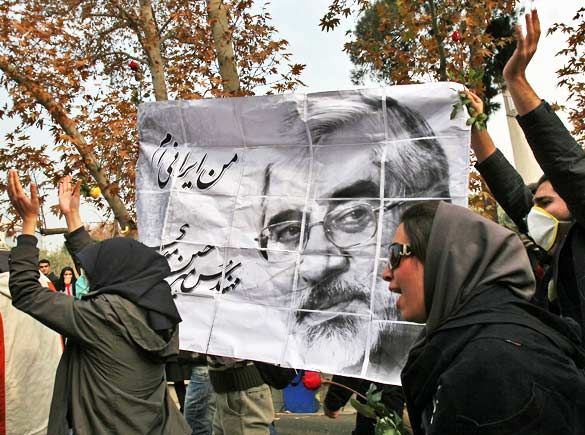
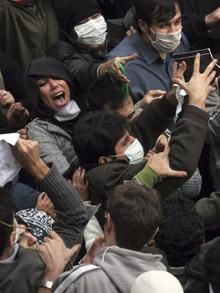
Tehran Univeristy Demonstration for Students Day


Manifestation sous haute tension à Téhéran

Les manifestants de l'opposition ont une nouvelle fois défilé lundi à Téhéran pour contester la réélection en juin dernier du président Ahmadinejad. Crédits photo : Le Figaro

LE FIGARO: Des milliers de manifestants de l'opposition ont défilé lundi dans la capitale iranienne pour protester une nouvelle fois contre la réélection du président Ahmadinejad. Des mouvements rapidement réprimés par les forces de l'ordre.

Nouvelle poussée de violences dans les rues de Téhéran. La police, déployée en force lundi dans la capitale iranienne, a utilisé des gaz lacrymogènes pour disperser les milliers de manifestants de l'opposition venus protester contre le président Mahmoud Ahmadinejad, en marge de la «journée de l'étudiant». Cette dernière commémore chaque année la mort de trois étudiants lors d'une manifestation anti-américaine en décembre 1953. Et donne lieu, depuis les années 1990, à des rassemblements en faveur des réformes. Les étudiants, fer de lance de l'actuel mouvement d'opposition né au lendemain de la réélection contestée d'Ahmadinejad en juin dernier, ont ainsi profité de cette journée pour manifester.

Selon un témoin, les affrontements entre les forces de l'ordre et les manifestants ont eu lieu sur l'avenue Enghelab, qui longe l'université de Téhéran, elle-même encerclée par des policiers anti-émeute et des gardes révolutionnaires. >>> Le Figaro.fr (avec agences) | Lundi 07 Décembre 2009

Proteste in Iran: Polizei knüppelt in Teheran

ZEIT ONLINE: In Iran demonstrieren Regimegegner, Sicherheitskräfte setzen Schlagstöcke und Tränengas ein, die Universität ist umstellt. Anlass der Unruhe ist der sogenannte Studententag.

Im Zentrum Teherans ist die Polizei mit Gewalt gegen Demonstranten der Opposition vorgegangen. "Die Polizei setzt Schlagstöcke ein, um die Demonstranten zu zerstreuen", sagte ein Augenzeuge der Nachrichtenagentur Reuters. Auch Tränengas kam zum Einsatz. "Die Leute skandieren Parolen gegen die Regierung." Die Zusammenstöße ereigneten sich demnach auf dem Platz Ferdowsi. Zuvor hatte die Polizei die Universität von Teheran umstellt, um Proteste der Opposition zu verhindern. >>> Zeit Online, Reuters, dpa | Montag, 07. Dezember 2009
Krawalle in Griechenland: Athen kommt nicht zur Ruhe

ZEIT ONLINE: Die Proteste in Athen und in anderen griechischen Städten gehen weiter: Auch am Montag kam es zu Auseinandersetzungen zwischen Jugendlichen und Polizei.

Auch an diesem Tag hat es erneut Auseinandersetzungen zwischen Jugendlichen und Polizisten in Griechenland gegeben. Bild: Zeit Online

In Griechenland ist es am Montag bei Protesten von Tausenden Schülern und Studenten erneut zu Krawallen gekommen. In der Hauptstadt Athen ging die Polizei mit Tränengas gegen Steine werfende Randalierer vor, wie das Fernsehen berichtete. Rund 300 Vermummte hatten sich unter die zunächst friedliche Demonstration von mehr als 4000 Schülern und Studenten gemischt, die gegen die "Polizeiwillkür" protestierten.

Die Ausschreitungen waren jedoch weniger hart als noch in den vergangenen zwei Tagen. Die Polizei hatte das historische Rektoratsgebäude im Zentrum Athens weiträumig abgesperrt. Dort hatten am Vortag Vermummte schwere Schäden angerichtet und den Rektor der Universität Athen am Kopf verletzt. >>> Zeit Online, dpa | Montag, 07. Dezember 2009
Iranian Police Shoot at Unarmed Protesters During Tehran Demonstrations

THE TELEGRAPH: Iranian police fired tear gas and live bullets as they fought back thousands of unarmed protesters on the streets of Tehran.

There were bloody clashes as young people launched a fresh wave of anti-government protests on the country's official Students Day.

Police used warning shots, baton charges and gas but failed to stop rallies, sit-ins and campus marches across the capital.

Universities in several cities, including Tehran's top seats of learning, were sealed off as guards checked identity cards of people trying to join the student demonstrations.

Earlier in the day, the authorities detained 23 members of a protest group of grieving mothers. They included the mother of Neda Agha-Soltan, known as the "Angel of Freedom", who was shot by pro-government militia at the height of demonstrations against Mahmoud Ahmadinejad's re-election in June.

Hajar Rostami-Motlaq has enraged the authorities by condemning pro-government students who accused British agents of killing Miss Soltan.

She was later released but friends expressed concern for other members of the protest group, Mourning Mothers of Iran, who were rounded up at a weekly protest in Tehran's Laleh Park.

Supporters of opposition leader Mirhossein Mousavi chanted "Death to the dictator" and "Do not be scared. We are all together", according to witnesses at the rallies on university campuses. >>> Damien McElroy, Foreign Affairs Correspondent | Monday, December 07, 2009
Iranian Nobel Laureate Shirin Ebadi Gets British Human Rights Award

Dr Ebadi considers the award to be an attack against Iran's suppression of activism. Photo: Times Online

TIMES ONLINE: An Iranian Nobel laureate will accept an award from a Government-financed human rights organisation in a move that is likely to ramp up the the Islamic Republic’s “propaganda” machine against the UK and further strain relations between the two countries.

The Times has learnt that Shirin Ebadi — the first Muslim women to win the Nobel Peace Prize for championing human rights and campaigning for democracy in Iran — will be presented with the award today by an organisation which annually receives £1.6 million, the bulk of its budget, from the Department of International Development (DFID).

International Services, a York-based development agency which helps disadvantaged people in places such as the Middle East and claims to be “non-political”, will present Dr Ebadi with the Award for Global Defence of Human Rights.

This comes after Dr Ebadi, 62, who has spent the past six months away from Iran attacking the regime’s alleged human rights abuses and electoral fraud, recently had her 2003 Nobel peace medal confiscated by the Iranian Government and her bank account frozen on the claim that she owes £250,000 in tax. >>> Richard Kerbaj | Monday, December 07, 2009
Stand By Our Courageous Students for 16 Azar or Dec 7

Iranische Polizei geht gegen Demonstranten vor: Berichterstattung in Teheran durch ausländische Medien verboten

NZZ ONLINE: In der Teheraner Innenstadt ist die Polizei am Montag gegen Demonstranten der Opposition vorgegangen. Zuvor hat sie die Universität von Teheran umstellt, um dort Proteste zu verhindern.

Im Zentrum Teherans ist die Polizei am Montag gegen Demonstranten der Opposition vorgegangen. «Die Polizei setzt Schlagstöcke ein, um die Demonstranten zu zerstreuen», sagte ein Augenzeuge der Nachrichtenagentur Reuters. «Die Leute skandieren Parolen gegen die Regierung.» Die Zusammenstösse ereigneten sich offenbar auf dem Platz Ferdowsi. Viele Geschäfte in der Umgebung der Teheraner Universität bleiben am Montag geschlossen. >>> sda/ap/Reuters | Montag, 07. Dezember 2009

TIMES ONLINE: Students clash with riot police as protests erupt on Iranian campuses: Violence erupted in Tehran today as thousands of students and opposition activists staged fresh protests against the Government.

Riot police using teargas and batons charged demonstrators in two of the capital’s main squares. Security forces flooded the streets and sealed off universities. They were reported to be firing in the air and bringing in water cannon, but they failed to prevent students demonstrating on campuses across Tehran and in other Iranian cities.
>>>
Martin Fletcher | Monday, December 07, 2009
Helmut Schmidt, Alt-Bundeskanzler: Erfahrungen und Einsichten

NZZ Video anschauen >>> | Montag, 07. Dezember 2009
World Leaders Photographed 'Up Close and Personal'

BBC: A photographer has attempted to capture world leaders, including Barack Obama and Robert Mugabe, in a more personal light.

Platon is a staff photographer for the New Yorker magazine, who set out to photograph world leaders for a project called "Portraits of Power" in September 2009.

He set up a tiny studio off the floor of the General Assembly and did his best to bring as many world leaders as possible in front of his lens.

The results, he says, shows leaders 'up close and personal'. Watch video >>> | Thursday, December 03, 2009
Les minarets à travers le Monde

L’EXPRESS.fr: Galerie de photos >>> | Vendredi 04 Décembre 2009
U.S. Sees Homegrown Muslim Extremism as Rising Threat

LOS ANGELES TIMES: This may have been the most dangerous year since 9/11, anti-terrorism experts say.

Reporting from Washington - The Obama administration, grappling with a spate of recent Islamic terrorism cases on U.S. soil, has concluded that the country confronts a rising threat from homegrown extremism.

Anti-terrorism officials and experts see signs of accelerated radicalization among American Muslims, driven by a wave of English-language online propaganda and reflected in aspiring fighters' trips to hot spots such as Pakistan and Somalia.

Europe had been the front line, the target of successive attacks and major plots, while the U.S. remained relatively calm. But the number, variety and scale of recent U.S. cases suggest 2009 has been the most dangerous year domestically since 2001, anti-terrorism experts said:

* There were major arrests of Americans accused of plotting with Al Qaeda and its allies, including an Afghan American charged in a New York bomb plot described as the most serious threat in this country since the Sept. 11 attacks.

* Authorities tracked other extremism suspects joining foreign networks, including Somali Americans going to the battlegrounds of their ancestral homeland and an Albanian American from Brooklyn who was arrested in Kosovo.

* The FBI rounded up homegrown terrorism suspects in Dallas, Detroit and Raleigh, N.C., saying that it had broken up plots targeting a synagogue, government buildings and military facilities.

Last week, Homeland Security Secretary Janet Napolitano issued her strongest public comments yet on the homegrown threat.

"We've seen an increased number of arrests here in the U.S. of individuals suspected of plotting terrorist attacks, or supporting terror groups abroad such as Al Qaeda," Napolitano said in a speech in New York. "Home-based terrorism is here. And, like violent extremism abroad, it will be part of the threat picture that we must now confront."

Officials acknowledged that her tone had changed, though they said terrorism has been her focus since becoming Homeland Security chief.

In some of the 2009 cases, extremist leanings are suspected but motives are not known.

Army Maj. Nidal Malik Hasan -- accused of killing 13 people in a Ft. Hood, Texas, shooting rampage last month -- has apparently suffered emotional problems. But in interviews, officials and experts have also raised his Muslim beliefs as an alleged motive.

A previous attack on the U.S. military, a shooting in June by an American convert who killed a soldier and wounded another at an Arkansas recruiting center, was apparently a case of a lone wolf radicalized in Yemen, according to Homeland Security officials.

"You are seeing the full spectrum of the threats you face in terrorism," former Homeland Security Secretary Michael Chertoff said.

"Radicalization is clearly happening in the U.S.," said Mitchell Silber, director of analysis for the Intelligence Division of the New York Police Department. "In years past, you couldn't say that about the U.S. You could say it about Europe." >>> Sebastian Rotella | Monday, December 07, 2009
Turkey's Moves towards Iran Concerning United States

THE TELEGRAPH: Turkey's attempts to develop a strategic partnership with Iran are causing concern in America and are likely to dominate talks between its leader and President Barack Obama during a US visit that starts today.

Turkish President Recep Tayyip Erdogan is likely to discuss his country's strategic partnership with Iran during his US visit . Photograph: The Telegraph

Recep Tayyip Erdogan, the Turkish prime minister, has introduced a "good neighbours" foreign policy that has tilted the axis of Ankara's diplomacy in the direction of Iran, Russia and bordering states.

Turkish frustration with a series of setbacks for its bid to join the European Union triggered a search for a foreign policy that reflect its historical interests in the Middle East, Caucasus and Islamic world.

Foreign intelligence officials sounded an alarm over Turkish manoeuvring closer to Iran, which has undermined the international campaign to isolate the Islamic regime. In particular it has allowed key members of the Islamic regime to move large sums of money – up to $10 million per day – into the global financial system.

Turkey has become a prized outlet for Iranian transactions since a tight regime of sanctions cut off Iranian banks from international finance.

Turkey was one of a handful of countries that refused to support a reprimand imposed on Iran over its failure to declare secret nuclear facility last month. Iranian activists have complained that the regime's agents can operate with impunity in a country that was once a safe haven for those fleeing persecution. >>> Damien McElroy, Foreign Affairs Correspondent | Monday, December 07, 2009
Iran’s Students Prepare for Battle as Regime Imposes Students’ Day Crackdown

Photo: Times ONline

TIMES ONLINE: December 7 is traditionally the date when the Iranian Government stages rallies to commemorate the deaths of three student demonstrators killed by the Shah’s security forces in 1953. The tables have now turned. Today the security forces will attempt to crush student demonstrations against its own brutality and repression.

On campuses across Iran, students outraged by the regime’s alleged theft of the presidential election in June, and the subsequent suppression of the opposition, will attempt to hijack the state-sponsored Students’ Day rallies — just as they did last month’s commemoration of the US embassy siege and the annual Palestinian solidarity rallies in September. The regime cannot cancel these events without losing face, but it is doing its utmost to stop today’s protests.

Yesterday security forces began to seal off campuses in Tehran and warned nearby householders not to open their doors to protesters or let anyone take pictures from their roofs. The regime has cut internet services to hamper the opposition’s preparations, and banned journalists employed by foreign news organisations from working on the streets. Dozens of student leaders are understood to have been arrested. >>> Martin Fletcher | Monday, December 07, 2009
US Air Force Recruiters End Ban on Tattoos on Saluting Arm

THE GUARDIAN: Military chiefs overturn rule on arm tattoos after 26 US air force recruits are barred from basic training

Military chiefs have scrapped a ban on tattoos decorating the saluting arm of recruits joining the US air force, following a backlash among heavily inked young Americans signing up for duty.

The air force recruiting service instituted a policy on 25 November prohibiting tattoos below the elbow on the right arm of recruits, citing "military image". The service did not want tattoos to be visible when its airmen salute.

Within a week, the rule meant that 26 recruits were turned away from basic training, causing confusion among 17,000 people due to join the service under a delayed entry program, which allows for a hiatus of up to 12 months between signing up and reporting for duty.

By the end of last week, military bosses had relented. In a statement to the in-house Air Force Times, the recruiting service's commander, Brigadier General Alfred Stewart, said that "regrettably", recruits had been caught in the middle of the change. He said: "At this time, recruiting service is revising guidance recently sent to the field." >>> Andrew Clark in New York | Sunday, December 06, 2009

Sunday, December 06, 2009

Spain Apologises for Jailing Homosexual in the 1970s

THE TELEGRAPH: Spain has apologised to a man jailed for being homosexual in the 1970s under a law introduced by General Francisco Franco.

Antoni Ruiz, 50, has become the first Spaniard to receive official recognition of his suffering more than three decades after he was imprisoned for his sexual orientation.

An estimated 5,000 men served prison sentences during the dictatorship of Gen Franco when homosexuality was made illegal but Mr Ruiz was one of the few sentenced for the crime following the death of the dictator in November 1975.

In 1976, at the age of 17, Mr Ruiz, from Valencia, told family members that he was gay. At the time homosexuality was still banned and when his parents confided in a Catholic monk, he denounced their son to the authorities.

He was sentenced to three months in prison and was then banished from his home town for a further year.

Mr Ruiz, who heads an association for former prisoners, received a formal letter of apology from Spain's justice minister last week and an offer of financial compensation amounting to 4,000 euros (£3,600). >>> Fiona Govan in Madrid | Sunday, December 06, 2009