Sunday, June 14, 2009

Benjamin Netanyahu Supports Creation of Demilitarised Palestinian State

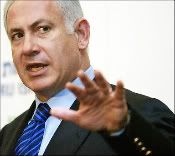
THE SUNDAY TELEGRAPH: Israeli Prime Minister Benjamin Netanyahu has said he would support the creation of a Palestinian state, but only if it was barred from having an army.

In a landmark move, he endorsed a separate state for the first time but said it must have no military, no control of its air space and no way of smuggling in weapons.

The speech, given in response to US President Barack Obama's address to the Muslim in Cairo world last month, also called on the Palestinians to recognise the right of Israel to exist.

"If we receive this guarantee for demilitarisation and the security arrangements required by Israel, and if the Palestinians recognise Israel as the nation of the Jewish people, we will be prepared for a true peace agreement (and) to reach a solution of a demilitarised Palestinian state alongside the Jewish state," he said.

"Each will have its flag, each will have its anthem. The Palestinian territory will be without arms, will not control airspace, will not be able to have arms enter."

Until now Mr Netanyahu, who leads the Right-wing Likud party, had refused to accept anything more than a vague notion of Palestinian autonomy.

But Mr Obama has made it clear he views a two-state solution as the only solution to the conflict and Mr Netanyahu has been balancing pressure from Washington with placating a ruling coalition dependent on hardliners.

Mr Netanyahu, refused to give in to another key American demand to freeze all construction of Jewish settlements in the West Bank, where Palestinians hope to build a future state. >>> By Dina Kraft in Tel Aviv | Sunday, June 14, 2009

THE TELEGRAPH:
Benjamin Netanyahu: Full Speech on Palestinian State >>> | Sunday, June 14, 2009

TIMES ONLINE: Netanyahu Defies Obama with Harsh Conditions for Palestinian 'Entity'

Photobucket
Binyamin Netanyahu refused to halt Israeli settlement-building in his speech. Photo: Times Online

Binyamin Netanyahu threw down the gauntlet to the US tonight, grudgingly agreeing to a limited Palestinian state that would be demilitarised and not in control of its airspace or borders.

The hawkish Prime Minister insisted that Israel would never give up a united Jerusalem as its capital, and said that established Jewish settlements in the West Bank would continue to expand — despite explicit objections from Washington.

In a keynote speech that referred to a Palestinian “entity” far more frequently than an actual state, Mr Netanyahu tried to advance elements of his economic peace plan — whereby the Palestinians would receive investment in return for limited sovereignty — while still conceding to US insistence on the creation of an independent Palestinian country.

The right-wing Israeli leader said the moderate Palestinian leadership in the West Bank must agree to recognise Israel as the homeland of the Jewish people, as well as fight the Islamic hardliners Hamas, who now control Gaza, in return for the resumption of peace talks.

“The key condition is that the Palestinians recognise in a clear and public manner that Israel is the state of the Jewish people,” he told dignitaries in an auditorium at Bar Ilan University in Tel Aviv.

“If we have the guarantees on demilitarisation, and if the Palestinians recognise Israel as a state of the Jewish people, then we arrive at a solution based on a demilitarised Palestinian state alongside Israel,” Mr Netanyahu said.

“Each will have its flag, each will have its anthem. The Palestinian territory will be without arms, will not control airspace, will not be able to have arms enter.” >>> James Hider in Jerusalem | Sunday, June 14, 2009
Mahmoud Ahmadinejad 'Takes Back Tehran' with Hardliners, as Police Resort to Beatings

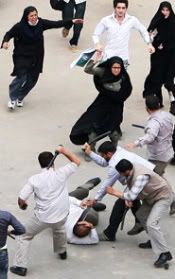
THE SUNDAY TIMES: Mahmoud Ahmadinejad brought tens of thousands of supporters into the heart of Tehran tonight in a bid to take back the capital after a weekend of vicious running battles between state security forces and large crowds of Iranians who insist that Mr Ahmadinejad stole last Friday’s presidential election.

Chanting ’Allah o’Akbar” (God is great) and “Ahmadi we love you”, the army of zealous hardliners poured into the central square in a massive show of strength designed to intimidate the furious supporters of Mr Ahmadinejad’s relatively moderate opponent, Mir Hossein Mousavi.

They came from far beyond Tehran. “The protestors are lying. There was no cheating,” declared Farang Kamalwand, 39, a chador-clad woman who had travelled 700 kilometres by bus from Lorestan. “We came to prove to people outside this country that we love and support our president,” said Karamollah Rahimi, a builder who had journeyed nine hours from Lordegan.

Mr Mousavi, 67, a former prime minister, has been in hiding since Friday night, but has issued a stream of internet statements urging his supporters to continue their nationwide protests against an election he called a “charade”: some results were announced before the ballot boxes had even been opened. Tonight, he appealed to the Guardian Council, a powerful body of senior clerics, to declare the election void.

Zahra Rahnavard, Mr Mousavi’s wife, accused Mr Ahmadinejad of “dictatorship”, saying: “The Iranian people voted to change Ahmadinejad, but this vote became a vote to solidify Ahmadinejad.” Mousavi aides accused the regime of mounting a “coup d’etat”.

Britain, the United States and other western governments expressed serious concern. Several leading reformists have been arrested including, briefly, the brother of Mohammed Khatami, the former president.

As the regime used overwhelming physical force, electronic jamming and censorship to suppress protests raging barely a mile from his presidential office, Mr Amadinejad gave a surreal, Orwellian press conference at which he called his victory an “epic achievement” that made Iran’s brand of religious democracy, with its emphasis on ethics, a model for the world. >>> Martin Fletcher in Tehran | Sunday, June 14, 2009
Dutch Divided Over Geert Wilders as Radical MP Eyes Premiership

THE TELEGRAPH: Until last week, the Bernard family had the normal concerns of any middle-class Dutch family – putting their teenage children through university, living a greener life, and paying the mortgage.

Photobucket
Geert Wilders began to see a rise in his popularity after an Amsterdam appeals court decided to try him for anti-Muslim comments in January. Photo: The Telegraph

But that has all changed since the European election – and the triumph by Geert Wilders, the right-wing populist and outspoken critic of Islam who in February was banned from entering Britain as a threat to "community harmony".

To many abroad Mr Wilders, a Dutch MP, appears an old-fashioned racist whose views put him on a par with other far-Right politicians elsewhere in Europe.

Yet in its first ever test of national electoral support among the normally tolerant Dutch, his anti-immigration Party for Freedom which he founded in 2006 won 17 per cent of the votes – making it the second biggest party. That has shaken the country to its core – opening up the real possibility that, through the Dutch coalition system, Mr Wilders could win power at the next general election.

Now, like many others in the Netherlands, the Bernards are desperately worried. "This has the feeling of what happened to Germany in the 1930s," said Alfred Bernard, 52, a lawyer. "Wilders blames foreigners for everything. People are disoriented because of the economic crisis. Everywhere there is dissatisfaction with mainstream politicians.

"After this I really believe that Wilders could become prime minister in the 2011 parliamentary elections, or at least set the political agenda."

In an interview with The Sunday Telegraph, Mr Wilders, 45, was frank about that ambition. Asked about the prospect of taking power in two years' time, he said: "That is our biggest job. We had an enormous success last week and our biggest task is to keep up momentum. I am very confident that we will have an excellent result.

"If my party becomes the biggest party, I would be honoured to be prime minister."

Sitting in his office in the Dutch parliament building in The Hague, protected from the threat of assassination by 10 armed secret service bodyguards, he summed up his antipathy to the religion of many immigrants to the Netherlands.

"Islam wants to dominate our society," he said in fluent and only slightly accented English. "It's in opposition to freedom.

"If people are offended, that's not my aim. I don't talk about Muslims but about Islam. Everything I say is against the fascist Islamic ideology."

To the charge that to many his views appeared to be racist, he responded: "If that was true, we would never have been the second biggest party in the European elections."

Why, then, did Moroccans and Turks living in the Netherlands so fear him? "As long as they don't commit crimes, it's a baseless fear," he said. "If you adhere to our laws, if you act according to our values, you are free to stay. We will help you to integrate.

"But if you cross the red line, if you start committing crimes, if you want to do jihad or impose sharia, we want you to be sent out of the Netherlands and we will get rid of your permits to stay."

An admirer of Churchill and Lady Thatcher, he is charismatic as well as combative. Holland's conventional politicians – mostly dull men in suits – have no idea how to counter his politically incorrect taunts, which outrage the parliamentary chamber but delight his supporters. >>> By Nick Meo in Rotterdam | Sunday, June 14, 2009

Read my essay:

Islam: The Enemy of Democracy and Freedom >>> Friday, April 20, 2007

LIVE LEAK: Fitna the Movie

Crowds Join Ahmadinejad Victory Rally

Mr Ahmadinejad told crowds the election was free and healthy.

BBC: Tens of thousands of people have joined a rally in central Tehran to celebrate the re-election of Iran's President Mahmoud Ahmadinejad.

The president's closest opponent in the election, Mir-Hossein Mousavi, has lodged an official appeal against the result amid continuing angry protests.

Security forces have arrested up to 100 members of reformist groups, accusing them of orchestrating the violence.

Mr Ahmadinejad denied any vote-fixing, saying the result was "very accurate".

At an earlier news conference, the president accused foreign media of refusing to accept the result because they did not like it.

"Forty million people have taken part in this process. How can they question it?" he said.

US doubt

Asked about Iran's nuclear programme and Tehran's relations with foreign powers, he said the nuclear debate "belongs to the past", and that Iran had "embraced" the idea of an international effort to eliminate nuclear weapons.

Global reaction to the election has been muted, but US Vice-President Joe Biden told broadcaster NBC there was "an awful lot of doubt" about the result.

Mr Ahmadinejad's closest rival in the election campaign, Mir-Hossein Mousavi, announced on Sunday he had lodged an official appeal appeal against the result to Iran's Guardian Council.

"I urge you Iranian nation to continue your nationwide protests in a peaceful and legal way," he said in a statement.

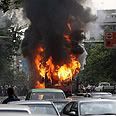
Mr Mousavi has called several times for his supporters to avoid violence, but angry protesters have been setting light to vehicles and throwing stones in Tehran.

Reuters reported that police charged a 2,000-strong group of students who were protesting at the University of Tehran. >>> | Sunday, June 14, 2009

BBC: Debris on the Streets of Tehran


BBC: Iran Arrests after Street Clashes

Reza Pahlavi Speaks Out on Ahmadnejad (October 2007)

Mir Hossein Mousavi Music Video for Iran Election June 2009

The Pahlavi Crown: التاج الپهلوی

Photobucket
Photo of ‘The Pahlavi Crown’ courtesy of the Iran Chamber Society

IRAN CHAMBER SOCIETY: This crown was used by Reza Shah, the founder of the Pahlavi dynasty, in his coronation on 25 April 1926. His son, Mohammad Reza Shah Pahlavi, the last Shah of Iran, also used the crown in his coronation on 26 Oct. 1967.

The crown was designed and built by a group of Iranian jewellers, under the supervision of Haj Serajeddin, the famous jeweller who had been in the employ of the Amir of Bokhara and had later emigrated from the Soviet Union to Iran. The stones were selected from loose stones in the treasury.

The crown made of red velvet, gold, and silver. It has a total height of 29.8 cm. and has a width of 19.8 cm. It weighs 2,080 grams. The are 3,380 diamonds employed on the crown, totalling 1,144 cts. The largest is a brilliant-cut yellow diamond of 60 cts. which is located in the center of the front jewel sunburst. There are also 369 perfectly-matching natural pearls in three rows on the crown. Of the 5 emeralds, totalling 200 cts., the largest is approximately 100 cts. The largest sapphire is 20 cts.

The design of the crown incorporates a motif of the Sassanid dynasty, which ruled over the Persian Empire from the 3rd through the 7th centuries AD. [Source: Iran Chamber Society]
The Facebook Revolt of Iran's Youth Isn't Over Yet

THE SUNDAY TIMES: For a few days it seemed Iran’s long-repressed youth were on the brink of freedom; then came the brutal reality

Photobucket
Photo: The Sunday Times

A young woman in a thigh-length tunic tightly bound with green ribbon danced down the middle of Tehran’s main boulevard last week. She was nominally campaigning by tossing leaflets into cars backed up for miles, but mostly she just gyrated joyously to pop music blasting into the summer night.

Six young men riding two-up on motorcycles trailed green streamers, hooted and took photos of one another on their mobile phones, then roared off the wrong way through the cars.

Thousands of other young Iranians wove through the traffic jam they had created, blowing whistles, waving green balloons, throwing campaign handouts into the air like confetti. Tehran had never seen anything like last week’s “green wave”.

Sara Siadatnejad was up until 7am loading her photos and video of the demonstrations onto Facebook.

“We were singing, dancing in the streets, boys and girls together. We had never done this before. No one wanted to go home,” she said later, sitting in an outdoor cafe and picking at chocolate cake with green-painted fingernails.

“It seems people were half dead before and suddenly everyone felt alive.”

Half dead because they were brought up in a society patrolled by religious police with the power to beat them for holding hands in the street. Alive because it was the first election in which women played a potent role, demanding an end to the inequalities they endured.

What happens now that the all too brief “Tehran spring” has been abruptly curtailed by the election result? Thirty years after Iran’s Islamic revolution, are the conservative male forces that control the country immune to the demands for reform?

The beatings by riot police, closure of universities and clampdown on foreign news websites yesterday, after President Mahmoud Ahmadinejad claimed an overwhelming victory, were targeted at the Facebook generation.

Will these women give in? Under Islamic law as it is enforced in Iran, a woman’s word counts only half as much as a man’s in court; a woman can inherit only half as much as her brother; and while men can divorce easily, a woman who wants a divorce will typically spend three to 10 years in court and automatically lose custody of daughters over the age of seven and sons over two.

“Changes have to be made,” said a 34-year-old political activist who asked to remain anonymous. Her first target would be headscarves, which are mandatory in Iran. “The least of the freedoms we need is the ability to choose what to wear. For women this is really an issue. Whenever you go out, you have to be vigilant because the moral police may not think it is appropriate and they may even take you to jail. A woman’s integrity is judged by the colour of your dress – well, isn’t that stupid?” THE symbol of the demand for reform is not so much Mir Hossein Mousavi, the 67-year-old main opposition candidate, who complained of election fraud yesterday, as his wife. >>> The Sunday Times | Sunday, June 14, 2009
The Beginning of the End?

YNET NEWS: Young Iranians may topple Ayatollah regime in wake of elections fiasco

Upon the publication of the official results of the Iranian presidential elections in 2009, which showed incumbent President Mahmoud Ahmadinejad as the clear winner, regime rivals including the government of Israel can be satisfied.

Ahmadinejad’s victory, which most people believe was apparently achieved via a well-oiled machine of fraud, threats, the deployment of armed forces, closure of rival headquarters, and disconnected cellular phones, may mark the beginning of the end of the Ayatollah regime. This regime was established by the Ayatollah Khomeini 30 years ago, in 1979, after he led a revolution that toppled the Shah and the Pahlavi dynasty.

During the past 30 years, Islamic regime leaders made sure not to repeat the grave mistakes made by the previous regime. As they took advantage of the Shah’s mistakes in order to topple him, Islamic leaders knew precisely which errors to avoid. However, in the latest presidential elections they revived the well-known dictum that we are doomed to repeat our mistakes.

On several occasions during his rule, the Shah was accused of forging election results; large strata of society believed these charges and this laid the groundwork for the popular revolution against him in 1978-79.

Yet on Friday it was the Islamic regime which so blatantly forged the results of the Iranian presidential elections. >>> Soli Shahvar | Sunday, June 14, 2009
Al-Qaeda's American Member Talks of Jewish Roots

YNET NEWS: Adam Yahiye Gadahn, one of most known speakers of global terror organization, releases video in which he talks of his Zionist grandfather who tried to convince him to visit Israel

Al-Qaeda's American activist Adam Yahiye Gadahn released a new video on Saturday in which he denounces Israel and the United States and talks about his Jewish ancestry for the first time.

Gadahn, who is known as the American Azzam and is on the FBI's most wanted list, spoke about his Zionist grandfather, who used to encourage him to visit Israel.

"Let me here tell you something about myself and my biography, in which there is a benefit and a lesson…Your speaker has Jews in his ancestry, the last of whom was his grandfather," he said in the video. Gadahn grew up in California, converted to Islam in the 1990s, moved to Pakistan and joined the global terror organization.

Gadahn said his grandfather was a "Zionist" and "a zealous supporter of the usurper entity, and a prominent member of a number of Zionist hate organizations."

"He used to repeat to me what he claimed are the virtues of this entity and encouraged me to visit it, specifically the city of Tel Aviv, where relatives of ours live," said Gadahn, referring to Israel.

According to the terror operative, his grandfather gave him a book by Israeli Prime Minister Benjamin Netanyahu called "A Place Among the Nations" in which the "rabid Zionist" sets out "feeble arguments and unmasked lies to justify the Jews' rape of Muslim Palestine." >>> Ynet | Sunday, June 14, 2009
Tehran Youth: I'll Never Vote in Iran Again

YNET NEWS: Frustrated and outraged by election results they believe were rigged, Tehran's young take to streets, spread messages and videos on internet and via mobile phones calling on world to intervene

Iran's youth responded with frustration and anger to President Mahmoud Ahmadinejad electoral win, which many believe was obtained by fraud. Some of them were able to voice their outrage through instant messages and video clips sent via mobile phones, or on blogs, forums, Facebook and YouTUbe before these websites were blocked by the authorities.

One of them, a young man from Tehran, told Ynet on Sunday: "I swear to God I'll never vote in Iran again. Mousavi received 25,000 million votes, but they changed the names (on the ballots)."

However he said that he was still hopeful in light of the great numbers of young Iranians who have taken to the streets in protest of the election results. Tens of thousands of people clashed with security forces in the capital of Tehran on Saturday, and at least two were reportedly killed in the violence. >>> Dudi Cohen | Sunday, June 14, 2009

YOUTUBE: Tehran – Vanak Square


YOUTUBE: Violence - Vanak Square


YOUTUBE: Clashes in Vali Asr Avenue

Die iranische Wahlfarce

DIE PRESSE: Der Triumph von Präsident Ahmadinejad riecht nach Betrug. Das wäre nicht nötig gewesen. Denn auch ein Sieg der Opposition hätte die wahren Machtverhältnisse in der „Mullahkratie“ kaum erschüttert.

Demokratie sieht im Iran so aus: Erst sorgt der Wächterrat dafür, dass zu einer Wahl nur Kandidaten antreten, die dem obersten Geistlichen, Ayatollah Khamenei, genehm sind und das islamistische System nicht infrage stellen. Dann dürfen die Bewerber Wahlkampf spielen; diesmal gab es sogar eine heftige Fernsehdiskussion zwischen den Präsidentschaftsanwärtern. Am Ende gewinnt aber immer der Richtige; da hilft das Establishment zur Not schon nach.

Es war ein ziemlich merkwürdiges Ergebnis, das der iranische Innenminister am Samstag dem etwas ungläubigen Publikum verkündete. 62,6 Prozent der Stimmen habe Amtsinhaber Mahmoud Ahmadinejad schon im ersten Wahlgang errungen, sein schärfster Konkurrent Mir-Hossein Moussavi lediglich 33,75 Prozent. Es ist daher nicht einmal eine Stichwahl nötig. Ahmadinejad wird schon seine Anhänger haben, vor allem auf dem Land. Aber gleich so viele? Der Sharia-Robin-Hood hat zwar in den vergangenen vier Jahren jede Menge Geld und Kartoffeln unters Volk gestreut. Als Erfolg ist seine bisherige Amtszeit jedoch nicht zu begreifen, zumindest nicht mit herkömmlichen Bewertungskriterien: Die Petrodollars des Ölbooms haben sich in Luft aufgelöst, die Inflation liegt sogar offiziell bei 15, die Arbeitslosigkeit bei schöngefärbten zehn Prozent.

Dementsprechend verdatterte Mienen löste nun das Wahlergebnis bei der Opposition aus, besonders angesichts der ausgelassen-jugendlichen Wendestimmung, die in den vergangenen Wochen in Teheran zu beobachten war. Sind die iranische Opposition und westliche Beobachter ihrem eigenen Wunschdenken auf den Leim gegangen? Oder inszenierten Ahmadinejad und seine Leute einen ungenierten Wahlbetrug monströsen Ausmaßes? Der Herausforderer Mir-Hossein Moussavi, bisher ein treuer Diener der Ayatollahs, wollte das Wahlresultat jedenfalls weder glauben noch anerkennen. Er sprach von einer gefährlichen Scharade. Als Ex-Premierminister sollte er wissen, dass die ganze scheindemokratische Kulissenschieberei, die seit der Islamischen Revolution 1979 praktiziert wird, eine einzige Scharade ist. >>> Christian Ultsch | Sonntag, 14. Juni 2009
Reza Pahlavi: Statement on the Latest Developments in Iran

Photobucket
Reza Pahlavi: (رضا پهلوی)

REZA PAHLAVI: Today the world is witnessing the demonstrated anger of millions of Iranians against a regime that denies their most basic rights, including the right to choose leaders who could improve their abysmal condition.

There is no exit from this condition, so long as one man appropriates onto himself the “power of god” and controls the judiciary, the media, the security forces and, through direct and indirect appointees dictates the only candidates claiming to represent an impoverished and disenfranchised people.

Today I stand united with my fellow Iranians and call for the end of the Islamic Republic, or any other prefix in front of the name of my beloved Iran that indicates theocracy or any other form of disregard for democratic and human rights.

I caution the world that offering any incentives or “carrots” to the theocracy under these circumstances is an affront to the people of Iran. This is not a time for short-sighted, self-defeating tactical games. This is the time for the free world to stand true to its principals and support the people of Iran’s quest for democracy and human rights. [Source: RezaPahlavi.org] Saturday, June 13, 2009
Election Clashes Erupt in Iran

Saturday, June 13, 2009

Saturday Night Entertainment – Phil Collins: Another Day in Paradise

Saturday Night Entertainment – Joe Cocker: An Officer and a Gentleman

Saturday Night Entertainment – Celine Dion: My Heart Will Go On


YOU TUBE: Luciano Pavarotti & Celine Dion: I Hate You Then I Love You


YOU TUBE: Celine Dion: Because You Loved Me

Obama's White House Is Falling Down

SULTAN KNISH: In the sixth month of his presidency, Obama has turned an economic downturn into an economic disaster, taking over and trashing entire companies, and driving the nation deep into deficit spending expected to pass 10 trillion dollars.

Abroad, Obama seems to have no other mode except to continue on with his endless campaign, confusing speechmaking with diplomacy. It is natural enough that Obama, who built his entire campaign on high profile public speeches reported on by an adoring press, understands how to do nothing else but that.

While the press is still chewing over Obama's Cairo speech, this celebrity style coverage ignores the fact that Obama's endless world tour is not actually accomplishing anything. Instead his combination of ego driven photo op appearances and clueless treatment of foreign dignitaries have alienated many of America's traditional allies. Those who aren't being quietly angry at Obama, like Brown, Merkel or Netanyahu, instead think of him as as absurdly lightweight, as Sarkozy, King Abdullah or Putin do.

While his officials carry out their dirty economic deeds, Obama responds to any and every crisis as if it were a Mickey Rooney and Judy Garland musical, with a cry of, "Let's put on a show." Thus far Obama has put on "shows" across America, Europe and the Middle East. And what the adoring media coverage neglects to cover, is that Obama's shows have solved absolutely nothing. They have served only as high profile entertainment.

Neither alienating America's traditional allies, through a combination of arrogant bullying and ignorance, nor appeasing America's enemies, has yielded any actual results. Nor does it seem likely to. Islamic terrorism is not going anywhere, neither are the nuclear threats from North Korea and Iran. While Obama keeps smiling, the global situation keeps growing more grim.

At home, if Obama was elected as depression era entertainment, the charm of his smiles and his constant appearances on magazine covers appear to be wearing thin on the American public. Despite the shrill attacks on Rush Limbaugh or the Republican Enemy of the Weak-- the Democratic party of 2009, is polling a lot like the Republican party of 2008. The Democrats have suddenly become the incumbents, and the only accomplishment they can point to is lavish deficit spending, often on behalf of the very same corporations and causes they once postured against.

The European Union Parliament's swing to the right cannot be credited to Obama, though doubtlessly some European voters seeing socialist economic crisis management on display in the world's richest country decided they wanted none of it, but it is part of a general turning against federalism. And Obama's entire program is dependent on heavily entrenching federalism at the expense of individual and state's rights. Yet that is precisely his achilles heel with independent voters who are polling against more taxes and expanded government. And no amount of speeches by Obama can wish away his 18 czars or the national debt he has foisted on generation after generation of the American people. That leaves Obama with a choice between socialism and the independent voter. And thus far he has chosen socialism. >>> | Sultan Knish
Sieg des Populismus über die Vernunft: Kommentar zum Ausgang der iranischen Präsidentschaftswahlen

Photobucket
Bild: Google Images

NZZ Online – Kommentar: Der heisse Wahlkampf der letzten zwei Wochen und der grosse Aufmarsch der Wähler an den Urnen hatten bei vielen Beobachtern den Eindruck erweckt, bei den iranischen Präsidentenwahlen würde der bisherige Amtsinhaber Mahmud Ahmadinejad abgewählt. Doch wie sich nun zeigt, war der Wunsch der Vater ihrer Prognosen, Ahmadinejads prominentester Gegner, der ehemalige Ministerpräsident Mir Hossein Moussavi, würde das Rennen machen.

Die Konkurrenten des Präsidenten hatten dessen Politik einer vernünftigen und berechtigten Kritik unterzogen, auf die Ahmadinejad reagierte, indem er die Register des Populismus zog. Er bezichtigte seine Gegner der Lüge und warf eminenten Persönlichkeiten des politischen und religiösen Establishments vor, bestechlich und geldgierig zu sein. Mit der Verteilung von Geld und Vergünstigungen in den Vorstädten und auf dem Land hatte Ahmadinejad in den vergangenen vier Jahren sein Versprechen einzulösen versucht, die reichlichen Öleinnahmen auf den Mittagstisch der Armen zu bringen. >>> Von Jürg Bischoff, Beirut | Samstag, 13. Juni 2009

THE WALL STREET JOURNAL: Ahmadinejad Re-election a Blow to U.S.-Arab Allies

DUBAI--Iranian President Mahmoud Ahmadinejad's announced election victory Saturday could deal a blow to Washington's Arab allies, who have been alarmed by Iran's regional ambitions and hoped his ouster might moderate them.

Officials in Saudi Arabia, Egypt and U.S.-allied Persian Gulf sheikdoms followed the elections in nearby Iran closely. Many have maintained cordial relations with Mr. Ahmadinejad. But tensions between Arab capitals and Tehran have escalated because of Iran's nuclear program and its sponsorship of proxies Hezbollah in Lebanon and Hamas in Gaza.

Friday's election had offered some hope that, should Mr. Ahmadinejad lose, rapprochement with Iran on a number of issues--from territorial disputes to business and trade ties--might be easier.

Mr. Ahmadinejad's biggest challenger, former prime minister Mir Hossein Mousavi, had criticized some of Mr. Ahmadinejad's foreign policy as adventurism on the campaign trail.

U.S. officials and those across the Arab world saw Mr. Mousavi, a sober, experienced statesman, as an attractive alternative to the erratic anti-American firebrand president.

"The continuation of Ahmadinejad certainly poses challenges for the U.S. and the Gulf states," said Hady Amr, director of the Brookings Doha Center in Qatar. Still, he said, Gulf officials--however hopeful--have been braced for his election victory. >>> By Chip Cummins | Saturday, June 13, 2009

THE TELEGRAPH: Iran Elections Commentary: Dreams of Change Turn to Dust

In the mass election rallies of the last few weeks, countless young Iranians have dared to hope that real political change was possible. Those dreams have turned to dust with remarkable speed.

Photobucket
An Iranian woman argues with members of a group protesting against the Presidential elections in Iran. Photo: The Telegraph

The announcement that President Mahmoud Ahmadinejad has won re-election with about 63 per cent of the vote sends an unmistakable message: the leaders of the Islamic Republic will not bow to the verdict of the ballot box.

The official result of this contest lacks any credibility. One consistent thread has run through every Iranian election, without a single exception, since the victory of Mohammed Khatami, a liberal cleric, in the presidential polls of 1997: high turnouts favour reformist candidates, low participation rates help the hardliners.

No-one disputes that turnout in this election was extremely high, with the authorities suggesting it may have exceeded 80 per cent. But the same officials are asking Iranians to believe that, for the first time in their electoral history, a massive voter response has delivered a convincing victory for a hardline candidate.

Mir-Hossein Mousavi, the former prime minister who was Mr Ahmadinejad's leading challenger, has already said that he cannot believe that all past experience of Iranian elections has suddenly been turned upside down.

Shortly after the results were announced, Mr Mousavi denounced the entire process. "I will not surrender to this dangerous charade," he said. "The result of such performance by some officials will jeopardise the pillars of the Islamic Republic and will establish tyranny."

In the past, the regime has manipulated elections by preventing reformers from standing – a method used to particular effect in the parliamentary polls of 2004, when thousands of candidates were disqualified en masse.

But allowing a contender to stand, only to announce an utterly incredible result, is without precedent in a presidential election.
The central question is how Mr Mousavi might respond. He has already signalled that he will not quietly accept the outcome, but he has only two options, both fraught with risk. >>> By David Blair, Diplomatic Editor | Saturday, June 13, 2009
iPride Brings Homosexuals Together in Time for Parade

Photobucket
Nitzan Horowitz – openly gay Knesset member. Photo: Google Images

THE JERUSALEM POST: Citing the "ongoing struggle" homosexuals face in areas outside of Tel Aviv, Meretz MK Nitzan Horowitz, the second openly gay elected Knesset member, was one of several speakers who met with 50 people at the Gay Community Center in Tel Aviv on Thursday to discuss the role and envolvement of gay rights and activism in Israel as part of the five-day program iPride, culminating in Tel Aviv's Gay Pride Parade next Friday.

"The main problem is that most of the gay rights achievements have been won in courts, not through law… Court rulings can be reversed, which is why it's so important to establish gay rights in the legislation," explained Horowitz.

As Tel Aviv prepares to celebrate its centennial, the gay pride parade is included as part of the celebration. "I feel that there has been a change. We are part of mainstream [society]," said Jonathan Danilowitz, a former El-Al flight attendant.

He filed a complaint with the Labor District Court in 1989 to procure an equal right for his then partner of 10 years to receive free flight tickets.

"I felt an outrageous discrimination against me as a gay man," Danilowitz told The Jerusalem Post. "I wasn't going to put up with it and now feel a sense of pride."

The court ruled in his favor, marking an Israeli precedent granting gay rights. Equality under law and inheritance rights for gay couples also were approved during the same period.

After finding their voice and gaining new rights, the GLBT community had another sector of life to face - the army. But unlike other militarized countries, homosexual members of the army do not face discrimination from the Israel Defense Force, according to Major Yoni Schoenfeld.

"If in America the policy is 'Don't ask, don't tell," he said. "Then in Israel, it's 'You can tell, but we just don't care.'" >>> By Stephanie Rubenstein | Friday, June 12, 2009

YOUTUBE: iPride Tel Aviv 2009 Gay Pride Parade

Opinion: Mousavi Bad for Israel

YNET NEWS: A reformist win in Iranian elections will bring Tehran closer to bomb

Many people will breathe a sigh of relief should Mir-Hossein Mousavi be elected as Iran’s president. The question is whether a Mousavi victory and Ahmadinejad defeat will indeed serve Israel’s strategic interests, and the answer is probably ‘no.’

The election victory of reformist candidate Muhammad Khatami in 1997 and again in 2001 took Iran out of isolation, opened doors that were previously closed, and in fact extended the life of the Islamic regime.

In the face of Khatami’s smiles and promising slogans in respect to civil society, the rule of law, and intercultural dialogue, Israel’s warnings that we were dealing with more of the same appeared delusional. By winning the elections, and throughout his presidential term, Khatami managed to a large extent to neutralize the explosive domestic element and blur external criticism.

Only after the radical Ahmadinejad’s victory in 2005, and paritcuarly [sic] in wake of his venomous statements against the State of Israel and his prominent Holocaust denial, the Western world starting seeing Iran in the light Israeli leaders hoped for. This prompted Western states to gradually intensify the moves they were willing to adopt against Iran, including countries such as France and Germany, which until then refrained from adopting a harsh approach vis-à-vis the Islamic regime in Tehran. >>> Soli Shahvar | Friday, June 12, 2009

The writer heads the Ezri Center for Iran and Persian Gulf Studies at University of Haifa.

HAARETZ: Analysis: U.S. to Face a Bolder, More Confident Ahmadinejad

According to reports emerging from Iran's election supervisory agencies, President Mahmoud Ahmadinejad garnered at least twice the number of votes compared to that of his main rival, Mir Hossein Mousavi.

Even when factoring in the number of forgeries, irregularities, disturbances, and threats against voters, this statistic is testament not only to the potency of the conservative camp but also the political acumen of Ahmadinejad.

Ahmadinejad's landslide victory (barring any surprises in the counting of the remaining votes) is not expected to change Iran's policy vis-a-vis its nuclear program nor will it impact Tehran's developing ties with the United States.

On these two matters, final say is not in the hands of the president but rather the Supreme Leader, Ali Khamenei. Even Iran's support for Hamas, Hezbollah, and Syria is determined by numerous figures, among which Ahmadinejad is just one among equals.

Nonetheless, the U.S. - which took great pains in not declaring its support for any of the candidates and even declared its intention to hold a dialogue with Iran prior to the elections - is now likely to face a more rigid, self-confident Iranian interlocutor, a leader who feels no need to rally public opinion to his side given the fact that he is legally unable to run for a third term as president in Iran. >>> By Zvi Bar'el, Haaretz Correspondent | Saturday, June 13, 2009

THE JERUSALEM POST: Hamas Hails Ahmadinejad's Victory, Urges World to Change Policy

Prominent Hamas spokesman Fawzi Barhoum on Saturday said that the Iranian election results were proof of Teheran's success in protecting the Iranian people's interests and meeting all the challenges facing the nation, Israel Radio reported.

Barhoum said that in light of Mahmoud Ahmadinejad's reelection, the international community must change its policy towards Iran. [Source: JPost.com] JPost staff | Saturday, June 13, 2009
New Dark Age Obamonomics! US Cities May Have to Be Bulldozed in order to Survive

THE TELEGRAPH: Dozens of US cities may have entire neighbourhoods bulldozed as part of drastic "shrink to survive" proposals being considered by the Obama administration to tackle economic decline.

The government looking at expanding a pioneering scheme in Flint, one of the poorest US cities, which involves razing entire districts and returning the land to nature.

Local politicians believe the city must contract by as much as 40 per cent, concentrating the dwindling population and local services into a more viable area.

The radical experiment is the brainchild of Dan Kildee, treasurer of Genesee County, which includes Flint.

Having outlined his strategy to Barack Obama during the election campaign, Mr Kildee has now been approached by the US government and a group of charities who want him to apply what he has learnt to the rest of the country.

Mr Kildee said he will concentrate on 50 cities, identified in a recent study by the Brookings Institution, an influential Washington think-tank, as potentially needing to shrink substantially to cope with their declining fortunes.

Most are former industrial cities in the "rust belt" of America's Mid-West and North East. They include Detroit, Philadelphia, Pittsburgh, Baltimore and Memphis.

In Detroit, shattered by the woes of the US car industry, there are already plans to split it into a collection of small urban centres separated from each other by countryside.

"The real question is not whether these cities shrink – we're all shrinking – but whether we let it happen in a destructive or sustainable way," said Mr Kildee. "Decline is a fact of life in Flint. Resisting it is like resisting gravity." >>> By Tom Leonard in Flint, Michigan | Friday, June 12, 2009
Iran Elections: Ahmadinejad Declared Winner as Mousavi Supporters Clash with Police

THE TELEGRAPH: Iranian officials say Mahmoud Ahmadinejad has an unassailable lead in the country's presidential elections, prompting angry claims of vote rigging from his reformist rival Mir Hossein Mousavi and sparking scenes of violence.

Photobucket
A female supporter of Iranian President Mahmoud Ahmadinejad displays her hand painted with the Iranian flag, also used as a sign for his party. Photo: The Telegraph

In a statement on Saturday morning, the interior ministry said the incumbent president had won 65 per cent of the votes, with nearly 90 per cent of ballot boxes counted.

That would put him clearly past the 50 per cent margin required to secure outright victory, and deal a devastating blow to the hopes of those who had backed Mr Mousavi, a former prime minister.

But at a tense press conference at midnight on Friday, Mr Mousavi declared that he himself was "definitely the winner. He accused Iran's clerical establishment, which is thought to back Mr Ahmadinejad, of "manipulating the people's vote" to keep him in power.

Meanwhile, Iranian police and Mousavi supporters clashed in Tehran.
"It is our duty to defend people's votes," he said, hinting that he might urge followers to challenge the verdict. "There is no turning back."

The apparent landslide victory by Mr Ahmadinejad comes despite widespread discontent among even his own followers over his dismal economic record and aggressive foreign policy. Polls had previously put him roughly neck-and-neck with Mr Mousavi, with some even predicting he faced a heavy defeat. >>> By Colin Freeman in Tehran | Saturday, June 13, 2009

WELT ONLINE: Erdrutschsieg: Durchmarsch für Ahmadinedschad bei Wahl im Iran

Irans ultrakonservativer Staatschef Mahmud Ahmadinedschad steht bei der Präsidentenwahl im Iran vor einem Erdrutschsieg. Nach Auszählung von mehr als 80 Prozent der Stimmen entfielen auf den Hardliner knapp 65 Prozent – doppelt so viel wie für seinen aussichtsreichsten Herausforderer. Der spricht von "Unregelmäßigkeiten".

Photobucket
Durchmarsch bei der Präsidentschaftswahl: Irans Staatschef Mahmud Ahmadinedschad steht vor einer zweiten Amtszeit. Bild dank der Welt

Ahmadinedschad kam nach Auszählung der Stimmen aus 87 Prozent der Wahlurnen auf 64,88 Prozent der Stimmen, wie die Wahlkommission des Innenministeriums am Samstag mitteilte. Sein aussichtsreichster Herausforderer, der gemäßigt Konservative Mir Hossein Mussawi, erreichte demnach 32,6 Prozent.

Gegen 04.20 Uhr MESZ waren laut der Wahlkommission im Innenministerium fast 29 Millionen Stimmzettel aus dem ganzen Land ausgewertet. Den vorläufigen Angaben zufolge erzielte Ahmadinedschad fast 19 Millionen Stimmen und lag damit mit mehr als 9,5 Millionen Stimmen vor Mussawi.

Die beiden weiteren Herausforderer Ahmadinedschads, der frühere Chef der Revolutionsgarden Mohsen Resai und Ex-Parlamentspräsident Mehdi Karubi, landeten den jüngsten Teilergebnissen zufolge deutlich abgeschlagen auf dem dritten und vierten Platz. Insgesamt waren etwa 46 Millionen Iraner zum Urnengang aufgerufen gewesen. >>> AFP/AP/omi | Samstag, 13. Juni 2009

leJDD.fr: Iran: Ahmadinejad haut la main
Mahmoud Ahmadinejad a sans nul doute remporté le scrutin présidentiel iranien. Alors que tous les bulletins ne sont pas encore dépouillés, la commission électorale a validé samedi la victoire de l'ultraconservateur, candidat sortant, contre son principal rival, le modéré Mir Hossein Moussavi. Crédité de seulement 32% des suffrages, contre 64,5% pour son adversaire, celui-ci crie à la fraude.

Un succès si large qu'il ne peut être suspect. Voilà en substance comment les partisans du modéré Mir Hossein Moussavi accueillent ce samedi le résultat de l'élection présidentielle iranienne. Selon les derniers chiffres disponibles et après dépouillement de plus de 30 millions de bulletins de vote - sur 38 millions de suffrages exprimés - le sulfureux Mahmoud Ahmadinejad a été aisément reconduit à la présidence du pays. D'après des résultats rendus publics samedi par la commission électorale iranienne, et alors que le scrutin s'annonçait serré, le président sortant, ultraconservateur, est crédité de 64,5% des voix contre 32% à peine pour son principal rival. Les deux autres candidats en lice, Mehdi Karoubi, (ancien président du parlement, réformateur) et Mohsen Rezaï (ancien chef des Gardiens de la révolution, conservateur), se partagent le reste des suffrages. >>> Par N.M (avec Reuters), leJDD.fr | Samedi 13 Juin 2009

Friday, June 12, 2009

Iran: confusion autour du vainqueur

LE FIGARO: Imbroglio vendredi soir autour des résultats à l'élection présidentielle. Le président sortant, l'ultraconservateur Mahmoud Ahmadinejad, a remporté la présidentielle de vendredi en Iran, a annoncé l'agence officielle Irna, quelques minutes après que son principal rival, Mir Hossein Moussavi, eut revendiqué la victoire.


"Sur la base des informations réunies par Irna, le Dr Ahmadinejad a obtenu la majorité des voix et il devance de loin Mir Hossein Moussavi," a dit l'agence.
Quelques minutes auparavant, M. Moussavi, un conservateur modéré présenté comme le principal adversaire de M. Ahmadinejad, avait revendiqué une large victoire, dans un communiqué lu à la presse.


"Conformément aux informations que nous avons obtenues, je suis le vainqueur de cette élection avec une marge importante", avait déclaré M. Moussavi.
"Mir Hossein Moussavi a obtenu 65% des voix", avait clamé peu auparavant auprès de l'AFP un de ses proches collaborateurs, Ali Akbar Mohatshemi-Pour. [Source: LeFigaro.fr] AFP | Vendredi 12 Juin 2009
David Miliband Calls Hillary Clinton to Voice Anger over Guantánamo Inmates' Transfer to Bermuda

THE TELEGRAPH: A high-level transatlantic row has broken out over the Obama administration's failure to consult Britain over the transfer of four Guantánamo Bay inmates to Bermuda.

Photobucket
Bermuda has agreed to take in four Guantanamo Bay detainees. Photo courtesy of The Telegraph

David Miliband has telephoned Hillary Clinton, US Secretary of State, to express the government's disappointment at the deal.

British officials were informed the four Chinese Uighurs were heading to the United Kingdom's oldest dependency only as they boarded their plane for Bermuda on Wednesday night.

A British diplomat said: "The Foreign Secretary registered his surprise. It was a regrettable mistake. Bermuda, the UK and the US now need to work together to fix it and make sure it doesn't happen again."

A senior State Department official said this diplomatic understatement masked a real anger over the Obama administration's oversight among British officials, telling ABC News: "They're pissed". >>> By Toby Harnden in Washington | Friday, June 12, 2009
Prince Charles Wins Fight with Qatar Royals over Chelsea Barracks

THE TELEGRAPH: The Prince of Wales has won his fight to halt a £1 billion modern flats development financed by the Qatar royal family in one of London's most historic areas.

The developers have withdrawn the proposals for 548 flats in contemporary steel and glass towers on Chelsea Barracks.

The decision to back down comes only days after planning officers on Westminster Council submitted a report which praised the modernist development by Lord Rogers, the architect, who has clashed with the Prince in the past.

In a further victory for the Prince of Wales the Qatar royal family has invited Hank Dittmar, 52, the chief executive of the Prince's Foundation for the Built Environment to become part of the new design team. Lord Rogers, who has made no public comment, is not expected to feature in the redesign. Clarnece [sic] House declined to comment. >>> By Andrew Pierce | Friday, June 12, 2009
Leading Muslim Cleric Killed in Suicide Bomb Attack in Lahore

Photobucket
Sarfraz Naeemi, whose father founded the madrassa where the bomber struck, was well known across Pakistan. Photo courtesy of TimesOnline

TIMES ONLINE: A prominent Pakistani Muslim cleric who founded a religious alliance against the Taleban was killed today in a suicide bomb attack on his Islamic college in the eastern city of Lahore.

Sarfraz Ahmed Naeemi appeared to have been the target of the blast in his office at the Jamia Naeemia madrassa, which he headed and where he had just conducted Friday prayers.

Dr Naeemi — whose father founded the madrassa and who was well known and respected in Lahore and across Pakistan — died on the way to hospital, according to his son, Waqar.

“I was still in the mosque when I heard a big bang. We rushed towards the office and there was a smell of explosives in the air. There was blood and several people were crying in pain,” Waqar said.

Geo TV showed Dr Naeemi’s body lying on a stretcher, his beard and hair covered in dust and blood stains around his nostrils. >>> Jeremy Page, South Asia Correspondent | Friday, June 12, 2009
European Voters Know What They Don't Want

SPIEGELONLINE INTERNATIONAL: Was it a swing to the right -- or just a return to reality? The result of the EU elections is not some terrible portent of doom. Instead, it is evidence that voters reward populists like Geert Wilders, who are not afraid to address issues that other parties don't want to touch.

There is always a certain amount of risk associated with any election. It is a truth recognized by dictators around the world -- leading them to prefer predetermined results. In the last elections for the North Korean "parliament," for example, the Democratic Front for the Reunification of the Fatherland got 100 percent of the vote and all 687 seats. It was a result that was difficult to misinterpret -- and met the expectations of those involved.

The outcome of the European parliamentary elections was different. It was a disaster that became apparent as early as Thursday, when the results from the Netherlands became public. The right-wing populist Geert Wilders and his Freedom Party ended up as the second strongest party in the country behind the Christian Democrats.

Many were horrified. The correspondent for German public radio station ARD even called Wilders a "peroxide blond blowhard," a "sleazy provocateur" and a "petty patriot." In his commentary, the ARD correspondent went on to say that "his political program is focused entirely on demonizing Islam" and finished by saying that the Dutch should be ashamed of themselves.

Disdain for the Voting Public

But what looked on Thursday like a one-time lapse on the part of a single journalist had, by Sunday evening, become the mainstream message. The evening news wasn't just talking about a rightward shift in European politics. Rather, one got the impression that right-wing extremists were about to take over power. The presenters seemed not only to have expected a different outcome but saw no reason to hide their disappointment -- and expressed their disdain for the voting public accordingly.

On the German public television station ZDF, anchorman Claus Kleber spoke of the "renewed strength of the extreme right in Holland" as if it represented the reincarnation of the Nationaal Socialistische Beweging, the country's pre-World War II fascist party. Another ARD reporter, speaking of the 15 percent achieved by the anti-Semitic Jobbik party in Hungary, slid effortlessly into a report on Wilders' party in the Netherlands, as if the two results were somehow linked. Indeed, as the coverage focused on those parties that made gains, it was difficult to ignore the subtext of sympathy for the losses suffered by the center-left across the continent. How, the media seemed to be asking, could the social democrats have fallen so far? >>> By Henryk M. Broder | Tuesday, June 09, 2009
Five Gay Couples Wed in Marriage Ceremony on Tel Aviv Beach

HAARETZ: Five Gay couples wed Friday in a ceremony held on the Tel Aviv beach to mark the city's 11th annual Gay Pride Parade.

The white city was turned pink all day Friday as tens of thousands of gays, bisexuals, transgenders, and their heterosexual compatriots marched in the parade. The event was financed by the municipality and set out at 1:30 P.M. from the gay community center at Meir Park, after a happening and an international gay tourism fair in the park.

Massive traffic jams were expected, as several city thoroughfares were closed to traffic for the parade, which was guarded by police, Border Police and civil defense volunteers. Bograshov, Ben-Yehuda and Ben-Gurion streets were closed to traffic from 11:30 A.M. until 5 P.M., as were the streets leading to them. The parade proceeded from King George St. to Bograshov St., Ben-Yehuda St. and Ben-Gurion Boulevard and finally ended up at Gordon beach, where a huge party with singers and DJs was to be held be held from about 3 P.M. to sunset. The event is to culminate in five simultaneous gay marriages.

Alon Elbakri, 15, came out of the closet about a year ago when he told his mother that he was gay.

"All my life I've been attracted to boys," he said. "I'd go to gay sites on the Internet, but I kept fighting myself, saying 'I like girls,' even though it wasn't true. Last year, in eighth grade, I underwent a change and realized that's what I am."

Elbakri is not exceptional: A survey conducted by Dr. Guy Shilo of Tel Aviv University indicates that the average age at which Israeli gays come out of the closet is declining. The agonizing that plagued most gays until a few years ago now mostly ends during high school.

"We're witnessing a social change," Shilo said. "At the end of the 1990s, the average coming-out age was 22. Today, it's 16."

Shilo, the head of research for the gay youth movement IGY, recently completed his doctorate at TAU, on the consolidation of sexual inclinations among gay youths. "Gay boys and girls mostly start feeling different from their peers between age 10 and 13," he said. "But the time between feeling different about themselves and deciding to categorize themselves as gay is getting shorter."

One reason why teenagers are coming out sooner is earlier sexual development among both gay and straight teens, Shilo said. Another reason is the growing exposure to gay boys and girls on television and the Internet. The latter, in addition to various forums and informational sites, also provides gay dating sites. >>> By Ofri Ilani and Noah Kosharek, Haaretz Correspondents | Friday, June 12, 2009
Carlebach Like Never Before

Concert, London, June 14. 2009, Theatre Royal, Drury Lane >>>
Les femmes dans le monde arabe sont comme des "meubles" dénonce Kadhafi

TRIBUNE DE GENÈVE: VISITE OFFICIELLE | Le leader libyen a estimé que le monde avait besoin d'une révolution féminine basée sur une révolution culturelle.

Photobucket
Mouammar Kadhafi a rencontré des femmes italiennens au troisième jour de sa visite en Italie. Crédits photo: Tribune de Genève

Les femmes dans le monde arabe et musulman sont comme "des meubles" que l’on peut déplacer à volonté sans devoir répondre à qui que ce soit, a estimé vendredi le leader libyen Mouammar Kadhafi, au troisième jour de sa visite officielle en Italie. "La femme est comme un meuble qu’il est possible de changer quand on veut et personne ne demandera jamais pourquoi on l’a fait", a dit M. Kadhafi, cité par l’agence Ansa, au cours d’un discours devant des femmes italiennes provenant du monde de la culture, de la politique et de l’économie. >>> AFP | Vendredi 12 Juin 2009
Saudi Arabia's Renewed Political Influence Counters Tehran

Photobucket
Saudi Arabia's clout in Middle East politics may be on the rebound. At right, King Abdullah. Photo courtesy of The Wall Street Journal

THE WALL STREET JOURNAL: Saudi Arabia's traditional clout over Middle East politics appears to be on the rebound with the weekend election victory of its political allies in Lebanon, after years of frustration in Riyadh over Iran's regional ascendancy.

Invigorated Saudi influence could be important to the Obama administration's emerging strategy on Middle East peace.

The staunch U.S. ally is seen in Washington as perhaps the only regional powerhouse that can bring unruly Arab neighbors, in particular Syria, into line with the U.S. goal of a comprehensive Arab-Israeli peace deal.

Both Riyadh and Washington believe that checking Iran's recently rising regional influence is a key element. Saudi officials could get another big boost if Iranian voters toss out hard-line conservative President Mahmoud Ahmadinejad.

For now, Saudi officials are savoring the weekend election victory in Lebanon of the so-called March 14 alliance. The Western-leaning bloc held on to its parliamentary majority, despite some polls predicting gains by an opposition coalition headed by Iranian-backed Hezbollah.

"The vacuum of power among the Arabs has finally been filled. We can see that the balance is tipping in our favor," said one Saudi diplomat.

Saudi Arabia was a key player in ending the civil war in Lebanon in 1989, but its influence there waned after the 2005 assassination of former Prime Minister Rafik Hariri, a billionaire who made his fortune as a contractor for the Saudi royal family.

Since then, the Saudis have openly intervened on behalf of the government dominated by Mr. Hariri's party. It has pledged $1.5 billion to prop up the country's currency and to help rebuilding efforts after the 2006 war between Hezbollah and Israel.

Opposition politicians in Lebanon accused Saudi Arabia of funneling money into the campaigns of politicians running alongside Mr. Hariri's son, Saad, who is now in the running to become Lebanon's next prime minister. Saudi officials have denied interference.

Influential Saudi-owned regional media outlets, however, waged their own public-relations campaign, warning in Lebanon of a looming crisis should Hezbollah and its allies win.

After the elections, Saudi's King Abdullah sent congratulations to the Lebanese people for their "successful" elections.

Tariq Alhomayed, editor of Asharq al-Awsat newspaper, owned by a brother of the king, went further, declaring in an editorial that the results showed "the fall of the Iranian project" in Lebanon. >>> Margaret Coker | Friday, June 12, 2009
Opinion: Limited Audience, Limited Impact

YNET NEWS: Obama’s speech falsely assumed Muslims constitute monolithic community, B. Raman says

President Barack Obama’s address at the Cairo University on June 4, 2009, which was billed in advance by his staff as a historic message of goodwill and reconciliation to the Islamic world, had a limited audience. Though projected as an address to the Islamic world, it was largely an address to the Arab world and focused largely on issues of interest to the Arabs.

The Arabs constitute a minority in the Islamic world. Non-Arab Muslims living in countries such as India, Pakistan, Afghanistan, Bangladesh, Malaysia and Indonesia constitute the majority. The issues, which agitate them, are different from the issues which agitate the Arab world. Osama bin Laden understands this better than Obama and his advisers. That was why in his audio message released through al-Jazeera a day before Obama’s Cairo address, bin Laden focused on issues of immediate concern to the non-Arab Muslims in the Af-Pak region such as the large-scale displacement of Pashtuns from the tribal areas of Pakistan. By focusing on their plight and by holding the Americans responsible for it, he sought to make it certain that the anti-American anger in the Af-Pak region will increase rather than decrease.

Outside India, Bangladesh, Malaysia and Indonesia, the attitude of the Muslims towards the US is characterized by feelings of hostility or anger or skepticism. There is hardly any feeling of empathy or warmth. There are various reasons for the negative feelings towards the US. Some are country-specific, some are region specific and some are ethnicity specific. The negative feelings of the Arabs towards the US may be due to the Palestine issue and the perceived US support for Israel, but Palestine and Israel are not such burning issues in the non-Arab Islamic world.

No common threat uniting Muslim anger

Obama’s address seemed to have been constructed around the belief that the Muslims constitute a monolithic community and that their actions are motivated by certain issues of common concern to all the Muslims of the world. This is a wrong belief. The Muslims are not a monolithic community and there is no common thread uniting the anger motivating the Muslims in different countries and different regions. There are Muslims and Muslims and issues and issues.

If Obama wanted to address the Muslims of the world, Cairo was the wrong place from which to seek to do so. There was a time when Egypt was seen as the beacon of the Arab world. It is no longer so. Al-Qaeda and pro-al-Qaeda organizations project Egypt and its leaders as apostate. President Hosni Mubarak is a very unpopular Arab leader .Obama going to Cairo to deliver the address is seen by large sections of pro-al-Qaeda and pro-Taliban leaders as a leader of the American infidels traveling to the country of apostates to deliver an address to the Muslims from a platform provided by the apostates. >>> Bahukutumbi Raman | Wednesday, June 10, 2009

The writer served in India's external intelligence agency from 1968 to1994 and was a member of the National Security Advisory Board of the Government of India from 2000 to 2002.
Chinese Muslims Trigger Public Backlash in Palau

THE INDEPENDENT: The tiny Pacific nation of Palau's decision to allow 13 Chinese Muslims from the Guantanamo Bay prison camp to resettle there has sparked anger among islanders who fear for the safety of the tranquil tourist haven.

The US government determined last year that the Chinese Muslims, or Uighurs, were not enemy combatants and should be released from the US military prison in Cuba. China has objected to their resettlement, calling the men "terrorist suspects" and demanding they be sent home.

The US has said it fears the men would be executed if they were returned to China.

Palau President Johnson Toribiong explained his decision to grant the Uighurs entry as traditional hospitality, but public opinion has appeared overwhelmingly negative. Some complained Friday that the government failed to consult the people.

"I totally disagree" with allowing the Uighurs onto Palau, Natalia Baulis, a 30-year-old mother of two, told The Associated Press by telephone.

"It's good to be humanitarian and all, but still these people ... to me are scary," she said.

The Uighurs (pronounced WEE'-gurs) have been in custody since they were captured in Afghanistan and Pakistan in 2001.

Fermin Nariang, editor of the Palau newspaper Island Times, said he had been stopped in the streets of the capital, Koror, by residents venting their anger. >>> Associated Press | Friday, June 12, 2009
The Princess’ Knickers ’n’ Things

THE TELEGRAPH: One of the most senior members of Saudi Arabia's royal family, Princess Maha al-Sudairi, is claiming diplomatic immunity in France after running up unpaid shopping bills of more than £15 million including £60,000 on designer lingerie.

Photobucket
Maha al-Sudairi is ignoring her furious debtors and has locked herself in her £2,500-a-night suite at the George V Hotel in Paris. Photo courtesy of The Telegraph

She has ignored her furious debtors and locked herself in her £2,500-a-night suite at the George V Hotel in Paris.

When a royal aide was approached about settling the underwear bill he replied: "I'm afraid we can't go around settling bills for the Princess's knickers."

Princess Maha, whose husband, Prince Nayef, is interior minister and second-in-line to the Saudi throne, is said to have spent millions on designer clothes, jewels and other luxury products in the French capital over the past year. Her weekly dry cleaning bill alone was said to be £30,000.

Every time the Princess and her entourage visited a shop a representative would offer staff an embossed document stating "Payment to Follow".

Jamila Boushaba, who runs the O Caprices De Lili lingerie store in Paris, confirmed that she was still waiting for £60,000 spent on a range of hugely expensive undergarments. Saudi princess runs up £15 million shopping bill >>> By Peter Allen in Paris | Friday, June 12, 2009
Kommentar: Gaddafi bleibt ein unappetitlicher Despot

WELT ONLINE: Der Enthusiasmus, mit dem Silvio Berlusconi den libyschen Revolutionsführer Muammar al-Gaddafi in Rom empfängt, ist befremdlich. Denn auch wenn Gaddafi deutliche Schritte unternommen hat, seine Beziehung zum Westen zu verbessern – er bleibt ein Diktator, der seine Bevökerung unterdrückt und Europa erpresst.

Photobucket
Diese Umarmung soll die Kolonialzeit vergessen machen: Der libysche Staatschef Muammar al-Gaddafi besucht Italien. Am Flughafen von Rom wird er vom italienischen Ministerpräsidenten Silvio Berlusconi mediterran begrüßt. Bild dank der Welt

Der libysche Revolutionsführer Muammar al-Gaddafi ist ein Diktator, der seine Bevölkerung unterdrückt. Er hat Terrorismus als Mittel der Politik eingesetzt, war einer der schlimmsten antiwestlichen Lautsprecher und hat die EU noch vor Kurzem im Falle der zu Unrecht verurteilten bulgarischen Krankenschwestern aufs Übelste erpresst. Andererseits ist er inzwischen ein wenig zur Vernunft gekommen, hat dem Terror abgeschworen und 2003 seine Programme zur Entwicklung von Massenvernichtungswaffen aufgegeben.

Staatsbesuche des Meisters der politischen Kostümierung sind also ein schwieriger Balanceakt. Weil Gaddafi nun deutliche Schritte unternommen hat, seine Beziehung zum Westen zu verbessern, sollte er dafür auch ein bisschen belohnt werden. Und es ist nur zu begrüßen, dass Italien die Sünden seiner Kolonialherrschaft wiedergutmachen will. Solche Geschichtsaufarbeitung ist notwendig, unabhängig davon, wer gerade in Tripolis regiert.

Dennoch gilt es, das richtige Maß zu wahren. Gaddafi mag nicht mehr ganz der widerwärtige Schurke von einst sein, ein unappetitlicher Despot bleibt er aber doch. Deshalb befremdet der Enthusiasmus, mit dem ihn Frankreichs Präsident einst in Paris empfing und Silvio Berlusconi nun in Rom. >>> Von Clemens Wergin | Donnerstag, 11. Juni 2009

TAGES ANZEIGER: Qadhafi hetzt in Rom gegen die USA

Der libysche Revolutionsführer nahm heute im römischen Senat kein Blatt vor den Mund – er gönnte sich einen Seitenhieb gegen die USA.

«Wir sind gegen den Terrorismus, aber was ist der Unterschied zwischen dem Bombenangriff der USA auf Libyen 1986 und den Anschlägen von Osama bin Laden», sagte al-Qadhafi in seiner Funktion als Präsident der Afrikanischen Union (AU) in einer Neben-Aula des Senatsgebäudes.

Er bezog sich damit auf den Luftangriff der Amerikaner auf Tripolis und Bengasi vom April 1986 - als Reaktion auf den Bombenanschlag in einer Westberliner Diskothek, bei dem zwei Menschen ums Leben kamen und zahlreiche andere verletzt wurden.

Die Beziehungen zwischen Libyen und den USA waren erst Anfang 2004 nach einer 23-jährigen Unterbrechung wieder aufgenommen worden. «Dass der Irak heute der Terrororganisation al-Qaida offen steht, ist allein Schuld der USA», sagte al-Qadhafi, denn Saddam Hussein sei «ein Bollwerk gegen den Terror» gewesen. >>> oku/sda | Donnerstag, 11. Juni 2009
20 Years Since Iconic Gorbachev Tour

Obama as You’ve Never Seen Him Before!

Er glaubte von ich lässig zu sein. / He thought he was cool. / Il a cru de lui-même d'être décontracté.

STERN BILDERGALERIE / PHOTO GALLERY / GALERIE DE PHOTOS:

Zur Galerie / To the gallery / À la galerie >>>
“No You Can’t”, Obama!

Photobucket
Photo courtesy of TimesOnline

TIMES ONLINE: President Obama’s push for peace in the Middle East has provoked the ire of right-wing Israelis, who have launched a campaign against his initiative with the slogan “No you can’t”.

The words are a play on the “Yes we can” campaign that propelled Mr Obama into the White House. No we can’t, Israeli hardliners tell Obama as he pushes for peace >>> Sheera Frenkel in Jerusalem | Wednesdaay, June 10, 2009

Thursday, June 11, 2009