The EU should be stronger and more united. Great Britain should belong to the Union.
Die EU sollte stärker und geeinter sein. Großbritannien sollte der Union angehören.
L'UE devrait être plus forte et plus unie. La Grande-Bretagne devrait appartenir à l'Union.
Sunday, June 21, 2009
Carter Says Palestinians Are Treated 'Like Animals'
MEHR NEWS: Former U.S. president Jimmy Carter said on Tuesday that Palestinians are being treated “like animals.”
“Tragically, the international community too often ignores the cries for help and the citizens of Palestine are treated more like animals than like human beings,” Carter said at a joint news conference with Hamas leader Ismail Haniya.
The former president called for a lifting of Israel''s merciless blockade of the Gaza Strip and ending “all violence” against the Palestinians.
“The starving of 1.5 million human beings of the necessities of life -- never before in history has a large community like this been savaged by bombs and missiles and then denied the means to repair itself,” Carter said at a UN school graduation ceremony in Gaza City.
The United States and Europe “must try to do all that is necessary to convince Israel and Egypt to allow basic goods into Gaza,” AFP quoted Carter as saying. >>> | Wednesday, June 17, 2009
BBC's Appointment of Muslim as Head of Religion Is 'Worrying', Anglicans Warn
THE TELEGRAPH: The appointment of a Muslim as the BBC's head of religious broadcasting is a "worrying" development that could further undermine the corporation's coverage of Christianity, Anglicans have warned.
Members of the General Synod, the parliament of the Church of England, are to vote on a motion condemning the decline of religious programming on BBC television, amid complaints that Christians are now only depicted as "freak shows".
In a new report to accompany the motion, the corporation's decision to recruit Aaqil Ahmed from Channel 4 to head its religious and ethical output is singled out for particular criticism.
Hundreds of people have complained to the BBC about the appointment of Mr Ahmed, who will be the first Muslim and only the second non-Christian in the role.
"Many of the Channel 4 programmes concerned with Christianity, in contrast to those featuring other faiths, seem to be of a sensationalist or unduly critical nature," wrote Nigel Holmes, a Synod member and former BBC producer who has tabled the motion.
"From this point of view it is worrying that the Channel 4 religion and multicultural commissioning editor, Aaqil Ahmed, who is a Muslim, is soon to be responsible for all the religious output from the BBC."
The motion is expected to attract the support of senior bishops when it is debated by the Synod next month.
The paper accuses the corporation of ignoring its Christian audience by failing to broadcast a Good Friday service on any of its national television and radio stations this year. >>> By Matthew Moore | Sunday, June 21, 2009
Forget Gerontomullocracy! Give Youth a Chance!
Image: Flickr
Freedom Craving 'Fuelling Iran Unrest'
BBC: The Iranian leadership is falling into the same trap that their arch-enemy the Shah of Iran fell into in the 1970s.
Photo: BBC News
They are not listening to the people.
After a meeting with Shah Reza Pahlavi, the US ambassador William Sullivan complained: "The king will not listen."
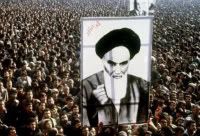
Soon afterwards, the king had to leave the country, and Ayatollah Khomeini returned from exile in triumph.
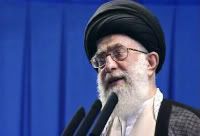
Khomeini's successor as Supreme Leader, Ayatollah Ali Khamenei, claimed at Friday prayers at Tehran university that "foreign agents" were behind efforts to stage a velvet revolution.
Change
Having spent 10 days in Iran for the 12 June election, that accusation sounds to me like a classic case of blaming the messenger.
There is a velvet rebellion taking place. It is not a revolution yet - but it could evolve into one if the Supreme Leader and his associates do not listen to the people.
I heard with my own ears dozens of peaceful, young Iranians saying they wanted change.
Sixty percent of the population are under 30 years old. They have no memory of the Islamic revolution in 1979. Many of them use the internet and watch satellite TV. Their window on the wider world is irreversibly open.
Many of them simply want peaceful change - and in particular an end to the strict laws that govern personal behaviour in Iran.
They want to be able to sing and dance. They wonder why the Iranian leadership continue to ban such expressions of human joy - a ban very similar to the rules imposed on Afghanistan during the Taliban regime.
And of course Iranians do sing and dance. I have been to several parties where the dancing was intense. And so was the drinking, though alcohol is also illegal.
Prohibition does not work. Many Iranians simply lead double lives.
An article in a magazine - available at Tehran news stands when I was there last year - carried the headline: "We are all hypocrites now."
Many women only cover their heads because they would be arrested if they did not.
Several women I met openly complained about the religious "guidance" police enforcing the female dress code of the chador, or the hijab and "manto" coat.
One young student told me: "I like the hijab. My friend doesn't like it. I should be free to choose to wear it, and she should be free to choose not to."
Another woman said: "The hijab is not really the problem. The real problem is that men and women are human beings - they are the same, and they should have equal freedoms." >>> By Hugh Sykes, BBC News | Sunday, June 21, 2009
Iran Cleric Family Arrested?
’Death to Khamenei’: In Tehran, a city bus is engulfed in flames, as people in crowds shout, 'Death to Khamenei'
Basij Militia HQ Burns: Amateur video shows the Basij headquarters set ablaze while smoke rises into a darkened sky
Zehntausende von Exil-Iranern protestieren
NZZ Online: Zehntausende von Anhängern der iranischen Opposition haben am Samstag in Europa und den USA gegen das offizielle Wahlergebnis im Iran protestiert. Die grösste Demonstration fand in Villepinte bei Paris statt, wo sich Exil-Iraner aus mehreren europäischen Ländern versammelten.
Laut den Organisatoren nahmen 90'000 Personen an der Kundgebung teil. Maryam Radjavi vom Nationalen Iranischen Widerstandsrat forderte einen demokratischen Wandel im Iran und «freie Wahlen unter der Aufsicht der Uno». >>> sda/afp/dpa | Samstag, 20. Juni 2009
CNN: Rallies in France, Germany, U.S. Support Iranian Demonstrators
WASHINGTON -- Demonstrators gathered in major cities in France, the United States and Germany on Saturday to condemn Iran's crackdown on pro-democracy protesters in Tehran.
The rallies ranged from tens of thousands of Iranian exiles and supporters who crammed a Paris, France-area convention center to the hundreds of demonstrators who braved a downpour in Washington to march to the White House.
In Hamburg, Germany, protesters marched against the announced result of last week's Iranian election, which had President Mahmoud Ahmadinejad declared the overwhelming victor in voting that opposition groups called rigged.
A threatening statement Friday by supreme leader Ayatollah Ali Khamenei in Iran raised fears of bloodshed, and security forces in Tehran confronted demonstrators Saturday with clubs, tear gas and water cannons. >>> CNN | Saturday, June 20, 2009
CNN: 90,000 Thousand Protest in Paris
CNN: Hundreds Protest in New York
leJDD.fr: Iran: Le monde réagit
Plutôt discrète après la proclamation des résultats en Iran, la communauté internationale s'est émue dimanche des violences policières dans la République islamique. Selon CNN, 19 personnes ont été tuées lors des manifestations de samedi. Plusieurs voix se sont élevées pour appeler à la fin de la répression. Mahmoud Ahmadinejad dénonce ces "ingérences". Et semble déterminé à mater l'opposition.
Londres, Rome, Berlin, Washington... Téhéran a essuyé les critiques de plusieurs capitales occidentales dimanche. En cause: la répression des manifestations de l'opposition samedi. CNN fait état de 19 victimes, la télévision publique iranienne parle elle de 10 morts et 100 blessés. Ces informations restent difficiles à vérifier, les journalistes occidentaux étant cantonnés dans leurs hôtels. Mais plusieurs vidéos, postées sur YouTube par des internautes iraniens, témoignent de la violence des affrontements.
Dimanche, la chancelière allemande, Angela Merkel, a demandé aux autorités iraniennes d'autoriser les manifestations pacifiques - interdites vendredi par le Guide suprême, l'ayatollah Ali Khamenei - et de procéder à un recomptage des bulletins de vote. L'Italie a quant à elle exhorté Téhéran à prendre des mesures urgentes pour mettre fin sans violences aux événements qui secouent le pays. Rome estime que la sortie de crise se trouve dans la tenue d'une rencontre publique et pacifique "entre le gouvernement et d'autres" pans "de la société iranienne". Après avoir observé une certaine retenue pendant la semaine, estimant que ce n'était pas à Washington de commenter le choix des électeurs iraniens, Barack Obama s'est montré plus ferme samedi. Il a appelé les autorités "à mettre fin aux violences et aux actions injustes" contre le peuple iranien. "Le gouvernement iranien doit comprendre que le monde regarde ce qu'il se passe. Nous portons le deuil de chaque vie innocente qui a été perdue", a-t-il ajouté dans un communiqué. >>> Par M.E, leJDD.fr | Dimanche 21 Juin 2009
INDEPENDENT ON SUNDAY: President Barack Obama challenged Iran's government to halt a "violent and unjust" crackdown on dissenters, using his bluntest language yet to condemn Tehran's postelection response.
Mr Obama has sought a measured reaction to avoid being drawn in as a meddler in Iranian affairs.
Yet his comments have grown more pointed as the clashes intensified, and his latest remarks took direct aim at Iranian leaders.
"We call on the Iranian government to stop all violent and unjust actions against its own people," Mr Obama said in a written statement.
"The universal rights to assembly and free speech must be respected, and the United States stands with all who seek to exercise those rights." >>> PA | Sunday, June 21, 2009
Iran: "Das ist erst der Anfang einer Revolution"
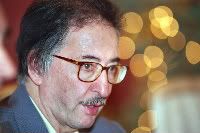
WELT AM SONNTAG: Im Iran hat es bei Zusammenstößen zwischen Demonstranten und Polizei erneut Verletzte gegeben. Mit Sorge schaut Abolhassan Banisadr, der erste Präsident der Islamischen Republik, auf sein Land. Das Regime habe dem Volk den Krieg erklärt, sagt er. Einen Sturz der Führung hält er jedoch für möglich.
Er war ein Vordenker der "islamischen Revolution" im Iran 1979. Der Ökonom und Theologe Abolhassan Banisadr, 76, lernte Ayatollah Khomeini in Paris kennen und wurde 1980 der erste Präsident der Islamischen Republik Iran. Weil er gegen die massenhaften Hinrichtungen im Zuge der Revolution protestierte, wurde er 1981 abgesetzt. Er lebt unter Polizeischutz in Paris.
Welt am Sonntag: Herr Banisadr, was halten Sie von der Rede des Revolutionsführers Ali Chamenei an die Iraner beim Freitagsgebet?
Abolhassan Banisadr: : Das war eine Kriegserklärung - gegen einen Teil des Systems und gegen die Bevölkerung. Chamenei hat die Bevölkerung gewarnt, auf die Straße zu gehen. Und er hat mit Konsequenzen gedroht, wenn Mussawi und die Seinen die Proteste nicht beenden. Ex-Premierminister Mussawi ist Teil des Systems, das hat Chamenei selbst betont. Aber damit hat der Revolutionsführer auch zugegeben, dass es einen Bruch innerhalb des Systems gibt. Dass es einen Bruch zwischen Herrschenden und Volk gibt. Er hat die Frage nach dem Fortbestand der Islamischen Republik gestellt. Das ist eine sehr gefährliche Frage für Chamenei.
Welt am Sonntag: : Glauben Sie also, dass der Sturz des Regimes bevorsteht?
Banisadr: : Das kann ich nicht mit Gewissheit sagen. Ich bin sicher, dass das Volk die Proteste fortsetzen wird. Mehr Sorgen mache ich mir um Herrn Mussawi. Wenn er Chameneis Drohung nachgibt, dann wird der Bruch zwischen System und Volk endgültig. Dann wird es langfristig noch mehr Gewalt geben, weil die Unterdrückung sehr viel brutaler werden wird. Wenn Mussawi nicht einknickt, wird der Übergang zur Demokratie wesentlich beschleunigt.
Welt am Sonntag: : Wen repräsentiert Mussawi?
Banisadr: : Diejenigen am Rande des Regimes, die nicht direkt an der Macht beteiligt sind und immer geglaubt haben, das System sei reformierbar. Das sind auch die meisten Mullahs in Qom. Die großen Kleriker, die Weggefährten Khomeinis, haben alle Mussawi gewählt.
Welt am Sonntag: : Was meinen Sie als einer der Väter dieses Systems: Ist es reformierbar?
Banisadr: : Letztlich nicht. Weil die Islamische Republik vollkommen auf die Person des Revolutionsführer ausgerichtet ist. Die Macht müsste sich selbst demontieren.
Welt am Sonntag: : Mit ihren Parolen und den Liedern beschwören die Demonstranten Parallelen zur islamischen Revolution von 1979. Sehen Sie die auch?
Banisadr: : Das Schah-Regime war viel schwächer als Chamenei heute. Und das Bewusstsein, dass es beseitigt werden muss, war viel allgemeiner. Was wir heute sehen, ist erst der Anfang einer Revolution. >>> Von Daniel-Dylan Böhmer | Sonntag, 21. Juni 2009
Iran’s Dictator Gives Up Pretence of Democracy
THE SUNDAY TIMES: Just before noon on Friday, June 19, the Islamic republic died in Iran. Its death was announced by its “supreme guide”, Ayatollah Ali Khamenei, who had come to praise the system but buried it instead. Khamenei was addressing supporters on the campus of Tehran University, transformed into a mosque for the occasion. Many had expected him to speak as a guide, an arbiter of disputes – a voice for national reconciliation. Instead, he spoke as a rabble rouser and a tinpot despot.
At issue was the June 12 presidential election that millions of Iranians, perhaps a majority, believe was rigged to ensure the re-election of President Mahmoud Ahmadinejad with a two-thirds majority. Since its inception in 1979, the Islamic republic has organised 31 elections at different levels. All have been carefully scripted, with candidates pre-approved by the regime and no independent mechanism for oversight.
Nevertheless, the results were never contested because most Iranians believed the regime would not cheat within the limits set by itself. Elections in the Islamic republic resembled primaries in American political parties in which all candidates are from the same political family but the contest is free and fair. The June 12 election was exceptional because three of the four candidates challenged the results.
Once the initial shock had passed, everyone looked to the supreme leader to find a way out of the impasse. Instead, Khamenei came out with a long lyrical monologue, hailing the election as a “miracle” and a “triumph for Islam”. Never before had Khamenei commented on the results of elections beyond accepting them as an expression of the popular will. The Khomeinist system was supposed to be 80% theocracy and 20% democracy, regardless of how bizarre the combination looked.
On Friday, the 20% democratic part disappeared, as Iran was transformed from an Islamic republic into an Islamic emirate headed by the Emir al-Momeneen (Commander of the Faithful) Ali Khamenei. As Iranians marched in the street in support of more freedom and democracy, Khamenei served notice that he was determined to lead the country in the opposite direction.
A sign that the self-appointed emir wanted to jettison the republican part of the system was there for all to see. The diminutive Ahmadinejad was relegated to the third rung of the faithful praying behind Khamenei. Sandwiched between two mullahs with giant turbans, he was almost hidden from public view. For almost a week the usually voluble Ahmadinejad has been kept off the airwaves. Suddenly the office of the president has become irrelevant. Ahmadinejad is there not because the people wanted him but because the emir found “his views closer to mine than the views of others”. >>> Amir Taheri* | Sunday, June 21, 2009
*Amir Taheri is an Iranian journalist and author
Clashes Show Depth of Fury
THE SUNDAY TIMES: Yesterday’s open defiance of the supreme leader was astonishing and shows how fast events are moving in Iran
The two men cradled the woman as she collapsed backwards onto the street, a pool of blood at her feet. The men pressed their hands on to a bullet wound in her neck as her hands fell limp above her shoulders.
Within seconds, her eyes rolled sideways and her pale features were obscured by haemorrhaging from her nose and mouth. Her would-be rescuers shrieked in panic. There was nothing they could do to save her.
The scene, captured on a number of mobile phones, unfolded yesterday in Tehran as protesters fought running battles with riot police and militia on the streets of the Iranian capital.
Another video showed hundreds of people milling about in a street with fires burning in the road. Some were collecting rocks. A helicopter buzzed overhead.
At least five shots were heard and soon after a group of men raced through the crowd carrying a man by his arms and legs. His head was lolling. He was laid on the ground and a crowd gathered. A large blood stain filled the centre of his white shirt. He lay still and appeared to be dead.
Yet more footage emerged of young men throwing stones at riot police. A number shouted “Death to Khamenei!”, underlining the seriousness of the protests. As supreme leader, Ayatollah Ali Khamenei traditionally occupies an untouchable position in Iranian society.
There was also video of a member of the security forces who had been knocked off his motorbike. A black-clad woman tried to protect him as a number of people, many of them wearing suits, kicked and punched him. A motorbike was on fire a few feet away.
Last night these videos revealed the extent of the defiance of the regime that has sprung from last week’s disputed presidential election. Yesterday tens of thousands of supporters of Mir Hossein Mousavi, who claim Mahmoud Ahmadinejad, the incumbent, stole victory in the election, poured on to the streets again. They were confronted with water cannon, tear gas and targeted gunfire.
The largest crowd gathered near the University of Tehran, after evading a riot police cordon which had tried to disperse them. Soon a volley of 20-30 shots rang out - which state television later claimed were warning shots - and the group broke up into roaming knots of protesters. Street battles then erupted as they took the fight to police with rocks.
As night fell it was unclear how many people had been killed or injured in the clashes. What was certain was that Iran was entering uncharted territory. >>> Marie Colvin in Tehran | Sunday, June 21, 2009
YOUTUBE: Basij Kills Young Girl in Tehran's Streets (Warning: Graphic)
Mir-Hossein Mousavi 'Ready for Martyrdom' as Iranians Defy Supreme Leader
THE TELEGRAPH: Iran's defeated presidential candidate Mir-Hossein Mousavi on Saturday night told his supporters he was ready for martyrdom, and demanded that the entire disputed election be annulled.
He dramatically raised the stakes in the standoff with Iran's Supreme Leader, Ayatollah Ali Khamenei, after publishing a letter to the country's highest electoral authority in which he cited examples of electoral fraud to support his "undeniable right" to call for a re-run of the election.
Mr Mousavi made his defiant call during a speech delivered in southwest Tehran, according to an ally, who telephoned a western news agency shortly afterwards to report: "Mousavi said he was ready for martyrdom and that he would continue his path."
A witness told Reuters that Mr Mousavi had called for a national strike if he was arrested.
It was an unprecedented act in defiance of Ayatollah Khamenei, who has declared President Mahmoud Ahmadinejad the winner of the June 12 election and on Friday ordered an end to protests by demonstrators who say Mousavi was the winner. >>> By Angus McDowall | Saturday, June 20, 2009
Iran: A Picture Paints a Thousand Words
The bloody face of Islamic theocracy. Photo: MailOnline via Twitter
Chaos – Tehran Riots (June 20) : BBC Farsi – Basij Open Fire into Crowds
Blutige Zusammenstöße im Iran: Polizei greift Demonstranten mit Schlagstöcken an
WELT ONLINE: Wasserwerfer, Tränengas und Schlagstöcke: Die Lage im Iran ist eskaliert. Bewaffnete Polizei stellte sich den Anhängern der Opposition entgegen. Augenzeugen berichten von bis zu 60 schwer Verletzten. Dem Oppositionsführer Mussawi drohte die iranische Regierung mit Verhaftung.
Bild: Welt Online
Der Machtkampf im Iran ist am Samstag weiter eskaliert. Polizei und regierungstreue Milizen gingen mit Wasserwerfern, Tränengas und Schlagstöcken gegen Anhänger der Opposition vor, die einem Demonstrationsverbot trotzten.
Augenzeugen berichteten von heftigen Zusammenstößen in der Nähe des Revolutionsplatzes in Teheran. Rund 3.000 Demonstranten protestierten dort gegen das offizielle Ergebnis der Präsidentenwahl und riefen „Tod der Diktatur“ und „Tod dem Diktator“.
Polizei und regierungstreue Milizen hätten 50 bis 60 Demonstranten so schwer verletzt, dass sie in das Imam-Chomeini-Krankenhaus gebracht werden mussten, sagten Augenzeugen der Nachrichtenagentur AP. Mehrere blutende Demonstranten seien von Mitstreitern weggetragen worden. Einige der Protestierenden hätten daraufhin Motorräder der Milizen in Brand gesteckt. >>> AP | Samstag, 20. Juni 2009
French Women May Face Ban on Head-to-toe Islamic Dress
Veiled women demonstrating in Paris in 2004 against the law banning the covering of heads in state schools. Photo: TimesOnline
TIMES ONLINE: France could bar Muslim women from wearing full veils in public, a government minister said yesterday as parliament took action over concerns about an increase in women who are wearing the niqab and burka in big cities.
The latest controversy over dress habits among France’s six million Muslims follows public differences this month between Presidents Obama and Sarkozy over the merits of legislating on religious clothing.
A group of 58 MPs from the Left and Right called on Wednesday for parliament to react to the phenomenon of women who are adopting what they called oppressive head-to-toe Islamic dress that “breaches individual freedoms”.
Luc Chatel, the Industry Minister and government spokesman, supported the MPs. “If it were determined that wearing the burka is a submissive act, and that it is contrary to republican principles, naturally parliament would have to draw the necessary conclusions,” he said.
Asked whether that would mean legislation, he replied: “Why not?”
The new debate over Muslim dress is reviving passions that surrounded France’s 2004 law banning religious headcover in state schools. André Gerin, a Communist MP, led the motion for an inquiry, calling the burka and niqab “a moving prison” for women.
Women’s groups, including some Muslim-led ones, back new measures against the practices of a growing but still small minority of radical Muslims.
Fadela Amara, a rights campaigner of Algerian background, who is the Housing Minister, said that she was alarmed by the number of women “who are being put in this kind of tomb”. She added: “We must do everything to stop burkas from spreading.” >>> Charles Bremner in Paris | Saturday, June 20. 2009
Les manifestations à Téhéran (Aujourd’hui ?)
Voici une vidéo diffusée via le réseau de microblogging Twitter et censée figurer les émeutes en cours. Les documents trouvés sur Internet étant difficiles à sourcer et à vérifier, ces images sont à prendre avec précaution. [Source: Le Figaro]
LE FIGARO: Iran : heurts entre pro et anti-Ahmadinejad : MINUTE PAR MINUTE - Malgré les menaces du pouvoir, les iraniens qui contestent la victoire de Mahmoud Ahmadinejad manifestent samedi et affrontent la police anti-émeutes. Un attentat-suicide a été commis contre le mausolée de l'ayatollah Khomeiny.>>> Samuel Laurent (lefigaro.fr) avec agences | Samedi 20 Juin 2009
NZZ Online: Lage in Teheran spitzt sich zu: Polizei geht gegen verbotene Demonstration vor – Selbstmordattentat
Im Konflikt um die iranische Präsidentenwahl ist es in Teheran zu Zusammenstössen zwischen Demonstranten und der Polizei gekommen. Gegen die Anhänger der Opposition wurden Tränengas und Wasserwerfer eingesetzt. Vor dem Mausoleum von Ayatollah Khomeinyi hat sich ein Selbstmordattentäter in die Luft gesprengt.
In der iranischen Hauptstadt Teheran hat sich am Samstag ein Selbstmordattentäter vor dem Mausoleum von Ajatollah Khomeinyi selbst getötet und zwei Personen verletzt. Das meldete die iranische Nachrichtenagentur Fars. Ob es einen Zusammenhang zu den Massenprotesten der Opposition nach den Präsidentenwahlen gibt, war zunächst völlig unklar. Das Mausoleum des islamischen Revolutionsführers Khomeinyi gilt vielen Iranern als Heiligtum. >>> sda/dpa/afp | Samstag, 20. Juni 2009
Iran Police 'Use Gas' on Protesters
AL JAZEERA: Iranian police have reportedly used tear gas and water cannon against thousands of people gathering to protest against the disputed re-election of Mahmoud Ahmadinejad, Iran's president.
Protesters tried to reach Revolution Square in the centre of the capital Tehran for a planned protest on Saturday, despite warnings from police that they would be arrested.
Police had blocked access to the square and Ahmadreza Radan, the deputy national police commander, had said they would "strongly confront any illegal gatherings and those without permission".
"Those who pull people to the streets should know that by a judicial decree they will be prosecuted by law and they will be arrested." Roads blocked >>>
'Bomb Explodes' As Thousands Protest In Iran
SKY NEWS: A bomb has exploded in Tehran near the shrine of Iran's revolutionary founder as thousands of people protest at the result of the country's election, reports say.
At least one person was killed and two others injured close to the shrine of Ayatollah Ruhollah Khomeini, said the Fars news agency.
Reports said it was a suicide bombing and the attacker died.
Elsewhere in the Iranian capital, police are using tear gas and water cannon on protesters, according to witnesses.
Reports said many people have defied Government warnings that any protests would be suppressed.
Eyewitnesses say some 3,000 protesters chanted "Death to the dictator!" and "Death to dictatorship!" near Revolution Square in the city centre.
Riot police were sent out on to the streets following a demand by Iran's supreme leader for the demonstrations to end. >>> | Saturday, June 20, 2009
ASSOCIATED PRESS: Web Support Pours Out for Iran Protesters
NEW YORK — Google and Facebook have rushed out services in Farsi. Twitter users have changed their home cities to Tehran to provide cover for Internet users there. Others have configured their computers to serve as relay points to bypass Iranian censorship.
In the aftermath of the disputed Iranian election, Internet companies and individuals around the world have stepped in to help Iranians communicate and organize.
Twitter delayed a scheduled maintenance shutdown so that people could continue to access the microblogging site while scores of Americans set up remote proxy servers so Iranians could access blocked Web sites from inside their country.
All week, Internet users in the U.S. and around the world fixed their eyes on the events unfolding in Iran, the way viewers might have been glued to their television sets 30 years ago. But unlike 30, or even five years ago, this time they could participate. >>> Associated Press | Saturday, June 20, 2009
Who’d Want to Be Ruled by Boring Old Farts in Iran?
Isn’t it high time that Obama spoke up for freedom? Isn’t it high time he stood by the side of the young people of Iran who are so obviously crying out for help to overthrow the tyranny they have to live with, and live under?
Obama said that he didn’t want to ‘meddle’ in the internal affairs of Iran. When did the idea of ‘meddling’ ever stop Obama before? He has meddled in the US car industry, he has meddled in banking affairs, he is meddling in the health-care industry, and he is going to meddle in European affairs, by insisting that the EU accept Turkey as a member state, even though most Europeans want nothing to do with the accession of that predominantly and backward nation to the Union. Yet, when it comes to ‘meddling’ in the affairs of Iran, Obama wants nothing to do with it. Funny that! Strange that!
Iran suppresses its people. Iran’s system is totally corrupt. Iran is brutal with the Iranians. Iran is totally un-democratic. Iran is also enriching uranium under our noses in order to get the atomic bomb; yet Obama feels that it would be wrong to ‘meddle’ in its internal affairs.
For God’s sake, Obama, this is a gift on a plate for you! The young of Iran have done all the work. It is high time, therefore, that the situatiuon be exploited. The vast majority of the educated people of Iran do not want the theocracy they have to live under. This has become self-evident in the last few days. Instead, these demonstrators want their human rights and freedom. They want freedom from tyranny, freedom to live their lives as they choose. Yet the best thing that you, Obama, can come up with is that you don’t want to ‘meddle’.
New Dark Age Alert! Loi controversée: La Lituanie interdit toute publicité de l'homosexualité
LE POINT: Le parlement de Lituanie a adopté mardi une loi sur la "protection des mineurs", interdisant en particulier de faire dans ce pays toute "publicité" pour les relations homosexuelles, bisexuelles et polygames.
77 députés ont voté pour cette loi, trois y ont été opposés et quatre se sont abstenus.
Selon ce texte, toute information publique faisant de la publicité pour les relations homosexuelles, bisexuelles et polygames est considérée comme ayant un effet négatif sur la santé psychique, le développement physique, intellectuel et moral des mineurs.
La nouvelle loi ne prévoit toutefois aucune sanction particulière pour ceux qui ne la respecteraient pas.
"C'est un mardi noir", a déclaré à l'AFP Vladimir Simonko, le président du Conseil de la Ligue des gays lituaniens.
"C'est une homophobie institutionnalisée qui se met en place", a-t-il regretté.
Selon lui, les homosexuels lituaniens s'adresseront au président de la République pour lui demander de ne pas promulguer la loi. >>> AFP | Tuesday, June 16, 2009
IPS: Lithuania Throttles Gay Rights
BRATISLAVA - Rights groups are calling on EU leaders to act after Lithuanian lawmakers approved controversial legislation that they say makes homosexuals "second class citizens" and breaches European conventions on human rights.
The legislation passed by Lithuania's parliament this week bans the discussion of homosexuality in schools and any reference to it in public information available to children.
Gay and human rights groups have condemned the law, claiming it institutionalises homophobia, is discriminatory, and violates the right to freedom of expression.
They say it will also make gay youths more vulnerable, as teachers and other school students will be unable to provide information to them about homosexuality, or could be afraid to help them if they are bullied or attacked by peers.
They also believe it breaches the European Convention on Human Rights, and have called on members of the European Parliament (MEPs) and EU leaders to put pressure on the Lithuanian government and president, who has yet to sign the law into effect, to amend it. >>> By Pavol Stracansky | Friday, June 19, 2009
Iran: Tehran Metro 2009
Friday, June 19, 2009
The Iranian Royal Family until 1979: Before the Islamic Revolution
Iran's Exiled Queen Speaks
THE DAILY BEAST – BLOG: As protesters flood Iran’s streets, Farah Pahlavi—the deposed empress—recalls the lessons of the 1979 uprising that led to her husband’s painful exile. A conversation with The Daily Beast.
Empress Farah Pahlavi, née Farah Diba
Farah Diba Pahlavi, the former queen of Iran, remembers all too well the last time Iranian youths poured into the streets of Tehran, chanting, throwing rocks, and demanding change: It was the start of the revolution against her husband, the shah of Iran, which ultimately forced the royal couple into exile in 1979 and plunged her life into chaos.
Thirty years later, Pahlavi, who now lives in Paris, feels a new optimism as YouTube and Twitter bring news of the uprising in Tehran’s streets. She’s hopeful that she is watching the beginning of the end of Iran’s theocracy—and the three decades of repressive Islamic rule that followed her husband’s departure.
During her reign as Iran’s queen, Pahlavi was the Jackie O. of Iran—a graceful, glamorous figure known as an emphatic advocate for the arts. And even as her husband’s support waned as a result of his autocratic rule, his harsh treatment of political enemies, and close ties with the U.S., she was still admired for her glamour and warmth.
But a new HBO documentary has forced Pahlavi to come to terms with some of the grievances against her husband’s rule. The Queen and I, which airs on Wednesday, is the work of Nahid Persson Sarvestani, an Iranian revolutionary who wanted to reconcile her glamorous childhood image of Farah Diba with the monarch who caused so much pain and suffering for their people. She sought out Pahlavi, who agreed to participate. >>> The Daily Beast | Wednesday, June 17, 2009
THE GLOBE AND MAIL: The cop strode up to Rajiv M., gave him a shove and demanded to look in his backpack. Rajiv handed it over and the cop pulled out a condom, and asked why Rajiv had it. “I said it was for sex,” Rajiv recalls, a bold if obvious answer that he knew was going to irritate the cop. But he wasn't feeling deferential.
The police officer demanded Rajiv's money, and his cellphone. “I said, ‘Why should I give it to you?'“ The cop grew more menacing: Next he demanded oral sex. Rajiv refused that, too, so the cop hauled the slight 21-year-old to a nearby police station and began the motions of charging him with the crime of homosexuality. When eventually he realized that Rajiv's dad was also a police officer, he let the young man go.
This nasty little piece of attempted extortion took place not in a gay bar, not in an alleyway late at night, but in the middle of a hot spring afternoon in Delhi last year, when Rajiv was standing at a crowded bus stop. “It's India,” Rajiv said with a shrug full of bravado. “So he could do something like this in the open.”
Rajiv, tousle-haired and deliberately camp, told this story a few weeks ago at a Delhi drop-in centre for gay and transgendered men, where he goes a couple times a week. Everyone had a similar story, except most had gorier endings. All the men had been harassed and detained by police who demanded money and, with no trace of irony, also often wanted sex, with the threat of charging and exposing the victim as a homosexual.
The police invoke Section 377 of the Indian Penal Code, the law that criminalizes “carnal intercourse against the order of nature,” including homosexual acts between consenting adults, with a possible sentence of life imprisonment. The law is almost never used for actual prosecutions: Men would have to be caught fully engaged in a sex act to hold up a case. No one has been convicted under 377 in 20 years. But few police officers are interested in actually enforcing the law. They prefer it as a blackmail tool.
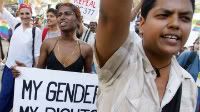
Now, however, a fledgling gay community is waiting on tenterhooks for a verdict from the Delhi High Court, expected soon, on a public-interest litigation aimed at decriminalizing same-sex activity – and ending a plague of state-sanctioned homophobia that has led to rape, extortion, suicide and the spread of HIV-AIDS.
If they win – if the law is struck down, and many legal experts believe it will be – it will be a big shift in a still deeply conservative culture. There will be huge ramifications for India – where the courts seem to be out ahead of most of the population – and for the rest of South Asia and the developing world, where only a handful of countries have legally enshrined gay rights. >>> Stephanie Nolen, New Delhi | Friday, June 19, 2009
House Condemns Iran's Crackdown on Protests
USA TODAY: The House has voted to condemn Tehran’s crackdown on demonstrators and the government’s interference with Internet and cellphone communications, the Associated Press reports.
The vote was 405-1, with two members voting present, The Hillreports.
Here is the text of the resolution:
The House of Representatives expresses its support for all Iranian citizens who embrace the values of freedom, human rights, civil liberties, and the rule of law; condemns the ongoing violence against demonstrators by the government of Iran and pro-government militias, as well as the ongoing government suppression of independent electronic communication through interference with the Internet and cellphones; and affirms the universality of individual rights and the importance of democratic and fair elections.
The resolution was initiated by Republicans as a veiled criticism of President Obama, the AP says. >>> Posted by Doug Stanglin | Friday, June 19, 2009
Nobelpreisträgerin Ebadi für Neuwahl in Iran: Uno-Beobachter gefordert
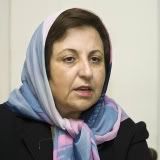
NZZ Online: Die iranische Friedensnobelpreisträgerin Shirin Ebadi hat für den Fall weiterer Demonstrationen in ihrer Heimat eine Wiederholung der Präsidentschaftswahl gefordert.
«Wenn die Menschen weiterhin unzufrieden sind mit dem Ausgang der Wahlen, sollten diese für null und nichtig erklärt und neu angesetzt werden», sagte die Anwältin für Menschenrechte am Freitag in Genf. Die Neuwahl sollte von Beobachtern der Uno oder anderen internationalen Organisationen überwacht werden. >>> sda/dpa | Freitag, 19. Juni 2009
Hugh Hewitt & Christopher Hitchens Discuss Iran Demonstrations
Protest at Iran's 'Evil UK' Claim
BBC: The Foreign Office is in talks with the Iranian ambassador in London after his country's supreme leader called the UK government "evil".
Ayatollah Ali Khamenei denounces the UK government as "evil"
Ayatollah Ali Khamenei made the comments as he appealed for an end to protests about election results.
He said Western nations were showing "their enmity against the Islamic Republic system and the most evil of them is the British government".
Ambassador Rasul Movaheddian is meeting officials at the Foreign Office now.
Officials want to register their displeasure at Ayatollah Khamenei's comments and find out why he made them.
BBC News website world affairs correspondent, Paul Reynolds, says that the summoning of the Iranian ambassador represents a shift of position by the British government which up until now had wanted to avoid getting involved in public arguments with Iran.
He added: "The line had been that it wanted to avoid giving the Iranians any reason to blame Britain for interfering. The US government has taken a similar view.
"However, Ayatollah Khamenei's description of Britain as the most 'evil' of foreign governments was a step too far."
British diplomats are thought to believe Britain is being used as "proxy" for the United States, because Iran does not want to endanger its improving relations with America.
In his first public remarks after days of demonstrations, Ayatollah Khamenei issued a stern warning that protests against the country's disputed presidential election results must end. >>> | Friday, June 19, 2009
Iran : que peut faire Obama ?
Pour Alain Barluet, journaliste au service International du Figaro, la réélection de Mahmoud Ahmadinejad est une «mauvaise nouvelle» pour Barack Obama, qui pourrait être contraint «de revoir toute sa politique iranienne».
Khamenei and the Politics of Denial
THE GUARDIAN: In his address at Friday prayers in Tehran the Supreme Leader offered no new initiatives and no path through the maze
It was billed as the speech of his life. But in many ways Ayatollah Ali Khamenei's address at Friday prayers in Tehran was disappointingly similar to speeches and sermons he has given in the past: pious, defensive, blinkered and fiercely scathing about real or imagined western "enemies" of the Islamic Republic.
Those hoping the Supreme Leader would produce a plan for a way out of the tumultuous political stand-off that has gripped Iran since last Friday's disputed presidential poll were disappointed. Khamenei offered no new initiatives, no explicit offers of compromise, no path through the maze.
Worse, he appeared to show little understanding of the depth of the crisis that he and his protege, President Mahmoud Ahmadinejad, have helped provoke with what looked to many Iranians like a pre-emptive strike last weekend to claim victory before the votes were fully counted.
It was a five-star performance in the politics of denial. And it's tempting to conclude: Khamenei just doesn't get it.
It could have been worse. Even as he told Iranians that street demonstrations and mass protests could not be allowed to continue, Khamenei conceded that genuine differences of political opinion were "natural". Even as he argued that vote-rigging was unthinkable in Iran, he admitted the country had problems with corruption that must be addressed. In a small way, these were concessions to the popular mood.
Although Khamenei appeared to threaten the reformist leader, Mir Hossein Mousavi, and other aggrieved presidential candidates with punitive action should their "illegal" protests continue, Khamenei did not make any explicit threat. Instead he said it was their responsibility to avoid possibly unpleasant outcomes.
Doubts concerning the election results must be investigated through legal channels, he said. Those who ignored this advice "will be responsible for [the] consequences of any chaos ... Arm wrestling in the street must stop. I want everyone to put an end to this."
Considering that Khamenei is the highest unifying authority in a country divided and badly wounded, his failure to offer an apology, or to commiserate with, the family and friends of the at least eight people killed by security forces and militias in the last week was striking. >>> Simon Tisdall | Friday, June 19, 2009
Khamenei Backs Iran Election Results
THE INDEPENDENT: Iran's supreme leader says there was "definitive victory" and no rigging in the disputed presidential elections that set off days of unprecedented protests.
Supreme Leader Ayatollah Ali Khamenei offered no concession to opposition supporters who are demanding the elections be cancelled and held again.
He blamed Great Britain and Iran's external enemies for the unrest, vigorously defending the ruling system in his first public comments since supporters of challenger Mir Hossein Mousavi flooded the streets.
Khamenei had already approved the June 12 election results that gave hard-line President Mahmoud Ahmadinejad a landslide victory, but he has not been able to ignore the powerful defiance of the opposition, which has called the vote rigged, of his authority.
Khamenei praised Iranians for taking part in the election and called it a "a magnificent show of responsibility of the people to determine the fate of their own country."
Khamenei was making his address as part of Friday prayers at Tehran University. Among the throngs of people crowded into the hall to see him speak was Ahmadinejad. It was not known whether Ahmadinejad's main challenger, Mir Hossein Mousavi attended as well.
Press TV, an English-language version of Iranian state television, showed television pictures of the crowded hall where Khamenei was speaking as the crowd and thousands of people assembled outside cheered. >>> By Ali Akbar Dareini and Nasser Karimi, Associated Press | Friday, June 19, 2009
Khamenei Tells Mousavi to Toe the Line over Election or Be Cast Out
TIMES ONLINE: The moderate Iranian leader who says that he was robbed of victory in last week’s presidential election faces a fateful choice today: support the regime or be cast out.
Ayatollah Ali Khamenei, Iran’s Supreme Leader, has told Mir Hossein Mousavi to stand beside him as he uses Friday prayers at Tehran University to call for national unity. An army of Basiji — Islamic volunteer militiamen — is also expected to be bussed in to support the Supreme Leader.
The demand was made at a meeting this week with representatives of all three candidates who claim that the poll was rigged, and it puts Mr Mousavi on the spot. He has become the figurehead of a popular movement that is mounting huge demonstrations daily against the “theft” of last Friday’s election by President Ahmadinejad, the ayatollah’s protégé.
Mr Mousavi, 67, is a creature of the political Establishment — a former revolutionary and prime minister who would like to liberalise Iranian politics but has never challenged the system in the way his followers are doing. It was unclear last night what he would do or even whether the protests would die away if he backed down. Yesterday tens of thousands of demonstrators packed into the Imam Khomeini Square in Tehran — named after the founder of the Islamic Republic — for another massive rally, this one to mourn protesters killed in Monday’s clashes with pro-government militias. >>> Ella Flaye in Tehran, Catherine Philp and Martin Fletcher | Friday, June 19, 2009
Qui sont les femmes qui portent la burqa en France ?
Elles seraient quelques milliers en France à porter un voile intégral, avec ou sans tissu grillagé au niveau des yeux. Crédits photo : Le Figaro
LE FIGARO: Le gouvernement n'exclut pas de légiférer sur le port de ce voile, dont les adeptes en France sont souvent jeunes et proches du mouvement salafiste qui prône un islam rigoriste.
Si certaines femmes souffrent de ce voile qui les ensevelit de la tête au pied, «la majorité a volontairement adopté cette tenue», tranche Bernard Godard, spécialiste de l'islam (1). «Beaucoup ont la nationalité française. Et l'on compte pas mal de converties dans leurs rangs», ajoute cet ancien du Bureau des cultes au ministère de l'Intérieur. «Elles deviennent salafistes comme on entre dans une secte», poursuit-il.
Les salafistes, tenant d'un islam radical, restent minoritaires en France. Ils seraient entre 30 000 et 50 000. Mais ils progressent régulièrement, dopés par leur opposition à l'Occident. Un fondamentalisme qui, comme le tabligh, attire justement des jeunes en mal d'absolu, dont des femmes. Comme dans les sectes, leurs membres passent des heures à peaufiner les règles, à revoir les sourates, mais aussi les milliers de hadiths, ces paroles rapportées du Prophète qu'ils entendent respecter à la lettre. Or ces hadiths sont aussi riches que contradictoires.
Majoritaire en France, l'islam malékite ne prescrit pas de voile intégral. Ce grand voile n'appartient ni aux obligations religieuses classiques ni aux traditions du Maghreb. Pourtant, seul le recteur de la Grande Mosquée de Paris, qui dépend de l'Algérie, s'est clairement prononcé contre ce niqab. Les autres mouvements paraissent gênés, analyse-t-on à la Direction centrale du renseignement intérieur, car ils composent avec une frange fondamentaliste en leur sein. >>> Cécilia Gabizon | Vendredi 19 Juin 2009
History Suggests the Coup Will Fail
THE INDEPENDENT: Patrick Cockburn, who reported from Iran during the 1979 revolution, reflects on the fall of the Shah and explains why the current uprising is very different
At first sight, what is happening in Tehran today looks very like the extraordinary events of the Islamic Revolution 30 years ago. But how deep do the similarities go? On 2 December 1978, two million Iranians filled the streets of central Tehran to demand an end to the rule of the Shah and the return of Ayatollah Khomeini. It was the most popular revolution in history. At night, people gathered on rooftops to chant "Allahu Akbar – God is Great". In the daytime, mass rallies commemorated as martyrs the protesters who had been killed by the security forces.
The methods of protest are very similar. This is hardly surprising because the demonstrators seeking to get rid of President Mahmoud Ahmadinejad understandably hope the type of unarmed mass protest that worked against the Shah will succeed again. Mass rally and public martyrdom are part of the Iranian revolutionary tradition, just as the barricade is part of the tradition in France. A difference between 1978-9 and today is that the Iranian government has no intention of letting history repeat itself.
Nor is it likely to do so. The Iranian revolution was carried out by a broad coalition from right to left which had religious conservatives at one end and Marxist revolutionaries at the other. The Shah and his regime had a unique ability to alienate simultaneously different parts of the Iranian population which had nothing in common. His cruel but poorly informed Savak security men convinced themselves that communists and revolutionary leftists were the danger to the throne and not the Shia clergy. They were not alone in their delusion. President Jimmy Carter recalls an August 1978 CIA memo, drafted five months before the Shah took flight, firmly concluding that Iran "is not in a revolutionary or even a pre-revolutionary situation".
Crucially, the Iranian revolution had a messianic leader in Ayatollah Khomeini who was a visible alternative to the Shah, a leader whose claims to legitimacy were compromised even before he came to the throne: his father Reza Shah, an army general who seized power in the 1920s, was deposed by British and Soviet troops in 1941. His son was forced to flee in 1953 when Mohammed Mossadeq was elected prime minister, only to be restored by a CIA-run coup for which President Barack Obama has apologised. >>> Patrick Cockburn | Friday, june 19, 2009
U.S. Fortifies Hawaii to Meet Threat From Korea
THE WALL STREET JOURNAL: WASHINGTON -- The U.S. is moving ground-to-air missile defenses to Hawaii as tensions escalate between Washington and Pyongyang over North Korea's recent moves to restart its nuclear-weapon program and resume test-firing long-range missiles.
Defense Secretary Robert Gates said on Thursday that the U.S. is concerned that Pyongyang might soon fire a missile toward Hawaii. Some senior U.S. officials expect a North Korean test by midsummer, even though most don't believe the missile would be capable of crossing the Pacific and reaching Hawaii.
Mr. Gates told reporters that the U.S. is positioning a sophisticated floating radar array in the ocean around Hawaii to track an incoming missile. The U.S. is also deploying missile-defense weapons to Hawaii that would theoretically be capable of shooting down a North Korean missile, should such an order be given, he said.
"We do have some concerns if they were to launch a missile...in the direction of Hawaii," Mr. Gates said. "We are in a good position, should it become necessary, to protect American territory." >>> By Yochi J. Dreazen | Friday, June 19, 2009
Blackout: The Great MPs' Expenses Cover-up
THE TELEGRAPH: MPs face universal condemnation over “disgraceful” censorship of their expenses claims.
MPs expenses: What data published by the Telegraph shows.
Party leaders struggled to explain the decision to publish heavily blacked-out versions of MPs’ claims as public anger mounted.
Despite a pledge from Gordon Brown that “transparency” was the only way to restore public faith in democracy, the files released by the Commons authorities withheld details that would have exposed the worst abuses of the expenses system.
The parliamentary expenses files do not expose MPs who have “flipped” their designated second homes and many of the most controversial claims have been completely blacked out in the documents.
Details that would have allowed the public to identify interest claimed on so-called “phantom mortgages” — such as in the case of Elliot Morley, the former environment minister — or MPs who were able to avoid paying capital gains tax on the sale of properties — such as Kitty Ussher, the Treasury minister forced to resign — were also excluded.
Controversial claims by Tory MPs for the cleaning of a moat and the purchase of a floating duck island were also omitted. >>> By Robert Winnett and James Kirkup | Thursday, June 18, 2009
MAIL Online: As the Nation Fumes at Expenses 'Blackwash' Scandal MPs Are Rewarded with £10,000 Pay Rise
Shameless MPs are set to provoke fresh public anger by pocketing a staggering £10,000-a-year pay rise.
The salary hike comes as MPs faced a backlash today over their blatant attempt to cover up expenses scams.
After weeks of public fury at leaked details, Commons officials unlocked their files yesterday - with crucial details covered in thick black ink.
It meant MPs who 'flipped' homes to claim on different properties - or charged for services such as moat-cleaning - were spared further embarrassment.
Despite growing fury among voters, it has now been revealed that they are to be rewarded for their greed with a £10,000 pay rise.
The head of the body that will now set their pay said they were underpaid by '10 to 15 per cent'.
The astonishing rise - up to five times the rate of inflation - comes as millions of workers across Britain face the threat of redundancy, salary freezes and even pay cuts. >>> By James Chapman | Friday, June 19, 2009
History in the Making: Spark of a New Revolution in Iran
New Dark Age Alert! Bubonic Plague Reported in Libya
BBC: The World Health Organization (WHO) is sending an expert to Libya to look into a reported outbreak of bubonic plague not far from the Egyptian border.
Libyan officials say at least one person has died and several more have been infected in the town of Tubruq.
Cases of the disease, which was known as the Black Death in medieval Europe, are reported quite frequently in sub-Saharan Africa.
Bubonic plague can be treated with antibiotics if diagnosed early.
The WHO received a request from Libya to investigate the suspected cases in Tubruq on Tuesday, spokeswoman Aphaluck Bhatiasevi said.
An expert is on his way to Tubruq where he will help a government team study epidemiological data and check the reported cases.
If confirmed, it would be the first outbreak in that part of Libya for about 25 years, Ms Bhatiasevi said.
The Associated Press news agency quoted a Libyan official as saying that two people had been treated and sent home, and 10 others turned out not to have the disease.
Plague primarily affects wild rodents, and is spread between them by fleas.
Humans who contract the plague through flea bites normally develop a bubonic form - in other words, a form that enters via the skin.
Besides Africa, cases have also been reported in some Asian countries and in the US in recent years. [Source: BBC] | Wednesday, June 17, 2009
Khamenei Tells Mousavi to Toe the Line Over Election or Be Cast Out
TIMES ONLINE: The moderate Iranian leader who says that he was robbed of victory in last week’s presidential election faces a fateful choice today: support the regime or be cast out.
Ayatollah Ali Khamenei, Iran’s Supreme Leader, has told Mir Hossein Mousavi to stand beside him as he uses Friday prayers at Tehran University to call for national unity. An army of Basiji — Islamic volunteer militiamen — is also expected to be bussed in to support the Supreme Leader.
The demand was made at a meeting this week with representatives of all three candidates who claim that the poll was rigged, and it puts Mr Mousavi on the spot. He has become the figurehead of a popular movement that is mounting huge demonstrations daily against the “theft” of last Friday’s election by President Ahmadinejad, the ayatollah’s protégé.
Mr Mousavi, 67, is a creature of the political Establishment — a former revolutionary and prime minister who would like to liberalise Iranian politics but has never challenged the system in the way his followers are doing. It was unclear last night what he would do or even whether the protests would die away if he backed down. Yesterday tens of thousands of demonstrators packed into the Imam Khomeini Square in Tehran — named after the founder of the Islamic Republic — for another massive rally, this one to mourn protesters killed in Monday’s clashes with pro-government militias. >>> Ella Flaye in Tehran, Catherine Philp and Martin Fletcher | Friday, June 19, 2009
Thursday, June 18, 2009
Schah-Sohn erwartet Machtwechsel in Teheran
TAGES ANZEIGER: Der frühere Kronprinz von Persien, Reza Pahlewi, sieht die Tage des Regimes im Iran gezählt.
Die Protestbewegung im Iran habe genügend Schubkraft entwickelt, um das Regime ins Wanken bringen zu können, sagte der 48-jährige Reza Pahlewi dem deutschen «Handelsblatt». «Wir haben bereits in vielen Ländern einen Prozess des zivilen Ungehorsams erlebt, wie wir ihn auch heute in Iran sehen, und das war dann nur das Vorspiel zu einem fundamentalen Wandel.» >>> vin/ap | Donnerstag, 18. Juni 2009
HANDELSBLATT: Thronfolger träumt vom Sieg: Schah-Sohn plant Umsturz im Iran
Resa Pahlavi, Sohn des letzten Schah im Iran, will nach 28 Jahren im Exil an die Spitze der Oppositionsgruppen rücken, um den Widerstand gegen das iranische Regime zu organisieren. Seine eigene Rolle in einem neuen Iran lässt er jedoch offen.
HB INNSBRUCK. Von ganz links und schräg unten aus gesehen, reckt sich der Habsburgische Doppeladler direkt über dem Haupt Seiner Majestät. Natürlich ist das garantiert ein Zufall, aber eben einer mit Symbolgehalt. Der Mann sitzt in einem wie ein Glaswürfel konstruierten Gebäude gegenüber der alten Hofburg von Innsbruck. Beifall von vielleicht 20 Gästen, vorwiegend Österreichern und zwei, drei Iranern hat ihn an diesem Morgen, an dem die Berge rundum schon tief verschneit sind und Innsbruck verschlafen wie das Tor zur Provinz daliegt, begrüßt. Reza Pahlavi strahlt.
Reza – wer? Der 48-jährige Mann im taillierten Nadelstreifenanzug, dessen dunkles Haar so akkurat sitzt, als hätte heute Morgen noch sein Hoffriseur Hand angelegt, trägt eine Anstecknadel am Revers mit den Farben des Irans: Grün, Weiß und Rot. In der derzeit verwendeten Version der Flagge lassen sich oberhalb und unterhalb des weißen Streifens der Ruf „Gott ist groß“ lesen sowie das stetig wiederholte Datum der Rückkehr des Religionsführers Ajatollah Khomeini. In der Fahnenmitte befinden sich eigentlich vier angedeutete Halbmonde, die für die Ausbreitung des Islams stehen. Ein Schwert demonstriert Stärke. Bei Reza Pahlavis Version prangt anstelle des Halbmonds und der Schrift ein goldener Löwe auf der Anstecknadel.
Pahlavi ist der Sohn des letzten Schahs von Iran, der den gleichen Namen trug. Der Thronfolger ist auf Einladung des renommierten Management Center Innsbruck hierhergekommen, um vor handverlesenen Gästen seine Vorstellung über die Zukunft jenes Landes auszubreiten, dessen Regime durch sein Atomprogramm, seine Attacken gegen die USA und Israel und seine Äußerungen zum Holocaust die Welt in Atem hält. „Demokratie ist – bei Gott – auch das Beste für uns“, sagt Pahlavi. >>> Von Pierre Heumann und Oliver Stock |Mittwoch, 31. Oktober 2007
Ali Khamenei, l'énigme iranienne
LE FIGARO: PORTRAIT - Il contrôle l'armée, la justice, la télévision, les gardiens de la révolution et les milices. Le guide suprême de la République islamique iranienne va devoir trancher pour mettre un terme aux manifestations qui secouent Téhéran.
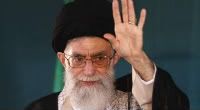
Il incarne tous les mystères du régime iranien. Aucun journaliste étranger n'a pu le rencontrer depuis vingt ans. L'ayatollah Ali Khamenei ne reçoit jamais les ambassadeurs accrédités en Iran. Et sa parole est des plus rares. Derrière ses lunettes en écaille, sa barbe blanche et son turban noir des descendants du Prophète, c'est pourtant ce personnage énigmatique qui est au centre de la République islamique - son très officiel Guide suprême - depuis la mort en 1989 de son fondateur, l'ayatollah Khomeyni. Ce septuagénaire, amateur de marche en montagne, doit trouver une issue à la pire crise politique qu'ait connue l'Iran depuis 1979, après la réélection contestée de Mahmoud Ahmadinejad, vendredi, à la présidence de la République. Accéder aux demandes du perdant, Mir Hossein Moussavi, de faire revoter les Iraniens ? Ou céder au rouleau compresseur de la répression, quitte à pousser le vaincu dans la dissidence, en l'érigeant comme chef de l'opposition ?
L'heure du choix va bientôt sonner. Or, choisir n'est pas son fort. Sur le papier, pourtant, le numéro un du régime dispose des quasi-pleins pouvoirs. Il contrôle l'armée, la justice, la télévision, les gardiens de la révolution - donc le nucléaire -, sans oublier les milices bassidjs en charge de la défense du régime. Mais comme en Iran rien n'est jamais simple, le guide est entouré d'une armée de conseillers - 1 700 environ - et placé sous le regard d'une demi-douzaine d'instances de régulation du système. «Khamenei n'est en fait que le primus interpares (le premier parmi les égaux)», souligne un diplomate occidental. En clair, l'ultime arbitre entre factions rivales au sommet de l'État, le défenseur d'un consensus minimum pour sauver un régime, contesté dans la rue depuis bientôt une semaine. >>> Georges Malbrunot, envoyé spécial à Téhéran | Mercredi 17 Juin 2009