Monday, October 05, 2009

Obama to Speak at LGBT Rights Dinner

abcNEWS: President Obama will be the keynote speaker at the Human Rights Campaign’s annual dinner on Saturday in Washington, D.C.

“We are honored to share this night with President Obama, who has called upon our nation to embrace LGBT people as brothers and sisters,” The Human Rights Campaign President, Joel Solmonese, said in an announcement today.

The dinner precedes a scheduled march on Washington by the LGBT community to take place on Sunday. The march was largely organized to draw attention to the administration’s lack on “Don’t Ask, Don’t Tell (DADT)” and the Defense of Marriage Act, among other gay rights issues.

Many leaders in the LGBT community are hoping Obama will use the platform as an opportunity to re-establish his position as a “fierce advocate” for gay rights that he solidified on the campaign trail.

White House aides say that the President has not yet written his remarks, and did not give guidance if the President will reveal any new policy.

National Security Jin Jones this weekend said that at the right time the President will deal with these issues, such as DADT – among others.

“The President has an awful lot on his desk. I know this is an issue he intends to take on at the appropriate time,” Jones told CNN.

While the gay community waits for the “appropriate time” after dedicating themselves to Obama’s campaign, discontent has continued to grow in light of the little progress that has been made since Obama took office in January.

Obama’s address on Saturday will be an historic one—as only the second sitting President ever to address a Gay rights organization. President Clinton was the first in 1997. >>> Jake Tapper, Senior White House Correspondent | Monday, October 05, 2009

THE GUARDIAN: Gay Muslims need support: Discrimination based on sexuality is as wrong as that based on religion. The Muslim Council of Great Britain can take a lead >>> Inayat Bunglawala | Monday, October 05, 2009
Egypt Purges Niqab from Schools and Colleges

THE TELEGRAPH: Egypt has embarked on a campaign to restrict the most conservative forms of Muslim dress after one of Islam's most respected clerics ordered a schoolgirl to remove her niqab, or veil.

Sheikh Mohammed Tantawi was reportedly angered during a tour of a Cairo school when he saw a girl wearing a niqab, the full veil worn by some devout Muslim women which covers the entire body except for the eyes.

Sheikh Tantawi, regarded by many as Egypt's Imam and Sunni Islam's foremost spiritual authority, asked the teenage girl to remove her veil saying: "The niqab is a tradition, it has no connection with religion."

The imam instructed the girl, a pupil at a secondary school in Cairo's Madinet Nasr suburb, never to wear the niqab again and promised to issue a fatwa, or religious edict, against its use in schools. The ruling will not affect use of the hijab, the Islamic headscarf worn by most Muslim women in Egypt.

Although definitions vary, the niqab is generally distinct from the burka, a garment which covers the entire body and allows only a mesh material in front of the eyes.

Shekih Tantawi's order is likely to resonate throughout the Islamic world even though, ironically, the schoolgirl had only worn the niqab in honour of his visit to the school. Following the imam's lead, …>>> Adrian Blomfield, Middle East Correspondent | Monday, October 05, 2009
Sechs Gründe für die Angst vor einer neuen Krise

TAGES ANZEIGER: Der Optimismus an den Börsen ist vorbei, die Bären geben die Stimmung an. Leider haben die Pessimisten gute Argumente.

Erstens

Der Zustand der Weltwirtschaft ist zu vergleichen mit einem Patienten, der einen schweren Herzinfarkt erlitten hat. Sein Zustand ist jetzt wieder mehr oder weniger stabil, doch er ist noch längst nicht der alte. Dasselbe gilt für die Weltwirtschaft. Eine Finanzkrise schüttelt man nicht ab wie eine harmlose Grippe, sie hinterlässt Spuren. So hat der Internationale Währungsfond (IWF) in seinem jüngsten Bericht dem World Economic Outlook, 88 Finanzkrisen der letzten 40 Jahre untersucht. Das Resultat ist wenig ermutigend: In den meisten Fällen war der Output der betroffenen Wirtschaften auch nach sieben Jahren noch gegen zehn Prozent unter dem Niveau bevor die Krise ausgebrochen war.

Zweitens

Langsam werden die Schäden der Krise sichtbar. Sie sind gewaltig. Die OECD, ein volkswirtschaftlicher Thinktank, schätzt, dass in den 30 reichsten Ländern gegen 25 Millionen Arbeitsplätze vernichtet worden sind. Viele der betroffenen Arbeitnehmer haben wenig Chancen ihren Job wieder zu erhalten. Das wird die Nachfrage über längere Zeit schwächen. Drittens >>> Von Philipp Löpfe | Montag, 05. Oktober 2009
Editorial : En Europe aussi, le référendum fait la force

LE TEMPS: L’Union européenne avait grandement besoin du «oui» irlandais. Après le «non» de juin 2008, une nouvelle défaite sortie des urnes aurait en effet relancé le débat sur la légitimité démocratique des institutions communautaires, et transformé Bruxelles en un parfait épouvantail à voix. Les «non» français et néerlandais de 2005, qui ont enterré le projet de Constitution, seraient revenus tels un boomerang. L’Union européenne, groggy, aurait dû batailler ferme pour se relever d’un pareil coup politique.

L’Irlande a fini par accepter le Traité de Lisbonne. Mais ne soyons pas aveugles. La crise qui a terrassé le «Tigre celtique» a joué un bien plus grand rôle dans le retournement de l’opinion irlandaise que la plupart des arguments raisonnés. A une différence toutefois: fort des garanties accordées par l’UE en matière de droit à la vie, de neutralité, de fiscalité et du droit pour chaque pays à disposer d’un commissaire européen, le gouvernement irlandais – bien qu’au plus bas dans les sondages – a pu convaincre. La pédagogie a façonné le vote utile. Les électeurs se sont sentis, sinon compris, du moins écoutés et capables d’influer. >>> Richard Werly | Lundi 05 Octobre 2009
Melanie Phillips: If Cameron Doesn’t Stop Blair Being Shoehorned as EU President, There’ll Be No Point in Him Becoming Britain’s Prime Minister

MAIL ONLINE: By the end of the Tory party conference, which starts today in Manchester, it would come as no surprise to find that Jerusalem had been replaced by the Czech national anthem.

It appears that David Cameron is sweating on the Czech Republic to help him escape from the biggest dilemma he faces.

Now that the Irish people have had their arms twisted to deliver the required 'yes' vote on the EU's constitutional Lisbon treaty, a deeply unwelcome ball has been bounced into Cameron's court.

He has promised that Britain would hold its own referendum on the treaty - but only if it has not been ratified by every other country, and thus is not in operation, by the time he comes to power.

Ireland's 'yes' vote increases the likelihood that it will be in operation by the next General Election. Only the Poles and Czechs now stand in its way.

The Poles are said to be likely to roll over soon; the Czech constitutional court is considering whether the treaty is consistent with Czech law.

If the Czechs say no, Cameron is off the hook. The big question, however, is whether Cameron will hold a referendum if the treaty has been ratified. He ducked it again yesterday.

The Irish vote has changed nothing, he protested. Well, nothing - and everything.

Yesterday, Tory Euro-federalists and Eurosceptics were trading blows about this even before the conference had properly started.

However, those who are calling for the referendum pledge to be honoured, even if the treaty is in force, fail to acknowledge that it would not be possible to renounce the treaty at that point because it would have turned into the constitution of Europe.

Notoriously, Cameron merely says that if the treaty has already been ratified the Tories 'will not let matters rest there'. What on earth does this mean?

If he is seriously suggesting that he would then try to repatriate certain powers to this country as he has pledged to do, he is being - to put it politely - disingenuous.

The EU constitution that the treaty brings into being cannot be undone or unpicked.

As Cameron desperately tried to shut this issue down yesterday, he was in danger of thus giving the impression that he did not grasp why Europe is indeed an issue of overriding importance.

If this constitution comes into force, the EU will be changed, unalterably and for ever, into a wholly new entity: a 27-nation superstate with no democratic legitimacy which will nevertheless rule our lives - and, in all probability, with Tony Blair as its President.

It would be beyond intolerable if, at the very moment that the British electorate finally voted out the government he led and consigned Blairism to the bin, the man who did so much damage to Britain as its Prime Minister should be shoehorned into a post which makes him the effective ruler of this country.

For if this constitution comes into effect, Britain and the other EU member states will no longer be self-governing nations.

Foreign policy, defence, social, economic and welfare policies, immigration, internal security - every national interest will be subordinated to this new anti-democratic entity.

As such, 'President' Blair would be committing the single most treacherous act of all towards his own country - taking away its own democratic power of self-government.

And as a zealot whose aim has always been to supersede the nation state by trans-national bodies which promise the arrival of the brotherhood of man, we can be sure that 'President' Blair would make full use of the despotic powers of the EU constitution to impose upon us all a frightening degree of uniformity and control.

So David Cameron would have defeated Labour only to find himself once again being ruled by Tony Blair. >>> Melanie Phillips | Monday, October 05, 2009
Britain Slips Out of Top 20 Best Countries to Live In

THE TELEGRAPH: Britain has slipped out of the top 20 most desirable countries in which to live, according to UN data, beaten by France, Australia and the United States.

Norway tops the study, which ranks countries on their education, wealth and life expectancy, using figures compiled by the United Nations Development Programme.

Britain, which was ranked 16th two years ago when the UN last conducted the research, has slipped five places to be ranked 21, only a few places ahead of Slovenia, Greece and Andorra in the Human Development Report 2009.

In 1990, Britain was the tenth best country to live in.

However, in the intervening years, Britain's wealth – as defined by gross domestic product per head – has slipped, while its educational ranking has failed to keep up with that of other countries. >>> Harry Wallop, Consumer Affairs Editor | Monday, October 05, 2009
France Telecom Executive Resigns after Employee Suicide Tally Rises to 24

THE GUARDIAN: Unions blame work-related stress for the deaths after many workers were forced to change jobs and relocate

The deputy chief executive of France Telecom has quit with immediate effect following the spate of suicides among its staff.

Louis-Pierre Wenes's departure comes less than a week after a France Telecom employee became the 24th since February 2008 to take his own life.

The telecoms firm announced this morning that Wenes had asked to be relieved of his duties, and that chief executive, Didier Lombard, accepted the request.

In recent weeks, France has been gripped by the series of suicides across the former state monopoly. Unions claimed workers are being driven to kill themselves by the pressure caused by a wide-ranging restructuring plan, under which many have been forced to change jobs and relocate. >>> Graeme Wearden | Monday, October 05, 2009

If Europe Does Get a President, It Definitely Won't Be Tony Blair

THE TELEGRAPH: Boris Johnson wagers – a fiver – that the former PM will not be granted his dream of ruling 500m people.

A spectre is haunting Europe, my friends. That spectre has a famously toothy grin and an eye of glistering sincerity and an almost diabolical gift of political self-reinvention. Barely two years after he stood down as prime minister, it seems that Tony Blair is about to thrust himself back into our lives. It turns out that he is not content merely to be in charge of brokering peace in the Middle East – which you would have thought was a full-time job for anyone. It isn't enough to potter around the world making speeches about climate change and Africa. He wants more, much more, than to consecrate his remaining days to the promotion of inter-faith dialogue and school sport.

With his colossal mortgages in Buckinghamshire and London's Connaught Square, you might have thought he needed to stick firmly on the after-dinner circuit. You might have thought that the Blair finances oblige him to keep making boss-eyed speeches to armies of tuxedoed Arizona neo-cons about the importance of the special relationship and beating up Saddam Hussein. Well, not any more, it seems. Blair has evidently piled up such a fortune that he is ready for one more big public job, and we now discover that his extinction as prime minister was only the prelude for his re-emergence – like some wizard in The Lord of the Rings – in a guise more powerful than we can possibly imagine.

He wants to be President of Europe. He wants to be the one-man incarnation of the wishes of 500 million people and 27 countries. He wants to be the answer to the decades old question originally posed by Henry Kissinger: "Who should the President of the United States ring if he wants to be put in urgent contact with Europe?" >>> Boris Johnson | Monday, October 05, 2009
Reminder: Disgusting, Rude, Hateful Comments Will Be Deleted

Whilst I do not always allow comments to my posts these days (due to constraints of time), I still receive comments on old posts which were always open for comments, and I still allow comments to some of my posts, especially my own essays.

I should therefore like to remind my guests that all comments are still very welcome, both on new and old posts. Please be aware, however, that disgusting, filthy, hateful comments will not be tolerated, and will be deleted forthwith.

This website is NOT a hate site. Hate-filled material does not, and will not, appear on this webite – ever. Should such a comment appear temporarily, it will be deleted at the earliest convenience. If hatred is what you are looking for, please click over: you have come to the wrong address. – Mark
Islamic Bonds Receive a Boost

Issuance Rises 82% as Confidence Grows in Global Markets

THE WALL STREET JOURNAL: DUBAI -- Global issuance of sukuk, or Islamic bonds, rallied during the third quarter with the value of sukuk issued rising 82% in the latest sign that confidence is returning to capital markets.

Data from Zawya.com's Sukuk Monitor shows the value of Islamic bonds issued world-wide for the third quarter rose to $6.2 billion, from $3.4 billion for the same quarter of 2008.

Investors are putting more faith in the sukuk market, seen as a more stable platform to raise capital, as the financial crisis eases and global market conditions improve rapidly, bankers say.

Sentiment over the $3.5 billion sukuk due in December by Nakheel, a real-estate unit of government-owned Dubai World, has improved in recent weeks after Sheik Mohammed bin Rashid Al Maktoum, Dubai's ruler and prime minister of the United Arab Emirates, said the emirate can meet debt obligations, estimated at as much as $80 billion.

Both conventional and Islamic deals were successfully placed, as investors became more comfortable with the economic environment.

Total global sukuk issuance stood at $13.5 billion at the end of September, data from Zawya's Sukuk Monitor shows. That is close to the total global market for primary Islamic bonds in 2008, which raised $15.2 billion, according to Zawya.com.

Mukhtar Hussain, global chief executive officer of HSBC Amanah told Zawya Dow Jones in a recent interview that the volume of Islamic bonds issued globally this year could hit $15 billion as the financial crisis eases and global market conditions improve rapidly. >>> Mirna Sleiman | Monday, October 05, 2009
What Berlusconi's Obama 'Jokes' Say About Italy

TIME: It was the gaffe heard around the globe. Last November, just two days after Barack Obama's historic election victory, the world's collective jaw dropped when Silvio Berlusconi quipped that the next U.S. President was "young, handsome and even has a good tan." Though the Italian Prime Minister refused to apologize for the failed attempt at humor, Obama and his aides gave Berlusconi a pass. The incoming President was not going to be sidetracked by a diplomatic incident with a man already notorious as a loose cannon. Berlusconi kept his place that week on Obama's initial round of phone calls to world leaders, with the "tan" remark firmly off the agenda and both sides hailing strong relations between the key transatlantic allies.

Strangely, it is Berlusconi who has not let the incident rest. He called his critics "imbeciles," saying the remark was meant as a compliment. "We'd all like to be tanned like Naomi Campbell and Obama," he said two weeks after the original one-liner. He has made other references to it in the months since.

And then on Sunday, he dropped the abbronzato bomb again. Having returned from the G-20 meeting in Pittsburgh, he told supporters in Milan that he carried greetings from "someone tan, what's his name? Barack Obama!" Not satisfied, he continued, "You will not believe it, but the two of them went together to get some sun at the beach, because the wife is also tanned."

The conventional wisdom in Italy, in both press and political circles, seems to be that it's just Berlusconi being Berlusconi. The latest quip got only passing notice from Italy's center-left opposition, which is more focused on Berlusconi's ongoing sex scandal. Even the leading leftist daily, La Repubblica, referred to the remarks as the latest "Berlusconi Show." But that's telling in itself. ... >>> Jeff Israeli | Thursday, October 1, 2009
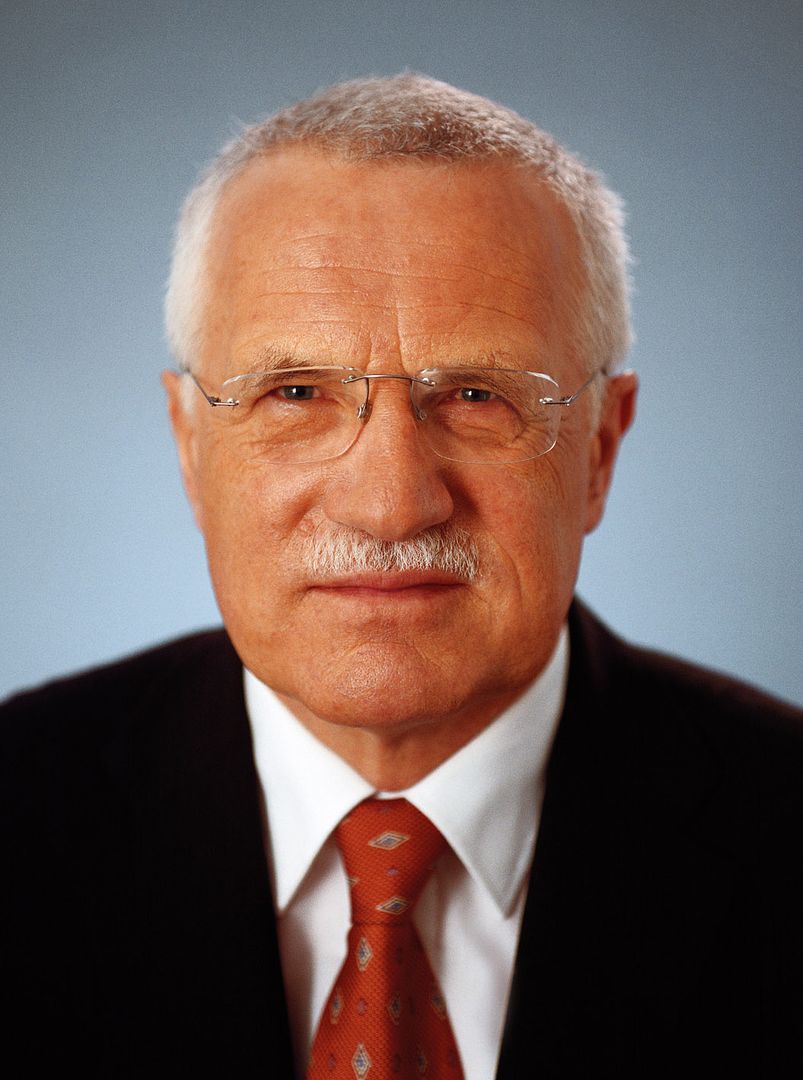
Václav Klaus, the second President of the Czech Republic. Photo: Google Images

EU's Push for President Post Faces Hurdle: After Ireland's Approval of Lisbon Treaty, European Leaders Begin Effort to Win Over Adamantly Opposed Czech President

THE WALL STREET JOURNAL: DUBLIN -- Backed by Ireland's resounding approval of a treaty designed to strengthen the European Union and give it a full-time president, leaders of the bloc said they would start a drive to remove the last remaining hurdle to the so-called Lisbon Treaty -- the refusal of Czech President Vaclav Klaus to sign it.

Ireland's 67% to 33% vote for the treaty Friday was a huge turnaround, reversing Irish voters' veto last year. The change of heart appears to have been driven mainly by the dramatic collapse of Ireland's economy, which made voters less willing to risk weakening the bloc.

For EU leaders who have been struggling for nearly a decade to pass versions of the treaty, it was a huge relief. They hope the scale of the victory will help them to persuade Mr. Klaus, a committed euroskeptic who has refused to sign the Czech legislature's ratification of the treaty, to back down.

Swedish Prime Minster Fredrik Reinfeldt and European Commission President José Manuel Barroso said over the weekend they would meet Wednesday with the Czech Republic's prime minister to add pressure on Mr. Klaus. Sweden, which holds the EU's rotating presidency, is also dispatching its European-affairs minister to Prague.

Mr. Barroso said he was also ready to accept names from the 27 EU countries of their representatives on the commission, the union's executive arm. Terms of the current commissioners end this month, and the process of replacing them had been delayed until the fate of the Lisbon Treaty became clear.

"We start already on Monday to start to push every head of state" to sign the treaty, said Guy Verhofstadt, a former Belgian prime minister and head of the European Parliament's liberal wing.

Ireland alone held a popular referendum on the treaty; the others ratified it through their parliaments. The process is now incomplete in two countries: Poland and the Czech Republic, which need their presidents' signatures.

Polish President Lech Kaczynski has said he would sign it as soon as Irish voters approved it, though his office gave no details on timing in a statement Sunday.

Mr. Klaus is another matter. The Czech president has never hidden his disdain for the EU, and he has a hero's status among treaty opponents across Europe. >>> Charles Forelle. Alistair MacDonald, Sean Carney and Malgorzata Halaba contributed to this article. | Monday, October 05, 2009
EU Ponders New President, Foreign Minister: After Ireland's Vote, Many See Top Post Going to Tony Blair

THE WALL STREET JOURNAL: BRUSSELS -- The Irish answer to the Lisbon Treaty formally opens the gates to the politically charged business of choosing Europe's first-ever president and foreign minister of the assembly of the European Union's 27 member governments.

For weeks, pundits and politicians have been handicapping the field, with former British prime minister Tony Blair emerging as the man to beat, although his candidacy faces some high hurdles.

The Lisbon Treaty calls for the two new posts to be chosen by national leaders and confirmed by the European Parliament. Inevitably, their selection will be part of a continental horse-trading game involving other IOUs among nations, and plum positions in the European Commission, the EU's executive branch.

Mr. Blair could give Europe a famous face and a connection to elites everywhere. As a left-of-center politician from Northern Europe, he offers political and geographical balance to the EU commission president, José Manuel Barroso, a Portuguese conservative. Mr. Barroso, a consensus-builder who doesn't ruffle many feathers, was reappointed to a five-year term this summer.

France regards Mr. Blair as a candidate who has "all the credentials," said a spokesman for French President Nicolas Sarkozy. German Chancellor Angela Merkel endorses the notion of a powerful personality as president, says a person familiar with her thinking. However, Ms. Merkel is concerned that Mr. Blair might not be acceptable to the European Parliament, the person said.

Other factors could cripple Mr. Blair's candidacy, say government officials in several EU countries. Mr. Sarkozy and Ms. Merkel -- who have the greatest weight in the voting -- could decide they don't want the high-profile Briton overshadowing them. Mr. Blair is known in Brussels for propelling the Iraq war, which is still very unpopular in Europe. >>> John W. Miller. Quentin Fottrell and David Gauthier-Villars contributed to this article. | Monday, October 05, 2009
Nicolas Sarkozy Told David Cameron He Was 'Stupid' for Pulling Out of European Group

THE SUNDAY TELEGRAPH: French President Nicolas Sarkozy angrily told David Cameron he was "stupid" for pulling the Conservatives out of the main centre-right grouping in the European Parliament.

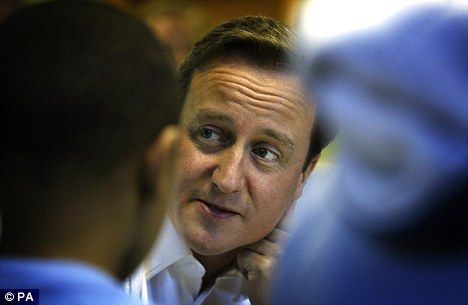
Mr Sarkozy is said to have confronted Mr Cameron about the issue several times. Photo: The Telegraph

President Sarkozy and the Conservative Leader were involved in a series of heated exchanges after Mr Cameron left the European People's Party, The Sunday Telegraph can reveal.

Mr Sarkozy is said to have told Mr Cameron: "C'est fou, il se fait mal à la tête," meaning "It's stupid, you're giving yourself a headache."

Senior sources in Brussels revealed the exchanges which took place in the wake of Mr Cameron's pulling his Conservative MEPs out of the centre-right EPP grouping in June in order to fulfil a pledge made during his leadership campaign in 2005.

The decision went down badly with other mainstream European leaders including Angela Merkel of Germany, who threatened to withhold co-operation from the Conservatives.

Ms Merkel's Christian Democrat Union party recalled its London representative Thomas Stehling to Germany in protest at the move.

Mr Sarkozy is said to have confronted Mr Cameron about the issue several times. "They have had three or four conversations about it," said a senior diplomatic source. "On one occasion Sarkozy basically told Cameron he was stupid for doing it, that it was a decision that would come back to haunt him."

European leaders were not alone in expressing their amazement at the move. President Barack Obama is understood to have raised the issue when he met Mr Cameron last summer at the House of Commons during his visit to Britain. >>> Melissa Kite, Deputy Political Editor | Sunday, October 04, 2009

MAIL ONLINE: 'Dithering' Cameron urged to speak out on Europe as Tory referendum row overshadows start of conference >>> Tim Shipman | Sunday, October 04, 2009

THE GUARDIAN: David Cameron retreats on European referendum: Boris Johnson claims no rift over call for public vote / Decision may bring Blair presidency closer / Party will attempt to claw back UK powers >>> Nicholas Watt | Sunday, October 04, 2009

Sunday, October 04, 2009

Los Angeles Episcopal Bishop Offers Apology to Hindus over Conversion Attempts

VIRTUE ONLINE: The ultra liberal Episcopal Bishop of Los Angeles J. Jon Bruno offered a formal apology to Hindus for centuries-old acts of religious discrimination including attempts by Christians to convert them.


He then authorized a joint Hindu-Anglican service at St John's Cathedral in Los Angeles permitting Hindu devotees to receive the consecrated elements.


According to a statement read on his behalf by suffragan Bishop Chester Talton, he vowed not to proselytize non-Christians. "I believe that the world cannot afford for us to repeat the errors of our past, in which we sought to dominate rather than to serve, in this spirit, and in order to take another step in building trust between our two great religious traditions, I offer a sincere apology to the Hindu religious community," said the bishop's statement reported by the Los Angeles Times.


A Hare Krishna provided music along with the St John's cathedral choirs. When the Eucharist was celebrated Hindus were invited to receive the consecrated elements. Some Hindus who abstain from alcohol received only the host, the Los Angeles Times reported.


An icon was venerated at the Communion service. While a Hindu band sang a hymn the Anglican celebrant anointed the icon with sandalwood paste, draped a garland of flowers over the icon and lit a lamp, "as a sign of Christ, the light in the darkness." >>> David W. Virtue | Tuesday, September 29, 2009
États-Unis : Le grand complot de Glenn Beck

LE TEMPS: La vedette de la chaîne de télévision conservatrice Fox News est devenue la personnalité la plus médiatique et la plus controversée du pays. Sa cible de choix: le président Barack Obama et sa «haine profonde des Blancs»

Sur un tableau, Glenn Beck a placé des photos: celle de Barack Obama et de sa femme Michelle. Puis de l’une des proches collaboratrices du président, Valerie Jarrett. D’autres membres encore de l’administration Obama et des personnalités de la gauche américaine. Dans le diagramme figure aussi le révolutionnaire Che Guevara et le marteau et la faucille communistes. «Il faudrait s’intéresser à tout cela, explique l’animateur à ses 3 millions de téléspectateurs. Nous devons prendre de la distance. Regarder l’image dans son ensemble.»

Le communisme a fait son irruption à la Maison-Blanche. Le «racisme anti-Blanc» également. Voire le nazisme, avec l’armée de volontaires qui se réunissent derrière le président démocrate et qui ressemblent «aux SS d’Adolf Hitler». Mais Glenn Beck est là pour veiller. En quelques mois, l’homme est devenu la personnalité la plus médiatique et la plus controversée des Etats-Unis. L’une des plus écoutées aussi. La chaîne de télévision Fox News n’en finit pas de se frotter les mains d’avoir dégotté pareil phénomène qui, chaque jour, tisse la grande toile des dangers et des conspirations qui menacent le citoyen américain moyen. >>> Luis Lema | Samedi 03 Octobre 2009

THE GUARDIAN: Waitrose dumps Fox News in protest over remarks about Barack Obama >>> Sam Jones | Sunday, October 04, 2009
Union Européenne : Après le vote irlandais, le cauchemar tchèque

LE TEMPS: Les 3 millions d’électeurs irlandais qui se sont prononcés vendredi sur le Traité de Lisbonne n’auront pas le dernier mot. L’eurosceptique président tchèque restera l’ultime obstacle

«Après avoir été l’otage des 3 millions d’électeurs irlandais, l’Union européenne va se retrouver prisonnière d’un seul eurosceptique.» A Bruxelles vendredi, la colère commençait déjà à se déchaîner contre le très eurosceptique président tchèque.

Si le second référendum irlandais – dont les résultats n’étaient pas encore disponibles hier soir – accouche d’un oui au Traité de Lisbonne, l’entrée en vigueur de celui-ci dépendra en effet entièrement de Vaclav Klaus. Lequel s’abrite derrière une nouvelle plainte devant la Cour constitutionnelle (qui a déjà statué favorablement au printemps) déposée le 29 septembre par des sénateurs de son ex-Parti libéral pour refuser de signer le traité, pourtant voté par le parlement tchèque.

Vaclav Klaus avait officialisé son opposition au texte destiné à réformer les institutions communautaires lors de son discours le 19 février à Bruxelles devant le Parlement européen, affaiblissant ainsi son pays qui présidait alors l’UE. Le chef de l’Etat tchèque doit signer la loi de ratification des traités. Or aucun traité européen ne peut entrer en vigueur sans avoir été ratifié par tous les Etats membres.

Le feuilleton politique pourrait néanmoins, cette fois, tourner au vinaigre entre les Etats membres. Jusque-là, et compte tenu de l’échec du premier référendum irlandais du 12 juin 2008, la patience était de rigueur. Partisan de la première heure d’un nouveau vote en Irlande – seul pays de l’UE à consulter sa population – Nicolas Sarkozy avait lui-même d’emblée proposé de modifier le Traité de Lisbonne pour conserver le principe d’un commissaire européen par pays jusqu’en 2014, afin de rassurer les Irlandais. Puis d’autres garanties en matière d’avortement, de neutralité et de souveraineté fiscale avaient été concédées à Dublin. Appel au forcing >>> Richard Werly | Samedi 03 Octobre 2009
Türkei: „EU-Beitritt 2015 wäre zu spät“

DIE PRESSE: Außenminister Ahmet Davutoglu übt scharfe Kritik an Zypern und will keine Sanktionen gegen den Iran. Davutoglu begründete dies mit dem Schaden, der der Türkei durch das Embargo gegen Saddam Husseins Irak entstanden ist.

Außenminister Ahmet Davutoglu. Bild: Die Presse

BRÜSSEL. Der türkische Außenminister Ahmet Davutoglu hat am Freitag die EU dazu aufgefordert, die Beitrittsverhandlungen mit der Türkei zu beschleunigen. „Ich möchte als Politiker von den Visionen zur Realität kommen. Insofern ist nicht nur ein türkischer Beitritt im Jahr 2050, sondern bereits im Jahr 2015 zu spät“, erklärte Davutoglu bei einer Veranstaltung der Denkfabrik European Policy Centre in Brüssel.

Gleichzeitig kritisierte er die Regierung Südzyperns, weil sie in den Verhandlungen über die Wiedervereinigung mit dem türkischen, international als Staat nicht anerkannten Norden der Insel nur zögerliche Vorschläge für mehr Autonomie für die zypriotischen Türken mache. „Warum teilen die griechischen Zyprioten ihre politischen Rechte nicht mit den türkischen Zyprioten? Das ist die ethische Frage“, sagte der seit Mai amtierende Außenminister. >>> Vom Korrespondenten der Presse Oliver Grimm | Freitag, 02. Oktober 2009
L'UDC plébiscite l'initiative anti-minarets

TRIBUNE DE GENÈVE: ASSEMBLÉE | Les arguments du conseiller national valaisan Oskar Freysinger qui a dénoncé l'avancement de l'islam dans le monde ont fait mouche.

Les arguments d'Oskar Freysinger contre les minarets ont fait mouche auprès d'un public déjà convaincu. Crédits photo : Tribune de Genève

Sans surprise, les délégués de l'UDC réunis samedi en assemblée à Genève ont massivement soutenu l'initiative anti-minarets. Les arguments du conseiller national valaisan Oskar Freysinger qui a dénoncé l'avancement de l'islam dans le monde ont fait mouche.

Le soutien à l'initiative soumise en votation le 29 novembre prochain a été votée par 288 voix contre 3 et 3 abstentions. "Au nom de la tolérance, il ne faut pas introduire l'intolérance en Suisse", a relevé le conseiller national ovationné par les délégués. La pensée musulmane ne voit pas le monde comme nous et elle échappe à tout contrôle démocratique, a ajouté le Valaisan.

Pour lui comme pour Heinz Gstrein, un universitaire autrichien invité à s'exprimer devant les délégués, les minarets n'ont pas leur place en Suisse. Il a démonté les arguments des adversaires de l'initiative qui craignent notamment des mesures de rétorsions des Etats musulman.

Les pétrodollars resteront en Suisse même si l'initiative passe, car les Etats musulmans connaissent très bien les avantages de ces placements en Suisse, selon M.Gstrein. Idem pour les exportations suisses. Elles sont si hautement spécialisées, qu'il est difficile de les remplacer, a assuré le professeur. >>> ATS | Samedi 03 Octobre 2009
Offensive Number Plates Withdrawn from Auction

THE INDEPENDENT ON SUNDAY: Gay rights campaigners today welcomed a move by the car licensing authority to withdraw offensive number plates from an auction.

The Driver and Vehicle Licensing Agency (DVLA) pulled the plates F4 GOT and D1 KES, which were due to be among 1,600 auctioned later this week.

The agency decided to remove the plates which bear resemblance to the derogatory terms faggot and dykes, on grounds of "the clear potential offence".

Each of the private plates had a reserve price of £900.

They were due to go under the hammer at an auction in Broadway, Worcestershire. >>> Liam Creedon, PA | Sunday, October 04, 2009