The EU should be stronger and more united. Great Britain should belong to the Union.
Die EU sollte stärker und geeinter sein. Großbritannien sollte der Union angehören.
L'UE devrait être plus forte et plus unie. La Grande-Bretagne devrait appartenir à l'Union.
Sunday, November 08, 2009
Fort Hood Gunman Had Told US Military Colleagues that Infidels Should Have Their Throats Cut
THE TELEGRAPH: Major Nidal Malik Hasan, the gunman who killed 13 at America's Fort Hood military base, once gave a lecture to other doctors in which he said non-believers should be beheaded and have boiling oil poured down their throats.
Maj. Nidal Malik Hasan, the U.S. Army doctor named as a suspect in the shooting death of 13 people and the wounding of 31 others at Fort Hood, Texas. Photo: The Telegraph
He also told colleagues at America's top military hospital that non-Muslims were infidels condemned to hell who should be set on fire. The outburst came during an hour-long talk Hasan, an Army psychiatrist, gave on the Koran in front of dozens of other doctors at Walter Reed Army Medical Centre in Washington DC, where he worked for six years before arriving at Fort Hood in July.
Colleagues had expected a discussion on a medical issue but were instead given an extremist interpretation of the Koran, which Hasan appeared to believe. >>> Nick Allen in Fort Hood | Sunday, November 08, 2009
Crown Prince Reza Pahlavi in Exile: 'I Can't Sit and Say Nothing as Iran Suffers'
THE TELEGRAPH: Crown Prince of Iran tells Simon Heffer he is ready to help bring change to his country but says the West needs to increase pressure on the Tehran regime.
Reza Pahlavi, son of the ex-Shah of Iran. Photo: The Telegraph
Reza Pahlavi, Crown Prince of Iran, and to his most devoted followers His Imperial Majesty the Shah, has been following the turbulent events of his country closer than perhaps any exile in the past five or six months.
I met him this week in a hotel room in Washington DC, near where he lives. While we talked over mineral water and fish and chips he pulled out his BlackBerry to see the latest news of the street protests in Tehran.
The repression of his fellow Iranians by the Ahmadinejad regime, still in place after the rigged elections of the summer, angers him profoundly.
"When I think that today we Iranians have to be represented by these people, warmongering, terrorist-sponsoring, Holocaust denying – can I possibly sit here and say nothing? I don't want anything in return. I do it because it is my duty," he says.
In exile since his father was deposed in 1979, the Prince, 49, remains the figurehead for the three or four million strong Iranian diaspora. Since the elections he has stepped up calls for civil disobedience by Iranians, and for external support for that. His many conduits of information from Iran tell him the regime is fragmenting, and he eagerly awaits a tipping point.
"The end of the apartheid regime in South Africa, of military juntas in South America, of the former Soviet Union – all of it came at the hands of the people of those nations themselves," he says. "None of this could have happened without foreign support – but that is not the same as an occupying army that comes in and changes a regime – I don't see how that can ever be legitimate."
The unhappy experience of foreign intervention in Iraq has further convinced him of the importance of avoiding it in Iran.
"Change must come to Iran by civil disobedience and non-violence. I stress that. We can't have change at any cost. It is ultimately a question of the sovereignty of that nation, and what happens must be the will of the people. But how do we determine that? There is an absence of public debate. There is an absence of the ballot box." >>> Simon Heffer | Saturday, November 07, 2009
THE TELEGRAPH: When she saw the browbeaten features of her younger sister confessing at a show trial on state television, Sepideh Pouraghaie knew she had to flee Iran.
With her passport confiscated by the authorities for political reasons, the quick route out of the country - a flight from Tehran's gleaming new international airport - was impossible.
Instead, she was forced to gamble on a perilous mountain escape to the comparative safety of northern Iraq, escorted by Kurdish guerrillas on horseback.
The rocky byways of the Kurdish mountains that straddle Iran and Iraq have long been used by smugglers, bandits and separatists to evade the watchful eyes of state authority. But over the past four months, the smuggling gangs' regular trade in Afghan opium and bootleg alcohol has expanded to include a steady trickle of Iranian dissidents and journalists desperate to escape a brutal crackdown.
Accompanied by Kurdish tribesmen in traditional baggy trousers and bright floral cummerbunds, would-be escapees are led along secret pathways at the dead of night, negotiating terrain that is as hazardous as it is beautiful.
Sometimes they are forced to skirt the concrete machine gun emplacements of Iranian border guards, at others they have to wade across freezing mountain streams or negotiate sheer precipices. In perhaps the most ingenious smugglers' trick, one fleeing Iranian recently crawled across the border hidden in a flock of sheep, mimicking the manner in which the Greek mythical figure Odysseus escaped from the Cyclops' cave.
Those who have made the hazardous journey include opposition activists, human rights campaigners and reporters, who have been fleeing Iran in such numbers that the press freedom organisation Reporters Without Borders has described it as the biggest exodus of journalists since the 1979 Islamic revolution. Hundreds more are believed to have lost their jobs - some for holding the wrong opinions, some because their newspapers were shut down by authorities. >>> Angus McDowall | Sunday, November 08, 2009
Remembrance Sunday 2009
In deep gratitude: Remembering the fallen – the men who died for our liberty.
Poppy: Google Images
UK Soldiers Remember the Fallen
BBC: A Remembrance Sunday service has been held at Camp Bastion in the Afghan province of Helmand on the day another British soldier has been killed.
Later the Queen is to lead the Remembrance Sunday commemorations at the Cenotaph in London's Whitehall.
Representatives from the Commonwealth will join Prime Minister Gordon Brown, military leaders and religious heads for a service and military march-past.
The latest soldier to die was killed in a blast in Helmand, the MoD said.
He was the 94th British fatality in Afghanistan this year.
A two-minute silence will be held at 1100 GMT across the country to remember the UK's war dead. >>> | Sunday, November 08, 2009
In Flanders Fields
By Lieutenant Colonel John McCrae, MD (1872-1918) Canadian Army
In Flanders fields the poppies blow Between the crosses, row on row, That mark our place; and in the sky The larks, still bravely singing, fly Scarce heard amid the guns below.
We are the Dead. Short days ago We lived, felt dawn, saw sunset glow, Loved, and were loved, and now we lie In Flanders Fields.
Take up our quarrel with the foe: To you from failing hands we throw The torch; be yours to hold it high. If ye break faith with us who die We shall not sleep, though poppies grow In Flanders Fields.
[Source: Arlington Cemetery]
The Man We Love to Hate: Mr Goldman Sachs
THE SUNDAY TIMES: Number 85 Broad Street, a dull, rust-coloured office block in lower Manhattan, doesn’t look like a place to stop and stare, and that’s just the way the people who work there like it. The men and women who arrive in the watery dawn sunshine, dressed in Wall Street black, clutching black briefcases and BlackBerrys, are very, very private. They walk quickly from their black Lincoln town cars to the lobby, past, well, nothing, really. There’s no name plate on the building, no sign on the front desk and the armed policeman stationed outside isn’t saying who works there. There’s a good reason for the secrecy. Number 85 Broad Street, New York, NY 10004, is where the money is. All of it.
It’s the site of the best cash-making machine that global capitalism has ever produced, and, some say, a political force more powerful than governments. The people who work behind the brass-trim glass doors make more money than some countries do. They are the rainmakers’ rainmakers, the biggest swinging dicks in the financial jungle. Their assets total $1 trillion, their annual revenues run into the tens of billions, and their profits are in the billions, which they distribute liberally among themselves. Average pay this recessionary year for the 30,000 staff is expected to be a record $700,000. Top earners will get tens of millions, several hundred thousand times more than a cleaner at the firm. When they have finished getting "filthy rich by 40", as the company saying goes, these alpha dogs don’t put their feet up. They parachute into some of the most senior political posts in the US and beyond, prompting accusations that they "rule the world". Number 85 Broad Street is the home of Goldman Sachs.
The world’s most successful investment bank likes to hide behind the tidal wave of money that it generates and sends crashing over Manhattan, the City of London and most of the world’s other financial capitals. But now the dark knights of banking are being forced, blinking, into the cold light of day. The public, politicians and the press blame bankers’ reckless trading for the credit crunch and, as the most successful bank still standing, Goldman is their prime target. Here, politicians and commentators compete to denounce Goldman in ever more robust terms — "robber barons", "economic vandals", "vulture capitalists". Vince Cable, the Lib Dem Treasury spokesman, contrasts the bank’s recent record results — profits of $3.2 billion in the last quarter alone — and its planned bumper bonus payments with what has happened to ordinary people’s jobs and incomes in 2009.
It’s even worse in the US. There, Rolling Stone magazine ran a story that described Goldman as "a great vampire squid wrapped around the face of humanity, relentlessly jamming its blood funnel into anything that smells like money". In his latest documentary, Capitalism: A Love Story, Michael Moore drives up to 85 Broad Street in an armoured Brinks money van, leaps out carrying a sack with a giant dollar sign on it, looks up at the building and yells: "We’re here to get the money back for the American people!"
Goldman’s reputation is suddenly as toxic as the credit default swaps and other inexplicably exotic financial instruments it used to buy with glee. That’s bad for the one thing it values more than anything else: business. Being the prime target for popular and political outrage could put Goldman first in line for draconian new regulation. So it has, reluctantly, decided that the time has come to speak out, to fight its corner. That’s how, on one of those bright autumnal New York mornings when anything seems possible — even an invitation to break bread with the masters of the universe — I find myself walking past the security guard who held up Michael Moore and into the building with no name. I'm doing 'God's work'. Meet Mr Goldman Sachs >>> John Arlidge | Sunday, November 08, 2009
Michael Moore – Capitalism: A Love Story – Trailer
Sweeping Health Care Plan Passes House
THE NEW YORK TIMES: WASHINGTON — Handing President Obama a hard-fought victory, the House narrowly approved a sweeping overhaul of the nation’s health care system on Saturday night, advancing legislation that Democrats said could stand as their defining social policy achievement.
After a daylong clash with Republicans over what has been a Democratic goal for decades, lawmakers voted 220 to 215 to approve a plan that would cost $1.1 trillion over 10 years. Democrats said the legislation would provide overdue relief to Americans struggling to buy or hold on to health insurance.
“This is our moment to revolutionize health care in this country,” said Representative George Miller, Democrat of California and one of the chief architects of the bill.
Democrats were forced to make major concessions on insurance coverage for abortions to attract the final votes to secure passage, a wrenching compromise for the numerous abortion-rights advocates in their ranks.
Many of them hope to make changes to the amendment during negotiations with the Senate, which will now become the main battleground in the health care fight as Democrats there ready their own bill for what is likely to be extensive floor debate.
Democrats say the House measure — paid for through new fees and taxes, along with cuts in Medicare — would extend coverage to 36 million people now without insurance while creating a government health insurance program. It would end insurance company practices like not covering pre-existing conditions or dropping people when they become ill.
Republicans condemned the vote and said they would oppose the measure as it proceeds on its legislative route. “This government takeover has got a long way to go before it gets to the president’s desk, and I’ll continue to fight it tooth and nail at every turn,” said Representative Kevin Brady, Republican of Texas. “Health care is too important to get it wrong.” >>> Carl Hulse and Robert Pear | Saturday, November 07, 2009
Saturday, November 07, 2009
Muslim Population in the Military Raises Difficult Issues
THE WALL STREET JOURNAL: The deadly rampage at Fort Hood is forcing Pentagon officials to confront difficult questions about the military's growing Muslim population.
The military has worked hard to recruit more Muslims since the start of the wars in Iraq and Afghanistan, and the number of Muslim troops, while still small, has been increasing. There were 3,409 Muslims in the active-duty military as of April 2008, according to Pentagon statistics.
Military personnel don't have to disclose their religions, and many officials believe the actual number of Muslim soldiers may be at least 10,000 higher than the Pentagon statistics. For instance, the military "Officer Record Brief" of Maj. Nidal Malik Hasan, the suspect in the Fort Hood shootings, said he had "no religious preference" and didn't identify him as a Muslim.
Even now, Muslim soldiers remain fairly rare in some parts of the military. At West Point, Army officials said there were just 24 Muslim cadets out of a total student body of 4,400. The Muslim cadets worship in an interfaith center on the bucolic New York campus, but don't have a dedicated mosque.
The push to boost Muslim representation has proven to be a double-edged sword for the military, which desperately needs the Muslim soldiers for their language skills and cultural knowledge, but also worries that a small percentage of those soldiers might harbor extremist ideologies or choose to turn their guns on their fellow soldiers. >>> Yochi J. Dreazen | Saturday, November 07, 2009
Achtung! Dhimmitude in Deutschland! Kölns erste Moschee – mit 55 Meter hohen Minaretten
TAGES ANZEIGER: In Köln ist am Samstag der Grundstein für die erste repräsentative Moschee der Stadt gelegt worden. Das Gebetshaus muss Auflagen erfüllen.
Eine Stadt feiert den Start zum Moschee-Bau: In Köln ragen bald Minarette in die Höhe. Bild: Tages Anzeiger
Die türkisch-islamische Organisation Ditib errichtet das Gebäude. Die Moschee soll 2011 fertiggestellt sein. Das Gebäude wird eine 35 Meter hohe Kuppel haben und zwei Minarette, die 55 Meter in die Höhe ragen. Ditib hat sich gegenüber Politikern dazu verpflichtet, dass von den Gebetstürmen keine öffentlichen Muezzin-Rufe erklingen werden.
Ausserdem sollen die Reden der Vorbeter in dem neuen Gebäude grundsätzlich auch in die deutsche Sprache übersetzt werden. Diese Zusagen sollen zu mehr Transparenz in der muslimischen Gemeindearbeit in Köln beitragen. [Quelle: Tages Anzeiger] cpm/sda | Samstag, 07. November 2009
World War I in Colour
Part 1:
Part 2:
Part 3:
Part 4:
Part 5:
Part 6:
Part 7:
Robert Spencer discusses the Fort Hood Jihadist on the Savage Nation
For Secular and Catholic France, a Shock to the System: The Rise of the Evangelicals
THE GUARDIAN: Church insists it is not like the US right, but many fear growth of a political force
As the piano strikes up, the congregation sways, palms to the ceiling, fists in the air, murmurs of hallelujah punctuating the music. Pastor Franck Lefillatre, besuited and bathed in the spotlight on his podium, intones into a microphone.
"Let out the words that are in your heart," he urges. His whispers crescendo to booming rhetoric. Behind him, emblazoned in gold lettering, are the words: "Jesus Christ: the same yesterday, today, eternally."
As evangelical services go, this gathering on a rainy Sunday afternoon is nothing unusual. In countless churches around the United States and many other countries it would be a staple means of Christian worship.
But this is not the American Bible belt. It is the Church of Paris-Bastille, and this congregation is just one of a growing number of evangelical communities spreading through France and prospering in spite of its staunchly secular – and Catholic – traditions.
From a postwar population of around 50,000, French evangelicals are now estimated to number between 450,000 and 500,000. According to the Evangelical Federation of France (FEF), the number of churches has risen from 800 in 1970 to over 2,200 today.
This week the boom made headlines when thousands of evangelicals – who are estimated to make up two-thirds of the country's practising Protestants – descended on Strasbourg to turn the 500th anniversary of Calvin's birth into a mass, media-covered event. It was not something even the most hopeful of believers could have prayed for. >>> Lizzy Davies in Paris | Friday, November 06, 2009
Nach dem Amoklauf von Fort Hood: Die Angst der amerikanischen Muslime vor Rache
WELT ONLINE: Amerikas 2,35 Millionen Muslime, zumal die rund 15.000 in den US-Streitkräften, leben seit den Terroranschlägen vom 11. September 2001 unter Generalverdacht. Vorfälle wie der Amoklauf von Fort Hood bringen die islamische Gemeinschaft weiter in Bedrängnis. Viele von ihnen fürchten Racheakte.
Der erste mit Vergeltung drohende Anruf ging beim „Arab-American Institute“ am späten Nachmittag ein, nur Minuten, nachdem der Name Nidal Malik Hasan zum ersten Mal über die Bildschirme gelaufen war. Im „Rat für amerikanisch-islamische Beziehungen" begann zur selben Zeit ein Krisenstab zu tagen.
In einer Pressekonferenz wurde noch am selben Abend der Amoklauf im texanischen Fort Hood verdammt und die Bitte, Ruhe zu bewahren, verbreitet: „Unglücklicherweise müssen wir aus Erfahrung amerikanische Muslime und jene, die für Muslime gehalten werden können, ersuchen, sich, ihre Familien und ihre religiösen Stätten vor Racheakten zu schützen.“ >>> Von Uwe Schmitt | Samstag, 07. November 2009
Chief Rabbi Lord Sacks: Islam Must Separate Religion from Power
TIMES ONLINE: The Chief Rabbi has called on Muslims to get used to living as a minority in Britain and to learn to separate religion from power.
Lord Sacks said that neither Muslims nor Christians had yet learnt the lessons inflicted on the Jewish people by the Babylonian exile.
“One of the great advantages of being Jewish is you know how to sing in the minor key,” he said. “We have had 26 centuries of experience ever since the Babylonian exile of living as a minority in the midst of a culture that does not share our views. Christianity and Islam have not had that experience.”
He said that Christianity had learnt toleration but only after 100 years of “knocking the hell out of each other all over Europe”.
He said: “So Christianity went through its experience, Judaism has been through it a long, long time ago and Islam has not yet had that experience.
“I have no doubt that Islam will work its way through to the essential situation that Judaism arrived at and Christianity, namely the substantive separation of religion from power. But there’s no quick way of getting there. It is quite a difficult and painful process within religion.
“Only Muslims can do it. Nobody can tell them from the outside. That would be taken as an affront and I would regard it as morally unacceptable. I do see some wonderful Muslims in this country and elsewhere, in Iraq and even in Iran, going through that process. >>> Ruth Gledhill, Religion Correspondent | Friday, November 06, 2009
Iranian Becomes Hero After Criticising Ayatollah Khamenei to His Face
THE TELEGRAPH: A college mathematics student has become an unlikely hero to many Iranians after he insulted Ayatollah Ali Khamenei to his face.
Mahmoud Vahidnia has received an outpouring of support from government opponents for the challenge – unprecedented in a country where criticising the supreme leader is a crime punishable by prison.
The confrontation happened at a question-and-answer session between Khamenei and students at Tehran's Sharif Technical University.
Some of those in attendance at the Oct 28 forum said the Ayatollah appeared taken aback by the questioning and left the meeting early.
The session began with a speech in which the supreme leader told the students the "biggest crime" was to question the results of the June 12 presidential election that returned hardliner Mahmoud Ahmadinejad to power. The Ayatollah declared Mr Ahmadinejad the victor despite opposition claims of widespread fraud.
After the speech, Mr Vahidnia raised his hand, then for 20 minutes he criticised the Iranian leader over the fierce crackdown on post-election protests, in which the opposition said 69 people were killed and thousands were arrested.
In brief excerpts broadcast on state TV, the thin, bespectacled Vahidnia was shown standing behind a podium, gesturing.
"I don't know why in this country it's not allowed to make any kind of criticism of you," said the student. >>> The Telegraph’s Foreign Staff | Friday, November 06, 2009
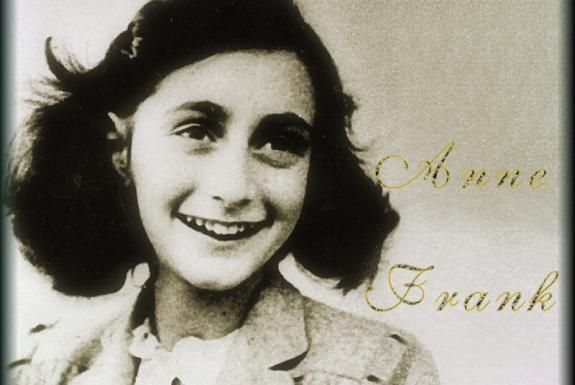
Photographie non datée d'Anne Frank, jeune fille juive morte du typhus au camp de Bergen-Belsen pendant l'hiver 1945.
Crédits photo : Le Monde
Le Hezbollah fait censurer la publication d'extraits du Journal d'Anne Frank
LE MONDE: Des extraits du journal d'Anne Frank ont été coupés d'un manuel scolaire au Liban à la suite d'une campagne du Hezbollah, selon qui l'ouvrage fait la promotion du sionisme. La polémique a éclaté après que le Hezbollah eut appris qu'un manuel scolaire utilisé par un établissement privé de la capitale contenait des extraits du Journal d'Anne Frank.
Al-Manar, la chaîne de télévision du Hezbollah, a dénoncé l'ouvrage, estimant qu'il se concentre sur la persécution des Juifs. "Ce qui est plus dangereux encore est la manière dramatique et théâtrale dont le journal est relaté, il est chargé d'émotion", estime la chaîne dans un reportage diffusé la semaine dernière. Il se demande pour combien de temps encore le Liban "restera une arène ouverte pour l'invasion sioniste de l'éducation". >>> LeMonde.fr avec AFP | Vendredi 06 Novembre 2009
Japan: Love Hotels
Watch Journeyman Pictures video here | Tuesday, April 08, 2008
«Wir behalten das Kruzifix» : Italiens Regierungschef Berlusconi ignoriert Gerichtsurteil
NZZ ONLINE: Der italienische Ministerpräsident Silvio Berlusconi hat im Streit um das Kruzifix-Urteil des Europäischen Gerichtshofs für Menschenrechte ein Machtwort gesprochen. «Wir behalten das Kruzifix», erklärte der Regierungschef am Freitag in Rom.
Das Urteil sei schliesslich kein «Zwangsurteil», sagte er. Daher würden die Kreuze in italienischen Klassenzimmern hängen bleiben - unabhängig vom Ausgang der Beschwerde seiner Regierung in Strassburg. >>> sda/dpa | Freitag, 06. November 2009
Marseille : la plus grande mosquée de France en 2011
Vue d'architecte du projet de mosquée dans les quartiers nord de Marseille. Crédits photo : Le Figaro
LE FIGARO: Le permis de construire délivré, reste à boucler le financement du plus grand édifice musulman de France.
Le projet de la grande mosquée de Marseille fait aujourd'hui un pas symbolique. Le sénateur-maire UMP, Jean-Claude Gaudin, a remis à la communauté musulmane le permis de construire de ce lieu de culte qui sera édifié dans les quartiers nord. L'élu, d'abord opposé au projet, a estimé, en 2001, qu'il ne pouvait priver d'un lieu de culte décent les 200 000 Marseillais musulmans, soit le quart de la population. Le sujet est sensible et l'extrême droite, en perte de vitesse, a fait de son opposition totale à «la mosquée cathédrale» son principal cheval de bataille.
Mais Jean-Claude Gaudin tient bon. «Il a été le premier à dire, je veux une mosquée pour les musulmans de Marseille», souligne le président de l'association La mosquée de Marseille, Nourredine Cheikh, un ancien chef d'entreprise halal.
Gaudin a favorisé le rassemblement d'une communauté diverse et divisée dans une association qui désormais gère le dossier. La ville lui a consenti un bail emphytéotique et lui délivre aujourd'hui un permis de construire.
«C'est un grand jour. C'est l'acte de naissance de notre mosquée. A nous désormais de l'élever», commente satisfait Nourredine Cheikh.
Les fidèles, qui disposent aujourd'hui de 63 lieux de cultes dans la ville, souvent bricolés dans des rez-de-chaussée d'HLM ou dans des petites salles de quartier, pourront être fiers d'un lieu vaste et beau. Les 8 600 m² du terrain des anciens abattoirs de Saint-Louis donnent la possibilité de construire une grande salle de prière mais également une école théologique, une bibliothèque, un restaurant, une librairie et un amphithéâtre. >>> Aliette de Broqua, Marseille | Vendredi 06 Novembre 2009
Obama: Après l'espoir, l'impatience
leJDD.fr: Un an après son élection, les Américains veulent toujours croire aux promesses de Barack Obama. Mais la désillusion gagne…
A 64 ans, Eileen Morrison est une débarquée du rêve américain."Je n’ai pas connaissance d’une époque aux Etats-Unis où l’on en arrive à gagner moins que ses parents", s’exclame la sexagénaire qui vit dans un trois-pièces d’un HLM de la banlieue sud de Daytona. L’appartement donne sur l’autoroute 95 qui longe la côte est de la Floride et relie Jacksonvil le à Miami. Abandonnée par son mari, Eileen a dû se remettre au travail. Elle est hôtesse à temps partiel dans une agence immobilière pour 1400 dollars par mois (946 euros). Pas vraiment la vieillesse dont elle avait rêvé. Pas vraiment non plus celle que lui avait promise Barack Obama, qu’elle a contribué à faire gagner la présidentielle il y a tout juste un an.
Pour autant, Eileen n’en veut pas à son président, qu’elle respecte pour sa « stature intellectuelle », son intégrité et sa volonté de réforme. Ce soir, en bonne militante, elle va même organiser dans son appartement une séance de "phoning" pour promouvoir par téléphone la réforme de l’assurance santé que la Maison-Blanche a tant de mal à imposer. Malgré plusieurs avancées notoires ces dernières semaines, le projet est toujours menacé par quelques élus démocrates "centristes". "Je me sens trahie par mon propre camp, soupire Eileen. Je n’arrive pas à comprendre que pour des intérêts politiques aussi minces, on puisse mettre en péril la seule réforme urgente dont a besoin ce pays." Est-ce aussi la faute d’Obama, de son sens trop poussé du compromis? Non, pas forcément. Même si elle le conjure de "cesser de jouer trop finement, de passer à l’action et d’être fort". >>> François Clemenceau, envoyé spécial du JDD à Daytona (Floride), Le Journal du Dimanche | Dimanche 01 Novembre 2009