Monday, June 22, 2009

Pahlavi Calls Vote 'Fraud': Iran's former crown prince and a leading advocate for civil disobedience, Reza Pahlavi, calls Iran's election a "fraud."


CNN: Fighting Tears, Shah's Son Calls Crisis a 'Moment of Truth'

WASHINGTON -- The son of the former shah of Iran called Monday for solidarity against Iran's Islamic regime, warning that the democratic movement born out of the election crisis might not succeed without international support.

"The moment of truth has arrived," Reza Shah Pahlavi said at Washington's National Press Club. "The people of Iran need to know who stands with them."

Pahlavi has lived in exile since 1979, when his father, Mohammad Reza Shah Pahlavi, was overthrown during the Islamic Revolution. Under the shah's regime, Iran saw nationalization of its oil and a strong movement toward modernization. Still, his secular programs and recognition of Israel cost him the support of the country's Shiite clergy, sparking clashes with the religious right and others who resented his pro-West views.

The son now lives in the United States with his family, where he spends much of his time talking about the Islamic regime in Iran.

During his remarks, he broke into tears when he spoke of "bullets piercing our beloved Neda," a woman killed Saturday by Iranian police at a protest in Tehran, whose death has become a rallying cry among demonstrators in Iran.

The Iranian regime, he said, was a "sinking Titanic" that might not survive the demands for democracy and human rights reverberating through the country.

Citing anecdotes from people inside the Iranian establishment, Pahlavi said he had heard that security forces have begun to distance themselves from the regime.

"It has already started," he said, citing reports that members of the security forces have gone home after their shifts ended and changed into plain clothes to join the protesters.

"Many, many elements within the security forces, within the Revolutionary Guard, are showing discontent," Pahlavi said. "There is an amazing reflection that is happening. ... This is a movement that has blown out of proportion." >>> By Elise Labott, CNN State Department Producer | Monday, June 22, 2009
Iran Bans Prayers for 'Angel of Freedom' Neda Agha Soltan

THE TELEGRAPH: Iran's regime has issued a ban on memorials for a young woman whose death has become the focal point of protests against the clerical regime.


Neda Agha Soltan, 27, was dubbed the Angel of Freedom after a video which appeared to show her being shot by a government sniper was posted on the internet.

Graphic scenes show Neda – her name means "the call" – walking with her father among demonstrators, then separately when she was shot as well as attempts to save her life.

Online posters of the woman covered in blood quickly emerged, included one modelled on a prominent image of Barack Obama during the last US presidential campaign.

Some online posts speculated the image would rank alongside that of the unnamed man standing in front of a tank in Beijing's Tiananmen Square in 1989 and the summary execution of a Vietnamese Communist prisoner by Colonel Nugyen Ngoc Loan in 1968.

Footage was posted on YouTube, Twitter and Facebook and was viewed by tens of thousands. Messages of sympathy and outrage flooded the internet following the posting of the videos.

The Iranian authorities have now sent out a circular to mosques banning collective prayers for the woman. [Source: The Telegraph] | Monday, June 22, 2009
Police Break Up New Tehran Rally

BBC: Iranian riot police have fired tear gas to break up a new opposition rally in the centre of the capital Tehran, hours after a stern warning to protesters.

Some 1,000 people had gathered on Haft-e Tir Square despite the warning from Iran's Revolutionary Guards against holding unapproved rallies.

Reports say the police were reinforced by Basij militiamen wielding clubs.

The Guards, an elite armed force, vowed to crack down on new street protests over the presidential election results.

On Friday Ayatollah Ali Khamenei banned protests, prompting street violence in which at least 10 people died.

Severe reporting restrictions placed on the BBC and other foreign media in Iran mean protest reports cannot be verified independently. >>> | Monday, June 22, 2009
Anti-Dhimmitude! Nicolas Sarkozy: Burqa Not Welcome in France

THE TELEGRAPH: President Nicolas Sarkozy has said that the Islamic burqa is 'not welcome' in France.

Photobucket
Photo: The Guardian

In a speech at the Palace of Versailles, Mr Sarkozy said that the head-to-toe Islamic garment for women was not a symbol of religion but a sign of subservience for women.

"The burka is not a sign of religion, it is a sign of subservience," he told members of both parliamentary houses gathered for his speech.

He added: "It will not be welcome on the territory of the French republic."

His comments follow an appeal last week by 65 French MPs for a parliamentary commission to examine whether Muslim women who cover themselves fully in public undermine the secular tradition in France as well as women's rights. >>> By The Telegraph’s Foreign Staff and Agencies in Paris | Monday, June 22, 2009

LE FIGARO - Extrait: LA BURQA, NON GRATA DANS LA RÉPUBLIQUE

S'exprimant sur la polémique qui a enflammé la classe politique française, le président de la République a estimé que la burqa soulevait un «problème de dignité et de respect de la femme». «Ce n'est pas un signe religieux, c'est un signe d'asservissement (…) Elle ne sera pas la bienvenue sur le territoire de la République française», a-t-il tranché. Il reviendra au Parlement de se prononcer sur l'opportunité d'un texte de loi. [Source: Le Figaro] | Julie Connan (lefigaro.fr) Lundi 22 Juin 2009

TAGES ANZEIGER: Sarkozy: «Burkas sind ein Zeichen der Unterdrückung»

In einer Grundsatzrede vor dem Parlament schlug der französische Präsident Nicolas Sarkozy ein Verbot des Ganzkörper-Schleiers für Frauen vor. Von der Opposition erntet er Kritik.

Zu den grossen Krisenherden der Welt nahm Sarkozy in seiner Rede nicht Stellung. Dafür sagte er den Burkas in Frankreich den Kampf an. Die Burkas seien ein Zeichen der Unterwerfung und Unterdrückung der Frau, sagte der französische Staatspräsident. Muslimische Frauen verdecken sich mit einer Burka nicht nur Körper und Haar, sondern auch Gesicht und Augen.

«Wir können nicht zulassen, dass es in unserem Land hinter einem Gitter gefangene Frauen gibt, die vom sozialen Leben ausgeschlossen und jeder Identität beraubt sind», sagte Sarkozy. Das Parlament solle die Burka auf französischem Staatsgebiet verbieten. «Das ist die beste Art vorzugehen.» Sarkozys Vorschlag kommt an einem Tag, an dem er noch am Morgen den Emir des Wüstenstaats Katar, Scheich Hamad Bin Khalifa al-Thani, empfangen hatte. >>> oku/sda | Montag, 22. Juni 2009

BBC: French Balls!

Since this was the first time in almost one and a half centuries that a French president had been allowed to address parliament, President Nicolas Sarkozy's speech was already on course to ruffle a few feathers.

The Greens and Communists refused to attend and the Socialists left early, claiming the venue for the address - the Chateau of Versailles, which was home to King Louis XIV - smacked of monarchy and a thirst for power.

But it was the French leader's attack on the burka that really caused a stir.

He expressed his strong distaste for the head-to-toe Islamic veil, calling it not a sign of religion but a sign of subservience.

"It will not be welcome on French soil," he said." We cannot accept, in our country, women imprisoned behind a mesh, cut off from society, deprived of all identity. That is not the French republic's idea of women's dignity."

President Sarkozy's comments have not come out of the blue.
They are in response to a call last week by a group of 65 cross-party MPs, led by the Communist Andre Gerin, who wants a parliamentary commission set up to investigate the spread of the burka in France.

They want to see whether such a spread is indicative of a radicalisation of Islam, whether women are being forced to cover themselves or are doing so voluntarily, and whether wearing the burka undermines French secularism.

Mr Gerin believes the burka "amounts to a breach of individual freedom on our national territory".

Because, if the mention of monarchy triggers warning bells in France, the mention of religion triggers much louder ones.

Ban in schools

The concept of secularism or "laicite" is sacred in France.

The separation of church and state is jealously guarded by everyone from school teachers to government ministers - and the constitution states the republic "does not recognise, subsidise or renumerate any religious body".

It underpinned the French Revolution, and has been a basic tenet of the country's progressive thought since the 18th century when French Enlightenment thinkers like Voltaire, Diderot and Montesquieu regarded religion as divisive, benighted and intolerant.

It was this same concept that was invoked five years ago to ban conspicuous signs of religion - including Islamic headscarves - from schools.

That decision sparked controversy and debate across Europe, with critics claiming it stigmatised Muslims at a time when France needed to be stepping up its fight against rife discrimination in the job market, which had caused so many youths of Muslim origin to feel forgotten by French society.

This latest call for a potential ban of the burka has prompted the head of the French Council for the Muslim Religion to warn MPs they risk stigmatising Muslims again. Sarkozy Stirs French Burka Debate >>> By Emma Jane Kirby, BBC News, Paris | Monday, June 22, 2009
Iran: Tehran Blames West for Riots

LOS ANGELES TIMES: Iranian Foreign Ministry spokesman Hassan Qashqavi has accused Western nations and media of supporting violent protests in an attempt to create anarchy and split apart the Islamic Republic.

The BBC and Voice of America “are the mouthpiece of their government's public diplomacy," Qashqavi said during a press conference today. "They have two guidelines regarding Iran. One is to intensify ethnic and racial rifts within Iran and secondly to disintegrate the Iranian territories."

He added: "Any contact with these channels, under any pretext or in any form, means contacting the enemy of the Iranian nation. How can they say they are unbiased when their TV channel is like a war headquarters and in fact they are blatantly commanding riots? Therefore their claims are absolutely wrong. Their governments have ratified decisions so that they can act in this way."

Iranian authorities have become increasingly agitated at what they claim is Western meddling. Britain and the U.S. have denied such accusations, but years of ill will between Washington and Iran are playing like background music as Tehran appears a city divided between reformist protesters and government-backed militias.

And as the power struggle inside Iran's political class appeared to intensify, with reformist and conservative leaders exchanging sharp statements that blamed each other for last week's deadly street violence, authorities announced irregularities that could affect 3 million votes in 50 cities. >>> Jeffrey Fleishman in Cairo | Monday, June 22, 2009
Iranian-Americans Protest Against the Iran Election Results

Photobucket
Iranian-American demonstrators took to the streets of Los Angeles and protested outside the White House in Washington againts the Iran election results and what they say are crimes against humanity and democracy as the Iranian government reacts to massive daily protests. Photo: The Telegraph

Photobucket
A protester holds aloft money with the eyes of Supreme Leader Ayatollah Ali Khamenei's eye cut out. Photo: The Telegraph

TELEGRAPH PHOTOS: To the gallery >>>
Iranian Forces Ready to Clear Country of 'Hooligans'

CNN: TEHRAN, Iran -- Iranian protesters who "disturb the peace and stand up to security forces" will be considered a threat to the regime and will be met with a strong response, the country's Revolutionary Guard warned Monday.

"The guardians of the Islamic revolution and the courageous Basiji together with the security forces following the orders of the supreme leader and following him unquestioningly, are determined to act strongly to return peace and tranquility to society ... and to clean the country of these plotters and hooligans," the Islamic Revolutionary Guard Corps said in a statement, according to Iran's state-run news agency, IRNA.

Iran's Revolutionary Guard is directly under the control of supreme leader Ayatollah Ali Khamenei and enforces the government's Islamic codes and morality. It was initially created to protect the leaders of the revolution, but over the years, it has broadened its scope. With more than 200,000 members, it is tasked with overseeing the country's crucial interests, including guarding its oil fields and missile arsenals.

The Basiji is a volunteer paramilitary force that takes orders from the Revolutionary Guard. It plays the role of de facto morality police and is often summoned to crack down on protests. It is unknown how large the force is, though estimates are in the millions.

At least 19 people were killed in clashes in Tehran on Saturday as Iranians took to the streets to protest the results of the June 12 presidential election, according to hospital sources.

Iranian-funded Press TV confirmed 13 fatalities, while unconfirmed reports put the number as high as 150. Tehran's prosecutor general's office said it has launched an investigation into the killings.

The station also said police arrested 457 people Saturday who vandalized property.

A statement purportedly from opposition leader Mir Hossein Moussavi on Sunday called on Iranians to "exercise self control" during protests in Tehran while still supporting their right to demonstrate against the government and the results of the election.

"The country belongs to you. The revolution and the system is your heritage," said the statement attributed to Moussavi posted on his Web site. "Protesting against lies and cheating is your right. Be hopeful about regaining your rights. Do not allow anyone who tries to make you lose hope and frighten you make you lose your temper." >>> | Monday, June 22, 2009

THE TELEGRAPH: Iran's Basij Force: The Shock Troops Terrorising Protesters

Protesters marching the streets of Tehran feared one thing more than any other: a sudden attack by the plain-clothed toughs of the Islamic Basij militia.

Armed with sticks, motorbike chains, knives and axes, the more extreme members have long been used as shock troops by the regime to cow demonstrators with brutal displays of violence.

Mounted on motorbikes, the militia's standard strategy is to charge the crowd, one man driving and another riding pillion using a truncheon to lash out at stragglers.

They have also been sent to raid university campuses, breaking bones and smashing up dormitories.

The movement - its name is Persian for "mobilisation" - began as a sort of volunteer Dad's Army, comprising old men and young boys fired with zeal during the Iran-Iraq war.

Under the command of the Revolutionary Guards, they would charge blindly across minefields with plastic keys, symbolising the martyr's entry to paradise, strung round their necks.

Officially, the Basij today number some five million: but only a fraction of its cadres are thought to be active.

Many joined simply for the benefits membership confers: an easier route to university or increased chances of promotion in government jobs.

In contrast, the armed men prowling the streets last week are a hard core, totally committed to the Supreme Leader and President Mahmoud Ahmadinejad. >>> By Angus McDowall | Sunday, June 21, 2009

BBC: Iran Guards Vow Protest Crackdown

Iran's Revolutionary Guards have threatened to crack down on any new street protests against the results of the country's presidential election.

In a statement, the guards vowed to react in a "revolutionary" way to suppress unauthorised demonstrations.

Reports are coming in that at least 1,000 demonstrators have gathered in a square in the centre of Tehran.

On Friday Ayatollah Ali Khamenei banned protests, prompting street violence in which at least 10 people died.

The capital has seen rallies both against and in support of President Mahmoud Ahmadinejad.

'Revolutionary confrontation'

The Revolutionary Guards, Iran's elite security force, have close ties to the country's supreme leader.

In a statement posted on their website, they said their troops would break up street protests and force protesters from the streets.

"Be prepared for a resolution and revolutionary confrontation with the Guards, Basij [pro-government militia] and other security forces and disciplinary forces," they said.

"The Guards will firmly confront in a revolutionary way rioters and those who violate the law," they added. >>> | Monday, June 22, 2009
Miliband Accused of Being 'Waste of Space' as Brown Defends Iraq Hostage Handling

Photobucket
David Miliband: "a waste of space". Photo: TimesOnline

TIMES ONLINE: Gordon Brown insisted today that the Government had “left no stone unturned” in trying to secure the release of British hostages in Iraq, fending off criticism over its handling of the saga.

The bodies of two of the five captives were handed over to the Iraqi authorities this weekend, but the father of one of those still missing hit out at the way the Foreign and Commonwealth Office had dealt with the issue.

Graeme Moore, who is anxiously awaiting news of the fate of his son, Peter, an IT consultant, told GMTV: “They haven’t done anything. They should have been straight in directing negotiations right from the beginning.”

He also dismissed David Miliband, the Foreign Secretary, as "a waste of space". >>> Philippe Naughton | Monday, June 22, 2009
Guy Bechor: Obama Doesn’t Get It

YNET NEWS: US president seeking instant Mideast solutions that show his ignorance

When I read that President Obama will call for normalization of ties between the Arab world and Israel at the early stages of his “peace plan,” I shrugged. Yet when I read that he intends to settle the Palestinian refugees in the Arab states they currently live in, and grant them monetary compensation, I was amused.

These are pipe dreams, just like the “Arab democracy” vision of his predecessor that collapsed loudly and brought disaster to the region. This is a rookie plan of an intern who believes that the Israeli-Arab conflict can be resolved with a quick and arrogant gesture. It is clear that whoever came up with this plan lacks understanding of the history, demography, and mostly the fears of the region.

Arab states will never renounce their demand to send back Palestinian refugees to Palestine, that is, to the State of Israel, and some of them, maybe, to the Palestinian Authority. Why? Because these are holy issues.

These refugees define the aspirations of the Arab world, its politics, and its article of faith; this is something that one does not renounce. The demand for returning the refugees is the only common denominator connecting Hizbullah and the Christians in Lebanon, Saudi Arabia and Iran, and it’s worth more than gold.

The Arab political establishment wishes to realize the “right of return” not for the sake of the Palestinians, heaven forbid, who are hated in most Arab States, but rather, in order to weaken Israel, destroy it from within, and sink it in the sea of returning Palestinians.

For the Arab world, this is not about the fate of the “Palestinians,” but rather, the fate of the “Palestinian problem,” and these are two separate issues: They hate the Palestinians, but admire the Palestinian problem. They hate the refugees, but admire their right of return. The Arab states have not been maintaining the refugee problem for more than 60 years in order to renounce it. >>> Guy Bechor | Monday, June 22, 2009
Iran's Web Spying Aided By Western Technology: European Gear Used in Vast Effort to Monitor Communications

THE WALL STREET JOURNAL: The Iranian regime has developed, with the assistance of European telecommunications companies, one of the world's most sophisticated mechanisms for controlling and censoring the Internet, allowing it to examine the content of individual online communications on a massive scale.

Interviews with technology experts in Iran and outside the country say Iranian efforts at monitoring Internet information go well beyond blocking access to Web sites or severing Internet connections.

Instead, in confronting the political turmoil that has consumed the country this past week, the Iranian government appears to be engaging in a practice often called deep packet inspection, which enables authorities to not only block communication but to monitor it to gather information about individuals, as well as alter it for disinformation purposes, according to these experts.

The monitoring capability was provided, at least in part, by a joint venture of Siemens AG, the German conglomerate, and Nokia Corp., the Finnish cellphone company, in the second half of 2008, Ben Roome, a spokesman for the joint venture, confirmed.

The "monitoring center," installed within the government's telecom monopoly, was part of a larger contract with Iran that included mobile-phone networking technology, Mr. Roome said.

"If you sell networks, you also, intrinsically, sell the capability to intercept any communication that runs over them," said Mr. Roome.

The sale of the equipment to Iran by the joint venture, called Nokia Siemens Networks, was previously reported last year by the editor of an Austrian information-technology Web site called Futurezone.

The Iranian government had experimented with the equipment for brief periods in recent months, but it had not been used extensively, and therefore its capabilities weren't fully displayed -- until during the recent unrest, the Internet experts interviewed said.

"We didn't know they could do this much," said a network engineer in Tehran. "Now we know they have powerful things that allow them to do very complex tracking on the network." >>> By Christopher Rhoads in New York and Loretta Chao in Beijing | Monday, June 22, 2009
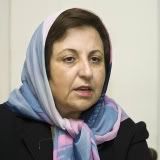
Netanyahu: Change in Iran Could Bring Peaceful Ties

YNET NEWS: Prime Minister Netanyahu tells German newspaper he has 'no doubt' Iran's citizens would choose a different government if allowed to vote freely. Meanwhile, Iranian Foreign Ministry spokesman calls Netanyahu's previous comments on Iran 'provocation'

Peaceful relations between Israel and Iran would be possible if new leadership took power in Tehran, Israeli Prime Minister Benjamin Netanyahu said in an interview with German newspaper Bild published on Monday.

"There is no conflict between the Iranian people and the people of Israel and under a different regime the friendly relations that prevailed in the past could be restored," Netanyahu told German daily Bild.

Iranian President Mahmoud Ahmadinejad was officially re-elected in a June 12 vote that the opposition has denounced as a fraud, and that has provoked the most violent unrest in Iran since the 1979 Islamic Revolution which ousted the US-backed shah.

Iran has accused the West and its media of playing a role in fomenting unrest.

Netanyahu said he had "no doubt" that Iran's citizens would choose a different government if allowed to vote freely.

"I think the true nature of the Iranian regime has been unmasked," he told Bild. "What we have seen in Iran is a powerful desire on the part of the Iranian people to be free." >>> Dudi Cohen | Monday, June 22, 2009
BBC Supports Islam, Attacks Christianity

MAIL Online: One of Radio 2's most popular religious presenters has launched a stinging attack on the BBC suggesting the broadcaster is biased against Christianity.

Don Maclean, 66, who hosted Good Morning Sunday for 16 years, said the broadcaster was 'keen' on programmes that attack the Christian church.

He said programming chiefs were keen to take a 'negative angle at every opportunity' in a way they do not with other faiths like Islam.

Mr Maclean said programmes about Anglicanism on the BBC always discuss gay clergy and for Catholicism they always mention paedophiles.

The presenter, who was replaced on the Radio 2 show in 2006 by Aled Jones, claimed the broadcaster was trying to 'secularise the country'.

He admitted that he was dismayed that the BBC recently appointed Aaqil Ahmed, a Muslim, as its new head of religious programming. The BBC supports Islam and attacks Christianity, claims Radio 2 stalwart Don Maclean >>> Paul Revoir | Monday, June 22, 2009

Sunday, June 21, 2009

Iran Expels BBC Correspondent: Official

REUTERS: TEHRAN - Iran has decided to expel the BBC's correspondent in Tehran over the broadcaster's coverage of this month's election, an Iranian official said on Sunday, and a semi-official news agency said Jon Leyne had 24 hours to leave.

The BBC confirmed Leyne, its permanent correspondent in Tehran, has been asked to leave, adding "The BBC office remains open."

An official at the Ministry of Culture and Islamic Guidance, which deals with foreign media, said Leyne had been told of the expulsion decision.

The official did not give details, but state radio cited the "distortion of news regarding the Islamic Republic of Iran and particularly news pertaining to the election."

The BBC in turn has accused the authorities of interfering with its broadcasts.

The semi-official Fars News Agency, which said Leyne must leave within 24 hours, also said he was accused of "dispatching fabricated news and reports" and "ignoring neutrality in news.."

He was also accused of "supporting rioters and trampling the Iranian nation's rights," Fars said. >>> Reporting by Hashem Kalantari and Fredrik Dahl; editing by Matthew Jones | Sunday, June 21, 2009

TIMES ONLINE: Iran and Britain in Diplomatic Stand-off as Protest Death Toll Rises

Britain and Iran moved towards a full-blown diplomatic crisis today as David Miliband rejected claims that the Government was stirring protests against the disputed re-election of president Mahmoud Ahmadinejad.

Within hours of confirmation that the BBC correspondent Jon Leyn had been ordered to leave Tehran, Iran’s foreign minister rebuked Britain for raising questions about voting irregularities.

As the death toll from clashes between demonstrators and security forces continued to rise, Manouchehr Mottaki told diplomats: “Great Britain has plotted against the presidential election for more than two years. We witnessed an influx of people before the election. Elements linked to the British secret service were flying in in droves.”

His comments come after Iran’s supreme leader Ayatollah Ali Khamenei accused “the evil British government” on Friday of interfering last weekend's election. >>> Jeremy Griffin | Sunday, June 21, 2009
Carter Says Palestinians Are Treated 'Like Animals'

MEHR NEWS: Former U.S. president Jimmy Carter said on Tuesday that Palestinians are being treated “like animals.”

“Tragically, the international community too often ignores the cries for help and the citizens of Palestine are treated more like animals than like human beings,” Carter said at a joint news conference with Hamas leader Ismail Haniya.

The former president called for a lifting of Israel''s merciless blockade of the Gaza Strip and ending “all violence” against the Palestinians.

“The starving of 1.5 million human beings of the necessities of life -- never before in history has a large community like this been savaged by bombs and missiles and then denied the means to repair itself,” Carter said at a UN school graduation ceremony in Gaza City.

The United States and Europe “must try to do all that is necessary to convince Israel and Egypt to allow basic goods into Gaza,” AFP quoted Carter as saying. >>> | Wednesday, June 17, 2009
BBC's Appointment of Muslim as Head of Religion Is 'Worrying', Anglicans Warn

THE TELEGRAPH: The appointment of a Muslim as the BBC's head of religious broadcasting is a "worrying" development that could further undermine the corporation's coverage of Christianity, Anglicans have warned.

Members of the General Synod, the parliament of the Church of England, are to vote on a motion condemning the decline of religious programming on BBC television, amid complaints that Christians are now only depicted as "freak shows".

In a new report to accompany the motion, the corporation's decision to recruit Aaqil Ahmed from Channel 4 to head its religious and ethical output is singled out for particular criticism.

Hundreds of people have complained to the BBC about the appointment of Mr Ahmed, who will be the first Muslim and only the second non-Christian in the role.

"Many of the Channel 4 programmes concerned with Christianity, in contrast to those featuring other faiths, seem to be of a sensationalist or unduly critical nature," wrote Nigel Holmes, a Synod member and former BBC producer who has tabled the motion.

"From this point of view it is worrying that the Channel 4 religion and multicultural commissioning editor, Aaqil Ahmed, who is a Muslim, is soon to be responsible for all the religious output from the BBC."

The motion is expected to attract the support of senior bishops when it is debated by the Synod next month.

The paper accuses the corporation of ignoring its Christian audience by failing to broadcast a Good Friday service on any of its national television and radio stations this year. >>> By Matthew Moore | Sunday, June 21, 2009
Forget Gerontomullocracy! Give Youth a Chance!

Photobucket
Image: Flickr
Freedom Craving 'Fuelling Iran Unrest'

BBC: The Iranian leadership is falling into the same trap that their arch-enemy the Shah of Iran fell into in the 1970s.

Photobucket
Photo: BBC News

They are not listening to the people.

After a meeting with Shah Reza Pahlavi, the US ambassador William Sullivan complained: "The king will not listen."

Soon afterwards, the king had to leave the country, and Ayatollah Khomeini returned from exile in triumph.

Khomeini's successor as Supreme Leader, Ayatollah Ali Khamenei, claimed at Friday prayers at Tehran university that "foreign agents" were behind efforts to stage a velvet revolution.

Change

Having spent 10 days in Iran for the 12 June election, that accusation sounds to me like a classic case of blaming the messenger.

There is a velvet rebellion taking place. It is not a revolution yet - but it could evolve into one if the Supreme Leader and his associates do not listen to the people.

I heard with my own ears dozens of peaceful, young Iranians saying they wanted change.

Sixty percent of the population are under 30 years old. They have no memory of the Islamic revolution in 1979. Many of them use the internet and watch satellite TV. Their window on the wider world is irreversibly open.

Many of them simply want peaceful change - and in particular an end to the strict laws that govern personal behaviour in Iran.

They want to be able to sing and dance. They wonder why the Iranian leadership continue to ban such expressions of human joy - a ban very similar to the rules imposed on Afghanistan during the Taliban regime.

And of course Iranians do sing and dance. I have been to several parties where the dancing was intense. And so was the drinking, though alcohol is also illegal.

Prohibition does not work. Many Iranians simply lead double lives.

An article in a magazine - available at Tehran news stands when I was there last year - carried the headline: "We are all hypocrites now."

Many women only cover their heads because they would be arrested if they did not.

Several women I met openly complained about the religious "guidance" police enforcing the female dress code of the chador, or the hijab and "manto" coat.

One young student told me: "I like the hijab. My friend doesn't like it. I should be free to choose to wear it, and she should be free to choose not to."

Another woman said: "The hijab is not really the problem. The real problem is that men and women are human beings - they are the same, and they should have equal freedoms." >>> By Hugh Sykes, BBC News | Sunday, June 21, 2009
Iran Cleric Family Arrested?

’Death to Khamenei’: In Tehran, a city bus is engulfed in flames, as people in crowds shout, 'Death to Khamenei'

Basij Militia HQ Burns: Amateur video shows the Basij headquarters set ablaze while smoke rises into a darkened sky

Zehntausende von Exil-Iranern protestieren

NZZ Online: Zehntausende von Anhängern der iranischen Opposition haben am Samstag in Europa und den USA gegen das offizielle Wahlergebnis im Iran protestiert. Die grösste Demonstration fand in Villepinte bei Paris statt, wo sich Exil-Iraner aus mehreren europäischen Ländern versammelten.

Laut den Organisatoren nahmen 90'000 Personen an der Kundgebung teil. Maryam Radjavi vom Nationalen Iranischen Widerstandsrat forderte einen demokratischen Wandel im Iran und «freie Wahlen unter der Aufsicht der Uno». >>> sda/afp/dpa | Samstag, 20. Juni 2009

CNN: Rallies in France, Germany, U.S. Support Iranian Demonstrators

WASHINGTON -- Demonstrators gathered in major cities in France, the United States and Germany on Saturday to condemn Iran's crackdown on pro-democracy protesters in Tehran.

The rallies ranged from tens of thousands of Iranian exiles and supporters who crammed a Paris, France-area convention center to the hundreds of demonstrators who braved a downpour in Washington to march to the White House.

In Hamburg, Germany, protesters marched against the announced result of last week's Iranian election, which had President Mahmoud Ahmadinejad declared the overwhelming victor in voting that opposition groups called rigged.

A threatening statement Friday by supreme leader Ayatollah Ali Khamenei in Iran raised fears of bloodshed, and security forces in Tehran confronted demonstrators Saturday with clubs, tear gas and water cannons. >>> CNN | Saturday, June 20, 2009

CNN: 90,000 Thousand Protest in Paris


CNN: Hundreds Protest in New York


leJDD.fr: Iran: Le monde réagit

Plutôt discrète après la proclamation des résultats en Iran, la communauté internationale s'est émue dimanche des violences policières dans la République islamique. Selon CNN, 19 personnes ont été tuées lors des manifestations de samedi. Plusieurs voix se sont élevées pour appeler à la fin de la répression. Mahmoud Ahmadinejad dénonce ces "ingérences". Et semble déterminé à mater l'opposition.

Londres, Rome, Berlin, Washington... Téhéran a essuyé les critiques de plusieurs capitales occidentales dimanche. En cause: la répression des manifestations de l'opposition samedi. CNN fait état de 19 victimes, la télévision publique iranienne parle elle de 10 morts et 100 blessés. Ces informations restent difficiles à vérifier, les journalistes occidentaux étant cantonnés dans leurs hôtels. Mais plusieurs vidéos, postées sur YouTube par des internautes iraniens, témoignent de la violence des affrontements.

Dimanche, la chancelière allemande, Angela Merkel, a demandé aux autorités iraniennes d'autoriser les manifestations pacifiques - interdites vendredi par le Guide suprême, l'ayatollah Ali Khamenei - et de procéder à un recomptage des bulletins de vote. L'Italie a quant à elle exhorté Téhéran à prendre des mesures urgentes pour mettre fin sans violences aux événements qui secouent le pays. Rome estime que la sortie de crise se trouve dans la tenue d'une rencontre publique et pacifique "entre le gouvernement et d'autres" pans "de la société iranienne". Après avoir observé une certaine retenue pendant la semaine, estimant que ce n'était pas à Washington de commenter le choix des électeurs iraniens, Barack Obama s'est montré plus ferme samedi. Il a appelé les autorités "à mettre fin aux violences et aux actions injustes" contre le peuple iranien. "Le gouvernement iranien doit comprendre que le monde regarde ce qu'il se passe. Nous portons le deuil de chaque vie innocente qui a été perdue", a-t-il ajouté dans un communiqué. >>> Par M.E, leJDD.fr | Dimanche 21 Juin 2009
Obama Urges Iran to Halt 'Unjust' Crackdown

At last, Obama finds a little bit of courage to speak out about the crisis in Iran. His statement is weak. Hardly the words of an inspiring leader. This is, however, a small step in the right direction. – ©Mark

INDEPENDENT ON SUNDAY: President Barack Obama challenged Iran's government to halt a "violent and unjust" crackdown on dissenters, using his bluntest language yet to condemn Tehran's postelection response.

Mr Obama has sought a measured reaction to avoid being drawn in as a meddler in Iranian affairs.

Yet his comments have grown more pointed as the clashes intensified, and his latest remarks took direct aim at Iranian leaders.

"We call on the Iranian government to stop all violent and unjust actions against its own people," Mr Obama said in a written statement.

"The universal rights to assembly and free speech must be respected, and the United States stands with all who seek to exercise those rights." >>> PA | Sunday, June 21, 2009
Iran: "Das ist erst der Anfang einer Revolution"

WELT AM SONNTAG: Im Iran hat es bei Zusammenstößen zwischen Demonstranten und Polizei erneut Verletzte gegeben. Mit Sorge schaut Abolhassan Banisadr, der erste Präsident der Islamischen Republik, auf sein Land. Das Regime habe dem Volk den Krieg erklärt, sagt er. Einen Sturz der Führung hält er jedoch für möglich.

Er war ein Vordenker der "islamischen Revolution" im Iran 1979. Der Ökonom und Theologe Abolhassan Banisadr, 76, lernte Ayatollah Khomeini in Paris kennen und wurde 1980 der erste Präsident der Islamischen Republik Iran. Weil er gegen die massenhaften Hinrichtungen im Zuge der Revolution protestierte, wurde er 1981 abgesetzt. Er lebt unter Polizeischutz in Paris.

Welt am Sonntag: Herr Banisadr, was halten Sie von der Rede des Revolutionsführers Ali Chamenei an die Iraner beim Freitagsgebet?

Abolhassan Banisadr: : Das war eine Kriegserklärung - gegen einen Teil des Systems und gegen die Bevölkerung. Chamenei hat die Bevölkerung gewarnt, auf die Straße zu gehen. Und er hat mit Konsequenzen gedroht, wenn Mussawi und die Seinen die Proteste nicht beenden. Ex-Premierminister Mussawi ist Teil des Systems, das hat Chamenei selbst betont. Aber damit hat der Revolutionsführer auch zugegeben, dass es einen Bruch innerhalb des Systems gibt. Dass es einen Bruch zwischen Herrschenden und Volk gibt. Er hat die Frage nach dem Fortbestand der Islamischen Republik gestellt. Das ist eine sehr gefährliche Frage für Chamenei.

Welt am Sonntag: : Glauben Sie also, dass der Sturz des Regimes bevorsteht?

Banisadr: : Das kann ich nicht mit Gewissheit sagen. Ich bin sicher, dass das Volk die Proteste fortsetzen wird. Mehr Sorgen mache ich mir um Herrn Mussawi. Wenn er Chameneis Drohung nachgibt, dann wird der Bruch zwischen System und Volk endgültig. Dann wird es langfristig noch mehr Gewalt geben, weil die Unterdrückung sehr viel brutaler werden wird. Wenn Mussawi nicht einknickt, wird der Übergang zur Demokratie wesentlich beschleunigt.

Welt am Sonntag: : Wen repräsentiert Mussawi?

Banisadr: : Diejenigen am Rande des Regimes, die nicht direkt an der Macht beteiligt sind und immer geglaubt haben, das System sei reformierbar. Das sind auch die meisten Mullahs in Qom. Die großen Kleriker, die Weggefährten Khomeinis, haben alle Mussawi gewählt.

Welt am Sonntag: : Was meinen Sie als einer der Väter dieses Systems: Ist es reformierbar?

Banisadr: : Letztlich nicht. Weil die Islamische Republik vollkommen auf die Person des Revolutionsführer ausgerichtet ist. Die Macht müsste sich selbst demontieren.

Welt am Sonntag: : Mit ihren Parolen und den Liedern beschwören die Demonstranten Parallelen zur islamischen Revolution von 1979. Sehen Sie die auch?

Banisadr: : Das Schah-Regime war viel schwächer als Chamenei heute. Und das Bewusstsein, dass es beseitigt werden muss, war viel allgemeiner. Was wir heute sehen, ist erst der Anfang einer Revolution. >>> Von Daniel-Dylan Böhmer | Sonntag, 21. Juni 2009
Iran’s Dictator Gives Up Pretence of Democracy

THE SUNDAY TIMES: Just before noon on Friday, June 19, the Islamic republic died in Iran. Its death was announced by its “supreme guide”, Ayatollah Ali Khamenei, who had come to praise the system but buried it instead. Khamenei was addressing supporters on the campus of Tehran University, transformed into a mosque for the occasion. Many had expected him to speak as a guide, an arbiter of disputes – a voice for national reconciliation. Instead, he spoke as a rabble rouser and a tinpot despot.

At issue was the June 12 presidential election that millions of Iranians, perhaps a majority, believe was rigged to ensure the re-election of President Mahmoud Ahmadinejad with a two-thirds majority. Since its inception in 1979, the Islamic republic has organised 31 elections at different levels. All have been carefully scripted, with candidates pre-approved by the regime and no independent mechanism for oversight.

Nevertheless, the results were never contested because most Iranians believed the regime would not cheat within the limits set by itself. Elections in the Islamic republic resembled primaries in American political parties in which all candidates are from the same political family but the contest is free and fair. The June 12 election was exceptional because three of the four candidates challenged the results.

Once the initial shock had passed, everyone looked to the supreme leader to find a way out of the impasse. Instead, Khamenei came out with a long lyrical monologue, hailing the election as a “miracle” and a “triumph for Islam”. Never before had Khamenei commented on the results of elections beyond accepting them as an expression of the popular will. The Khomeinist system was supposed to be 80% theocracy and 20% democracy, regardless of how bizarre the combination looked.

On Friday, the 20% democratic part disappeared, as Iran was transformed from an Islamic republic into an Islamic emirate headed by the Emir al-Momeneen (Commander of the Faithful) Ali Khamenei. As Iranians marched in the street in support of more freedom and democracy, Khamenei served notice that he was determined to lead the country in the opposite direction.

A sign that the self-appointed emir wanted to jettison the republican part of the system was there for all to see. The diminutive Ahmadinejad was relegated to the third rung of the faithful praying behind Khamenei. Sandwiched between two mullahs with giant turbans, he was almost hidden from public view. For almost a week the usually voluble Ahmadinejad has been kept off the airwaves. Suddenly the office of the president has become irrelevant. Ahmadinejad is there not because the people wanted him but because the emir found “his views closer to mine than the views of others”. >>> Amir Taheri* | Sunday, June 21, 2009

*Amir Taheri is an Iranian journalist and author
Clashes Show Depth of Fury

THE SUNDAY TIMES: Yesterday’s open defiance of the supreme leader was astonishing and shows how fast events are moving in Iran

The two men cradled the woman as she collapsed backwards onto the street, a pool of blood at her feet. The men pressed their hands on to a bullet wound in her neck as her hands fell limp above her shoulders.

Within seconds, her eyes rolled sideways and her pale features were obscured by haemorrhaging from her nose and mouth. Her would-be rescuers shrieked in panic. There was nothing they could do to save her.

The scene, captured on a number of mobile phones, unfolded yesterday in Tehran as protesters fought running battles with riot police and militia on the streets of the Iranian capital.

Another video showed hundreds of people milling about in a street with fires burning in the road. Some were collecting rocks. A helicopter buzzed overhead.

At least five shots were heard and soon after a group of men raced through the crowd carrying a man by his arms and legs. His head was lolling. He was laid on the ground and a crowd gathered. A large blood stain filled the centre of his white shirt. He lay still and appeared to be dead.

Yet more footage emerged of young men throwing stones at riot police. A number shouted “Death to Khamenei!”, underlining the seriousness of the protests. As supreme leader, Ayatollah Ali Khamenei traditionally occupies an untouchable position in Iranian society.

There was also video of a member of the security forces who had been knocked off his motorbike. A black-clad woman tried to protect him as a number of people, many of them wearing suits, kicked and punched him. A motorbike was on fire a few feet away.

Last night these videos revealed the extent of the defiance of the regime that has sprung from last week’s disputed presidential election. Yesterday tens of thousands of supporters of Mir Hossein Mousavi, who claim Mahmoud Ahmadinejad, the incumbent, stole victory in the election, poured on to the streets again. They were confronted with water cannon, tear gas and targeted gunfire.

The largest crowd gathered near the University of Tehran, after evading a riot police cordon which had tried to disperse them. Soon a volley of 20-30 shots rang out - which state television later claimed were warning shots - and the group broke up into roaming knots of protesters. Street battles then erupted as they took the fight to police with rocks.

As night fell it was unclear how many people had been killed or injured in the clashes. What was certain was that Iran was entering uncharted territory. >>> Marie Colvin in Tehran | Sunday, June 21, 2009

YOUTUBE: Basij Kills Young Girl in Tehran's Streets (Warning: Graphic)


Hat tip: Pastorius >>>
The Downfall of the Mullocracy That Is Iran Is Nearer Than Most People Think

Just wait! You might not have to wait very long! - ©Mark

Saturday, June 20, 2009

Mir-Hossein Mousavi 'Ready for Martyrdom' as Iranians Defy Supreme Leader

THE TELEGRAPH: Iran's defeated presidential candidate Mir-Hossein Mousavi on Saturday night told his supporters he was ready for martyrdom, and demanded that the entire disputed election be annulled.

He dramatically raised the stakes in the standoff with Iran's Supreme Leader, Ayatollah Ali Khamenei, after publishing a letter to the country's highest electoral authority in which he cited examples of electoral fraud to support his "undeniable right" to call for a re-run of the election.

Mr Mousavi made his defiant call during a speech delivered in southwest Tehran, according to an ally, who telephoned a western news agency shortly afterwards to report: "Mousavi said he was ready for martyrdom and that he would continue his path."

A witness told Reuters that Mr Mousavi had called for a national strike if he was arrested.

It was an unprecedented act in defiance of Ayatollah Khamenei, who has declared President Mahmoud Ahmadinejad the winner of the June 12 election and on Friday ordered an end to protests by demonstrators who say Mousavi was the winner. >>> By Angus McDowall | Saturday, June 20, 2009
Iran: A Picture Paints a Thousand Words

Photobucket
The bloody face of Islamic theocracy. Photo: MailOnline via Twitter
Chaos – Tehran Riots (June 20) : BBC Farsi – Basij Open Fire into Crowds

Blutige Zusammenstöße im Iran: Polizei greift Demonstranten mit Schlagstöcken an

WELT ONLINE: Wasserwerfer, Tränengas und Schlagstöcke: Die Lage im Iran ist eskaliert. Bewaffnete Polizei stellte sich den Anhängern der Opposition entgegen. Augenzeugen berichten von bis zu 60 schwer Verletzten. Dem Oppositionsführer Mussawi drohte die iranische Regierung mit Verhaftung.

Photobucket
Bild: Welt Online

Der Machtkampf im Iran ist am Samstag weiter eskaliert. Polizei und regierungstreue Milizen gingen mit Wasserwerfern, Tränengas und Schlagstöcken gegen Anhänger der Opposition vor, die einem Demonstrationsverbot trotzten.

Augenzeugen berichteten von heftigen Zusammenstößen in der Nähe des Revolutionsplatzes in Teheran. Rund 3.000 Demonstranten protestierten dort gegen das offizielle Ergebnis der Präsidentenwahl und riefen „Tod der Diktatur“ und „Tod dem Diktator“.

Polizei und regierungstreue Milizen hätten 50 bis 60 Demonstranten so schwer verletzt, dass sie in das Imam-Chomeini-Krankenhaus gebracht werden mussten, sagten Augenzeugen der Nachrichtenagentur AP. Mehrere blutende Demonstranten seien von Mitstreitern weggetragen worden. Einige der Protestierenden hätten daraufhin Motorräder der Milizen in Brand gesteckt. >>> AP | Samstag, 20. Juni 2009
French Women May Face Ban on Head-to-toe Islamic Dress

Photobucket
Veiled women demonstrating in Paris in 2004 against the law banning the covering of heads in state schools. Photo: TimesOnline

TIMES ONLINE: France could bar Muslim women from wearing full veils in public, a government minister said yesterday as parliament took action over concerns about an increase in women who are wearing the niqab and burka in big cities.

The latest controversy over dress habits among France’s six million Muslims follows public differences this month between Presidents Obama and Sarkozy over the merits of legislating on religious clothing.

A group of 58 MPs from the Left and Right called on Wednesday for parliament to react to the phenomenon of women who are adopting what they called oppressive head-to-toe Islamic dress that “breaches individual freedoms”.

Luc Chatel, the Industry Minister and government spokesman, supported the MPs. “If it were determined that wearing the burka is a submissive act, and that it is contrary to republican principles, naturally parliament would have to draw the necessary conclusions,” he said.

Asked whether that would mean legislation, he replied: “Why not?”

The new debate over Muslim dress is reviving passions that surrounded France’s 2004 law banning religious headcover in state schools. André Gerin, a Communist MP, led the motion for an inquiry, calling the burka and niqab “a moving prison” for women.

Women’s groups, including some Muslim-led ones, back new measures against the practices of a growing but still small minority of radical Muslims.

Fadela Amara, a rights campaigner of Algerian background, who is the Housing Minister, said that she was alarmed by the number of women “who are being put in this kind of tomb”. She added: “We must do everything to stop burkas from spreading.” >>> Charles Bremner in Paris | Saturday, June 20. 2009
Les manifestations à Téhéran (Aujourd’hui ?)

Voici une vidéo diffusée via le réseau de microblogging Twitter et censée figurer les émeutes en cours. Les documents trouvés sur Internet étant difficiles à sourcer et à vérifier, ces images sont à prendre avec précaution. [Source: Le Figaro]

LE FIGARO: Iran : heurts entre pro
et anti-Ahmadinejad : MINUTE PAR MINUTE - Malgré les menaces du pouvoir, les iraniens qui contestent la victoire de Mahmoud Ahmadinejad manifestent samedi et affrontent la police anti-émeutes. Un attentat-suicide a été commis contre le mausolée de l'ayatollah Khomeiny. >>> Samuel Laurent (lefigaro.fr) avec agences | Samedi 20 Juin 2009

NZZ Online: Lage in Teheran spitzt sich zu: Polizei geht gegen verbotene Demonstration vor – Selbstmordattentat

Im Konflikt um die iranische Präsidentenwahl ist es in Teheran zu Zusammenstössen zwischen Demonstranten und der Polizei gekommen. Gegen die Anhänger der Opposition wurden Tränengas und Wasserwerfer eingesetzt. Vor dem Mausoleum von Ayatollah Khomeinyi hat sich ein Selbstmordattentäter in die Luft gesprengt.

In der iranischen Hauptstadt Teheran hat sich am Samstag ein Selbstmordattentäter vor dem Mausoleum von Ajatollah Khomeinyi selbst getötet und zwei Personen verletzt. Das meldete die iranische Nachrichtenagentur Fars. Ob es einen Zusammenhang zu den Massenprotesten der Opposition nach den Präsidentenwahlen gibt, war zunächst völlig unklar. Das Mausoleum des islamischen Revolutionsführers Khomeinyi gilt vielen Iranern als Heiligtum. >>> sda/dpa/afp | Samstag, 20. Juni 2009
Iran Police 'Use Gas' on Protesters

AL JAZEERA: Iranian police have reportedly used tear gas and water cannon against thousands of people gathering to protest against the disputed re-election of Mahmoud Ahmadinejad, Iran's president.


Protesters tried to reach Revolution Square in the centre of the capital Tehran for a planned protest on Saturday, despite warnings from police that they would be arrested.

Police had blocked access to the square and Ahmadreza Radan, the deputy national police commander, had said they would "strongly confront any illegal gatherings and those without permission".


"Those who pull people to the streets should know that by a judicial decree they will be prosecuted by law and they will be arrested." Roads blocked >>>
'Bomb Explodes' As Thousands Protest In Iran

SKY NEWS: A bomb has exploded in Tehran near the shrine of Iran's revolutionary founder as thousands of people protest at the result of the country's election, reports say.

At least one person was killed and two others injured close to the shrine of Ayatollah Ruhollah Khomeini, said the Fars news agency.

Reports said it was a suicide bombing and the attacker died.

Elsewhere in the Iranian capital, police are using tear gas and water cannon on protesters, according to witnesses.

Reports said many people have defied Government warnings that any protests would be suppressed.

Eyewitnesses say some 3,000 protesters chanted "Death to the dictator!" and "Death to dictatorship!" near Revolution Square in the city centre.

Riot police were sent out on to the streets following a demand by Iran's supreme leader for the demonstrations to end. >>> | Saturday, June 20, 2009

ASSOCIATED PRESS: Web Support Pours Out for Iran Protesters

NEW YORK — Google and Facebook have rushed out services in Farsi. Twitter users have changed their home cities to Tehran to provide cover for Internet users there. Others have configured their computers to serve as relay points to bypass Iranian censorship.

In the aftermath of the disputed Iranian election, Internet companies and individuals around the world have stepped in to help Iranians communicate and organize.

Twitter delayed a scheduled maintenance shutdown so that people could continue to access the microblogging site while scores of Americans set up remote proxy servers so Iranians could access blocked Web sites from inside their country.

All week, Internet users in the U.S. and around the world fixed their eyes on the events unfolding in Iran, the way viewers might have been glued to their television sets 30 years ago. But unlike 30, or even five years ago, this time they could participate. >>> Associated Press | Saturday, June 20, 2009
Who’d Want to Be Ruled by Boring Old Farts in Iran?

Isn’t it high time that Obama spoke up for freedom? Isn’t it high time he stood by the side of the young people of Iran who are so obviously crying out for help to overthrow the tyranny they have to live with, and live under?

Obama said that he didn’t want to ‘meddle’ in the internal affairs of Iran. When did the idea of ‘meddling’ ever stop Obama before? He has meddled in the US car industry, he has meddled in banking affairs, he is meddling in the health-care industry, and he is going to meddle in European affairs, by insisting that the EU accept Turkey as a member state, even though most Europeans want nothing to do with the accession of that predominantly and backward nation to the Union. Yet, when it comes to ‘meddling’ in the affairs of Iran, Obama wants nothing to do with it. Funny that! Strange that!

Iran suppresses its people. Iran’s system is totally corrupt. Iran is brutal with the Iranians. Iran is totally un-democratic. Iran is also enriching uranium under our noses in order to get the atomic bomb; yet Obama feels that it would be wrong to ‘meddle’ in its internal affairs.

For God’s sake, Obama, this is a gift on a plate for you! The young of Iran have done all the work. It is high time, therefore, that the situatiuon be exploited. The vast majority of the educated people of Iran do not want the theocracy they have to live under. This has become self-evident in the last few days. Instead, these demonstrators want their human rights and freedom. They want freedom from tyranny, freedom to live their lives as they choose. Yet the best thing that you, Obama, can come up with is that you don’t want to ‘meddle’.

What a weak, lame excuse! It’s time for you to grow a backbone. It’s time for you, Obama, to get tough. It is not in the best interests of the world for this corrupt system to survive. After all, who the hell would want to be ruled by boring, old, bloodthirsty farts like the mullahs of Iran? And who wants to allow them to stay in power long enough to get the atomic bomb.
– ©Mark

All Rights Reserved


PS: Do you want to know what a “boring old fart” looks like? If so, click here >>>
Kent Ekeroth interviewed on Covert Radio - Islamization in Sweden


Hat tip: European Alliance for Rational Thought >>>
New Dark Age Alert! Loi controversée: La Lituanie interdit toute publicité de l'homosexualité

LE POINT: Le parlement de Lituanie a adopté mardi une loi sur la "protection des mineurs", interdisant en particulier de faire dans ce pays toute "publicité" pour les relations homosexuelles, bisexuelles et polygames.

77 députés ont voté pour cette loi, trois y ont été opposés et quatre se sont abstenus.

Selon ce texte, toute information publique faisant de la publicité pour les relations homosexuelles, bisexuelles et polygames est considérée comme ayant un effet négatif sur la santé psychique, le développement physique, intellectuel et moral des mineurs.

La nouvelle loi ne prévoit toutefois aucune sanction particulière pour ceux qui ne la respecteraient pas.

"C'est un mardi noir", a déclaré à l'AFP Vladimir Simonko, le président du Conseil de la Ligue des gays lituaniens.

"C'est une homophobie institutionnalisée qui se met en place", a-t-il regretté.

Selon lui, les homosexuels lituaniens s'adresseront au président de la République pour lui demander de ne pas promulguer la loi. >>> AFP | Tuesday, June 16, 2009

IPS: Lithuania Throttles Gay Rights

BRATISLAVA - Rights groups are calling on EU leaders to act after Lithuanian lawmakers approved controversial legislation that they say makes homosexuals "second class citizens" and breaches European conventions on human rights.

The legislation passed by Lithuania's parliament this week bans the discussion of homosexuality in schools and any reference to it in public information available to children.

Gay and human rights groups have condemned the law, claiming it institutionalises homophobia, is discriminatory, and violates the right to freedom of expression.

They say it will also make gay youths more vulnerable, as teachers and other school students will be unable to provide information to them about homosexuality, or could be afraid to help them if they are bullied or attacked by peers.

They also believe it breaches the European Convention on Human Rights, and have called on members of the European Parliament (MEPs) and EU leaders to put pressure on the Lithuanian government and president, who has yet to sign the law into effect, to amend it. >>> By Pavol Stracansky | Friday, June 19, 2009
Iran: Tehran Metro 2009

Friday, June 19, 2009

The Iranian Royal Family until 1979: Before the Islamic Revolution

Iran's Exiled Queen Speaks

THE DAILY BEAST – BLOG: As protesters flood Iran’s streets, Farah Pahlavi—the deposed empress—recalls the lessons of the 1979 uprising that led to her husband’s painful exile. A conversation with The Daily Beast.

Photobucket
Empress Farah Pahlavi, née Farah Diba

Farah Diba Pahlavi, the former queen of Iran, remembers all too well the last time Iranian youths poured into the streets of Tehran, chanting, throwing rocks, and demanding change: It was the start of the revolution against her husband, the shah of Iran, which ultimately forced the royal couple into exile in 1979 and plunged her life into chaos.

Thirty years later, Pahlavi, who now lives in Paris, feels a new optimism as YouTube and Twitter bring news of the uprising in Tehran’s streets. She’s hopeful that she is watching the beginning of the end of Iran’s theocracy—and the three decades of repressive Islamic rule that followed her husband’s departure.

During her reign as Iran’s queen, Pahlavi was the Jackie O. of Iran—a graceful, glamorous figure known as an emphatic advocate for the arts. And even as her husband’s support waned as a result of his autocratic rule, his harsh treatment of political enemies, and close ties with the U.S., she was still admired for her glamour and warmth.

But a new HBO documentary has forced Pahlavi to come to terms with some of the grievances against her husband’s rule. The Queen and I, which airs on Wednesday, is the work of Nahid Persson Sarvestani, an Iranian revolutionary who wanted to reconcile her glamorous childhood image of Farah Diba with the monarch who caused so much pain and suffering for their people. She sought out Pahlavi, who agreed to participate. >>> The Daily Beast | Wednesday, June 17, 2009

THE DAILY BEAST:
Photo Gallery >>>
Iran: Mansour Osanloo - Freedom Will Come


With thanks to Reza Pahlavi (رضا پهلوی) >>>
India's Gay Community Fights for Dignity

THE GLOBE AND MAIL: The cop strode up to Rajiv M., gave him a shove and demanded to look in his backpack. Rajiv handed it over and the cop pulled out a condom, and asked why Rajiv had it. “I said it was for sex,” Rajiv recalls, a bold if obvious answer that he knew was going to irritate the cop. But he wasn't feeling deferential.

The police officer demanded Rajiv's money, and his cellphone. “I said, ‘Why should I give it to you?'“ The cop grew more menacing: Next he demanded oral sex. Rajiv refused that, too, so the cop hauled the slight 21-year-old to a nearby police station and began the motions of charging him with the crime of homosexuality. When eventually he realized that Rajiv's dad was also a police officer, he let the young man go.

This nasty little piece of attempted extortion took place not in a gay bar, not in an alleyway late at night, but in the middle of a hot spring afternoon in Delhi last year, when Rajiv was standing at a crowded bus stop. “It's India,” Rajiv said with a shrug full of bravado. “So he could do something like this in the open.”

Rajiv, tousle-haired and deliberately camp, told this story a few weeks ago at a Delhi drop-in centre for gay and transgendered men, where he goes a couple times a week. Everyone had a similar story, except most had gorier endings. All the men had been harassed and detained by police who demanded money and, with no trace of irony, also often wanted sex, with the threat of charging and exposing the victim as a homosexual.

The police invoke Section 377 of the Indian Penal Code, the law that criminalizes “carnal intercourse against the order of nature,” including homosexual acts between consenting adults, with a possible sentence of life imprisonment. The law is almost never used for actual prosecutions: Men would have to be caught fully engaged in a sex act to hold up a case. No one has been convicted under 377 in 20 years. But few police officers are interested in actually enforcing the law. They prefer it as a blackmail tool.

Now, however, a fledgling gay community is waiting on tenterhooks for a verdict from the Delhi High Court, expected soon, on a public-interest litigation aimed at decriminalizing same-sex activity – and ending a plague of state-sanctioned homophobia that has led to rape, extortion, suicide and the spread of HIV-AIDS.

If they win – if the law is struck down, and many legal experts believe it will be – it will be a big shift in a still deeply conservative culture. There will be huge ramifications for India – where the courts seem to be out ahead of most of the population – and for the rest of South Asia and the developing world, where only a handful of countries have legally enshrined gay rights. >>> Stephanie Nolen, New Delhi | Friday, June 19, 2009
House Condemns Iran's Crackdown on Protests

USA TODAY: The House has voted to condemn Tehran’s crackdown on demonstrators and the government’s interference with Internet and cellphone communications, the Associated Press reports.

The vote was 405-1, with two members voting present, The Hill reports.

Here is the text of the resolution:
The House of Representatives expresses its support for all Iranian citizens who embrace the values of freedom, human rights, civil liberties, and the rule of law; condemns the ongoing violence against demonstrators by the government of Iran and pro-government militias, as well as the ongoing government suppression of independent electronic communication through interference with the Internet and cellphones; and affirms the universality of individual rights and the importance of democratic and fair elections.
The resolution was initiated by Republicans as a veiled criticism of President Obama, the AP says. >>> Posted by Doug Stanglin | Friday, June 19, 2009
Nobelpreisträgerin Ebadi für Neuwahl in Iran: Uno-Beobachter gefordert

NZZ Online: Die iranische Friedensnobelpreisträgerin Shirin Ebadi hat für den Fall weiterer Demonstrationen in ihrer Heimat eine Wiederholung der Präsidentschaftswahl gefordert.

«Wenn die Menschen weiterhin unzufrieden sind mit dem Ausgang der Wahlen, sollten diese für null und nichtig erklärt und neu angesetzt werden», sagte die Anwältin für Menschenrechte am Freitag in Genf. Die Neuwahl sollte von Beobachtern der Uno oder anderen internationalen Organisationen überwacht werden. >>> sda/dpa | Freitag, 19. Juni 2009
Hugh Hewitt & Christopher Hitchens Discuss Iran Demonstrations

Protest at Iran's 'Evil UK' Claim

BBC: The Foreign Office is in talks with the Iranian ambassador in London after his country's supreme leader called the UK government "evil".

Ayatollah Ali Khamenei denounces the UK government as "evil"

Ayatollah Ali Khamenei made the comments as he appealed for an end to protests about election results.

He said Western nations were showing "their enmity against the Islamic Republic system and the most evil of them is the British government".

Ambassador Rasul Movaheddian is meeting officials at the Foreign Office now.

Officials want to register their displeasure at Ayatollah Khamenei's comments and find out why he made them.

BBC News website world affairs correspondent, Paul Reynolds, says that the summoning of the Iranian ambassador represents a shift of position by the British government which up until now had wanted to avoid getting involved in public arguments with Iran.

He added: "The line had been that it wanted to avoid giving the Iranians any reason to blame Britain for interfering. The US government has taken a similar view.

"However, Ayatollah Khamenei's description of Britain as the most 'evil' of foreign governments was a step too far."

British diplomats are thought to believe Britain is being used as "proxy" for the United States, because Iran does not want to endanger its improving relations with America.

In his first public remarks after days of demonstrations, Ayatollah Khamenei issued a stern warning that protests against the country's disputed presidential election results must end. >>> | Friday, June 19, 2009
Iran : que peut faire Obama ?

Pour Alain Barluet, journaliste au service International du Figaro, la réélection de Mahmoud Ahmadinejad est une «mauvaise nouvelle» pour Barack Obama, qui pourrait être contraint «de revoir toute sa politique iranienne».
Khamenei and the Politics of Denial

THE GUARDIAN: In his address at Friday prayers in Tehran the Supreme Leader offered no new initiatives and no path through the maze

It was billed as the speech of his life. But in many ways Ayatollah Ali Khamenei's address at Friday prayers in Tehran was disappointingly similar to speeches and sermons he has given in the past: pious, defensive, blinkered and fiercely scathing about real or imagined western "enemies" of the Islamic Republic.

Those hoping the Supreme Leader would produce a plan for a way out of the tumultuous political stand-off that has gripped Iran since last Friday's disputed presidential poll were disappointed. Khamenei offered no new initiatives, no explicit offers of compromise, no path through the maze.

Worse, he appeared to show little understanding of the depth of the crisis that he and his protege, President Mahmoud Ahmadinejad, have helped provoke with what looked to many Iranians like a pre-emptive strike last weekend to claim victory before the votes were fully counted.

It was a five-star performance in the politics of denial. And it's tempting to conclude: Khamenei just doesn't get it.

It could have been worse. Even as he told Iranians that street demonstrations and mass protests could not be allowed to continue, Khamenei conceded that genuine differences of political opinion were "natural". Even as he argued that vote-rigging was unthinkable in Iran, he admitted the country had problems with corruption that must be addressed. In a small way, these were concessions to the popular mood.

Although Khamenei appeared to threaten the reformist leader, Mir Hossein Mousavi, and other aggrieved presidential candidates with punitive action should their "illegal" protests continue, Khamenei did not make any explicit threat. Instead he said it was their responsibility to avoid possibly unpleasant outcomes.

Doubts concerning the election results must be investigated through legal channels, he said. Those who ignored this advice "will be responsible for [the] consequences of any chaos ... Arm wrestling in the street must stop. I want everyone to put an end to this."

Considering that Khamenei is the highest unifying authority in a country divided and badly wounded, his failure to offer an apology, or to commiserate with, the family and friends of the at least eight people killed by security forces and militias in the last week was striking. >>> Simon Tisdall | Friday, June 19, 2009
Khamenei Backs Iran Election Results

THE INDEPENDENT: Iran's supreme leader says there was "definitive victory" and no rigging in the disputed presidential elections that set off days of unprecedented protests.

Supreme Leader Ayatollah Ali Khamenei offered no concession to opposition supporters who are demanding the elections be cancelled and held again.

He blamed Great Britain and Iran's external enemies for the unrest, vigorously defending the ruling system in his first public comments since supporters of challenger Mir Hossein Mousavi flooded the streets.

Khamenei had already approved the June 12 election results that gave hard-line President Mahmoud Ahmadinejad a landslide victory, but he has not been able to ignore the powerful defiance of the opposition, which has called the vote rigged, of his authority.

Khamenei praised Iranians for taking part in the election and called it a "a magnificent show of responsibility of the people to determine the fate of their own country."

Khamenei was making his address as part of Friday prayers at Tehran University. Among the throngs of people crowded into the hall to see him speak was Ahmadinejad. It was not known whether Ahmadinejad's main challenger, Mir Hossein Mousavi attended as well.

Press TV, an English-language version of Iranian state television, showed television pictures of the crowded hall where Khamenei was speaking as the crowd and thousands of people assembled outside cheered. >>> By Ali Akbar Dareini and Nasser Karimi, Associated Press | Friday, June 19, 2009