The EU should be stronger and more united. Great Britain should belong to the Union.
Die EU sollte stärker und geeinter sein. Großbritannien sollte der Union angehören.
L'UE devrait être plus forte et plus unie. La Grande-Bretagne devrait appartenir à l'Union.
Saturday, May 08, 2010
Qatari Royal Family Buys Harrods
Fayed invested £400m in Harrods, which was founded in 1840. Photo: Times Online
TIMES ONLINE: Harrods, the world famous department store, has been sold for more than £1.5bn to the Qatari royal family, Times Online can confirm.
Mohamed al-Fayed, the Egyptian owner of the London landmark, has decided to retire and will hand over the reins to Qatar Holding.
The firm was chosen because they would "maintain the traditions of Harrods", said Ken Costa, chairman of Lazard International - the investment bank advising the family trust on the deal.
Fayed received advances from Gulf-based suitors in the last two months, but initially offered them “two fingers” in a vehement refusal.
“People approach us from Kuwait, Saudi Arabia, Qatar. Fair enough, but I put two fingers up to them all,” Fayed said last month.
“It is not for sale. This is not Marks & Spencer or Sainsbury. It is a special place that gives people pleasure. There is only one Mecca.”
Cameron's 'Big, Open, Comprehensive' Offer to Lib Dems
Nick Clegg leaves his party's headquarters in Westminster last night. Photograph: Times Online
TIMES ONLINE: David Cameron has invited Nick Clegg to transform British politics by joining a Tory-led coalition after voters delivered the first hung Parliament in 36 years.
Mr Cameron sketched out a possible deal for “collaborative government” as party leaders grappled with the most complicated election result in terms of Commons arithmetic since the 1920s.
Mr Clegg was keeping his options open last night after Gordon Brown tried to tempt the Liberal Democrats into power with a promise of full proportional reform to the voting system.
The initiative, though, was with Mr Cameron after he emerged with more votes and seats from a long election night most notable for dashing the highest hopes of all the parties.
The public wooing of Mr Clegg unfolded in three acts of extraordinary Westminster drama that promises to continue through the weekend with potentially far-reaching consequences.
The Tories would like to finalise a deal before markets open on Monday but the Liberal Democrat leader does not want to be bounced into something that he cannot sell to his party. >>> Roland Watson, Political Editor | Saturday, May 08, 2010
‘Greece Is Like a Rat’s Tail. It Will Come Round to Hit Us’
TIMES ONLINE: Eleni is busy. Beyond the doors of the kitchen you can make out her gentle bullying: agape mia, she seems to be saying, my dear, where are the dolmades for Table 3? And back in the restaurant, with its murals of the blue Aegean, she flits from alcove to alcove listening to the sour jokes from her German customers — “Eleni, don’t expect me to pay the bill for the next three years, you Greeks are already emptying our pockets.” The Germans may be angry with the Greeks but they are not about to go without their ouzo. As the country approaches a critical election tomorrow it is becoming clear that bailing out Greece has become a key issue for Germans. “It’s the dominant topic,” says Klaus-Peter Schöppner, the head of the Emnid polling institute. “People are asking what happens to us if we don’t help the Greeks?”
Other questions are beginning to nag the Germans, too: how much Europe do we really need? Suddenly the European project that was for so long the preserve of the elites — the scrapping of the mark, EU eastward enlargement — has become a matter of public debate. It was instructive to study the faces of German trade unionists on May Day as they made their routine pledges of proletarian support to Greek workers; the cameras captured the bemusement of the listening crowds. Solidarity with the Greeks? Paying them money from our taxes so that they could retire in their late fifties while we slog on until 67? Precisely what European idea makes that possible?
The vote that is bringing these doubts to the surface is being held in North Rhine-Westphalia, a region that encompasses the once heavily industrialised Ruhr Valley. There are big cities such as Cologne and Dortmund struggling with the economic downturn and the crumbling of multicultural communities, great swaths of farmland and also pockets of neglect, as impoverished as anything that can be seen in the heavily subsidised eastern Germany. Eighteen million people live in the region compared with only eleven million in the whole of Greece. It is ruled by a coalition of Christian Democrats and Free Democrats, just like the country as a whole.
The election has become a tight contest. If the Government collapses there, Angela Merkel will lose her majority in the Upper House of parliament — and the plans for a radical overhaul of the tax and health systems will be blocked by the Social Democrats. Popular frustration about Greece, and about Europe, has therefore become a critical factor in Ms Merkel’s future. >>> Roger Boyes | Saturday, May 08, 2010
Euro Crisis Goes Global as Leaders Fail to Stop the Rot
THE GUARDIAN: G7 demands action from Europe after markets plunge / Fears that banks' exposure to debt could wreck recovery
Germany's Angela Merkel and other European leaders is [sic] under increasing pressure over the Greek debt crisis going global as markets were in turmoil. Photograph: The Guardian
The growing crisis in the eurozone threatened to undermine the global economic recovery as markets plunged across the world on fears that European leaders may not be able to contain the debt contagion spreading from Greece.
Stock markets in London, New York, and Shanghai dived following criticism that much delayed and half-hearted measures to rescue Greece were undermining confidence in wider efforts to kick start the world economy.
European shares finished the day at a six-month low while the Dow was down around 1% at 10,424. In Asia, the Shanghai stock market fell to an eight-month low of 2688, down 6.8% on the previous day.
An emergency summit of the 16 leaders of the countries using the single currency was held in Brussels , with Chancellor Angela Merkel of Germany and President Nicolas Sarkozy of France demanding tougher and quicker regulation of the financial markets in what looked like a doomed attempt to contain contagion from the Greek drama.
One factor being discussed last night was to persuade the ECB to launch a new quantitative easing policy – entailing huge loans to distressed governments in the form of buying up their bonds. This is supported by the European Commission, Spain, Portugal, Italy and France, but is certain to run into German opposition.
With the pace of developments outstripping the ability of political leaders to respond, what was initially called as a summit to bless a €110bn (£95bn) rescue package for Greece turned into a frantic exercise in global crisis management.
Alarm bells were ringing in major capitals across the world where leaders voiced their exasperation with European attempts to contain the fallout from Greece. >>> Phillip Inman and Ian Traynor in Brussels | Friday, May 07, 2010
Brutal revenge: In a High-security British Jail, a Serbian Warlord Has His Throat Slashed by Three Muslim Inmates
MAIL ONLINE: A former Serb general convicted of Europe's worst massacre since the Second World War had his neck slashed open by three Muslim prisoners in a British jail yesterday.
Radislav Krstic, 62, serving a 35-year sentence for war crimes, was in a critical condition in hospital after the attack at top security Wakefield Prison.
The Serbs were the deadly enemies of Bosnian Muslims during the Yugoslav civil war in the 1990s. At least one of Krstic's attackers is said to be a Bosnian Muslim.
The incident is a huge embarrassment to prison bosses because Krstic is regarded as one of Britain's most sensitive and high-profile inmates.
It is almost certain to be raised at diplomatic level and questions will be asked about how the suspects were able to attack him. >>> David Williams and Stephen Wright | Saturday, May 08, 2010
”Mobilisation générale” pour sauver la zone euro
Nicolas Sarkozy et Angela Merkel lors du sommet européen à Bruxelles vendredi soir. Photo : Le Point
LE POINT: La zone euro a décidé vendredi soir de mettre en place un fonds de soutien sans précédent pour ses pays confrontés à des difficultés financières, dans l'espoir de stopper la contagion d'une crise gravissime qui menace les fondements de l'Union monétaire.
A l'issue d'un sommet de crise à Bruxelles, les dirigeants des seize pays utilisant la monnaie unique ont demandé à la Commission européenne de proposer "un mécanisme de stabilisation visant à préserver la stabilité financière de la zone euro", selon une déclaration commune. Les ministres des Finances de l'ensemble de l'Union européenne sont convoqués dimanche après-midi pour finaliser le fonctionnement et le financement de ce dispositif, qui reposerait notamment sur des emprunts contractés par la Commission européenne. "D'ici à dimanche soir nous ferons en sorte d'avoir en place une ligne de défense de la zone euro imperméable", à temps pour l'ouverture des marchés lundi matin, a déclaré le président de l'Eurogroupe, Jean-Claude Juncker. Le Premier ministre italien Silvio Berlusconi a pris un ton tout aussi martial pour décréter "l'état d'urgence", tandis que le président français Nicolas Sarkozy a sonné la "mobilisation générale". La zone euro va se doter d'un fonds de soutien >>> AFP | Samedi 08 Mai 2010
Euro-Länder nehmen Kampf mit Spekulanten auf
WELT ONLINE: Die Euro-Länder wollen Europas angeschlagene Währung mit einer Radikalkur retten. Morgen sollen die EU-Finanzminister ein Notfallsystem für klamme Mitgliedstaaten festzurren. Das beschlossen die Staats- und Regierungschefs in der Nacht zum Samstag. Spekulanten soll es an den Kragen gehen.
Kündigte ein hartes Durchgreifen bei der Regulierung der Finanzmärkte an: Frankreichs Staatsoberhaupt Nicolas Sarkozy. Bild: Welt Online
Die Euro-Länder haben der Spekulation gegen die Gemeinschaftswährung den Kampf angesagt und einen Rettungsmechanismus zur Abwehr von Schuldenkrisen in ihren Mitgliedsländern beschlossen. Noch vor Öffnung der Finanzmärkte wollen die EU-Finanzminister am Sonntagabend beschließen, dass die Kommission künftig in Krisenfällen am Kapitalmarkt Kredite für strauchelnde Euro-Länder aufnehmen kann. >>> Von Ilona Wissenbach | Samstag, 08. Mai 2010
Chávez-Kritiker muss acht Jahre ins Gefängnis: Ex-Verteidigunsminister Baduel wegen Machtmissbrauchs verurteilt
NZZ ONLINE: Der ehemalige venezolanische Verteidigungsminister Raúl Isaías Baduel ist zu knapp acht Jahren Gefängnis verurteilt worden. Ihm wird Veruntreuung und Machtmissbrauch zur Last gelegt.
Der ehemalige venezolanische Verteidigungsminister Raúl Isaías Baduel, ein früherer Vertrauter von Staatschef Hugo Chávez, ist wegen Veruntreuung und Machtmissbrauchs zu knapp acht Jahren Haft verurteilt worden. >>> sda/afp | Samstag, 08. Mai 2010
Why Liberal Dems Want Reform
Zeal and Angst: Germany Torn Over Role in Europe
Helmut Kohl, left, returns to the European stage. Photograph: The Wall Street Journal
THE WALL STREET JOURNAL: LUDWIGSHAFEN, Germany—Helmut Kohl, frail and confined to a wheelchair, returned to public view this week, imploring his countrymen not to abandon the goal he spent his political life pursuing: a united Europe.
"Today, I am convinced more than ever that European unification is a question of war and peace for Europe and for us, and the euro is part of our guarantee of peace," the former chancellor, his voice uneven and raspy, told guests at a celebration for his 80th birthday.
As Chancellor Angela Merkel looked on, Mr. Kohl issued a thinly veiled critique of her reluctance to help Greece, saying he couldn't understand "people who act as if Greece doesn't matter." Of course the situation is difficult, but Germany must pull out all the stops, he said, drawing applause from the crowd.
The scene underscored the threat Greece's turmoil poses to monetary union, the grandest expression of the European continent's drive toward integration. Mr. Kohl led the unification drive two decades ago. Now the increasingly disruptive debt problems in Greece and elsewhere post the question: What price is Germany willing to pay to save Europe? >>> Marcus Walker and Matthew Karnitschnig | Saturday, May 08, 2010
THE TELEGRAPH: Dmitry Medvedev has launched a wide-ranging attack on the Soviet Union as a totalitarian state that crushed individual liberties in the most outspoken comments on the USSR by a Russian leader in recent years.
Mr Medvedev's comments, which also included stinging criticism on the historical role of Soviet dictator Josef Stalin, will be interpreted by many as an attempt to distance himself from Vladimir Putin, the prime minister, who has adopted a more ambiguous stance on Russia's often tragic history.
In an interview Mr Medvedev declared that nothing could justify Stalin's crimes against his own people.
"Despite the fact that he worked a lot, and despite the fact that under his leadership the country recorded many successes, what was done to his own people cannot be forgiven." >>> Andrew Osborn in Moscow | Friday, May 07, 2010
Britain to Go to Polls Again Within 12 Months, Experts Say
THE TELEGRAPH: Britain is very likely to go to the polls within 12 months, political experts have warned, costing the parties millions in further expense.
As the Conservatives started to negotiate with the Liberal Democrats about forming some form of alliance, political historians warned that it there was a strong chance that Britain would be forced to go to the polls by as soon as the end of the year.
Dr Richard Toye, an historian at Exeter University, said: "I'd bet on an election in October or November this year." >>> Harry Wallop, Consumer Affairs Editor | Friday, May 07, 2010
David Cameron Has Had This Coming to Him
THE TELEGRAPH: Dave Cameron abandoned conservatism five years ago because he believed it would get his party elected. It didn't.
Dave had to fight a widely despised Prime Minister leading a Government incompetent and destructive on a scale unseen in living memory. Seldom has there been a softer target; but seldom has one been missed so unnecessarily. With just 36 per cent of the vote, the Tories stood almost still since 2005. They are now on their knees to their other enemy, the Lib Dems.
Gordon Brown, predicted to cause his party's greatest defeat since 1918, was instead still in office and giving an entirely accurate constitutional lecture to the nation. So low were expectations of him that he looks as though he has done remarkably well. He remains Prime Minister. It is his duty to carry on the Queen's government. Like Baldwin, defeated in 1923, he can stay until he meets parliament with a Queen's Speech. Unless forced out by his party, he need not resign yet. Dave cannot even try to form a government while there is an incumbent prime minister. And there will be an incumbent prime minister until Mr Brown is convinced that the combined forces of the Lib Dems and Tories can defeat him on a motion of confidence or a Loyal Address.
It should not have come to this. As I rang round Tory MPs some were incandescent at the conduct not just of the campaign, but of the whole anti-core vote strategy that has alienated many natural Tory voters. George Osborne, both as campaign co-ordinator and also as an inept shadow chancellor, was quickly selected as the scapegoat. But let us not forget that the roots of this problem go back to 2005. The party has chosen to mimic and validate the policies of its opponents, with the result that the public found little to choose between the main parties. This was exemplified in the television debates, in which the leaders fell over themselves to agree not only with any contention put to them by the public, but even with each other. >>> Simon Heffer | Friday, May 07, 2010
David Cameron Closes In on Deal with Nick Clegg
THE TELEGRAPH: David Cameron has entered into formal talks with Nick Clegg to try to secure a deal that would force Gordon Brown from Number 10.
Nick Clegg and David Cameron - David Cameron closes in on deal with Nick Clegg. Photos: The Telegraph
During one of the most extraordinary days in British political history, the Conservative leader made an unprecedented “big, open and comprehensive offer” to the Liberal Democrats after the election ended in the first hung parliament for 36 years.
Mr Cameron was compelled to make the public plea to Mr Clegg after it became clear that the Conservatives would be 20 seats short of an overall Commons majority and that Mr Brown would not allow him to lead a minority government.
To the astonishment of many at Westminster and beyond, Mr Brown stubbornly refused to accept election defeat despite Labour losing almost 100 seats.
Instead, the Prime Minister attempted to woo the Liberal Democrat leader with a power-sharing offer of his own.
After a night in which the Tories had appeared confident of securing an overall majority, Mr Cameron looked shell-shocked as he addressed a press conference at which he outlined a ground-breaking and, until yesterday, unthinkable offer to the Liberal Democrats.
He said: “I am prepared to consider alternative options. It may be possible to have stronger, more stable, more collaborative government. >>> Andrew Porter and Robert Winnett | Friday, May 07, 2010
Gordon Brown - Flawed, Failed, Finished.
THE TELEGRAPH: As Gordon Brown clings on to power, his biographer Anthony Seldon delivers his damning verdict on our flawed prime minister
'I did not foresee it,” Gordon Brown was heard to say on May 7, 2010. But then the Gordon Brown story is a Shakespearean tragedy of King Lear proportions. Like King Lear, he lashes out in all directions, now berating, now making sycophantic overtures, a desperate figure clinging by his nails to the vestiges of power. Like Lear, he demeans himself, and fails to see the truth, a truth evident to those all around him.
As John Major said, his remaining in office is beginning to look undignified: quite fairly, the former Tory prime minister observed that his own loss in 1997 was nothing like as severe as Brown’s. He should really, added Major, have taken himself off to watch the cricket by now.
True, Labour avoided falling into third place, and with it the ignominy of achieving its poorest result since 1918. But achieving just 29 per cent of the vote, and losing 90 seats, was still its worst result since 1983, when the party was led by Michael Foot. And however the next few days play out – whether Nick Clegg strikes a deal with David Cameron or even if he opens talks with senior figures in Labour – one thing is certain: Brown is a dead man walking. >>> Anthony Seldon | Friday, May 07, 2010
Hung Parliament Sparks Market Chaos
THE TELEGRAPH: The pound plunged up to 4½ cents against the dollar during a roller coaster 24 hours of trading as the prospect of coalition Government prompted investors to ditch UK assets.
The inconclusive election result unnerved investors already spooked by Greece's deepening debt crisis and a global rout of equity markets.
Gilt yields see-sawed, with investors at one point demanding an extra 1.25 percentage points to hold 10 year gilts rather than German Bunds – the biggest spread since 1998. Shares also fell, with the benchmark FTSE 100 dropping 2.6pc, capping its worst week for 14 months.
Michael Saunders, chief European economist at Citigroup, said Britons should brace for a potential "meltdown" if there is no deal for stable government by Monday.
"Right now there is a firestorm of a sovereign credit crisis sweeping global markets," he said. "If markets do not get some sense on Monday that there is a solid government with a credible route back to fiscal stability, things could get very ugly indeed. A coalition of Labour, Lib Dems and nationalist parties could well precipitate a market meltdown."
The best outcome so far as investors were concerned would be a Conservative-Liberal Democrat coalition with an outline plan to cut the deficit, he said. >>> Richard Fletcher and Edmund Conway | Friday, May 07, 2010
Ayaan Hirsi Ali: 'Why Are Muslims So Hypersensitive?'
THE GUARDIAN: She says Islam is backward and the Qur'an is terrible. But Ayaan Hirsi Ali – whose provocative new book is extracted here – is not about to let a fatwa intimidate her. She talks to Emma Brockes
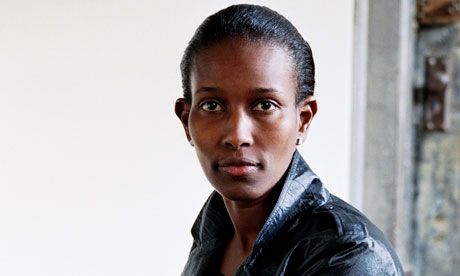
Ayaan Hirsi Ali enters an apartment in New York followed by a bodyguard. The 40-year-old, who for the last six years has been unable to turn up at a venue without it being checked by security, is a writer, polemicist and critic of Islam. She is also a Somali immigrant, an ex-Muslim, a survivor of child genital mutilation, an exile many times over, a former Dutch MP, a black woman whose language would not, in places, look amiss in a BNP pamphlet, a remarked-upon beauty and a lady-in-peril, identities that lend her as a figurehead to disparate causes and bring on confusion in the people she meets.
"I'm a serious person," she says, frowning, as the photographer suggests various fashion poses, but she is also quietly, almost coyly glamorous, moving around with fawn-like grace. It's a combination that works particularly well on male polemicists of the muscular left, who can't do enough to defend her: her gentle charm, her small wrists, her big eyes – oh, and her brave commitment to Enlightenment values – in the face of all that extremism. >>> Emma Brockes | Saturday, May 08, 2010
Friday, May 07, 2010
Hung Parliament in the UK: A Very Un-British Election Result
SPIEGEL ONLINE INTERNATIONAL: Britain, it seems, has finally become European, at least in its political system. The UK's much-dreaded hung parliament would be business as usual on the Continent, where parties are used to forming coalition governments. Britain's unfair first-past-the-post system needs to finally be fixed.
British beer is famous for tasting flat to continental Europeans. Equally flat was the mood that set in over the course of the long election night after Britons voted in Thursday's general election. The result is disappointingly undecided: The British wanted change, but not enough to actually get it.
They have obviously had enough of Labour's Gordon Brown and his government, but they do not necessarily want Conservative challenger David Cameron as prime minister. With around 36 percent of the total vote, the Tories narrowly missed their goal of winning a majority of seats in parliament. Now the British have produced a very un-British election result: a hung parliament in which no single party has a majority of seats.
In the eyes of the Brits, coalition governments have been regarded, at least up until now, as an excessively complex invention by those continental Europeans. Such governments were seen as incapable of action, and coalitions were thought to promote haggling between parties and political corruption.
The British are accustomed to having a single government party and a large opposition party in their parliament. The government -- which, thanks to the undemocratic first-past-the-post system, usually had a comfortable majority -- dictated their policies; the opposition railed against them. Once the ruling party had run out of steam, the roles were reversed. New Political Territory >>> A Commentary by Michael Sontheimer | Friday, May 07, 2010
Devastation of War: Archival Discovery Reveals a Ruined Berlin
SPIEGEL ONLINE INTERNATIONAL: Forgotten for decades, a trove of post-war photographs from 1945 has recently been unearthed. The snapshots illustrate the devastation of the German capital and capture the desperation of the city in the weeks after the end of World War II. They also show glimpses of Berlin's resilience.
The soldier with the Iron Cross on his chest lies in the middle of the street. His steel helmet has rolled away. The Red Army soldiers are turning him onto his back and cleaning their weapons. They take no notice of the photographer kneeling to take the picture. He's already taken dozens of shots today -- this time he's just chosen a corpse for the foreground.
It's a scene from the final days of the World War II, taken somewhere in the center of Berlin. For decades this picture, along with thousands of others, lay in the archives of a Berlin publishing house. Unnoticed. It is only now that the collection has come to light. >>> Solveig Grothe | Friday, May 07, 2010
Kein Triumph für David Cameron: Bewährungsprobe und Besonnenheit
FRANKFURTER ALLGEMEINE ZEITUNG: Mit seinem Pyrrhussieg erreichte der Spitzenkandidat der britischen Konservativen den vorläufigen Höhepunkt einer Karriereleiter, die er rasch und entschlossen erklommen hatte. Ihm steht nun der schwierigste Schritt aber noch bevor.
David Cameron hat mehr errungen als einen Pyrrhussieg, doch ein Triumph ist es nicht geworden. Die Konservativen hätten unter seiner Führung einen höheren Zugewinn an Sitzen erlangt, als er einst der konservativen Heldin Margaret Thatcher bei ihrem ersten Wahlsieg gelungen sei, beeilten sich Camerons Helfer und Anhänger am Freitag zu versichern. Aber über die wichtigste Zielmarke, die absolute Mehrheit, hat ihn die Welle der Wechselwähler dann doch nicht getragen.
Damit wartet auf Cameron augenblicklich die größte Bewährungsprobe - bevor er noch die Hand auf den Preis seines Erfolges, das Amt des Premierministers, legen kann. Es kommt auf seine Argumentationskraft und Besonnenheit an, um die britische Öffentlichkeit - die über den von ihr verursachten Wahlausgang nun selber verunsichert zu sein scheint - an seiner Seite zu halten. Das Ringen mit der Labour-Partei um das Recht der Regierungsbildung wird mit moralischen und machttaktischen Griffen entschieden werden.
Das bedingt eine Handlungsfreiheit für den konservativen Parteichef, die sich Cameron, seit er vor fünf Jahren im Handstreich die Führung der Tories übernahm, zäh und geduldig in der eigenen Partei erworben hat. Er hat die Konservativen mit grünen Überzeugungen und einem sozialen Gewissen ausgestattet und ein paar im eigenen Lager umstrittene Wahlaussagen durchgesetzt - etwa den Verzicht auf eine neue Start- und Landebahn für den Londoner Flughafen Heathrow -, um diesen Wandel glaubwürdig zu illustrieren. Obwohl konservativ ein Erbe Blairs >>> Von Johannes Leithäuser, London | Freitag, 07. Mai 2010
Lawyers in Egypt Call for Arabian Nights to Be Banned
THE TELEGRAPH: A group of Islamist lawyers in Egypt has called for the book Arabian Nights to be banned because they believe it is obscene.
Chinese tenor Xin Wang performs during a rehearsal of the opera Aladdin and the Magic Lamp, written by Nino Rota, at a theatre in Colmar, France. Photo: The Telegraph
The literary classic, which features characters such as Sinbad the Sailor, Aladdin and Ali Baba and the Forty Thieves, was described by the group as a call to "vice and sin".
Known in the original Arabic as One Thousand And One Nights, the collection of folk tales and short stories was first published in medieval times.
But a recent republication triggered controversy and calls to ban the new version on the basis of depiction of sexuality and use of offensive language, according to Al Arabiya.
"I was shocked at the offensive phrases it contains," said Ayman Abdul-Hakim, member of Lawyers without Shackles, the non-governmental group that filed a complaint with Egypt's Prosecutor General calling for the withdrawal of the new edition from the market and for banning the book altogether.
Mr Abdul-Hakim said the book was "a waste of public money" and that several references to sex in the book and were "calls to sin". >>> | Friday, May 07, 2010
Greece: A Nation at War with Itself
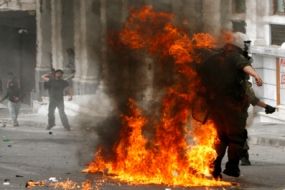
THE TELEGRAPH: The attack on an Athens bank that left three dead stirred memories of the blood-spattered years of Greek civil war in the 1940s. Former correspondent Harry de Quetteville reports that many fear the violence has yet to run its course.
When 44-year-old Marie-Therese Iatrou, who lives in a comfortable suburb outside Athens, spoke this week to her mother, Renna Nezos, she detected a note of panic in the 78-year-old's voice.
"I want to come and live with you outside the city," said Mrs Nezos, whose childhood home was occupied by the Nazis and who has vivid memories of the bloodshed of the civil war that followed. "I've seen this before."
On the streets outside Mrs Nezos's window in the centre of Athens, tens of thousands of demonstrators were preparing to march against the extraordinary package of austerity measures imposed alongside the joint EU-IMF bailout that has saved the country from immediate bankruptcy.
To most observers of Greek street politics, there is nothing new, or particularly threatening, about the prospect of mass protest in this hot-blooded Mediterranean country, politically charged and potentially violent though such protest can be.
As a correspondent based for several years in Athens, I became used to the sight of demonstrators parading through the city. Stones are routinely hurled; the police routinely respond with tear gas. The British and American embassies, regular targets of demonstrators' ire, are not built like fortresses for nothing. Protests make for good television reports, before everyone forgets about them the next day.
Indeed, the very idea of protestors demanding rights and brandishing hammer-and-sickle flags (such as those draped from the Acropolis this Tuesday) can seem laughably anachronistic. Tame, almost. For years, many of Greece's wealthiest people – those in the northern suburbs of Athens with the swimming pools that they are now hiding from the taxman; those with the boltholes on Mykonos, built beautifully, but illegally, too close to the shoreline – may have regarded the man on the street with disdain, not fear. But on Wednesday that changed. >>> Harry de Quetteville | Friday, May 07, 2010
Jeremy Warner: Merkel Goes to War in Battle She Cannot Win
THE TELEGRAPH – BLOG: Angela Merkel, the German Chancellor, has declared war – no, not on the Greeks or Poles, but on the markets.
Speculators are exaggerating the tensions in the eurozone, she has declared, and must be brought to heel. “To some degree this is a battle between the politicians and the markets,” she said in a speech in Berlin. “But I am firmly resolved – and I think all of my colleagues are too – to win this battle.”
Does not the German Chancellor think that economic fundamentals might have the teeniest, tiniest little bit to do with the sovereign debt meltdown, as in Greece has become about as credit worthy as an unemployed lorry driver?
Apparently not. Ms Merkel has placed herself firmly at the forefront of calls to set up a special EU credit rating agency, presumably with the intention of awarding a triple A rating to anyone the politicians deem appropriate.
When economics and politics collide, there is only ever one outcome. Despite what Ms Merkel says, the economics will always win through. European policymakers are determined to tame markets and bend them to their will. I wish them luck, but they won’t succeed. Read on and comment >>> Jeremy Warner | Friday, May 07, 2010
Eurozone Talks Battle to Stem Global Crisis Over Greek Rescue Plan
THE GUARDIAN: Turmoil in international markets hangs over emergency summit of European leaders
European leaders are battling a crisis of confidence in the euro single currency tonight, desperately seeking a formula to reassure the markets as the emergency triggered by Greece's huge debt levels and Europe's response threatened to go global.
An emergency summit of the 16 leaders of the countries using the single currency was held in Brussels, with chancellor Angela Merkel of Germany and president Nicolas Sarkozy of France demanding tougher and quicker regulation of the financial markets in what looked like a doomed attempt to contain contagion from the Greek drama.
With the pace of developments outstripping the ability of political leaders to respond, what was initially called as a summit to bless a €110bn (£95bn) rescue package for Greece turned into a frantic exercise in global crisis management.
Alarm bells were ringing in major capitals across the world where leaders voiced their exasperation with European attempts to contain the fallout from Greece. In what may have been Alistair Darling's last part in trying to manage international financial turbulence, the chancellor took part in a phone conference of G-7 finance ministers discussing the implications for the international bond markets of the Greek debt debacle.
Australia's prime minister, Kevin Rudd, was scathing about the EU package for Greece over three years agreed last weekend by 15 eurozone countries and the International Monetary Fund: "Markets have judged those arrangements to be inadequate," he [said]. >>> Ian Traynor, Brussels | Friday, May 07, 2010
U.K. Hung Parliament Explained
Royaume-Uni : Incertitude sur le futur gouvernement
LE TEMPS: C’est désormais officiel, les conservateurs gagnent les élections mais n’ont pas la majorité absolue au parlement, selon les résultats définitifs publiés dans 615 des 650 circonscriptions. Les tories emportent 36,2% des voix, les libéraux-démocrates 22,9%, soit beaucoup moins qu’attendu, et les travaillistes 29,1%, le pire score du Labour en termes de suffrages depuis 1983. Les chiffres officiels complets seront connus en fin d’après-midi. Des semaines de tractations politiques devraient suivre, Gordon Brown n’ayant pas l’intention de raccrocher. La Livre est en baisse ce matin, victime de la perspective d’un parlement sans majorité absolue, une première depuis 1974 >>> AFP | Vendredi 07 Mai 2010
Gordon Brown: Willing to Talk with Clegg
Nick Clegg: The Electoral System Is Broken
General Election 2010: Hung Parliament Is a Certainty as Final Results Trickle In
THE TELEGRAPH: A hung parliament is now a certainty as the final votes across the country are counted up.
It could be days before the final make-up of government is decided. Nick Clegg has offered few hints as to whether he would participate in a Labour or Conservative alliance. David Cameron is "happy to talk" with other parties, including the Liberal Democrat leader, according to Michael Gove the shadow education secretary.
He said: "It is certainly the case that David Cameron is happy to talk to people in other parties in order to ensure that we can have a strong, stable, Conservative-led government to provide the country with the change it needs."
He added: "I stress it is for David Cameron to decide with whom we should work. We do not yet know the basis on which the new Parliament will be constructed entirely, we don't know the precise arithmetic."
Meanwhile senior Labour ministers have begun making overtures to Gordon Brown themselves.
Asked if Labour would do a deal to stay in power, Lord Mandelson said: “The constitutional conventions are very clear. The rules are that if it’s a hung parliament, it’s not the party with the largest number of seats that has first go - it’s the sitting government.”
Pressed again on whether he would do a deal with the Lib Dems to hold on to power, he said: “I have no problem in principle in trying to supply this country with a strong and stable government.”
David Cameron called on Gordon Brown to stand aside today after the Tories made significant gains across England and Wales in the closest general election for a generation. >>> Andrew Porter and Robert Winnett | Friday, May 07, 2010
Britain Wakes Up to a Hung Parliament
Gordon Brown arrives back at Downing Street. Photo: Times Online
TIMES ONLINE: Gordon Brown was back in Downing Street today as Britain woke to the uncertainties of its first hung Parliament for 36 years.
As counting wrapped up in the few dozen seats yet to declare, David Cameron's Tories were on course to become the largest party in the Commons but about 20 seats short of the 326 needed for a majority.
Mr Brown made clear that he had no intention of giving up power easily – his passage through Britain's most famous front door at 7am was a symbolic reminder that he remains Prime Minister and has the constitutional right to form a government.
Nick Clegg, the Liberal Democrat leader, admitted that his party had had a disappointing night, losing seats to both the Tories and Labour despite the excitement it had generated during the campaign.
He may yet emerge as a kingmaker, however, from a wildly unpredictable night in which the biggest dramas were in seats held against the odds rather than trophy scalps. >>> Philippe Naughton and Roland Watson | Friday, May 07, 2010
Russian Politician Claims He Met Aliens on Moscow Balcony
THE TELEGRAPH: A senior Russian politician claims to have met aliens on the balcony of his Moscow apartment, prompting critics to question his suitability to head up the World Chess Federation and run an internal Russian republic.
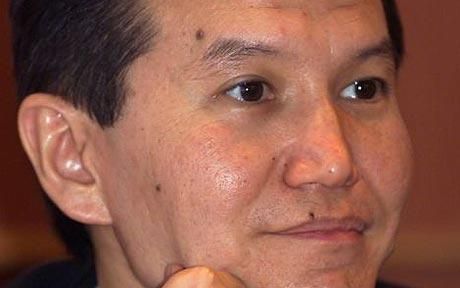
Kirsan Ilyumzhinov, the President of the republic of Kalmykia, made the extraordinary comments on Russian state TV last week, claiming he spent several hours in the company of aliens in 1997.
He said he was relaxing at his Moscow apartment when he heard his balcony door being opened and someone calling him. "I went there and looked. There was a semi-transparent pipe. I went into this pipe and saw people in yellow spacesuits."
He claims to have communicated with the aliens/humanoids through brain waves. "I was shown around their spaceship," he said with no apparent sign of irony, adding that the aliens explained that they were collecting samples. "I would probably have not believed this if there had not been three witnesses – these were my driver, a minister and my assistant." >>> Andrew Osborn in Moscow | Thursday, May 06, 2010
Euro-Krise: Experte empfiehlt "Kern-Euro" als Ausweg
DIE PRESSE: Der Euro ist am Donnerstag mit einem Kurs von 1,2738 Dollar auf den tiefsten Stand seit März 2009 gefallen. Ein Experte empfiehlt einen radikalen Schritt. Er schlägt einen "nordischen Euro" der stabilen Länder vor.
Der Euro ist angesichts der Griechenland-Krise schwer unter Druck geraten. Am Donnerstag fiel die europäische Gemeinschaftswährung auf bis zu 1,2738 Dollar und damit den tiefsten Stand seit März 2009. Ein Kurs von 1,20 Dollar ist in naher Zukunft durchaus realistisch. "Bis zum Jahresende könnte ich mir eine Parität zum Dollar vorstellen, da die Märkte ja bekanntlich gern übertreiben", beschreibt der Präsident des deutschen Exportverbands, Anton Börner, den schlimmsten Fall. Ein Euro wäre dann nur noch einen Dollar wert, berichtet "Spiegel Online".
Das eigentliche Drama des Kursverfalls liegt laut dem Online-Portal aber woanders: "Die Finanzmärkte trauen den Europäern schlicht nicht mehr zu, dass sie die Schuldenkrise in den Griff bekommen", sagt Manfred Jäger, Finanzmarktexperte beim Kölner Institut der Deutschen Wirtschaft.
Experten sehen die Glaubwürdigkeit der Europäischen Zentralbank zunehmend gefährdet, wie DiePresse.com am Dienstag berichtete. Denn die Notenbank verzichtet für Griechenland auf ihre eigenen strengen Bonitätsregeln und akzeptiert griechische Ramschanleihen. "Die EZB hat eines ihrer hehren Prinzipien über Bord geworfen. Das zeigt, dass die Lage sehr, sehr ernst ist", sagte dazu Thorsten Polleit, Chefvolkswirt von Barclays Capital. >>> Ag./Red. | Donnerstag, 06. Mai 2010
In Britain, It Feels Like Election Day 1974
THE GLOBE AND MAIL: With 40 per cent of voters undecided and the resurgent third-place Liberals likely to keep either the Conservatives or Labour from a majority, PM Gordon Brown faces a frighteningly familiar situation
The British Prime Minister, devastated by an economic meltdown that has left his country swimming in debt, scarred by rising fuel prices and a series of strikes, has found his re-election hopes sideswiped by a young, charismatic Liberal whose third-place party has suddenly risen to big-party popularity levels. The Prime Minister, desperate to hold onto power, prepares to form a coalition government with the Liberals even if his party comes in second.
That was Britain in 1974 – an amazingly familiar scenario that terrifies British voters as they go to the polls Thursday.
With almost 40 per cent of voters undecided on election eve and a resurgent third-place Liberal Democratic Party likely to prevent either the Conservatives or Labour from winning a majority, there is a good chance that Friday morning will be a jarring repeat of 1974.
And voters know how that story goes. The Liberal Leader, in exchange for backing the minority government, demands a referendum to switch to a proportional-representation voting system, which would prevent the big parties from ever having majorities again. The pact collapses after days, there’s another election, followed by five years of disarray and misery.
Back then, it was Tory Prime Minster Edward Heath who tried to turn his second-place finish into a coalition government, failed, and punted the country into the long grass. Liberal Leader Jeremy Thorpe turned his centrist party into coalition kingmakers – or spoilers, depending on your perspective – for the rest of the 1970s, an era that saw Britain spiral into near-total economic shutdown, unmanageable debt, and a Greek-style bailout from the International Monetary fund. >>> Doug Saunders | Published Wednesday, May 05, 2010; Updated Thursday, May 06, 2010
Gulf of Mexico Oil Slick: Sarah Palin Fuels Anti-British Sentiment
THE TELEGRAPH: Sarah Palin has fuelled growing anti-British sentiment over the Gulf of Mexico oil rig disaster by saying "foreign" oil companies like BP were not be trusted.
The former Alaska governor and potential 2012 presidential candidate attacked the British oil giant over the recent Deepwater Horizon spill and a previous one in her state in 2006.
Her comments came despite the fact her husband Todd Palin worked for BP for 18 years, as a production supervisor, and only left the company last year to spend more time with his family.
Mrs Palin urged those in the Gulf of Mexico to "learn from Alaska's lesson with foreign oil companies." She added: "Don't naively trust – verify." As an oil slick the size of Luxembourg loomed off the US coast her intervention added to growing anger at BP among environmentalists and those who face losing their livelihoods. >>> Nick Allen in Louisiana | Thursday, May 06, 2010
Greek Crisis: Tourists Told to 'Exercise Extreme Caution'
THE TELEGRAPH: Tourists visiting Greece have been warned to exercise "extreme caution" as the country's parliament prepares to vote on austerity cuts to tackle the financial crisis.
The Foreign Office advice came a day after three bank workers died in a petrol bomb attack as demonstrations against the hefty cuts turned violent.
President Karolos Papoulias warned that Greece was on the "brink of the abyss" hours before the parliament was due to vote on the austerity measures.
Bank workers went on strike on Thursday to protest the fatal attack that left three dead in the worst clashes Athens has seen since the country disclosed that it had covered up a black hole of £272 billion in debt.
Mr Papoulias's government has promised to carry out strict spending cuts - a condition of a 110 billion euro (£95 billion) bailout by the European Union and the International Monetary Fund, which is aimed at preventing the spread of the debt crisis throughout Europe.
The Greek parliament will vote on Thursday night on proposed wage freezes, pension cuts and tax rises. >>> | Thursday, May 06, 2010
This summary is not available. Please
click here to view the post.
Leading Conservative Claims Muslim Politicians Lack 'Principles'
THE TELEGRAPH: Baroness Warsi under fire for comments made at dinner in honour of the visiting president of Pakistan-controlled Kashmir
A leading member of the Conservative shadow cabinet has argued against more Muslims going into Parliament because they lack "principles", a video obtained by The Independent reveals.
Baroness Warsi, the party's spokeswoman for community cohesion, was recorded saying that she did not want to see more Muslim MPs or Muslim Lords because "Muslims that go to Parliament don't have 'asool'". Asool is Urdu for "morals" or "principles".
A Conservative spokesperson said her remarks were take out of context. They said the word "asool" should have been translated as "Muslim principles" and wasn’t intended to imply that Muslim parliamentarians were immoral.
They also acknowledged that "this may not have been the best way of making her point" but insisted that she had been taken out of context.
"She was saying you shouldn't vote for a Muslim MP on the basis of their Muslim principle, you should vote for an MP based on their ability to represent the community regardless of their ethnic tick box." >>> Billy Kenber | Thursday, May 06, 2010
Comment Merkel et Sarkozy veulent sauver l'euro
LE FIGARO: Dans une lettre commune adressée aux présidents de la Commission européenne et de l'Union européenne, la chancelière allemande et le chef de l'Etat souhaitent «renforcer la surveillance budgétaire».
Angela Merkel et Nicolas Sarkozy reprennent l'initiative à la veille du Conseil européen des chefs d'Etat et de gouvernement. La chancelière allemande et le chef de l'Etat français ont appelé jeudi dans une lettre commune à «aller plus loin» et à «tirer les leçons de la crise» grecque afin «d'éviter qu'une crise de cette nature ne se reproduise».
Dans ce texte adressé à Herman Van Rompuy, président de l'Union européenne, et à Jose Manuel Barroso, président de la Commission européenne, ils détaillent comment «renforcer la gouvernance économique». L'enjeu ? «Préserver les acquis de la création de l'euro».
Les deux dirigeants réclament une véritable remise à plat du fonctionnement de la zone euro. D'abord sur la réforme du pacte de stabilité et de croissance qui a fait la preuve de son inefficacité : «Renforcement de la surveillance budgétaire», «élargissement» des critères de Maastricht «aux questions structurelles et de compétitivité» mais aussi «un cadre robuste pour la résolution des crises». >>> Par Guillaume Guichard | Jeudi 06 Mai 2010
Griechenland Desaster: Merkel und Sarkozy wollen die Eurozone retten
WELT ONLINE: In einem gemeinsam Brief an EU-Kommissionschef Barroso, der WELT ONLINE vorliegt, drängen Kanzlerin Merkel und Frankreichs Präsident Sarkozy auf radikale Maßnahmen zum Schutz der Eurozone. Helfen soll dabei der von Frankreich lange geforderte Ausbau einer europäischen Wirtschaftsregierung.
Unmittelbar vor dem EU-Gipfel am Freitag in Brüssel haben Kanzlerin Angela Merkel und Frankreichs Staatspräsident Nicolas Sarkozy die Initiative an sich gerissen: Nach dem Griechenland-Desaster wollen sie die Eurozone stabiler und krisenfester machen. >>> Von Christoph B. Schilz | Donnerstag, 06. Mai 2010
Greece Fuels Fears of Contagion in U.S. : Crisis Would Likely Spread in Europe Before Crossing Atlantic, Economists Say; Wary Investors Monitor Credit Markets
THE WALL STREET JOURNAL: Investors and policymakers are starting to worry that the economic crisis in Greece could cross the Atlantic and undermine the U.S. economic recovery, in the same way that U.S. housing woes in 2008 battered Europe.
"What we have seen is that contagion"—economist-speak for a spreading crisis—"has gone global," says Harvard University economist Jeffrey Frankel.
Early credit-market indicators of contagion to the U.S. aren't yet flashing red, but investors are keeping a wary eye on them. "This is like we've agitated a colony of prairie dogs, and everybody is looking out of their hole to see what's going on," said Howard Simons, bond strategist at Bianco Research in Chicago. "But it's no crisis, yet." >>> Bob Davis and Mark Gongloff | Wednesday, May 05, 2010
Nigerian President Dead at 58
Faisal Shahzad Met Taliban
UK Electoral System 101
From New York to Al-Qaeda
Merkel Plea to Save Europe as Contagion Hits Iberia
THE TELEGRAPH: Europe's debt markets are flashing danger signals after spreads on Iberian debt reached the highest level since the launch of the euro and investors rushed for safety into German notes, prompting warnings from German Chancellor Angela Merkel that the European Project itself is at risk.
"Contagion pressures continue to rage unabated," said Marco Annunziata, Europe economist at UniCredit. "The flames have rushed through the firewall of the IMF/EU programme for Greece and now threaten other peripheral countries."
"While the sell-off on sovereign bond markets so far remains discriminating, the risk that it might suddenly mutate into irrational panic can no longer be ignored. Eurozone policymakers need to take further steps quickly," he said.
Mrs Merkel made a moving plea to the Bundestag to support the €110bn (£93bn) rescue for Greece. "Nothing less than the future of Europe is at stake. The happy tale of German history since World War Two and our emergence as a free, united, and strong country cannot be separated from the European Union. We owe decades of peace and prosperity to the understanding of our neighbours," she said.
"Europe today is looking to Germany. As the strongest economy in Europe, Germany has a special responsibility and it takes this responsibility to heart.
"Immediate help is needed to ensure the financial stability of the eurozone. This must be done to avoid a chain-reaction to the European and international financial system, and contagion to other eurozone states. There is no alternative."
Belated support from Berlin has failed to stop the crisis escalating. Spreads on Portuguese 10-year bonds soared to a post-EMU record of 290 basis points above Bunds; Spanish spreads rose to 131. Bank shares in Madrid slid again, with falls of 4.9pc for Banco Popular, 3.6pc for BBVA, and 2.5pc for Santander[.]
Bundesbank chief Axel Weber said there was a "grave threat of contagion", echoing the formula now being used by German officials to justify the rescue. Berlin hopes the wording will head off a legal challenge at the constititional court. >>> Ambrose Evans-Pritchard, International Business Editor | Wednesday, May 05, 2010
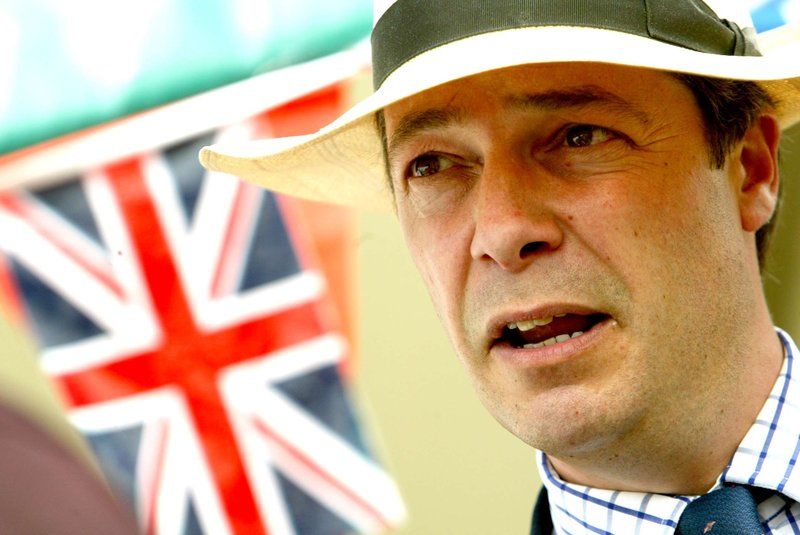
Nigel Farage. Photo: Google Images
Ukip's Nigel Farage Injured in Plane Crash
THE TELEGRAPH: Nigel Farage, who is contesting Speaker John Bercow’s seat in Buckingham, has been injured in a light plane crash.
Mr Farage was taken to hospital with non life-threatening injuries following the crash at Hinton-in-the-Hedges airfield, near Brackley in Northamptonshire.
The light aircraft was pulling a Ukip banner and it is believed it may have been caught up in the engine. The banner reportedly carried the slogan "Vote for your country - Vote Ukip".
The plane went down just after 8am, also injuring the pilot, who reportedly had to be cut out the cockpit and was taken to Walsgrave Hospital in Coventry.
Mr Farage was taken to Horton General Hospital in Banbury. A Ukip spokesman said: "We've had unconfirmed reports that either the banner got snagged up or there were cross-winds and it was unfamiliar airfield to the pilot, who had to be cut out of the plane. >>> Ben Leach | Thursday, May 06, 2010
Mumbai Attack Gunman Sentenced to Death
THE TELEGRAPH: The only gunman to survive the 2008 terrorist attacks in Mumbai has been sentenced to death by an Indian court.
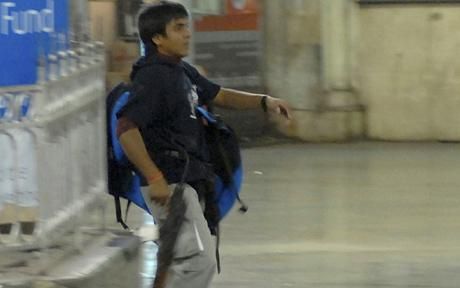
Mohammed Ajmal Amir Kasab, a 22-year-old Pakistani citizen, was found guilty on Monday of 86 charges, including waging war against India, murder and terrorism offences for his role in the attack on India's financial capital that left 166 dead.
Judge M.L. Tahaliyani said the man described by prosecutors as a "killing machine" should be hanged.
"I don't find any case for a lesser punishment than death in the case of waging war against India, murder and terrorist acts," the judge said. >>> | Thursday, May 06, 2010