Monday, November 30, 2009

Vote anti-minarets : Après le vote, la facture diplomatique

LE TEMPS: Arrivée en début de matinée à Bruxelles pour un conseil des ministres de la Justice et des Affaires intérieures de l’UE, Eveline Widmer-Schlumpf a reconnu l’impact négatif de cette votation

Après le choc, le fossé et la facture diplomatique. Arrivée en début de matinée à Bruxelles pour assister au conseil mixte (avec la Norvège, le Liechtenstein et l’Islande) de la réunion des ministres de la Justice et des Affaires intérieures de l’Union européenne, Eveline Widmer-Schlumpf a très vite fait face à une salve de questions: «Ma priorité sera d’expliquer que cette votation n’est pas contre la liberté de religion, mais contre les minarets dans les lieux de culte» a commenté la conseillère fédérale au micro de la Radio suisse romande avant d’entamer sa réunion avec ses homologues européens. Tout en admettant l’évidence: «Ce résultat n’est pas un signe très bon pour la Suisse. Il me faudra expliquer que l’on respecte la liberté de la foi». >>> Richard Werly, Bruxelles | Lundi 30 Novembre 2009

LE TEMPS: Minarets : A l’étranger, des réactions contrastées: En Europe c’est la couleur politique qui dicte les réactions à l’interdiction de construire de nouveaux minarets, votée dimanche par les Suisses. La droite dure est généralement satisfaite, quand les sociaux-démocrates dénoncent ostracisme et provocation >>> Le Temps avec agences | Lundi 30 Novembre 2009
Dutch Call for Anti-minaret Referendum

RADIO NETHERLANDS WORLDWIDE: Dutch MP Geert Wilders' Freedom Party has said it wants a referendum on the building of minarets similar to the one held in Switzerland on Sunday . Mr Wilders expects the Dutch to ban new minarets just like a 57.5 percent majority of Swiss did.

The referendum result is hailed as a breakthrough by the opposition MP. "It's the first time that people in Europe have stood up to a form of Islamisation."

Other xenophobic nationalist parties in Europe are taking a similar line to the Netherlands' Freedom Party. Mario Borghezio, a Euro-MP for Italy's Northern League (Lega Nord) called for a referendum in Italy, saying "The flag of a courageous Switzerland which wants to remain Christian is flying over a near-Islamised Europe."


Switzerland is home to 6 million Christians and 400,000 Muslims. There are currently 200 mosques in the Alpine country, but only four minarets. >>> | Monday, November 30, 2009
Swiss Vote to Ban Minarets

Von der islamischen Blickwinkel: Stellungnahme zur Annahme der Minarettverbotsinitiative

Bild: VAM

VERBAND AARGAUER MUSLIME: Die islamischen Nationalverbände in der Schweiz bedauern die Annahme der Minarettverbotsinitiative zutiefst. Den Initianten ist leider gelungen mit ihrer verzerrenden Propaganda, Ängste bei einer Mehrheit der Stimmenden zu mobilisieren, welche nichts mit dem Islam in der Schweiz zu tun haben.

Die hier lebenden Muslime bekennen sich zur Schweizer Verfassung und Rechtsordnung. Umso grösser ist ihr Befremden, dass nun ihre Verfassungsrechte verletzt werden sollen. Das Verbot, ihre Gotteshäuser mit einem Minarett zu schmücken, verstösst unter anderem gegen das Grundrecht der Religionsfreiheit.

Den Initianten dieses Minarettverbots ging es vom Anfang an und in erster Linie nicht um das symbolische sakrale Bauwerk. Sie haben in der Abstimmungskampagne alles daran getan, um den Islam mit Gerüchten und Halbwahrheiten, in dem sie Schreckensbilder aus dem Ausland in ein Licht stellten, das gar nichts mit dem realen Leben der muslimischen Familie in der Schweiz zu tun hat. Durch die Initiative haben viele Muslime das Gefühl, dass ihr Glaube und ihre Daseinsberechtigung in der Schweiz infrage gestellt wurden. Das hat bei ihnen Sorgen und Ängste ausgelöst, die nun durch das Abstimmungsergebnis noch verstärkt worden sind. Die negativen gesellschaftlichen und juristischen Auswirkungen können heute noch nicht abgeschätzt werden.

Die muslimischen Verbände stehen trotz allem zur Schweiz und ihren Institutionen. Dankbar nehmen sie zur Kenntnis, dass der Bundesrat, das Parlament, die meisten Parteien und unsere Schwesterreligionen Judentum und Christentum sich für das Grundrecht der Religionsfreiheit und den Schutz der Minderheit eingesetzt und die Minarettverbotsinitiative abgelehnt haben. Sie und wir wissen, dass eine Ausgrenzung der Muslime dem gesellschaftlichen Frieden und dem Zusammenleben der vielfältigen Kulturen der Schweiz nicht dient.

Die muslimischen Verbände erkennen auch, dass nun ihre Verantwortung noch gewachsen ist, auf legitime Befürchtungen in der Schweizer Bevölkerung einzugehen und zu antworten. Wir müssen unsere Öffentlichkeitsarbeit verstärken, um Missverständnissen und Vorurteilen über den Islam und die Muslime zu begegnen. Wir laden darum alle Kreise ein, bei anstehenden Problemen gemeinsam mit uns nach konstruktiven Lösungen zu suchen. Unser Anliegen ist es, ein friedliches Zusammenleben zu fördern im Respekt voreinander und entsprechend der menschlichen Würde. [Quelle: VAM]

Stellungnahme Zur Volksabstimmung «Gegen den Bau von Minaretten» vom 29. November 2009

Baden, 29. November 2009

VERBAND AARGAUER MUSLIME (VAM): Mit grosser Enttäuschung nehmen wir zur Kenntnis, dass die Anti-Minarett-Initiative vom Schweizer Stimmvolk deutlich angenommen wurde. Es ist nun leider eine Tatsache, dass die Musliminnen und Muslime in der Schweiz als einzige Religionsgemeinschaft mit einem Sonderverbot bedacht werden, und das erst noch in der Bundesverfassung.

Die Musliminnen und Muslime im Aargau möchten aber auch all jenen Stimmbürgerinnen und Stimmbürgern, welche sich trotz aller Unbill von Seiten der Initiativ-Befürworter an der Urne zu Religionsfreiheit und –frieden bekannt haben, ganz herzlich danken. Auch sie bekennen sich zur Religionsfreiheit und dem Schweizer Rechtstaat und wollen einen positiven Beitrag für ein friedliches Miteinander leisten.

Obwohl sich nun eine gewisse Enttäuschung unter den Musliminnen und Muslimen breit machen wird, möchten wir an dieser Stelle betonen, dass wir uns der Probleme bewusst sind, welche die Integration ethnischer und religiöser Minderheiten mit sich bringt und möchten daher unsere Bereitschaft bekräftigen, mit allen interessierten Kreisen die vorhandenen Probleme ernsthaft zu diskutieren und gemeinsam Lösungen zu suchen.

Wir hoffen, dass die Initiativ-Befürworter auch ernsthaft daran interessiert sind, die Probleme zu lösen und daher auf dieses Angebot eingehen und nicht mit weiteren Verbotsinitiativen zur Marginalisierung der Musliminnen und Muslime beitragen werden.

Mit freundlichen Grüssen

Hamit Daran

Sekretär und Pressesprecher VAM
[Quelle: VAM]

Islam.ch >>>
The Man Who Smuggled Himself into Auschwitz

More than a million people died in Auschwitz. Photo: BBC

BBC: When millions would have done anything to get out, one remarkable British soldier smuggled himself into Auschwitz to witness the horror so he could tell others the truth.

Denis Avey is a remarkable man by any measure. A courageous and determined soldier in World War II, he was captured by the Germans and imprisoned in a camp connected to the Germans' largest concentration camp, Auschwitz.

But his actions while in the camp - which he has never spoken about until now - are truly extraordinary. When millions would have done anything to get out, Mr Avey repeatedly smuggled himself into the camp.

Now 91 and living in Derbyshire, he says he wanted to witness what was going on inside and find out the truth about the gas chambers, so he could tell others. He knows he took "a hell of a chance".

"When you think about it in today's environment it is ludicrous, absolutely ludicrous," he says.

"You wouldn't think anyone would think or do that, but that is how I was. I had red hair and a temperament to match. Nothing would stop me."

He arranged to swap for one night at a time with a Jewish inmate he had come to trust. He exchanged his uniform for the filthy, stripy garments the man had to wear. For the Auschwitz inmate it meant valuable food and rest in the British camp, while for Denis it was a chance to gather facts on the inside. >>> Rob Broomby | Sunday, November 29, 2009
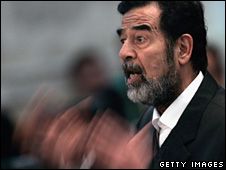
Mystery Tribute Channel to Saddam Hussein Launched

BBC: A television channel dedicated to former Iraqi leader Saddam Hussein has appeared on Arab satellite networks.

Its launch came on the third anniversary, on the Islamic calendar, of the former president's execution.

It is not clear who is behind the channel which broadcasts the speeches, images and even poetry of Saddam Hussein, backed with patriotic music.

It is broadcast from outside Iraq and some analysts suspect his former political supporters of bankrolling it.

Saddam Hussein's family and some exiled members of the Baath party he once headed have denied any connection to it.

The Associated Press news agency said it contacted a man called Mohammed Jarboua who claimed to be the channel's chairman, in the Syrian capital Damascus. However, his claim can not be verified. 'Glorification of a tyrant' >>> | Monday, November 30, 2009
Les sociétés européennes crispées face à l'enracinement de l'islam

LE MONDE: Frontalement, les Suisses ont répondu, dimanche 29 novembre, à des questions qui taraudent, à des degrés divers, l'ensemble des pays européens. L'islam est-il compatible avec les sociétés européennes ? Peut-il devenir un élément des identités nationales qui ont forgé le continent ?

En approuvant l'interdiction de construire des minarets, les Suisses ont répondu "non" et il n'est pas certain que d'autres, à leur place, auraient voté différemment. Car même si c'est "l'islamisme" qu'ils prétendent combattre, c'est en réalité la présence même de l'islam sur des terres chrétiennes que les groupes politiques les plus actifs mettent en question.

Le parti flamand d'extrême droite, en Belgique, et le Parti pour la liberté, aux Pays-Bas, ne s'y sont pas trompés : dès dimanche, leurs responsables ont annoncé leur intention de déposer des propositions visant à interdire la construction de minarets. Il s'agit, pour le député flamand Filip Dewinter, de donner aux musulmans un "signal qu'ils doivent s'adapter à notre manière de vivre et non l'inverse".

En France, la vice-présidente du Front national, Marine Le Pen, ne dit pas autre chose. Se félicitant du vote suisse, elle a demandé aux "élites de cesser de nier les aspirations et les craintes des peuples européens, qui rejettent les signes ostentatoires des groupes politico-religieux musulmans, souvent à la limite de la provocation".

"Signes ostentatoires" : le mot est lâché. Car si l'image de l'islam, dégradée par la violence de l'actualité internationale depuis une décennie, explique en partie les soupçons d'extrémisme accolés aux musulmans à travers le monde, elle ne suffit pas à justifier le rejet de l'islam en Europe. C'est indéniablement la visibilité des musulmans, qui, dans les sociétés européennes, pose problème. >>> Stéphanie Le Bars | Lundi 30 Novembre 2009
As the Swiss Say No to Minarets, I Vote We Have Many More Referendums

THE TELEGRAPH: Why is making decisions for the nation a right of the government and not one of the people, asks Melanie McDonagh.

The Swiss have spoken and, oh dear, the government isn't best pleased. Against all the approved advice, from churches, politicians and business, the people have voted to ban minarets.

The outcome of yesterday's referendum was entirely unexpected, given that Swiss manufacturers, pallid at the thought of Abu Dhabi saying no to Swatches, had lobbied vigorously against a ban. The government wasn't keen on reprisals from excitable Islamists. But notwithstanding all the high-level advice, the people were having none of it.

Actually, the notion of building minarets in Switzerland is pretty redundant. They couldn't be used to call the faithful to prayer because noise regulations, this being Switzerland, don't permit it. Small Islamic communities all over Switzerland just wanted to make their presence felt. On the skyline.

It was interesting, the nature of the coalition against the minarets. The campaign was led by the populist Swiss People's Party, but it was supported, unexpectedly, by Swiss feminists because they have issues with Islam's treatment of women. And – who knows – because of the phallic shape of the structures concerned. In fact, the most notable thing about the poll was that, in favour of the ban, women outnumbered men.

Personally, I blame the Turkish prime minister, Tayyip Erdogan. The opponents of minarets hardly needed to make an argument; all they needed to do was quote, out of context, his pronouncement that minarets are the bayonets of Islam and the job was done. Nice one, Mr E.

Actually, I felt rather cheered when I heard that the Swiss had voted as they did, for the simple and sufficient reason that I like it when people don't do what they're told by politicians. I was ecstatic when the Danes voted against the Nice Treaty; I felt a kind of subversive thrill when Ireland turned against the Lisbon Treaty, though it did vote the approved way second time round.

Referendums are brilliant, precisely because they give people a chance to consider what everyone says they ought to think and do, and then do just what they want anyway. It's the nearest we get nowadays to the full-on democracy of Athens, unless you count reality television.

The sad thing, of course, is that it couldn't happen here. Whenever anyone suggests having more referendums, politicians say, in a grand way: nope, we are a parliamentary democracy. Finis. >>> Melanie McDonagh | Monday, November 30, 2009
Meinung aus Berlin: Sieg der Angst

BERLINER ZEITUNG: Damit hatte kaum jemand gerechnet. Die Schweizer haben sich in ihrer Mehrheit dafür ausgesprochen, den Bau von Minaretten zu verbieten - und dies, obwohl die Regierung, alle großen Parteien außer der rechtspopulistischen SVP, die beiden Landeskirchen, die jüdische Gemeinde, die Gewerkschaften und die Unternehmer sich einmütig gegen ein Verbot ausgesprochen hatten. Es ist eine herbe Niederlage für die Regierung, und das Parlament scheint nicht mehr jene zu vertreten, die es gewählt haben.

Doch um Religion ging es nur vordergründig. Nichts zeigt dies deutlicher als ein Satz auf der Website der Volksinitiative "Für ein Verbot von Minaretten". Wörtlich heißt es dort: "Wer Minarette baut, will hier bleiben." Genau so ist es. Und man darf den Initiatoren im Umkehrschluss getrost unterstellen: Sie wollen, dass die Muslime gehen. Und wenn man sie schon nicht abschieben kann, dann sollen sie wenigstens Bürger zweiter Klasse sein - mit weniger Rechten als Christen. Ein Verstoß gegen das verfassungsmäßige Diskriminierungsverbot.

Aber es geht nicht um Muslime, sondern um Ausländer generell. Sprüche wie "Keine Steuergelder für Koranschulen!" oder "Das Minarett ist die Speerspitze der Scharia" kaschieren dies bloß. Islam und Terror scheinen seit dem 11. September 2001 wesensverwandt. Deshalb eignet sich der Muslim als Sündenbock. In der Schweiz macht der Anteil der Immigranten an der Gesamtbevölkerung inzwischen 21 Prozent aus. Die Ängste vor "Überfremdung" sind da, man muss sie ernst nehmen. Just das aber tun Rechtspopulisten nicht. Wer landesweit Plakate klebt, auf denen neben einer tief verschleierten Frau Minarette als Raketen dargestellt werden, schürt die Ängste, spielt mit ihnen, instrumentalisiert sie für andere Zwecke und behindert eine sachliche Diskussion objektiv vorhandener Probleme. Wer insinuiert, dem Unternehmerverband gehe es nur um die Absatzmärkte in der islamischen Welt, und gleichzeitig weiß, dass die Schweiz die Ausländer braucht, um die Wirtschaft am Laufen zu halten und die Renten zu sichern, betreibt billigen Populismus. >>> Thomas Schmid | Montag, 30. November 2009

BNP: Switzerland Takes Stand against Islamic Colonisation >>>
Minarett-Verbot schlägt hohe Wellen

WIENER ZEITUNG: Überraschung, Unverständnis und Enttäuschung in arabischen Medien / Deutsche Muslime bedauerten das Minarett-Verbot in der Schweiz

Bern. Das Verbot von Minaretten in der Schweiz hat die islamische Welt überrascht und schockiert. Gewalttätige Reaktionen sind jedoch nach Ansicht von Babacar Ba, Botschafter der Organisation der islamischen Konferenz (OCI), nicht zu erwarten.

Die Schweizer Regierung habe klar gegen die Initiative Stellung genommen. Das Ansehen der Schweiz in den islamischen Ländern leide aber, sagte Ba am Sonntagabend der Nachrichtenagentur SDA.

Und den Fundamentalisten könnte das Abstimmungsergebnis neue Türen öffnen. Die OCI appelliere deshalb an die Wachsamkeit. Die Schweizer Muslime könnten sich bedroht fühlen. Eine Diskussion über die Rolle der Muslime in der Schweiz sei deshalb nötig.

"Die Schweiz hat nicht rassistisch abgestimmt. Es war wohl vielmehr blanker Egoismus und die Sorge, dass jemand des Volkes Ruhe stören könnte", sagte Anouar Abou Eisheh, Rechtsprofessor an der Al-Quds-Universität in Ost-Jerusalem. Das Abstimmungergebnis liefere den muslimischen Extremisten Argumente für ihren Kampf gegen den Westen. Für sie sei der Entscheid eine frontale Attacke gegen den Islam und seine Symbole. Er hoffe, dass das Beispiel in Europa nicht Schule mache.

Auch deutsche Muslime bedauerten das Minarett-Verbot in der Schweiz. Für den Vorsitzenden der Türkischen Gemeinde in Deutschland zeigt das Ja, dass die europäischen Gesellschaften noch nicht ganz reif für die Einwanderung seien. Gleichzeitig äußerte er grundsätzliche Zweifel, ob derartige Abstimmungen über religiöse Fragen überhaupt organisiert werden sollten. Über Religionsfreiheit könne ebenso wenig abgestimmt werden wie über Meinungsfreiheit. >>> APA | Montag, 30. November 2009
Kommt jetzt die grosse Islam-Debatte?

BLICK.ch: Minarett? Nein danke! Klare Abstimmung, unklare Folgen. Polit-Bern reibt sich die Augen.

Die beiden Väter der siegreichen Initiative: Die SVP-Nationalräte Ulrich Schlüer und Walter Wobmann schütteln sich die Hand. Bild: Blick.ch

Paukenschlag zum ersten Advent: Mit unerwartet deutlichen 57,5 Prozent haben die Schweizer der Initiative «Gegen den Bau von Minaretten» zugestimmt – gegen die Empfehlung von Parlament, Bundesrat, aller Parteien ausser der SVP und den Kirchen.

«Das Verbot ist direkt anwendbar und tritt ab sofort in Kraft», erklärte Justizministerin Eveline Widmer-Schlumpf. Alle Minarette, die heute noch keine rechtskräftige Bewilligung hätten, dürften nicht mehr gebaut werden.

«Das Verbot widerspricht der Europäischen Menschenrechtskonvention», warnt aber Widmer-Schlumpf. Ein Bauverbot könne deshalb an den Europäischen Menschenrechtshof weitergezogen werden. Erhält die Beschwerde recht, gibt es laut Widmer-Schlumpf nur zwei Möglichkeiten: «Das Verbot müsste erneut vors Volk, oder wir müssten aus dem Europarat austreten.»

Die Väter der Initiative beeindruckt Widmer-Schlumpf damit wenig: «Wir erwarten, dass die Regierung jetzt nicht via ausländische Gerichte das Resultat hintertreibt.» Sie freuen sich über das «fantastische Resultat» >>> Von Nicole Freudiger, Simon Spengler und Hannes Heldstab | Montag, 30. November 2009

BLICK.ch: Kommentar von Blick-Politik-Chef Clemens Studer: Minarette waren nicht das Problem >>> | Montag, 30. November 2009

Walter Wobmann: Ihr Volksvertreter im Bundeshaus >>>

TIMES ONLINE: Balderdash from The Times >>>

My COMMENT on The Times leader, which, of course, will not be printed!

Rarely have I ever read an article, still less a leader, which is based on such woeful ignorance. The writer misunderstands the nature of Islam and equally disturbingly misunderstands the nature of democracy too.

The Swiss enjoy democratic rights that other Europeans could only dream of, and that is because of their direct democracy. Their direct democracy allows the Swiss to call for a referendum on any issue if enough signatures can be collected from Swiss citizens. (200,000?).

In this case, enough signatures could be collected; and the referendum was held. The Swiss voted on it, and this is the result. The people have spoken. Basta!

It's no use talking up democracy then decrying it when the people give you an answer which you don't want to hear.

I know Switzerland very well indeed. I have lived there for many years. I also know Schwyzertüütsch and German (and French), so I know something about the mentality of the people. Let me assure you that minarets do not sit comfortably in Switzerland, no more than Islam does. Yet, in fairness to the Swiss, Muslims have been welcomed. But clearly there are limits. The minaret is one such limit.

If Muslims continue to live in Switzerland in peace and tranquility, I feel sure there will be no problems. But the Swiss have done what all other Western politicians should have done long ago: They have said you are welcome to work here, as long as you abide by our rules. How can sensible people argue with that?
– © Mark


TIMES ONLINE: More Balderdash from The Times >>>

Here’s my comment which probably won’t get printed:

This article is nothing but balderdash. Hatred of the Swiss. Contempt for democracy. Shame on the 'The Times' for printing such rubbish! – © Mark

VOA: Kouchner Talks Krap on Swiss Referendum >>>

THE TELEGRAPH: Tosh! This Time from The Telegraph: What can Muslims teach the Swiss about tolerance? Churches are totally banned in Saudi Arabia! The Swiss haven’t banned mosques, just minarets. As for the Vatican… it had better remain silent, for there will be no Vatican if Islam gets too strong in Europe >>> | Monday, November 30, 2009
Nick Griffin to Attend Copenhagen Summit

Sunday, November 29, 2009

La droite dure jubile : Au tour des Autrichiens de vouloir interdire les minarets

20MINUTES.ch: Plusieurs partis européens de droite ou d'extrême-droite ont salué dimanche l'acceptation en Suisse de l'initiative contre les minarets.

Ils y voient une victoire contre «l'islamisme radical» et contre les «élites» qui éludent le problème, ainsi qu'un exemple pour leurs propres pays.

L'extrême-droite autrichienne est satisfaite. Le chef du Parti de la liberté (FPÖ), Heinz-Christian Strache, a salué «un signal clair contre l'islamisme radical».

Un avis partagé par le BZÖ, le parti de feu Jörg Haider. Le vote des Suisses «confirme» une décision similaire prise il y a deux ans par la Carinthie, s'est félicité le gouverneur de ce Land alpestre, Gerhard Dörfler (BZÖ). La liberté de religion ne doit pas permettre «que des édifices non chrétiens (...) soient bâtis», a-t-il dit.

Le secrétaire général du BZÖ, Martin Strulz, veut désormais que la loi sur l'aménagement du territoire soit adaptée pour interdire la construction de minarets dans toute l'Autriche. A ses yeux, l'acceptation de l'initiative helvétique montre «très clairement» que la population ne veut pas des minarets.

De nombreuses réactions positives sont également provenues d'Italie. «Même la patiente Suisse s'est fatiguée de l'expansion de l'immigration et de l'islam», a dit Maurizio Gasparri, président du groupe du Peuple de la Liberté (PDL, le parti de Silvio Berlusconi) au Sénat italien.

«En Italie aussi, nous devons continuer la politique de rigueur. Nous en avons pleinement le droit», a ajouté M. Gasparri, issu du parti post-fasciste Alliance nationale.

La croix comme étendard

Même son de cloche chez le ministre italien de la simplification administrative, Roberto Calderoli, membre du parti populiste et xénophobe de la Ligue du Nord. «De la Suisse nous parvient un signal clair: oui aux clochers, non aux minarets», a-t-il déclaré à l'agence ANSA.

Selon lui, ce choix montre «d'une part le respect de la liberté religieuse et d'autre part la nécessité aux aspects politiques et à la propagande liés à l'islam». «C'est une chose à laquelle nous devrions réfléchir nous aussi», a ajouté M. Calderoli, qui s'était signalé lors de la crise des caricatures de Mahomet en arborant des T-shirts reproduisant un de ces dessins.

Son collègue de parti Roberto Castelli, sénateur et vice-ministre des infrastructures, va plus loin, en demandant que la croix soit désormais ajoutée sur le drapeau italien. L'UMP s'interroge >>> ats | Dimanche 29 Novembre 2009
Anti-Dhimmitude in Switzerland! Swiss Voters Back Ban on Minarets

With this one referendum, the Swiss have shown more spunk than the rest of the West put together! Bravo! – © Mark

BBC: Swiss voters have supported a referendum proposal to ban the building of minarets, official results show.

More than 57% of voters and 22 out of 26 cantons - or provinces - voted in favour of the ban.

The proposal had been put forward by the Swiss People's Party, (SVP), the largest party in parliament, which says minarets are a sign of Islamisation.

The government opposed the ban, saying it would harm Switzerland's image, particularly in the Muslim world.

The BBC's Imogen Foulkes, in Bern, says the surprise result is very bad news for the Swiss government which also fears unrest among the Muslim community.

Our correspondent says voters worried about rising immigration - and with it the rise of Islam - have ignored the government's advice.

"The Federal Council (government) respects this decision. Consequently the construction of new minarets in Switzerland is no longer permitted," said the government in a statement, quoted by the AFP news agency.

Justice Minister Eveline Widmer-Schlumpf said the result reflected fear of Islamic fundamentalism.

"These concerns have to be taken seriously. However, the Federal Council takes the view that a ban on the construction of new minarets is not a feasible means of countering extremist tendencies," she said.

She sought to reassure Swiss Muslims, saying the decision was "not a rejection of the Muslim community, religion or culture".

Switzerland is home to some 400,000 Muslims and has just four minarets.

After Christianity, Islam is the most widespread religion in Switzerland, but it remains relatively hidden.

There are unofficial Muslim prayer rooms, and planning applications for new minarets are almost always refused.

Supporters of a ban claimed that allowing minarets would represent the growth of an ideology and a legal system - Sharia law - which are incompatible with Swiss democracy. >>> | Sunday, November 29, 2009

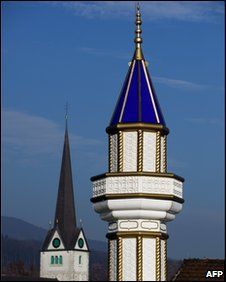
Votations Fédérales : La construction de minarets interdite en Suisse

20MINUTES.ch: Des minarets ne pourront plus être érigés en Suisse. L'initiative populaire «contre la construction de minarets» a été clairement acceptée dimanche, ce qui constitue une surprise.

«On faisait confiance à la lucidité du peuple suisse, c'est une énorme déception», a déclaré Youssef Ibram, imam du centre culturel islamique du Petit-Saconnex (GE). Photo : 20Minutes.ch

Près de six votants sur dix et ont appuyé le texte. Celui-ci était perçu par les opposants comme une menace pour la paix religieuse en Suisse.


L'initiative antiminarets était donnée perdante par les sondages. Elle a pourtant clairement passé la rampe: une majorité de 57,5% des votants (1.534.054 personnes) ont dit «oui» et seuls quatre cantons s'y sont opposés, à savoir Genève (59,7% de «non»), Vaud (53,1%), Bâle-Ville (51,6%) et Neuchâtel (50,8%). En Suisse romande, les cantons du Valais, de Fribourg et du Jura ont approuvé l'initiative par respectivement 58,0%, 55,9% et 51,2%. Le Tessin a dit «oui» à 68,1%, Berne à 60,7% et Zurich à 51,8%. La participation s'est élevée à 53,4%.

Lancée par des membres de l'Union démocratique du centre (UDC) et de l'Union démocratique fédérale (UDF), l'initiative «contre la construction de minarets» avait été déposée en juillet 2008 avec plus de 113.000 signatures valables. Demandant d'inscrire dans la Constitution fédérale la phrase «la construction de minarets est interdite», elle requerrait la double majorité du peuple et des cantons. L'UDC était le seul parti gouvernemental à recommander le «oui». «Islamisation sournoise» >>> ap | Dimanche 29 Novembre 2009

Die Schweiz verbietet den Bau von Minaretten: Deutliche Zustimmung zur Volksinitiative

NZZ ONLINE: In der Schweiz wird der Bau von Minaretten künftig per Verfassungsartikel verboten. Das Stimmvolk hat eine entsprechende Volksinitiative angenommen. Die Zustimmung fiel überraschend hoch aus und beträgt 57,5 Prozent.

In der Schweiz wird der Bau von Minaretten verboten. Das Stimmvolk hat der Anti-Minarett-Initiative aus Kreisen der SVP und der EDU wider Erwarten zugestimmt, und zwar deutlich: 57 Prozent der Stimmenden sagten Ja. Bei der letzten Umfrage von Mitte November hatten sich lediglich 37 Prozent der Befragten für die Initiative ausgesprochen. Mit ihrer umstrittenen Kampagne gelang es den Befürwortern offenbar, in der letzten Phase des Abstimmungskampfes viele Unentschlossene für sich zu gewinnen. >>> sda | Sonntag, 29. November 2009

Referendum in Svizzera, sì a proposta stop minareti

REUTERS ITALIA: GINEVRA - Gli elettori svizzeri hanno approvato oggi la proposta della destra di vietare la costruzione di nuovi minareti, in un risultato sorprendente destinato a creare imbarazzo al governo neutrale della Svizzera.

L'agenzia di stampa elvetica Ats e altri media hanno detto che nel referendum circa il 57,5% degli elettori e 22 dei 26 cantoni hanno detto sì alla proposta avanzata dal partito di destra Swiss People Party (Svp).

In Svizzera sia il parlamento che il governo hanno respinto la proposta dicendo che viola la costituzione del Paese, la libertà di religione e la nota tradizione di tolleranza svizzera. Secondo il governo elvetico una modifica della costituzione per proibire la costruzione dei minareti potrebbe "fare il gioco dei gruppi estremisti". >>> | domenica 29 novembre 2009

TAGES ANZEIGER: «Eine grosse Peinlichkeit»: Reaktionen auf das Minarett-Verbot >>> | Sonntag, 29. November 2009

TAGES ANZEIGER: Minarett-Verbot liefert Ghadhafi neue Argumente gegen die Schweiz: Das Verbot von Minaretten in der Schweiz hat die islamische Welt überrascht und schockiert. Der Volksentscheid könnte politisch instrumentalisiert werden, wie ein Experte meint. >>> vin/sda/ap | Sonntag, 29. November 2009

NZZ ONLINE: «Gegen Minarette, nicht gegen eine Glaubensgemeinschaft» : Der Bundesrat zum Ausgang der drei eidgenössischen Volksabstimmungen >>> wab. Bern | Sonntag, 29. November 2009

NZZ ONLINE: Applaus vom rechten Rand Europas: Rechtsgerichtete Parteien feiern Ja zur Anti-Minarett-Initiative >>> sda | Sonntag, 29. Novembre 2009

NZZ ONLINE: Spontane Demonstrationen in Bern und Zürich: Einige hundert Personen äussern Unmut gegen Anti-Minarett-Initiative >>> sda | Sonntag, 29. November 2009

LE TEMPS: Votation Minarets : Les Suisses refusent massivement les minarets >>> Le Temps avec ATS | Dimanche 29 Novembre 2009

THE TELEGRAPH: Switzerland risks Muslim backlash after minarets vote: Switzerland risked a Muslim backlash on Sunday after its citizens voted overwhelmingly to ban minarets on mosques. >>> Alexandra Williams in Geneva | Sunday, November 29, 2009

TIMES ONLINE: Swiss voters 'back ban on building of minarets' >>> Charles Bremner in Paris | Sunday, November 29, 2009
Across U.S., Food Stamp Use Soars and Stigma Fades

A GROWING NEED FOR A PROGRAM ONCE SCORNED Greg Dawson and his wife, Sheila, of Martinsville, Ohio, help feed their family of seven with a $300 monthly food stamp benefit. Center and right, the food pantry in Lebanon, Ohio, where residents can also enroll in what is formally called the Supplemental Nutrition Assistance Program. Photograph: The New York Times

THE NEW YORK TIMES: MARTINSVILLE, Ohio — With food stamp use at record highs and climbing every month, a program once scorned as a failed welfare scheme now helps feed one in eight Americans and one in four children.

It has grown so rapidly in places so diverse that it is becoming nearly as ordinary as the groceries it buys. More than 36 million people use inconspicuous plastic cards for staples like milk, bread and cheese, swiping them at counters in blighted cities and in suburbs pocked with foreclosure signs.

Virtually all have incomes near or below the federal poverty line, but their eclectic ranks testify to the range of people struggling with basic needs. They include single mothers and married couples, the newly jobless and the chronically poor, longtime recipients of welfare checks and workers whose reduced hours or slender wages leave pantries bare. >>> Jason DeParle and Robert Gebeloff | Saturday, November 28, 2009

THE NEW YORK TIMES PHOTOGALLERY: Once Scorned, a Federal Program Grows to Feed the Struggling >>>

THE INDEPENDENT: Britain faces return to Victorian levels of poverty >>> Andrew Grice, Political Editor | Monday, November 30, 2009
Lockerbie Bomber Abdelbaset Ali Mohmed alMegrahi Linked to Libya’s Chemical Weapons

THE SUNDAY TIMES: THE man convicted of the Lockerbie bombing was implicated in the purchase and development of chemical weapons by Libya, according to documents produced by the American government.

The papers also claim that Abdelbaset Ali Mohmed alMegrahi sought to buy 1,000 letter bombs from Greek arms dealers while working as a Libyan intelligence officer.

The documents, prepared by the US State Department, raise further questions about the wisdom of the Scottish government in releasing the convicted bomber on compassionate grounds in August.

The documents, written in 1992, were based on information gathered by the Central Intelligence Agency to bolster the case against Libya for the 1988 bombing of Pan Am flight 103 which killed 270 people.

They claim that Megrahi’s “deep involvement in Libya’s most sensitive, high-priority procurement operations indicates that he enjoyed the fullest confidence of Libya’s leadership”. >>> Mark Macaskill | Sunday, November 29, 2009
Nicolas Sarkozy Hails EU Shake-up a Victory for France

THE TELEGRAPH: Nicolas Sarkozy has reignited the row over the appointment of European Union commissioners by branding Britain “the big losers”.

The French President said the appointment of Baroness Ashton of Upholland as the EU’s new foreign policy chief was far less important than the elevation of Michel Barnier, France’s former agriculture minister, to the key financial post of commissioner for the internal market, which puts him in charge of supervising the City of London.

In provocative remarks which are certain to inflame tensions, Mr Sarkozy told Le Monde newspaper that the negotiations which resulted in Tony Blair being jettisoned and Herman Van Rompuy, the Belgian Prime Minister, being appointed the new EU president, were a “French victory”.

He said that Britain was against Mr Barnier’s appointment to the financial post, but that he got it through after persuading José Manuel Barroso, the European Commission president, to back the idea.

Mr Sarkozy said: “It’s the first time in 50 years that France has had this role. The English are the big losers in this business.”

The remarks, on the fringes of the Commonwealth Summit in Trinidad and Tobago, are particularly surprising because the French President had been expected to “reassure” the British about the intentions of Mr Barnier, who will play a big role in financial reform and regulation, an issue on which the British and the French have starkly differing views.

Mr Sarkozy has said he will visit London soon to calm worries in the City about a more regulatory French regime orchestrated by Paris.

But his comments to Le Monde will do little to put British minds at rest. >>> Melissa Kite and Kim Wilsher, in Paris | Saturday, November 28, 2009

LE MONDE: A la Commission, Michel Barnier défendra une économie plus régulée >>> Arnaud Leparmentier et Philippe Ricard | Samedi 28 Novembre 2009
Fumer tue votre garantie Apple

LE MONDE: Le tabagisme passif fait des ravages insoupçonnés. Le site Internet The Consumerist fait état de deux plaintes provenant d'utilisateurs de Mac qui se sont vus refuser des réparations pour cause de "contamination" à la nicotine de leur ordinateur. Les machines étaient bien sous garantie, mais celle-ci s'est révélée inopérante lorsque les clients se sont tournés vers le service après-vente d'Apple.

"J'ai acheté un iMac pour mon fils avec la garantie étendue Applecare. Il y a un mois, il a arrêté de fonctionner. Mon fils l'a apporté au centre de services Apple. Le technicien l'a informé que ça prendrait entre 48 et 72 heures. Cinq jours plus tard, toujours sans nouvelles, j'ai appelé. Ils m'ont informé que cet ordinateur ne pouvait pas être réparé car il était contaminé. Quand j'ai demandé une explication, on m'a dit que mon fils était un fumeur et que l'ordinateur était contaminé à cause de la fumée de cigarette, ce qui constitue un 'danger biologique potentiel'", raconte dans une lettre envoyée à The Consumerist l'un de ces consommateurs. >>> LeMonde.fr | Samedi 28 Novembre 2009

Saturday, November 28, 2009

Women Lead Swiss in Vote to Ban Minarets

Photograph: The Sunday Times

THE SUNDAY TIMES: A right-wing campaign to outlaw minarets on mosques in a referendum being held in Switzerland today has received an unlikely boost from radical feminists arguing that the tower-like structures are “male power symbols” and reminders of Islam’s oppression of women.

A “stop the minarets” campaign has provoked ferment in the land of Heidi, where women are more likely than men to vote for the ban after warnings from prominent feminists that Islam threatens their rights.

Forget about tranquil Alpine scenery and cowbells: one of the most startling features of the referendum campaign has been a poster showing a menacing woman in a burqa beside minarets rising from the Swiss flag.

It seems to have struck a nerve in Langenthal, a small town near Bern where Muslims plan to put up a minaret next to their prayer room in a bleak former paint factory.

“If we give them a minaret, they’ll have us all wearing burqas,” said Julia Werner, a local housewife. “Before you know it, we’ll have sharia law and women being stoned to death in our streets. We won’t be Swiss any more.”

A spoof video game on the internet called Minaret Attack shows minarets popping up all over the idyllic Swiss countryside, after which a message proclaims: “Game over! Switzerland is covered in minarets. Vote to ban them on November 29.”

“It’s a dirty campaign,” said Mutalip Karaademi, an Albanian who leads Langenthal’s small Muslim community. “They’re trying to provoke us.”

A poll suggested the Swiss would narrowly reject a ban but the feminist involvement is having an effect: according to one poll, 39% of women were in favour of a ban, but only 31% of men.

Tatiana, a teacher who had previously voted for the left, was quoted in a newspaper as saying she would vote for the minaret ban as she could “no longer bear being mistreated and terrorised by boys who believe women are worthless”. >>> Matthew Campbell | Sunday, November 29, 2009
Russie : Déraillement: l’attentat confirmé


LE TEMPS: Les enquêteurs russes ont confirmé samedi la thèse de l’attentat terroriste suite au déraillement dans la nuit du train de passagers Nevski Express reliant Moscou à Saint-Pétersbourg, qui a causé la mort d’au moins 26 personnes et peut-être 39 selon un autre bilan, toujours provisoire

«Il est bien question d’un attentat», a déclaré le porte-parole des enquêteurs du parquet fédéral à l’agence Interfax, Vladimir Markine. Cette thèse était déjà privilégiée par les autorités russes. »Le groupe d’enquêteurs du comité d’enquête du procureur de Russie a découvert et saisi les restes d’un engin explosif», a indiqué le comité d’enquête du parquet dans un communiqué.

«Selon les estimations des enquêteurs, les données préliminaires font état de l’explosion d’un engin artisanal d’une puissance équivalente à sept kilos de TNT», a déclaré, selon les agences russes, le chef du FSB Alexandre Bortnikov.

«Selon un bilan préliminaire, pas moins de 26 personnes ont été tuées et plus de 100 blessées», a indiqué le communiqué du parquet, précisant qu’«une hausse du nombre de victimes ne pouvait pas être exclue». Les précédents bilans, tous provisoires, oscillaient entre 25 et 39 morts, selon les sources.

Le PDG des chemins de fer russes, Vladimir Iakounine a remarqué que les circonstances du drame rappelaient un événement similaire trois ans plus tôt. «Le schéma de l’explosion ressemble beaucoup à l’incident qui s’est produit il y a trois ans», a-t-il dit en une apparente allusion à l’attentat à la bombe qui avait fait dérailler le même Nevski Express en août 2007, faisant 60 blessés.

Une enquête criminelle pour terrorisme a été ouverte, selon le parquet. >>> AFP | Samedi 28 Novembre 2009

Terroranschlag auf russischen Nachtexpress: Rettungskräfte gehen von rund 30 Todesopfern aus

NZZ ONLINE: Bei einem Anschlag auf einen voll besetzten Schnellzug im Nordwesten Russlands sind rund 30 Personen in den Tod gerissen worden. Der mit mehr als 600 Reisenden besetzte Zug von Moskau nach St. Petersburg entgleiste nach der Explosion einer Bombe auf den Schienen.

Das Zugunglück im Nordwesten Russlands mit mindestens 26 Toten geht nach Einschätzung der Ermittler auf einen Anschlag mit Sprengstoff zurück. Das meldete die Nachrichtenagentur Interfax am Samstag unter Berufung auf die Generalstaatsanwaltschaft. Der voll besetzte Newski Express war am Freitagabend zwischen Moskau und St. Petersburg unterwegs, als er nach Angaben des Inlandgeheimdienstes FSB durch die Explosion eines Sprengssatzes zum Entgleisen gebracht wurde.

Der selbst gebaute Sprengkörper habe eine Wucht von sieben Kilogramm TNT gehabt. Weitere Details nannte FSB-Chef Alexander Bortnikow bei einem Treffen mit Präsident Dmitri Medwedew nicht. Der Ermittlungsausschuss der Generalstaatsanwaltschaft erklärte, am Tatort in der Nähe der Ortschaft Uglowka seien «Teile eines Sprengsatzes gefunden und entfernt» worden. Nahe der Gleise am Tatort wurde laut Interfax auch ein Krater mit einem Meter Durchmesser entdeckt.

Augenzeugen hätten kurz vor dem Entgleisen der Waggons einen Knall gehört. Die Nachrichtenagentur RIA Nowosti zitierte eine andere Quelle, wonach möglicherweise ein Sprengsatz unter einem der Waggons angebracht war. Vier Wagen entgleist >>> sda/afp/dpa | Samstag, 28. November 2009

Terrorist Bomb Blast Is Blamed for Causing Russian Train Crash That Killed 26

THE TELEGRAPH: Russia's FSB intelligence service said a homemade terrorist bomb caused a packed Moscow-St Petersburg train travelling at 125 mph to derail, killing at least 26 people.

The statement ended speculation that the crash, which also injured nearly 100, may have been a tragic accident. It also raised the spectre of a fresh terror campaign in Russia's major towns and cities after five years of relative calm.

Alexander Bortnikov, the FSB chief, told Russian President Dmitry Medvedev that a bomb equivalent to 15 lb of TNT had been planted beneath the busy route. But he did not say who may have been responsible or why anyone would have wanted to carry out such an attack.

Investigators said they had opened a large-scale terrorism investigation as detectives with sniffer dogs combed through wreckage strewn with charred personal effects looking for clues.

Suspicion will inevitably fall on Islamist radicals from Chechnya and Russia's volatile North Caucasus region. They have carried out spectacular attacks in the past which have killed hundreds of people, although nobody had claimed responsibility by late on Saturday.

The attack also will evoke memories of a deadly series of bombings earlier this decade that targeted the Moscow metro, public buses, and passenger airliners. >>> Andrew Osborn in Moscow | Saturday, November 28, 2009