Sunday, May 09, 2010
THE NEW YORK TIMES: More firmly and publicly than before, senior officials of the Obama administration on Sunday blamed the failed attempt to blow up a bomb in Times Square on the Pakistani Taliban, an accusation that should increase pressure on the Pakistan military to attack the organization in its bastions in the lawless tribal region of North Waziristan.
“We’ve now developed evidence that shows the Pakistani Taliban was behind the attack,” Attorney General Eric Holder said in an interview on ABC television’s news program “This Week.”
Later, appearing on NBC’s “Meet the Press,” he said the Taliban in Pakistan “directed this plot” and may have also financed it. The Pakistani Taliban, he said, was “intimately involved” in the attempt on May 1 by Faisal Shahzad, an American citizen of Pakistani descent, to blow up gasoline and propane tanks secreted inside a Nissan Pathfinder parked on West 45th Street just yards from the heart of Times Square.
John Brennan, President Obama’s chief counterterrorism adviser, echoed Mr. Holder’s statements Sunday morning, saying that it appeared that Mr. Shahzad, a resident of Bridgeport, Conn., who spent five months in Pakistan until February, was working for Tehrik-e-Taliban Pakistan, or TTP. The TTP is believed by some military intelligence officials to have joined forces with Al Qaeda and may be hiding some of its senior leaders, including Osama bin Laden, who was the motivating force behind the 9/11 attack.
Until now, American officials have speculated that the Pakistan Taliban may have trained Mr. Shahzad during his visit to Pakistan, but Sunday’s statements were their most definitive about the Taliban’s role.
The conclusion that the Pakistani Taliban is behind the attempted bombing “underscores the serious threat that we face from a very determined enemy,” Mr. Brennan said on CNN’s ”State of the Union.” >>> Joseph Berger | Sunday, May 09, 2010
THE SUNDAY TIMES: US warns Pakistan over Times Square bomb attempt: The United States has delivered a tough new warning to Pakistan to crack down on Islamic militants or face severe consequences after the failed Times Square bombing. >>> Anne Barrowclough | Sunday, May 09, 2010

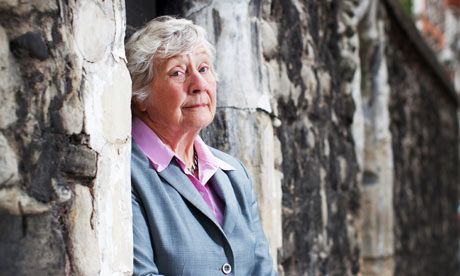
THE GUARDIAN: Liberal Democrat peer becomes first senior party member to publicly register disapproval of any deal with David Cameron
Lady Shirley Williams has become the first senior Liberal Democrat to break ranks and come out against the idea of her party striking a formal coalition deal with David Cameron, warning that it is not in the "Conservatives' DNA" to move properly in key areas.
Speaking to the Guardian, she said she would prefer the Lib Dems to agree to vote through key Tory bills rather than become coalition partners.
Asked if she thought an alliance was a good idea, she said: "No. Instead I think it would be better for us to offer them 'confidence and supply' and let them govern as a minority government, coupled with cross-party work in two areas: we need swift cross-party action to bring down the deficit, and action on political reform." >>> Allegra Stratton | Political Correspondent | Sunday, May 09, 2010
THE TELEGRAPH: Malta's citizens are up in arms over plans to rebuild the centre of their historic capital, which was bombed during World War Two.

It was built in the 16th century as a city fortress capable of withstanding attacks by marauding Ottoman Turks, but 500 years on a new battle is raging over the future of Valletta, Malta's historic capital.
A £90 million project envisages transforming the historic entrance to the World Heritage-listed city – a medieval gem which has remained little changed since it was built by the Knights of St John in the 1560s.
The avant-garde plan has been drawn up by world renowned Italian architect Renzo Piano, who has worked on the Pompidou Centre in Paris and Berlin's Potsdamer Platz. It was given the green light last month by Malta's government and is due to be completed by 2012 but has sparked a ferocious row among the Mediterranean island's 400,000 inhabitants.
It entails building a brand new parliament building, tearing down the existing city gate and turning Valletta's ruined Royal Opera Theatre into an open-air performance space.
The theatre, constructed in 1866, was badly bombed by the Luftwaffe in the siege of Malta during the Second World War and has lain in ruins ever since.
The then British colony was collectively awarded the George Cross by King George VI in 1942 in recognition of its bravery and resistance to the German and Italian onslaught, which brought the island close to starvation and surrender. >>> Nick Squires in Valletta | Saaturday, May 08, 2010
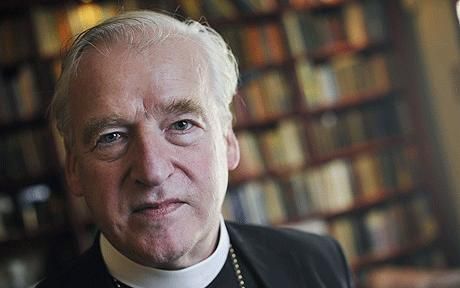
THE SUNDAY TELEGRAPH: Traditionalist Anglicans have warned that new proposals to pave the way for women bishops would force them to leave the Church of England.
In a move set to engulf the Church in a bitter row over the historic reform, legislation was published yesterday which will allow women clergy to enter the top ranks while giving almost no concessions to opponents.
While groups campaigning for female clerics to be treated equally expressed joy at the new plans, leading traditionalists reacted angrily to the development.
They claimed that the proposals were designed to "wipe out" those on the Anglo-Catholic and evangelical wings of the Church who do not believe it is in accordance with biblical teaching for women to be bishops.
The legislation, which would go before parliament if approved by the General Synod, could trigger a much larger defection of clergy to Rome than previously predicted. It follows a secret meeting held between the Vatican and three Anglican bishops last month.
The Rt Rev John Broadhurst, the Bishop of Fulham and one of those involved with the talks in Rome, said Anglo-Catholics would be "incandescent" and would effectively be "forced out" of the Church of England. >>> Jonathan Wynne-Jones, Religious Affairs Correspondent | Sunday, May 09, 2010
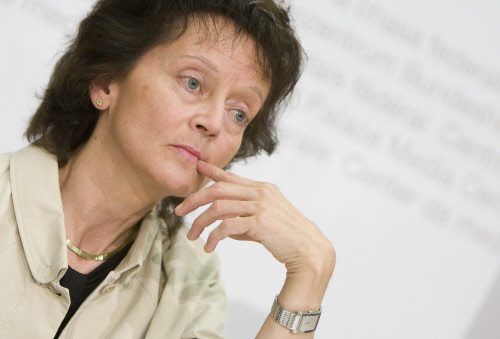
NZZ am SONNTAG: Nach Frankreichs Präsident Nicolas Sarkozy denkt nun auch die Schweizer Justizministerin Widmer-Schlumpf laut über ein Verbot der Burka nach.
Noch 2007, als Christoph Blocher Justizminister war, erteilte der Bundesrat der Forderung nach einem Trageverbot für die islamische Ganzkörperverhüllung eine klare Absage. Aus «föderalistischen und grundrechtlichen Motiven» erwäge er keine Massnahmen gegen das Tragen von Burkas im öffentlichen Raum, schrieb die Landesregierung auf eine Interpellation von CVP-Präsident Christophe Darbellay.
Jetzt deutet Blochers Nachfolgerin Eveline Widmer-Schlumpf eine mögliche Kehrtwende an. In einem Interview des Thurgauer Lokalfernsehens Tele D sagte Widmer-Schlumpf auf die Frage, ob sie persönlich für ein Burka-Verbot sei, sie könne sich vorstellen, «dass man sagen würde, in der Schweiz wollen wir das nicht». Die Burka, so Widmer-Schlumpf weiter, «passt nicht zu unserer offenen und gleichberechtigten Kultur». Für sie als Frau biete das Kleidungsstück einen «diskriminierenden Anblick». >>> Pascal Hollenstein | Samstag, 08. Mai 2010
TRIBUNE DE GENÈVE: Dans un entretien publié dans "Sonntag", la ministre de la Justice affirme qu’elle s’oppose à toute forme de déguisement sur la voie publique, ce qui concerne également la burqa.
"Dans l’espace public, j’aimerais aussi voir le visage de mon vis-à-vis et non seulement ses yeux", a expliqué Eveline Widmer-Schlumpf. Elle estime que la liberté personnelle s’arrête là où celle des autres est entravée: la liberté d’une porteuse de burqa s’arrête lorsque les autres se sentent agressés ou insécurisés.
Dans les contacts avec les autorités, le visage doit être généralement reconnaissable. La ministre de la justice considère que le port du voile islamique à l’école publique est problématique et que cette question doit être discutée avec les cantons. Il est cependant déjà admis que le personnel enseignant n’est pas autorisé à porter le voile islamique. Les enseignants doivent être "confessionnellement neutres". >>> AP | Dimanche 09 Mai 2010
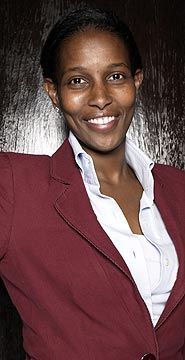
THE SUNDAY TIMES: Ayaan Hirsi Ali is under threat from jihadists. It has not stopped her finding romance with the married historian Niall Ferguson
‘Why did you choose this place?” asks Ayaan Hirsi Ali, eyebrows arched in feigned alarm. She then giggles endearingly. We are in New York’s Algonquin hotel, just a few hundred yards from Times Square, where a Muslim would-be bomber parked a car full of explosives a couple of days earlier.
Radical Islamists have been trying for years to kill Hirsi Ali, a softly spoken politician turned intellectual who combines the beauty of a film star with the uncompromising zeal of an Enlightenment crusader.
She has been under siege ever since the ritualised murder in 2004 of her friend, Theo van Gogh, who had helped her make the film Submission, a blistering polemic about Islam’s treatment of women. A letter pinned to Van Gogh’s chest — or, rather, stabbed into place with a butcher’s knife — warned Hirsi Ali that “you will go down”. She went into hiding, eventually exchanging a career as a Dutch MP for exile.
Six years on, she is still preceded everywhere by a burly security man. “I’m on that endless list of names they have,” she tells me — every jihadist’s death list. It’s a grim, confining way to live, yet here she is, gaily teasing me about my tactless choice of rendezvous: she doesn’t seem remotely angry or distressed — radiant, more like.
“There is a new man in my life: Niall Ferguson, a British historian and TV presenter; the situation is a bit complicated. I am deeply in love and that feels great,” she told a Dutch magazine last week.
“We are both constantly travelling so it is hard to see one another regularly. On the other hand, we do not need to explain the situation to each other. I cannot say what will happen with us. There is still a divorce procedure going on and there are children involved.” She clams up now when quizzed about her romance, which has created a certain frisson in Britain because of Ferguson’s high profile and marriage to a former newspaper executive.
Yet I sense that silence on this is difficult and she seems to be talking as much to herself as me when she adds softly: “I just think no comment is best.”
All this might be dismissed as tabloid voyeurism had Hirsi Ali herself not turned her own most intimate history into fodder for public debate, first in her acclaimed 2006 memoir Infidel and now again in its sequel, Nomad. As a five-year-old in Somalia, she has written, part of her genitals were removed in a circumcision ceremony designed to preserve girls as virgins until they can be married off; she has since hinted that thanks to a sympathetic surgeon she got off lightly compared with other Somali Muslim women. >>> Tony Allen-Mills | Sunday, May 09, 2010
Nomad by Ayaan Hirsi Ali is published by Simon & Schuster on Thursday
MIRROR: Tories say no deal will be struck before tomorrow
Gordon Brown and David Cameron battled for Nick Clegg’s support last night by offering him up to SIX seats in the Cabinet.
The extraordinary bidding war was revealed as the Tories continued to try to cut a deal with the Lib Dems to allow Mr Cameron to become PM.
He desperately needs the support of their MPs to get past the magic number of 326 needed for a majority in the House of Commons.
Last night Tory sources said there would be no deal before tomorrow, despite fears of fresh falls in the finance markets when they reopen.
And Mr Clegg’s closest allies warned the Tory refusal to give in to their key demand of a referendum on Britain’s voting system was proving a “major roadblock” to any chance of a power-sharing deal.
Earlier, the party leaders put aside their differences to appear side-by-side at a ceremony to mark the 65th anniversary of VE Day at the Cenotaph in Whitehall. >>> Vincent Moss, Political Editor | Sunday, May 09, 2010

LE FIGARO: La Grande-Bretagne a indiqué dimanche ne pas vouloir participer au Fonds d'urgence envisagé pour aider les pays de la zone euro en difficulté.
La Grande-Bretagne refuse de participer, en y apportant sa garantie, au Fonds d'urgence envisagé pour aider les pays de la zone euro en difficulté, a indiqué dimanche le ministre des Finances britanniques. «Je pense qu'il est important que nous fassions tout ce que nous pouvons faire pour stabiliser les marchés... Soyons très, très clairs: s'il y a une proposition afin de créer un fonds de stabilisation pour l'euro, cela doit être du ressort des pays de l'Eurogroupe», a déclaré le ministre, interrogé depuis Bruxelles par la chaîne d'information continue britannique Sky News.
L'idée de départ était que la Commission européenne puisse emprunter en bénéficiant de la garantie de tous les pays de l'Union européenne, y compris ceux comme la Grande-Bretagne qui n'utilisent pas l'euro, puisqu'il s'agit d'un mécanisme de l'UE, selon des sources diplomatiques. Dans cette perspective, la Suède s'est dite prête à participer au Fonds, même si elle ne fait pas partie de la zone euro, a déclaré en début d'après-midi son ministre des Finances. >>> Par lefigaro.fr | Dimanche 09 Mai 2010
THE GUARDIAN: Alistair Darling rules out British support for euro: Chancellor says that responsibility for propping up single currency must be limited to eurozone countries >>> Zoe Wood | Sunday, May 09, 2010
THE SUNDAY TELEGRAPH – Editorial: For the sake of the nation, a deal should be struck, and quickly.

The ideal outcome from last week’s election, as we argued forcefully in these pages, would have been a government – preferably a Conservative government – with the mandate and majority needed to tackle the urgent problems that this country faces. We stressed that the haggling and uncertainty that accompany a hung parliament would make it all but impossible to restore the public finances to order, get a grip on immigration, reform the education system, and much else besides. Yet the absence of a strong government is about to cost us extremely dear in another way, too.
As we report today, Nicolas Sarkozy, the French president, has persuaded other members of the eurozone that they can interpret a clause in the Lisbon Treaty so as to force every country belonging to the EU to contribute unspecified, and potentially unlimited, sums to bailing out insolvent members of the eurozone. It means that to keep the single currency going, in the event of future Greek-style collapses, Britain will have to write a blank cheque.
This cynical, underhand and anti-democratic move has been prompted by the stresses that the colossal budget deficits of the weaker members of the euro – Greece, Portugal, Ireland, Spain, Italy – have placed on the currency itself. Last week, France and Germany agreed that Greece should receive an emergency loan of 110 billion euros. The injection of cash is at most a stay of execution, not a solution to the problem, whose root cause is that Greece, being in the euro, cannot devalue its currency and so cannot make its exports competitive, and thereby earn the money it needs to repay its debts. The obvious solution is for Greece to leave the euro. But that would be a humiliation for Europe’s politicians and bureaucrats, for it would show that the fundamental objection to it – that it could not be viable across countries that are at such different levels of economic development – is correct. So, instead, they have decided that in future all the other members of the EU, including Britain, will foot the bill. >>> Telegraph View | Sunday, May 09, 2010
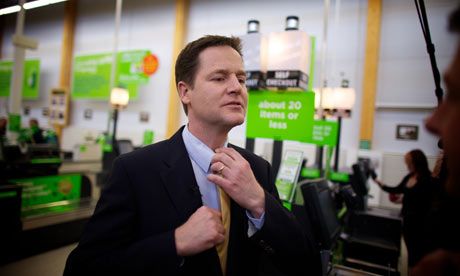
THE OBSERVER: The leader of the Liberal Democrats is playing high-stakes poker as both Tories and Labour try to woo him with offers of electoral reform and cabinet seats
As he was bundled through a baying press pack into a car waiting to speed him to yesterday's VE Day celebrations at the Cenotaph, Nick Clegg effected a physical transformation.
He was still the smart, political tyro who had shaken up the two-party system. He still looked like a man who had broken the mould: a pristine suit clashing with the jeans and anoraks of the camera crews huddled in the rain reinforced the image of a political big hitter.
But gone was the boyish, affable face of the centre left. Instead, here was someone different: steelier, tight-lipped, stern. Clegg is a man playing high-stakes Texas Hold 'Em. He knows he can win, but inside he is desperately trying to calculate the strength of his hand.
His authority has certainly been diminished by Thursday's disappointing performance at the polls that only a week earlier had promised so much.
But he can still be kingmaker – for either side. >>> Jamie Doward and Cal Flyn | Saturday, May 08, 2010
THE OBSERVER: Belgium doesn't exist, only Flanders and Wallonia as Dutch and French communites live apart. By Ian Traynor in Brussels
Twenty minutes north of Brussels, in Belgium's medieval royal seat of Mechelen, there's a science playground, just the place for the kids on a boring, wet Sunday afternoon.
Technopolis is stuffed with interactive gadgets and games, making education fun. There is also another message. When entering the complex, the paving stones are inscribed with a simple, direct statement. The message is in Dutch only, the language of Flanders, the bigger northern half of the country. You are told the size of Flanders in square kilometres and its population density.
There is no mention of Belgium. That does not exist. You are in a country called Flanders. That does not exist either, but if many of the politicians running this divided society get their way it is only a matter of time.
"Long live free Flanders, may Belgium die" was the battle cry ringing out in Belgium's federal parliament on Thursday as the 150 elected deputies cleared their desks and returned home to prepare to fight an early election next month, triggered by the latest collapse of the national government.
Following the last election in 2007, Belgium went without a government for six months because of the divisions and squabbling between Dutch-speaking Flanders to the north and French-speaking Wallonia in the south. Three years later, the same conflict has brought down the government again.
In most countries of western Europe, the third prime ministerial resignation in three years would be cause for alarm. In Belgium, the latest resignation – of Yves Leterme, the Christian Democrat prime minister – after only five months has instead been greeted with shrugs of indifference and expressions of relief.
"We are incredibly lucky to be here; this is one of the luckiest countries in the world," says a senior government official. "We are very successful." Which is true in many respects. But the political class running this wealthy state of 10.5 million people gives a very good impression of caring little for a country called Belgium.
"I'm Flemish, not Belgian," says Willy De Waele, mayor of the small Flemish town of Lennik, just south of Brussels. "There's no loyalty to a country called Belgium. There has never been a country that has lasted so long in conditions like this." >>> Ian Traynor | Sunday, May 09, 2010
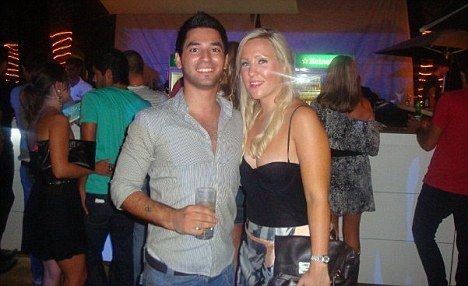
MAIL ON SUNDAY: A British woman jailed in Dubai for kissing a man on the cheek has spoken for the first time of her nightmare ordeal in prison.
Charlotte Adams, 26, was deported on Friday after spending 23 days locked up alongside prostitutes and murderers for ‘indecency’.
A local woman claimed she saw Charlotte openly kiss and touch Londoner Ayman Najafi in a restaurant.
The harsh sentence may have been intended to send a warning to the Britons who flock to the five-star beach resorts of an emirate which styles itself as a playground for the jet-set – yet has laws that penalise any deviation from Islam.
In 2008, a British couple found having sex on a Dubai beach were, on appeal, given only a three-month suspended sentence.
Charlotte’s ‘crime’ means she is now banned from Dubai and the United Arab Emirates.
But as her plane took off for Britain on Friday, she said: ‘It is such a relief. I’ve thought of nothing else for the last few months.
‘I love this place and it makes me sad that I’ll never come back, although I think I’d struggle to ever feel free here again.
'But the laws need to evolve to match the culture here. At the moment, it’s all just hypocrisy.’ I was in prison with some prostitutes and a Russian woman who chopped up her boyfriend: Dubai 'kiss' girl reveals price she paid >>> Jo MacFarlane | Sunday, May 09, 2010
THE NEW YORK TIMES: The fear that began in Athens, raced through Europe and finally shook the stock market in the United States is now affecting the broader global economy, from the ability of Asian corporations to raise money to the outlook for money-market funds where American savers park their cash.
What was once a local worry about the debt burden of one of Europe’s smallest economies has quickly gone global. Already, jittery investors have forced Brazil to scale back bond sales as interest rates soared and caused currencies in Asia like the Korean won to weaken. Ten companies around the world that had planned to issue stock delayed their offerings, the most in a single week since October 2008.
The increased global anxiety threatens to slow the recovery in the United States, where job growth has finally picked up after the deepest recession since the Great Depression. It could also inhibit consumer spending as stock portfolios shrink and loans are harder to come by. >>> Nelson D. Schwartz and Eric Dash | Saturday, May 08, 2010
Subscribe to:
Posts (Atom)