Saturday, March 06, 2010

Cocaine, Kidnapping and the Al-Qaeda Cash Squeeze

THE TELEGRAPH: Hit by a global crackdown on their wealthy financiers, Bin Laden's followers have been forced to abandon their Koranic principles to pursue their holy war.

The three al-Qaeda agents assured the Colombians that they would have no problem moving their shipment of European-bound cocaine through the Islamist badlands of the Sahara.

As supporters of the terrorist organisation's North African branch, they would guarantee shipment of the drugs through territory they controlled - so long as they were paid fee of $2,000 per kilo.

The trio, all from the impoverished desert nation of Mali, thought they were setting up a deal with representatives of Colombia's Marxist FARC guerrillas to smuggle up to 1,000 kgs of cocaine.

In fact, they were speaking to informants for the US Drug Enforcement Administration (DEA) who secretly taped the meeting in Ghana in a sting operation in December. The three men, who were recorded on tape saying that they were levying "taxes" on the terror group's behalf, were arrested and extradited to New York, where they are now fighting drug and terror charges.

Anti-terrorism officials believe the case may prove a crucial landmark in the battle against al-Qaeda: it is the first time that anyone linked to the terror group has faced prosecution for its newest money-spinning activity, narco-terrorism. >>> Philip Sherwell in New York | Saturday, March 06, 2010
Obama Addresses Health-Care Reform

Khamenei’s Uncertain Future: A lonelier road for Iran’s Supreme Leader

THE MAJALLA: While before the presidential elections it appeared that Khamenei would remain Supreme Leader for life, his fate is far less certain today, and he is openly defied by reformist leaders, faces dissent from top ayatollahs, and is contested in public demonstrations. Despite the damage to his reputation, Khamenei’s vast and potent network remains for the moment intact, and his future rests largely in the hands of the Revolutionary Guards.

Among the numerous casualties of Iran’s tainted 2009 presidential elections was the legitimacy of Supreme Leader Ayatollah Ali Khamenei. While for two decades Khamenei had attempted to cultivate an image of an impartial and magnanimous guide staying above the political fray, his defiant public support for hardline President Mahmoud Ahmadinejad—amidst massive popular uprisings and unprecedented fissures amongst the country’s political elites—exposed him as a petty, partisan autocrat.

At a popular level, previously sacred taboos were shattered, as hundreds of thousands of Iranians defied Khamenei’s unveiled threats against protestors by taking to the streets chanting “death to the dictator” and even “death to Khamenei.” Widely seen images of government-sanctioned brutality against civilians—such as the horrific murder of 27-year-old Neda agha Soltan—as well as persistent allegations of torture, rape, and forced confessions in prison have undermined Khamenei’s image as a “just” spiritual leader among Iran’s pious classes. Widespread allegations of the growing role of his son Mojtaba, considered a key Ahmadinejad ally, in Iran’s repressive security apparatus have further tarnished Khamenei’s public image. >>> Karim Sadjadpour | Monday, February 01, 2010
Geert Wilders: Der radikale Volkstribun

DIE PRESSE: Nach den niederländischen Kommunalwahlen ist der Rechtspopulist Wilders im Aufwind. Der Mann mit dem gefärbten Blondschopf setzt auf Islamkritik und innere Sicherheit. Die Anschläge von 9/11 haben ihn radikalisiert.

Innerhalb von nur einer Woche erlebte Geert Wilders zwei ganz große Triumphe. Der erste war sein Wahlsieg bei den Kommunalwahlen in den Niederlanden, bei denen er mit seiner „Partei für die Freiheit“ (PVV) in der Stadt Almere stärkste politische Kraft wurde; am Regierungssitz in Den Haag stieg die PVV zur zweitgrößten Partei knapp hinter den Sozialdemokraten auf. Seinen zweiten Triumph feierte der Mann mit dem blondierten Haupthaar in London. Dort zeigte er im britischen Parlament seinen islamkritischen Film „Fitna“ („Zwiespalt“) und feuerte erneut Tiraden gegen den Islam ab: Da nannte er den Propheten Mohammed einen „Barbaren, Massenmörder und Pädosexuellen“, da bezeichnete er den türkischen Ministerpräsidenten Erdoğan „Mafkees“, als Spinner.

Der Auftritt von Wilders in London war für den Niederländer deshalb ein großer Erfolg, weil ihm das britische Innenministerium 2009 noch die Einreise ins Vereinigte Königreich mit der Begründung verweigert hatte, Wilders gefährde die öffentliche Sicherheit. Wilders klagte. Ein Londoner Gericht gab ihm recht – mit der Begründung, dass Wilders auch in Großbritannien von seinem Recht auf freie Meinungsäußerung Gebrauch machen könne. >>> Von Helmut Hetzel (Den Haag) (Die Presse) | Samstag, 06. März 2010

DIE WELTWOCHE – Auszug: In den internationalen Medien wird Wilders als extremer Rechtsaussen dargestellt. Das ist er nicht. Seine Gegner und ungenügend informierte ausländische Berichterstatter übernehmen gern die Kritik politisch korrekter niederländischer Politiker und Journalisten. Wilders ist hochgewachsen, er hat eine auffällige Haartracht, und wenn man ihm persönlich begegnet, frappiert der grosse Kontrast zwischen seinem Image in den ausländischen Medien – der Kryptofaschist – und dem sanftmütigen, fröhlichen Menschen, der er in Wirklichkeit ist.

Wilders ist ein leidenschaftlicher Populist, der ganz genau weiss, wann er die Medien mit extremen Äusserungen provozieren kann. Er hat eine breitgefächerte Anhängerschaft von Sozialisten bis hin zu Konservativen, die sich allesamt Sorgen um die Zukunft des Wohlfahrtsstaats machen – der per definitionem nur Bestand hat, wenn die Solidargemeinschaft zu den Werten des Nationalstaats steht.

Wilders wahrt achtsam Distanz zu Parteien und Gruppierungen, die als rechtsradikal eingestuft werden. Täte er das nicht, würde er seine Anhänger in den Niederlanden sofort verlieren. Setzt er seinen Vormarsch fort und verdrängt die arrivierten Parteien, dann kann er, falls er nicht ermordet wird, die Fahne Fortuyns nach den nächsten Wahlen in die Räume des Ministerpräsidenten tragen. Ein sanftmütiger, fröhlicher Mensch >>> Von Leon de Winter* | Mittwoch, 10. Juni 2010

*Leon de Winter ist Autor verschiedener Romane, Drehbücher und Erzählungen.

Aus dem Niederländischen von Hanni ­Ehlers
EU nimmt neuen Anlauf zu Nahost-Verhandlungen: Zwei-Staaten-Lösung für Palästinenser und Israeli im Zentrum

NZZ ONLINE: Die EU will Palästinenser und Israelis wieder an den Verhandlungstisch bringen. Die EU-Aussenbeauftragte Catherine Ashton kündigte nach dem Treffen der 27 EU-Aussenminister im spanischen Córdoba an, sie werde am 14. März in den Nahen Osten reisen.

«Wir müssen jetzt handeln, und zwar in Richtung auf eine Zwei-Staaten-Lösung», sagte der spanische Aussenminister Miguel Angel Moratinos. Die Europäer wollten den US-Nahost-Sondergesandten George Mitchell bei dem Versuch unterstützen, Verhandlungen zwischen den Konfliktparteien wieder in Gang zu bringen.

Erster konkreter Beitrag dazu ist Ashtons einwöchige Nahost-Reise Mitte März. Bei ihrem ersten diplomatischen Einsatz seit Amtsantritt im Dezember wird sie Israel, Ägypten, Syrien und Jordanien besuchen. >>> sda/dpa/Reuters | Samstag, 06. März 2010
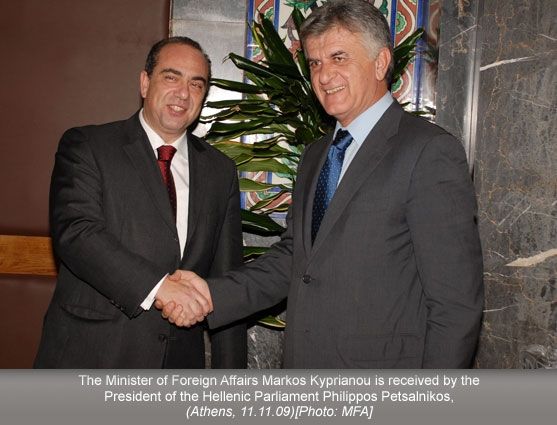
Parlamentspräsident Petsalnikos: Warnung vor anti-griechischer Stimmung

FOCUS ONLINE: Der griechische Parlamentspräsident Philippos Petsalnikos wirbt im FOCUS für gute Beziehungen zwischen Deutschland und seiner Heimat – trotz Provokationen und beleidigender Mails. Er verspricht radikale Reformen im Kampf gegen den Bankrott.

Manche Äußerungen deutscher Politiker seien „sehr negativ, ja provokativ für Griechenland“, sagte er in einem Interview mit FOCUS. Deshalb würden deutsche Bürger derzeit „sehr oft beleidigende E-Mails“ an die griechische Botschaft in Berlin schicken. „Es wäre schade wenn die guten Beziehungen verletzt würden. In Deutschland leben immer noch 350 000 Griechen“, so Petsalnikos, der mit einer Deutschen verheiratet ist. >>> flf | Samstag, 06. März 2010

Church Bows to Gays Seeking Communion

NRC HANDELSBLAD INTERNATIONAL: Homosexuals can now attend communion in all parishes in the diocese of Den Bosch.

This is the outcome of a meeting between the church council of the main Roman Catholic church in the Netherlands, St. John’s Cathedral in Den Bosch, priest Geertjan Van Rossum, Vera Bergkamp of the gay organisation COC and editor-in-chief of the gay peridocial Gaykrant.

"People should decide for themselves whether or not to attend communion whatever their sexuality and should do so with a clean conscience," said a spokesperson for the diocese.

The openly gay Prince of the Carnival who was recently refused communion in the provincial town of Reusel therefore should have received it. The church's refusal to give him communion sparked protests at Roman Catholic church services up and down the Netherlands on Sunday.

During the protest, gay rights demonstrators dressed in pink and wearing wigs of the same colour walked out of the service at St. John’s after priest Geertjan van Rossum said "the correct experience of sexuality is part of the ten commandments". >>> RNW | Friday, March 05, 2010
Iceland Votes on Bailout


NZZ ONLINE: Isländer stimmen über Milliarden-Zahlungen ab: Nein zum Abkommen mit Grossbritannien und den Niederlanden erwartet >>> sda/dpa | Samstag, 06. März 2010
German Chancellor Says Greece Doesn't Need Aid


Lien en relation avec cette vidéo:

TRIBUNE DE GENÈVE: La Grèce n'a actuellement pas besoin d'aide financière, selon Angela Merkel >>> AFP | Vendredi 05 Mars 2010
"11 septembre": Ahmadinejad n'y croit pas

leJDD.fr: Mahmoud Ahmadinejad a qualifié samedi les attentats du 11-Septembre de "grand montage". Pour le président iranien, cet évènement vise à justifier la "guerre contre le terrorisme" menée ensuite par les Etats-Unis, rapporte l'agence de presse officielle Irna. "L'incident du 11 septembre est un grand montage qui a servi de prétexte à la campagne antiterroriste et de prélude à l'invasion de l'Afghanistan", a-t-il affirmé devant le personnel du ministère des Renseignements, évoquant un "scenario complexe en matière de renseignement". [Source: leJDD.fr] | Samedi 06 Mars 2010
'There Is a Sense of Revolt. I Feel It Too'

THE GUARDIAN: Nana Mouskouri is one of the biggest-selling singers of all time. Already adored in Greece, she promised this week to forgo her pension – the least she could do, she says, to help her financially ruined country

Nana Mouskouri: ‘Everywhere I see stories about my country going bankrupt. It’s painful for me. Nobody wants their country to be treated badly’. Photo: The Guardian

Athens in spring, and the tangerine trees are laden with vivid orange fruit. On the top floor of a quiet bookshop near the parliament a press conference is in progress: six people facing a room of journalists, arguing for the need to preserve the home of one of Greece's best-known poets. At their centre sits a woman striking both for her total stillness, and her huge dark glasses. She speaks evenly into a microphone, certain of her audience. When she finishes the meeting breaks up, into knots of people sipping wine and lighting cigarettes, jockeying and gossiping, as in any literary gathering the world over.

But when Nana Mouskouri makes her way to the back of the room it's to say, "Welcome. Welcome to troubled Athens." Because while here there may be blue skies and blossom, just round the corner stand armed police, riot shields at the ready. The traffic is just beginning to flow again, after yet another demonstration against the austerity measures just announced – the third round in as many months, and the harshest: €4.8bn (£4.3bn) in wage cuts, tax increases, a 30% cut in traditional holiday bonuses, a freeze on state pensions. The papers carry pictures of the demonstration yesterday – of pensioners, grey-haired and lined, being pressed back into line by young officers in full riot gear.

This week Mouskouri – who, even though she doesn't live in Greece, must be, by some measure, the country's most famous pensioner – announced that she is doing her bit by forgoing her pension altogether. "They say that one bird doesn't bring the springtime," she says now, laughing slightly, "but it's something." Her voice is quiet, only very lightly inflected – 50 years of fame, of equable, kindly interviews in one or another of her six languages, have produced an odd mixture of openness and distance, a generosity both rote and sincere – an effect exacerbated by the glasses she has hidden behind ever since she was a child. Speaking to her, you often find you are addressing her mouth, because although you can see her eyes through the tinted lenses, they seem to be doing their own thing, like a consciousness in a fish tank, swimming close, then arching away again.

Unlike the socialist government, which has strongly suggested that Greece's often very wealthy diaspora stump up some cash in its time of trouble, Mouskouri refuses to insist that other people should follow her example. But she rather hopes they will. "I believe in the pride, and the good will of everybody." Later she mentions that she's heard "that a deputy from the parliament has given her salary for a certain time. In Greece we call that philotimo. Philotimo is to have a certain pride – not arrogance, pride – and to place it well. To say I want to do something for my country. I believe there is some of it. I hope. At least nowadays everybody's informed about [the crisis]." >>> Aida Edemariam | Saturday, March 06, 2010
Canada’s Prime Minister Forced to Backtrack Over Plans to Make National Anthem More Politically Correct

MAIL ONLINE: The Canadian government has been forced to backtrack over plans to make its national anthem more politically correct after a national outcry.

Three days after announcing the proposals to alter 'O Canada' to include the country's women in one of its lines, Prime Minister Stephen Harper said his conservative government would no longer be pursuing the idea.

The national anthem, which has existed for nearly 100 years, includes the line 'true patriot love in all thy sons' command'.

Originally, the line said 'in thou dost us command', but it was changed to the current line in 1980.

Mr Harper wanted to start a public discussion on whether to change the wording in a way that would not exclude the nation's women.

He is said to have initiated the idea on the basis of advice of a female senator, according to National Post columnist Don Martin.

The idea was included in a major policy speech on Tuesday, but by yesterday the public outcry was so strong Mr Harper dropped the idea completely. >>> | Saturday, March 06, 2010
U.S. Anglicans Converting en masse to Catholicism

MAIL ONLINE: About 100 traditionalist Anglican parishes across the United States have decided to convert en masse to the Roman Catholic Church, it emerged yesterday.

They have voted to take up the offer made by Pope Benedict XVI in November that permits vicars and their entire congregations to defect to Rome - while keeping many of their Anglican traditions, including married priests.

The Pope had been accused of attempting to poach Anglicans unhappy about decisions taken in their church to ordain women and sexually-active homosexuals as priests and bishops.

But the Vatican insisted that the move to create self-governing 'personal ordinariates' came as a result of requests from at least 30 disaffected Anglican bishops around the world.

The Anglican Church in America will now enter the Catholic Church as a block, bringing in thousands of converts along with their own bishops, buildings and even a cathedral. >>> | Saturday, March 06, 2010
Dutch MP’s Visit to Show Anti-Islam Film to UK Lawmakers Sparks Outrage


Controversial Dutch MP Geert Wilders Says Islam Is 'Fascist'

Portugal : José Socrates entre le marteau et l’enclume

Le premier ministre socialiste José Socrates. Photo : Le Temps

LE TEMPS: Entre les exigences de Bruxelles pour qu’il prenne des mesures d’austérité drastiques et l’inquiétude de l’opinion, le premier ministre socialiste a une marge de manœuvre bien réduite

Le ciel politique du flamboyant premier ministre, José Socrates, est empli de nuages menaçants. Au lendemain d’une grève des fonctionnaires – suivie jeudi à 80% –, et alors que Bruxelles exige de lui des mesures drastiques pour réduire le déficit public, la situation du leader socialiste est devenue difficilement tenable. Car, non seulement José Socrates va devoir annoncer d’ici peu des réformes très impopulaires (réduction des dépenses de santé, gel des salaires de la fonction publique, baisse des indemnités chômage…), mais il fait face à une série de scandales économico-médiatiques dans lesquels il serait impliqué.

Enquête parlementaire

La semaine prochaine, une commission d’enquête parlementaire sera constituée pour faire la vérité sur son rôle dans le rachat de la télévision privée TVI – l’une des deux plus importantes – par Portugal Telecom, le géant des télécommunications du pays, sous contrôle gouvernemental. Pour la première fois depuis le retour de la démocratie en 1974, un chef de l’exécutif sera appelé à comparaître personnellement dans une affaire qui pourrait le forcer à la démission. >>> François Musseau | Samedi 06 Mars 2010

Turkey Threatens 'Serious Consequences' After US Vote on Armenian Genocide

THE GUARDIAN: Strategic partnership at risk despite Barack Obama's attempts to stop Congress resolution

Turkey has threatened to downgrade its strategic relationship with the US amid nationalist anger over a vote in the US Congress that defined the mass killings of Armenians during the first world war as genocide.

Barack Obama's administration, which regards Turkey as an important ally, was today desperately seeking to defuse the row. It expressed its frustration with the House of Representatives' foreign affairs committee, which voted 23-22 yesterday in favour of a resolution labelling the 1915 massacre of up to 1.5 million Armenians a "genocide".

A furious Turkey may now deny the US access to the Incirlik air base, a staging post for Iraq, as it did at the time of the 2003 invasion, or withdraw its sizeable troop contribution to the coalition forces in Afghanistan.

On the diplomatic front, the US needs the support of Turkey, which has a seat on the UN security council, in the push for sanctions against Iran over its nuclear programme. Turkey is also helpful to the US on a host of other diplomatic issues in the Middle East and central Asia.

The White House and state department began work today to try to prevent the controversial issue making its way to the floor of the house for a full vote. >>> Robert Tait in Istanbul and Ewen MacAskill in Washington | Friday, March 05, 2010

Soon Every Swiss Dog Could Have His Day in Court

If the Swiss adopt this stupid measure, then they will ALL be ready for admittance to the Bürghölzli in Zürich forthwith! Sicherlich können die Schweizer nicht recht bei Trost sein! Perhaps Colonel Ghadhafi was right all along. It could be that this really is the land of the infidel! They certainly don’t have enough serious things to think about, or else they wouldn’t come up with nonsense like this! Think about this: Goldfish are given more rights in Switzerland than homosexuals are in Muslim countries! Now that's something to ponder over. – © Mark

TIMES ONLINE: There is no better place than Switzerland to be a chicken. Or a hamster. Or even — though the jury is still out on this — a goldfish.

The reason is that the country has an extraordinary set of animal protection laws that closely define the obligations of pet owners and farmers.

Now it is about to go a step farther [sic]: a national referendum tomorrow will decide whether to allow animals official legal representation.

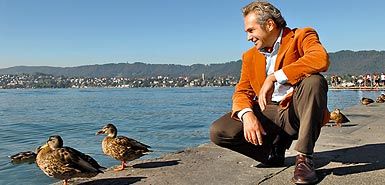
The canton of Zurich already has an animal advocate, Antoine Goetschel, a kind of courtroom Dr Dolittle who, for the past two years, has been fighting the corner for flogged horses, depressed Dalmatians and tortured fish.

A “yes” vote will place publicly funded animal welfare lawyers, like Mr Goetschel, across the country. “Then I think the Government should create some form of academy or educational forum for animal barristers,” Mr Goetschel said. “These are not skills learnt at law school.”

The tricky issues facing these new Rumpoles of the barnyard came to a head a fortnight ago in one of Mr Goetschel’s most toughly fought cases.

An angler on Lake Zurich landed a 22lb (10kg) perch after, as he subsequently bragged to a local paper, a ten-minute fight. Zurich citizens complained and the state prosecutor passed the case to Mr Goetschel, who had to determine how long an angler can struggle to land a fish before it becomes an act of cruelty. Fish-rights supporters opened a Facebook page for the dead perch — 6,000 “friends” made it probably Europe’s most popular fish — while the anglers argued fiercely that the fish felt no pain.

Mr Goetschel did not win the case. >>> Roger Boyes | Saturday, March 06, 2010
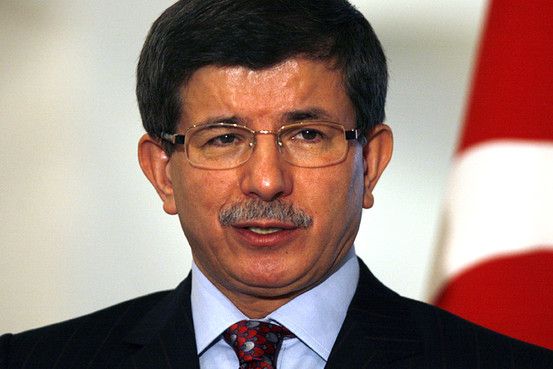
Nach Völkermord-Resolution: Türkei wirft Kongress „historischen Fehler“ vor

FRANKFURTER ALLGEMEINE ZEITUNG: Nach der Entscheidung des Auswärtigen Ausschuss des amerikanischen Repräsentantenhauses, den osmanischen Massenmord an den Armeniern im Jahr 1915 als „Völkermord“ einzustufen, hat der türkische Außenminister Ahmet Davutoglu am Freitag vor einer Verschlechterung der Beziehungen zwischen seinem Land und den Vereinigten Staaten gewarnt. Davutoglu bezeichnete die Entscheidung als Beleg für mangelnde strategische Weitsicht in Washington und fügte sinngemäß hinzu, Ankara erwarte, dass Präsident Obama dagegen vorgehe. Andernfalls sei der Ausblick (auf die Beziehungen zwischen beiden Ländern) „nicht positiv“, sagte Davutoglu.

Die Türkei werde den im vergangenen Jahr begonnenen Annäherungsprozess an Armenien fortsetzen, sich dabei aber nicht unter Druck setzen lassen: „Wir sind entschlossen, die Verhandlungen über eine Normalisierung der Beziehungen mit Armenien voranzutreiben“, wurde Davutoglu am Freitag zitiert. Allerdings gefährde die Entscheidung des Auswärtigen Ausschusses die Ratifikation der Protokolle über die armenische Annäherung durch das Parlament, sagte der Außenminister weiter.

Die Türkei und Armenien hatten sich im April 2009 unter Vermittlung der Schweiz auf eine Normalisierung ihrer Beziehungen geeinigt. Im Oktober vergangenen Jahres unterzeichneten Ankara und Eriwan ein Protokoll über die Aufnahme diplomatischer Beziehungen sowie über die Öffnung der seit 1993 geschlossenen Grenze zwischen den Ländern. >>> FAZ.NET mit tens., rüb., Reuters, dpa | Samstag 06 März 2010
Le Canada, le pays du G7 le plus résistant à la crise, hésite entre rigueur et relance

LE MONDE: Les Canadiens ont certes goûté à la crise, avec des effets à long terme sur les finances publiques, mais leur pays, qui a émergé de la récession au troisième trimestre 2009, a affiché une croissance de 5 % au quatrième et conserve une bonne longueur d'avance sur ses collègues du G7. Le ministre des finances canadien, Jim Flaherty, s'est vanté de cette place en présentant, jeudi 4 mars, son cinquième budget, qui donne "priorité absolue" à un plan de relance de 46 milliards de dollars canadiens, (près de 33 milliards d'euros) dont 19 milliards restants pour 2010.

Contrairement à son voisin états-unien, le Canada a conservé un secteur financier robuste (qui a traversé la crise sans aide étatique et en accumulant des profits) et une demande intérieure soutenue qui a compensé, en partie, une baisse de 14 % des exportations en 2009. Pour l'avenir, M. Flaherty table sur une reprise mondiale pour conserver au Canada sa place de leader du G7 en matière de croissance. >>> Anne Pelouas, Montréal (Canada) Correspondance | Vendredi 05 Mars 2010