Tuesday, March 02, 2010

Grèce : Athènes va annoncer de nouvelles économies

LE TEMPS: Le gouvernement de George Papandréou viserait 4,8 milliards d’économies supplémentaires, pour rassurer les marchés obligataires, Bruxelles et surtout l’Allemagne, encore réticente à lui accorder son aide

Face aux pressions de l’Union européenne et des investisseurs, le gouvernement grec s’apprête à annoncer quelque 4,8 milliards d’euros de réduction budgétaire en plus des engagements d’austérité qu’il a déjà pris.

Les nouvelles mesures d’économie influeraient notamment des taxes plus élevées sur le tabac, l’alcool, une augmentation de la TVA, et de nouvelles coupes dans les primes variables des fonctionnaires, a indiqué mardi une source gouvernementale. >>> Le Temps | Mardi 02 Mars 2010
Muslim Council of Britain Rejects Allegations of a TV Documentary

ASSOCIATED PRESS OF PAKISTAN: LONDON - The UK’s largest Muslim organization-Muslim Council of Britain- has rejected all allegations leveled in a TV documentary claiming that the association was attempting to turn Britain into an Islamic Republic. “We reject entirely the allegation that the MCB is “dominated” by any organisation/s. The MCB, with over 500 affiliates, has a rigorous election process with elected officials from a wide range of Islamic backgrounds.

Simply put, there is no scope whatsoever, real or perceived, for any affiliate/s or group of affiliates to dominate the decision-making process. The Dispatches programme has failed to provide even a single shred of evidence of how “undue influence” by any affiliate or group of affiliates has actually been exercised,” The MCB said in a statement in response to the programme screened on Monday evening by the UK domestic TV Channel 4.

The media spokesman Tufael Ahmed said: “Last night’s Dispatches fronted by Andrew Gilligan has once again resurrected stereotypes. Using out of context quotations, he echoes the rhetoric of far-right extremists, that British Muslims are somehow foreign, alien, extremist and imposing their way of life on the others.”

“The core of the programme accuses the Islamic Forum Europe (IFE) and the East London Mosque of fostering ‘Islamist’ extremism and that the IFE has an undue and pernicious influence over the politics of our country.” >>> APP | Tuesday, March 02, 2010
This Secretive Agenda Must Be Taken Seriously

THE TELEGRAPH: Telegraph View: Developments in Tower Hamlets are worrying news for British democracy

Radical Muslims, in their unguarded moments, are unrepentant about what they believe to be their religious duty: the replacement of secular, tolerant and liberal democracy in Britain by a rigid theocracy, in which the country is governed by Islamic law. Those who aspire to that goal are usually, and correctly, dismissed as a tiny minority who are unrepresentative of the moderate majority of British Muslims. But it would be wrong to dismiss the extremists as insignificant. The evidence we publish today [Saturday, February 27, 2010] suggests that at least one such group has infiltrated parts of the Labour Party, and has taken over important aspects of the running of the London borough of Tower Hamlets.

If the Islamic Forum of Europe (IFE) was open and frank about its aims, voters would be able to make up their own minds about whether they wanted to see its members in any form of government in Britain. It is part of any democratic system worthy of the name that those who abide by the rule of law are entitled to campaign in elections, even if we find their beliefs objectionable. But some members of the IFE demonstrate in private that they have an agenda that they are not willing to share with the electorate. They have also demonstrated that they are unwilling to abide by the procedures which are essential if elections are to be free and fair. As we report today, Jim Fitzpatrick, the MP for Tower Hamlets, believes that the party has been infiltrated by radical Muslims – just as it was infiltrated in the 1980s by the Militant Tendency. The IFE denies any such campaign. But its denials would be more credible if, in public, the IFE was not presented as simply a "social welfare organisation" committed to "community cohesion" and "tolerance" – while in private, it shows itself to be committed to replacing democracy by a theocracy based on Islamic law. >>> Telegraph View | Sunday, February 28, 2010

Related:

Dispatches: Britain’s Islamic Republic >>> Channel 4 | Monday, March 01, 2010

Britain's Islamic Republic >>> Channel 4 | Monday, March 01, 2010

Islamic Radicals 'Infiltrate' the Labour Party >>> Andrew Gilligan | Saturday, February 27, 2010
The EU’s Foreign Service Apparatus: Berlin Concerned about British Dominance

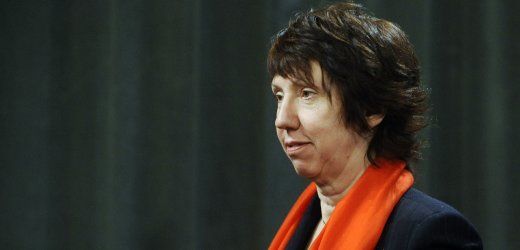
SPIEGEL ONLINE INTERNATIONAL: The European Union's new diplomatic service is still months from completion. But already, Germany is worried that the bloc's new foreign policy chief, Catherine Ashton, is handing over too many top slots to Britons.

At least the European Union's new diplomatic service has a name: The European External Action Service. Beyond that, however, just what the service might look like remains a matter of conjecture. There is no clear leadership framework, nor is there a budget. Nevertheless, the service has become the subject of intense debate in capital cities throughout the 27-member bloc.

Diplomats from Germany and France are displeased with the personnel preferences being shown by EU High Representative for Foreign Affairs and Security Policy Catherine Ashton, according to an article in the Guardian. Citing anonymous sources, the paper says there is concern that four of the 12 positions in her Brussels office have been given to Britons and that several important jobs in the new EU diplomatic service have gone to UK diplomats.

Ashton has occupied her new position, created when the Lisbon Treaty entered into force last December, for three months. More time will pass before she submits her official proposal for how the EU's new foreign policy apparatus should look. Ultimately, it will likely include some 130 European Union ambassadors and 7,000 diplomats -- and discussions on how those positions might be divvied up are underway among Europe's 27 foreign ministers. Already, though, the first governments are sounding the alarm. >>> Matthias Gebauer and Carsten Volkery | Tuesday, March 02, 2010
Beitrittsbemühungen: Türkei will Verfassung den EU-Normen anpassen

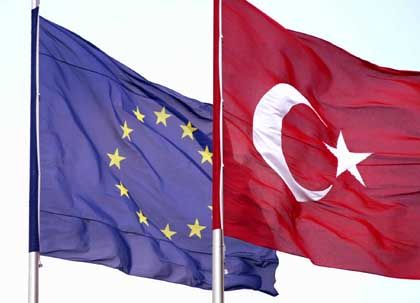
WELT ONLINE: Seit 2005 verhandelt die Türkei mit Brüssel über einen EU-Beitritt. Um das stockende Projekt voranzubringen, soll nun die türkische Verfassung verändert werden. Die Regierung will etwa das Justizsystem europäischen Standards anpassen. Das letzte Wort darüber hat aber vermutlich das türkische Volk.

Die türkische Regierung hat eine Überarbeitung der Verfassung des Landes angekündigt. Damit soll das türkische Grundgesetz an die Normen der europäischen Demokratie angepasst werden, wie Ministerpräsident RecepTayyip Erdogan sagte.

„Es geht nicht darum, die Verfassung von Grund auf zu ändern, sondern wir wollen einige Artikel abändern“, sagte Erdogan vor Journalisten.
Bei der geplanten Reform gehe es vor allem um Artikel zum Verbot politischer Parteien und zur Funktionsweise der Justiz. Erdogans Regierungspartei AKP will dem Parlament seinen Angaben zufolge bis Ende März einen Änderungsentwurf vorlegen.

Da die AKP im Parlament nicht über die erforderliche Mehrheit für eine Verfassungsänderung verfügt, muss er das geplante Reformpaket möglicherweise per Volksabstimmung verabschieden lassen. >>> AFP/jm | Montag, 01. März 2010
Korruption in Griechenland nimmt deutlich zu

ZEIT ONLINE: Den Führerschein machen? Einen Anwalt finden? In Griechenland kostet vieles extra, mit steigender Tendenz. Im Durchschnitt bestach jeder Bürger 2009 mit bis zu 1671 Euro.

Griechenlands Wirtschaft und Gesellschaft sind laut Transparency International (TI) fest im Griff der Korruption. Die Griechen zahlten laut einer von Die Welt veröffentlichten TI-Studie im vergangenen Jahr durchschnittlich 1355 Euro Bestechungsgeld, wenn sie die Ausstellung eines Führer- oder Fahrzeugscheins beschleunigen, eine Baugenehmigung kaufen, schneller in ein öffentliches Krankenhaus aufgenommen oder die Ergebnisse einer Steuerprüfung manipulieren wollten. 2008 lag das durchschnittliche Bestechungsgeld in diesem Bereich bei 1374 Euro. >>> Zeit Online, AFP, Reuters | Dienstag, 02. März 2010

SPIEGEL ONLINE INTERNATIONAL: Corruption is widely regarded as one of the triggers of the Greek debt crisis threatening the euro common currency. A new study by Transparency International suggests that corruption is part of everyday life in Greece, and claims private households paid more than 780 million euros in bribes in 2009.

The Greeks paid an average of €1,355 ($1,830) in bribes last year for public services such as speeding up the issue of driver's licenses and construction permits, getting admitted to public hospitals or manipulating tax returns, according to a new study by Transparency International, the Berlin-based global corruption watchdog.

In 2008, average bribes were even higher, at €1,374, the study said, according to a report in the German daily Die Welt on Tuesday. European Debt Crisis: Greek Corruption Booming, Says Transparency International >>> cro -- with wire reports | Tuesday, March 03, 2010
Don’t Let Politicians Bully You, Lord Carey Warns Christians

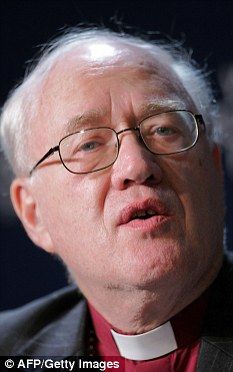
MAIL ONLINE: Former Archbishop of Canterbury Lord Carey today accused politicians of trying to bully Christianity out of public life.

He complained of a 'strident and bullying campaign' to marginalise Christianity in the name of political correctness.

Lord Carey said: 'We have reached the point where politicians are mocked for merely expressing their faith.

'I cannot imagine any politician expressing concern that Britain should remain a Christian country. That reticence is a scandal and a disgrace to our history.'

The powerful intervention from the retired Archbishop, who stepped down from Lambeth Palace in 2002, comes in the wake of strongly-expressed criticism of state attempts to sideline Christianity from other senior prelates.

Last month Archbishop of York Dr John Sentamu said that Christianity was being pushed out of public life in a 'ferocious and insidious' manner.

Lord Carey has spoken out strongly on a number of controversial matters since his retirement in a way he avoided while serving as the Anglican primate. In particular, he has backed limits to immigration, criticised Islamic theology, and attacked the 'anything goes' philosophy that has led judges to constrain public debate about the bad behaviour of celebrities for the sake of their privacy.

He told a meeting in the House of Lords: 'Christianity, which has given so much to our country, is now being sidelined as never before as though it is a stranger to our nation.'

Lord Carey told Christians to stand up for their faith and to be more assertive when their heritage is attacked.

'If we behave like doormats, don't be surprised if we are treated as though we are,' he said. 'It is time to return to the public square.' >>> Steve Doughty | Tuesday, March 02, 2010
Dispatches: Britain’s Islamic Republic

Link: Dispatches Britain’s Islamic Republic

HSBC Hands Top Banker £9 million Bonus

TIMES ONLINE: One of the biggest bonuses seen this year for any London-based banker was revealed today as HSBC announced it had given Stuart Gulliver, its head of investment banking, a £9.8 million package.

Mr Gulliver was awarded a £9 million bonus on top of his £800,000 base pay for his "exceptional performance" in trebling the profits of his division to $10.5 billion, HSBC said.

The payment came as Michael Geoghegan, HSBC chief executive, confirmed that he will give his £4 million bonus to charity.

HSBC disappointed investors after full-year profits fell by 24 per cent to $7.1 billion (£4.7 billion) following a big write down of the value of its own bonds. Its shares lost more than 5 per cent, down 37.1p, to 682.46p. >>> Patrick Hosking and Catherine Boyle | Monday, March 01, 2010

Monday, March 01, 2010

Iran Launches Fierce Attack on West in UN Rights Forum

Iran's Foreign Minister Manouchehr Mottaki speaks during the 13th session of the UN Human Rights Council at the European headquarters of the United Nations in Geneva on Monday. Photo: Arab News

ARAB NEWS: GENEVA: Iran launched a fierce verbal assault on the West on Monday, charging some European countries of subjecting Muslim communities to insult and violence and suggesting the United States and Europe aided terrorism.

Foreign Minister Manouchehr Mottaki told the United Nations Human Rights Council, to which it is bidding for election in May, that some Western states are gross violators of rights and are promoting lewdness to undermine family life.

"There is a growing trend in applying double standards by the Western countries with regard to the freedom of expression and opinion," Mottaki told the 47-member forum at the start of its main annual four-week session.

"Muslims throughout the world in general and the Muslim communities in Western countries in particular, have been the target not only of massive propaganda campaigns but outright social castigation and open violence, all under the pretext of freedom of expression," he declared. >>> Robert Evans, Reuters | Monday, March 01, 2010
Caricatures: un saoudien envisage un procès contre des journaux danois

TRIBUNE DE GENÈVE: POLÉMIQUE | Ahmad Zaki Yamani avait réclamé ces excuses à 16 journaux danois depuis août 2009.

Un avocat saoudien s’est déclaré prêt à engager un procès contre quinze journaux danois s’ils n’acceptaient pas de présenter des excuses aux musulmans pour avoir reproduit les caricatures de Mahomet en 2008, a-t-il indiqué lundi sur le site du quotidien danois B.T. Ahmad Zaki Yamani, agissant au nom de huit associations représentant près de 95 000 descendants du prophète, avait réclamé ces excuses à 16 journaux danois depuis août 2009.

Mais seul le grand quotidien Politiken a répondu à cette exigence, acceptant de conclure un compromis annoncé vendredi dernier et qui a soulevé un tollé au Danemark. "Nous sommes prêts à un long et très coûteux procès contre les autres journaux qui refusent un accord" semblable à celui de Politiken, a déclaré Me Ahmad Zaki Yamani à bt.dk.

L’avocat a indiqué avoir reçu une lettre du directeur de Niqabat al-Ashraf, l’une des huit organisations plaignantes, forte de près de 70.000 membres, qui se dit "très satisfait" par le compromis obtenu avec Politiken et qui lui accorde "un soutien financier pour des poursuites devant les tribunaux contre les 15 autres quotidiens" réfractaires. >>> AFP | Lundi 03 Mars 2010
Turkey Generals Accused of Links to 2003 Istanbul Bombing

THE TELEGRAPH: Three retired Turkish military leaders have been accused of helping to plan the 2003 Istanbul bombing which claimed 60 lives including three Britons.

Three of Turkey's most senior former military leaders have been accused of plotting a coup. Photo: The Telegraph

The men are alleged to have plotted with al-Qaeda to carry out the attack in the hope of destabilising the government and paving the way for a military coup.

Prosecutors suspect the former heads of the air force, navy and Turkish 1st army were linked to attacks on the British consulate, HSBC headquarters and synagogues.

Roger Short, the consul general in Istanbul, was killed in the attack on the Charles Barry-designed Italianate Palace in the heart of Istanbul in November 2003. Lisa Hallworth, from Denton, Greater Manchester, and former airline worker Nanette Elizabeth Kurma, from Drongan, Ayrshire, were also killed in the blast.

Although an al-Qaeda linked group claimed responsibility for the attack at the time, there have always been questions over its ability to source bomb making materials and evade security controls in a country with a powerful security force.

Investigators claim the bombings were part of "Operation Sledgehammer" which had been formulated by senior military figures eight months earlier to destabilise Turkey and trigger a military intervention to overthrow the government.

Prosecutors have arrested 35 ex-military figures in recent weeks on suspicion of being part of the plot which is also said to have involved plans to provoke Greece into shooting down a Turkish fighter jet. >>> Damien McElroy, Foreign Affairs Correspondent | Monday, March 01, 2010
Islamic Scholar Says Suicide Bombers Will 'Go to Hell'

Shaikh ul-Qadri is explicit in his condemnation of suicide bombings, kidnappings and the killing of innocents which he describes as absolutely against the teachings of Islam?

THE INDEPENDENT: A respected Islamic scholar will publish a seminal fatwa tomorrow that unequivocally condemns terrorism and warns suicide bombers that they will “go to hell” for their attacks.

Pakistani-born Shaikh Dr Tahir ul-Qadri is launching his fatwa in London as part of a drive to combat the power of jihadist rhetoric on the web and provide English-speaking Muslims with an authoritative theological explanation detailing why terrorism is not permitted.

Although numerous fatwas condemning terrorism have been released by scholars around the world since 9/11, Shaikh Dr Qadri’s 600-page ruling is both significant and unusual because it is one of the few available in English and online. >>> Jerome Taylor, Religious Affairs Correspondent | Monday, March 01, 2010
Naked Art: 5,200 Sydneysiders Strip for Spencer Tunick

THE GUARDIAN: Lie down, heads up, stop smiling' ... photographer Spencer Tunick directs one of his largest ever groups of volunteers for a nude shot on the steps of Sydney Opera House Watch Guardian video >>> | Monday, March 01, 2010
Should Have Stuck with ‘Community Organizing’. The World Would Have Been a Safer Place! Barack Obama Plans 'Dramatic Cuts' in Nuclear Stockpile

Surely this should not be done unilaterally; this should be done only in a tit-for-tat manner.

With Iran building the bomb, and with other countries in the Middle East probably intending to follow suit, it is unbelievable that Obama finds it necessary to divest America of its strength.
– © Mark

THE TELEGRAPH: President Barack Obama is planning "dramatic reductions" in the US nuclear weapon stockpile as part of a sweeping review designed to prove his commitment to the goal of global nuclear disarmament.

Officials said hundreds of nuclear weapons could be cut, in many cases by retiring weapons that are now kept in storage, from the current level of 2,200 warheads.

A senior administration official said the new strategy would point to a greater role for conventional weapons, while "maintaining a strong and reliable" nuclear deterrent.

The president yesterday met Robert Gates, the Defence Secretary, to discuss the "Nuclear Posture Review" which was supposed to be published in December but was delayed reportedly because Mr Obama did not consider it radical enough.

The policy review "will be an important step forward in pursuing the goal of reversing the spread of nuclear weapons and seeking a world without them," said the official. He said it could also rule out the need to develop the nuclear version of "bunker-buster" weapons for penetrating underground targets. >>> Alex Spillius in Washington | Monday, March 01, 2010
Pound Slumps to Nine-month Low Over Fears of a Hung Parliament

MAIL ONLINE: The pound slumped to a nine-month low against the dollar today as fears over a hung Parliament sparked a sterling sell-off.

The currency fell sharply to as low as 1.478 against the dollar, as well as dropping below 1.10 against the euro.

Pressure on the pound comes as the Conservative lead against Labour in the polls narrows - threatening an indecisive General Election result at the same time markets want firm action to sort out the UK's dire public finances.

Mark O'Sullivan, director of dealing at foreign exchange firm Currencies Direct, said: 'Until the political situation in the UK becomes clearer, sterling will remain very, very vulnerable.'

The sudden drop from 1.52 to below 1.48 is the pound's biggest one-day fall since January last year, according to Chris Turner, head of FX Strategy at ING Commercial Banking.

He warned: 'While UK policymakers may have quietly welcomed the pound's recent weakness, they will not appreciate the kind of fast markets that can see a "sell UK" mentality developing.'

Sterling has lost nearly 10 cents against the dollar in little more than a week - hitting holidaymakers in the pocket, increasing pressure on petrol pump prices and adding to import costs for businesses. Read on and comment >>> | Monday, March 01, 2010
Polen: Die Wandlung eines Neonazis zum gläubigen Juden

WELT ONLINE: Pawel war ein polnischer Skinhead. Bis er und seine Frau ihre jüdischen Wurzeln entdeckten. Erst waren sie schockiert, dann konvertierten sie. "Ich kämpfe jeden Tag, um meine alten Ideen loszuwerden", sagt der 33-Jährige heute. Sein Weg zeigt auch die erstaunliche Renaissance des Judentums in Polen.

Pawels Transformation vom katholischen Skinhead zum Juden begann in den 1980er-Jahren. Bild: Welt Online

Wenn Pawel in den Spiegel schaut, sieht er manchmal immer noch einen Neonazi-Skinhead zurückstarren. Den Mann, der Pawel war, bevor er seinen rasierten Kopf mit einer Kippa bedeckte, seine faschistische Ideologie für die Thora über Bord warf und Gewalt und Hass gegen die Gnade Gottes tauschte.

„Ich kämpfe immer noch jeden Tag, um meine alten Ideen loszuwerden“, sagt Pawel, ein 33-jähriger ultraorthodoxer Jude und ehemaliger Lkw-Fahrer. Und er merkt ein wenig ironisch an, dass er aufhören musste, Juden zu hassen, um einer zu werden. „Wenn ich ein altes Bild von mir als Skinhead sehe, schäme ich mich“ sagt er. „Jeden Tag, jede Minute. Es gibt eine Menge nachzuholen.“

Pawel, der sich hebräisch Pinchas nennt, hat darum gebeten, seinen Nachnamen nicht zu veröffentlichen. Aus Angst davor, dass seine alten Neonazi-Freunde ihn oder seine Familie ausfindig machen könnten. Unglaubliche Rückbesinnung zum Judentum >>> Von Dan Bilefsky | Montag, 01. März 2010

Changing Face in Poland: Skinhead Puts on Skullcap

THE NEW YORK TIMES: WARSAW — When Pawel looks into the mirror, he can still sometimes see a neo-Nazi skinhead staring back, the man he was before he covered his shaved head with a skullcap, traded his fascist ideology for the Torah and renounced violence and hatred in favor of God.

“I still struggle every day to discard my past ideas,” said Pawel, a 33-year-old ultra-Orthodox Jew and former truck driver, noting with little irony that he had to stop hating Jews in order to become one. “When I look at an old picture of myself as a skinhead, I feel ashamed. Every day I try and do teshuvah,” he said, using the Hebrew word for repentance. “Every minute of every day. There is a lot to make up for.”

Pawel, who also uses his Hebrew name Pinchas, asked that his last name not be used for fear that his old neo-Nazi friends could harm him or his family.

Twenty years after the fall of Communism, Pawel is perhaps the most unlikely example of the Jewish revival under way in Poland, of a moment in which Jewish leaders here say the country is finally showing solid signs of shedding the rabid anti-Semitism of the past.

Before 1939, Poland was home to more than three million Jews, more than 90 percent of whom were killed by the Nazis. Most who survived emigrated. Of the fewer than 50,000 who remained in Poland, many abandoned or hid their Judaism during decades of Communist oppression in which political pogroms against Jews persisted.

Today, though, Michael Schudrich, the chief rabbi of Poland, said he considered Poland the most pro-Israel country in the European Union. He said the attitude of Pope John Paul II, a Pole, who called Jews “our elder brothers,” had finally entered the public consciousness.

Ten years after the revelation that 1,600 Jews of the town of Jedwabne were burned alive by their Polish neighbors in July 1941, he said the national myth that all Poles were victims of World War II had finally been shattered.

“Before 1989 there was a feeling that it was not safe to say, ‘I am a Jew,’ ” Rabbi Schudrich said. “But two decades later, there is a growing feeling that Jews are a missing limb in Poland. The level of anti-Semitism remains unacceptable, but the image of the murderous Pole seared in the consciousness of many Jews after the war doesn’t correspond to the Poland of 2010.”

The small Jewish revival has been under way for several years around eastern Europe. Hundreds of Poles, a majority of them raised as Catholics, are either converting to Judaism or discovering Jewish roots submerged for decades in the aftermath of World War II. >>> Dan Bilefsky | Saturday, February 27, 2010
Medvedev mise sur l'axe franco-russe

Nicolas Sarkozy et Dmitri Medvedev en septembre 2008, à Moscou. Crédits photo : Le Figaro

LE FIGARO: Le chef du Kremlin entame ce lundi à Paris une visite officielle à forte dimension économique.

Nicolas Sarkozy ne devrait pas être avare de démonstrations d'amitiés à l'égard de Dmitri Medvedev, qui effectue à partir de ce lundi une visite officielle de trois jours en France, la première pour le président russe depuis son accession à la tête du Kremlin, en mai 2008. Après un entretien à l'Élysée le premier jour, les deux hommes participeront mardi à une cérémonie sur la tombe du soldat inconnu. Ils inaugureront au Louvre une exposition consacrée à la «Sainte Russie», point d'orgue de l'année croisée entre les deux pays, avant de se retrouver pour un dîner officiel.

Après les tensions apparues lors de la guerre russo-géorgienne d'août 2008 (alors que la France était aux commandes de l'Union européenne), les relations de coopération entre Paris et Moscou ont repris de plus belle. En décembre 2009, le premier ministre Vladimir Poutine était déjà à Paris pour un séminaire gouvernemental franco-russe. Pour sa part, le président de la République est attendu le 9 mai à Moscou pour la célébration du soixante-cinquième anniversaire de la Libération, avant sa participation, à la mi-juin, au forum économique de Saint-Pétersbourg.

Il y a encore une semaine, Paris et Moscou plaçaient les questions internationales au centre de la visite du président russe. «Nos positions coïncident ou sont proches», explique le Kremlin. Au sein du régime russe, Medvedev n'est pas l'interlocuteur le plus difficile à convaincre de l'utilité des nouvelles sanctions contre l'Iran, prônées par Paris. >>> Par Pierre Avril | Dimanche 28 Février 2010

Merci! Medvedev gives candid interview to Parisian press

RUSSIA TODAY: In anticipation of Dmitry Medvedev’s upcoming trip to France, Paris Match magazine met the president at his Moscow residence to talk about everything from NATO to his relations with Vladimir Putin.

The interview kicked off with questions concerning Russia’s relationship with France, which this year is hosting “Year of Russia” celebrations.

Medvedev’s answer provided a penetrating insight not just into the present state of affairs between the two countries, but their lengthy mutual history as well, which has oftentimes been quite colorful.

Relations with France

“Indeed, the relations between our countries have been developing for many centuries,” the Russian president began. “There have been many historical events when the ways of Russia and France crossed. The history of our states has witnessed both bright moments and sometimes problems, which also brought us together, but in the end the scope of cooperation has been tremendous. A classic example is the life of Queen Anna, daughter of Yaroslav the Wise, who got married to Henry I, King of France. However, it was long ago, though this fact is quite remarkable.”

After making passing references to other remarkable aspects of the French-Russian relationship – including Russia’s interest in the French language, bilateral cooperation during World War II and mutual respect during the Soviet period of Russian history, notably under the leadership of General Charles de Gaulle – Medvedev stressed that “the new Russia enjoys a very good partnership, a strategic partnership with France.”

“We are no longer divided by ideological differences,” the Russian president said. “This does not mean we have no disputes at all, but we actually maintain very good and positive relationships with the French administration, including my personal contacts with President Sarkozy. When we reach an agreement, President Sarkozy always keeps his promises, which is something every politician should be able to do.” On buying foreign-made armaments >>> | Thursday, February 25, 2010 / Monday, March 01, 2010

Exclusiv : Dmitri Medvedev nous reçoit dans sa datcha

Dmitri Medvedev pose pour notre photographe dans les allées enneigées de la résidence présidentielle de Gorki, à une vingtaine de kilomètres de Moscou, où il habite avec sa famille. Photo: Paris Match

PARIS MATCH: A la veille de son voyage à Paris, le président russe nous parle de son ami Sarkozy, de la modernisation de son pays et de l’Otan qu’il vit comme une menace. Retrouvez les coulisses de cette entrevue sur notre Podcast.

Un entretien avec Olivier Royant et Pierre Delannoy - Paris Match
>>> Jeudi 25 Février 2010
Britain's Islamic Republic

CHANNEL 4 – Dispatches: Dispatches investigates a fundamentalist Islamic group headquartered in Britain, and its claims to have placed its 'brothers' in positions of political power here.

Using undercover recordings, investigative journalist Andrew Gilligan reveals the group's ambitions to create a worldwide 'Islamic social and political order,' and the concerns of a mainstream party that they are being 'infiltrated'; and talks to the Muslims who want to stop it. [Source: Channel 4] | Monday, March 01, 2010

This hour-long documentary will be broadcast on Channel 4 at 8pm this evening. If you miss it, it will be brought to you on this website as soon as it becomes available in suitable format. Please keep checking back. – Mark
Destruction Along Chile's Coast