The EU should be stronger and more united. Great Britain should belong to the Union.
Die EU sollte stärker und geeinter sein. Großbritannien sollte der Union angehören.
L'UE devrait être plus forte et plus unie. La Grande-Bretagne devrait appartenir à l'Union.
Saturday, November 21, 2009
Report Warns of Pakistan's Younger Generation Losing Faith in Democracy
THE GUARDIAN: Swelling population 'risks demographic disaster' / Cynicism and disaffection among disturbing findings
Children study the Qur'an prior to examinations at the Dar al-Haqqania Madrassa near Peshawar, Pakistan. Photo: The Guardian
Pakistan faces a "demographic disaster" if its leaders fail to invest in a youth population that is disturbingly cynical about democracy, has greatest faith in the military and is resentful of western interference, according to a study published tomorrow.
The report, commissioned by the British Council, says the nuclear-armed country is at a critical point, with its population forecast to swell by 85 million, from its current 180 million, over the next two decades.
"Pakistan is at a crossroads," said David Steven, an academic who helped write the report. "It can harness the energy of that generation, and collect a demographic dividend. But if they fail to get jobs and are poorly educated, it faces a demographic disaster."
Pakistan has never had such a high proportion of young adults: half of its population are aged under 20, with two-thirds still to reach their 30th birthday. But they are deeply divided about how the country should be run.
Only a third believe democracy is the best system of governance, one third support sharia law, while 7% think dictatorship is a good idea. Fasi Zaka, a radio DJ and commentator who helped launch the report, called it a snapshot of a "lost generation".
"They don't believe in anything firmly. Maybe they want sharia law, maybe they want democracy. It's all over the place. But despite this there's a lot of patriotism. So it's not a lost cause." Summing up the contradictions, he said young Pakistanis "don't like this country, but they love it". >>> Declan Walsh in Islamabad | Friday, November 20, 2009
Islam: Schweinegrippe bedroht Millionen Hadsch-Pilger
WELT ONLINE: In diesen Tagen beginnt der Hadsch. Für Millionen Muslime ist die Pilgerreise der religiöse Höhepunkt ihres Lebens. Diesmal ist einiges anders, denn in Mekka herrscht Angst vor der Schweinegrippe. Saudi-Arabien bemüht sich um die Eindämmung des Problems mit Atemmasken, Thermo-Kameras – und Gebeten.
Mit Mundschutz: Eine Teilnehmerin des Hadsch am Flughafen von Dschidda. Bild: Welt Online
Ausgerechnet Schweinegrippe! Ausgerechnet jetzt! Das Schwein gilt im Islam ohnehin als unrein und wird gemieden, der Verzehr seines Fleisches ist Muslimen verboten. Unverständnis von Marokko bis Malaysia: Wie kann man sich denn da anstecken? Dass die Weltgrippe nichts mit Essgewohnheiten und auch nur entfernt überhaupt mit dem Schwein zu tun hat, kann die Muslime kaum beruhigen. Und das schlimmste ist: Der Hadsch steht bevor, die islamische Wallfahrt nach Mekka mit fast drei Millionen Pilgern aus rund 160 Staaten.
Was kommende Woche in Mekka geschieht, ist das exakte Gegenteil von dem, was die Weltgesundheitsorganisation (WHO) zur Eindämmung des H1N1-Virus empfiehlt: Hunderttausende Menschen in großer Enge und Hitze, die zusammen beten, essen und dieselben rituellen Gegenstände berühren. Der Pilgerort droht zum riesigen Inkubator zu werden. >>> Von Dietrich Alexander | Freitag, 20. November 2009
Swine Flu Kills Four in Saudi Arabia on Hajj Pilgrimage
BBC: Four pilgrims have died of swine flu as they take part in this year's annual Mecca pilgrimage, Saudi officials say.
Three of the victims, a woman from Morocco and men from Sudan and India, were in their seventies.The fourth was a 17-year-old girl from Nigeria.
The Health Ministry said none of the four foreign victims had been vaccinated against the H1N1 virus.
The latest figures from the World Health Organization show the virus has so far killed 6,750 people worldwide.
Up to three million Muslims from around the world take part in the holy pilgrimage every year, but health officials have expressed fears that it could provide a breeding ground for the virus. Egyptian fears >>> | Saturday, November 21, 2009
EUROPEAN VOICE: Van Rompuy says he will assume new job with conviction and enthusiasm.
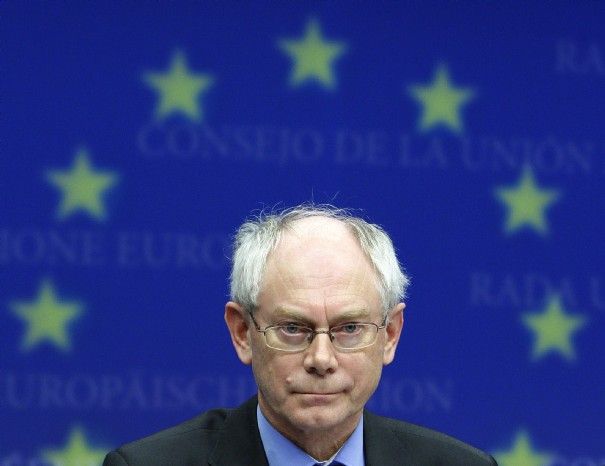
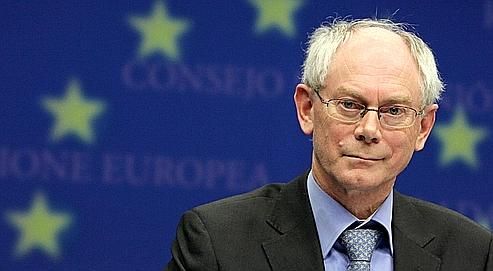
Herman Van Rompuy, Belgium's reluctant prime minister, portrayed himself this evening as Europe's reluctant president. “I have not sought this post or worked for it, but I assume it with conviction and enthusiasm,” he said.
He stressed that he would continue with the consensual style that had been his hallmark in Belgian politics and which brought him to the prime minister's post at the end of last year.
“Every country should emerge victorious from negotiations,” he said. “A negotiation that ends with a defeated country is never a good negotiation.”
“We are living in a period of anguish and anxiety and lack of confidence,” he said, after highlighting the economic, environmental and security problems. He said that now that the Lisbon treaty was ratified, the issue of institutional reform was “closed for a long time”.
But Van Rompuy stressed that the presidents of the EU's three main institutions – the Council, the European Parliament and the European Commission – must work together, respectfully.
He said that he looked forward to the enlargement of the EU in the next two and a half years, to include “countries that of course meet conditions”. Asked his views on the admission of Turkey to the EU, he said that he would not be representing his own views but those of the 27 member states. “My personal opinion is totally subordinate to the views of the Council,” he said.
He said that, after consultation with Fredrik Reinfeldt, Sweden's prime minister, who currently holds the chair of the European Council, he would remain prime minister of Belgium until the end of the year and not take up his EU office until 1 January. Surprise >>> Tim King | Thursday, November 19, 2009
L’EXPRESS.fr: L'Union européenne gagne un président, Herman Van Rompuy. Mais la Belgique devra renoncer à ce Premier ministre qui a su concilier les intérêts des Flamands et des Wallons, à défaut de les réconcilier durablement. La crise belge pourrait-elle ressurgir à cette occasion?
Ce vendredi matin, la Belgique est fière. Le tout premier président du Conseil européen a été choisi dans ce pays présent depuis le début dans l'aventure européenne: les Vingt-sept ont penché pour son Premier ministre chrétien-démocrate, Herman Van Rompuy. Consécration pour ce néerlandophone de 62 ans, considéré comme efficace et discret par ses compatriotes.
"Il joue un rôle important depuis près de 30 ans en Belgique, à la tête du parti démocrate-chrétien et flamand (CD&V) puis comme ministre du Budget et enfin comme Premier ministre. C'est normal que les Européens ne le connaissent pas encore, c'est un homme de l'ombre", explique Pierre Havaux, journaliste au Vif/L'Express.
A Bruxelles, Herman Van Rompuy est le "Sphinx". "Il ne se répand pas dans les médias, il y est allergique! Ne vous attendez pas à des déclarations flamboyantes... Mais ne vous y trompez pas, c'est un faux mou doté d'un humour cynique. Il a le sens du compromis, c'est dans ses gênes, il est Belge", ajoute le journaliste politique de l'hebdomadaire.
Ajoutez à cette savante alchimie une dose de lucidité: "Il sait parfaitement qu'on l'a choisi pour déminer le terrain et arrondir les angles, surtout pas pour faire de l'ombre à des figures comme Nicolas Sarkozy. Ca ne le dérange pas". Et vous obtiendrez le candidat idéal pour le poste européen dont les contours restent encore à définir. Bruxelles regrette déjà son "Sphinx" >>> Par Marie Simon | Vendredi 20 Novembre 2009
Friday, November 20, 2009
Russian Priest and Muslim Critic, Daniil Sysoyev, Assassinated in Church
The Russian Orthodox priest Daniil Sysoyev, 35, was shot by a masked gunman. Photo: Times Online
TIMES ONLINE: A Russian Orthodox priest known for his outspoken criticism of Islam and attempts to convert Muslims to Christianity has been assassinated in his Moscow church.
A masked gunman shot Father Daniil Sysoyev in the head and chest after asking for him by name, police said. The choirmaster, Vladimir Strelbinsky, was seriously wounded in the attack at St Thomas Church in southern Moscow.
Father Daniil, 35, died of his wounds in hospital late last night. A Russian newspaper reported that he had recently told its journalists of 14 death threats by telephone and e-mail, which he had received as a result of his work among Muslim migrants from former Soviet republics.
“They’ve threatened to cut my head off 14 times,” the priest told Komsomolskaya Pravda, adding that the Federal Security Service had contacted him last year after uncovering a plot to murder him. >>> Tony Halpin in Moscow | Friday, November 10, 2009
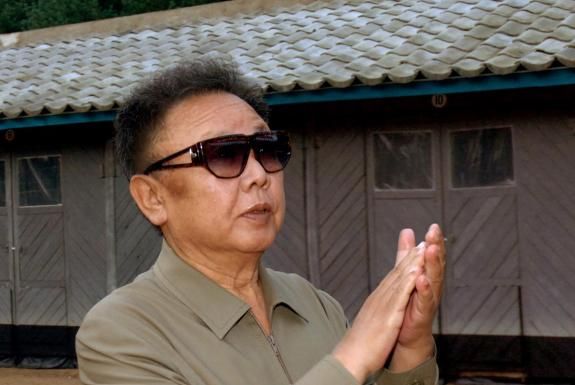
Kim Jong-Il. Crédits photo : Le Monde
En Corée du Nord, la situation des droits de l'homme reste très alarmante
LE MONDE: Le non-respect des droits de l'homme en République populaire démocratique de Corée (RPDC) était un sujet sur lequel les déclarations à Séoul du président Barack Obama étaient attendues. En Chine, l'hôte de la Maison Blanche a été peu mordant. Il ne l'a pas été davantage à Séoul dans le cas d'un pays certes moins puissant dont la situation a été qualifiée de "pire du monde" par Vitit Muntarbhorn, rapporteur auprès des Nations unies sur les droits de l'homme en RPDC.
Des organisations de défense des libertés civiles avaient exhorté M. Obama à la fermeté : "le problème nucléaire a trop longtemps éludé d'autres questions", estime Elaine Pearson, directrice adjointe pour l'Asie de Human Right Watch. Dans une lettre ouverte au président américain, Timothy Peter, directeur de Helping Hands Korea, rappelle que la Chine rapatrie de force les Nord-Coréens qui passent clandestinement la frontière. Ils seraient actuellement de 30 000 à 50 000. La plupart sont des migrants économiques qui passent temporairement en Chine en quête de travail et de nourriture. Ramenés en RPDC, ils risquent de lourdes peines de prison. >>> Tokyo Correspondant | Jeudi 19 Novembre 2009
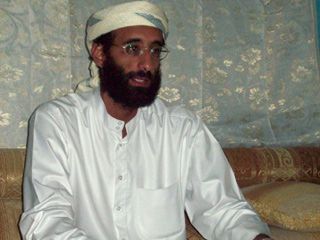
Anwar al-Awlaki. Photo: Fox News
Hasan E-Mail to Radical Imam: 'I Can't Wait to Join You' in the Afterlife
FOX NEWS: The Army psychiatrist accused of killing 13 people in the Fort Hood massacre told a radical Muslim imam, "I can't wait to join you" in the afterlife, in one of several e-mails exchanged between the two men, ABC News reported on Thursday.
An unnamed official "with top secret access" told the network 18 e-mails were exchanged between Maj. Nidal Malik Hasan and Anwar al-Awlaki, who encouraged Muslims to kill U.S. troops in Iraq, from Dec. 2008 until June of this year.
Other e-mails, the official said, included discussion of when jihad is considered "appropriate," and if it is acceptable for innocent people to die in suicide attacks.
"Hasan told Awlaki he couldn't wait to join him in the discussions they would [be] having over non-alcoholic wine in the afterlife," ABC quoted the official as saying.
Hasan — with an annual salary around $92,000 — also wrote, "My strength is my financial capabilities," the source said. Investigators have found the Army major donated as much as $30,000 per year to Islamic "charities." American authorities have found several such charities to be conduits to terrorist networks. >>> FoxNews & AP | Friday, November 20, 2009
US Postal Service Closes North Pole to Christmas Post
THE TELEGRAPH: The US Postal Service has been accused of Scrooge-like behaviour after it imposed strict rules on a 55-year-old Father Christmas letters service over fears that paedophiles might gain access to the young correspondents.
Since 1954, the Operation Santa programme, which is centred in the small Alaskan town of North Pole, has been forwarding about 150,000 letters a year addressed to “Santa Claus, North Pole”.
Replies written by volunteers around the US and bearing the North Pole postmark, come signed by one of Santa’s elves. However, concerns were raised last year when a worker at a sorting centre in Maryland recognised an Operation Santa volunteer in the state as a registered sex offender.
The individual was sacked before he could answer a child’s letter, but the episode prompted the Postal Service to tighten up the rules, which already required “elves” to show identification.
The service now prohibits volunteers from having access to children’s full names and addresses. They will be replaced by codes that match computerised addresses known only to the post office. >>> Tom Leonard in New York | Thursday, November 19, 2009
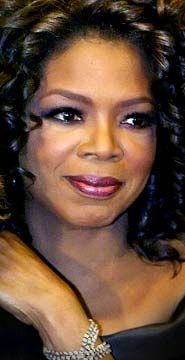
TIMES ONLINE: Oprah Winfrey, the Queen of the American talk show, is to give up her sofa after 25 years of A-List interviews, weepy personal confessions, and spectacular audience give-aways—in spite of a contract that saw her earn an estimated $275 million (£166 million) last year alone.
The 55-year-old African American star, who was born into poverty in rural Mississippi—the daughter of a teenage single mother—is thought to have decided to call an end to her hugely successful show because of her much-anticipated plans to launch a cable channel.
“The sun will set on the ‘Oprah’ show as its 25th season draws to a close on September 9, 2011,” wrote Tim Bennett, the president of Ms Winfrey’s company, Harpo Products, in a letter to employees. They were reportedly informed of the decision late on Thursday.
In spite of its 4pm air-time and relatively modest viewership of 7 million, The Oprah Winfrey show is a force like no other in modern broadcasting.
Vastly influential with American women, its unashamed sentimentality and focus on inspirational first-person stories and self-improvement advice has influenced American pop culture profoundly, in particular the presentation of news.
Indeed, the ‘Oprahfication’ of news is such that when Ms Winfrey announced to her studio audience last year that she had gained weight—to the point where she had reached 200lbs—the revelation briefly turned into a more prominent story on the cable news channels than the collapse of the global economy. >>> Chris Ayres in Los Angeles | Friday, November 20, 2009
Archbishop Tells Pope: There Will Be No Turning Back on Women Priests
TIMES ONLINE: The Archbishop of Canterbury yesterday made his most outspoken challenge to the Roman Catholic Church since the Pope invited disaffected Anglicans to switch to Rome.
Speaking before he meets Benedict XVI tomorrow, Dr Rowan Williams told a conference in Rome that the Catholic Church’s refusal to ordain women was a bar to Christian unity.
“For many Anglicans, not ordaining women has a possible unwelcome implication about the difference between baptised men and baptised women,” he said.
The Anglican provinces that ordain women had retained rather than lost their Catholic holiness and sacramentalism, he said. >>> Ruth Gledhill and Richard Owen in Rome | Friday, November 20, 2009
European Union: Fading Presidential Ambitions
THE GUARDIAN – Editorial: Who do you call when you want to call Europe? After five years of wrangling designed to deal with the Henry Kissinger question, the EU last night failed to provide a satisfactory answer. The first ever president of the European council is to be the haiku-writing Belgian prime minister, Herman Van Rompuy, who is still little known in his own country, let alone the wider world. And the continent's pioneering high-representative on foreign policy is the able but unknown Labour baroness, Catherine Ashton, who is as unelected as she is obscure. Neither will stop the traffic even in Brussels, never mind in Beijing. Talk of President Blair has bitten the dust, but so too has any hope of Europe forcing the planet to pay it fresh attention.
That ultimately disappointed hope is what sunk the EU into a prolonged bout of introspection from which it has only just emerged. The 2004 draft constitution was all about creating identifiable leadership, until the people of the Netherlands and France scuppered the plan. But the ambition of providing Europe's half-billion people with a new voice lived on through the Treaty of Lisbon, which limped through near-death in Ireland and eastern resentment to be signed and sealed this month.
At last, the European council could be galvanised by a dynamic leader instead of drifting with an endlessly-rotating chair; and at last Brussels would be able to enter discussion on the Middle East, Africa and the environment with a figure able to look Washington's secretary of state in the eye. Or, at least, that was the theory. But while Tony Blair's divisive and doomed candidacy for the first of these posts created a terrific distraction, Europe quietly returned to its old ways. A Franco-German stitch-up in favour of an obscure Belgian is exactly how things traditionally worked – it is as if the Swedes, the Poles and the rest had never joined the club. There was no puff of white smoke, but the secretive manner in which 27 proud democracies reached the decision made the Vatican look almost transparent. >>> Editorial | Friday, November 20, 2009
Europe's two most powerful jobs were handed out yesterday.
But the 500million people who live in the EU were given no say in who got them.
Instead, Europe's elite chose the winners of this shabby lottery.
First in secretive meetings, then over a lavish feast, they thrashed out their sickening stitch-up. It was like the worst days of Soviet Russia.
And it exposed once again how this discredited European empire is rotten to the core. [Source: The Sun] Graeme Wilson | Friday, November 20, 2009
Ashton: 'I Am Best Person for EU Foreign Job'
BBC: Baroness Ashton has hit back at claims she does not have enough experience for the post of EU high representative for Foreign Affairs and security.
The Labour peer was the surprise choice of Europe's leaders for the role - dubbed the first EU foreign minister.
Lady Ashton told the BBC that EU leaders were "comfortable" with her appointment - and that she will show she is "the best person for the job". >>> | Friday, November 20, 2009
Last Night's Menu
Dinner menu: The Sun
BNP Signs Its First Non-white Member...
THE INDEPENDENT: ... but he's only joined because he hates Muslims
An elderly Sikh who describes Islam as a "beast" and once provided a character reference for Nick Griffin during his racial hatred trial is set to become the British National Party's first non-white member.
Rajinder Singh, an anti-Islam activist in his late seventies who blames Muslims for the death of his father during the Partition of India in 1947, has been sympathetic towards Britain's far-right party for much of the past decade even though he currently remains barred from becoming a member because of the colour of his skin.
But last weekend the BNP's leadership took their first steps towards dropping its membership ban on non-whites after the Human Rights Commission threatened the party with legal action. The move will be put to a vote of members soon. >>> Ben Quinn and Jerome Taylor | Friday, November 20, 2009
Le Belge Van Rompuy va présider l'Europe
LE FIGARO: À 62 ans, le premier ministre belge, qui prendra ses fonctions à la tête de l'Union le 1er janvier, est un homme discret, rompu à l'art du consensus.
Les Vingt-Sept ont préféré le consensus au panache. À l'issue d'un sommet rondement mené, le Belge Herman Van Rompuy a été désigné jeudi premier président du Conseil européen, et la Britannique Catherine Ashton devient quasi-ministre des Affaires étrangères au poste de haut représentant.
Déjouant les pronostics de négociations à rallonges, les chefs d'État et de gouvernement ont prouvé leur capacité à s'entendre sur le visage de la future Europe. Il n'est pas sûr pourtant que leur double choix fasse rêver. Les deux lauréats sont des figures nouvelles sur la scène internationale et ont pleinement bénéficié des tractations entre grandes capitales qui peinaient à trouver un dénominateur commun.
Van Rompuy a réuni le soutien annoncé de Paris et Berlin. De son côté, le premier ministre Gordon Brown «a joué un jeu superbement machiavélique», soulignait-on de source diplomatique. Les Britanniques, qui soutenaient vent debout la candidature de Tony Blair pour la présidence, ont accepté de le lâcher en échange du poste de haut représentant. David Miliband, candidat idéal, n'a finalement pas sauté le pas. C'est donc Catherine Ashton, commissaire européenne au Commerce mais novice en politique internationale, qui s'est retrouvée, à 53 ans, propulsée au premier plan, dans un contexte porteur pour les femmes. Il ne lui manque à présent que la confirmation du Parlement.
L'hypothèse Blair étant levée, la voie était aussi ouverte pour Van Rompuy, qui représente l'antithèse du flamboyant Britannique. À 62 ans, le premier ministre belge a su s'imposer par sa maîtrise des dossiers et son art du consensus dans le sac de nœud de la politique belge. Des talents qu'il compte transposer au niveau européen lorsqu'il prendra ses fonctions, le 1er janvier : «Une négociation avec des vaincus est toujours une mauvaise négociation», a-t-il affirmé jeudi. Originaire d'un pays fondateur de l'Europe, conservateur comme la majorité des pays au Conseil, il parle français et cultive la discrétion - un avantage pour les grands pays qui craignaient d'envoyer à Bruxelles une diva leur faisant de l'ombre. «Celui qui sera appelé, c'est celui qui parle pour l'Europe» >>> Claire Gallen, à Bruxelles | Vendredi 20 Novembre 2009
Arabesques sacrées des arts de l'Islam
LE FIGARO: Des manuscrits du Coran si petits qu'ils tiennent dans la paume de la main aux lourds rideaux de la Kaaba ; des premières estampes panoramiques de La Mecque aux miniatures de la chronique des rois perses ; des émeraudes intaillées pour le trésor du Grand Moghol aux tapis évoquant dans la soie ou le velours les jardins du paradis : l'infiniment grand et l'infiniment petit se côtoient dans cette collection d'arts islamiques. Tant il est vrai que, pour le croyant, Dieu est partout, dans l'Univers comme dans le détail. >>> Éric Biétry-Rivierre (Figaroscope) | Mardi 20 Octobre 2009
Europas neue Spitze: Die wahren Entscheider bleiben andere
ZEIT ONLINE: Geschmeidig, effizient, möglichst lautlos: Die Berufung von Ashton und Van Rompuy zeigt, wie sich die EU ihr Spitzenpersonal vorstellt. Eine wichtige Chance wurde vertan.
Man reibt sich verwundert die Augen. Der Belgier Herman Van Rompuy und die Britin Catherine Ashton – sie bilden Europas neues Spitzenduo. Es gibt wahrscheinlich außerhalb der kundigen Brüsseler Zirkel nur wenige, die mit den beiden Namen etwas anfangen können. Es hat schon eine besondere Ironie: Ausgerechnet zwei Politiker, die dem Publikum weitgehend unbekannt sind, sollen der Europäischen Union nun ein Gesicht verleihen.
Der neue EU-Ratspräsident Van Rompuy und die künftige "EU-Außenministerin" Catherine Ashton haben den Segen der europäischen Staats- und Regierungschefs bekommen. Die Autorität, die sich mit ihren Ämtern verbindet, werden sie sich allerdings erst noch erarbeiten müssen. Denn sie treten ihre Posten unter einem schlechten Vorzeichen an: Sie sind der kleinste gemeinsame Nenner im europäischen Posten-Poker.
Es ist kein Zufall, dass sich der EU-Gipfel bei der Besetzung der neuen europäischen Spitzenämter ausgerechnet auf zwei Politiker geeinigt hat, die in der Europapolitik noch wenig von sich reden machten. Gefangen im Parteien- und Geschlechterproporz, bemüht um den Ausgleich zwischen großen und kleinen EU-Staaten, fanden Angela Merkel, Nicolas Sarkozy, Gordon Brown und die übrigen europäischen Staatenlenker eine Lösung, die niemandem weh tut, vor allem ihnen selbst nicht. Sie sind die wahren Entscheider in der EU – und wollen es auch bleiben. >>> Zeit Online, Tagesspiegel | Freitag, 20. November 2009
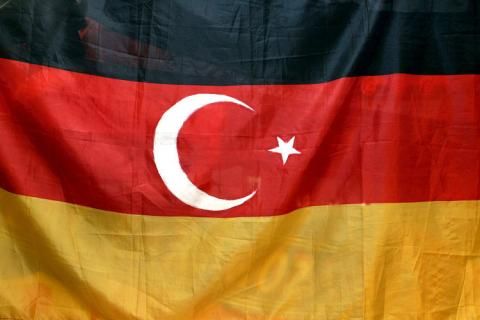
Studie: Deutsche Türken wollen türkisch bleiben
DER TAGESSPIEGEL: Fast jeder zweite der in Deutschland lebenden Türken und türkischstämmigen Migranten fühlt sich nicht erwünscht. Bei den Werten gibt es große Übereinstimmung mit den übrigen Befragten – aber nicht beim Familienbild.
BERLIN - Fast die Hälfte der in Deutschland lebenden Türken und türkischstämmigen Migranten fühlt sich in Deutschland unerwünscht, 42 Prozent planen sogar eine Rückkehr in die Türkei. Das ist das Ergebnis einer am Donnerstag in Berlin vorgestellten Studie, für die 331 Türken in Deutschland befragt wurden. Diese stünden zudem „fest zu ihren kulturellen und religiösen Wurzeln und den türkischen Wertewelten“, schreiben die Autoren der Studie. Die ehemalige Berliner Ausländerbeauftragte Barbara John (CDU), die die Studie mit vorstellte, rief dazu auf, den Wunsch nach Bewahrung der eigenen Kultur zu respektieren.
Bei den jungen Migranten ist der Wunsch, in die Türkei zu gehen, sogar ausgeprägter als bei den älteren. Dieses Ergebnis mache besonders nachdenklich, sagte Kenan Kolat, Bundesvorsitzender der Türkischen Gemeinde in Deutschland, dem Tagesspiegel. „Es ist fatal, wenn Jugendliche, die hier geboren sind und die wir hier ausgebildet haben, unser Land wieder verlassen wollen.“ Den Grund dafür sieht Kolat in einer „unterschwelligen Diskriminierung“, die viele Türken in Deutschland erlebten. „Antitürkische Ressentiments haben in den vergangenen Jahren zugenommen“, sagte der Vorsitzende der Türkischen Gemeinde. Wenn so viele Menschen sich in Deutschland nicht angenommen fühlten, müsse dringend etwas getan werden. Insgesamt 82 Prozent der Befragten sind der Auffassung, dass die deutsche Gesellschaft stärker auf die Gewohnheiten und Besonderheiten der türkischen Einwanderer Rücksicht nehmen sollte. >>> Von Claudia von Salzen | Freitag, 20. November 2009
Iran: Campaign Launched to Annoint Neda Agha-Soltan Time Magazine's Person of the Year 2009
THE LOS ANGELES TIMES: The flickering images of Neda Agha-Soltan’s last moments in a Tehran street on June 20 before she died from gunshot wounds gripped the world, galvanized the nation and made the 26-year-old music student the face of Iran’s recent protest movement.
Five months after an unknown assailant took her life at a demonstration in the Iranian capital staged by pro-reform activists, supporters across the world have spearheaded a grassroots initiative in a move to immortalize her.
Through the use of various social media outlets such as Facebook and Twitter, they are pushing to make Agha-Soltan Time magazine’s Person of the Year 2009.
Each year, the U.S.-based magazine grants the title to one or several persons who "most affected the news and our lives, for good or ill, and embodied what was important about the year."
Administrators of the more than 1,000-member strong Facebook group "Nominate Neda Agha-Soltan as the Time Woman of the Year" say she deserves the title because she has become “the symbol of the recent Iranian movement towards democracy and freedom" through her tragic death that shocked the world.
Members of the group are encouraged to send letters to Time magazine to vote for Agha-Soltan and spread the word to their friends.
The campaign is also triggering traffic on the micro-blogging service Twitter, where supporters of the initiative are "tweeting" their thoughts on why Time magazine should choose Agha-Soltan as its Person of the Year and calling on fellow Twitterers to give her their vote. >>> Babylon & Beyond | Thursday, November 19, 2009
Thursday, November 19, 2009
Herman Van Rompuy and Baroness Ashton Land Top EU Jobs
THE TEEGRAPH: Herman Van Rompuy and Baroness Ashton have been named the European Union's new president and foreign minister.
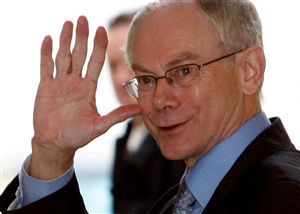
Herman Van Rompuy, left, and Baroness Ashton are the EU's new president and foreign minister. Photo: The Telegraph
They wouldn’t win a beauty contest between them, but, apparently, they have won the race to become EU president and EU foreign minister. Good wishes to both. – Mark
The little-known Belgian federalist and the Labour peer who has never held elected office were selected at a meeting in Brussels.
EU leaders chose the Belgian prime minister as the first President of the European Council. Britain's European Trade Commissioner was made the High Representative for Foreign Affairs.
The surprise combination emerged after Gordon Brown ended Tony Blair's hopes of becoming president, abandoning his support for his successor and proposing Baroness Ashton for the foreign job instead.
The Prime Minister's switch surprised European leaders, not least because of Baroness Ashton's lack of diplomatic experience.
A former health authority chairwoman made a peer in 1999, she held a string of low-key ministerial posts until last year when she was sent to Brussels as an interim replacement for Lord Mandelson on his return to the Cabinet.
Mr Van Rompuy is a poetry-writing economist almost entirely unknown outside Belgium until he emerged as EU leaders' choice for a president who could not possibly overshadow national leaders.
A staunch advocate of European integration, he has backed policies including a European-wide tax on all financial transactions to fund EU work. >>> James Kirkup and Bruno Waterfield in Brussels | Thursday, November 19, 2009
Tony Blair Dumped as Baroness Ashton of Upholland Gets Key EU Role
TIMES ONLINE: The EU appointed Herman Van Rompuy, the Belgian Prime Minister, and the British Trade Commissioner, Baroness Ashton of Upholland, to the two newly created posts of President and High Representative tonight, hours after Downing Street confirmed it had abandoned its support for Tony Blair.
Gordon Brown joined the seven other European socialist group leaders in backing Mr Van Rompuy and Lady Ashton after accepting that there was too little support for Mr Blair to be president.
Downing Street's U-turn was a humiliating snub to Mr Blair, Mr Brown's predecessor, who had hoped to take the plum role, but was opposed by key EU leaders who feared he would be too presidential. >>> Jenny Mills, Philip Webster and David Charter | Thursday, November 19, 2009