Sunday, November 15, 2009

«Die Zeit wird knapp» : Obama und Medwedew drohen Iran

NZZ ONLINE: Die USA und Russland haben Teheran aufgefordert, ein Abkommen über die Verarbeitung angereicherten Urans ausserhalb des Irans zu unterzeichnen. «Die Zeit wird knapp», sagte der amerikanische Präsident Barack Obama bei einer gemeinsamen Pressekonferenz mit dem russischen Präsidenten Dmitri Medwedew am Sonntag in Singapur.

Im Atomstreit mit dem Iran haben der amerikanishe Präsident Barack Obama und der russische Staatschef Dmitri Medwedew den Druck auf die Führung in Teheran erhöht. Die Zeit für die Annahme des internationalen Kompromissvorschlags laufe allmählich ab, sagte Obama in Singapur.

Der Iran habe leider bislang nicht dem Vorschlag zugestimmt, der allgemein als kreativer und konstruktiver Vorstoss angesehen werde, sagte der amerikanische Präsident an einer gemeisamen Medienkonferenz mit Medwedew am Rande des Gipfels des Asien-Pazifik-Forums (Apec) am Sonntag.

Auch Medwedew äusserte sich unzufrieden über das Tempo der Verhandlungen. Wenn es keine Ergebnisse gebe, müssten andere Mittel erwogen werden. «Unser Ziel ist klar: ein transparentes Atomprogramm statt eines Programms, das die Sorgen Anderer erregt», sagte Medwedew. >>> sda/Reuters | Sonntag, 15. November 2009
Exclusive: Boyfriend Speaks of His Love for Neda Agha Soltan, Murdered Iranian Protester

THE OBSERVER: Neda was prepared 'to take a bullet in the heart' in fight against President Ahmadinejad

Neda Agha Soltan, the young Iranian woman whose face became the international symbol of protest against Mahmoud Ahmadinejad, told her fiancé she was prepared to "take a bullet in the heart" in the fight against the president's regime.

The revelation comes as her boyfriend speaks out for the first time after being imprisoned following Neda's death last June, when she was shot by Iranian police at a demonstration in Tehran. Caspian Makan, a photographer, spent two months in prison for criticising the authorities after her death. In a moving interview, he told the Observer that far from being a bystander caught up in the demonstrations, she was committed to the overthrow of Ahmadinejad. As a result of her high-profile presence at the protests, he believes she was targeted by the regime loyalists who killed her.

Makan has fled Iran and given two in-depth interviews. His meeting with director Angus Macqueen, which is featured in today's Observer Review, will appear in a BBC film about Neda. In both interviews she emerges as a markedly different figure to the young woman depicted at the time of her death. Her fiancé describes her as politically active and assertive, convinced she was fighting for "democracy and freedom" for Iranians. Neda joined the first wave of protests. After the election results were announced, she headed to the Interior Ministry in central Tehran – a focal point for the emerging movement supporting Ahamdinejad's election rival, Mir Hossein Mousavi. Makan remembers telling her that the scenes she described to him would quickly lead to a violent response from the regime.

She said: "No, they will continue because the people are too many and the scale too widespread… Everyone is responsible for reaching democracy," Makan recalls her as saying. "If I get shot in the heart or arrested, it's not important because we are all responsible for our future." >>> Iason Athanasiadis | Sunday, November 15, 2009

Caspian Makan: 'I Cannot Believe It Yet. I Still Think I Will See Neda Again'

THE OBSERVER: Neda Agha Soltan, killed on camera by a sniper's bullet, became the symbol of opposition to Iranian President Ahmadinejad this summer. Her boyfriend, Caspian Makan, who has just fled the country, talks to Arash Sahami and Angus Macqueen about their romance, his imprisonment after her death and his terrifying escape

A demonstrator holds a photo of dead Iranian student Neda Agha-Soltan during a protest in New York. Photo: The Observer

Caspian Makan has been run over by the blind, careering juggernaut of history. Just five months ago his girlfriend was killed on the streets of Tehran, one of some 80 deaths reliably reported during the tumultuous demonstrations that followed the disputed presidential elections. Most victims' relatives and friends have grieved in private – but Neda Agha Soltan, Caspian's girlfriend, died live on phone camera, an almost unbearable 90-second sequence that turned her into an icon. Uploaded on to the internet, within hours her face became the face of protest.

But symbols destroy lives. In the days and weeks that followed, Caspian has lost not only the woman he was planning to marry, but also his country, his family, his friends and his career. Anyone and everyone who had anything to do with Neda's death are now toxic to the Iranian government. Members of her family have been bullied, threatened and even detained. The doctor who is caught on camera trying to save her life is now exiled in Britain. The music teacher who was with her when she died has been rolled out on Iranian television, patently required to deny what he saw: that Neda was shot by a member of the religious militia.

And Caspian disappeared. In the days after her killing, he spoke out on foreign satellite stations and then vanished. Finally it was confirmed he was in the notorious Evin Prison in Tehran – the frightening symbol of the Shah's oppressive regime smoothly transferred into the hands of the Islamic Republic's secret police. He was held for more than two months, some of that time in solitary confinement. In September he was released on bail pending trial – perhaps being prepared for one of the extraordinary show trials that have been broadcast on Iranian TV over the past months, in which leading supporters of the opposition have been obliged to recant their actions. Urged on by family and friends, Caspian decided he had to escape. >>> The Observer | Sunday, November 15, 2009

'An Iranian Martyr', directed by Monica Garnsey, will be broadcast on BBC2 on Tuesday, 24 November, at 9pm.

Saturday, November 14, 2009

US-Präsident: Obama warnt Nordkorea vor Konfrontationskurs

Barack Obama redet in der Suntory Hall in Tokio. Bild: Welt Online

WELT ONLINE: US-Präsident Barack Obama hat während seiner Asienreise erneut Nordkorea aufgefordert, seinen Konfrontationskurs zu beenden. In seiner Grundsatzrede zur Außenpolitik bekräftigte Obama die Beistandsgarantie für die langjährigen Verbündeten Japan und Südkorea und lobte die wirtschaftliche Entwicklung Chinas.

US-Präsident Barack Obama hat Asien in seiner fünften außenpolitischen Grundsatzrede eine gleichberechtigte Partnerschaft angeboten. Vor 1.500 Zuhörern in Tokio bekräftigte er die Beistandsgarantie für die langjährigen Verbündeten Japan und Südkorea, lobte den Aufstieg Chinas zur Wirtschaftsmacht und warnte Nordkorea davor, seinen Konfrontationskurs fortzusetzen. Anschließend reiste Obama zum Gipfeltreffen des Asiatisch-Pazifischen Wirtschaftsforums (APEC) in Singapur.

Die Regierung in Pjöngjang müsse lernen, dass die Nichterfüllung internationaler Verpflichtungen im Umgang mit seinem Atomprogramm nicht zu mehr, sondern zu weniger Sicherheit führe, sagte Obama. Das isolierte Nordkorea habe nur dann eine bessere Zukunft, wenn es zu den Sechsparteien-Gesprächen zurückkehre. „Wir werden weiter eine klare Botschaft senden, nicht nur mit Worten, sondern mit unseren Handlungen“, betonte der US-Präsident. >>> AP/ks | Samstag, 14. November 2009
Obama Bows to Emperor of Japan

Our Alcoholic Father Beat Me, Says Barack Obama's Half Brother, Mark

THE TELEGRAPH: As President Barack Obama begins his China visit, his half brother who lives there reveals that when he was a child their father was a violent drunk

Barack Obama's half brother, Mark Ndesandjo, paints a shocking picture of his and President Obama's father. Photo: The Telegraph

The southern Chinese city of Shenzhen is a world away from Washington DC.

The booming border town and the staid American capital are both home to members of the Obama family. That, though, is where the similarities end, because while Barack Obama resides in the splendour of the White House and is perhaps the most recognisable person on the planet, his younger half-brother Mark lives anonymously in a rented two-bedroom flat in Shenzhen's suburbs.

Now, on the eve of his older sibling's first-ever visit to China, Mark Okoth Obama Ndesandjo has emerged from the shadows to reveal the disturbing truth about the late Barack Obama Sr, his and President Obama's father.

Last week, Mr Ndesandjo published an autobiographical novel, Nairobi to Shenzhen: A Tale of Love In The East. It paints a shocking picture of his abusive and alcoholic father, one that is at odds with the man portrayed in Dreams From My Father, President Obama's best-selling 1995 memoir.

"I can remember my father hitting my mother and me. They're memories I don't like to dwell on because it's very painful for me," said Mr Ndesandjo, who has lived in China for seven years.

"I had a very difficult early childhood and there were things that happened to me that really hardened me."

In his book, Mr Ndesandjo describes a father who was a heavy drinker and who began to abuse his wife, verbally and physically, soon after they were married. Their son witnesses his mother running, screaming, into the night to escape being beaten. >>> David Eimer in Guangzhou | Saturday, November 14, 2009

Ce demi-frère qu'Obama va retrouver en Chine

Même silhouette longiligne et athlétique, Mark Ndesandjo présente aussi de vraies ressemblances dans les traits avec son demi-frère Barack Obama. Crédits photo : Le Figaro

LE FIGARO: Mark Okoth Obama Ndesandjo, né du même père et d'une autre mère, vit à Shenzhen au sud de la Chine. Il vient de publier un roman autobiographique et sera dimanche à Pékin pour accueillir le président.

En s'aventurant pour la première fois en terre chinoise, dimanche, Barack Obama pourra s'appuyer sur une épaule familiale s'il est pris du vertige du grand dépaysement. Son «frère chinois» devrait être là pour l'accueillir. Resté jusqu'à présent très discret sur sa parenté si intime avec le président américain, Mark Ndesandjo vient de sortir un peu de l'ombre.

Longtemps, l'homme avait tu cette prestigieuse affinité­ lignagère, y compris à ses bons amis, jusqu'à ce que la presse le débusque l'an dernier. Depuis, il avait refusé toutes les sollicitations. Aujourd'hui, c'est cependant fort opportunément que Mark Okoth Obama Ndesandjo sort un livre, à mi-chemin entre le roman et l'autobiographie, à l'aube du voyage du président américain à Pékin. Si pour Barack Obama, le chemin s'est fait de Hawaï à Washington, celui de Mark l'a conduit De Nairobi à Shenzhen, titre de son ouvrage. Le demi-frère de l'homme le plus puissant du monde, comme on le souligne ici, a fait souche depuis sept ans dans la grande ville du sud de la Chine, à un jet de pierre de Hongkong. Une ville qui reste le symbole des réformes lancées par Deng Xiaoping, le temple du capitalisme rouge, pour ne pas perdre tous ses repères américains.

David, le nom du héros du roman, y pose son sac dans le sillage du 11 septembre 2001, après avoir perdu son travail. Il tombe sous le charme de la Chine par l'intermédiaire «d'une femme magnifique et d'un jeune orphelin». David est le fils d'une mère juive américaine, divorcée de son mari kényan. Dans la vraie vie, Obama père, divorcé en 1964 de la mère de l'actuel président, Stanley Ann Dunham, a ensuite rencontré une autre de ses quatre femmes, la jeune Ruth Nidesand, avec laquelle il est reparti l'année suivante au Kenya, où il a eu six nouveaux enfants. Ce père est au cœur du livre de Mark Ndesandjo, comme il l'était des célèbres Mémoires de Barack Obama, Les Rêves de mon père. Les deux hommes se rejoignent en peignant douloureusement le portrait d'un homme brillant, mais qui n'a jamais pu ou su tenir ses talentueuses promesses ni ses responsabilités familiales. Il disparaît dans la nature quand Barack a 2 ans, et le jeune garçon ne reverra son père que brièvement huit ans plus tard. Obama Senior est mort dans un accident de la route en 1982, à l'âge de 46 ans. Cette absence du père a été la grande blessure du président américain, en quête de cette part fuyante de son identité. Son cadet Mark, qui tait son âge, a connu les mêmes blessures. Il raconte ce père grignoté par l'alcool, battant sa mère, le frappant lui-même. De manière émouvante, il a confié combien l'élection de son demi-frère avait en ce sens transformé sa vie. La fierté ressentie devant ce succès et la liesse de millions d'Américains transfigurés par un nouvel espoir l'ont réconcilié «avec beaucoup de choses, y compris le nom d'Obama». >>> Par correspondant du Figaro à Pékin, Arnaud de La Grange | Vendredi 13 Novembre 2009

NZZ am SONNTAG: Der Halbbruder aus Shenzhen: Auf seinem Staatsbesuch in China trifft der US-Präsident auch einen Verwandten >>> Bernhard Bartsch, Peking | Sonntag, 15. November 2009

TIME: Obama's Half Brother Makes a Name for Himself in China >>> Ling Woo Liu / Guangzhou | Monday, November 16, 2009

TIME PHOTOGALLERY: Barack Obama’s Family Tree >>>
Obama Blowing Smoke!

With his bomber jacket, open-necked shirt, and smoking one cigarette after the other, Obama thought himself to be the ‘king of cool’! Photo: Stern.de

Check out these photos of Obama >>>

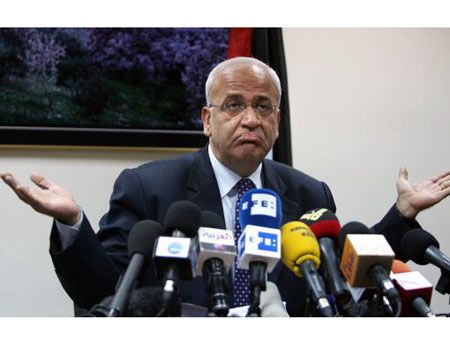
Erekat: PA* May Declare State via UN

YNET NEWS: Chief Palestinian negotiator: PA seeking global support for declaring statehood

Chief Negotiator Saeb Erekat says the Palestinian Authority is making an effort to elicit international support for declaring statehood, Al-Ayyam newspaper reported Saturday.

According to Erekat, the PA intends to promote this issue in order to bring it for a vote at the UN Security Council. The Palestinians are interested in declaring a state in line with the 1967 borders, he said.

"The idea is clear and understandable," he said, adding that "now we mobilize" and criticizing Israel's policies in the West Bank which he said prompted the latest Palestinian effort.

The move would send a message that "settlements and other unilateral actions are null and void and do not establish rights or territory," Erekat said, noting that he spoke about the Palestinian initiative with both American and European officials. >>> Ynet | Saturday, November 4, 2009

*PA – Palestinian Authority
Denmark to Pay Immigrants £12,000 to Go Home If They ‘Can’t or Won’t’ Assimilate

MAIL ONLINE: Denmark is boosting cash incentives to entice immigrants to return to their homelands if they 'can't or won't' assimilate into society.

The offer now on the table is close to £12,000 for every person who takes up the offer to leave.

Critics of the measure say it sends the wrong message to foreigners but the centre-right government in Copenhagen is forging ahead with the plan.

The financial carrot is ten times more than that previously offered under a scheme which as been law since 1997.

'We thought it was important to substantially increase this aid so that immigrants who want to return home because they are not able to adapt to Danish society have a strong financial basis to start a new life,' said foreign affairs spokesman Soeren Espersen of the far-right Danish People's Party.

The offer is aimed at immigrants and refugees who 'cannot or do not want to integrate into Danish society,' said the head of the DPP's parliamentary group, Kristian Tuelesen Dahl. >>> Allan Hall | Tuesday, November 10, 2009

Hat tip: Jihad Watch
Bob Schieffer on Nadal Malik Hasan: Muslim or "Religious Nut?"


This video shows that people really do not have a clue about Islam and Jihad. These men talk through their hats! Little wonder we are lsoing the war against militant Islam!

Hat tip: Jihad Watch
Barack Obama Bows and Talks of Green Tea Ice Cream as He Pushes US Ties in Asia

THE TELEGRAPH: President Barack Obama has bowed to the Emperor of Japan and revealed his childhood affection for green tea icecream as he pushes stronger US ties with Asia.

President Barack Obama is greeted by Japanese Emperor Akihito and Empress Michiko upon arrival at the Imperial Palace in Tokyo. Photo: The Telegraph

There was talk of green tea ice cream, memories of a childhood visit to Japan and even a reference to the remote fishing town Obama as the US President set out his vision for US relations with Asia in a keynote speech.

He later bowed deeply to Japanese Emperor Akihito and Empress Michiko, upon arrival at the Imperial Palace in Tokyo for a private lunch before he headed to Singapore on the next leg of his Asian tour.

Beneath the signature charm and rhetoric, President Barack Obama's message was clear: the US fully intends to deepen dialogue with China and pursue greater cooperation with countries across Asia.

Speaking before 1,500 people in a central Tokyo concert hall on the second day of his whistlestop tour of Asia, Mr Obama also pledged his "unshakeable" commitment to Asian security and insisted that the US would not be "cowed" by North Korea's nuclear tests.

Calling himself "America's first Pacific President" during a 40-minute address, Mr Obama said: "I want every American to know that we have a stake in the future of this region, because what happens here has a direct effect on our lives at home.

"This is where we engage in much of our commerce and buy many of our goods. And this is where we can export more of our own products and create jobs back home in the process."

The president reaffirmed the alliance between Japan and the US, which spans nearly five decades and has recently been overshadowed by a dispute over the relocation of American troops in the southern Okinawa region, and their continued presence in Japan overall. >>> Danielle Demetriou in Tokyo | Saturday, November 14, 2009
Muslims Must Quit British Forces, Says Iranian Envoy Abdolhossein Moezi

Ayatollah Abdolhossein Moezi says the death of protesters in Iran was regrettable but unavoidable. Photo: Times Online

TIMES ONLINE: The Iranian Supreme Leader’s representative in Britain has told Muslim servicemen and women to quit the Armed Forces, saying that their involvement in the Afghanistan and Iraq wars is forbidden by Islam.

The cleric, personally appointed by Iran’s Supreme Leader, Ayatollah Ali Khamenei, to be his special envoy to the UK, also urged Muslims to defeat the opposition to the Iranian regime and keep the 30-year-old Islamic Republic alive.

In his first interview with an English language newspaper, Ayatollah Abdolhossein Moezi, director of the Islamic Centre of England, said he regretted that protesters were killed by the Iranian security forces after the presidential election in June but that their deaths were “unavoidable”.

Ayatollah Moezi, the most senior Iranian spiritual leader in Britain with thousands of followers from the Shia sect, said that it was wrong for followers of Islam to serve in the Armed Forces, especially in Afghanistan and Iraq where Muslims were being killed.

“Not only do I not accept it for Muslims to go there, I don’t accept non-Muslims to go there as well,” Ayatollah Moezi told The Times through an interpreter provided by him. “We say that Muslims are not allowed to go and kill Muslims. Do you think that Christians are allowed to go and kill Muslims?” >>> Richard Kerbaj | Saturday, November 14, 2009

Tehran Unlikely to Dissuade Muslims from Joining British Army

TIMES ONLINE: Anyone who counts Ayatollah Abdolhossein Moezi as a spiritual leader is unlikely to have joined the British military in the first place. He is the religious envoy of the same regime that calls Britain “the little Satan”.

Ayatollah Moezi is the director of the Islamic Centre of England, the London outpost of Iran’s neoconservative regime — a role to which he was personally appointed by Iran’s Supreme Leader, Ayatollah Ali Khamenei. His leadership — as political as it is religious — is anathema to most British-Iranians, the majority of whom came to the country to escape the Islamic Revolution.

Shia Muslims, who traditionally take their spiritual guidance from imams such as Ayatollah Khamenei, are outnumbered in Britain by Sunni Muslims, mostly from Pakistan and Bangladesh, who do not all recognise any special priestly authority. >>> Catherine Philp, Diplomatic Correspondent | Saturday, November 14, 2009
Profile: Angela Merkel and the Talent of Seeming Ordinary

THE TELEGRAPH: Angela Merkel, the German Chancellor, has the gift of making Germany seem routine, and worthy of little apprehension

Angela Merkel's studied ordinariness hides a ruthless and effective politician. Photo: The Telegraph

When the Berlin Wall came down, Margaret Thatcher was not the only person who worried that Germany might be about to become too interesting again. The reunited Germany, celebrating the 20th anniversary of the fall of the Wall this week, is a very powerful country, the most powerful in Europe. Yet under the leadership of Angela Merkel, the scientist from the East, it arouses very little apprehension.

This week, Mrs Merkel, who successfully regained the office of Chancellor in recent elections, chose not to dwell on the fall of communist eastern Europe and the events that led to a reunified Germany. Instead of grandstanding and gladhanding she warned instead in a big speech that the country's economic problems would "get bigger before they get better". She added that the growing budget deficit would not prevent the government from pressing ahead with cuts in income tax in an effort to stimulate growth.

The focus on economics and tax cuts highlighted the qualities of Europe's latest superstar woman politician: she is a ruthless power player who does what is needed, yet she conveys an impression of magnified ordinariness, right down to the determination to continue doing her own shopping and to queue in her local supermarket.

Nobody can read Mrs Merkel's mind, a talent she developed while growing up in East Germany as the daughter of a Lutheran pastor. To be allowed by the regime to build a successful career as a scientist, without actually joining the ruling Party of Socialist Unity (though she was active in its youth wing), required a prodigious capacity to veil her own opinions, to seem unthreatening and to concentrate in a pragmatic way on the task in hand.

Mrs Merkel has an excellent sense of humour and often smiles, but people no more know what lies behind her smile than what lies behind the Mona Lisa's. >>> Andrew Gimson | Friday, November 13, 2009

Friday, November 13, 2009

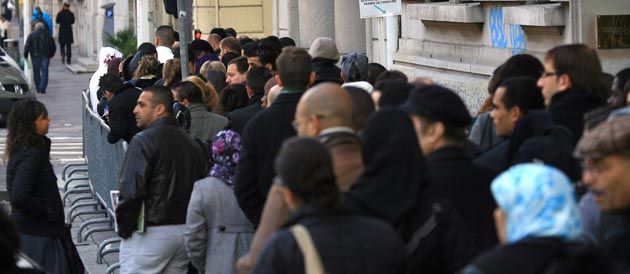
Débat sur l’identité nationale : Comment la France accueille ses immigrés

LE POINT: Ils sont vingt-quatre. Certains se sont mis sur leur trente-et-un, chaussures cirées et costume apprêté. D'autres ont préféré le confort de baskets et la chaleur d'un gros pull en laine pour affronter cette journée. Tous sont arrivés à l'Office français de l'immigration et de l'intégration (OFII) en avance sur leur convocation. Leurs regards se sont posés sur les grands drapeaux français et européens déployés à l'accueil : d'ici quelques heures, ils en seront. Ces immigrants auront leurs papiers français. Mais en attendant la remise de leur carte de séjour, un peu plus tard dans l'après-midi, les participants de tous âges sont venus aujourd'hui signer leur " contrat d'accueil et d'intégration " (CAI). Un passage obligatoire depuis 2007 pour tous les étrangers admis en France pour la première fois en vue d'une installation durable. Objectif : transmettre les symboles et valeurs de la République aux immigrés. À l'heure des débats initiés par Éric Besson , lepoint.fr est allé découvrir "l'identité nationale" telle qu'on l'enseigne aux nouveaux arrivants.

"Vous êtes sur la plate-forme d'accueil de l'OFII car vous allez recevoir votre premier titre de séjour", articule Christelle, l'auditrice en charge du groupe convoqué cet après-midi. Malgré un grand "bonjour" scandé à l'unanimité à l'entrée de la jeune femme, l'assemblée semble stressée. "Vous allez signer le CAI et vous engager par contrat à respecter les valeurs de la République française", continue Christelle solennellement, en parlant lentement. Aujourd'hui, tout son auditoire comprend le français : personne n'a eu recours à un traducteur ou à l'un des audioguides disponibles à l'entrée. Ousmane N'Diaye semble - comme le reste de l'assemblée - tendu. Ce Sénégalais de 34 ans s'est assis au milieu de la salle, comme s'il voulait se faire tout petit. Passer inaperçu, il connait cela par coeur : cela fait plus de quinze ans qu'il vit à Paris, sans papiers. Le grand gaillard écoute tout de même avec attention le film diffusé, "Vivre ensemble, en France". Tout un programme. >>> Par Louise Cuneo | Vendredi 13 Novembre 2009

Extraits : "Vivre ensemble, en France"

UN Meets Homeless Victims of American Property Dream

NAME: UN special rapporteur says wealthy US ignoring deepening homeless crisis while pumping billions into bank rescues / UN say US is neglecting deepening homeless crisis

A United Nations special investigator who was blocked from visiting the US by the Bush administration has accused the American government of pouring billions of dollars into rescuing banks and big business while treating as "invisible" a deepening homeless crisis.

Raquel Rolnik, the UN special rapporteur for the right to adequate housing, who has just completed a seven-city tour of America, said it was shameful that a country as wealthy as the US was not spending more money on lifting its citizens out of homelessness and substandard, overcrowded housing.

"The housing crisis is invisible for many in the US," she said. "I learned through this visit that real affordable housing and poverty is something that hasn't been dealt with as an issue. Even if we talk about the financial crisis and government stepping in in order to promote economic recovery, there is no such help for the homeless." >>> Chris McGreal in Los Angeles | Thursday, November 12, 2009
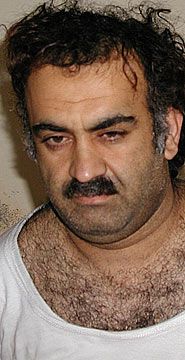
New York Trial for Alleged 9/11 Mastermind

TIMES ONLINE: Five Guantanamo Bay detainees alleged to have masterminded the September 11 attacks are to be taken to the United States to stand trial in a civilian court in New York, an Obama Administration official said today.

Khalid Sheikh Mohammed and four alleged accomplices will be brought on to US soil for trial as part of President Obama’s pledge to close down the detention centre in Cuba.

The Attorney General Eric Holder is expected to officially announce the decision today.

Mr Obama initially planned to close Guantanamo by January 22 next year but the Administration is no longer expected to meet that deadline.

The high profile trial will be an enormous legal and political test for Mr Obama’s approach to terrorism. If the case suffers legal setbacks the administration will face criticism from those who believe that it should have been held in a military court The case is also likely to force the federal court system to confront a host of controversial legal issues surrounding the President Bush-era counter terrorism programmes that started after the 2001 attacks. >>> Nico Hines | Friday, November 13, 2009
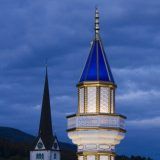
Zweierlei christlicher Umgang mit dem Islam: Christian Waber und CVP-Nationalrätin Barbara Schmid-Federer im Gespräch

NZZ ONLINE: Ein Minarettverbot verspricht laut einem EDU-Vertreter der Initianten eine Stärkung christlicher Werte in der Gesellschaft. Aus CVP-Sicht beeinträchtigt hingegen eine Einschränkung der Religionsfreiheit den religiösen Frieden und die Integration.

Was ist besonders christlich an einer Initiative, die für eine Religion eine Einschränkung vorsieht?

Christian Waber: Die Religionsfreiheit wird in keiner Weise tangiert. In der Schweiz können alle Religionen gelebt werden, auch die vielen Richtungen des Islam. Aber die Schweiz ist ein christliches Land. Und das erste der Zehn Gebote lautet: Du sollst keine anderen Götter haben neben mir. Allah und unser Gott sind nicht der gleiche Gott. Zu einem Minarett gehört der Muezzin, und er lobt Allah als einzigen Gott.

Vernachlässigt die CVP das Christentum, indem sie gegen die Initiative ist?

Barbara Schmid-Federer: Die CVP ist als politische Partei der Verfassung verpflichtet, versucht aber die ethischen Grundwerte des Christentums in die Politik einzubringen. Ein zentraler Glaubenssatz des Christentums ist die Gleichwertigkeit aller Menschen. Die Initiative können wir nicht annehmen, weil sie ganz klar eine einzelne Religionsgemeinschaft diskriminiert. Nur den Muslimen wird eines ihrer religiösen Symbole untersagt. Herr Waber, Sie widersprechen sich, wenn Sie die Religionsfreiheit bejahen, aber die Gleichbehandlung des Islam ablehnen.

Hätte das Minarettverbot vor dem Europäischen Gerichtshof für Menschenrechte Bestand?

Waber: Selbstverständlich. Artikel 9 der Europäischen Menschenrechtskonvention (EMRK) sieht ja wie auch der Uno-Menschenrechtspakt Ausnahmen vor. Und gerade das neue Strassburger Urteil über Kruzifixe in den italienischen Schulen zeigt, dass die Religionsfreiheit Schranken hat.

Schmid: Mit Ausnahme der Initianten sind alle Parteien und Juristen einhellig der Meinung, dass sowohl der Uno-Pakt als auch die EMRK verletzt werden.

Waber: Der Kern der Religionsfreiheit wird auch nach Meinung des Bundesrats nicht verletzt. Der Menschenrechtsgerichtshof akzeptiert beispielsweise das Schächtverbot.

Schmid: Wenn Minarette als Symbol verboten werden, ist das Feld frei für andere Forderungen. So könnte jemand Kirchtürme verbieten wollen.

Waber: Das ist doch kein Problem. Wenn eine solche Initiative lanciert wird und das Volk zustimmt, ist es ein demokratischer Prozess. Ist die Schweiz überhaupt ein christlicher Staat? >>> Interview: C. W. | Freitag, 13. November 2009
NY Gov. Paterson on Marriage Equality: The Advocate Sits Down with New York Governor David Paterson to Discuss LGBT Rights

Eurozone Emerges from Recession

BBC: The eurozone economy has emerged from recession after growing between July and September, figures have shown.

The 16 nations that use the euro collectively grew 0.4%, after shrinking by 0.2% between April and June.

The French and German economies both grew for a second consecutive quarter, confirming the eurozone's two largest economies are out of recession. >>> | Friday, November 13, 2009
Switzerland: Divided Over Minarets

Political Correctness Claims Thirteen Lives at Fort Hood

EXAMINER.COM: Yet another practitioner of the religion of peace has gone on a murderous rampage, this time at the US Army post at Fort Hood, Texas. The suffocating blanket of political correctness that dominates America and its military ensured that the perpetrator could operate in open and carry out his attack with ease. It is becoming apparent that anyone could have seen that he was an enemy of the United States and an aspiring terrorist, but the government and media template will be that he was simply a troubled individual acting alone, and that the attack had nothing to do with his Muslim faith. >>> Todd Keister | Thursday, November 12, 2009