Sunday, August 02, 2009

Obama’s Ratings Fall Back to Earth

THE SUNDAY TIMES: OFFICIALS insisted it was not a crisis meeting, but President Barack Obama and members of his cabinet had plenty to worry about as they ended a two-day retreat devoted to discussions of the administration’s faltering progress.

Plummeting opinion poll ratings, divisions among Democrats about healthcare reform and distracting rows about Wall Street bonuses, economic stimulus programmes and racial politics all cast a shadow over the beginning of Washington’s summer recess.

Obama and vice-president Joe Biden left the White House on foot on Friday evening to spend four hours at Blair House, a government guesthouse across the road, where all 22 cabinet members and several senior aides discussed policy over dinner. >>> Tony Allen-Mills in Washington | Sunday, August 02, 2009
Lubna Hussein: 'I'm Not Afraid of Being Flogged. It Doesn't Hurt. But It Is Insulting'

THE OBSERVER: Lubna Hussein could receive 40 lashes if found guilty on Tuesday of being indecently dressed - by wearing trousers. In her first major interview, she tells James Copnall in Khartoum why she is determined to fight on, whatever danger she faces

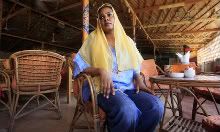
Sitting in the restaurant where her ordeal began, Lubna Hussein looks at the offending item of clothing that caused all the trouble and laughs softly. "In Sudan, women who wear trousers must be flogged!" she says, her eyes widening at the thought. The former journalist faces up to 40 lashes and an unlimited fine if she is convicted of breaching Article 152 of Sudanese criminal law, which prohibits dressing indecently in public.

What exactly constitutes "indecent" is not clear. Last month Lubna was among a crowd listening to an Egyptian singer in a restaurant in a swish area of Khartoum when policemen surged in. They ordered Lubna and other women to stand up to check what they were wearing, and arrested all those who had trousers on. Lubna, who was wearing loose green slacks and a floral headscarf, was taken to the police station.

"There were 13 of us, and the only thing we had in common was that we were wearing trousers," Lubna says. "Ten of the 13 women said they were guilty, and they got 10 lashes and a fine of 250 Sudanese pounds (about £65). One girl was only 13 or 14. She was so scared she urinated on herself."

Lubna asked for a lawyer, so her case was delayed. Despite the risks, she is determined that her trial should go ahead. Before her initial hearing last Wednesday, she had 500 invitation cards printed, and sent out emails with the subject line: "Sudanese journalist Lubna invites you again to her flogging tomorrow."

The court was flooded with women's rights activists, politicians, diplomats and journalists, as well as well-wishers. During the hearing, Lubna announced that she would resign from her job as a public information officer with the United Nations, which would have provided her with immunity, to fight the case. The judge agreed, and adjourned the trial until Tuesday.

Lubna says she has no fear of the punishment she might face. "Afraid of what? No, I am not afraid, really," she insists. "I think that flogging does not hurt, but it is an insult. Not for me, but for women, for human beings, and also for the government of Sudan. How can you tell the world that the government flogs the people? How can you do that?"

She is determined to face prosecution in order to change the law. "It is not for me. It is my chance to defend the women of Sudan. Women are often arrested and flogged because of what they wear. This has been happening for 20 years. Afterwards some of them don't continue at high school or university, sometimes they don't return to their family, and sometimes if the girls have a future husband, perhaps the relationship comes to an end." >>> James Copnall | Sunday, August 02, 2009
Raul Castro: Cuba Will Never Renounce the Revolution

THE SUNDAY TELEGRAPH: The Cuban president Raul Castro has warned the US and Europe he will not 'restore capitalism' and will never renounce the revolution.

Mr Castro said the Caribbean country's socialist political system was non-negotiable.

In a speech marking the end of the annual parliamentary session, which has been dominated by Cuba's grave economic crisis, he said he would be willing to "discuss everything" with foreign leaders except the island's political and social system.

The Cuban leader, who succeeded his ailing brother Fidel Castro as president three years ago, said he wanted to respond to comments by Hillary Clinton, the US secretary of state, who has linked dialogue with Cuba to democratic reform in the country.

"With all due respect, in response to Mrs Clinton, but also to the European Union ... I was not chosen as president to restore capitalism to Cuba or to renounce the revolution," he said to applause from Cuban politicians.

"I was chosen to defend, maintain and continue to perfect socialism, not to destroy it," said Mr Castro. >>> The Telegraph’s Foreign Staff and Agencies in Havana | Sunday, August 02, 2009
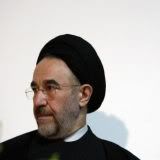
Khatami kritisiert Prozess gegen iranische Demonstranten: Vertrauen in das Regime soll weiter geschwächt werden

NZZ ONLINE: Der ehemalige iranische Staatschef Mohammad Khatami hat das Verfahren gegen Oppositionelle und Demonstranten nach der umstrittenen Präsidentenwahl als Schauprozess kritisiert. Der Prozess werde das öffentliche Vertrauen in die Regierung weiter schwächen, erklärte der reformorientierte Politiker am Samstag auf seiner Website. >>> ap | Sonntag, 02 August 2009
New Dark Age Alert! Gunman Kills Three in Tel Aviv Gay Nighclub [sic]

THE TELEGRAPH: A black-clad gunman has killed three people and wounded several others in an attack on a Tel Aviv nightclub.

Israeli police said the gunman entered Cafe Noir, a youth club for gay teenagers in central Tel Aviv, and sprayed the interior with automatic rifle fire, killing three people and injuring 11.

Yaniv Weisman, who witnessed the incident, said: "This was a hate crime, a premeditated attack. Those hurt were very young."

A police spokesman confirmed the deaths at the gay club, describing the incident as "criminal, rather than nationalistic". >>> Telegraph reporter | Saturday, August 01, 2009

Saturday, August 01, 2009

Heroine: Lubna Hussein

THE TELEGRAPH: Lubna Hussein, the Sudanese woman who is daring Islamic judges to have her whipped for the "crime" of wearing trousers, has given a defiant interview to the Telegraph.

Photobucket
In court on Tuesday Mrs Hussein will dare judges to have her flogged. Photo: The Telegraph

As the morality police crowded around her table in a Khartoum restaurant, leering at her to see what she was wearing, Lubna Hussein had no idea she was about to become the best-known woman in Sudan.

She had arrived at the Kawkab Elsharq Hall on a Friday night to book a cousin's wedding party, and while she waited she watched an Egyptian singer and sipped a coke.

She left less than an hour later under arrest as a "trouser girl" - humiliated in front of hundreds of people, then beaten around the head in a police van before being hauled before a court to face a likely sentence of 40 lashes for the "sin" of not wearing traditional Islamic dress.

The officials who tried to humiliate her expected her to beg for mercy, as most of their victims do.

Instead she turned the tables on them – and in court on Tuesday Mrs Hussein will dare judges to have her flogged, as she makes a brave stand for women's rights in one of Africa's most conservative nations.

She has become an overnight heroine for thousands of women in Africa and the Middle East, who are flooding her inbox with supportive emails.

To the men who feel threatened by her she is an enemy of public morals, to be denounced in the letters pages of newspapers and in mosques.

As she recounted her ordeal in Khartoum yesterday Mrs Hussein, a widow in her late thirties who works as a journalist and United Nations' press officer, managed cheerfully to crack jokes - despite the real prospect that in a couple of days she will be flogged with a camel-hair whip in a public courtyard where anyone who chooses may watch the spectacle. 'Whip me if you dare' says Lubna Hussein, Sudan's defiant trouser woman >>> Talal Osman in Khartoum and Nick Meo | Saturday, August 01, 2009

THE GUARDIAN: In Praise of… Lubna Hussein

It is so much easier to demand change from the outside than to challenge convention from within. Lubna Hussein was among a group of 13 Sudanese women arrested in a popular cafe in Khartoum for wearing trousers. All but three were flogged two days later, but Ms Hussein decided to have her day in court. She refused a plea bargain that would have limited her punishment to 10 lashes, and resigned from her job as a journalist working for the UN mission in Sudan, which would otherwise have granted her immunity from prosecution. She did so knowing that if she lost her case the penalty could be 40 lashes. She makes her stand not merely over the right for women to wear trousers or as a protest against a punishment she regards as an act of humiliation. She wants to annul the article of Sudanese law that addresses women's dress code under the title of indecent acts. Sudan's interpretation of Islamic law, she argues, is not just unconstitutional but un-Islamic. Sharia law is imperfectly enforced in Sudan, especially in its increasingly affluent and cosmopolitan capital. It is, however, used to crack the whip, making Islam a proxy for the regime's authoritarianism. The government may well be embarrassed by Ms Hussein's trial, as much as it is annoyed by her status as a cause celebre. Ms Hussein may not win her case, but in defeat she could prove stronger than in victory. Her example should be a spur to independent-minded women wherever they are in the world. [Source: The Guardian] | Friday, July 31, 2009
Die Gehirnwäsche der Taliban

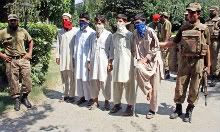
TAGES ANZEIGER: Kinder werden im Swat-Tal von den Taliban entführt und zu Selbstmordattentäter ausgebildet. Die pakistanische Armee berichtet von erschreckenden Methoden.

Die pakistanische Armee hat zwanzig Jugendliche gerettet, die von den Taliban rekrutiert und einer Gehirnwäsche unterzogen worden waren. Einige der Buben waren erst neun Jahre alt, berichtete die britische Zeitung «Independent». Sie erzählten den Soldaten, sie seien von den Taliban entführt worden, andere wurden von Freunden in die Trainingslager im Swat-Tal gebracht. >>> Von Andrea Schmits | Samstag, 01. August 2009
Die heimliche Invasion

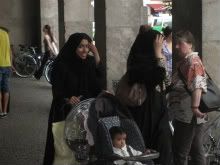
POLITICALLY INCORRECT: Seit dem Mord im Dresdner Gerichtssaal scheint es, als ob immer mehr Musliminnen ihre Verhüllung öffentlich zur Schau tragen wollen. Sei es aus Solidarität oder aus Trotz, im Stadtbild nehmen diese Erscheinungen immer mehr zu. Wie zum Beispiel in München: Der Autor dieser Zeilen war am vergangenen Donnerstag eigentlich am Marienplatz, um bei dem Rekrutengelöbnis zu fotografieren. Aber ständig liefen ihm diese vermummten Gestalten entgegen, meist mit Kinderwagen. >>> Gastbeitrag | Samstag, 01. August 2009
Algerian Author Anwar Malek Talks about the Arab World

Deutsche Firma verbietet Arbeitern im Iran Proteste

WELT ONLINE: Der Gipshersteller Knauf hat seinen Mitarbeitern im Iran die Teilnahme an den Protesten gegen das Regime von Präsident Ahmadinedschad verboten. Die Geschäftsführung drohte den Angestellten sogar mit Entlassungen. Nach Kritik aus der Bundesregierung gibt Knauf „unglückliche" Formulierungen zu.

Der bayerische Baustoffhersteller Knauf hat seinen Mitarbeitern im Iran verboten, an politischen Protesten teilzunehmen. „Falls irgendeiner unserer Mitarbeiter bei Demonstrationen gegen die aktuelle Regierung gefasst werden sollte, wird er oder sie mit sofortiger Wirkung entlassen“, zitiert die US-Wirtschaftszeitung „Wall Street Journal“ aus einem Brief an die Mitarbeiter der dortigen Niederlassung.

Unterzeichnet ist das Papier mit Datum vom 21. Juli 2009 von Isabel Knauf, die Mitglied der Geschäftsführung des Familienunternehmens ist. >>> Von Carsten Dierig | Freitag, 31. Juli 2009
Les anti-Ahmadinejad 
devant la justice iranienne

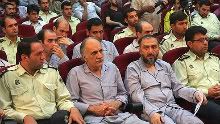
LE FIGARO: Le procès d'une centaine de manifestants, arrêtés lors des défilés de juin, s'est ouvert samedi devant un tribunal révolutionnaire de Téhéran. Les accusés, parmi lesquels figurent des personnalités du camp réformateur, encourent au moins cinq ans de prison.

A quelques jours de la prestation de serment Mahmoud Ahmadinejad, vainqueur très contesté de la présidentielle iranienne du 12 juin, le régime iranien hausse le ton. Le premier procès de manifestants anti-Ahmadinejad s'est ouvert samedi evant un tribunal révolutionnaire de Téhéran. Dans le box des accusés se trouve une centaine de sympathisants de l'opposition, arrêtés lors des marches de protestation du mois de juin. Parmi ces militants figurent des personnalités du camp réformateur telles que l'ancien vice-président Mohammat Ali Abtahi, l'ancien porte-parole du gouvernement Abdollah Ramezanzadeh ou le chef du principal parti réformateur, le Front iranien de la participation islamique, Mohsen Mirdamadi.

Les prévenus selon l'agence officielle Irna, d'avoir «perturbé l'ordre et la sécurité» et «d'avoir des liens avec les hypocrites», l'appellation officielle des Moudjahidine du Peuple, le principal mouvement d'opposition en exil. Ils sont également soupçonnés, précise l'agence, «de port d'armes à feu et de grenades, d'attaques contre les forces de l'ordre et les miliciens islamistes et d'envoi d'images des défilés pour les médias ennemis». A priori, les prisonniers encourent cinq ans de captivité, mais s'ils étaient reconnus coupables d'être «mohareb» (ennemi de Dieu), ils risqueraient la peine de mort. >>> lefigaro.fr avec AFP | Samedi 01 Août 2009
Mahmoud Ahmadinejad Rounds on Conservatives in Bitter Feud

TIMES ONLINE: Mahmoud Ahmadinejad, Iran’s discredited President, spoke out against critics among his own hardline colleagues today as his authority was further eroded by bitter feuding.

The day after violent protests returned to the streets of Tehran, the President was forced to defend himself not from the pro-reformist opposition but against his former allies.

Conservatives have cast doubt on Mr Ahmadinejad’s loyalty to Supreme Leader Ayatollah Ali Khamenei after a dispute over his vice presidential appointment two weeks ago.

He responded robustly today during a speech in the north-eastern city of Mashhad, which was broadcast on state television.

“Some in recent days have portrayed the relationship between the leader and the administration as in doubt. They tried to imply distance and rift,” he said.

“What they do not understand is that the relationship between us and the Supreme Leader goes beyond politics and administration. It is based on kindness, on ideology, it is like that of a father and son.”

He claimed the attempts by “ill-wishers” would yield no results, adding “this path will be shut in the face of devils”. >>> Nico Hines | Friday, July 31, 2009
Geert Wilders in Denmark: 'Deporting Millions of Muslims May Be Necessary' - Interview

Liberal Saudi Intellectual Abdallah bin Bakhit Explains Advantages of Secularism and Gets Abused

British Convert to Islam

New Dark Age Alert! British Citizens Convert to Islam

Friday, July 31, 2009

Quakers to Perform Gay Wedding Ceremonies

THE INDEPENDENT: A religious denomination today reignited debate on same-sex unions after agreeing to perform marriage ceremonies for gay couples.

The Quaker church, also known as the Religious Society of Friends, already offers religious blessings to couples in civil partnerships.

But today, at its yearly meeting, held at the University of York, the church opted to extend this to same-sex weddings.

Quakers will ask the Government to change the law, which does not recognise gay marriage, to allow Quaker registering officers to register same-sex partnerships in the same way as marriages.

Michael Hutchinson, of Quakers in Britain, said: "Many of our meetings have told us that there are homosexual couples who consider themselves to be married and believe this is as much a testimony of divine grace as a heterosexual marriage.

"They miss the public recognition of this in a religious ceremony."

During this week's meeting, Quakers spoke about their personal experiences of committed relationships, agreeing that "whereas there was a clear, visible path to celebration and recognition for opposite sex couples" the same was not always true for those in same-sex relationships, a minute released by the church said.

It said: "This open sharing of personal experience has moved us and added to our clear sense that, 22 years after the prospect was first raised... we are being led to treat same-sex committed relationships in the same way as opposite-sex marriages, reaffirming our central insight that marriage is the Lord's work and we are but witnesses.

"The question of legal recognition by the state is secondary."

All those present at today's meeting, numbering around 1200, agreed to take steps to revise relevant parts of Quaker faith and practice in order to treat same-sex marriages in the same way as more traditional unions. >>> Celia Paul, Press Association | Friday, July 31, 2009
Police Use Batons and Tear Gas at Neda Soltan Ceremony

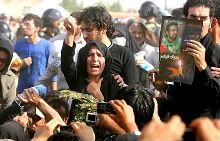
TIMES ONLINE: It was meant to be a solemn religious ceremony in a cemetery where countless Islamic revolutionaries and martyrs are buried. Instead, the security forces turned the Behesht-e Zahra cemetery near Tehran into a battlefield yesterday, attacking hundreds of mourners with batons and teargas and driving opposition leaders away before they could even offer their prayers.

The occasion was the end of the 40-day mourning period for Neda Soltan, the student who became an icon of the opposition movement when she was killed in one of the protests after the disputed re-election of President Ahmadinejad.

It was marked not by prayers and readings from the Koran but by the desecration of the cemetery and, on the streets of the capital, battles between the regime’s forces and thousands of defiant Iranians who have refused to abandon their dreams of freedom.

As darkness fell the clashes continued. Observers said that the demonstrators were becoming increasingly fearless and that other protests held recently had been broken up much faster. “They are holding their own. They’re taking the beatings in their stride,” said one witness.

Tyres and rubbish skips burnt on the pavements, the air reeked of teargas and there were reports of gunfire. Many were arrested and the Basij smashed the windows of cars whose drivers supported the protesters by hooting.

The demonstrators, however, had once again made their point: seven weeks after the election, and despite their brutal tactics and mass arrests, the security forces have conspicuously failed to crush the opposition.

“We’re here to show that we’re here to stay. We are a fact the Government has to face,” said Ahmad, a shopkeeper. Maryam, an office worker, said: “We’re out here to show our hatred. You keep hearing about what they did to people in these prisons and all you feel is anger and disgust.”

The inauguration of Mr Ahmadinejad, which is due to take place on Wednesday, will lead to more demonstrations. Mir Hossein Mousavi, his defeated challenger, is expected to build on the opposition’s unexpected momentum by starting a broad political movement to fight for justice and democracy. >>> Martin Fletcher | Friday, July 31, 2009

Security forces, protesters face off in Iran

Thursday, July 30, 2009

Iran Security Forces Retreat as Huge Numbers of Mourners Gather at Cemetery

LOS ANGELES TIMES: As many as tens of thousands of protesters meet at the grave of Neda Agha-Soltan, whose shooting death was videotaped. Meanwhile, the first group of protesters arrested in the unrest heads to trial.

Reporting from Tehran and Beirut -- Thousands and possibly tens of thousands of mourners, many of them black-clad young women carrying roses, overwhelmed security forces today at Tehran's largest cemetery to gather around the grave of Neda Agha-Soltan, the young woman whose videotaped shooting at a June 20 demonstration stunned the world.

Amateur video apparently taken at Behesht Zahra cemetery and quickly uploaded to the Internet shows a sea of mourners moving through the cemetery chanting slogans.

"Death to the dictator," chanted those in one long procession, kicking up a storm of dust as they walked. "Neda is not dead. This government is dead."

Afterward, the crowds began to gather in front of central Tehran's Grand Mossala mosque, defying authorities who had prohibited the use of the site. Protesters chanted slogans as they rode the subway to the venue, setting the stage for more clashes as dusk approached.

Uniformed security forces initially clashed violently today with some of the mourners, supporters and leaders of the opposition, who were there to protest and grieve for those killed in recent unrest. Unsuccessful presidential candidates Mir-Hossein Mousavi and Mehdi Karroubi attempted to attend the graveside ceremony marking the religiously significant 40th day since the death of Agha-Soltan and others killed in the fighting.

"Oh, Hossein! Mir-Hossein," the mourners chanted in support of him. >>> Borzou Daragahi and Ramin Mostaghim | Thursday, July 30, 2009
Opinion: It's No Longer Islam vs. Non-Islam in Iran

TORONTO STAR: It is clear that Iran is going through its worst internal crisis since the 1979 Islamic revolution. Less obvious but more significant is this: Islam is no longer the dividing line between the proponents and opponents of the theocratic regime in Tehran.

The trend has been in the making for a decade. But it has manifested itself clearly during the crisis roiling the country since the contested results of the June 12 presidential election. If the trend holds, it would constitute the biggest political, religious and social change in the history of the Islamic republic.

The new battle line divides those in the regime who continue cracking heads to hang onto power and those who, in varying degrees, want the rule of law, human rights, greater personal freedoms and an end to Iran's international isolation.

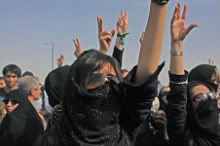
The latter include Islamists and non-Islamists alike, and those in the regime and not. They are led, for the most part, by women and the young in Iran and in the diaspora.

This was evident in Saturday's rallies in Toronto and more than 50 cities around the world calling for reforms in Iran, said Sima Zerehi, 31, editor of the English part of the Toronto Farsi weekly Shahrvand. >>> Haroon Siddiqui | Thursday, July 30, 2009