Saturday, January 29, 2011

Police Probe 'Fatwa' by Muslim Extremists Against Home Secretary Theresa May

LONDON EVENING STANDARD: Police have launched an investigation after Muslim extremists issued a "fatwa" against Home Secretary Theresa May.

The Met acted after wanted-style posters were put up in Tooting.

The posters said the fatwa - sometimes taken to mean an Islamic death sentence - was "for the abduction, kidnapping and false imprisonment" of various Muslim clerics. An accompanying website has been set up as part of a campaign to highlight what organisers claim is unfair treatment of the Muslim community.

It says they have been left with "no alternative" because their concerns are being ignored. >>> Craig Woodhouse | Friday, January 28, 2011
Turkey's Alcohol Restrictions Against European Practice, Euro MP Says

HÜRRIYET DAILY NEWS: The new restrictions introduced by the AKP government regarding alcohol laws are inconsistent with Europe's free market principles, according to a EU MP. 'If they change, then it would be a clear step away from European values, says,' EU Labor party member Richard Howitt

New restrictions on Turkey’s alcohol laws strongly backed by the government drew adverse criticism from a member of the European Parliament who said they were inconsistent with Europe’s free market principles.

The new regulations introduced by the Justice and Development Party, or AKP, government, would prohibit alcohol from appearing in commercials and advertisements and bring strict new restrictions on alcohol licenses.

“It is a legal drug across the European Union, freely sold and consumed in European markets and therefore if restrictions are brought in Turkey they are inconsistent with our freedom in the EU,” Richard Howitt, Labor member of the European Parliament, told the Hürriyet Daily News & Economic Review in an interview.

“The objective fact is a restriction on the market for alcohol is inconsistent with Europe’s free market principles and if it changes then it would be a clear step away from European values,” he said. >>> Fulya Özerkan, Ankara, Hürriyet Daily News | Friday, January 28, 2011

THE TIMES: Drink tax is a sobering affair for Turkey >>> Alexander Christie-Miller | Saturday, January 29, 2011 [£]
Egyptians React to Mubarak Speech

Times reporter Stephen Farrell describes the scene on the streets of Cairo as President Hosni Mubarak addresses the nation after days of protests and demonstrations.

Die Gewalt in Ägypten nimmt zu

ZEIT ONLINE: Die Parteizentrale brennt, Demonstranten wollten das Außenamt stürmen, Gewehrfeuer in Kairo: In Ägypten eskaliert die Gewalt. Staatschef Mubarak schickt mehr Militär.

Den vierten Tag in Folge haben sich Demonstranten und Sicherheitskräfte in Ägypten heftige Auseinandersetzungen geliefert. Zehntausende Menschen gingen nach dem Freitagsgebet in Kairo und in anderen Städten auf die Straße und verlangten den Rücktritt von Präsident Hosni Mubarak. Die Proteste der Opposition waren so massiv, dass die Regierung eine Ausgangssperre über die Hauptstadt Kairo, Suez und Alexandria verhängte. Sie gelte von 18.00 Uhr bis 07.00 Uhr, berichtete das Staatsfernsehen.

Doch viele Demonstranten hielten sich nicht an das Verbot. Im Gegenteil: Der Unmut der Regierungsfeinde nahm zu. Die Zentrale der Regierungspartei stand am Abend in Flammen. In den Straßen Kairos war Gewehrfeuer zu hören. Mubarak entsandte mehr Soldaten in die Stadtzentren. Die Armee wies er an, die Polizei zu unterstützen. Im Lauf des Abends dehnte er die Ausgangssperre auf ganz Ägypten aus. Weiter lesen und einen Kommentar schreiben >>> ZEIT ONLINE, dpa, Reuters, AFP | Freitag, 28. Januar 2011

Video: Die ägyptische Regierung stemmt sich mit aller Macht gegen die zunehmenden Massenproteste in ihrem Land. >>>

ZEIT ONLINE: Hohngelächter für das Regime: Das Volk versucht den Umbruch – das Regime hält gegen. Die Wut der Menge entlädt sich im Brandschatzen und Plündern. >>> Von Martin Gehlen | Freitag, 28. Januar 2011

WELT ONLINE: Ägypter haben ihre Angst vor dem Regime verloren >>> Autor: Daniel-Dylan Böhmer | Freitag, 28. Januar 2011
En Égypte, l'insurrection 
atteint un nouveau stade

La journée de vendredi a été le théâtre d'affrontements sanglants dans les principales villes égyptiennes. Partout, les milliers de manifestants supplient le président Moubarak de quitter le pouvoir.

”Israël craint d’être encore plus isolé”

L’Etat hébreu, don’t l’Egypte est le principal interlocuteur arabe, refoute les conséquences des émeutes pour la paix de la région, explique Georges Malbrunot

Protesters Demonstrate at Egyptian Embassy in Dublin

Reaction to unrest in Egypt has spread internationally, including the United States and Europe. In this amateur video, Egyptians demonstrate in front of their country's embassy in Dublin.

Egypt Protests: President Mubarak Sacks Cabinet But Refuses to Step Down

THE DAILY TELEGRAPH: President Hosni Mubarak of Egypt sent the army in to contain rampaging mobs across Egypt’s cities on Friday as he defiantly refused to stand down and emerge triumphant from the battle that raged on the Nile.

Mr Mubarak defended the use of security forces to control protesters in a televised address to the nation last night. He said he had ordered his government to resign and that a new cabinet would be announced today.

Refusing to concede to the demands of the protesters all day that he should leave, Mr Mubarak vowed to bring in democratic reform but stressed the need for stability, stating that while he was “on the side of freedom,” his job was to protect the nation from chaos.

“We will not backtrack on reforms. We will continue with new steps which will ensure the independence of the judiciary and its rulings, and more freedom for citizens,” he said.

Thousands of Egyptians gathered after Friday prayers and fought battles with lines of riot police at all the major junctions of the capital.

Riot squads gave way to armoured personnel carriers as the crowds ignored a curfew imposed at dusk.

On Friday night police and protesters, defying a nationwide curfew, battled for control of the central Tahrir square. The army eventually brought in tanks to secure the square and prevent protesters from advancing towards parliament nearby.

The headquarters in central Cairo of the governing party was set on fire and a crowd surrounded the central radio and television building. 870 were injured, several with bullet wounds. Read on and comment >>> Richard Spencer, Cairo | Friday, January 28, 2011

Dissolution du gouvernement égyptien

LE FIGARO: AFP – Le président égyptien Hosni Moubarak a annoncé la démission de son gouvernement, la formation dès samedi d'un nouveau cabinet et des réformes démocratiques dans une allocution télévisée au cours de la nuit de vendredi à samedi.


«J'ai demandé au gouvernement de démissionner et demain il y aura un nouveau gouvernement», a déclaré le président égyptien dans une allocution de onze minutes à la télévision nationale.


Le président égyptien, âgé de 82 ans, a aussi plaidé en faveur d'une série de réformes démocratiques. «Il y aura de nouvelles mesures pour une justice indépendante, la démocratie, pour accorder davantage de liberté aux citoyens, pour combattre le chômage, améliorer le niveau de vie, développer les services et soutenir les pauvres», a ajouté M. Moubarak. [Source: Le Figaro] AFP | Vendredi 28 Janvier 2011
Egypt Protests: America's Secret Backing for Rebel Leaders Behind Uprising

THE DAILY TELEGRAPH: The American government secretly backed leading figures behind the Egyptian uprising who have been planning “regime change” for the past three years, The Daily Telegraph has learned.

The American Embassy in Cairo helped a young dissident attend a US-sponsored summit for activists in New York, while working to keep his identity secret from Egyptian state police.

On his return to Cairo in December 2008, the activist told US diplomats that an alliance of opposition groups had drawn up a plan to overthrow President Hosni Mubarak and install a democratic government in 2011.

The secret document in full

He has already been arrested by Egyptian security in connection with the demonstrations and his identity is being protected by The Daily Telegraph. >>> Tim Ross, Matthew Moore and Steven Swinford | Friday, January 28, 2011

Watch Telegraph video: Hillary Clinton: violence will not make protests go away: Hillary Clinton, US Secretary of State, has urged the Egyptian government to respect the rights of their citizens amid a crackdown on swelling anti-government protests, and urged them to heed demands for political and economic reform. >>> | Friday, January 28, 2011
Stakelback’s Analysis of the Egyptian Protests

Friday, January 28, 2011

Three Men in Court Charged with Stirring Up Hatred of Homosexuals

THE DAILY TELEGRAPH: Three men have appeared in court accused of stirring up hatred of homosexuals in the first case of its kind in Britain.

hjaz Ali, 41, Umar Javed, 37, and Mehboob Hussain, 44, are accused of distributing threatening written material intending to stir up hatred on the grounds of sexual orientation after they were said to have handed out leaflets calling for the death penalty for homosexuals.

Two of their alleged accomplices, Razwan Javed, 30, and Kabir Ahmed, 27, were charged with the same offence on Thursday. All five will appear in court next month for a committal hearing after a district judge ruled the case would have to be heard by the Crown Court. >>> Nick Britten | Friday, January 28, 2011
Davos 2011 - David Cameron


THE DAILY TELEGRAPH: Davos WEF 2011: Osborne calls time on banker bashing – George Osborne has given a clear signal the Government wants to halt the long period of “banker bashing” by admitting “we need to move on”. >>> Kamal Ahmed, in Davos | Friday, January 28, 2011

What the hell is this chancellor is talking about? Who the hell is he to tell us what we are supposed to think? If this chancellor wants people to stop banker-bashing, then he needs to take action to halt the despicable bonuses which these people are stealing from the system. This is the disgusting face of ‘unbridled’ capitalism. – © Mark
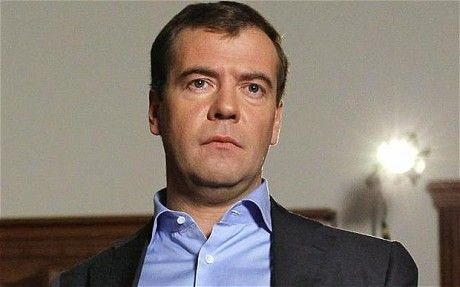
Dmitry Medvedev Spends £26m on Luxury Yacht

THE DAILY TELEGRAPH: Dmitry Medvedev, the Russian president, has spent £26m on a super-yacht with whirlpool baths, an artificial waterfall and a cinema.

The 177 foot-long Sirius has quarters for 12 crew and a range of 5,000 miles. >>> | Friday, January 28, 2011

It’s a crying shame that Britain isn’t an ex-communist state. Perhaps were Britain to be, we’d all have a chance to be get-rich-quick billionaires today! Nothing like being an ex-communist to catapult one into the stratosphere! Money seems to flow to the ex-communists of this world like rivers flow to the sea! Are you listening, Castro? – © Mark
Abu Adam - Dunya (دُنْيا) [Earthly Concerns and Possessions] oder Akhira (الآخرة) [Referring to the After-life]

Israel Fears Regime Change in Egypt

Photobucket
Riot police in Cairo (Jan. 26 photo): Israel is afraid of regime change in Egypt. Photograph: Spiegel Online International

SPIEGEL ONLINE INTERNATIONAL: Israel is watching developments in Egypt with concern. The government is standing by autocratic Egyptian President Hosni Mubarak, out of fear that the Islamist Muslim Brotherhood could take power and start supplying arms to Hamas.

Israel is usually a country where politicians have an opinion on any topic, and vociferously so. But in recent days, Israel's leadership has been unusually silent on a certain question. No one, it seems, is willing to make an official comment on the ongoing unrest in Egypt, where protesters have been holding anti-government rallies. It's not because Israel does not care about the riots ravaging its southern neighbor -- on the contrary, Israeli news channels, normally prone to parochialism, have been closely following recent events in the Arab world, from Tunisia to Lebanon.

Radio, television and newspapers constantly report the courage of the demonstrators in the streets of Cairo, not only relishing the historic spectacle, but openly expressing sympathy with Egypt's struggle for democracy.

But the Israeli government is keeping quiet. "We are closely monitoring the events, but we do not interfere in the internal affairs of a neighboring state," was the curt answer from the Israeli Foreign Ministry to requests for comments. >>> Gil Yaron in Jerusalem | Friday, January 28, 2011
Analysis: Why Egypt Matters

Photobucket
There have been demonstrations in Cairo and several other cities. Photograph: BBC

BBC: If Egyptian unrest turns into an Egyptian revolution, the implications for the Arab world - and for Western policy in the Middle East - will be immense.

Egypt matters, in a way that tiny Tunisia - key catalyst that it has been in the current wave of protest - does not.

It matters because its destiny affects, in a range of ways, not only Arab interests but Israeli, Iranian and Western interests, too.

Egypt, the most populous Arab state, can help determine the thrust of Arab policies - whether towards Israel or Iran or in the perennial quest for Arab consensus on issues that matter.

Above all, the Egyptian state has traditionally had a strength and solidity that made its collapse seem unthinkable.

Even now, with so much that is uncertain, that state and its basic structures may survive - with or without Hosni Mubarak, the country's president for the last three decades.

Islamist wild card

If there is a power vacuum, who is likely to fill it?

Will the powerful military intervene to restore stability?

If they did, would the protesters accept such a scenario - or would they, like their Tunisian counterparts, keep up the pressure for radical change?

And - the wild card that troubles Western policy-makers most - could the Muslim Brotherhood, the country's Islamist opposition movement, somehow exploit the protests to come to power?

Right now, that scenario seems far-fetched. The Brotherhood is trying to jump on the bandwagon of a youthful and largely leaderless protest movement.

They are not in front. They are trying to catch up.

But the situation is volatile. New leaders - nationalist or Islamist, civilian or military - could emerge if the country is engulfed in chaos. Regional consequences >>> Roger Hardy, Middle East analyst, Woodrow Wilson Center | Friday, January 28, 2011
Fresh Protests Erupt in Egypt

Protests have erupted in cities across Egypt following Friday midday prayers, with angry demonstrators demanding an end to Hosni Mubarak's 30-year presidency. Tens of thousands of protesters have taken to the streets across the country. Al Jazeera continues its coverage of what many say are unprecendented protests.

Map: Cairo's 'Day of Wrath'

Violent protests have spread across the Egyptian capital, Cairo, and other Egyptian cities as tens of thousands of demonstrators intensified their campaign to oust President Hosni Mubarak. Protesters have been pouring out from mosques after noon prayers on Friday and clashing with police who fired tear gas, rubber bullets and water cannons to disperse the crowds. This video explains the geographic spread of Cairo protests.

Newly-formed Thai Airline Recruits 'Ladyboys' as Air Hostesses

THE DAILY TELEGRAPH: A newly-formed Thai airline has recruited transsexuals as air hostesses, in a pioneering move it believes will be copied by other carriers.

Photobucket
Thailand has the largest number of 'katoeys' – as they are called in Thai – in the world. Photo: The Daily Telegraph

[There is] sky-high demand from men wishing to become women [in Thailand]. – [Source: The Daily Telegraph]

PC Air, which has yet to take to the skies, selected three "Ladyboys" in its first round of hiring this week to promote equal opportunities for what is dubbed the "third sex" in Thailand.

Peter Chan, the new airline's boss, is enthusiastic about his groundbreaking move because of the opportunities it would afford transsexuals.

"I think these people can have many careers – not just in the entertainment business – and many of them have a dream to be an air hostess," he said. "I just made their dream come true. Our society has changed. It's evolution. I'm a pioneer and I'm sure there will be other organisations following my idea." >>> Ian MacKinnon, Bangkok | Friday, January 28, 2011
Ottawa Faces Uphill Battle to Expel Tunisian Billionaire in Montreal

THE GLOBE AND MAIL: The federal government is seeking the expulsion from Canada of the billionaire brother-in-law of ousted Tunisian dictator Zine El Abidine Ben Ali. But it could be years before Belhassen Trabelsi is forced to leave the country, if he can be made to leave at all.

Sources report that the Canadian government revoked Mr. Trabelsi’s status as a permanent resident, granted to legal immigrants after they arrive in Canada. Officials had been investigating whether he had forfeited that status by not living in Canada for at least two of the past five years.

Mr. Trabelsi returned to Canada after Mr. Ben Ali and his family fled Tunisia in the wake of mass demonstrations that toppled the former dictator’s regime. Mr. Trabelsi is believed to be staying in a Montreal-area hotel. Mr. Ben Ali is thought to be in Saudi Arabia.

It is no easy thing to revoke residency status once it has been obtained. “If he has the resources and the determination, he can easily stay here for ten years, maybe more,” said Leo Adler, a law professor at York University’s Osgoode Hall Law School. He noted that some individuals have successfully fought deportation for more than 20 years. >>> John Ibbitson and Campbell Clark | Publish: Thursday, January 27, 2011; Updated: Friday, January 28, 2011

Watch Canadian Press video: Deposed Tunisian president not welcome, Harper warns: Prime Minister Harper has wrapped up his visit to Morocco, Canadian Press reporter Bruce Cheadle says Harper answered carefully when asked about uprisings in several North African countries. >>> | Published: Thursday, January 27, 2011; Updated: Friday, January 28, 2011
Egypt Braces for Protest Showdown

AL JAZEERA ENGLISH: Government blocks internet and mobile services ahead of planned protests against President Mubarak's 30-year rule.

Egypt is on edge as activists pressing for a change in government prepare to stage the biggest day of protests in the Middle East's most populous nation amid a security clampdown.

Security forces are on high alert and internet, mobile phone and SMS services have been disrupted ahead of the planned demonstrations following Friday prayers.


Dan Nolan, Al Jazeera's correspondent reporting from the capital, Cairo, said that internet access had been blocked across the country and the government had effectively wiped the country off the global digital map in a bid to prevent protesters from organising themselves.


But he said people already know where to be on Friday if they want to have their voice heard "because an email was spread throughout Egyptian networks last night ... that listed the places where people should gather".

For the past three days, cities across Egypt have witnessed unprecedented protests against the 30-year rule of Hosni Mubarak, the president.

Apparently inspired by the recent turmoil in Tunisia, the determined protesters have stood their ground against heavily-armed police and are refusing to relent until there is a change in government.


The violence has so far left seven people dead. >>> Source: Al Jazeera and agencies | Friday, 28. January 2011

THE DAILY TELEGRAPH: Egypt protests: ElBaradei held as thousands pour on to streets in biggest protests yet: Egyptian authorities have held Mohamed ElBaradei, the Nobel peace laureate leading protests against President Hosni Mubarak's authoritarian regime. >>> Adrian Blomfield, Middle East Correspondent | Friday, January 28, 2011

WELT ONLINE: Al-Baradei offenbar in Kairo festgesetzt: Laut al-Dschasira darf der Oppositionspolitiker das Gebiet nicht verlassen. Mit drastischen Maßnahmen will die Regierung die Proteste eindämmen. >>> afp/dapd/dpa/sam | Freitag, January 28, 2011

AL JAZEERA ENGLISH: Fresh protests erupt in Egypt: Thousands stream out of mosques to protest against President Mubarak's 30-year rule, defying a government crackdown. >>> | Friday, January 28, 2011

Egypt Protests: Fresh Protests Could Leave Egypt on Brink of Revolution

THE DAILY TELEGRAPH: A fresh wave of mass protests could leave Egypt teetering on the brink of revolution on Friday after police warned the president they could soon lose control of the demonstrators demanding his overthrow.


Hosni Mubarak's grip on power was slipping on Thursday and momentum appeared to be shifting rapidly in favour of pro-democracy activists.

Undeterred by a violent police response and the deaths of at least seven people after three days of clashes in Cairo and other cities, organisers said they planned to make today's marches the biggest yet. Yesterday police shot dead a protester in north Sinai.

They were given a further boost after Mohamed ElBaradei, one of Mr Mubarak's fiercest critics, returned to Egypt from Vienna to join the protests, providing opponents of the regime with a potential figurehead to rally around.

There are also reports of arrests of opposition figures overnight.

The reported crackdown on the largest opposition movement, the Muslim Brotherhood, came after it said it would back the Friday protests. >>> Adrian Blomfield, Middle East Correspondent | Friday, January 28, 2011

THE DAILY TELEGRAPH: Internet, phones cut off as Egypt braces for protests: Internet and cellphone services have been cut across Egypt, as authorities brace for demonstrations backed by both the country's biggest opposition group and newly returned Nobel Peace laureate Mohamed ElBaradei. >>> | Thursday, January 28, 2011

THE GUARDIAN: Egypt braces itself for biggest day of protests yet: Pressure builds on the president, Hosni Mubarak, as banned Muslim Brotherhood backs protests >>> Peter Beaumont and Jack Shenker in Cairo | Thursday, January 27, 2011

THE INDEPENDENT: Egypt's day of reckoning: Mubarak regime may not survive new protests as flames of anger spread through Middle East >>> Robert Fisk | Friday, January 28, 2011

LE MONDE: L'Egypte coupée d'Internet : Après deux jours de blocages ponctuels des services de télécommunications et de services Web comme Twitter et Facebook, les autorités sont passées à une méthode plus radicale pour tenter d'empêcher les manifestations prévues ce vendredi : elles ont tout simplement coupé l'accès à Internet dans l'ensemble du pays. >>> LEMONDE.FR | Vendredi 28 Janvier 2011

LE MONDE: Après la Tunisie, l'Egypte cherche sa liberté >>> Le Monde | Jeudi 27 Janvier 2011

Egypte: Revolte ou révolution?


Ägypten: Gebildet, unideologisch und wütend

FRANFURTER ALLGEMEINE ZEITUNG: Die Protestbewegung in Ägypten hat keinen Anführer und ist politisch heterogen. Die Islamisten gehören zwar dazu, aber ihr Ansehen ist gesunken. Viele gut ausgebildete junge Ägypter gehen mittlerweile auf Distanz zu islamistischen Vorstellungen und Gruppierungen.

Wenn früher in Ägypten Demonstranten zu sehen waren – meistens in der Hauptstadt Kairo auf dem zentralen Tahrir-Platz – handelte es sich in der Regel um von der regierenden Staatspartei NDP bezahlte und bestellte Lobhudler des jeweiligen Präsidenten. Besonders oft war dies unter der Herrschaft Gamal Abdel Nassers, zwischen 1952 und 1970, der Fall. Der ließ sich feiern; oder es ging darum, gegen „Israel“ und „die Zionisten“ zu protestieren. Dies geschah meistens, wenn das Regime Niederlagen zu bewältigen hatte.

In den achtziger und neunziger Jahren waren es dann häufig radikale Muslime, meistens aus der 1928 gegründeten Muslimbruderschaft stammend, die sich zu Protestdemonstrationen zusammenfanden. Sie forderten eine „islamische Ordnung“, die von „islamischer Gerechtigkeit“ geprägt sein sollte. Ihre wichtigste Parole lautete: „Der Islam ist die Lösung“. Oder sie äußerten ihre Unterstützung für die palästinensische radikalislamische Hamas im Gaza-Streifen und im Westjordanland.

Die an den jüngsten Demonstrationen und Unruhen beteiligten Ägypter ähneln jedoch mehr denjenigen, die in Tunesien auf die Straße gingen. Es sind junge Leute, auffällig viele Frauen. Ideologien spielen bei ihnen offenkundig kaum eine Rolle. Sie fordern Arbeitsplätze, billige Nahrungsmittel, demokratische Freiheiten, Zukunftsaussichten, die diesen Namen verdienen. Vierzig Prozent der Ägypter leben von etwa zwei Dollar täglich, und dies keineswegs nur auf dem flachen Land. Ziel ist das Ende der Machtstruktur. >>> Von Wolfgang Günter Lerch | Freitag, 28. Januar 2011
US Tacit Support for Mideast Autocrats Reeks of Short-Sightedness, Undermines US Interests

THE HUFFINGTON POST: The winds of change are blowing over the Middle East from Jordan to Algeria.

A couple of weeks ago, Tunisia became the first Arab nation to succeed in shaking off decades of debilitating dictatorship through a popular uprising that sent shock waves through the entire region.

Egyptians who have long voiced discontent with their government are now taking to the streets in unprecedented numbers demanding change. If Egypt succeeds, analysts agree that a domino effect is likely.

Having withered decades of institutionalized corruption, police brutality and lack of freedoms under despotic regimes, Arab citizenries are finally beginning to believe that freedom and democracy are within reach. Their demands are straight-forward: democratically elected governments that truly represent and serve their citizens, in place of apathetic despots that work against the interests of their own citizens. They dream of free elections, government transparency, bureaucratic accountability, and rule of law.

It is perplexing that in the ensuing confrontation between citizens longing for democracy and iron-fisted dictators clamping down on dissent in the Arab world, the US official policy is to side with the dictators. >>> Ahmed Rehab | Thursday, January 27, 2011
Arizona Drops the Anchor on 'Anchor Babies'

State known for controversial illegal immigration law introduces bill targeting birthright citizenship

'Thundersnow' Storm Causes Havoc in [sic] US East Coast

THE DAILY TELEGRAPH: America's east coast has been battered by blizzards which have dumped 19 inches of snow, adding to the heaviest January many parts of the region have seen in decades.

Four hundred thousand Washington residents were left without power after a blizzard that began on Wednesday intensified overnight, bringing so-called "Thundersnow" to the capital.

The blizzard forced the closure of New York's JFK and Newark airports, leading to the cancellation of thousands of flights. The Long Island Rail Road, a major commuter line, also suspended services. Schools were closed and governments [sic] workers across the region were sent home early on Wednesday, with little prospect of returning on Thursday. The Statue of Liberty was closed for snow removal.

Even the most high profile commuter in the US was delayed. Barack Obama was forced to make his way to the White House from Andrews air force base by car rather than helicopter, after a trip to Wisconsin.

Residents of Washington experienced Thundersnow – a combination of snowfall, thunder and lightning that has become the new talking point on TV news – as New Yorkers had done the previous night. >>> Jon Swaine, New York | Thursday, January 27, 2011

Winter Storm Slams Northeast

Thousands of travelers left stranded, schools closed


Dangerously Cold Temperatures Hit New York

Turmoil in the Arab World

Obama's policy unclear in light of protests

Thursday, January 27, 2011

Kommentar: Arabische Ungewissheit

FRANKFURTER ALLGEMEINE ZEITUNG: Die Ähnlichkeiten der Ereignisse in Tunesien und Ägypten können die Unterschiede nicht verdecken: Mit Ägypten fiele ein wesentlicher Akteur des nahöstlichen Friedensprozesses aus. Überdies gibt es dort eine starke islamistische Bewegung.

Die Ähnlichkeiten zwischen den Ereignissen in Ägypten und dem Sturz Ben Alis in Tunesien fallen ins Auge: hier wie dort ein greiser Diktator, von Alter und Krankheit gezeichnet, der sich über Jahrzehnte an der Macht festgekrallt hat, zunehmend - und am Schluss ausschließlich - gestützt auf die Sicherheitskräfte seines Landes.

Beide haben den Ruf nach Reformen jahrzehntelang überhört und sich und ihre Familien schamlos bereichert. Der ägyptische Präsident Mubarak hat in den vergangenen Jahren versucht, seinen Sohn Gamal in die Rolle des Nachfolgers zu hieven. Zumindest dies - von einer Wiederwahl des 82 Jahre alten „Rais“ zu schweigen - dürfte sich nach den Protesten in mehreren Städten Ägyptens erledigt haben. >>> Von Günther Nonnenmacher | Donnerstag, 27. Januar 2011
Mass Egypt Anti-government Protest Planned

Wulff sieht "ewige" Verantwortung der Deutschen

WELT ONLINE: Christian Wulff hält als erster Bundespräsident eine Rede im Vernichtungslager Auschwitz. Er bedankt sich bei den Überlebenden und ihren Nachfahren.

Durch Eis und Schnee, entlang der Baracken aus rotem Backstein schreiten Jugendliche gemäßigten Tempos. Gut hundert Menschen schließen sich ihnen an. Aus Deutschland und Polen stammen die jungen Leute, Kränze tragen sie über die Wege des Stammlagers I im Konzentrationslager Auschwitz.

Zur Spitze des Zuges zählen Christian Wulff und Bronislaw Komorowski, die Staatsoberhäupter aus Deutschland und Polen, samt ihrer Delegationen. Wulff trägt einen schwarzen Mantel und einen schwarzen Hut, wie es nach jüdischem Ritus üblich ist. An der Todesmauer legen die Jugendlichen die Kränze nieder. Komorowski begibt sich nach vorn, hält inne, verbeugt sich. Dann tritt der Bundespräsident vor die Totenmauer, doch er tut dies nicht alleine.

Wulff wird eingerahmt von Dieter Graumann, dem neuen Präsidenten des Zentralrats der Juden, und Romani Rose, der schon viele Jahre die Sinti und Roma in Deutschland repräsentiert. Die drei Männer halten schweigend inne – und dann entscheidet sich Wulff zu einer Geste außerhalb des präzisen Protokolls: Er wendet sich Graumann zu, und umarmt ihn, dann legt er seinen Arm um Rose. Die Schleifen am Kranz richtet der Präsident diesmal nicht. >>> Autor: Daniel Friedrich Sturm | Donnerstag, 27. Januar 2011

THE DAILY TELEGRAPH: Holocaust Memorial Day: Google launches Holocaust archive to help keep memories of tragedy alive: Google has partnered with Israel’s Yad Vashem museum, to help digitise the largest collection of Holocaust photos and documents in the world, to mark International Holocaust Remembrance Day. >>> Emma Barnett, Digital Media Editor | Thursday, January 27, 2011
Global Muslim Birth Rate Drops

YNET NEWS: Muslim population growing at slower rate, but will still be 26.4% of world by 2030, study says

Falling birth rates will slow the world's Muslim population growth over the next two decades, reducing it on average from 2.2 percent a year in 1990-2010 to 1.5% a year from now until 2030, a new study says.

Muslims will number 2.2 billion by 2030 compared to 1.6 billion in 2010, making up 26.4% of the world population compared to 23.4% now, according to estimates by the Pew Forum on Religion and Public Life.

Continued migration will swell the ranks of Europe's Muslim minorities by one-third by 2030, to 8 percent of the region's inhabitants from 6 percent, the study says.

Muslims in France will rise to 6.9 million, or 10.3% of the population, from 4.7 million (7.5%), in Britain to 5.6 million (8.2%) from 2.9 million and in Germany to 5.5 million (7.1%) from 4.1 million (5%). >>> Reuters | Thursday, January 27, 2011

MAIL ONLINE: Number of British Muslims will double to 5.5m in 20 years >>> Steve Doughty | Friday, January 28, 2011

THE HUFFINGTON POST: World's Muslim Population Expected To Grow Twice As Fast As Non-Muslims In 20 Years: Report – On a global level, the Muslim population is expected to grow by 35 percent over the next two decades -- twice the pace of the world's non-Muslim population, according to a controversial new report. >>> Curtis M. Wong | Thursday, January 27, 2011
Good on Ya, Mr. Cable! Good on Ya!

MAIL ONLINE: Business Secretary Vince Cable today had a remarkable dig at bankers with a sick gag about one being mown down by a disgruntled driver.

In an astonishing joke with reporters he suggested a motorist would not slow down to avoid a financial services worker in the road.

The Liberal Democrat cabinet minister has been a fierce critic of bankers and has advocated taking a 'very strong approach' to beating down their bonuses.

But his gag shared with reporters at a Westminster Press Gallery lunch today, went 'too far', critics said.

He asked what the difference was between a cat being found dead on a motorway and a banker being found dead.

'There were skid marks around the cat,' said Mr Cable. Vince Cable jokes over bankers being 'mown down on motorways' >>> Daily Mail Reporter | Thursday, January 27, 2011
Egyptian Protests Intensify, as Clashes Spread Across the Middle East

THE DAILY TELEGRAPH: Egyptian police have been fighting protesters in intensifying clashes, and demonstrations have reported from Yemen and Gabon – a sign that defiance against authoritarian rulers in the Middle East is spreading.

Riot, Cairo
Riot police clash with protesters in Cairo yesterday. Photo: The Daily Telegraph

Security forces shot dead a Bedouin protester in Egypt's Sinai region on Thursday, bringing the death in the three days of protests to five. Police in Suez fired rubber bullets, water cannon and tear gas at hundreds of demonstrators calling for an end to the 30-year-old rule of Hosni Mubarak, the Egyptian president. Protesters chucked rocks and petrol bombs at police lines. In Ismailia, hundreds of protesters clashed with police, who dispersed the crowds with tear gas.

Like in many other countries in the region, protesters in Egypt complain about surging prices, unemployment and the authorities' reliance on heavy-handed security to keep dissenting voices quiet. The protests are inspired by Tunisia, where a democratic movement recently overthrew the government.

Egyptian Nobel laureate Mohamed ElBaradei announced on Thursday he was returning to Egypt to join the protests. "Tomorrow is going to be, I think, a major demonstration all over Egypt and I will be there with them," he said. Mr Baradei, who won the Nobel peace prize for his work as head of the UN's nuclear agency, called on Mr Mubarak to leave office, saying "he has served the country for 30 years and it is about time for him to retire."

His arrival could spur protesters who have no figurehead, although many activists resent his absences in recent months.

"Our government is a dictatorship. A total dictatorship," said Mohamed Fahim, a 29-year-old glass factory worker, as he stood near the charred skeleton of a car.

"It's our right to choose our government ourselves. We have been living 29 years, my whole life, without being able to choose a president." >>> | Thursday, January 27, 2011

TRIBUNE DE GENÈVE: Les répercussions historiques de la «Révolution du Jasmin» : EFFET DOMINO | De l’Egypte à la Jordanie en passant par le Yémen, la "Révolution du jasmin" commence à toucher des régimes arabes qui se maintiennent depuis des décennies grâce au carcan de la peur. Eclairage. >>> AFP | Jeudi 27 Janvier 2011
Davos WEF 2011: Sarkozy Says France and Germany Will 'Never Let the Euro Fail'

THE DAILY TELEGRAPH: France and Germany will never turn their backs on the euro, French President Nicolas Sarkozy has said in his most robust defence of the troubled single currency to date.

Addressing the World Economic Forum in Davos, he told speculators to be prepared for big losses if they bet against the euro. “[Germany’s] Chancellor Merkel and myself will never – do you hear me, never – let the euro fall,” he said.

“The euro is Europe. And Europe spells 60 years of peace. Therefore we will never let the euro go or be destroyed… To those who bet against the euro, watch out for your money because we are fully determined to defend the euro.”

President Sarkozy’s intervention comes with the single currency under greater strain than at any time in its short history. Davos has been abuzz with talk of a two-speed Europe, with billionaire investor George Soros warning that the “euro could possibly fall apart” under the strain.

Greece and Ireland are implementing painful pay cuts and other deflationary measures because they can not devalue, while Germany powers ahead. Ken Rogoff, the Harvard economist, has suggested Greece should be allowed to fail in an orderly fashion because its debts are insurmountable.

However, President Sarkozy said: “To imagine that we might pull out shows a complete misunderstanding of the European psychology. It has to do with our identities as Europeans.” >>> Philip Aldrick, Economics Editor, in Davos | Thursday, January 27, 2011
Anti-government Protests Erupt in Yemen

Protestors are putting pressure on governments across the Arab world - demanding changes in leadership and policies. In Yemen, tens of thousands of people marched in the capital, Sanaa. Opposition groups are calling for the president to stand down, after more than three decades in power. Al Jazeera's Caroline Malone reports on the developments in Yemen

Anonymous – Operation Egypt – A Press Release

Financial Crisis Was Avoidable, Inquiry Finds

Photobucket
The commission’s report finds fault with two Fed chairmen: Alan Greenspan, right, a skeptic of regulation who led the central bank as the housing bubble expanded, and his successor, Ben S. Bernanke, who did not foresee the crisis but then played a crucial role in the response to it. Photograph: The New York Times

THE NEW YORK TIMES: WASHINGTON — The 2008 financial crisis was an “avoidable” disaster caused by widespread failures in government regulation, corporate mismanagement and heedless risk-taking by Wall Street, according to the conclusions of a federal inquiry.

The commission that investigated the crisis casts a wide net of blame, faulting two administrations, the Federal Reserve and other regulators for permitting a calamitous concoction: shoddy mortgage lending, the excessive packaging and sale of loans to investors and risky bets on securities backed by the loans.

“The greatest tragedy would be to accept the refrain that no one could have seen this coming and thus nothing could have been done,” the panel wrote in the report’s conclusions, which were read by The New York Times. “If we accept this notion, it will happen again.”

While the panel, the Financial Crisis Inquiry Commission, accuses several financial institutions of greed, ineptitude or both, some of its gravest conclusions concern government failings, with embarrassing implications for both parties. But the panel was itself divided along partisan lines, which could blunt the impact of its findings.

Many of the conclusions have been widely described, but the synthesis of interviews, documents and testimony, along with its government imprimatur, give the report — to be released on Thursday as a 576-page book — a conclusive sweep and authority. >>> Sewell Chan | Tuesday, January 25, 2011
Hizbollah Gains Power In Lebanon

Thousands of people have taken part in violent protests on the streets of Lebanon over the future of its government, after the appointment of a new prime minister put Hizbollah in control of the country. Sky's Dominic Waghorn reports

Egypt Protests Continue For Second Day

There have been more clashes in Egypt during a second day of protests against the country's President Hosni Mubarak. Sky's Tim Marshall reports

Lauren Booth, Tony Blair's Sister-in-law, Having an Anti-Israel Rant

Sister-in-law Says Try Blair for War Crimes

ABC RADIO AUSTRALIA NEWS: The sister-in-law of former British prime minister Tony Blair says he should be tried for war crimes over the invasion of Iraq.


Lauren Booth, a rights campaigner and Muslim convert, is the half-sister of Mr Blair's wife, Cherie.


Ms Booth is in Malaysia for lectures.


When asked whether Mr Blair should be arrested and sent to the International Court of Justice in The Hague for war crimes, she replied "Absolutely, he misled the British people and took Britain to war on a lie." [Source: ABC Radio Australia News] | Thursday, January 27, 2011
Egypt’s Young Seize Role of Key Opposition to Mubarak

THE NEW YORK TIMES: For decades, Egypt’s authoritarian president, Hosni Mubarak, played a clever game with his political opponents.

He tolerated a tiny and toothless opposition of liberal intellectuals whose vain electoral campaigns created the facade of a democratic process. And he demonized the outlawed Muslim Brotherhood as a group of violent extremists who posed a threat that he used to justify his police state.

But this enduring and, many here say, all too comfortable relationship was upended this week by the emergence of an unpredictable third force, the leaderless tens of thousands of young Egyptians who turned out to demand an end to Mr. Mubarak’s 30-year rule.

Now the older opponents are rushing to catch up.

“It was the young people who took the initiative and set the date and decided to go,” Mohamed ElBaradei, the former head of the International Atomic Energy Agency, said Wednesday with some surprise during a telephone interview from his office in Vienna, shortly before rushing home to Cairo to join the revolt.

Dr. ElBaradei, a Nobel prize winner, has been the public face of an effort to reinvigorate and unite Egypt’s fractious and ineffective opposition since he plunged into his home country’s politics nearly a year ago, and he said the youth movement had accomplished that on its own. “Young people are impatient,” he said. “Frankly, I didn’t think the people were ready.”

But their readiness — tens of thousands have braved tear gas, rubber bullets and security police officers notorious for torture — has threatened to upstage or displace the traditional opposition groups. >>> David D. Kirkpatrick and Michael Slackman | Wednesday, January 26, 2011
Unruhen in Ägypten: Polizei jagt Demonstranten durch die Nacht

SPIEGEL ONLINE: Trotz einer Ausgangssperre reißen die Proteste in Ägypten nicht ab: In der Nacht lieferten sich Polizei und Demonstranten ein Katz-und-Maus-Spiel in den Straßen von Kairo und Suez. Neue Proteste sind angekündigt.

Kairo/Suez - Massiver Drohungen der ägyptischen Führung zum Trotz gehen die Menschen in Kairo, Suez und anderen Städten weiter auf die Straße. In der Nacht zum Donnerstag versammelten sich kleinere Gruppen von Demonstranten, um gegen Präsident Husni Mubarak, Korruption und Unterdrückung zu protestieren. Polizisten versuchten, sie auseinanderzutreiben. >>> amz/dpa/Reuters | Donnerstag, 27. Januar 2011
Facebook et Twitter bloqués en Égypte

LE POINT: Les réseaux sociaux sont inaccessibles dans le pays, en proie aux manifestations contre le pouvoir.

Il était impossible de se connecter au site de socialisation Facebook mercredi en Égypte, au lendemain du blocage du site de microblogs Twitter sur fond de manifestations antigouvernementales, selon le site spécialisé dans la surveillance d'Internet Herdict.org. Interrogé sur des informations faisant état de l'inaccessibilité de Facebook en Égypte, un porte-parole de Facebook renvoie au site Herdict.org spécialisé dans la surveillance de ce type de blocages. Ce site, géré par l'université Harvard, faisait état mercredi de six rapports d'inaccessibilité pour Facebook. "Des Égyptiens ont confirmé que Facebook avait été bloqué ce matin", a indiqué Jillian York, spécialiste de ces questions à Harvard. >>> Source AFP | Mercredi 26 Janvier 2011
Egypt Launches Crackdown on Protesters as US Urges Reform

THE DAILY TELEGRAPH: Egyptian authorities launched a crackdown on anti-government protesters on Wednesday night as US Secretary of State Hillary Clinton issued America's most blunt comments yet about its long-term ally, urging reform.

Police arrested 860 people across the country after bloody confrontations with security forces using rubber bullets, batons, tear gas and water cannon.

A protester and a policeman were killed on Wednesday night when a car ran them over during a protest in a poor, central Cairo neighbourhood. Officials said earlier the two died when they were hit by rocks but later changed the account. Three protesters and a policeman were killed on Tuesday.

Protesters in Suez set a government building on fire and tried to burn down a local office of Egypt's ruling party with petrol bombs.

Demonstrators had earlier broken through police cordons despite hundreds being severely beaten and the presence of the feared undercover police on the streets.

White House Spokesman Robert Gibbs would not say whether President Hosni Mubarak, the target of demonstrators' anger, still has the Obama administration's support.

Mrs Clinton said the government should allow peaceful protests instead of cracking down.

"We are particularly hopeful that the Egyptian government will take this opportunity to implement political, economic and social reforms that will answer the legitimate interests of the Egyptian people," she said. >>> Adrian Blomfield, Jerusalem and Damien McElroy | Wednesday, January 26, 2011

US Urges Reform in Egypt

PJ Crowley, the spokesman for the US state department, has been talking to Al Jazeera about the recent protests in Egypt and Tunisia. He says the US supports social reform and more freedoms in Egypt, yet at the same time supports the government of President Hosni Mubarak. Crowley describes Egypt as "an ally and friend of the United States, an anchor of stability in the Middle East which is helping us pursue a comprehensive peace in the Middle East". "We want to see change in Egypt, we want to see it done peacefully and stably."

Wednesday, January 26, 2011

Gamal Mubarak Travels Light to London!

MAIL ONLINE: The son of Egyptian President Hosni Mubarak is said to have fled to London after the country was rocked by two days of riots over poverty.

Gamal Mubarak, 48 and believed to be his father's choice of successor, boarded a private jet from Cairo to London with his wife, daughter and around 100 piece of luggage, according to reports.

His sudden flight, reported by the U.S. based Arabic website Akhbar al-Arab came as hundreds of demonstrators hit the streets despite a government ban on protests. Egyptian president's son 'flees to London with 100 pieces of luggage as country is rocked by second day of violence'
>>>
Daily Mail Reporter | Wednesday, January 26, 2011
«Si Moubarak tombe, ce sera le chaos assuré»

Photobucket
Agé de 83 ans, Hosni Moubarak devrait briguer un sixième mandat en septembre. Photo : Le Figaro

LE FIGARO: Hosni Moubarak règne sans partage sur l'Egypte depuis 30 ans. Lefigaro.fr décrypte les rouages d'un régime autoritaire contre lequel la rue se retourne désormais.

En octobre prochain, Hosni Moubarak aura passé trente à la tête de l'Egypte. Président omnipotent, il n'aura même pas daigné, pendant ces trois décennies, s'adjoindre un vice-président comme le faisaient ses prédécesseurs. A l'heure où des milliers d'Egyptiens bravent l'interdiction du régime de manifester contre le chef de l'Etat, sur quoi repose le pouvoir de l'un des plus anciens dirigeants du monde ?

«Il y a toujours eu des critiques contre Moubarak, mais elles deviennent plus acerbes avec le temps. Toutefois, on aurait tort de comparer l'impopularité de Moubarak avec celle de Ben Ali», estime Jean-Noël Ferrié, directeur de recherche au CNRS.

Hosni Moubarak est arrivé au pouvoir à l'issue de l'assassinat de Sadate en 1981. Militaire de formation, héros de la guerre de 1973, il jouit du soutien de l'armée, élément-clé du régime. «Il est peu probable que les manifestants puissent le renverser sans avoir à affronter d'abord les militaires», souligne le spécialiste. Moubarak devrait d'autant plus pouvoir compter sur l'armée que celle-ci, très riche, contrôle de nombreuses sociétés et ne souhaite pas voir ses avantages remis en cause. >>> Par Pauline Fréour | Mercredi 26 Janvier 2011
Die schleichende Islamisierung von Atatürks Republik

DIE PRESSE: Langsam mehren sich die Anzeichen, dass es in der Türkei bald wieder islamischer zugehen könnte. Mit einer Reihe von Maßnahmen gibt die Regierung von Erdoğan Kritikern recht, die vor geheimer Agenda warnen.

Istanbul.
Für einen türkischen Lehrer kann es mitunter gefährlich sein, die Frage eines Schülers nach bestem Wissen zu beantworten: Dies musste ein Grundschullehrer in der Hauptstadt Ankara nun erfahren. Er wurde von der Schulbehörde verwarnt, weil er den Schülern einer fünften Klasse Darwins Evolutionstheorie erklärte. Ein Schüler wollte wissen, ob es denn stimme, dass der Mensch vom Affen abstamme. Die Gewerkschaft ortet im Rüffel für den Lehrer ein Anzeichen für Islamisierung des Bildungswesens.

Seit die islamisch-konservative AK-Partei vor acht Jahren das Ruder in der Türkei übernommen hat, lebt ein beträchtlicher Teil der Türken mit der Angst, ihr „unislamischer“ Lebensstil könnte ihnen irgendwann unmöglich gemacht werden. Lange ist nicht viel geschehen, doch in letzter Zeit mehren sich die Anzeichen dafür, dass es in Atatürks Republik bald wieder islamischer zugehen könnte: Im Herbst wurden die Steuern auf Alkoholika massiv angehoben. Kurz darauf kam eine neue Verordnung zum Jugendschutz heraus. Danach ist es jetzt etwa nicht mehr möglich, auf Hochzeiten ohne Genehmigung Alkohol auszuschenken, es sei denn die Feier findet an einem Ort statt, wo dies ohnehin erlaubt ist. Insgesamt sind die Bestimmungen nicht besonders restriktiv, doch viele Dinge, die bisher jeder tun konnte, sind plötzlich an eine spezielle Genehmigung gebunden. >>> Vom Korrespondenten der Presse Jan Keetman | Mittwoch, 26. Januar 2011