The EU should be stronger and more united. Great Britain should belong to the Union.
Die EU sollte stärker und geeinter sein. Großbritannien sollte der Union angehören.
L'UE devrait être plus forte et plus unie. La Grande-Bretagne devrait appartenir à l'Union.
Wednesday, December 30, 2009
Iran: Regime droht Oppositionsführern mit dem Tod
DIE PRESSE: Die iranische Führung verschärft den Ton gegenüber Opposition. Ein Vertreter von Irans geistlichem Oberhaupt Ayatollah Khamenei fordert die Todesstrafe für Oppositionsführer.
Die iranische Führung verschärft den Ton gegen die seit Tagen demonstrierende Opposition und droht ihren Führern mit dem Tod. Ein Vertreter des obersten Führers Ayatollah Ali Khamenei forderte am Dienstag die Todesstrafe für die Spitze der Reformbewegung, weil sie Feinde Gottes seien. >>> Ag | Dienstag, 29. Dezember 2009
The Fall of the Islamic Republic of Iran: Only a Question of Time Now
The Iranian Revolution of thirty years ago is now grinding to a halt. Islam has proven to be a brutal force to reckon with; yet the people will tolerate it no longer. Its time is up. The régime is coming to the end of its lifetime. It's drawing its last breath.
The mullahs and Basij (بسيج) can extend the life of the régime a little longer by the use of brute force; but in reality, they have come to the end of the life of the régime. The people can tolerate such brutality no longer. Common sense must prevail.
Gaddafi's Playboy Son 'Attacked Model Wife in £4,000 Claridge's Suite'
MAIL ONLINE: The playboy son of Colonel Gaddafi was at the centre of a police inquiry last night over claims he attacked his wife in a top London hotel on Christmas Day.
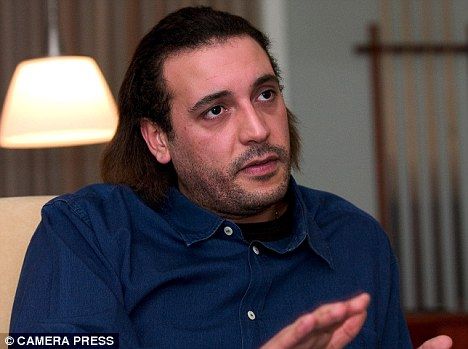
Moutassim Gaddafi - known as Hannibal - was staying with his wife, the model Aline Skaf, 29, and their children in a luxury suite at Claridge's when the fight broke out.
Police were called to the family's £4,000-a-night suite at 1.30am after hotel staff heard a woman's screams for help.
But when officers arrived they found the Libyan despot's 33-year-old son locked in the room with his wife - with his bodyguards blocking their way.
Three of the security staff were arrested at the scene for obstructing police officers.
Mr Gaddafi, however, was able to slip away after calling the Libyan ambassador, who informed officers that he had diplomatic immunity.
The Porsche-loving playboy and notorious hell-raiser was then whisked away in an embassy car. >>> Rebecca Camber, Tamara Cohen and Neil Sears | Tuesday, December 29, 2009
Hannibal’s wife, Aline Skaf. All praise is due to Allah, don’t you know? Photo: Google Images
Tuesday, December 29, 2009
Detroit Terror Attack: A Murderous Ideology Tolerated for Too Long
A whiff of common sense here. People are beginning to wake up from their slumbers. Surely, the tide must be beginning to turn. It must turn if the West is to be won.
This viewpoint from The Telegraph is refreshing indeed; yet it doesn’t go far enough. Radical Islamism is a symptom of a fanatic belief in Islam. In many ways, it is the true belief of a Muslim, one who, in their eyes, submits to the will of Allah, but who in anyone else’s eyes can only be thought of submitting to the ideology of a death cult: Islam.
If we are to win this war being waged against the West, otherwise known as the Jihad – an intermittent war which has been waged against the “infidel West” since Islam’s inception – then we have to come to the realization that Islam is not a religion per se, but a religio-political system which recognizes NO SEPARATION OF POLITICS AND RELIGION. The separation of politics and religion is the sine qua non of democracy. No democracy can exist without it. Islam is the true enemy of democracy and freedom. No true democracy will ever exist where Islam is the dominant ideology. This is so not only because Islam recognizes no separation of mosque and state, but also because Islam recognizes no diversity. None whatsoever! Islam recognizes one religion – Islam, and one way of life – the Islamic way of life. In an age of multiculturalism and diversity, it is incredible that we should tolerate such an intolerant ideology in our midst, for truly, if Islam gets the upper hand here in the West – and it is looking increasingly likely in the long- or medium-term, then there will be no diversity. There will be only Islam. Apostates will be killed, as will homosexuals. It will then be a case of convert, die, or pay the jizyah, the special tax levied on the infidel in return for some measure of protection. Remember this: Multiculturalism and diversity are anathema to Islam!
Westerners have faffed around, played around with our language for far, far too long. We have come up with all kinds of weird and wonderful expressions, euphemisms all, and all thought-up and devised so as not to appear Islamophobic, so as not to point the finger at a religion and thereby appear religiously bigotted, and to keep the peace at any price. The euphemisms are well-known to all by now: Islamism, radical Islamism (as though there could ever be a non-radical Islamism!), radical Jihadism (again, as though there could ever be a benign, non-radical Jihadism), and so on and so forth. There are but three words that we need in our vocabulary: Islam, Muslim, and the Jihad. An Islamist is a devout follower of the faith of Islam. A believer that dots the ‘i’s’ and crosses the ‘t’s’. Contrary to popular Western myth, he is not one who has perverted his faith; rather, he is the real thing. Just as much the real thing as Coke is to cola.
The Muslims considered by the West as being peaceful and law-abiding are actually people who do not follow central aspects of their faith such as the Jihad, the killing of apostates, honour killings, and other repugnant tenets of that faith.
THE TELEGRAPH: Telegraph View: Jihadist Islamism is comparable to Nazism in many respects. The British public realises this; so do the intelligence services.
Friday's attempt to blow up a transatlantic airliner by a British-educated Islamist was foiled by the bravery of its passengers and crew. We cannot assume that we will be lucky next time. And the indications are that there will be a next time. According to police sources, 25 British-born Muslims are currently in Yemen being trained in the art of bombing planes. But most of these terrorists did not acquire their crazed beliefs in the Islamic world: they were indoctrinated in Britain. Indeed, thousands of young British Muslims support the use of violence to further the Islamist cause – and this despite millions of pounds poured by the Government into projects designed to prevent Islamic extremism.
Is it time for a fundamental rethink of Britain's attitude towards domestic Islamism? Consider this analogy. Suppose that, in several London universities, Right‑wing student societies were allowed to invite neo-Nazi speakers to address teenagers. Meanwhile, churches in poor white neighbourhoods handed over their pulpits to Jew-hating admirers of Adolf Hitler, called for the execution of homosexuals, preached the intellectual inferiority of women, and blessed the murder of civilians. What would the Government do? It would bring the full might of the criminal law against activists indoctrinating young Britons with an inhuman Nazi ideology – and the authorities that let them. Any public servants complicit in this evil would be hounded from their jobs. >>> | Tuesday, December 29, 2009
Argentine Gay Couple Becomes First in Region to Marry
BBC: Two Argentine men have become the first same-sex couple to marry legally in Latin America.
Alejandro Freyre, 39, and Jose Maria Di Bello, 41, tied the knot in a civil ceremony in the southern city of Ushuaia, in Tierra del Fuego province.
Gay marriage is illegal in Argentina. However, the Tierra del Fuego governor issued a special decree allowing the couple to wed there.
Roman Catholic leaders in the country expressed alarm at the move.
A judge in the capital, Buenos Aires, prevented the couple from marrying there earlier this month. Church anger >>> | Tuesday, December 29, 2009
Two Gay Weddings on Two Continents, But Only One Happy Ending
THE GUARDIAN: Argentinians celebrate first same-sex marriage, while couple in Malawi are arrested and charged
Jose Maria Di Bello, left, and Alex Freyre kiss during their wedding in Argentina. Photograph: The Guardian
It was a tale of two weddings continents apart, but there was to be only one happy ending.
In Argentina, Jose Maria Di Bello and Alex Freyre made history as the first same-sex couple to marry in Latin America. Thousands of miles away, Tiwonge Chimbalanga and Steven Monjeza became the first gay men to tie the knot in Malawi.
The different reactions to the two ceremonies, however, suggested that while gay rights in Latin America are advancing, in Africa they are going into reverse.
Although Di Bello and Freyre had to rely on subterfuge, a progressive provincial governor and a 1,500-mile trip to the continent's southern tip, their union was greeted as a breakthrough. Chimbalanga and Monjeza, however, were swiftly arrested and charged with gross public indecency. Campaigners warned that the move indicated a conservative backlash against homosexuality across Africa. >>> David Smith in Johannesburg and Rory Carroll in Caracas | Tuesday, December 29, 2009
BBC: Two gay men arrested in Malawi after getting engaged have pleaded not guilty to charges of gross public indecency.
Tiwonge Chimbalanga and Steven Monjeza appeared at a court in Malawi's biggest city Blantyre, where they will ask for bail on Monday.
The pair held a traditional engagement ceremony over the weekend - believed to be the first gay couple in Malawi to start the process of getting married. >>> | Wednesday, December 30, 2009
Homophobic Malawi
iAFRICA: A gay couple was jailed for "gross indecency" in Malawi after the country's first same-sex public wedding ceremony over the weekend, as several African states were clamping down on homosexuality.
A police spokesman told AFP that Tiwonge Chimbalanga and Steven Monjeza, the first Malawian gays to publicly wed in a symbolic ceremony on Saturday "will appear in court soon to answer charges of gross indecency."
Homosexuality is banned in the conservative southern African country where the public discussion of sex is still taboo. Malawi's penal code outlaws homosexuality and sodomy, which is punishable by a maximum of 14 years in jail.
Countries such as Uganda, Senegal and Burundi have intensified their efforts to repress homosexuality in a continent where 38 out of 53 countries have criminalised consensual gay sex.
Hundreds of people attended Saturday's ceremony held at a guesthouse in Blantyre and spiced with traditional and hip-hop music. The couple wore traditional robes. >>> | Wednesday, December 30, 2009
Proteste in Iran: Teherans Machthaber rächen sich mit neuen Festnahmen
ZEIT ONLINE: Das iranische Regime versucht, die Lage im Land unter Kontrolle zu bringen. Für Ahmadineschad sind die Proteste ein Schauspiel des Westens, das er "zum Kotzen" findet.
Härte gegen Opposition, Drohungen gegen das Ausland: Das Regime in Teheran will die Kontrolle zurückgewinnen. Bild: Zeit Online
Der Chef der freiwilligen Basidsch-Einheit der Revolutionsgarden, Mohammed Resa Naghdi, nannte die Oppositionsführer "Ungläubige" und deren Anhänger "Wüstlinge". "Die Basidschis würden nicht zögern, das Land von diesen Hetzern und ausländischen Söldnern zu säubern", sagte der General und drohte mit neuen Maßnahmen. >>> Zeit Online, dpa, Reuters | Dienstag, 29. Dezember 2009
Iran: Die Islamische Republik taumelt ihrem Ende entgegen
ZEIT ONLINE: Sicherheitskräfte versuchen, die seit der gefälschten Wahl im Juni anhaltenden Proteste gewaltsam zu stoppen. Doch längst haben sie das ganze Land erfasst. Von M. Gehlen
Ein Demonstrant hält seine blutverschmierte Hand in die Höhe. Er und Hunderte weitere meist junge Teheraner protestieren gegen das iranische Regime. Bild: Zeit Online
Was für ein Jahr für Iran. Im Februar hatte die Führung noch mit großen Umzügen, triumphierenden Predigten und provozierenden Reden den 30. Jahrestag der Islamischen Republik gefeiert. Als Krönung schoss man damals den ersten eigenen Satelliten ins All, während sich Präsident Mahmud Ahmadineschad stolz inmitten der unterirdischen Uranzentrifugen in Natanz fotografieren ließ. Iran präsentierte sich als kommende Atommacht und unbestrittene Hegemonialmacht des Mittleren Ostens – politisch, technisch und militärisch vorne. So war das selbstbewusste Signal an die arabischen Nachbarn. Und so lautete die Botschaft an die westliche Welt. Zehn Monate danach taumelt die Islamische Republik ihrem Ende entgegen. ... >>> Zeit Online, Tagesspiegel | Dienstag, 29. Dezember 2009
Iranian Protest Is Grassroots and Unstoppable, Say Activists
TIMES ONLINE: Iran’s panicking regime is once again seeking to suppress the Green Movement by decapitating it.
Just as it did after June’s hotly-disputed presidential election, it is arresting high-profile reformists, academics and journalists who support the opposition.
It hesitates to detain Mir Hossein Mousavi lest millions of his supporters take to the streets, but it has locked up his brother-in-law and is widely suspected of killing his nephew. It cannot arrest Shirin Ebadi, the Nobel laureate, as she is abroad, but it has imprisoned her sister.
The tactic will prove as futile now as it did in June. Decapitation will not work because the opposition is a bottom-up movement run not by Mr Mousavi or Mehdi Karroubi, its nominal leaders, but by its grassroots members. It is a massive campaign of civil disobedience. >>> Martin Fletcher: Commentary | Wednesday, December 30, 2009
Liz Hoggard: A Morning-after Pill Is Best Served Without a Sermon
THE INDEPENDENT: I don't expect my pharmacist to impose his or her private scruples
I adore the old-fashioned pharmacy. The place that sells everything from Mason Pearson hair brushes to rose water and proper scents. In summer, I spend hours buying plasters and dressings for feet cruelly betrayed by new sandals. In winter, I lurk around the homeopathic flu remedies. A great pharmacist is an asset to any local neighbourhood.
Part psychologist, part confessor, they give advice about diet, exercise and stress; help patients manage conditions from diabetes and asthma to high blood pressure, and discreetly answer questions about side effects to different drugs. We all know of times when a quick-witted pharmacist has spotted a clinical error made by a frazzled GP. Or raised concerns when a customer returns for a repeat prescription just a little too often. They are highly trained experts (all qualifying pharmacy courses are at Masters degree level and last four years). But I don't expect my pharmacist to impose his or her private moral scruples on me, the customer.
You can now buy the morning-after pill from a pharmacy without a prescription. But at the moment, pharmacists are able to decline services with which they disagree on moral or religious grounds. A significant number, mainly Christians and Muslims, refuse women the morning-after pill because they believe it is a form of abortion. I can't be the only one who has witnessed a distressed young woman brusquely told by a pharmacist that they can't help with emergency contraception. Or sent away, like a naughty child, to another pharmacy, one which (by implication) has laxer morals. >>> Liz Hoggard | Tuesday, December 29, 2009
Les avortements retarderaient l'arrivée du Messie
Le Grand rabbin d’Israël. Crédits photo: Tribune de Genève
TRIBUNE DE GENÈVE: ISRAËL | Les deux Grands rabbins d'Israël se sont élevés contre les avortements en Israël. Selon eux, les interruptions de grossesse "retardent la rédemption messianique". >>> AFP | Mardi 29 Décembre 2009
To Our Eternal Shame, Britain Is STILL a Hub for Islamic Terror
MAIL ONLINE: So here we go again. Another international Islamic terrorist plot - and yet another British connection.
The attempt by Umar Farouk Abdulmutallab to blow up an American plane was averted only by luck and courage.
The incident obviously raises alarming questions about gross lapses in security. In particular, how did Abdulmutallab obtain a U.S. visa when he had been on an American watch-list of people with known terrorist connections?
But the deeper and more urgent issue for Britain concerns the key role this country has once again played in a Muslim's trajectory to radicalisation and terror. Abdulmutallab, who claims to have been working for Al Qaeda, was an engineering student at prestigious University College London for three years until 2008.
He was actually refused an entry visa to Britain earlier this year, but only because the institution at which he said he wanted to study turned out to be non-existent.
How, people might well ask, could such a radical have been educated in Britain without the authorities jumping on him?
Did MI5 know anything about him - especially since he was on a U.S. terrorism watch-list for two years?
As yet, we still don't know much about this man's history.
It appears he became a religiously extreme Muslim at a school in Togo, but was further radicalised while studying in London before apparently going to Yemen and linking to Al Qaeda.
Who can be surprised? After all, this is ' Londonistan' - the contemptuous term coined by the French security service back in the Nineties as they watched Britain become the central hub of Islamic terrorism in Europe.
Radicals flocked to the UK, attracted by Britain's toxic combination of criminally lax immigration controls, generous health, education and welfare benefits and the ability to perpetuate their views through the British veneration of the principle of free speech. >>> Melanie Phillips | Monday, December 28, 2009
Monday, December 28, 2009
Roman Polanski 'Overwhelmed' by Messages of Support
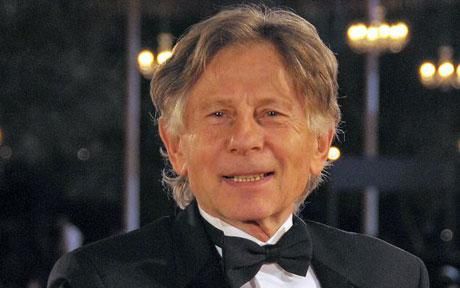
THE TELEGRAPH: The film director Roman Polanski said he was overwhelmed by messages of support as he battles extradition to the US to face a decades-old sex case involving a 13-year-old girl.
"In the darkest moments, each of their notes has been a source of comfort and hope, and they continue to be so in my current situation," wrote Polanski in a letter released online.
The 76-year-old Oscar winner made his first public statement since his arrest in September in a letter to the French philospher Bernard-Henri Levy, who has been been one of his strongest supporters.
The director of Rosemary's Baby and The Pianist is living under house arrest at his chalet in the Swiss Alpine resort of Gstaad after being released on bail on Dec 4.
Swiss authorities have said a decision on his extradition to the US is expected in January.
"I have been overwhelmed by the number of messages of support and sympathy I have received in Winterthur prison, and that I continue to receive here, in my chalet in Gstaad, where I am spending the holidays with my wife and my children," Polanski wrote. >>> | Monday, December 28, 2009
Pound May Fall Below Parity with Euro, Economists Warn
TIMES ONLINE: Economists have warned that the pound is on the brink of sinking below parity with the euro due to the Government’s unconvincing plans to tackle Britain’s £178 billion budget deficit.
Douglas McWilliams, the chief executive of the Centre for Economics and Business Research (cebr), said that the British economy was walking “five yards away from the edge of the cliff” and could be toppled by an “unexpected gust”.
The pound is trading at 1.10 against the euro after hitting a low of 1.02 a year ago. However, currency markets are reflecting the expectation of a win for the Conservatives in next year’s election, raising hopes of tougher action to tackle the deficit. Any signs of Labour closing the gap ahead of the election would result in the pound plunging, according to the cebr.
“If I had to bet, I would bet on the side of parity being broken,” said Mr McWilliams, adding that there was significant downside risk for the euro as a result of the divergent economic performances of countries such as Germany and Greece. >>> Nic Fildes | Monday, December 28, 2009
Iran Protests: Opposition Leader Mir Hossein Mousavi's Nephew Shot Dead
THE TELEGRAPH: Iranian security forces have shot and killed a nephew of opposition leader Mir Hossein Mousavi during the fiercest clashes with anti-government protesters in months.
At least eight people are thought to have died in clashes across the country, according to opposition web sites and witnesses.
Amateur video footage from the centre of Tehran showed an enraged crowd carrying away one of the casualties, chanting, "I'll kill, I'll kill the one who killed my brother".
In several locations in the capital, demonstrators fought back furiously against security forces, hurling stones and setting their motorcycles, cars and vans ablaze, according to video footage and pro-reform websites.
Demonstrations also took place in at least three other cities. >>> | Sunday, December 27, 2009
Wednesday, December 23, 2009
Merry Christmas! Joyeux Noël! Frohe Weihnachten! Buon Natale! Felix Nativitas!
’We Three Kings’, an original painting by James C. Christensen. Collage: Google Images
And the Word was made flesh, and dwelt among us, (and we beheld his glory, the glory as of the only begotten of the Father,) full of grace and truth. – The Gospel According to John, 1, 14
Et la Parole a été faite chair, et elle a habité parmi nous, pleine de grâce et de verité; et nous avons contemplé sa gloire, une gloire du Fils unique venu du Père. – Evangile selon Jean, 1, 14
Und das Wort ward Fleisch und wohnte unter uns, und wir schauten seine Herrlichkeit, eine Herrlichkeit, wie sie der eingige [Sohn] von seinem Vater hat, voll Gnade und Wahrheit. – Das Evangelium nach Johannes, 1, 14
E la Parola è stata fatta carne ed ha abitato per un tempo fra noi, plena di grazia e di verità; e noi abbiam contemplata la sua gloria, gloria come quella dell’Unigenito venuto da presso al Padre. – Evangelo secondo Giovanni, 1, 14
Et Verbum caro factum est et habitavit in nobus, et vidimus gloriam eius, gloriam quasi Unigeniti a Padre, plenum gratiae et veritatis. – Evangelium secundum Ioannem, 1, 14
Passions over 'Prosperity Gospel': Was Jesus Wealthy?
Some pastors are making a bold claim: Jesus wasn't poor; he was rich. Photo: CNN
CNN: Each Christmas, Christians tell stories about the poor baby Jesus born in a lowly manger because there was no room in the inn.
But the Rev. C. Thomas Anderson, senior pastor of the Living Word Bible Church in Mesa, Arizona, preaches a version of the Christmas story that says baby Jesus wasn't so poor after all.
Anderson says Jesus couldn't have been poor because he received lucrative gifts -- gold, frankincense and myrrh -- at birth. Jesus had to be wealthy because the Roman soldiers who crucified him gambled for his expensive undergarments. Even Jesus' parents, Mary and Joseph, lived and traveled in style, he says.
"Mary and Joseph took a Cadillac to get to Bethlehem because the finest transportation of their day was a donkey," says Anderson. "Poor people ate their donkey. Only the wealthy used it as transportation."
Many Christians see Jesus as the poor, itinerant preacher who had "no place to lay his head." But as Christians gather around the globe this year to celebrate the birth of Jesus, another group of Christians are insisting that Jesus' beginnings weren't so humble.
They say that Jesus was never poor -- and neither should his followers be. Their claim is embedded in the doctrine known as the prosperity gospel, which holds that God rewards the faithful with financial prosperity and spiritual gifts. >>> John Blake, CNN | Friday, December 25, 2009
How Long Before Small Boys Here Ask: A Church? What’s That, Grandad?
MAIL ONLINE: I had hoped to have a sort of Christmas truce this week, but the controversy just keeps on raging, drowning out the choirs and bells.
And one of the problems is Christmas itself. How much longer will it exist in the form we know today?
I fear it won’t be much longer. Many of its traditions are visibly dying. Teachers complain that children don’t know the carols any more, because their parents don’t know them either.
At a couple of packed services during Advent (a season many haven’t heard of), I’ve noticed that large numbers of adults stand with their lips not moving during the singing of these simple, easily mastered songs.
Perhaps they’re humming, or struck dumb with awe, but it looks to me as if they are just completely unfamiliar with words or music and don’t know what to do.
For the moment, they still think they should come to church, but for how much longer?
A few days ago I heard a story from the former East Germany, where Christianity was coldly tolerated but officially discouraged, and as far as possible denied to children.
This created a mixture of hostility and indifference that has not been overcome in the 20 years since the regime collapsed. The link between people and Christianity, many centuries old, has now been broken.
A small boy was walking with his grandparent past a church in a small town in Brandenburg. ‘What’s that strange building? What’s it for?’ he asked.
But East Germany wasn’t half as subtle as the politically correct revolutionaries who run this country. Our lot are far cleverer.
They hope to destroy the Christian religion through a thousand regulations. But first they have to rob it of its ancient standing by treating it as equal (if not slightly inferior) to Islam, Buddhism and Hinduism. >>> Peter Hitchens | Saturday, December 26, 2009 (Boxing Day)
No Burqas in France? Ruling Party Moves to Ban Veils in Public
A woman wears a burqa as she shops with her family at a street market in Roubaix northern France, August 9, 2009. France's ruling party has announced plans to present a bill to ban Islamic veils in all public places. Photograph: The Christian Science Monitor
THE CHRISTIAN SCIENCE MONITOR: The new effort to outlaw the full-length veil - niqabs and burqas - in public trumps earlier efforts to ban it only in some official buildings. The move comes at a time when French Muslims say they are being targeted as outsiders or not fully French.
Paris: The French ruling party of President Nicolas Sarkozy now affirms it will present a bill to ban full-length Islamic veils in all public places in France. It won't wait for the results of a parliamentary inquiry into the all-covering niqab and burqa to be published. The move adds fuel to an increasingly hot debate on French identity that has minorities here upset.
A nationwide identity debate, engineered by the ruling UMP party last month, has evolved into an embarrassingly unruly discussion about Muslims and northern Africans in France. And it comes on the heels of a surprise vote in neighboring Switzerland last month to outlaw the construction of new minarets at Muslim worship sites.
The UMP effort to outlaw the full-length veil in public trumps earlier efforts to ban it only in some official buildings, and comes at a time when French Muslims say they are being targeted as outsiders or not fully French.
Yet UMP party leader Jean-François Cope yesterday said veils that cover a woman’s entire face are a “violation of individual liberty” and a “negation” of one’s identity and that of others in a public milieu.
Under the proposed law, women would not be able to move in public with their faces fully covered. The legal rendering is that burqas and all-covering niqabs are a public order issue, and not a religious practice issue - as is the French ban on headscarves in schools, which has been carried out to uphold French secularism, known as laïcité.
Offenders wearing veils would receive a fine – though lawmakers now say there will be a period of mediation following the initial charge. Vote expected in early Jan >>> Robert Marquand, Staff writer | Wednesday, December 23, 2009
We Need a Shared Story to Underpin Our National Life
THE TELEGRAPH: Our future leaders must be taught selflessness in place of greed, and service in place of arrogance
By any reckoning, Britons have had an uncomfortable and anxious year. Even as the implications of the financial crisis sank in and the belt-tightening began, news broke of the ride for which we had been taken by our political masters, via their expenses forms. The war in Afghanistan claimed the lives of more than 100 British soldiers. The Copenhagen summit raised awareness of environmental problems, but left it unclear what would or should be done about them. And attacks on the traditional family continued, with claims by ministers and "experts" that no one form of the family was to be preferred to any other.
It has been tough for everyone, but Christians in particular have found themselves under pressure. Nurses have been told not to pray with their patients; registrars ordered to conduct civil partnership ceremonies in spite of conscientious objections; evangelists forbidden to spread the word in "Muslim" areas; and permission for Good Friday processions refused on the grounds that they are a "minority" interest and do not warrant police time.
Given the sea of troubles with which we are faced – at home and elsewhere – what can we look forward to as we face 2010? First, we need to accept that the financial and political crises are not primarily about the failure of procedures and regulation. The angst about the war in Afghanistan, similarly, is not just about the sad loss of life. The broader problem is that there has been the loss of a common narrative, a story which underpins our national life. In the past, this was provided by the Judaeo-Christian tradition, derived from the Bible. This narrative has been at the root of those values which we regard as particularly British, whether to do with the dignity of the human person, with fundamental freedoms of belief, speech and assembly, or with equality – which is not about "sameness", but a recognition of the image of God in others.
This tradition has also provided us with the virtues for which we have looked in vain in our economic and political leaders. The best of British business and politics has been characterised by a sense – largely derived from the Bible's teachings – of responsibility, of trust, justice, fairness and truth-telling. In recent years, these virtues have been jettisoned, so that we can be more "competitive" in a cut-throat world, or engage in a more adversarial form of politics. We, and the generations to follow, will have to live with the consequences of this dissolution of a moral and spiritual framework for our common life.
But while the task of reconstruction must begin immediately, it cannot be just about tinkering with the expenses system at Westminster, or the regulation of the City. It has to be about moral and spiritual education in our schools and universities. Future leaders must be taught that the public have the right to expect selflessness rather than greed, service rather than arrogance, and even sacrifice for the greater good of the organisation, or the nation. >>> Dr Michael Nazir-Ali | Saturday, December 26, 2009 (Boxing Day)
The Rt Rev Dr Michael Nazir-Ali is president of the Oxford Centre for Training, Research, Advocacy and Dialogue, and was until this year Bishop of Rochester
Head of Russian Orthodox Church Condemns Discrimination against Gays
PINK NEWS: The head of the Russian Orthodox Church, Patriarch Kirill, has said that although homosexuality is still a sin, gay people must not be discriminated against.
Kirill met with Thorbjorn Jagland, the secretary general of the Council of Europe, a pan-European human rights body.
According to Russian news agency RIA Novosti, he told Jagland: "We respect the person's free choice, including in sex relations."
Although he reiterated that the majority of religions saw homosexuality as a sin and gay marriage could not be allowed, he added: "Those who commit a sin must not be punished… And we have repeatedly spoken out against discriminating people for their nontraditional sexual orientation." >>> Jessica Geen | Wednesday, December 23, 2009
Yusuf al Qaradawi on Christmas
Sunday, December 20, 2009
US on the Brink of Embracing Socialized Medicine! Barack Obama's Health Reform Set to Pass Senate after Abortion Deal
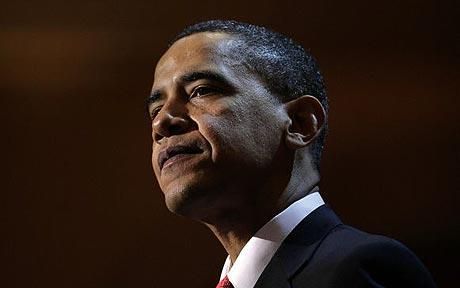
THE TELEGRAPH: President Barack Obama's goal of health care reform received a key boost when Senate Democrat leaders said they had secured the key 60th vote needed to pass legislation.
The Senate bill is now expected to be put to a vote before Christmas, despite Republican delaying tactics.
Democrats from the Senate and the House of Representatives will then still have to hammer out major differences between their two versions of health reform before a final bill can be delivered to Mr Obama.
The president has made health reform his domestic policy priority and White House aides welcomed reports that there were now 60 supporters for a compromise deal in the Senate.
Mr Obama devoted his weekend radio and Internet address to the issue he campaigned on in 2008.
"Now - for the first time - there is a clear majority in the Senate that's willing to stand up to the insurance lobby and embrace lasting health insurance reforms that have eluded us for generations," he said.
The breakthrough came when Sen Ben Nelson, a socially conservative Democrat, told his party colleagues that he was willing to accept new wording that restricted federal funding for abortion.
It also emerged that he had secured extra federal funding for health programmes in his home state of Nebraska after days of negotiations.
His support appeared to give Senate leader Harry Reid the 60 votes required in the 100-seat chamber to overcome the threat of a Republican filibuster. >>> Philip Sherwell in New York | Saturday, December 19, 2009
There'll Be Nowhere to Run from the New World Government
THE TELEGRAPH: 'Global' thinking won't necessarily solve the world's problems, says Janet Daley
There is scope for debate – and innumerable newspaper quizzes – about who was the most influential public figure of the year, or which the most significant event. But there can be little doubt which word won the prize for most important adjective. 2009 was the year in which "global" swept the rest of the political lexicon into obscurity. There were "global crises" and "global challenges", the only possible resolution to which lay in "global solutions" necessitating "global agreements". Gordon Brown actually suggested something called a "global alliance" in response to climate change. (Would this be an alliance against the Axis of Extra-Terrestrials?)
Some of this was sheer hokum: when uttered by Gordon Brown, the word "global", as in "global economic crisis", meant: "It's not my fault". To the extent that the word had intelligible meaning, it also had political ramifications that were scarcely examined by those who bandied it about with such ponderous self-importance. The mere utterance of it was assumed to sweep away any consideration of what was once assumed to be the most basic principle of modern democracy: that elected national governments are responsible to their own people – that the right to govern derives from the consent of the electorate.
The dangerous idea that the democratic accountability of national governments should simply be dispensed with in favour of "global agreements" reached after closed negotiations between world leaders never, so far as I recall, entered into the arena of public discussion. Except in the United States, where it became a very contentious talking point, the US still holding firmly to the 18th-century idea that power should lie with the will of the people. >>> Janet Daley | Saturday, December 19, 2009
Weihnachtsfeier in der Sprache Jesu: Im Dorf Malula in Syrien erlebt das Aramäische eine ganz und gar unerwartete Renaissance
NZZ am SONNTAG: An Weihnachten findet im christlichen Bergdorf Malula eine Mitternachtsmesse statt. Die Leute sind stolz, dass ihre Sprache trotz der Übermacht des Arabischen überleben wird.
Erzählt Mushe Barkula von den Vorbereitungen für Weihnachten, wirkt der schüchterne Mann mit dem Schnauz wie ein schelmischer Bub. «Wir machen Köfte und Hummus, kochen Fisch, Weinblätter und bereiten Taboulé, Salat aus frischen Kräutern.»
Mushe war lange Sanitäter in Malula. Der Cousin des Schriftstellers Rafik Schami kennt die Geschichten der Leute und ihre Sprache. Weihnachten heisst hier «Edha Milothe». Das ist nicht etwa Arabisch, die Muttersprache der meisten Christen im Nahen Osten. Das ist Aramäisch. «Meine Muttersprache und die Sprache Jesu», sagt Mushe, während er in seiner Wohnung an der Einfahrt in das 1500 Meter über Meer gelegene Dorf sitzt, die Frau Kaffee kocht und die Kinder herumtollen.
Malula bedeutet Eingang auf Aramäisch. Es ist tatsächlich eine Pforte im Fels, hinter der sich das Dorf in die Schlucht aus beigem Fels zu drücken scheint. Einige Häuser sind in den Berg gebaut oder stehen wie von Kindern aufgetürmte Bauklötzchen übereinander. Früher lebten die Leute in den Höhlen, deren Eingänge wie Löcher im Fels klaffen. Oft drückt ein Wind aus der irakischen Wüste ins Tal, meist ist der Himmel azurblau. Wenn im Sommer in der Ebene von Damaskus die Hitze steigt, braucht man in Malula nicht einmal eine Klimaanlage. Dann wohnen bis zu 5000 Personen hier. Im Winter sind noch 1000 Bewohner da, die meisten Christen, wenige Muslime, die auch Aramäisch sprechen. Manchmal fällt an Weihnachten Schnee, dann ist der Weg nach Damaskus blockiert. >>> Christoph Plate, Malula | Sonntag, 20. Dezember 2009
It’s Only You Brits Who Don’t Appreciate Me, Insists Tony Blair
THE SUNDAY TIMES: Tony Blair has hit back defiantly at his British critics, insisting that he is appreciated overseas much more than at home. He also defended his money-making activities.
“If I did what these people who criticise me here wanted, I’d end up just sitting in a corner, but that is never going to be me,” he said.
Interviewed for today’s News Review, the former prime minister said: “You get to a position where the criticism you get, you just have to live with. It’s the way it is. When you are someone like me, you create a lot of controversy one way or another. You just decide to do what you are going to do and let that speak for itself.”
He blamed his negative image in Britain on the press, saying: “They don’t approach me in an objective way. Their first question is how to belittle what I’m doing, knock it down, write something bad about it. It’s not right. It’s not journalism. They don’t get me and they’ve got a score to settle with me. But they are not going to settle it.”
He added: “It’s not true that nobody likes me! Reading the papers in Britain, you’d end up thinking I’d lost three elections rather than won them. There is a completely different atmosphere around me outside the country. People accept the work that you are doing, as it is. They don’t see anything wrong with being successful financially and also doing good work.”
Since leaving office in 2007, Blair has divided his time between unpaid humanitarian work and lucrative activities advising banks, companies and Arab governments.
There has been criticism of his high fees for public speaking, but Blair responded: “When leaders step down, they all do a certain amount of paid speaking and that is fair enough. If all I wanted to do was make speeches, let me tell you, I could make five times the number.”
He added: “I got out of politics early enough to have a second act in life. Why shouldn’t a politician be able to do that? Others do. Nobody says Bill Gates is bad for moving from business to philanthropy. Why shouldn’t a politician do a business model when they change their life?” >>> John Arlidge | Sunday, December 20, 2009