Monday, September 07, 2009

Lubna Hussein Returns to Court over Sundanese ‘Indecency’ Laws

TIMES ONLINE: Sudan is facing international condemnation as the trial resumes today of Lubna Hussein, a Muslim woman who faces a flogging for breaking indecency laws by wearing trousers.

Speaking to The Times before her court appearance, Ms Hussein, 34, a widow, said that she was overwhelmed by the public support she has received in her fight to change a law that she says discriminates against women.

“I am so happy when I see all of the support from around the world,” she said by telephone from the Sudanese capital Khartoum. “It is not support for Lubna Hussein but for human rights and women’s rights in Sudan and elsewhere in the world.”

Ms Hussein wants to force the repeal of Article 152 of Sudan’s penal code, which orders a fine and flogging for women dressed in an “indecent” manner. >>> Tristan McConnell | Monday, September 07, 2009
Michael Moore Film Calls Capitalism Evil

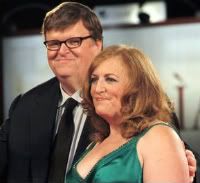
THE TELEGRAPH: The latest film by Michael Moore, the US documentary maker, says that capitalism is "evil". Capitalism: A Love Story, targets the big banks and speculators who have been blamed for contributing to the global financial crisis.

Capitalism: A Love Story, targets the big banks and speculators who have been blamed for contributing to the global financial crisis.

The film premiered at the Venice film festival on Sunday.

Blending his trademark humour with tragic individual stories, archive footage and publicity stunts, the 55-year-old launches an all-out attack on the capitalist system, arguing that it benefits the rich and condemns millions to poverty.

"Capitalism is an evil, and you cannot regulate evil," the two-hour movie concludes.

"You have to eliminate it and replace it with something that is good for all people and that something is democracy."

The bad guys in Moore's mind are big banks and hedge funds which "gambled" investors' money in complex derivatives that few, if any, really understood and which belonged in the casino. >>> | Sunday, September 06, 2009

Trailer: Michael Moore’s New Film Capitalism: A Love Story

The Long and the Short of It!

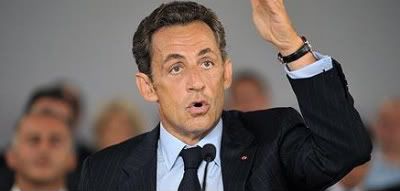
THE TELEGRAPH: Twenty short people were ordered to stand behind Nicolas Sarkozy so as to make him look taller while delivering a keynote televised speech, it has emerged.

They were bused in after being 'vetted' by aides of the French President who made sure none were taller than his own height of 5ft 5ins.

The extraordinary scenes unfolded at the Faurecia motor technology plant in Caligny, south of Caen, Normandy, last Thursday.

Mr Sarkozy looked far more statuesque than usual as he posed in front of the large group of white coated technicians on a specially erected stage.

In scenes being broadcast across France today, a woman researcher admits on camera that she was chosen because of her small size.

Asked by a TV journalist if it was necessary for her to be no taller than the President's 5ft 5ins - a height which rises to around 5ft 7ins thanks to his trademark stacked heels - she clearly replies: 'There you have it.'

Pictures are then shown of the 20 workers on board a coach which brought them in from other parts of the three mile square Faurecia site.

All admitted that they were among the smallest members of the 1400-strong Faurecia workforce, and had been selected to replace the usual workers in the unit where Mr Sarkozy made his speech about the car industry.

Mr Sarkozy, who is notoriously sensitive about his height, did not want a repeat of the fiasco in June when he was caught using a footstool when delivering a speech alongside Gordon Brown and Barak Obama on one of Normandy's nearby D-Day beaches.

Both the 5ft 11ins British Prime Minister and 6ft 2 ins American towered above Mr Sarkozy when they used the same podium, humiliating him in front of a worldwide audience.

But while the incident in June was considered funny, this time round Mr Sarkozy was accused of scandalously manipulating his media image for political ends. Nicolas Sarkozy 'surrounded by short people for TV speech' >>> Peter Allen in Paris | Monday, September 07, 2009

Fall of the Roman Empire (Prelude to Documentary)

Roman Empire Falling into Dark Ages

Halal Ads Hit French TV

Photobucket
Halal butchery and poultry shelves in a supermarket in Illzach, France, on the eve of the beginning of Ramadan. Photo: TIME

TIME: A pack of shoppers swarm supermarket shelves, cheerfully snapping up packages of prepared lasagna, ravioli and paella as they sing the products' praises. Sounds just like a normal evening TV ad. And it is, only this one features ethnic-Arab actors in a commercial for halal food in France. A first in its own right, the ad is already a remarkable sight on French TV. But even more surprising is the reaction it's gotten — or, rather, hasn't gotten. In a country that's usually quick to burst into outrage over the spread of Islam into secular society, these halal-food ads have been playing without a peep from the public.

The ad campaign by Panzani-owned, Lyon-based food brand Zakia Halal is the first ever mass-market promotion of halal food to France's estimated 5 million Muslims. The TV spots kicked off on Aug. 17 to coincide with the start of the holy month of Ramadan and have been running on most of France's largest television channels since. The $430,000 campaign will be put on pause Sept. 2, then resumed as Ramadan comes to an end later this month and the feast of Eid el-Fitr approaches. Thus far, the spots have gotten a mostly supportive reaction from Muslim shoppers and the French media, with the daily Le Parisien trumpeting "Halal Takes a Spot on TV."

What's astounding is how long it took for any of France's numerous makers of halal food products to embrace this kind of mass marketing. Studies done by ethnic-marketing consultancy Solis Conseil in Paris estimate that French Muslims currently purchase about $5.7 billion worth of specialized foodstuffs and related products — a market that's been increasing nearly 15% annually for almost a decade. Solis has also found that nearly 94% of all Muslims in France with North African roots — by far the largest group of Muslims in the country — buy exclusively halal food. A recent poll by the Ifop agency found that 70% of Muslims in France are observing Ramadan this year — leaving little doubt as to the thinking behind the timing of Zakia Halal's groundbreaking ad campaign.

"Even though people have to fast during the day, Muslims tend to eat more — and better — when they can eat during Ramadan, which is why it is traditionally a period of peak consumer activity," explains Abbas Bendali, director of Solis Conseil. "Zakia's timing makes good sense because people tend to be short on time during Ramadan and will use prepared dishes along with fresh food for meals. And when you consider the size and value of this demographic, using mass-market methods to promote halal products becomes logical too." But it's also potentially inflammatory, given the tendency of the French to view overt manifestations of Islamic faith as a threat to the nation's tradition of secularity. >>> Bruce Crumley, Paris | Wednesday, September 02, 2009
Geschichte einer Einwanderung: "Die Bratwurst ist die Trennlinie zwischen West und Ost"

SPIEGEL ONLINE: Wie kommt man als Muslim dazu, doch mal Schweinefleisch zu kosten? Und wie erhält man als Pakistaner den Vornamen Niels? Hasnain Kazim berichtet von der Einwanderung seiner Familie nach Deutschland. SPIEGEL ONLINE veröffentlicht Auszüge aus seinem Buch "Grünkohl und Curry".

Meine Mutter machte kurz nach ihrer Ankunft in Deutschland das erste Mal in ihrem Leben Bekanntschaft mit Schweinen. Die Tiere standen in einiger Entfernung auf einer Wiese im niedersächsischen Rastede, sie entdeckte sie, als sie mit Omi und Opi unterwegs war. Omi und Opi, das waren Mariechen und Erich Koch, Verwandte eines deutschen Kollegen meines zur See fahrenden Vaters, die meine Eltern bei sich aufgenommen hatten. "Ich wunderte mich: Was sind das für riesige Viecher? Schafe? Aber sie hatten kein Fell. Schweine kannte ich nur aus pakistanischen Bilderbüchern: kleine, rosafarbene Tiere. Diese Wesen hier waren schwarzbraun und riesengroß, fast so groß wie Kühe."

Sie starrte die Schweine an, sie begriff, dann entfuhr ihr: "Pigs! There [sic] are pigs!" Omi fiel diese Szene regelmäßig ein, wenn sie Geschichten von früher erzählte. "Deine Mutter sagte nur 'Pigs!' Und ich: Ja, das sind 'pigs'. Die hatte sie wohl noch nie zuvor gesehen."

Omis schnatterndes Gelächter.

Es war nur eine Frage der Zeit, bis das Fleisch dieser Tiere auch auf dem Teller meiner Mutter landete. Ich weiß nicht, inwiefern Omi meine Eltern gefragt hat, ob sie Schweinefleisch essen, oder ob sie es ihnen überhaupt angeboten hat. Meine Mutter hatte es bis dahin trotz des Bratengeruchs auf dem Schiff, auf dem mein Vater arbeitete, und bei Kochs zu Hause nicht probiert, weil sie innerlich nicht dazu bereit war - noch nicht. Jahrelang hatte sie gehört, wie eklig Schweinefleisch ist. Sie sah, dass mein Vater an Bord angefangen hatte, Schweinefleisch zu essen, und fand es nicht weiter schlimm. Sie selbst rührte es nicht an. Aber dann briet Omi eines Abends Schweinekoteletts, kochte Kartoffeln und Rotkohl dazu und dünstete im Bratfett Ananasstücke an. Meine Mutter, hochschwanger, hatte großen Appetit.

"Was gibt es zum Abendessen?"

"Koteletts mit Ananas."

"Ah, Koteletts mit Ananas!"

Kotelett hatte sie gelernt und Ananas heißt auch auf Urdu Ananas.
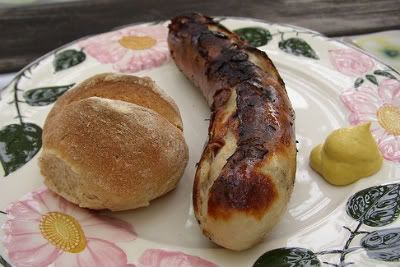
Es schmeckte ihr so gut, dass sie noch heute davon schwärmt. "Aus Pakistan kannte ich Lammkoteletts vom Grill, die sehen fast genauso aus." Allerdings sind die viel schärfer, aber das war wohl zweitrangig. Fortan war Schweinefleisch für meine Mutter kein Problem mehr. Kein Schwein gehabt >>> Hasnain Kazim | Montag, 07. September 2009
Du burkini au voile, l'Europe cherche la réponse

Photobucket
Un mannequin présente un modèle de burkini en Turquie. Ces tenues de bain islamiques ont fait leur apparition un peu partout en Europe. Crédits photo : Le Figaro

LE FIGARO: Les gouvernements des pays de l'UE hésitent sur la conduite à tenir face au port du voile intégral dans les lieux publics.

C'est une première en Europe : une femme portant le niqab, ce voile couvrant tout le visage, a pu témoigner début août dans un tribunal de Copenhague, alors même que la justice danoise proscrit chapeaux et lunettes de soleil à la barre ! Comme en France, le port de la burqa fait l'objet d'intenses débats au Danemark, à la suite d'une proposition du parti conservateur, au pouvoir, visant à l'interdire dans les lieux publics.

Les Pays-Bas ont été les premiers, dès 2005, à envisager une interdiction totale de la burqa, pour des raisons de sécurité. Un texte avait été déposé par le député populiste Geert Wilders, adversaire résolu de l'islam radical. Mais, depuis, le gouvernement tergiverse : aucune loi n'a encore été adoptée. Et, dans la pratique, les municipalités ont du mal à imposer une interdiction : une commune qui avait refusé de verser ses allocations sociales à une femme n'ayant pas trouvé d'emploi à cause de sa burqa a été condamnée en juin 2007. Interdit «saufpendant le carnaval» >>> Stéphane Kovacs | Lundi 07 Septembre 2009
Venezuela will Iran 20.000 Barrel Benzin pro Tag liefern

DIE PRESSE: Trotz reicher Erdölvorkommen mangelt es dem Iran an Raffinerien. Ab Oktober will Venezuela mit Benzin aushelfen. Damit könnte das Ajatollah-Regime drohende Sanktionen wegen seines Atomprogramms umgehen.

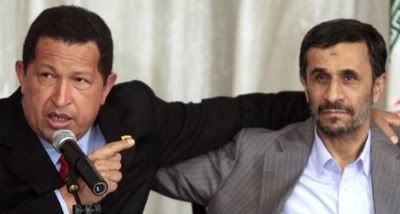
Venezuela will dem Iran künftig 20.000 Barrel Benzin täglich liefern. Das kündigte der venezolanische Staatschef Hugo Chavez am Sonntag bei einem Besuch im Iran an. Die Lieferungen im Wert von insgesamt 800 Millionen Dollar (560 Millionen Euro) würden im Oktober beginnen, sagte Chavez in der Stadt Mashhad im Nordosten des Landes lokalen Medien zufolge. Die Erlöse werde Venezuela nutzen, um im Gegenzug vom Iran Ausrüstung und Technologie zu kaufen. Über welche Dauer die Lieferungen erfolgen sollten, sagte Chavez nicht. Zu wenige Raffinerien im Iran >>> Ag. | Montag, 07. September 2009
Race Riot Flared after Muslims Were Urged to Confront Right-wing Protests

TIMES ONLINE: Birmingham’s top Muslim leader urged his followers to “vent their feelings” against anti-Islamic protesters during a weekend rally that ended in violence and dozens of arrests, The Times can reveal.

Muslims were encouraged by the Birmingham Central Mosque to counter-demonstrate during Saturday’s protest in the city, which was organised by the right-wing English Defence League (EDL). It is understood that Muslims were encouraged to confront the protest against the advice given by the West Midlands Police to community leaders to stop their followers from attending.

Mohammad Naseem, Birmingham Central Mosque’s chairman, considered to be the most senior community leader in the West Midlands region, told The Times yesterday that he encouraged members of his congregation to attend the rally, at which about 80 people were arrested, to express the Islamic community’s solidarity.

Dr Naseem’s advice came less than a month after Muslims of predominantly Asian heritage clashed with the EDL in Birmingham at another antiIslamic rally that led to 35 arrests.

He said the presence of Muslims at the weekend protest was an important stand against anti-Islamic fascists. “I think it shows that the community has got a sense of cohesion,” he added.

The police used their batons to subdue the violent crowd of more than 200 people, predominantly aged between 16 and 36, who threw bottles at each other and exchanged punches.

They could not stop the clash between the two groups despite initially containing them to two separate locations in the city. It is believed that half of those arrested were counter-protesters.

The Times understands that the West Midlands police received assurances from Muslim leaders during numerous meetings in the past two weeks that their community members would be discouraged from attending the protest, which the EDL had announced at the August 8 demonstration in Birmingham.

“The police had a lot of engagement with mosques, youth workers and social workers, and a lot of work went on to encourage people to stay away and not attend,” police sources said. “But it is obviously difficult to stop kids going and their presence alone would be deemed provocative.”

Asked if it would have been a better idea to encourage Muslims not to attend the rally at all, Dr Naseem said: “The thing is, that is their right, I cannot say, ‘You don’t have this right’.” >>> Richard Kerbaj | Monday, September 07, 2009

Sunday, September 06, 2009

BP to Strike It Rich with Libya Contracts

THE TELEGRAPH: BP is not expecting an early pay-off from its contentious Libyan contract tied to prisoner transfers but analysts say the potential from the huge tracts of exploration territory is enormous.

The group was awarded onshore and offshore areas equivalent to the size of Belgium and Kuwait in May 2007 as a "sweetener" to speed progress on a prisoner deal at the time. The oil and gas potential is said to be considerable but until now there has been little recognition of how significantly the Libyan deal could benefit BP.

Tony Blair personally attended the signing ceremony, shortly before Britain signed a wide-ranging memorandum of understanding with Libya on extradition, legal assistance and established the framework for the release of the Lockerbie bomber. >>> Roland Gribben | Sunday, September 06, 2009
Saudi Arabia: 'Pure' Islamic Alternative to YouTube Launched

LOS ANGELES TIMES: In a move to preserve religious and moral values in cyberspace, a group of unidentified Saudis have launched a "clean" Islamic alternative to the leading video-sharing site YouTube.

It's called NaqaTube.

Naqa means "pure" in Arabic. The website offers a collection of edited and Islamically "clean" clips from YouTube under the banner, “Participate with us in a clean website."

Site administrators censor video clips that express critical views of the government, Islamic scholars and members of the Saudi royal family.

In keeping with Saudi Arabia's strict religious and moral codes, music videos and clips featuring women are also banned. Any music videos on NaqaTube must adhere to Islamic rules.

Abu Ibraheem, the handle of a NaqaTube moderator, assured in an interview with the Saudi English-language daily Arab News that all footage on NaqaTube is "religiously safe."

The clips, he said, are often edited before being posted. Visitors also can use its online tool to edit their own footage before uploading it to the site.

Abu Ibraheem told the paper that he hopes NaqaTube will some day rival YouTube, perhaps by decreasing the number of visitors to YouTube.

But for now NaqaTube will have to wait. It has attracted only 5,000 to 6,000 visitors since its launch this summer, Abu Ibraheem said.

Plans are in the pipeline to launch NaqaTube in languages other than Arabic.

The vast majority of clips on NaqaTube have religious themes. Visitors are offered a spectrum of more than 10 channels, including a science-themed one and a site featuring children's cartoon clips.

Viewers are also offered countless clips of religious scholars giving lectures and debating Islamic rules on talk shows.
Abu Ibraheem stressed that NaqaTube is promoting "moderate" Islamic teachings and "nothing extreme."

NaqaTube isn't the first religious counterpart of YouTube. Other examples include JewTube, Islamic[t]ube, and GodTube (now called tangle.com), which describes itself as using "technology to connect Christians for the purpose of encouraging and advancing the Gospel worldwide."

NaqaTube comes as Saudi Arabia tries to censor Internet content deemed harmful to its values.

The initiative, titled Saudi Flag[g]er, includes 200 volunteers who search YouTube for inappropriate content.

Once a racy clip is found, a member of the campaign flags it. Users are then encouraged to complain to YouTube administrators that the video contains “hateful or abusive content” that “promotes hatred or violence” against religious groups, according to the campaign's website. >>> Alexandra Sandels in Beirut | Sunday, September 06, 2009
Dinner with Sarah

Watch AP video: Palin’s eBay dinner: Want to have dinner with former Alaska Gov. Sarah Palin? Plan on writing a big cheque. The ex-Republican vice presidential candidate is offering the dinner as part of a charity auction on eBay >>> | Saturday, September 05, 2009
Libyen-Affäre: «Qadhafi hat sein Gesicht verloren»

TAGES ANZEIGER: Bundespräsident Merz hätte versuchen sollen, Qadhafi zu treffen. Selbst wenn dies bedeutet hätte, drei Tage lang auf ihn zu warten, sagt Nahost-Experte Hottinger.

Herr Hottinger, haben Sie eine Ahnung, wann die beiden Schweizer Geiseln freikommen?

Es gibt zwei Möglichkeiten: Entweder erlässt Qadhafi einen Gnadenakt – danach sieht es allerdings nicht aus – oder es gibt neuen Druck auf die Schweiz. Wenn Qadhafi das im Sinn hat, behält er natürlich sein Pfand.

Man hat den Eindruck: Qadhafi will die Schweiz schmoren lassen.

Seine Idee, die Schweiz aufzuteilen, zeigt, dass Qadhafi die Temperatur sogar noch etwas erhöhen möchte. Das würde heissen: Sein Rachebedürfnis ist noch lange nicht gestillt. Jetzt kommt es sehr auf die Geschicklichkeit der Schweiz an. Dabei muss sie sich an Qadhafi orientieren, nicht an den Regeln des Rechtsstaats. Der Rechtsstaat hat in Libyen keine Bedeutung. Man muss schauen, wie man Qadhafi beschwichtigen kann.

Was also würden Sie dem Bundesrat raten?

Zuerst einmal: Nicht in Panik verfallen. Weiter braucht es eine Ouvertüre, in der sich Qadhafi in Szene setzen kann, nicht seine Minister. Es war wohl ein Fehler, dass Bundespräsident Hans-Rudolf Merz mit einem Minister verhandelt hat, und dann das Angebot, «du kannst den grossen Chef sehen», nicht wahrnehmen wollte oder nicht wahrnehmen konnte. Das hätte geheissen, auf Qadhafi zu warten.

Anmerkung: Laut Recherchen der Online-Redaktion des «Tages-Anzeigers» hat Bundesrat Merz bestritten, dass es ein Angebot zu einem Gespräch mit dem lybischen Staatschef gab.

Unter Umständen hätte das dauern können.

Ja, aber wenn der Bundespräsident die Reise schon unternimmt, hätte er wohl warten müssen, vielleicht drei Tage lang. Das wäre auch dann der Fall gewesen, wenn er von vornherein ein Rendezvous zugesichert bekommen hätte.

So oder so heisst das: Die Schweiz muss sich demütigen lassen.

Das sollte man nicht so schweizerisch sehen. Es handelt sich um eine Stammesangelegenheit zwischen zwei Stämmen, dem libyschen und dem schweizerischen. Wir sind in einer Fehde. Wenn zwei Stämme streiten, braucht es einen Schiedsrichter. Das muss so über die Bühne gehen, dass Qadhafi nicht sein Gesicht verliert. >>> Von Ruedi Burger | Samstag, 05. September, 2009

Arnold Hottinger: Die Länder des Islam >>>

TAGES ANZEIGER:
Libyen widerspricht Merz: Rückkehr der Geiseln nie zugesagt: In der Schweiz liege wohl ein Missverständnis vor, sagt der libysche Vize-Aussenminister – und erzählt seine Version der Abmachung. >>> oku/sda/ap | Sonntag, 06. September 2009
Deal for Terror Release?

Revealed: Blair's Role in Megrahi Release

THE INDEPENDENT ON SUNDAY: MPs want to know what deal was struck over the Lockerbie bomber at a meeting in a London club in 2003 – long before either the Scottish government or Gordon Brown was involved

Tony Blair will be thrust into the controversy over the release of the Lockerbie bomber Abdelbaset Ali al-Megrahi with questions in Parliament over a secret meeting the then Prime Minister orchestrated that brought Libya in from the cold.

MPs are set to demand the minutes of an extraordinary cloak-and-dagger summit in London between British, American and Libyan spies held three days before Mr Blair announced that Colonel Muammar Gaddafi was surrendering his weapons of mass destruction programme.

At the time of the secret meeting in December 2003 at the private Travellers Club in Pall Mall, London – for decades the favourite haunt of spies – Libyan officials were pressing for negotiations on the status of Megrahi, who was nearly three years into his life sentence at a Scottish jail.

Whitehall sources said the issue of Megrahi's imprisonment was raised as part of the discussions, although it is not clear whether Britain or America agreed to a specific deal over his imprisonment, or a more general indication that it would be reviewed.

MPs are to investigate what was promised by Britain at the talks on 16 December, and the role that Mr Blair played in the affair. Until now, the controversy over Megrahi's release last month has centred on discussions between Gordon Brown's government and the Scottish executive and Libya since 2007, with Mr Blair apparently not involved in any way.

It has also focused on claims that the deal was related to oil deals, with Jack Straw admitting yesterday that BP's interests in Libya played a "big part". But authoritative sources said the seeds for Megrahi's release were sown in 2003, when Libya made the historic agreement to end its status as a pariah, and that the focus on oil and trade was a "red herring".

Yesterday the Libyan Foreign Minister, Musa Kusa – who himself was present at the Travellers Club meeting – told The Times that Megrahi's release was "nothing to do with trade".

Two days after the meeting Mr Blair and Col Gaddafi held direct talks by telephone; and the next day, 19 December, the historic announcement about Libyan WMD was made by Mr Blair and President Bush.

At the time, the British government was in desperate need of an intelligence victory after the debacle of going to war in Iraq in the belief that it had weapons of mass destruction.

The Iraq Survey Group had just reported it had found no biological or chemical weapons. Two months after the talks, Mr Blair travelled to the Libyan desert to extend the "hand of friendship" to Col Gaddafi in a Bedouin tent, calculating that the PR coup of Libya dismantling WMD programmes outweighed American outrage.

Yet, in the end, it was revealed that Libya had not developed a nuclear- weapons capability and so did not pose as great a threat to the West as was feared. >>> Jane Merrick | Sunday, September 06, 2009
John Rentoul: Faraway Bombs Leave Brown's Hopes in Tatters

THE INDEPENDENT ON SUNDAY: We are surely approaching the final chapter of the Prime Minister's career, and the story is being written in Afghanistan and Libya

Prime ministers tend to be defined as much by their foreign policy as by what they achieve at home. Eden – Suez; Wilson – Vietnam; Heath – Europe; Thatcher – Falklands; Blair – Iraq. Hence the importance to Gordon Brown of getting Afghanistan right. Just like Barack Obama, he took over from a leader identified with Iraq, and found himself embroiled in another war, which had started before and which will go on afterwards. In both Britain and the US, a foreign war has become caught up in a domestic political drama.

President Obama faces his first crisis of popularity, forced to plead for his health-care reforms at a joint session of Congress this week, as Rupert Cornwell writes today. Brown is in such a pit of unpopularity that his problem is different. For him, Afghanistan is about much shorter-term politics. The two foreign affairs stories of the late summer, the release of Abdelbaset al-Megrahi and the criticism of Brown's Afghanistan policy by Eric Joyce, the Labour MP and former army officer, feed into a Westminster narrative about the Prime Minister's survival as leader of his party.

The immediate focus was not on the content of Joyce's letter of resignation from the junior, unpaid post of parliamentary private secretary (PPS) to Bob Ainsworth, the Defence Secretary. The first question was: is it part of another plot to try to destabilise the Prime Minister?

In this, Brown is partly the victim of the tactics that brought him into 10 Downing Street. Tony Blair was hustled offstage by the co-ordinated resignations of PPSs and the publication of a critical letter. That was a coup orchestrated by Brown's henchpersons. Brown can hardly complain when people assume that similar tactics are being deployed against him. He can hardly be surprised when it is pointed out that Joyce is a Blairite. So Blairite, in fact, that he voted against another inquiry into the Iraq war. He was only PPS to Ainsworth at all because he had held the same post under John Hutton, the once-implacable modernising ultra who resigned unexpectedly three months ago.

It was inevitable, despite Joyce's claim in his letter that "this seems to me the least disruptive time [to resign]", that it would be assumed he had timed his departure for maximum damaging effect, the day before Brown's big speech on Afghanistan.

The real story is rather different. Of course there will be another attempt from within Labour to dislodge Brown, just before or just after the party's annual conference in Brighton at the end of this month. But, like the resignations of Hazel Blears, Jacqui Smith, John Hutton and even James Purnell in June, it will be disorganised and more about people giving up than about a gritty determination to minimise a Conservative win. >>> John Rentoul | Sunday, September 06, 2009
USA: No Mosque Welcome Here!


Hat tip: Bare Naked Islam >>>
Prince Andrew ‘Had Lockerbie Talks with Gaddafi’s Son’

MAIL ON SUNDAY: Claims that Prince Andrew held secret ‘detailed discussions’ over the release of the Lockerbie bomber with Colonel Gaddafi’s son were at the centre of a simmering diplomatic row last night.

Libyan officials yesterday claimed the Prince held off-the-record talks with Saif al-Islam Gaddafi days after Libya formally applied for convicted terrorist Abdelbaset Al Megrahi’s release.

But last night, despite the Libyan assertions, Buckingham Palace denied any meetings or discussions had taken place between the Prince and Mr Gaddafi on the issue.

The alleged Royal intervention in the controversial affair came while the Prince was on an official Foreign Office-sponsored trip to Algeria in May to open Britain’s new embassy in the country.

Libyan government officials say Colonel Gaddafi’s son – who would later give the terrorist a hero’s welcome on his return to Tripoli – made a special visit to Algiers to discuss the developments with the Prince, Britain’s special representative on trade and investment.

The pair are said to have become friends after Andrew made several official and unofficial trips to Libya. Mr Gaddafi has also been a guest at Windsor Castle.

The Prince’s formal role is to help secure trade and investment deals for Britain and he was in Algeria at the behest of the Foreign Office.

The involvement of the Prince would raise new questions about the deal done with Libya to free Megrahi, the man convicted of bombing Pan Am Flight 103.

But told of the Libyan claims the Prince had played a key role in the affair, Buckingham Palace last night issued a categoric denial.

A spokesman said: ‘We can categorically say that no meetings or discussions took place between the Duke of York and Mr Gaddafi in Algiers on any issue. The Duke has only met Mr Gaddafi on two occasions and was unaware they were in Algiers at the same time.’

He added: ‘It is categorically untrue that the Duke of York met Saif Gaddafi in Algeria.’ >>> Jason Lewis, Mail On Sunday Security Editor and Nabila Ramdani | Sunday, September 06, 2009
Affaire Bettencourt : Le procès débute sous haute tension – Joutes verbales entre avocats en guise d’échauffement

Photobucket
Liliane Bettencourt. Photo : Gala.fr

GALA.fr: François Meyers-Bettencourt attaque l’ami de sa mère François-Marie Banier pour «abus de faiblesse» de sa mère Liliane, âgée de 87 ans. Alors qu’il ne s’agit que de déterminer si la requête est recevable ou non, les avocats commencent l’audience sur les chapeaux de roue.

Affaire n° 13, jour 1. L’audience est dite de consignation, et son issue décidera de la nécessité ou non d’ouvrir un procès.

Les forces en présence: d’un côté, Françoise Meyers-Bettencourt, fille de Liliane, milliardaire, héritière du fondateur et principale actionnaire de l'Oréal, et dont la fortune est estimée à 17 milliards d’euros. En face d'elle: François-Marie Banier, photographe et ami de longue date de Liliane Bettencourt. La plaignante l’accuse en quelque sorte d’extorsion au détriment de madame Bettencourt.

Entre 2001 et 2007, Liliane aurait «dilapidé» environ 1 milliard d’euros en cadeaux divers, souscriptions de contrats d’assurance vie au profit du photographe, et autres versements. Elle a affirmé à plusieurs reprises qu’elle était en pleine possession de ses moyens au moment de contenter son ami. Un examen médical l'a d'ailleurs confirmé. : «Cela vient peut-être du fait que je m'entends bien avec François-Marie Banier. C'est un artiste, ça me motive» avait-elle déclaré au JDD en décembre 2008. >>> | Vendredi 04 Septembre 2009