The EU should be stronger and more united. Great Britain should belong to the Union.
Die EU sollte stärker und geeinter sein. Großbritannien sollte der Union angehören.
L'UE devrait être plus forte et plus unie. La Grande-Bretagne devrait appartenir à l'Union.
Sunday, January 30, 2011
Mubarak's Dictatorship Must End Now
THE OBSERVER – EDITORIAL: It is in the interest of autocratic Arab nations to note the mood in Egypt and effect change
Days of rage in Egypt signify the end of days for Hosni Mubarak's repressive and bankrupt regime. For 30 years, the president has held his country down through fear, secret police, emergency laws, American cash subsidies and a lamentable absence of vision and imagination. His crude, Gaullist message: without me, chaos. Now the chaos has come anyway. And Mubarak must go.
Five days of rage on the streets of Cairo, Alexandria, Suez and dozens of other cities have transformed the way Egypt sees itself. For years, they said it was impossible. The regime was too powerful, the masses too apathetic, the security apparatus too ubiquitous. Like eastern Europeans trapped in the Soviet Union's cold, pre-1991 embrace, they struggled in the dark, without help, without hope. Movements for change, such as Kefaya (Enough!), were brutally suppressed. Courageous dissidents such as Ayman Nour were harassed, beaten and imprisoned.
Yet all the time, pressure for reform was rising. Every day, higher prices, economic stagnation, poverty and unemployment, political stasis, official corruption and a stifled, censored public space became less and less tolerable. Every day, impatience with the regime's insulting insouciance bred more enemies. Hatred seeped like poison through the veins of the people. Until, at last, in five days of rage, as if as one, they cried: "Enough!" And now, Mubarak must go. >>> Editorial | Sunday, January 30, 2011
Stakelbeck on Terror: The Muslim Brotherhood
„Ägypten muss friedliche Demonstrationen genehmigen!“
Die Stabilität des Landes sei extrem wichtig, aber nicht um den Preis der Meinungsfreiheit, sagte Merkel in Davos.
Weiter heftige Proteste gegen Mubarak
Trotz starker Militärpräsenz auf den Strassen in der Hauptstadt Kairo demonstrieren die Ägypter weiter.
Egypt Protests: Bloodshed on the Streets as Human Price of Hosni Mubarak's Clampdown Emerges
THE SUNDAY TELEGRAPH: The full horror of Egypt's political convulsions has emerged, as relatives gathered at morgues filled with bodies and doctors described their heroic efforts to save the wounded.
As President Hosni Mubarak installed his head of intelligence as the first vice-president of his 30-year rule in a desperate effort to cling to power, it became clear that the death toll from the past two days of violent disturbances was even higher than officials claimed.
A tally of credible figures from around Egypt collated by The Sunday Telegraph showed that at least 89 people had died, compared with the 62 admitted by officials on Saturday. A further 2,500 were said to have been injured.
Among the dead were 10 policemen — some had been attacked by protesters. The civilian dead and injured included many shot with live rounds: doctors and protesters displayed bullets they had picked up from the streets after police — and in some cases soldiers — opened fire.
The use of live ammunition against his people, with witnesses claiming that deadly rounds had been fired by units of the elite presidential guard, throws into further doubt continued American support for Mr Mubarak’s regime.
President Barack Obama telephoned his counterpart late on Friday night to urge the 82-year-old leader to take concrete steps toward reform. “Violence will not address the grievances of the Egyptian people, and suppressing ideas never succeeds in making them go away,” he said after the 30-minute conversation. >>> Colin Freeman, and Richard Spencer Cairo | Saturday, January 29, 2011
What Next for Egypt, the USA and the Middle East?
THE SUNDAY TELEGRAPH: As Washington struggles to come to terms with a rapidly changing Middle East, US President Barack Obama is acutely aware he must get Egypt right, for the wrong side of history eagerly beckons.
Faced with a dilemma that has long troubled Western leaders, including Britain's, Barack Obama's administration has not covered itself in glory vis à vis Egypt.
Hillary Clinton, the Secretary of State, was conspicuously caught between two natural inclinations - encouraging the forces of democracy and preserving an autocratic but deeply loyal friend of the United States and its allies.
Initially, she said that although the US supported "the fundamental rights of expression and assembly", in her view the Egyptian government was "stable".
The next day, as the turmoil deepened in Cairo, she declared that reform "must be on the agenda" of the Egyptian government, which should respond to "active, civil leaders".
Vice President Joe Biden, whose foot is never far from his mouth, rejected the suggestion that Mubarak was a dictator and questioning whether the crowds of Egyptians were indeed making "legitimate claims".
Those were dangerous words. The US provides $1.3 billion military aid annually to Egypt, money which helps fund a repressive apparatus that Washington now more than ever does not want to be closely identified with.
Rather late in proceedings, Mr Obama himself produced a more calibrated response on Friday, edging away from Hosni Mubarak and effectively putting the Egyptian leader on notice. "This moment of volatility has to be turned into a moment of promise," said the US president, who urged that "reforms that meet the aspirations of the Egyptian people". >>> Alex Spillius, Washington | Saturday, January 29, 2011
My comment:
In two years, Mr Obama has shown himself to be a quick learner.
The pace of his learning seems to have slowed considerably, then! He and his administration appear to have been caught on left foot. His reaction, and the reaction of his cronies, is way out there in left field. Neither Obama nor Hillary Clinton are doing themselves any favours by propping up Hosni Mubarak. However good an ally he has been to America, his reign is coming to an end. He's finished. He is an ailing, ageing man who has lost all credibility. Further, he has failed to understand that the people of Egypt do not want him any longer. Which part of the word 'go' doesn't this geriatric understand?
Asking Mubarak to reform is not enough. The man has had thirty-one years to reform; and in that time, he has demonstrated his reluctance to reform anything. Obama, Clinton, Cameron, and Hague are all wrong to back him any longer. The US, in particular, with all the billions they have been supplying this régime with, would have a lot of leverage with Egypt. Obama should be using that leverage to ease Mubarak out of power. Obama should be showing the young of the Arab world that America is committed to democracy, committed to the will of the people. After all, there was supposed to be “a new beginning.” So why not back ElBaradei? He is the right man waiting in the wings. He is perfectly capable and willing to take over from Mubarak. Further, at eighty-two, it is high time that Mubarak spent far more time with his family!
By going against the wishes of the people of Egypt, who, as we all know, have been suppressed and have suffered for far, far too long already, Obama risks a backlash against America in the post-Mubarak age. And that age is fast approaching. Mubarak may from here on in stumble along for a short while, but it is now only a matter of time.
Images of the thousands of Egyptian protesters that defied a curfew in the capital Cairo and other cities taken throughout the day
ElBaradei Urges Mubarak to Step Down
Opposition figure Mohamed Elbaradei interview about the situation in Egypt
Looting Spreads in Egyptian Cities
AL JAZEERA ENGLISH: Looters seen stealing objects in various cities as residents form vigilante groups in defence.
Residents in the Egyptian capital of Cairo have set up neighbourhood groups armed with guns, clubs and knives as looting spread across the capital, despite the deployment of army troops to restore order.
Witnesses also reported gangs of youths, some on motorbikes, roaming the streets, looting supermarkets, shopping malls and shops on Saturday. Some of the gangs also entered wealthy residential areas of the capital, and gunfire could be heard in the city centre as well as outlying districts.
Residents also said that banks were broken into and hundreds of young men carted away televisions, fans and stereo equipment looted from the ruling National Democratic Party (NDP) near the Egyptian Museum, before setting the building alight.
The looting has prompted residents in some neighbourhoods, including the upscale Zamalek district in central Cairo, to set up vigilante groups to protect private property. Outside some apartment blocks, guards armed with machine guns had taken up posts.
In the Maadi neighborhood in south Cairo, neighbourhood mosques called on young men over loudspeakers to come down to the entrances of building and homes to ward off looters. >>> Source: Al Jazeera and agencies | Saturday, January 29, 2011
Egypt Protests Press On
Egyptian military tanks rolled into cities including Cairo, in President Hosni Mubarak's attempt to restore order. But Egyptians are angry, and Mubarak's speech on Saturday has done little to appease them. Protests continue for a fifth day, with demonstrators still calling for an end to his 30-year reign. Al Jazeera's Dan Nolan reports
Protesters Return to Cairo Streets, Calling for End to Mubarak Regime
THE GLOBE AND MAIL: Tanks guarded key government building around Cairo and the central square Saturday as protesters returned to the streets a day after massive and violent confrontations emboldened the movement demanding the ouster of President Hosni Mubarak. The Cabinet resigned in the midst of rampant looting across the sprawling city and the death toll since protests began rose to 45.
Dozens of military armoured personnel carriers and tanks as well as soldiers on foot deployed around a number of key government buildings in the capital, including state television and the Foreign Ministry after thousands of protesters besieged the two offices in Friday's riots. The military was protecting important tourist and archaeological sites such as the Egyptian Museum, home to some of the country's most treasured antiquities, as well as the Cabinet building. The pyramids on the outskirts of Cairo — Egypt's premiere tourist site — were closed by the military to tourists.
Last night, a defiant President Hosni Mubarak attempted to reassure the Egyptian people that he is still the best man to deal with the grievances of the people, and would do so in an orderly way.
Mr. Mubarak said he was aware of people’s hopes to improve the economy and would take steps to do so “as soon as possible.” To that end, he announced that he had dismissed the government and would appoint a new cabinet Saturday.
But, emphasizing the “thin line that separates freedom and chaos,” Mr. Mubarak said that the violence of protesters in recent days was an attempt “to destabilize the country,” something he would not tolerate.
Delivered after midnight on state television, these were the words of a man looking over the abyss: the 30-year rule of the Egyptian President is hanging by a thread. >>> Patrick Martin | Published: Friday, January 28, 2011; Updated: Saturday, January 29, 2011
Iranian Leaders Hope for Islamic Republic in Egypt
YNET NEWS: Clerics say protests against Mubarak government were inspired by 1979 revolution in Iran
Iranian leaders expressed satisfaction with the anti-government protests in Egypt, with one leader saying he believes the protesters were inspired by the revolution in his country in 1979.
“Today, as a result of the gifts of the Islamic revolution in Iran, freedom-loving Islamic peoples such as the peoples of Tunisia, Egypt and nearby Arab countries are standing up to their oppressive governments,” the New York Times quoted Ayatollah Mohammad-Taghi Mesbah-Yazdi as saying.
He congratulated the Egyptian people, saying their actions were "based on the principles" of the Islamic revolution.
Western officials fear Egyptian President Hosni Mubarak will be replaced by a hardline cleric similar to the ayatollahs in Iran, like the Muslim Brotherhood opposition party, which also gave rise to Hamas.
Mohammad-Javad Larijani, secretary general of the Iranian High Council for Human Rights and a conservative leader, also voiced a positive opinion. "In my opinion, the Islamic Republic of Iran should see these events without exception in a positive light," he said. >>> Ynet | Saturday, January 29, 2011
Anger against Hosni Mubarak
Young Iranian's New Show of Freedom? Curly Locks
Photo: France 24
FRANCE 24: If Iran's hardliners had their way, men would keep their hair cropped short and women's locks would be out of sight under tight veils. As a result, free-spirited young Iranians have decided to wear their curly locks Jimmy Hendrix-style, a move less innocuous than it would first appear…
Iranian authorities banned “un-Islamic haircuts” in July 2010 during the yearly Modesty and Veil festival. Ponytails, mullets and punk hairstyles were forbidden, in favour of classic short cuts, with a dab of hair gel at the very most.
Brutal police repression in the face of a recent popular uprising silenced most opposition in Iran. As a result, Iranians have found other, less overtly political, ways to express their opposition to the government. For example, a Facebook group of curly-haired Iranians has been established, where its members rally Iranians with similarly large hair dos to meet in Tehran’s Mellat park on January 21, is one example of playful subversion. >>> | Friday, January 28, 2011
ÉGYPTE - Hosni Moubarak "doit partir", selon El Baradei
LE POINT: Le Prix Nobel de la paix, opposant au régime actuel, estime que les manifestants veulent le départ du président.
L'opposant égyptien, Prix Nobel de la paix, a fait savoir qu'il est prêt à mener une transition si le peuple le lui demande. Photo : Le Point
Le président égyptien Hosni Moubarak "doit partir", a déclaré samedi l'opposant le plus en vue, Mohamed El Baradei, dans une déclaration à la chaîne d'information France 24, alors que les manifestations contre le régime se poursuivaient en Égypte. "Je descendrai dans la rue aujourd'hui (samedi) avec mes collègues pour contribuer à apporter un changement (...) et pour dire au président Moubarak qu'il doit partir", a déclaré à France 24 Mohamed El Baradei, ancien chef de l'Agence internationale de l'énergie atomique (AIEA). >>> Source AFP | Samedi 29 Janvier 2011
YNET NEWS: Extremist takeover in Egypt would put Israel in ‘wholly different position,’ security official warns
A fundamental change of government in Egypt may lead to a “revolution in Israel’s security doctrine,” a defense official told Ynet Friday night, as protests against President Hosni Mubarak’s rule continued to intensify.
The security official made it clear that Israel’s peace treaty with Egypt constitutes an important strategic asset, “which enables the IDF to focus on other theaters.” The defense source said that the IDF would have to dedicate major resources in order to devote any attention to the Egyptian front as well.
“It is no secret that the IDF focuses on certain theaters and earmarks most resources to them,” the official said. “The Egyptians are only addressed on the margins. We are holding discussions, including updates relevant to recent years, yet without a doubt Egypt is not considered a theater that requires attention.”
Should a revolution indeed take place in Egypt, the rules of play will not necessarily change at once, the source added. “It won’t mean, heaven forbid, that Egypt would immediately turn into an enemy country, yet our attention would most certainly have to shift.” >>> Hanan Greenberg | Saturday, January 29, 2011
The American Dilemma
YNET NEWS – OPINION: Op-ed: Obama Administration must decide whether to support democracy or US ally Mubarak
WASHINGTON – The natural American tendency is to support individual freedoms, freedom of religion, freedom of expression and freedom of association, which constitute inalienable US assets and the essence of the American nation. However, democracy at home is one thing, while democracy abroad is an entirely different matter.
In order to preserve its global hegemony, the US over the years knew how to openly endorse democratic reforms in the Arab world and other regions, yet at the same time support tyrants such as Mubarak and the Saudi and Jordanian kings – as long as they were loyal to the US and to the West, of course.
When former President George W. bush [sic] attempted to push the Middle East to adopt democracy, in the wake of the Iraq takeover and the toppling of Saddam Hussein, he insisted on holding elections for the Palestinian Legislative Council, contradictory to Israel’s and the Palestinian Authority’s position. Hamas ended up winning most seats in the subsequent vote. Meanwhile, Bush’s democratization ideas in Lebanon opened the door for Hezbollah’s integration into parliament and beyond.
Obama appears to be more pragmatic than his predecessor on this front. He issued statements in favor of democracy, including in the famous Cairo speech, yet at the moment of truth he lowered his profile. The State of the Union Address Tuesday constituted an opportunity to speak about democracy, yet the word “Egypt” was not mentioned in the speech. Tunisia, however, was mentioned.
The latest developments in the Arab world caught the American Administration in a helpless position as it desperately seeks the help of its diplomats, and mostly its intelligence arms, in making sense of where the wind is blowing. >>> Yitzhak Benhorin | Saturday, January 29, 2011
Egypt: A Pivotal Moment
THE GUARDIAN – EDITORIAL: Mohamed ElBaradei must be free to give political leadership
It was the day on which Egyptians lost their fear: of green armoured personnel carriers, which swayed and toppled before the unstoppable tide of human wrath; of plainclothes thugs who had plagued their lives; of the ruling party's headquarters, from where elections were rigged and parliamentary seats managed – it too went up in flames; of military curfews; of the entire apparatus of a regime which had crushed all political dissent for nearly three decades. "Even if the dogs could speak," one of the hundreds of thousands who flocked the streets told our reporter, "they would tell you that they are fed up with [Hosni] Mubarak. We have to have change." This was a transformative day. The Arab world's largest power had just lost control of the streets of Cairo, Alexandria, Giza, Suez. The regime shut down the internet and unplugged the mobile phone network, a desperate move to stop the protests. It only propelled thousands more on to the streets. As darkness fell, shots were heard in Cairo and tanks were seen in Suez. And still the roar of protest continued.
The revolution threatens not only Hosni Mubarak's regime but the strategy the US and Britain have constructed in the Middle East. The hesitancy with which President Mubarak reacted last night was matched only by the perceptible shift in the emphasis of the statements by the US secretary of state, Hillary Clinton. Only two days ago she said the US assessment was that the Egyptian government was stable and was looking for ways to respond to the legitimate interests of the Egyptian people. The primary importance of keeping a key Arab ally and Middle East interlocutor stable was also emphasised yesterday by Tony Blair, the Quartet's envoy. Faced with the conflicting needs to keep an Arab partner of Israel afloat and to respond to demands for democratic reform, the US would choose the first every time. After yesterday's events, Ms Clinton's calls to lift internet controls and respond to the grievances of Egyptians became more strident. But it was too little, too late. Ms Clinton's initial support for the Mubarak regime had not been lost on Egyptians battling for their freedoms. Read on and comment >>> Editorial | Saturday, January 29, 2011
Afghanistan: Kabul Suicide Bomber at Supermarket Targets Western Diplomats
THE DAILY TELEGRAPH: An Afghan suicide bomber targeting British diplomats killed up to nine people when he blew himself up in a supermarket servicing Kabul's expats in a wealthy district yards from the British embassy.
Afghan intelligence officials said four Filipinos and two Afghans were confirmed among the dead when a lone gunman opened fire, threw at least one grenade and then detonated his explosive harness. Women and a child were among those killed.
The Taliban immediately took responsibility in a text message claiming it had targeted the chief of the Blackwater security contracting firm.
The 2.30pm (10am GMT) blast struck Finest Supermarket in the relatively secure central Wazir Akbar Khan district which is popular with embassies.
The shop is across the road from the fortified British embassy compound and is frequented by expats for its range of Western groceries. Witnesses said the shop was full of foreigners on what is the Afghan weekend.
Mehrab Gol, who sells mobile phone cards outside the shop, said: "The suicide bomber fired first and then threw a grenade and then he blew himself up. >>> Ben Farmer, Islamabad | Friday, January 28, 2011
Albania Braces for Fresh Protests
THE AUSTRALIAN: THE mood of revolt has spread beyond the Arab world to the Balkans.
The Albanian opposition gearing up for another anti-government protest today and the police warning of a high risk of violence.
The opposition Socialist Party said the rally was aimed at honouring the three victims of violent clashes in last week's anti-government demonstration. Protesters have been calling on the government to resign, claiming corruption and electoral fraud.
"I want to assure you it will be peaceful and quiet, there will be flowers and candles," Socialist leader Edi Rama said yesterday. "Everything will be normal, not provoking anyone and not being provoked by anyone."
Police said the demonstration was a danger to national security, and warned that they could not guarantee the rally's safety. >>> AFP | Saturday, January 29, 2011
Police Probe 'Fatwa' by Muslim Extremists Against Home Secretary Theresa May
LONDON EVENING STANDARD: Police have launched an investigation after Muslim extremists issued a "fatwa" against Home Secretary Theresa May.
The Met acted after wanted-style posters were put up in Tooting.
The posters said the fatwa - sometimes taken to mean an Islamic death sentence - was "for the abduction, kidnapping and false imprisonment" of various Muslim clerics. An accompanying website has been set up as part of a campaign to highlight what organisers claim is unfair treatment of the Muslim community.
It says they have been left with "no alternative" because their concerns are being ignored. >>> Craig Woodhouse | Friday, January 28, 2011
Turkey's Alcohol Restrictions Against European Practice, Euro MP Says
HÜRRIYET DAILY NEWS: The new restrictions introduced by the AKP government regarding alcohol laws are inconsistent with Europe's free market principles, according to a EU MP. 'If they change, then it would be a clear step away from European values, says,' EU Labor party member Richard Howitt
New restrictions on Turkey’s alcohol laws strongly backed by the government drew adverse criticism from a member of the European Parliament who said they were inconsistent with Europe’s free market principles.
The new regulations introduced by the Justice and Development Party, or AKP, government, would prohibit alcohol from appearing in commercials and advertisements and bring strict new restrictions on alcohol licenses.
“It is a legal drug across the European Union, freely sold and consumed in European markets and therefore if restrictions are brought in Turkey they are inconsistent with our freedom in the EU,” Richard Howitt, Labor member of the European Parliament, told the Hürriyet Daily News & Economic Review in an interview.
“The objective fact is a restriction on the market for alcohol is inconsistent with Europe’s free market principles and if it changes then it would be a clear step away from European values,” he said. >>> Fulya Özerkan, Ankara, Hürriyet Daily News | Friday, January 28, 2011
Times reporter Stephen Farrell describes the scene on the streets of Cairo as President Hosni Mubarak addresses the nation after days of protests and demonstrations.
Die Gewalt in Ägypten nimmt zu
ZEIT ONLINE: Die Parteizentrale brennt, Demonstranten wollten das Außenamt stürmen, Gewehrfeuer in Kairo: In Ägypten eskaliert die Gewalt. Staatschef Mubarak schickt mehr Militär.
Den vierten Tag in Folge haben sich Demonstranten und Sicherheitskräfte in Ägypten heftige Auseinandersetzungen geliefert. Zehntausende Menschen gingen nach dem Freitagsgebet in Kairo und in anderen Städten auf die Straße und verlangten den Rücktritt von Präsident Hosni Mubarak. Die Proteste der Opposition waren so massiv, dass die Regierung eine Ausgangssperre über die Hauptstadt Kairo, Suez und Alexandria verhängte. Sie gelte von 18.00 Uhr bis 07.00 Uhr, berichtete das Staatsfernsehen.
Doch viele Demonstranten hielten sich nicht an das Verbot. Im Gegenteil: Der Unmut der Regierungsfeinde nahm zu. Die Zentrale der Regierungspartei stand am Abend in Flammen. In den Straßen Kairos war Gewehrfeuer zu hören. Mubarak entsandte mehr Soldaten in die Stadtzentren. Die Armee wies er an, die Polizei zu unterstützen. Im Lauf des Abends dehnte er die Ausgangssperre auf ganz Ägypten aus. Weiter lesen und einen Kommentar schreiben >>> ZEIT ONLINE, dpa, Reuters, AFP | Freitag, 28. Januar 2011
En Égypte, l'insurrection atteint un nouveau stade
La journée de vendredi a été le théâtre d'affrontements sanglants dans les principales villes égyptiennes. Partout, les milliers de manifestants supplient le président Moubarak de quitter le pouvoir.
”Israël craint d’être encore plus isolé”
L’Etat hébreu, don’t l’Egypte est le principal interlocuteur arabe, refoute les conséquences des émeutes pour la paix de la région, explique Georges Malbrunot
Protesters Demonstrate at Egyptian Embassy in Dublin
Reaction to unrest in Egypt has spread internationally, including the United States and Europe. In this amateur video, Egyptians demonstrate in front of their country's embassy in Dublin.
Egypt Protests: President Mubarak Sacks Cabinet But Refuses to Step Down
THE DAILY TELEGRAPH: President Hosni Mubarak of Egypt sent the army in to contain rampaging mobs across Egypt’s cities on Friday as he defiantly refused to stand down and emerge triumphant from the battle that raged on the Nile.
Mr Mubarak defended the use of security forces to control protesters in a televised address to the nation last night. He said he had ordered his government to resign and that a new cabinet would be announced today.
Refusing to concede to the demands of the protesters all day that he should leave, Mr Mubarak vowed to bring in democratic reform but stressed the need for stability, stating that while he was “on the side of freedom,” his job was to protect the nation from chaos.
“We will not backtrack on reforms. We will continue with new steps which will ensure the independence of the judiciary and its rulings, and more freedom for citizens,” he said.
Thousands of Egyptians gathered after Friday prayers and fought battles with lines of riot police at all the major junctions of the capital.
Riot squads gave way to armoured personnel carriers as the crowds ignored a curfew imposed at dusk.
On Friday night police and protesters, defying a nationwide curfew, battled for control of the central Tahrir square. The army eventually brought in tanks to secure the square and prevent protesters from advancing towards parliament nearby.
The headquarters in central Cairo of the governing party was set on fire and a crowd surrounded the central radio and television building. 870 were injured, several with bullet wounds. Read on and comment >>> Richard Spencer, Cairo | Friday, January 28, 2011
Dissolution du gouvernement égyptien
LE FIGARO: AFP – Le président égyptien Hosni Moubarak a annoncé la démission de son gouvernement, la formation dès samedi d'un nouveau cabinet et des réformes démocratiques dans une allocution télévisée au cours de la nuit de vendredi à samedi.
«J'ai demandé au gouvernement de démissionner et demain il y aura un nouveau gouvernement», a déclaré le président égyptien dans une allocution de onze minutes à la télévision nationale.
Le président égyptien, âgé de 82 ans, a aussi plaidé en faveur d'une série de réformes démocratiques. «Il y aura de nouvelles mesures pour une justice indépendante, la démocratie, pour accorder davantage de liberté aux citoyens, pour combattre le chômage, améliorer le niveau de vie, développer les services et soutenir les pauvres», a ajouté M. Moubarak. [Source: Le Figaro] AFP | Vendredi 28 Janvier 2011
Egypt Protests: America's Secret Backing for Rebel Leaders Behind Uprising
THE DAILY TELEGRAPH: The American government secretly backed leading figures behind the Egyptian uprising who have been planning “regime change” for the past three years, The Daily Telegraph has learned.
The American Embassy in Cairo helped a young dissident attend a US-sponsored summit for activists in New York, while working to keep his identity secret from Egyptian state police.
On his return to Cairo in December 2008, the activist told US diplomats that an alliance of opposition groups had drawn up a plan to overthrow President Hosni Mubarak and install a democratic government in 2011.
He has already been arrested by Egyptian security in connection with the demonstrations and his identity is being protected by The Daily Telegraph. >>> Tim Ross, Matthew Moore and Steven Swinford | Friday, January 28, 2011
Three Men in Court Charged with Stirring Up Hatred of Homosexuals
THE DAILY TELEGRAPH: Three men have appeared in court accused of stirring up hatred of homosexuals in the first case of its kind in Britain.
hjaz Ali, 41, Umar Javed, 37, and Mehboob Hussain, 44, are accused of distributing threatening written material intending to stir up hatred on the grounds of sexual orientation after they were said to have handed out leaflets calling for the death penalty for homosexuals.
Two of their alleged accomplices, Razwan Javed, 30, and Kabir Ahmed, 27, were charged with the same offence on Thursday. All five will appear in court next month for a committal hearing after a district judge ruled the case would have to be heard by the Crown Court. >>> Nick Britten | Friday, January 28, 2011
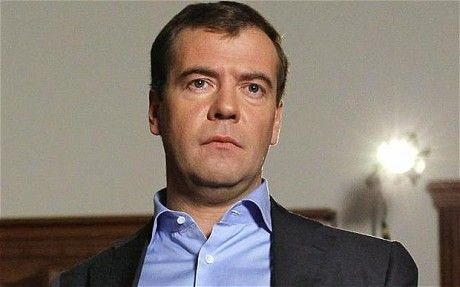
THE DAILY TELEGRAPH: Dmitry Medvedev, the Russian president, has spent £26m on a super-yacht with whirlpool baths, an artificial waterfall and a cinema.
The 177 foot-long Sirius has quarters for 12 crew and a range of 5,000 miles. >>> | Friday, January 28, 2011
Abu Adam - Dunya (دُنْيا) [Earthly Concerns and Possessions] oder Akhira (الآخرة) [Referring to the After-life]
Israel Fears Regime Change in Egypt
Riot police in Cairo (Jan. 26 photo): Israel is afraid of regime change in Egypt. Photograph: Spiegel Online International
SPIEGEL ONLINE INTERNATIONAL: Israel is watching developments in Egypt with concern. The government is standing by autocratic Egyptian President Hosni Mubarak, out of fear that the Islamist Muslim Brotherhood could take power and start supplying arms to Hamas.
Israel is usually a country where politicians have an opinion on any topic, and vociferously so. But in recent days, Israel's leadership has been unusually silent on a certain question. No one, it seems, is willing to make an official comment on the ongoing unrest in Egypt, where protesters have been holding anti-government rallies. It's not because Israel does not care about the riots ravaging its southern neighbor -- on the contrary, Israeli news channels, normally prone to parochialism, have been closely following recent events in the Arab world, from Tunisia to Lebanon.
Radio, television and newspapers constantly report the courage of the demonstrators in the streets of Cairo, not only relishing the historic spectacle, but openly expressing sympathy with Egypt's struggle for democracy.
But the Israeli government is keeping quiet. "We are closely monitoring the events, but we do not interfere in the internal affairs of a neighboring state," was the curt answer from the Israeli Foreign Ministry to requests for comments. >>> Gil Yaron in Jerusalem | Friday, January 28, 2011
Analysis: Why Egypt Matters
There have been demonstrations in Cairo and several other cities. Photograph: BBC
BBC: If Egyptian unrest turns into an Egyptian revolution, the implications for the Arab world - and for Western policy in the Middle East - will be immense.
Egypt matters, in a way that tiny Tunisia - key catalyst that it has been in the current wave of protest - does not.
It matters because its destiny affects, in a range of ways, not only Arab interests but Israeli, Iranian and Western interests, too.
Egypt, the most populous Arab state, can help determine the thrust of Arab policies - whether towards Israel or Iran or in the perennial quest for Arab consensus on issues that matter.
Above all, the Egyptian state has traditionally had a strength and solidity that made its collapse seem unthinkable.
Even now, with so much that is uncertain, that state and its basic structures may survive - with or without Hosni Mubarak, the country's president for the last three decades.
Islamist wild card
If there is a power vacuum, who is likely to fill it?
Will the powerful military intervene to restore stability?
If they did, would the protesters accept such a scenario - or would they, like their Tunisian counterparts, keep up the pressure for radical change?
And - the wild card that troubles Western policy-makers most - could the Muslim Brotherhood, the country's Islamist opposition movement, somehow exploit the protests to come to power?
Right now, that scenario seems far-fetched. The Brotherhood is trying to jump on the bandwagon of a youthful and largely leaderless protest movement.
They are not in front. They are trying to catch up.
But the situation is volatile. New leaders - nationalist or Islamist, civilian or military - could emerge if the country is engulfed in chaos. Regional consequences >>> Roger Hardy, Middle East analyst, Woodrow Wilson Center | Friday, January 28, 2011
Fresh Protests Erupt in Egypt
Protests have erupted in cities across Egypt following Friday midday prayers, with angry demonstrators demanding an end to Hosni Mubarak's 30-year presidency. Tens of thousands of protesters have taken to the streets across the country. Al Jazeera continues its coverage of what many say are unprecendented protests.
Map: Cairo's 'Day of Wrath'
Violent protests have spread across the Egyptian capital, Cairo, and other Egyptian cities as tens of thousands of demonstrators intensified their campaign to oust President Hosni Mubarak. Protesters have been pouring out from mosques after noon prayers on Friday and clashing with police who fired tear gas, rubber bullets and water cannons to disperse the crowds. This video explains the geographic spread of Cairo protests.
Newly-formed Thai Airline Recruits 'Ladyboys' as Air Hostesses
THE DAILY TELEGRAPH: A newly-formed Thai airline has recruited transsexuals as air hostesses, in a pioneering move it believes will be copied by other carriers.
Thailand has the largest number of 'katoeys' – as they are called in Thai – in the world. Photo: The Daily Telegraph
[There is] sky-high demand from men wishing to become women [in Thailand]. – [Source: The Daily Telegraph]
PC Air, which has yet to take to the skies, selected three "Ladyboys" in its first round of hiring this week to promote equal opportunities for what is dubbed the "third sex" in Thailand.
Peter Chan, the new airline's boss, is enthusiastic about his groundbreaking move because of the opportunities it would afford transsexuals.
"I think these people can have many careers – not just in the entertainment business – and many of them have a dream to be an air hostess," he said. "I just made their dream come true. Our society has changed. It's evolution. I'm a pioneer and I'm sure there will be other organisations following my idea." >>> Ian MacKinnon, Bangkok | Friday, January 28, 2011
Ottawa Faces Uphill Battle to Expel Tunisian Billionaire in Montreal
THE GLOBE AND MAIL: The federal government is seeking the expulsion from Canada of the billionaire brother-in-law of ousted Tunisian dictator Zine El Abidine Ben Ali. But it could be years before Belhassen Trabelsi is forced to leave the country, if he can be made to leave at all.
Sources report that the Canadian government revoked Mr. Trabelsi’s status as a permanent resident, granted to legal immigrants after they arrive in Canada. Officials had been investigating whether he had forfeited that status by not living in Canada for at least two of the past five years.
Mr. Trabelsi returned to Canada after Mr. Ben Ali and his family fled Tunisia in the wake of mass demonstrations that toppled the former dictator’s regime. Mr. Trabelsi is believed to be staying in a Montreal-area hotel. Mr. Ben Ali is thought to be in Saudi Arabia.
It is no easy thing to revoke residency status once it has been obtained. “If he has the resources and the determination, he can easily stay here for ten years, maybe more,” said Leo Adler, a law professor at York University’s Osgoode Hall Law School. He noted that some individuals have successfully fought deportation for more than 20 years. >>> John Ibbitson and Campbell Clark | Publish: Thursday, January 27, 2011; Updated: Friday, January 28, 2011
AL JAZEERA ENGLISH: Government blocks internet and mobile services ahead of planned protests against President Mubarak's 30-year rule.
Egypt is on edge as activists pressing for a change in government prepare to stage the biggest day of protests in the Middle East's most populous nation amid a security clampdown.
Security forces are on high alert and internet, mobile phone and SMS services have been disrupted ahead of the planned demonstrations following Friday prayers.
Dan Nolan, Al Jazeera's correspondent reporting from the capital, Cairo, said that internet access had been blocked across the country and the government had effectively wiped the country off the global digital map in a bid to prevent protesters from organising themselves.
But he said people already know where to be on Friday if they want to have their voice heard "because an email was spread throughout Egyptian networks last night ... that listed the places where people should gather".
For the past three days, cities across Egypt have witnessed unprecedented protests against the 30-year rule of Hosni Mubarak, the president.
Apparently inspired by the recent turmoil in Tunisia, the determined protesters have stood their ground against heavily-armed police and are refusing to relent until there is a change in government.
The violence has so far left seven people dead. >>> Source: Al Jazeera and agencies | Friday, 28. January 2011
Egypt Protests: Fresh Protests Could Leave Egypt on Brink of Revolution
THE DAILY TELEGRAPH: A fresh wave of mass protests could leave Egypt teetering on the brink of revolution on Friday after police warned the president they could soon lose control of the demonstrators demanding his overthrow.
Hosni Mubarak's grip on power was slipping on Thursday and momentum appeared to be shifting rapidly in favour of pro-democracy activists.
Undeterred by a violent police response and the deaths of at least seven people after three days of clashes in Cairo and other cities, organisers said they planned to make today's marches the biggest yet. Yesterday police shot dead a protester in north Sinai.
They were given a further boost after Mohamed ElBaradei, one of Mr Mubarak's fiercest critics, returned to Egypt from Vienna to join the protests, providing opponents of the regime with a potential figurehead to rally around.
There are also reports of arrests of opposition figures overnight.
The reported crackdown on the largest opposition movement, the Muslim Brotherhood, came after it said it would back the Friday protests. >>> Adrian Blomfield, Middle East Correspondent | Friday, January 28, 2011
FRANFURTER ALLGEMEINE ZEITUNG: Die Protestbewegung in Ägypten hat keinen Anführer und ist politisch heterogen. Die Islamisten gehören zwar dazu, aber ihr Ansehen ist gesunken. Viele gut ausgebildete junge Ägypter gehen mittlerweile auf Distanz zu islamistischen Vorstellungen und Gruppierungen.
Wenn früher in Ägypten Demonstranten zu sehen waren – meistens in der Hauptstadt Kairo auf dem zentralen Tahrir-Platz – handelte es sich in der Regel um von der regierenden Staatspartei NDP bezahlte und bestellte Lobhudler des jeweiligen Präsidenten. Besonders oft war dies unter der Herrschaft Gamal Abdel Nassers, zwischen 1952 und 1970, der Fall. Der ließ sich feiern; oder es ging darum, gegen „Israel“ und „die Zionisten“ zu protestieren. Dies geschah meistens, wenn das Regime Niederlagen zu bewältigen hatte.
In den achtziger und neunziger Jahren waren es dann häufig radikale Muslime, meistens aus der 1928 gegründeten Muslimbruderschaft stammend, die sich zu Protestdemonstrationen zusammenfanden. Sie forderten eine „islamische Ordnung“, die von „islamischer Gerechtigkeit“ geprägt sein sollte. Ihre wichtigste Parole lautete: „Der Islam ist die Lösung“. Oder sie äußerten ihre Unterstützung für die palästinensische radikalislamische Hamas im Gaza-Streifen und im Westjordanland.
Die an den jüngsten Demonstrationen und Unruhen beteiligten Ägypter ähneln jedoch mehr denjenigen, die in Tunesien auf die Straße gingen. Es sind junge Leute, auffällig viele Frauen. Ideologien spielen bei ihnen offenkundig kaum eine Rolle. Sie fordern Arbeitsplätze, billige Nahrungsmittel, demokratische Freiheiten, Zukunftsaussichten, die diesen Namen verdienen. Vierzig Prozent der Ägypter leben von etwa zwei Dollar täglich, und dies keineswegs nur auf dem flachen Land. Ziel ist das Ende der Machtstruktur. >>> Von Wolfgang Günter Lerch | Freitag, 28. Januar 2011
US Tacit Support for Mideast Autocrats Reeks of Short-Sightedness, Undermines US Interests
THE HUFFINGTON POST: The winds of change are blowing over the Middle East from Jordan to Algeria.
A couple of weeks ago, Tunisia became the first Arab nation to succeed in shaking off decades of debilitating dictatorship through a popular uprising that sent shock waves through the entire region.
Egyptians who have long voiced discontent with their government are now taking to the streets in unprecedented numbers demanding change. If Egypt succeeds, analysts agree that a domino effect is likely.
Having withered decades of institutionalized corruption, police brutality and lack of freedoms under despotic regimes, Arab citizenries are finally beginning to believe that freedom and democracy are within reach. Their demands are straight-forward: democratically elected governments that truly represent and serve their citizens, in place of apathetic despots that work against the interests of their own citizens. They dream of free elections, government transparency, bureaucratic accountability, and rule of law.
It is perplexing that in the ensuing confrontation between citizens longing for democracy and iron-fisted dictators clamping down on dissent in the Arab world, the US official policy is to side with the dictators. >>> Ahmed Rehab | Thursday, January 27, 2011
Arizona Drops the Anchor on 'Anchor Babies'
State known for controversial illegal immigration law introduces bill targeting birthright citizenship
'Thundersnow' Storm Causes Havoc in [sic] US East Coast
THE DAILY TELEGRAPH: America's east coast has been battered by blizzards which have dumped 19 inches of snow, adding to the heaviest January many parts of the region have seen in decades.
Four hundred thousand Washington residents were left without power after a blizzard that began on Wednesday intensified overnight, bringing so-called "Thundersnow" to the capital.
The blizzard forced the closure of New York's JFK and Newark airports, leading to the cancellation of thousands of flights. The Long Island Rail Road, a major commuter line, also suspended services. Schools were closed and governments [sic] workers across the region were sent home early on Wednesday, with little prospect of returning on Thursday. The Statue of Liberty was closed for snow removal.
Even the most high profile commuter in the US was delayed. Barack Obama was forced to make his way to the White House from Andrews air force base by car rather than helicopter, after a trip to Wisconsin.
Residents of Washington experienced Thundersnow – a combination of snowfall, thunder and lightning that has become the new talking point on TV news – as New Yorkers had done the previous night. >>> Jon Swaine, New York | Thursday, January 27, 2011
Winter Storm Slams Northeast
Thousands of travelers left stranded, schools closed
Dangerously Cold Temperatures Hit New York
Turmoil in the Arab World
Obama's policy unclear in light of protests
Thursday, January 27, 2011
Kommentar: Arabische Ungewissheit
FRANKFURTER ALLGEMEINE ZEITUNG: Die Ähnlichkeiten der Ereignisse in Tunesien und Ägypten können die Unterschiede nicht verdecken: Mit Ägypten fiele ein wesentlicher Akteur des nahöstlichen Friedensprozesses aus. Überdies gibt es dort eine starke islamistische Bewegung.
Die Ähnlichkeiten zwischen den Ereignissen in Ägypten und dem Sturz Ben Alis in Tunesien fallen ins Auge: hier wie dort ein greiser Diktator, von Alter und Krankheit gezeichnet, der sich über Jahrzehnte an der Macht festgekrallt hat, zunehmend - und am Schluss ausschließlich - gestützt auf die Sicherheitskräfte seines Landes.
Beide haben den Ruf nach Reformen jahrzehntelang überhört und sich und ihre Familien schamlos bereichert. Der ägyptische Präsident Mubarak hat in den vergangenen Jahren versucht, seinen Sohn Gamal in die Rolle des Nachfolgers zu hieven. Zumindest dies - von einer Wiederwahl des 82 Jahre alten „Rais“ zu schweigen - dürfte sich nach den Protesten in mehreren Städten Ägyptens erledigt haben. >>> Von Günther Nonnenmacher | Donnerstag, 27. Januar 2011