Thursday, July 16, 2009

New Dark Age Alert! Pagan Police Allowed to Take Hallowe'en and Summer Solstice Off Work

THE TELEGRAPH: Pagan police officers in Britain have been given the right to take eight days off work a year to celebrate "religious holidays" including Hallowe'en and the summer solstice.

Photobucket
Photo of Stonehenge courtesy of ‘The Telegraph’

It follows the setting up of a Pagan Police Association to represent officers who worship nature and believe in many gods.

Pc Andy Pardy, a leading Pagan officer from Hertfordshire Police, met with Home Office officials this week to push for more recognition for pagan officers.

The neighbourhood beat manager, who has been an officer for the past seven years, is a heathen which means he worships Norse gods, including the hammer-wielding Thor, the one-eyed Odin and Freyr, the god of fertility.

Pc Pardy said : "Paganism is not the new age, tree hugging fad that some people think it is. It is not the clandestine, horrible, evil thing that people think it is. A lot of people think it is about dancing naked around a fire but the rituals are not like that.

"It involves chanting, music, meditation, reading passages and for pagans the practices are seen to have the same power as prayer does for Christians. Most pagans practice some kind of conservation work as well to give something back to the planet."

Hertfordshire Police allows Pc Pardy the eight pagan holidays off each year, including Hallowe'en, which signifies the Pagan new year, and the summer solstice in June.

The days are deducted from his annual leave but because of his religion the days off are set in stone.

Superintendent Simon Hawkins, of Hertfordshire Police, said: "While balancing operational needs, the force's religion and beliefs policy gives all staff the choice of re-allocating the traditional Christian bank-holiday festivals to suit their personal faith. >>> Nick Allen | Thursday, July 16, 2009
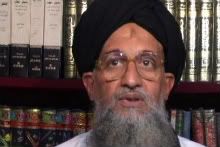
Ayman Al-Zawahiri appelle les Pakistanais au djihad

LE MONDE: Dans un enregistrement vidéo de 8 minutes et 49 secondes, le numéro deux d'Al-Qaida, Ayman Al-Zawahiri, met en garde les Pakistanais contre les interventions américaines dans les questions militaires et politiques de leur pays. Le leader islamiste d'origine égyptienne affirme que la "croisade" menée par les Américains vise à éradiquer le cœur de la lutte islamiste afin de démembrer le Pakistan et de le transformer en une série de "petites entités loyales et dépendantes des néo-croisés".

Dans cette vidéo intitulée "Mes frères et mes sœurs musulmans au Pakistan", postée mardi 14 juillet sur des forums djihadistes, il dit que les interventions américaines menacent l'avenir du Pakistan. "La manipulation par les croisés américains du destin du Pakistan a atteint un tel niveau que cela met gravement en danger le futur et l'existence même du Pakistan", déclare le numéro deux d'Al-Qaida dans la vidéo, obtenue par le centre américain de surveillance des sites islamistes, SITE. >>> LEMONDE.FR avec AFP et Reuters | Mercredi 15 Juillet 2009

CNN: Al Qaeda Message Urges Pakistanis to Back Militants

The people of Pakistan must back Islamic militants to counter the influence of the United States in their country or face punishment from God, Ayman al-Zawahiri, al Qaeda's second in command, said in an audio message released early Wednesday.

"I believe that every honest and sincere Muslim in Pakistan should seriously contemplate ... Pakistan's present state and expected future, because the blatant American crusader interference in Pakistan's affairs ... has reached such an extent that it now poses a grave danger to Pakistan's future and very existence," al-Zawahiri said in the message, which was released on radical Islamist Web sites.

Zawahiri warned Muslims that they have a religious duty to support the jihad, or struggle.

"If we stand by passively without offering due support to the mujahedeen, we shall not only contribute to the destruction of Pakistan and Afghanistan, but we shall also deserve the painful punishment of almighty God," he said. >>> | Wednesday, July 15, 2009
Israeli Navy in Suez Canal Prepares for Potential Attack on Iran

TIMES ONLINE: Two Israeli missile class warships have sailed through the Suez Canal ten days after a submarine capable of launching a nuclear missile strike, in preparation for a possible attack on Iran’s nuclear facilities.

The deployment into the Red Sea, confirmed by Israeli officials, was a clear signal that Israel was able to put its strike force within range of Iran at short notice. It came before long-range exercises by the Israeli air force in America later this month and the test of a missile defence shield at a US missile range in the Pacific Ocean.

Israel has strengthened ties with Arab nations who also fear a nuclear-armed Iran. In particular, relations with Egypt have grown increasingly strong this year over the “shared mutual distrust of Iran”, according to one Israeli diplomat. Israeli naval vessels would likely pass through the Suez Canal for an Iranian strike.

“This is preparation that should be taken seriously. Israel is investing time in preparing itself for the complexity of an attack on Iran. These manoeuvres are a message to Iran that Israel will follow up on its threats,” an Israeli defence official said.

It is believed that Israel’s missile-equipped submarines, and its fleet of advanced aircraft, could be used to strike at in excess of a dozen nuclear-related targets more than 800 miles from Israel.

Ahmed Aboul Gheit, the Egyptian Foreign Minister, said that his Government explicitly allowed passage of Israeli vessels, and an Israeli admiral said that the drills were “run regularly with the full co-operation of the Egyptians.” >>> Sheera Frenkel in Jerusalem | Thursday, July 16, 2009

VOA: Israel: Iran Will Be Destroyed if It Launches Nuclear Attack

Israel has warned Iran of catastrophic consequences if it attacks the Jewish state with weapons of mass destruction. 

Israel's national security advisor says Iran will be destroyed if it dares to launch a nuclear attack on the Jewish state. In an interview published Friday in the Hebrew daily Ha'aretz, Uzi Arad said Israel must have "tremendously powerful" weapons to deter or retaliate for a nuclear strike. That seemed to be a clear reference to Israel's reported nuclear arsenal, though it has never admitted to having nuclear weapons. Arad described a nuclear Iran as a "nightmare for Israel."

In a speech last week, Prime Minister Benjamin Netanyahu warned that a nuclear Iran is not only a threat to Israel, but also to Western civilization. >>> Robert Berger | Friday, July 10, 2009

HAARETZ: Defense Official: Israel Readying for Attack on Iran

Israel's recent deployment of warships across the Red Sea should be seen as serious preparation for an attack on Iran, an Israeli defense official told the Times of London on Thursday.

"This is preparation that should be taken seriously. Israel is investing time in preparing itself for the complexity of an attack on Iran. These maneuvers are a message to Iran that Israel will follow up on its threats," the official was quoted as saying.

Earlier this week, two Israel Navy gunboats openly sailed through the Suez Canal into the Red Sea. The ships that passed through the Suez Canal on Tuesday were two Sa'ar 5 gunboats, the Hanit and the Eilat. This follows a similar incident in late June, when an Israeli Dolphin-class submarine passed through the canal, later returning the same way.

The move, apparently coordinated with Egypt, is seen as a warning message to Middle Eastern radicals, first and foremost Iran. >>> By Amos Harel, Anshel Pfeffer and Jack Khoury, Haaretz Correspondent and Haaretz Service | Thursday, July 16, 2009
Supreme Leader Khamenei Diminished in Iranians' Eyes

LOS ANGELES TIMES: Since Ayatollah Ali Khamenei openly sided with President Ahmadinejad with the election results still in dispute, 'opposing him is no longer the same as opposing God,' one analyst says.

Reporting from Beirut -- For two decades he was considered to be above the petty political squabbles, a cautious elder contemplating questions of faith and Islam while guiding his nation into the future.

But Ayatollah Ali Khamenei, whose title of supreme leader makes him Iran's ultimate authority, has gotten his hands dirty. His decision in recent weeks to so stridently support the nation's controversial president after a disputed election has dramatically changed his image among his people, setting in motion an unpredictable series of events that could fundamentally change the Islamic Republic.

"Public respect for him has been significantly damaged," said one analyst, speaking on condition of anonymity. "Opposing him is no longer the same as opposing God."

The venerated Khamenei has even become the target of public jokes and criticism.

President Mahmoud Ahmadinejad "commits crimes, and the leader supports him," was a popular slogan during the riots of June 20, the day after Khamenei delivered a blistering Friday sermon in which he said that the election a week earlier had been won by Ahmadinejad.

At July 9 demonstrations, protesters mocked the ayatollah's son, Mojtaba, who many believe hopes to succeed his father. >>> Borzou Daragahi | Wednesday, July 15, 2009

Wednesday, July 15, 2009

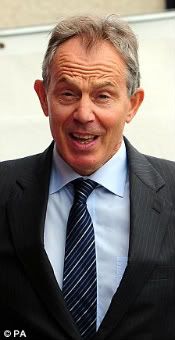
Tony Blair: President of Europe?

Are we really going to be subjected to this? Having that man as the Prime Minister for twelve years – the banning prime minister – was bad enough, but the thought of his being Pres for a few years at the top of European politics is really too much to bear. At the risk of sounding unpatriotic, reach for the ‘sick bag’ for me, please. – ©Mark

Petition: Stop Blair! >>>

A Right British Stitch-up!

MAIL Online: Tony Blair is Labour's choice to become President of Europe, a minister let slip last night.

The Europe minister Glenys Kinnock has revealed that Gordon Brown has formally chosen to endorse his predecessor for the lucrative new post.

In a press conference at the European Parliament in Strasbourg, she said: 'The UK Government is supporting Tony Blair's candidature for President of the Council.'
The move has dismayed the Tories, who have accused Labour of a 'stitch-up'.

And Lady Kinnock's admission provoked consternation in Downing Street, which mow must face questions over the role played by Lord Mandelson in the decision. What a stitch-up! Government backs Blair as President of Europe - but did Lord Mandy twist PM's arm? >>> Tim Shipman | Thursday, July 16, 2009
Afrique – Somalie : les agents français aux mains d'islamistes

LePARISIEN.fr: Les deux Français enlevés mardi matin dans un hôtel de Mogadiscio (Somalie) sont détenus par des insurgés islamistes, selon un haut responsable des services de sécurité somaliens, qui précise qu'ils ont «changé de mains». Il n'a pas précisé laquelle des deux milices extrémistes - les shehab et le Hezb al-Islamiya - détenait les otages.

Dns [sic] un premier temps, le ministre somalien de la Défense avait assuré sur l'antenne de RFI que les deux agents de renseignement français avaient été victimes d'un rapt crapuleux. Une thèse soutenue par un journaliste indépendant, le grand reporter Grégoire Deniau, tout juste rentré de Somalie, qui expliquait que les enlèvements sont devenus un véritable business dans la capitale somalienne.

«Le gouvernement fédéral est quasi inexistant là-bas. Il contrôle seulement le port, l'aéroport et le palais présidentiel. Ailleurs, c'est le chaos, expliquait Grégoire Deniau mercredi matin, au micro de France Info. Les pro-islamistes d'un côté, les milices soutenues par l'Ethiopie de l'autre, y règnent en maître. Les quartiers de la ville passent d'ailleurs d'une main à l'autre en seulement deux minutes. Du coup, des gens, pour sauver leur peau, vendent des étrangers à ces groupes. Un marché qui devient très lucratif pour eux».

Les autorités somaliennes assurent qu'elles ont réussi à identifier les ravisseurs et à prendre contact avec eux. «On ne connaît pas leur nom, ni leur appartenance. Mais ce ne sont pas ni des Shabab, ni des islamistes radicaux. Ils sont en revanche connus pour participer régulièrement aux violences à Mogadiscio», précise le ministre de la Défense, Mohamed Abdi Gandi. >>> Mardi 14 Juillet 2009
Cisjordanie: L'Autorité palestinienne suspend la chaîne Al-Jazira

LE POINT: L'Autorité palestinienne a ordonné mercredi la fermeture temporaire du bureau de la chaîne satellitaire Al-Jazira à Ramallah, en Cisjordanie, pour diffusion de fausse nouvelle, a annoncé le ministère de l'Information palestinien.

Le ministère indique avoir pris cette décision à la suite de la diffusion d'"information mensongère" mardi par Al-Jazira, une chaîne basée au Qatar. Il précise que des poursuites judiciaires vont être engagées contre la chaîne d'information en arabe.

Dans son communiqué, il affirme qu'Al-Jazira "a consacré une part importante de ses programmes à dénigrer l'OLP (Organisation de libération de la Palestine) et l'Autorité palestinienne".

"Malgré nos appels répétés à ce qu'elle soit neutre dans sa couverture des questions palestiniennes et équilibrée en ce qui concerne la situation palestinienne interne, la chaîne a continué à (les) dénigrer", précise-t-il.

Al-Jazira s'est refusée à tout commentaire mais a indiqué dans un bandeau en bas d'écran que la décision était liée à la diffusion mardi d'une déclaration de Farouk Kaddoumi, chef du département politique de l'OLP.

Il y accusait le président palestinien Mahmoud Abbas et le dirigeant Mohammed Dahlane d'avoir comploté avec Israël pour tuer par empoisonnement le dirigeant historique palestinien Yasser Arafat.

Yasser Arafat est décédé le 11 novembre 2004 à l'âge de 75 ans dans un hôpital de la région parisienne. Le mystère entourant la maladie à l'origine de la mort d'Arafat demeure entier, plusieurs responsables palestiniens étant convaincus que leur chef a été empoisonné par Israël, ce que l'Etat hébreu dément. >>> AFP | Mercredi 15 Juillet 2009
Wie der Iran an die Atombombe kam

Das Mullah-Regime soll in nur sechs Monaten in der Lage sein, eine Atombombe zu testen. Das ergaben die Recherchen der stern-Journalisten Oliver Schröm, Uli Rauss und Johannes Gunst. Wieso deutsche Unternehmer dabei eine entscheidende Rolle spielten und was der BND weiß - ein Interview.
Iran und die Atombombe: Der Albtraum der Welt

STERN: Die Mullahs und die Atombombe - das ist der Albtraum der Welt. Und es war lange klar, dass es so kommen könnte. Wie gefährlich ein nuklear bewaffneter Iran wirklich ist, und was der Westen jetzt unternehmen sollte.

Am 12. September 2002 - ein Jahr nach den Anschlägen von New York und Washington und einen Tag nach dem Werben von US-Präsident George Bush vor der Uno für einen Krieg gegen Saddam Hussein - sorgte sich Deutschlands damaliger Außenminister Joschka Fischer auf dem Rückflug aus den USA nach Deutschland wegen des iranischen Atomprogramms. "Was auch immer im Irak passieren wird", sagte er damals an Bord seines Regierungs-Airbus, "um den Iran mache ich mir viel größere Sorgen."

Womöglich wird der Ex-Außenminister wieder mal Recht behalten. Denn ein Konflikt um die nuklearen Ambitionen des Iran hat viel mehr Zündstoff als ein Krieg gegen den Irak - so verheerend der schon war. Und das liegt am Iran ebenso wie an seinen Gegnern. Denn letztere haben einen gehörigen Anteil daran, dass es überhaupt so weit gekommen ist.

Weshalb bemüht sich der Iran so sehr um die Bombe? Einmal aus dem Selbstverständnis des Landes als einer uralten bedeutenden Kultur heraus. Weshalb - so lautet das Argument der Iraner - spricht man ihnen das Recht auf eine Bombe ab, wenn doch andere Länder der Region - Pakistan oder Israel zum Beispiel - Atomwaffen besitzen.


Iraner sind Schiiten, umgeben von einem Meer ihnen oft nicht wohl gesonnener Sunniten. Sie sind keine Araber. Sie wurden 1980 von einem arabischen Nachbarn, von Saddam Hussein, überfallen und in einen Krieg verwickelt, der etwa 500.000 von ihnen das Leben gekostet hat. Noch heute trifft man in den Wartezimmern iranischer Kliniken Hunderte Männer, die dem Giftgas des irakischen Diktators nur mit Mühe entkommen sind.

Darüber hinaus hat der Irak-Krieg 2003 gezeigt, dass ein Land ohne Massenvernichtungswaffen mit dem Sturz seines Regimes rechnen muss. Wer welche besitzt wie Nordkorea, ist davor anscheinend gefeit. Und da die US-Regierung von George W. Bush und die hinter ihr stehenden Republikaner nie einen Hehl daraus gemacht haben, dass sie die Mullahs loswerden wollen, haben die schon vor Jahren begonnen, den Preis dafür nach oben zu treiben. >>> Eine Analyse von Hans-Hermann Klare | Mittwoch, 15. Juli 2009
Christopher Hitchens: Iran’s Clock Ticking Towards Nuclear Weaponry

The Persian Paradox: Understanding Iran and Iranians

Robert Baer: Iran’s Grip on America’s Future

Afghanistan, and a Lesson from History that Goes Unheeded

THE TELEGRAPH: Great leaders can see the bigger picture in times of conflict, says Irwin Stelzer

Reading Andrew Roberts's Masters and Commanders is a depressing experience. Not because of any flaws in this beautifully researched and wonderfully told tale of the Masters (Franklin Roosevelt and Winston Churchill) and Commanders (General George Marshall and Field Marshall Sir Alan Brooke, both chiefs of staff) who forged the strategy that won the Second World War. You leave this book unread this summer at peril to your understanding not only of the war, but of the relevance of that history to the policy decisions confronting whatever government British voters decide to trust with their fate at the next general election.

The baseball player Yogi Berra once famously said: "I came to a fork in the road and I took it." Britain's policymakers do not have the luxury of such choice-avoidance: nuclear-armed Pakistan is threatened by Afghanistan-based Taliban jihadists, Russia is on a roll, Islamic fanatics are threatening to continue terror attacks on our countries, British and American citizens are being trained in Afghanistan for suicide missions, Iran's mullahs are close to acquiring nuclear weapons, and North Korea is becoming the nuclear-arms supplier of choice for groups that wish to do us harm. In short, the threats Britain and America face might not be as visible as those presented by Hitler, but are in the long-run as dangerous to the survival of the West, especially because many are posed by non-state actors who do not have a "return address" should we seek to respond to any attack.

President Obama is sufficiently impressed with the danger posed by the Taliban to face down many in his own party and order a troop surge – though that Bushite word never passes the Obama lips – in Afghanistan. If this anti-Iraq war disciple of "soft power" feels the need to put 20,000 more American troops in harm's way, there surely must be good reason for concern. >>> Irwin Stelzer | Tuesday, July 14, 2009
The Return of Religion to Europe

THE JAPAN TIMES ONLINE: BUDAPEST — It's a well-worn contrast: the United States is religious, Europe is secular. Yet, in some respects, this cliched opposition has actually been reversed recently: Religion played virtually no role during the last American presidential election, while in a range of different European countries major controversies about religion have flared up, suggesting that questions of faith are back at the center of European politics.

Consider French President Nicolas Sarkozy. On numerous occasions, he has argued that his country needs to rethink its traditional strict separation of state and religion. In particular, according to the twice-divorced self-confessed "cultural Catholic," France should develop a "positive secularism." In contrast to a negative separation, which according to Sarkozy "excludes and denounces," a positive separation invites "dialogue" and recognizes the social benefits of religion.

In a much criticized speech in Rome at the end of 2007, Sarkozy acknowledged the Christian roots of France, "the eldest daughter of the Church"; he also praised Islam during a visit to Saudi Arabia. Now he wants state subsidies for faith-based organizations — a policy proposal that upsets his many secularist critics.

This new appeal to religion — after a long period when it was taken for granted that secularization would make religion less and less politically relevant — is not an exclusively French phenomenon. The Spanish People's Party tried hard to mobilize Catholics during the election campaign in March 2008. The church supported the PP against Prime Minister Jose Luis Rodriguez Zapatero, whose advocacy of gay marriage, more relaxed divorce laws and the removal of compulsory religion classes from the national curriculum, upset many religious conservatives. Zapatero eventually felt it necessary to tell a Vatican envoy that Spanish bishops should stop meddling in the elections (which the prime minister won).

In Italy, Prime Minister Silvio Berlusconi precipitated a constitutional crisis by trying to rush through emergency legislation to prevent a comatose patient from being taken off life support. This reminded many observers of what America's Republican Party tried to do to demonstrate its "pro-life commitments" during George W. Bush's presidency.

Finally, there is Britain, usually seen as perhaps the most secular country in Western Europe, and thus the least likely candidate to see the return of religion of any kind (outside its Muslim community). Under David Cameron's leadership, the newly invigorated Conservative Party is listening to a number of thinkers, dubbed "red Tories," who urge the party to turn its back on Thatcherism and embrace civil society, local community, the family and, not least, religion as a major force in fostering responsible social behavior. >>> Jan-Werner Mueller*, © 2009 Project Syndicate/Institute for Human Sciences | Sunday, July 5, 2009

*Jan-Werner Mueller is associate professor of politics at Princeton University and an Open Society fellow at Central European University, Budapest.
Anatomy of an Iranian Revolution Delayed

THE JAPAN TIMES ONLINE: YPSILANTI, Mich. — The ongoing conflict between Iran's rulers and the Iranian public is the result of a head-on collision between two contradictory forces. In recent years, public attitudes in Iran have become more liberal. At the same time, power has shifted from conservative pragmatism toward a much more militant fundamentalism. The call by the most important group of Iran's clerics for the election results to be thrown out is but the latest sign of the fight back of both the reformist and pragmatic conservative factions.

Thirty years after the Islamic revolution, Iranians are growing demonstrably less religious and more liberal. Two face-to-face surveys of more than 2,500 Iranian adults, conducted in 2000 and 2005, clearly show the trend. The percentage of those who "strongly agree" that democracy is the best form of government increased from 20 percent to 31 percent.

Similarly, on a number of questions concerning gender equality — including political leadership, equal access to higher education, and wifely obedience — the numbers continued a downward trend. Those who considered love as the basis for marriage increased from 49 percent to 69 percent, while those who depended on parental approval fell from 41 percent to 24 percent. In 2005, a much higher percentage than in 2000 defined themselves as "Iranian, above all" rather than "Muslim, above all."

This trend is not hard to understand. The imposition of a monolithic religious discourse on society has made liberal values attractive to Iranians. But, while this was reflected in reformist trends in the country's wider political life, a movement toward militant fundamentalism took shape within the regime's power structure. Reform-minded politicians were partly to blame for this change. Far from opposing absolutist power as an impediment to religious democracy, they tried to persuade the supreme leader, Ayatollah Ali Khamenei, of the value of reform.

But Khamenei had no interest in reform, as he made plain in dismantling the reform movement. The presidency of Mohammad Khatami, an avowed reformer, who served eight years, beginning in 1997, convinced the supreme leader that his authority would be assured only if the presidency was held by a subservient fundamentalist such as the current president, Mahmoud Ahmadinejad. In this, Khamenei was following the lead of the late shah, who kept Amir Abbas Hoveyda, a loyal retainer, as prime minister from 1965 until the shah was overthrown in 1979.

The problem with the supreme leader's calculation, however, is that Ahmadinejad is a loose cannon. His populist rhetoric and religious fundamentalism have alienated a large section of conservative-pragmatist clerics and their supporters. >>> Mansoor Moaddel*, © 2009 Project Syndicate | Wednesday, July 15, 2009

*Mansoor Moaddel, a professor of sociology at Eastern Michigan University, has conducted numerous opinion surveys in the Middle East.
Eilmeldung: Verkehrsflugzeug in Iran abgestürzt: 150 Passagiere an Bord

NZZ Online: Ein iranisches Verkehrsflugzeug ist nach Angaben des staatlichen iranischen Fernsehens abgestürzt und hat vermutlich alle rund 150 Insassen in den Tod gerissen. Der Sender meldete am Mittwoch, dass mit keinen Überlebenden zu rechnen sei. >>> sda/Reuters/ap | Mittwoch, 15. Juli 2009

REUTERS: Up to 168 Aboard Plane Killed in Iran Crash

TEHRAN - A Tupolev passenger aircraft crashed in northwestern Iran on Wednesday and 168 people on board were killed, Iranian media reported.

The Caspian Airlines aircraft was carrying 153 passengers and 15 crew, Reza Jafarzadeh, a spokesman for Iran's aviation organization, told state television.

State television showed footage of debris from the plane and some body parts.

"It's been a major disaster with pieces of aircraft spread over an area of 200 square meters," a fire brigade official told Iranian state television.

"There was an explosion which left an indentation 10 meters deep in the ground. There was nothing we could do. We tried to put out the fire as best we could," he said.

Other television pictures showed a large crater gouged into farmland with mangled pieces of metal scattered around. Smoke rose from the site as police and bystanders gathered around.

The plane was traveling from Tehran to Yerevan in Armenia when it came down at 11:33 a.m. (0703 GMT) near the city of Qazvin, the official IRNA news agency said.

The plane crashed 16 minutes after take-off from the capital's Imam Khomeini International airport, it said. >>> Reporting by Zahra Hosseinian and Parisa Hafezi; Writing by Fredrik Dahl; Editing by Louise Ireland, © Thomson Reuters 2009 All rights reserved | Wednesday, July 15, 2009

Tuesday, July 14, 2009

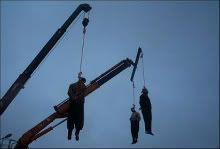
Iran 'Executes Sunni Militants'

BBC: Iran has executed 13 members of a Sunni rebel group blamed for a spate of attacks in the south-east of the country, Iran's state news agency says.

They were members of Jundallah (God's Soldiers). The execution of the brother of their leader was postponed, the agency reported.

Tehran blames the group for a series of attacks including the bombing of a mosque in May which killed 25 people.

Amnesty International had appealed for a stay of execution.

It said that the convicts had not received a fair trial.

Ebrahim Hamidi, who heads the judiciary in south-eastern Sistan-Baluchestan province, told the official Irna news agency on Tuesday that 13 of the group had been hanged inside a jail in the city of Zahedan.

"After last minute consultations, the executions were carried out in a prison," Mr Hamidi is quoted as saying.

Fars, a semi-official news agency, had earlier reported that the executions would be carried out in public.

Abdolhamid Rigi, the brother of the group's leader Abdolmalek Rigi, was not among those hanged on Tuesday but would be executed later this week, the report said. >>> | Tuesday, July 14, 2009
Moussavi plant eine iranische Reformpartei

TAGES ANZEIGER: Der iranische Oppositionsführer will auf breiter Front weiter gegen die Regierung von Mahmoud Ahmadinejad kämpfen: Er gründet nach Angaben eines Vertrauten eine neue Partei.

Mir-Hossein Moussavi plane die Gründung einer «politischen Front», der verschiedene reformorientierte Parteien angehören sollten, sagte Ali Reza Beheshti am Dienstag der Nachrichtenagentur AP.

Der nach amtlichem Ergebnis bei der Präsidentenwahl vom 12. Juni gegen Ahmadinejad unterlegene Moussavi hatte sich in letzter Zeit aus der Öffentlichkeit zurückgezogen. Er hat lediglich angekündigt, für das weitere Vorgehen gegen den Staatschef einen «rechtlichen Rahmen» zu schaffen. >>> oku/ap | Dienstag, 14. Juli 2009
Sarah Palin attackiert Barack Obama

TAGES ANZEIGER: Kaum ist sie als Gouverneurin von Alaska zurückgetreten, meldet sich Palin auf der nationalen Politbühne zurück: Mit scharfen Worten gegen die Klimaschutz-Pläne des Präsidenten.

Obamas Vorhaben sei eine «unglaubliche Gefahr» für die US- Wirtschaft, schrieb Palin in einem am Dienstag in der Tageszeitung «Washington Post» veröffentlichten Beitrag. Der Plan «untergrabe» den Wiederaufbau der Wirtschaft und füge ihr langfristig Schäden zu, schrieb Palin, die Anfang Juli überraschend den Rücktritt als Gouverneurin von Alaska angekündigt hatte.

«Wir müssen in eine neue Richtung vorstossen», schrieb die 45- Jährige und nannte unter anderem eine intensivere Erdölförderung und einen stärkeren Rückgriff auf heimische Energieressourcen. Wirtschaftswachstum und Energieunabhängigkeit seien möglich, «wenn wir verantwortungsvoll die Rohstoffe nutzen, die Gott uns im amerikanischen Boden geschenkt hat». >>> oku/sda | Dienstag, 14. Juli 2009
Inside the Hidden Kingdom: Saudi Arabia

Watch Journeyman Pictures video here >>>