Wednesday, March 16, 2011

THE DAILY TELEGRAPH: Japan earthquake: live »
FRANKFURTER ALLGEMEINE: Wenn der Kaiser spricht, steht es wirklich schlecht: Am Mittwoch hat sich Kaiser Akihito zum ersten Mal in der Geschichte mit einer Fernsehansprache an das japanische Volk gewandt. Damit müsste allen klar sein, wie dramatisch die Lage ist. Bloß nicht den Oppositionsparteien: Sie streiten und spinnen Intrigen, als wäre nichts geschehen. » | Von Petra Kolonko, Seoul | Mittwoch, 16. März 2011
THE DAILY TELEGRAPH: The Libyan army has told people in Benghazi to lay down their arms as its troops advanced closer to the rebel stronghold for what could be the decisive battle in the uprising against Muammar Gaddafi.
Gaddafi's son Saif al-Islam, speaking to French-based TV channel Euronews, said his troops were near Benghazi and "everything will be over in 48 hours".
The town of Ajbadiyah, 150 km (90 miles) south of Benghazi on the Gulf of Sirte, was firmly in government hands after most of its rebel defenders retreated under fire from a withering artillery barrage on Tuesday. Those who stayed had now handed over their guns, a rebel officer said.
In Benghazi, seat of the insurgents' provisional national council, the mood was a mixture of defiance and nervousness, with some citizens predicting a bloodbath and others confident the rebels would still snatch victory against the government offensive.
Forces loyal to Gaddafi have retaken a string of coastal towns in the past 11 days, reversing gains made by the rebel army early in the uprising against his 41-year-rule of the North African country. Important oil industry facilities are now mostly back under government control.
An armed forces statement read on state television described the offensive as a humanitarian operation to save the people of "beloved Benhgazi" and said troops would not take revenge on them if they surrendered.
"Advise your duped sons to hand over their weapons to the armed forces or the People's Leadership and they will be covered by an amnesty requested by the Commander (Gaddafi), which will be valid for any person who hands over his weapon to the armed forces and refrains from resistance and subversion," it said.
Benghazi residents said they had found leaflets scatttered in the streets also telling them they would not be punished if they gave up the fight. » | Wednesday, March 16, 2011
EURONEWS: ‘That clown Sarkozy’: see the exclusive euronews interview with Saif Al-Islam Gaddafi the son of Libyan leader Muammer Gaddafi. Coming up on euronews today.
With troops loyal to Gaddafi advancing on the rebels in the east of the country, the Libyan leader’s son Saif al-Islam has given a defiant exclusive interview to euronews.
Reporter Riad Muasses asked him what he will do with those who have fought against the regime.
Saif al-Islam said: “Firstly, they’ve left. You know that at the borders there are crowds who want to return to Egypt. And we with our army and the people we say leave a safe passage for these traitors and the militias. And those who contacted America, Britain and France and those who have asked for the British forces and US army to come back, then those and their families are leaving for Egypt.
“We don’t want to kill, we don’t want revenge, but you, traitors, mercenaries, you have committed crimes against the Libyan people: leave, go in peace to Egypt.” (+ video) » | © euronews | Wednesday, March 16, 2011
En français »
Auf deutsch »
عربي »
THE GUARDIAN: From Libya to Turkey the will of the people has revived a sense of common destiny. This is now our region
The wave of revolutions in the Arab world was spontaneous. But it also had to happen. They were necessary in order to restore the natural flow of history. In our region – west Asia and the south Mediterranean – there were two abnormalities in the last century: first, colonialism in the 1930s, 40s and 50s that divided the region into colonial entities, and severed the natural links between peoples and communities. For example, Syria was a French colony and Iraq a British one, so the historical and economic links between Damascus and Baghdad were cut.
The second abnormality was the cold war, which added a further division: countries that had lived together for centuries became enemies, like Turkey and Syria. We were in Nato; Syria was pro-Soviet. Our border became not a border between two nation states, but the border between two blocs. Yemen was likewise divided.
Now it is time to naturalise the flow of history. I see all these revolutions as a delayed process that should have happened in the late 80s and 90s as in eastern Europe. It did not because some argued that Arab societies didn't deserve democracy, and needed authoritarian regimes to preserve the status quo and prevent Islamist radicalism. Some countries and leaders who were proud of their own democracy, insisted that democracy in the Middle East would threaten security in our region.
Now we are saying all together: no. An ordinary Turk, an ordinary Arab, an ordinary Tunisian can change history. We believe that democracy is good, and that our people deserve it. This is a natural flow of history. Everybody must respect this will of the people.
If we fail to understand that there is a need to reconnect societies, communities, tribes and ethnicities in our region, we will lose the momentum of history. Our future is our sense of common destiny. All of us in the region have a common destiny. » | Ahmet Davutoglu | Tuesday, March 15, 2011
 FRANKFURTER ALLGEMEINE: Einen Tag nach Ausrufung des Notstands in Bahrein gehen Sicherheitskräfte mit Gewalt gegen den Protest der Regierungsgegner vor. Nach Angaben der schiitischen Opposition hat es dabei auch Tote gegeben.
Einen Tag nach Ausrufung des Notstands in Bahrein sind Soldaten und Sicherheitskräfte am Mittwoch gegen Hunderte Regierungsgegner vorgegangen. Vertreter der Opposition sprechen angesichts des harten Vorgehens gegen Demonstranten von einem „Vernichtungskrieg“.
Bei einem Einsatz der Truppen seien allein am Mittwoch fünf Menschen getötet und Hunderte verletzte worden, sagte ein hochrangiger Vertreter der schiitischen Opposition, Abdel Dschalil Chalil, der Nachrichtenagentur Reuters. Er gehört der größten Schiiten-Partei des Landes an, der Wefak. » | FAZ.NET mit Reuters | Mittwoch, 16. März 2011
LE FIGARO: La perception qu'ont les Français du Japon, celle d'un pays riche contrairement à Haïti, ne faciliterait pas la collecte de dons, s'inquiètent les associations humanitaires.
Alors qu'un bilan de 3373 morts et 6476 disparus a été confirmé mardi par la police japonaise, les appels aux dons pour secourir les victimes du séisme et du tsunami qui ont frappé l'archipel ont débuté en France. Dès vendredi, le Secours populaire avait lancé un appel d'urgence à la générosité du public. Il a été rejoint lundi par d'autres organisations comme la Fondation de France et la Croix-Rouge française.
Pourtant, alors qu'aux Etats-Unis, 22 millions de dollars d'aide avaient déjà été recueillis lundi soir, la générosité des Français ne semble pas s'emballer pour les victimes de la catastrophe. Selon nos informations, le Secours populaire avait collecté mardi après-midi 44.600 euros. De son côté, la Croix-Rouge française annonçait environ 100.000 euros provenant de particuliers. A comparer avec les deux millions d'euros qu'elle avait recueillie en trois jours lors du séisme à Haïti, en janvier 2010… » | Par Louis Haushalter | Mardi 15 Mars 2011
CROIX-ROUGE FRANÇAISE – Catastrophe Japon 2011: Faire un don »
LE FIGARO: Le terme "fuite nucléaire" était aujourd'hui censuré sur le principal site de micro-blogging en Chine, vraisemblablement pour freiner la propagation des craintes et des rumeurs liées aux rejets radioactifs de la centrale japonaise de Fukushima.
Sur le site de sina.com, principal équivalent chinois de Twitter (lui-même censuré en Chine), une requête avec les mots "fuite nucléaire" déclenchait la réponse suivante: "Selon les lois en vigueur, le résultat de votre recherche ne peut être communiqué".
L'aggravation de la crise nucléaire dans la région frappée vendredi par un séisme suivi d'un tsunami alarme les Chinois, voisins du Japon, alimentant les rumeurs propagées sur l'Internet et par SMS. » | AFP | Mercredi 16 Mars 2011
 THE VANCOUVER SUN: At least 200 people were shot and wounded on Tuesday in a Shiite village south of the Bahraini capital, a medic said, as the king imposed a state of emergency after bringing in Saudi and Emirati troops to help quell anti-regime protests.
As violence escalated, close ally the United States warned that there was "no military solution" to political upheaval in Bahrain and that any violence against peacefully expressed political demands "should be stopped." U.S. Secretary of State Hillary Clinton said Bahrainis must "take steps now" toward a political resolution of the crisis.
"More than 200 people we received today had been shot with buckshot," a hospital medic in the village of Sitra, south of the capital, said by telephone. The medic, who asked not to be identified, said the hospital was under siege by armed gangs and security forces targeting Shiites -the backbone of anti-regime protests that have raged for a month. The medic said villagers "confronted the gangs when they arrived in the village," only to discover that they were carrying guns.
Helicopters were hovering over the area, the medic said, adding that the total number of injured people rises to more than 400 when those admitted for inhaling tear gas are included.
Neighbouring Iran condemned Monday's intervention by Saudi-led Gulf country troops to help put down the protests, prompting Manama to recall its ambassador. » | REUTERS | Wednesday, March 16, 2011
 THE DAILY TELEGRAPH: They'd been evacuated once already, pushed from pillar to post, and told that everything was fine. Now the truth was out, and they were fleeing, in their thousands.
The railway station at Nasushiobara, the last one still operating near Japan's nuclear crisis area, was jammed with frightened people. In this ghost town of closed shops and offices, pedestrian-free pavements, and empty petrol pumps, the station was the only place still alive, and the only escape route that most had left.
The Tokyo highway a mile to the west was busy, too – but you needed a lot of petrol to get to Tokyo. At the only garage which still had it, there was a five-hour queue. With radiation now leaking from the stricken plant just down the road, there might not be five hours to spare.
From the town and the whole surrounding region, on foot, by bicycle and using the last fuel in their tanks, the people came to the railway station, a river turning into a flood as word spread of just how serious the danger now was.
"I couldn't sleep and I was watching TV," said Noriyuki Fukada, an English teacher. "Then it was announced that there would be a government statement at 6.30. I thought, if the government announces something at 6.30am, it cannot be good."
It wasn't. Radioactive fuel rods in one of the stricken Fukushima nuclear reactors, the official spokesman admitted, were now "fully exposed", at risk of meltdown, and radiation had escaped into the atmosphere. Ninety per cent of the plant's own staff were evacuated, leaving only a skeleton team fighting off catastrophe. Most serious of all, an explosion the previous day – the plant's third – might have damaged a reactor containment vessel.
The containment vessels are the last barriers between the reactors' cores and the outside world, the very things the government has spent the last several days promising will protect us. A few hours later, the chief cabinet secretary, Yukio Edano, appeared on television.
"Now we are talking about levels [of leakage] that can impact human health. I would like all of you to embrace this information calmly," he said. But the beads of sweat were clearly visible on his own brow. » | Andrew Gilligan, Nasushiobara | Tuesday, March 15, 2011
THE DAILY TELEGRAPH: The Bahrain monarchy's reflexive fear of Iran drove its decision to call out Saudi Arabian troops
"That programme must be stopped," thundered Hamad bin Isa al-Khalifa, Bahrain's King, in 2009. "The danger of letting it go on is greater than the danger of stopping it."
King Hammad's deep fears about Iran's nuclear programme, contained in a leaked diplomatic cable recording his conversation with a US military commander, help explain his decision call in Saudi Arabian troops to help quell the protests now sweeping the tiny Gulf emirate.
The protests are modest by standards of the protests sweeping the Middle East: there has been no violence, like in Libya, nor a giant, regime-threatening mass mobilisation, like in Egypt. Last month, seven protesters were shot dead by police – but most experts agree the violence was caused by the excessive use of force by authorities, not uncontrollably-large protests.
Bahrain, though, sees the protests through the prism of its relationship with its militarily-powerful neighbour – which it fears could use the religious affiliations of the majority of the emirate's population to sweep the monarchy aside.
The central issue is this: Bahrain's rulers are Sunnis, the descendants of the central Arabian Bani Utbah clan who seized power in 1783. Four in five people they rule, though, are Shi'a, linked by faith and politics to Iran. For decades, Bahrain's rulers allowed raiders from central Arabia to pillage Shi'a villages – and Bahrain's democratic movement isn't, its leadership has been pointing out, exclusively Shi'a: the two sects haven't had significant problems coexisting, and share concerns ranging from unemployment to housing.
The Shi'a do, however, have a unique problem with the monarchy. Even though four in five of Bahrain's citizens are Shia, for example, they make up just 60 per cent of the military, a consequence of fears that the community had been radicalised by the 1979 Islamic revolution in Iran.
Bahrain's Shi'a are also under-represented in the bureaucracy, which is increasingly staffed by puritanical Salafists hostile to Bahrain's majority on theological grounds. » | Praveen Swami, Diplomatic Editor | Wednesday, March 16, 2011
THE NEW YORK TIMES: TOKYO — Emperor Akihito of Japan, in a rare televised address to the nation, on Wednesday expressed his concern for the survivors of the tsunami and thanked the rescue teams working under difficult conditions in the north.
Akihito also said that he was “deeply worried” about the ongoing nuclear crisis at several stricken reactors. The address was the first taped video message by a Japanese emperor.
The remarks were the first public comments from Akihito, 77, since the earthquake and tsunami struck northern Japan last Friday, and underscored the urgency of multiple crises confronting the country.
A huge rescue and relief operation continued as hundreds of thousands of people prepared to spend a sixth night in temporary shelters amid freezing temperatures. » | Mark McDonald and Kevin Drew | Wednesday, March 16, 2011
THE STAR ONLINE: » | Reporting by Shinichi Saoshiro, Writing by Linda Sieg; Eding by Nick Macfie | Wednesday, March 16, 2011
FAZ.NET: Kaiser Akihito ist „zutiefst besorgt“: Die Lage im havarierten Kernkraftwerk Fukushima in Japan ist außer Kontrolle. Erstmals äußerte sich der japanische Kaiser: Er sei „zutiefst besorgt“, die Lage sei „unvorhersehbar“, sagte er bei einer Fernsehansprache. Im Großraum Tokio wächst die Sorge vor einer radioaktiven Wolke. » | FAZ.NET | Mittwoch, 16. März 2011
Tuesday, March 15, 2011
 THE GUARDIAN: Government troops close in on centre of resistance as western powers continue deliberations on whether to aid oppostion
Libya's revolution was facing collapse as Muammar Gaddafi's forces broke through the last major line of resistance before Benghazi, the heart of the uprising and the seat of the rebel administration.
Pro-Gaddafi troops pushed back the rebels in an air and land assault on the town of Ajdabiya, as the regime moved to crush the revolution once and for all before foreign powers could agree measures in support of the uprising, including a no-fly zone.
The rebels had pledged a vigorous defence of Ajdabiya but swiftly lost control of large parts of the town, including the strategically important coastal road, although pockets of fighting continued. The regime's advance leaves the road open to Benghazi, 90 miles away, where there was growing alarm as word of the assault spread.
"The battle is lost. Gaddafi is throwing everything against us," a rebel officer who gave his name as General Suleiman told Reuters.
The revolutionary leadership promised a fight to the death but some Benghazi residents were fleeing to the Egyptian border last night amid considerable bitterness at the failure of western countries to back up vocal support for the rebels with practical help, including a no-fly zone and military equipment to fight Gaddafi's better armed forces, some of them trained by the British army.
"They have betrayed us," Ahmed Malen, one of the revolutionary volunteers pasting anti-Gaddafi posters on walls in Benghazi. "If they kill us all, the west will have blood on its hands. They do not believe in freedom. They are cowards." » | Chris McGreal in Benghazi | Tuesday, March 15, 2011
 THE GUARDIAN: Government-backed security forces clash with Shia demonstrators in the capital city, Manama
The sectarian standoff between Bahrain's Shia majority and its Sunni elite deteriorated further on Tuesday when the king declared martial law and security forces clashed violently with protesters throughout the capital, Manama.
At least two people were killed in fighting between the civilian protesters and government-backed security forces that included Saudi soldiers invited into the kingdom on Sunday.
Hospitals were again teeming with wounded demonstrators in scenes reminiscent of earlier clashes in February, that severely tested the legitimacy of the US-backed government.
Soldiers were active in numerous areas that had been flashpoints in past clashes. Doctors and medical staff reported that troops had taken over a medical centre in the Sitra area and, in some cases, prevented them from tending to casualties. Doctors in the medical centre claimed they were being prevented from leaving by troops stationed outside.
"They are shooting at us, they are shooting," one doctor told the Guardian. "Get help, get the international community to help."
Up to 200 people were reported to have been treated at some point during the day, which is being seen as the start of a new phase in the increasingly bitter clashes that are steadily gaining a regional dimension in the Gulf.
Bahrain withdrew its ambassador to Tehran in protest at a warning from the Iranian foreign minister, Ali Akbar Salehi, to the kingdom not to harm demonstrators, almost all of whom are Shias. Meanwhile, the Gulf states and Saudi Arabia said they felt obliged to intervene, claiming that continuing unrest in Bahrain could threaten them. » | Martin Chulow | Tuesday, March 15, 2011
 THE GUARDIAN: Kingdom's rulers tell police and army to take all measures against uprising but deny Saudi soldier was killed
The streets of Bahrain's capital, Manama, have again erupted in violence as the kingdom's besieged monarch declared martial law and ordered troops - including Saudi forces - to take all measures to quell a festering rebellion.
The clashes had been anticipated since more than 1,000 troops from Saudi Arabia and other Gulf states arrived in Bahrain on Sunday, after being invited by the ruling dynasty to help restore order.
Demonstrators and security forces faced off from mid-morning in the Sitra area on the outskirts of Manama. Bystanders reported the sound of gunfire and the scent of teargas by early afternoon, followed by the familiar cacophony of ambulance sirens as they sped casualties towards the city's two main hospitals.
By late afternoon, there were numerous reports of clashes inside Shia villages throughout Manama that had led to dozens of injuries.
At least nine people were admitted to hospital with moderate to serious injuries. Hospital officials reported that two victims had what appeared to be gunshot wounds. Many more appeared to be unconscious as they were wheeled into wards amid chaotic scenes. » | Martin Chulov | Tuesday, March 15, 2011
Related material here and here
THE GUARDIAN: G8 talks stall after Germans refuse to support military intervention backed by Britain and France
Germany has again blocked Anglo-French plans for the imposition of a no-fly zone over Libya.
Reports from talks held by G8 ministers in Paris said German objections, backed by Russia, meant the communique from the meeting would make no mention of a no-fly zone.
Speaking during the meeting, Germany's foreign minister, Guido Westerwelle, said his country remained "very sceptical" about the prospect of a no-fly zone.
He recommended instead more "political pressure" against the Libyan leader, Muammar Gaddafi. He said Germany did not want "to get sucked into a war in north Africa".
"We need to send a clear signal … Gaddafi must stop his civil war against his own people, he must be held responsible for his crimes. The security council must take action." But Westerwelle also made clear Germany would not support military intervention.
His comments echoed the German chancellor, Angela Merkel, who told an EU summit last week that the no-fly zone idea was potentially dangerous. "What is our plan if we create a no-fly zone and it doesn't work? Do we send in ground troops?" she said. "We have to think this through. Why should we intervene in Libya when we don't intervene elsewhere?" » | Simon Tisdall | Tuesday, March 15, 2011

THE DAILY TELEGRAPH: The king of Bahrain has declared a three month state of emergency following weeks of unrest in the kingdom.
The financial district of Manama was deserted, shops and malls were shuttered and Sunni and Shiite vigilantes armed with metal pipes and clubs were in the streets after hundreds of troops rolled into Bahrain from Saudi Arabia.
State television interrupted normal programming to announce the state of emergency in the strategic Gulf state, which is home to the US Fifth Fleet and major international banks and finance institutions.
"Due to the ongoing circumstances in Bahrain ... King Hamad has announced a state of national emergency as of Tuesday for three months," it said.
Armoured troops from Saudi Arabia and the United Arab Emirates had earlier rolled across the causeway from Saudi's Eastern Province to help Manama deal with pro-democracy protests which have shaken the kingdom for the past month.
Saudi Arabia's staunchly Sunni government said it had responded to a call for help from its neighbour under a mutual defence pact of the six-country Gulf Cooperation Council (GCC).
But Iran's foreign ministry described the intervention as unacceptable and said it would complicate the already volatile situation. » | Tuesday, March 15, 2011
THE DAILY TELEGRAPH: Wall Street fell 2pc on Tuesday as a global stock market sell-off intensified with investors dumping shares in a flight to safety, panicked by Japan's growing nuclear crisis.
The Dow Jones Industrial Index dropped 2.3pc - or 280 points - to 11,699.96 within minutes of opening, with shares seen as exposed to the disaster sliding. Insurer AIG fell 4pc and General Electric fell 5pc.
European bourses were dragged lower. Britain's FTSE 100 fell 2.6pc - or 154 points - to a fresh year low of 5622.53 at 1.30pm in London, wiping around £32bn off the value of the blue-chip index. Germany's DAX plunged 4.8pc and France's CAC 3.9pc.
The fall followed a 10.6pc dive - 14pc at one stage - in Japan's Nikkei after the government warned of dangerous levels of radiation following a third explosion at the earthquake-damaged Fukushima nuclear plant. The benchmark index ended down 1,015.34 points at 8,605.15, while the broader Topix plunged 9.5pc in its worst two-day fall since 1987.
This caused a ripple effect through Asia, Europe and the United States as investors reassessed the impact of last Friday's earthquake and tsunami and the growing nuclear disaster on a fragile global economy.
Brent crude dropped $4.80 to $108.93 a barrel in London and fell below $100 in New York as markets bet on a dramatic loss of demand for oil from the world's third largest economy.
"Last night’s move was the third worst decline in the Nikkei’s history and there’s fear that there could be more to come," said Simon Denham, the managing director of Capital Spreads. » | Tuesday, March 15, 2011
TELEGRAPH – BLOGS – DAMIAN THOMPSON: Britain’s plans to increase foreign aid to Pakistan while the country turns a blind eye to religious persecution is “tantamount to an anti-Christian foreign policy”, says Cardinal Keith O’Brien. Needless to say, those words “tantamount to” haven’t made it into many news reports, but they weren’t intended to. He knows how to grab a headline, does +Keith Patrick, unlike his risk-averse opposite number in Westminster.
Still, “tantamount to” is actually right. Britain is not deliberately pursuing an anti-Christian foreign policy. But we don’t waste time worrying about foreign Christians when we’re distributing largesse to Islamic countries that make life hell for non-Muslim minorities. Continue reading and comment » Damian Thompson | Tuesday, March 15, 2011
Related articles here, here, and here
LE FIGARO: Le CAC 40 perd plus de 3% et s'enfonce sous les 3800 points. Londres et Milan suivent le même chemin tandis que Francfort lâche 5%. Les opérateurs s'inquiètent de l'aggravation de la situation nucléaire du Japon.
Encore une journée morose à la Bourse de Paris. Le CAC 40, qui a plongé sous les 3900 points hier, reste ce mardi ancré dans le rouge. Après un démarrage en forte baisse de 2,17% à 3793,95 points, l'indice phare de Paris creuse ses pertes et lâche 3,43% à 3744 points vers 10h30. À Londres et Milan, les Bourses suivent le même chemin et abandonnent également plus de 3%. La Bourse de Francfort creuse ses pertes à près de -5%.
Les indices ont du mal à retrouver le chemin de la hausse alors que la situation nucléaire japonaise s'est encore aggravée. Une nouvelle explosion et un incendie ont eu lieu au sein de la centrale de Fukushima Dai-ichi. «Le niveau de radioactivité a considérablement augmenté» et devient dangereux pour la santé, a déclaré le premier ministre japonais, Naoto Kan, à la télévision, provoquant un vent de panique sur les marchés d'Asie. La Bourse de Tokyo, pour sa part, s'est écroulée de 10,55%. » | Par Hayat Gazzane | Mardi 15 Mars 2011
THE DAILY TELEGRAPH: London joins global sell-off as Japan crisis fuels panic: London shares fell sharply on Tuesday as investors in Europe joined a global market sell-off that started with a 10.55pc plunge in the Nikkei as panicked investors dumped stocks in the face of an escalating nuclear crisis in Japan. » | Tuesday, March 15, 2011
TRIBUNE DE GENÈVE: L’adhésion des Français aux idées du Front National (FN) a progressé de 6 points depuis le début de l’année. Quelque 28% d’entre eux se déclarent être en accord avec les opinions du parti d’extrême droite.
Désormais, seulement 61% des Français disent ne pas adhérer aux idées du FN alors que celles-ci, depuis une dizaine d’années, étaient jusqu’ici désapprouvées par 80% des sondés, précise le sondage réalisé par l’institut TNS Sofres et diffusé mardi matin par la chaîne de télévision privée Canal+.
Avec 28% de Français d’accord avec les idées du FN, on retrouve le niveau de mai 2002, lorsque Jean-Marie Le Pen s’était qualifié pour le second tour de la présidentielle. » | ATS / AFP | Mardi 15 Mars 2011
 FAZ.NET: Die Truppen des libyschen Machthabers Gaddafi sind am Montag weiter in den Osten Libyens vorgedrungen. Unterdessen tagte der UN-Sicherheitsrat in New York und erörterte ein mögliches Flugverbot über Libyen. Außenminister Westerwelle äußerte sich abermals skeptisch.
Libysche Kampfflugzeuge haben am Montag die ostlibysche Stadt Adschdabija angegriffen. Adschdabij liegt östlich der Hafenstadt Brega und ist der letzte größere Ort vor Benghasi, dem Sitz des Nationalen Rats der Opposition, der sich als Übergangsregierung versteht. Aus Adschdabija zweigt auch eine wichtige Wüstenstraße in Richtung Tobruk und der ägyptischen Grenze ab. » | F.A.Z./hcr./rüb./sat. | Montag, 14. März 2011
FAZ.NET: Amerika und Iran haben den Einmarsch saudi-arabischer Truppen in Bahrain scharf kritisiert. Ein Sprecher des Weißen Hauses rief die Staaten des Golfkooperationsrates zur Zurückhaltung auf.
Die Stationierung arabischer Truppen in Bahrain ist international auf Kritik gestoßen. Sowohl die Vereinigten Staaten als auch der Iran und UN-Generalsekretär Ban Ki-moon warnten vor einer weiteren Eskalation der Auseinandersetzung zwischen den vorwiegend schiitischen Demonstranten und der sunnitischen Herrscherfamilie um König Hamad bin Issa al-Chalifa. „Wir glauben, dass die Forderungen des Volkes in Bahrain legitim sind“, sagte der Sprecher des iranischen Außenministeriums, Ramin Mehmanparast, am Dienstag in Teheran.
Jede Einmischung von außen mache die Situation nur noch komplizierter. Viele Beobachter am Golf sind der Meinung, dass die iranische Führung Schiiten in Bahrain und Saudi-Arabien gegen die sunnitischen Herrscher dieser Staaten aufwiegelt. Das iranische Außenministerium wies die Frage jedoch als „irrelevant“ zurück, ob Iran selbst möglicherweise Truppen nach Bahrain schicken könnte. Washington ruft zu Zurückhaltung auf » | FAZ.NET mit dpa/Reuters | Dienstag, 15. Marz 2011
 THE GUARDIAN: Unrest will be seen as destabilising for western governments too until our dependency on Riyadh's tap is curbed
Did you hear it? The clamour from western governments for democracy in Saudi Arabia? The howls of outrage from the White House and No 10 about the shootings on Thursday, the suppression of protests on Friday, the arrival of Saudi troops in Bahrain on Monday? No? Nor did I.
Did we miss it, or do they believe that change is less necessary in Saudi Arabia than it is in Libya? If so, on what grounds? The democracy index published by the Economist Intelligence Unit places Libya 158th out of 167, and Saudi Arabia 160th. At least in Libya, for all the cruelties of that regime, women are not officially treated as lepers were in medieval Europe.
Last week, while explaining why protests in the kingdom is unnecessary, the foreign minister, Prince Saud Al-Faisal, charmingly promised to "cut off the fingers of those who try to interfere in our internal matters". In other parts of the world this threat would have been figurative; he probably meant it. If mass protests have not yet materialised in Saudi Arabia, it's because the monarchy maintains a regime of terror, enforced with the help of torture, mutilation and execution.
Yet our leaders are even more at ease among the Saudi autocracy than they were in the court of Colonel Gaddafi. The number of export licences granted by the UK government for arms sales to the kingdom has risen roughly fourfold since 2003. The last government was so determined to preserve its special relationship with the Saudi despots that it derailed British justice by forcing the Serious Fraud Office to drop its inquiry into corruption in the al-Yamamah deals.
Why? Future weapons sales doubtless play a role. But there's an even stronger imperative. A few days ago the French bank Société Générale warned that unrest in Saudi Arabia could push the oil price to $200 a barrel.
Abdullah's kingdom is the world's last "swing producer": the only nation capable of raising crude oil production if it falls elsewhere, or if demand outstrips supply. As a result, political disruption there is as threatening to the stability of western governments as it is to the Saudi regime. Probably more so, as our leaders wouldn't get away with gunning us down in the street. Continue reading and comment » | George Monbiot | Tuesday, March 15, 2011
My comment on this article:
Excellent article! Thank you, Mr. Monbiot.
Western leaders, including British politicians and captains of industry, perhaps more especially the British trolls, have been a-scraping, brown-nosing in the Gulf for as long as I can remember. They don’t give a-you-know-what for the well-being of the British expats that work in the Kingdom. Nor do they care about democracy. They care only for their order books. Anybody and anything that comes in the way of a good order just gets trampled on. The British establishment’s behaviour is quite disgusting and despicable in this regard. They are all self-aggrandizing, self-serving, unprincipled hypocrites, almost to a man. They couldn’t give a damn about principles; they care only about lining their own pockets. It’s a case of ‘Yes, Sir! Yes, Sir! Three bags full, Sir!’ – © Mark
This comment also appears here
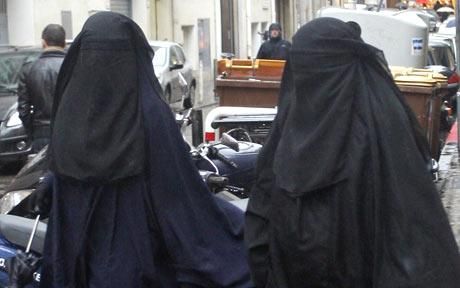
THE NEW YORK TIMES: “When in Rome, do as the Romans do” is a maxim derived from advice that St. Ambrose is said to have offered to St. Augustine in the late 4th century.
It’s still a pretty good idea, which would partly explain why Karen Post said she went shopping not long ago for an abaya, the robelike dress worn by some Muslim women. Ms. Post, who is a branding consultant, was headed for Saudi Arabia on a business trip.
“Online, I found a company that sells Islamic clothing,” she said. “For like $49, I found a really nice black abaya that fit perfectly.”
Late last month, she flew to Jeddah, Saudi Arabia, to give a talk on branding to about 400 executives and marketing employees with Saudi Arabian Airlines.
Now, doing as the Romans do is one thing. Doing as the Saudis do, especially for a woman, is something else.
A State Department travel warning advises American citizens to take precautions in the country, where laws against alcohol and even playing music in public are strictly enforced. Women are especially restricted. State Department guidelines note, for example, that the religious police can “pressure women to wear” the full-length black covering known as an abaya, “and to cover their heads.” Women can’t drive in the country and are strongly advised not to appear in public without an approved male escort.
Nevertheless, Western female business travelers do venture these days into Saudi Arabia. Like Ms. Post, they make it a point to learn the drill. » | Joe Sharkey | Monday, March 14, 2011
THE WALL STREET JOURNAL: Japan's Nuclear Crisis Escalates: Damage Spreads to Fourth Reactor; Prime Minister Warns of Radiation Release, Tells Residents in 18-Mile Zone to Stay Indoors » | Yuka Hayashi and Phred Dvorak| Tuesday, March 15, 2011
 THE GUARDIAN: Amnesty International has added to the calls for the Libyan authorities to release Ghaith Abdul-Ahad
Intensive efforts are continuing to persuade the Libyan government to release Guardian correspondent Ghaith Abdul-Ahad, who was detained 11 days ago while reporting from the country.
Libya's foreign ministry confirmed last week that it was holding Abdul-Ahad, but there has been no word on his whereabouts and no explanation of why he is still being detained after a Brazilian journalist he was travelling with was freed last Thursday.
Abdul-Ahad and Andrei Netto, a correspondent for the Brazilian newspaper O Estado de S Paulo, were picked up in the coastal town of Sabratha on March 2 then moved to a prison on the outskirts of the capital Tripoli.
The Guardian has been in contact with Libyan officials in Tripoli and London as well as Arab and international figures and asked them urgently to give all assistance in securing Abdul-Ahad's release. There is particular concern that he has had no access to a lawyer. » | Ian Black | Sunday, March 13, 2011
THE GUARDIAN: Appeal to be made as G8 foreign ministers consider whether to back French and British calls for a no-fly zone over Libya
Libya's revolutionary leadership is pressing western powers to assassinate Muammar Gaddafi and launch military strikes against his forces to protect rebel-held cities from the threat of bloody assault.
Mustafa Gheriani, spokesman for the revolutionary national council in its stronghold of Benghazi, said the appeal was to be made by a delegation meeting the French president, Nicolas Sarkozy, and the US secretary of state, Hillary Clinton, in Paris on Monday, as G8 foreign ministers gathered there to consider whether to back French and British calls for a no-fly zone over Libya.
"We are telling the west we want a no-fly zone, we want tactical strikes against those tanks and rockets that are being used against us and we want a strike against Gaddafi's compound," said Gheriani. "This is the message from our delegation in Europe."
Asked if that meant that the revolutionary council wanted the west to assassinate Gaddafi, Gheriani replied: "Why not? If he dies, nobody will shed a tear." » | Chris McGreal in Benghazi | Monday, March 14, 2011
THE DAILY TELEGRAPH: Armed Yemeni security forces raided an apartment shared by four Western journalists on Monday and deported them because of their coverage of a gathering uprising against the country's longtime ruler, one of the reporters said.
The journalists, two Americans and two Britons in their 20s, contribute to publications including The Daily Telegraph, the Wall Street Journal, Time Magazine, the Los Angeles Times and the Washington Post.
"They came into our apartment this morning and they told us all to come to the immigration office," said Oliver Holmes, 24, a Briton. "They sat us down and said, 'You're being deported."'
In the car on the way to immigration, the journalists were allowed to make phone calls. But their phones and passports were confiscated for hours while they were held at the immigration office and then as they packed up their apartment under the gaze of armed agents.
One of the agents told Holmes they were being kicked out because of their coverage of the uprising, which was inspired by the revolutions in Tunisia and Egypt. » | Monday, March 14, 2011
 THE DAILY TELEGRAPH: Marine Le Pen, the daughter of France's longtime far-right leader who now heads his National Front party, on Monday advocated turning migrants back to sea before they can reach European shores after she toured a centre for illegal migrants on Italy's southernmost island of Lampedusa.
A group of young protesters yelled "racist" at Miss Le Pen as she toured the island, where some 8,700 north Africans have fled unrest that has spread from Tunisia to Egypt and Libya since January.
Despite her party's anti-immigrant politics, Miss Le Pen, 42, had insisted before her arrival that the visit is aimed at gathering information, not at provocation.
"Europe is impotent and has not come up with any solution," Miss Le Pen said. Instead of patrolling near European shores, she said Europe's navies "in reality ... should go as close as possible to the coasts from where the clandestine boats departed to send them back."
Europe, she said, cannot handle the influx, which "is adding poverty to poverty, and disorder to disorder."
She warned that the migrants were arriving "in proportions that Italy can no longer handle."
"In truth, we are about to witness a catastrophe," she said. » | Tuesday, March 15, 2011
Lien en relation avec cet article »
THE DAILY TELEGRAPH: Tokyo shares closed down 10.55pc on Tuesday as panicking investors dumped stocks after the government said levels of radiation leaking from a stricken nuclear plant posed a threat to health.
Japan's Nikkei index clawed back some ground from an earlier freefall - sliding more than 12pc at one stage - to close down 1,015.34 points at 8,605.15. The broader Topix plunged 9.5pc in its worst two-day fall since 1987.
Other Asian markets suffered a ripple effect as investors fled stocks as the crisis in the world's No. 3 economy seemed only to escalate after a third explosion at the crippled Fukushima Dai-ichi nuclear plant in Fukushima province. » | Tuesday, March 15, 2011
Monday, March 14, 2011
REUTERS: Saudi sends troops, Bahrain Shi'ites call it "war": Saudi Arabia sent troops into Bahrain on Monday to help calm weeks of protests by the Shi'ite Muslim majority, a move opponents of the Sunni ruling family on the island called a declaration of war. » | Lin Noueihed and Frederik Richter | MANAMA | Monday, March 14, 2011
HOUSTON CHRONICLE: MANAMA, Bahrain — A Saudi-led military force crossed into Bahrain Monday to prop up the monarchy against widening demonstrations that have sent waves of fear through Gulf states over the potential for enemy Iran to take new footholds on their doorsteps.
The Bahrain conflict is sectarian as much as pro-democracy, as the strategic Gulf island nation's majority Shiite Muslims see an opportunity to rid themselves of two centuries of rule by a Sunni monarchy.
But Gulf Sunni leaders worry that might give Shiite Iran a stepping stone to its arch-rival Saudi Arabia, connected to Bahrain by a wide causeway.
Instead, the Saudis and the other members of the Gulf Cooperation Council sent forces the other way, deploying about 1,000 troops by land and air and cementing the entire six-nation alliance to the fate of Bahrain's rulers, key U.S. allies as hosts of the U.S. Navy's 5th Fleet.
The first cross-border offensive against one of the rebellions sweeping the Mideast was not greeted with celebrations.
Shortly after word of the foreign military reinforcements began to spread through the island nation, protesters blocked roads in the capital Manama. Thousands of others swarmed into Pearl Square, the symbolic center of the monthlong revolt.
Shiite-led opposition groups denounced the Gulf military task force as an occupation that pushes the tiny island kingdom dangerously close to a state of "undeclared war." » Reem Khalifa and Brian Murphy | The Associated Press | Monday, March 14, 2011
THE JERUSALEM POST: Gov't forces have pushed insurgents 160 km eastwards in counter-offensive; France presses for no-fly zone, analysts fear it may be too late.
AJDABIYAH, Libya - Muammar Gaddafi's jets bombed Libyan rebels on Monday, aiding a counter-offensive that has pushed insurgents 100 miles (160 km) eastwards in a week, as France pressed for a no-fly zone "as fast as possible".
Gaddafi's government, at first reeling from widespread popular uprisings last month, is now confident of success. "We are certain of our victory, whatever the price," state TV said.
Government troops took Brega on Sunday, but the rebels said they had moved back into the oil terminal town during the night and surrounded Gaddafi's troops.
"Some of them (government troops) have been killed and some have been captured. But they are still in Brega. It is still dangerous and there is still fighting but today we will squeeze them hard," said Idriss Kadiki, a rebel fighter.
Behind rebel lines, Libyan planes bombed Ajdabiyah on Monday, the only sizeable town between Brega and the rebel stronghold of Benghazi. From Ajdabiyah there are roads to Benghazi and to Tobruk to the east, which could allow Gaddafi's troops to encircle Benghazi.
There is now a very real possibility that by the time world powers agree on a response to the conflict in Libya, Gaddafi's forces may already have won, analysts said. » | Reuters | Monday, March 14, 2011
THE GUARDIAN: The Saudi regime is stepping up its regional security role, but it is clear that it is not immune from 'contagion'
Saudi Arabia's decision to send troops into Bahrain to help stabilise the country following violent anti-government demonstrations marks another stage in Riyadh's reluctant emergence as a regional policeman at a time when the Arab world faces unprecedented turmoil.
The Saudi move, requested by Bahrain's embattled Sunni Muslim royal family, is motivated primarily by self-interest. If Bahrain, with its majority Shia population, succumbed to an Egyptian-style popular uprising then the regime in Riyadh would fear, rightly, that its oil-rich eastern province, where many Shia live, might be next.
But Saudi actions are also influenced by larger geostrategic considerations. One is Riyadh's close military and economic alliance with the US – its defender of last resort – which in effect embraces Bahrain, home to the US fifth fleet. The move by the Gulf Cooperation Council will not have come without prior consultation with Washington.
Another crucial consideration is Riyadh's intensifying rivalry with Iran, which has powerful political and religious aspects (Iran is majority Shia Muslim, Saudi Arabia is majority Sunni).
The developments in Bahrain follow stepped-up Saudi involvement in other regional flashpoints. They include Lebanon, where King Abdullah tried unsuccessfully last year to persuade Syria and Iranian-sponsored Hezbollah to take a less confrontational line; and Yemen, where Saudi Arabia has supported the government of Ali Abdullah Saleh, an American ally, against Iranian-backed rebels and al-Qaida infiltrators.
The Saudis have also been actively involved, with the Obama administration, in international efforts to forge an Israel-Palestine settlement, another regional running sore exploited by Iran. The Saudi peace plan of 2002 remains the most likely basis for ending the Arab-Israeli conflict.
Saudi efforts to keep a lid on unrest in the region extend to Oman – like Bahrain, a relatively poor country that acts as a base for the US military. Read on and comment » | Simon Tisdall | Monday, March 14, 2011
REUTERS: Japan grapples with nuclear crisis after tsunami » | Taiga Uranaka and Ki Joon Kwon | FUKUSHIMA, Japan | Monday, March 14, 2011

THE DAILY TELEGRAPH: More than 1,000 Saudi Arabian troops have been deployed in Bahrain, following fresh protests over the weekend that pitted protesters from the tiny Gulf monarchy's Shia majority against riot police.
Local residents say they saw Saudi troops driving across the causeway that links the two countries early on Monday.
There was no official comment on the presence of the troops, but a Saudi official said "the force will work under the directions of the Bahraini government and protect vital facilities like oil and power."
The opposition Wefaq movement, however, described the presence of the troops as "an undeclared war" and "a blatant occupation."
Salman bin Hamad Al Khalifa, Bahrain's crown prince offered opposition groups a dialogue on Sunday, but added that "right to security and stability transcends any other consideration." Prince Salman's offer came after protesters after barricaded a road leading into its financial district on Sunday, a working day in the Kingdom, sparking off a two-hour street battle with police.
The clashes were the worst since February 17, when seven protesters were shot dead by police The protests broke out soon after Robert Gates, the US defence secretary, met Bahrain's king to persuade him to undertake reforms Washington believes are necessary to prevent Iran from capitalising on the arrest. » | Diplomatic Editor | Monday, March 14, 2011
Related »
Subscribe to:
Posts (Atom)