THE SUNDAY TIMES: The radical Muslim who threatened to hold a march through Wootton Bassett is ready to defy the ban on his group and says a coup could make Britain an Islamic state
Saturday, January 16, 2010
THE SUNDAY TIMES: The radical Muslim who threatened to hold a march through Wootton Bassett is ready to defy the ban on his group and says a coup could make Britain an Islamic state
THE SUNDAY TIMES: Western evangelists and gay rights groups are stoking Africa’s bitter rows over homosexuality, writes RW Johnson in Cape Town
The trial of a young male couple charged with unnatural practices and gross indecency after announcing their engagement in Malawi was adjourned last week when one of the accused collapsed in court while enduring jeers from the public gallery.
Tiwonge Chimbalanga, 20, was made to return with a mop to clean up his own vomit, even though he has malaria.
He and his boyfriend, Steven Monjeza, 26, have been held in Chichiri prison, Blantyre, for more than a week — in order, the judge says, to protect them from mob violence.
Chichiri has a reputation for overcrowding, disease and homosexual rape. The couple say they have been badly beaten and Peter Tatchell, the British gay activist, describes their conditions as appalling.
Such scenes will only increase the pressure from western human rights activists and donor countries on Malawi’s government to moderate its draconian anti-gay laws, for which the couple have provided a test case. They face up to 14 years in jail.
Following similar donor pressure, President Yoweri Museveni of Uganda distanced himself from an anti-homosexuality bill before parliament in Kampala last week. Museveni appealed to MPs to “go slow” on the private member’s bill, which stipulates the death penalty for “aggravated homosexuality”, including homosexual acts by HIV-positive men.
Museveni said he had come under pressure from Gordon Brown, Stephen Harper, the prime minister of Canada, and the US secretary of state, Hillary Clinton, in a 45-minute phone call. He was also struck by the fact that a US protest rally had drawn 300,000 people, saying he would have great difficulty attracting such a crowd.
The two cases illustrate the way Africa is becoming a battleground over differing attitudes to homosexuality in the West. >>> RW Johnson in Cape Town. Additional reporting: Rosie Kinchen | Sunday, January 17, 2010
Labels:
Africa,
battle,
being gay,
evangelism,
homosexuality,
human rights
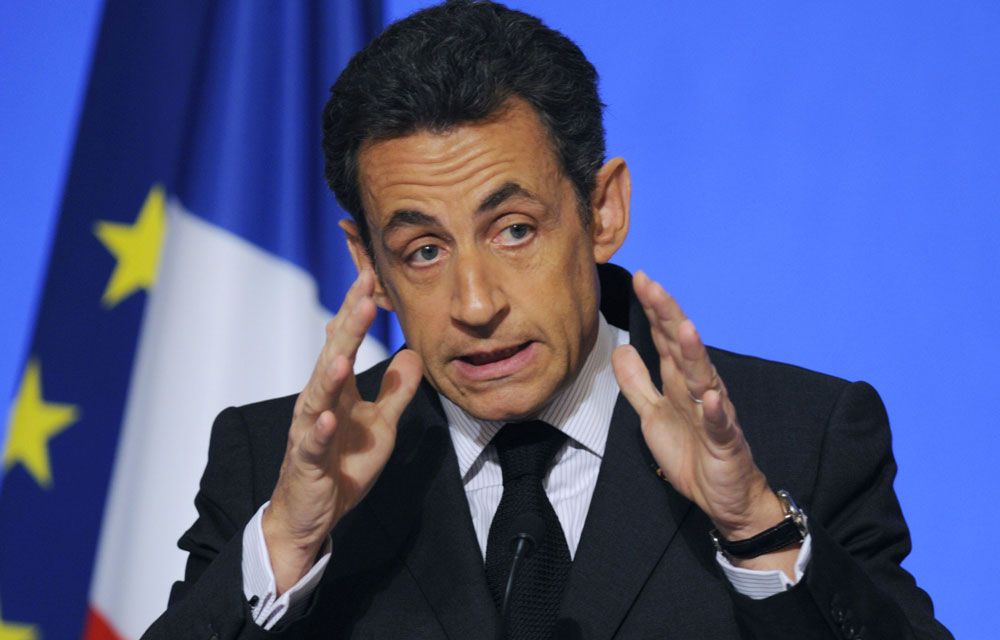
leJDD.fr: Sur la question du voile, Nicolas Sarkozy a annoncé mercredi qu'il était pour une résolution, suivie, dans un second temps, d'une loi. De son côté, le président de la mission parlementaire sur le sujet, André Gérin, s'en prend à Jean-François Copé qui souhaite déposer une proposition de loi sans attendre les conclusions de la commission.
Nicolas Sarkozy a officialisé mercredi son point de vue sur la question du port de la burqa dans l'espace public français. Alors que les avis divergent au sein même de la majorité, le président s'est déclaré favorable à une résolution "sans ambiguïté", suivie d'un texte de loi, lors de ses vœux aux parlementaires. Réaffirmant que le "voile n'était pas le bienvenu en France", il a déclaré que le plus important était que "personne ne se sente stigmatisé".
"Il faudra ensuite tirer les conséquences de cette résolution, d'un point de vue législatif et réglementaire. Le Parlement aura alors à débattre d'un texte de loi adapté à la situation", a précisé Nicolas Sarkozy. Et le président – qui a appelé à un vote le plus large possible – a également fixé le calendrier: la loi comme la résolution ne devraient pas intervenir avant les élections régionales de mars prochain. "Je pense qu'il serait sage que nous réfléchissions et que nous décidions indépendamment des échéances électorales à venir. Ce ne sont jamais des périodes propices à la sérénité et au calme qui sont pourtant indispensables pour traiter de ces grandes questions de société", a estimé Nicolas Sarkozy. >>> ACh. D., leJDD.fr| Mercredi 13 Janvier 2010
SAN FRANCISCO CHRONICLE: Europe and the Islamic world are at war. It's a proxy conflict, fought in European capitals and on the Arab streets. But people are being killed.
Earlier this month, Islamic gunmen slaughtered six Christians as they left church in southern Egypt on Coptic Christmas Eve, setting off a week of retributive violence. This was just the latest incident in a cascading series of repressive and violent acts against Christians living in numerous Arab states, including the Palestinian territories, Iraq and Morocco, among other places.
Meantime, across Europe, government leaders are contemplating or enacting ever-more repressive rules on Muslim residents and citizens, who are carrying their lifestyles and grievances into unforgiving societies.
The most famous example: The Swiss electorate voted last month to ban the construction of new minarets. Then, early this month, a fiery Islamic cleric in England announced that he would organize a large protest march through the streets of a town near London that regularly honors passing hearses carrying British soldiers killed in Afghanistan. Prime Minister Gordon Brown said he was "personally appalled," and then on Tuesday Britain banned the group.
In both worlds, the conflicts result from misunderstanding and outright intolerance, fanned oftentimes by extremists**, like Geert Wilders, a Dutch member of parliament. He travels the Western world preaching an anti-Islamic screed. Wilders has hit a chord, and the transcript of one speech he gave in New York last year has gone viral, landing in millions of e-mail in-boxes and watched on YouTube nearly 1 million times.
Wilders likes to note that "it is not a coincidence that every terrorist act is based on this fascist book the Quran, this wrong ideology, and unfortunately has been done by people from the Islamic world. I don't believe that cultures are equal. I believe that our culture is much better than the retarded Islamic culture."
In England, meanwhile, Anjem Choudary, leader of the banned Islamic group, posted his view on his organization's Web site recently, saying the march (now canceled) would be in honor of "the real war dead who have been shunned by the Western media and general public as they were, and continue to be, horrifically murdered in the name of democracy and freedom: the innocent Muslim man, women and children."
An estimated 20 million Muslims now live in Europe. Many emigrated to take menial jobs that Europeans were no longer willing to do. The problem for Europeans is that these immigrants tend not to assimilate. They live in their own communities where some of their leaders enforce elements of Shariah law. >>> Joel Brinkley* | Saturday, January 16, 2010
*Joel Brinkley, a professor of journalism at Stanford University, is a former foreign correspondent for the New York Times.
**Joel Brinkley’s viewpoint.
THE CHRISTIAN INSTITUTE: A controversial Dutch MP has lost a legal attempt to halt a pending hate crime prosecution against him.
Geert Wilders will now face trial for inciting hatred against Muslims after a Dutch court described his challenge as “inadmissible”.
While leaving court on Wednesday Mr Wilders said: “Freedom of speech is under pressure. The legal system in North Korea is better than in the Netherlands.”
Despite the controversy Mr Wilders, the leader of the Freedom Party, is one of Holland’s most popular politicians.
Mr Wilders is the maker of the 17-minute anti-Koran movie, Fitna, which features quotations from the Koran interspersed with footage of terrorist atrocities and speeches by Muslim preachers.
The controversial MP has also been criticised for writing anti-Islamic articles and letters which were later published in a mainstream Dutch newspaper.
While in August 2007 Mr Wilders called for the Koran to be banned.
However, Mr Wilders has always maintained that he is targeting Islam not individual Muslims. >>> | Friday, January 15, 2010
Labels:
Geert Wilders,
hate crime,
show trial
LE FIGARO: L'opposition de pays européens à l'entrée d'Ankara dans l'UE contribue à mythifier l'âge d'or de l'empire perdu.
Les visiteurs, ravis, en prennent plein les yeux et les oreilles. Réglée au volume maximum, la bande-son fait gronder les canons et rouler les tambours. Le sultan Mehmet II le Conquérant chevauche fièrement son destrier blanc, les murailles byzantines cèdent à l'assaut des janissaires. Sur 360° et en trois dimensions, une fresque géante reproduit la conquête de Constantinople : c'est l'attraction phare du Musée historique panoramique de 1453. Depuis son inauguration il y a un an par le premier ministre Recep Tayyip Erdogan, il voit défiler toutes les écoles d'Istanbul. «On revit la bataille en direct, c'est incroyable, s'enflamme Mutlu Turkoglu, professeur, aussi enthousiaste que ses élèves. Les jeunes Turcs doivent être fiers de leur histoire, c'est primordial pour leur identité. »
Ce musée, fondé par la municipalité d'Istanbul, est révélateur de l'«ottomania» en vogue en Turquie. Après avoir longtemps méprisé «l'homme malade de l'Europe», les Turcs redécouvrent leur passé ottoman et se penchent avec nostalgie sur un empire qui, au faîte de sa puissance, rayonna des Balkans à la péninsule arabique. «À partir de 1923, tous les efforts ont été concentrés sur la construction de la jeune République et sur son avenir, explique Nilüfer Narli, sociologue. S'en est ensuivie une sorte d'amnésie. Aujourd'hui, on revient à une image plus positive. »
La solennité des derniers honneurs rendus à Ertugrul Osman, le petit-fils du sultan Abdullamid II, en septembre, illustre le retour en grâce de l'Empire ottoman. En 1924, alors enfant, il avait été expulsé de Turquie avec les autres membres de la famille royale. En ordonnant l'exil, Mustafa Kemal, le fondateur de la République turque, liquidait définitivement les restes de l'empire. Pour les funérailles de l'héritier du trône, dix mille personnes et plusieurs ministres se sont massés à la cérémonie organisée à la Mosquée bleue.
L'arrivée au pouvoir en 2002 du Parti de la justice et du développement (AKP), aux racines islamistes, et l'ascension d'une bourgeoisie musulmane, concurrençant l'élite traditionnelle laïque, ont contribué à alléger le joug kémaliste qui pesait sur l'histoire. La nouvelle diplomatie turque, conduite par Ahmet Davutoglu, active au Moyen-Orient comme dans les Balkans, est souvent qualifiée de «néo-ottomane».«La Turquie réintègre des espaces où elle a été présente pendant des siècles», soulignait récemment Suat Kiniklioglu, porte-parole du comité des affaires étrangères au Parlement. >>> Laure Marchand, Istanbul | Jeudi 07 Janvier 2010
Labels:
Ottoman Empire,
Turquie
THE TELEGRAPH: Al-Qaeda has successfully restructured its global network and now has the capability to carry out a wide range of terror attacks against Western targets, according to a detailed U.S. intelligence assessment that has been conducted in the wake of the failed Christmas Day Detroit bomb plot.
And the growing strength of al-Qaeda’s support in Britain has emerged as a major concern for U.S. intelligence agencies as they attempt to prevent further attacks after Umar Farouk Abdulmutallab, a Nigerian student who studied at London’s University College, nearly succeeded in detonating an explosive device that he had concealed in his underpants as Northwest airlines flight 253 made its final approach to Detroit airport.
American intelligence officials are still investigating claims that Abdulmutallab was radicalised while he was a student between 2005 and 2008, although British security officials insist that he was radicalised in Yemen after he left London.
But the failure of British security officials to alert their American counterparts to Abdulmuttalab’s radical activities while president of UCL’s Islamic Society has led to increased tensions between Washington and London.
Earlier this week Alan Johnson, the Home Secretary, confirmed that the UK had not passed any information to the U.S. prior to the attempted December 25 bombing that would have led American officials to believe that Abdulmutallab was a potential terrorist.
But while in London Abdulmutallab regularly presided over debates that denounced Britain’s involvement in the war on terror and America’s Guantanamo detention facility.
American officials now believe Britain poses a major threat to Western security because of the large number of al-Qaeda supporters that are active in the country. Two years ago Jonathan Evans, the head of MI5, estimated that there were 2,000 al-Qaeda sympathisers based in Britain – the largest concentration of al-Qaeda activists in any Western country. But American officials, who regularly refer to “Londonistan” because of the high concentration of Islamic radicals in the capital, believe the figure is growing all the time. They point out that recent al-Qaeda terror attacks planned in Britain have been the work of British-based Muslims, many of whom have been trained in al-Qaeda camps in Afghanistan and Pakistan. >>> Con Coughlin | Friday, January 15, 2010
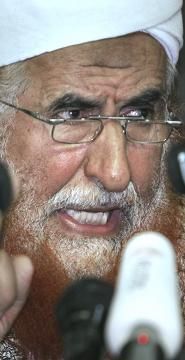
TIMES ONLINE: A group of influential religious leaders in Yemen has threatened to declare jihad — holy war — if foreign troops intervene to stem the spread of al-Qaeda in the country. The edict is a clear warning to the United States as it plans to step up its military involvement in the country.
The leaders said that a jihad would be called if foreign troops set up bases inside the country, or moved into its territorial waters.
“If any party insists on aggression, or invades the country, then according to Islam, jihad becomes obligatory,” said a statement signed by 150 clerics and read out at a news conference in Sanaa, the capital. The stark threat came as Yemeni security officials declared that the country was openly now at war with the terrorists, who are trying to carve out a haven in a country riven by rebellion, secessionism, poverty and tribal loyalties. >>> James Hider, Middle East Correspondent | Friday, January 15, 2010
THE TELEGRAPH: The self-proclaimed heir to Russia’s imperial throne has demanded the reopening of the investigation into the murder of Tsar Nicholas II and his family by Bolsheviks in 1918.
The Russian Prosecutor-General has formally closed a criminal investigation into the shooting because too much time had elapsed since the crime and because those responsible had died.
But monarchists said a resumption of the criminal case was essential if Russia as finally to come to terms with its brutal past.
“This case is essential for Russia,” said Alexander Zakatov, who represents Grand Duchess Maria Vladimirovna, a Romanov who styles herself as the heir to the imperial throne.
“Russians need to know about the fate of the tsarist family and all of the other victims of the Communist regime. There should be a clear legal verdict on this,” said Zakatov, who heads the chancellery of Russia’s so-called Imperial House.
He said lawyers for Mrs Vladimirovna had asked Moscow’s Basmanny court to force prosecutors to reopen the case, which he said was needed to resolve a host of questions about the murder and remains said to belong to the last tsar.
Nicholas II, his wife and five children were killed by a revolutionary firing squad in July 1918 in the cellar of a merchant’s house in Yekaterinburg, 900 miles east of Moscow. >>> The Telegraph’s Foreign Staff | Saturday, January 16, 2010
THE TELEGRAPH: An actress was doused with petrol in Paris in an attack thought to be related to her role in a feminist play she wrote about Algerian women.
The 45-year-old, who goes by the name of Rayhana, said two men approached her while she was walking to the theatre on Tuesday, grabbed her from behind, slapped her face and poured petrol on her. “I could smell the petrol. A flame brushed my hat and then I ran,” she said. >>> The Telegraph’s Foreign Staff | Friday, January 15, 2010
L’EXPRESS.fr: Dernière représentation* ce samedi soir, à Paris, de la pièce de Rayhana, dramaturge d'origine algérienne agressée mardi par des hommes qui ont tenté de l'immoler. Révoltées, deux militantes féministes racontent leur propre combat contre l'intégrisme religieux.
Rayhana a été aspergée de white spirit mardi soir alors qu'elle se rendait à la Maison des Métallos, à Paris, où se joue, jusqu'à ce soir, A mon âge, je me cache encore pour fumer. Une pièce qu'elle a écrite, dans laquelle neuf femmes se racontent leur quotidien dans société algérienne étouffée par l'obscurantisme religieux. Ce texte engagé a-t-il un lien avec l'agression violente dont a été victime la comédienne à l'entrée du théâtre? Les enquêteurs chargés de l'affaire en ont «de fortes suspicions». >>> Par LEXPRESS.fr | Samedi 16 Janvier 2010
Labels:
Islam in France
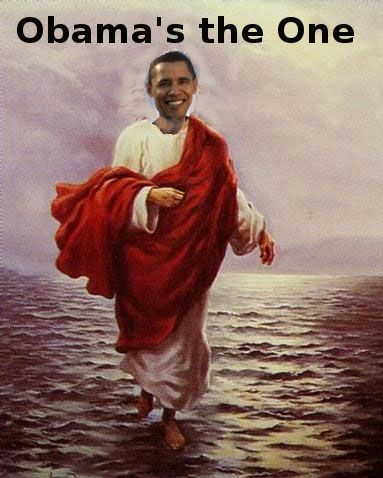
THE TELEGRAPH: Barack Obama's election did not usher in a post-racial America. Instead, speaking honesty about race is taboo, writes Toby Harnden in Washington
A year ago, Americans were basking in what many believed was a post-racial new dawn. The United States was just about to inaugurate its first black President. Across the world, those who had pronounced the country too mired in its past to elect an African-American were being forced to reassess.
Fast forward to last week and the American chattering classes were engaged in the kind discussion about race that makes one despair. I use the term "discussion" but that's over-egging things - it was really a mud-slinging contest in which Republicans and Democrats shouted tired old slogans at each other.
The matter at issue was comments by Harry Reid, the Senate Majority Leader, made during the 2008 election campaign. Obama was electable, Reid observed, because he was "light-skinned" and did not "speak with a Negro dialect unless he wanted to have one".
Reid knew he was in big trouble and immediately rushed out a statement of apology when his words, quoted in a new campaign book, became public.
He had forgotten that race was a taboo subject.
His use of the term "Negro" was a little anachronistic, though the National Council of Negro Women and United Negro College Fund still exist. But it wasn't exactly the other N-word.
Reid, who is fighting for his political life in Nevada, where polls have him trailing badly in his November re-election contest, has said many stupid things. Three years ago, he declared that the Iraq war "is lost".
Last month he compared Republicans who opposed healthcare reform to those who once clung to slavery.
But this time his sin was really to speak the truth. Part of candidate Obama's special appeal was that he was a black man who made white people feel exceedingly good about themselves - not least because he was half white and had been raised by a white mother and grandparents.
At the same time, Obama showed himself to be at ease among blacks who had, unlike him, lived through the civil rights area and were descended from slaves.
Thus, Obama walked the tightrope between being too black and being not black enough. One of the ways he did that was to alter his tone and cadence depending on the audience he was speaking to - as many politicians do. >>> | Saturday, January 16, 2010
My comment on this article in The Times today:
Ms Jagger, this is not a class issue; rather, this is an issue of national identity and preserving one's culture and values. The burqah does not belong here. The practice has its roots in the desert. It is actually not Islamic, even though it has come to represent Islamic fundamentalism. Its actual roots lie in the class structure of Saudi Arabia! Upper class women in Arabia, the city-dwellers, wore them for two main reasons: to protect the skin from the hot sun in the desert (pale skin on women is prized there even to this day); and as the hallmark of a lady who didn't have to do manual labour, as the poorer classes did.
There is therefore absolutely no reason for wearing them in the United Kingdom. They were never really a religious duty anyway. The prophet of Islam called for modesty. One doesn't have to cover oneself from head to foot to preserve one's modesty! – © Mark
TIMES ONLINE: The UK Independence Party is to call for a ban on the burka and the niqab — the Islamic cloak that covers women from head to toe and the mask that conceals most of the face — claiming they affront British values. The policy, which a number of European countries are also debating, is an attempt by UKIP to broaden its appeal and address the concerns of disaffected white working-class voters.
UKIP would be the first national party to call for a total ban on burkas, though the far-Right BNP believes they should be banned from schools.
Lord Pearson of Rannoch, the leader of UKIP, said yesterday: “We are taking expert advice on how we could do it. It makes sense to ban the burka — or anything which conceals a woman’s face — in public buildings. But we want to make it possible to ban them in private buildings. It isn’t right that you can’t see someone’s face in an airport.”
He explained that UKIP wanted to bring to the fore the issue of the increasing influence of Sharia in Britain: “We are not Muslim bashing, but this is incompatible with Britain’s values of freedom and democracy.”
Nigel Farage, the former UKIP party leader, will announce tomorrow that the party believes the fabric of the country is under threat from Sharia and that forcing women to conceal their identity in public is not consistent with traditional Britishness.
UKIP believes that the burka and the niqab have no basis in Islam, are a threat to gender equality, marginalise women and endanger the public safety because terrorists could use them to hide their identity. >>> Suzy Jagger, Politics and Business Correspondent | Saturday, January 16, 2010
NZZ ONLINE: Selten war der Amtsantritt eines amerikanischen Präsidenten mit ähnlich hohen Erwartungen verknüpft gewesen wie Barack Obamas Einzug ins Weisse Haus an jenem denkwürdigen 20. Januar 2009. Dass sich in der Zwischenzeit Ernüchterung eingestellt hat, ist kein überraschendes Fazit nach einem Jahr. Denn schon an dem strahlenden Wintertag, als Obama auf den Stufen des Capitols seinen Amtseid ablegte, liess sich erahnen, dass der neue Präsident mit unerfüllbar hohen Erwartungen konfrontiert war. Zwei Kriege und die schwerste Wirtschaftskrise seit mehr als einem halben Jahrhundert nagten an der Zuversicht der Nation. Die Hoffnung auf Wandel und Erneuerung nach Jahren der republikanischen Dominanz hatte den jungen Senator zum Sieg getragen; doch ein Rezept zum Regieren war dies noch nicht. Einmal an der Macht, musste Obama sein vages Wahlprogramm konkretisieren und einen Teil seiner Anhänger, die ganz anderes auf ihn projiziert hatten, unweigerlich enttäuschen. >>> Neue Zürcher Zeitung | Samstag, 16. Januar 2010
Labels:
Barack Obama,
Demokraten,
Politik,
USA
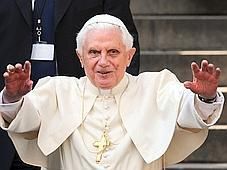
LE TEMPS: Le grand rabbin Di Segni maintient son invitation dimanche malgré la polémique au sujet de la volonté du pape de béatifier Pie XII, controversé pour son silence sur l’extermination des juifs
La traversée du Tibre, de la basilique de Saint-Pierre au vieux ghetto juif, devait s’effectuer dans le sillage lumineux de Jean Paul II, le premier pape de l’histoire à se rendre, en 1986, à la synagogue de Rome. Dimanche soir, la visite de Benoît XVI dans le grand temple de la capitale italienne sera, au contraire, entourée de l’ombre sulfureuse de Pie XII. La décision de Joseph Ratzinger de proclamer, le mois dernier, «vénérable» Eugenio Pacelli (en même temps que Karol Wojtyla) et d’en célébrer les «vertus héroïques» pour franchir une étape supplémentaire dans la cause en béatification du pape controversé pour ses silences durant la guerre a en effet relancé incompréhensions, polémiques, à la limite du courroux. >>> Eric Jozsef | Samedi 16 Janvier 2010
Labels:
l'Italie,
le Vatican,
les Juifs
NZZ ONLINE: Die iranischen Behörden wollen künftig mit drastischen Strafen gegen Protestaufrufe der Opposition über E-Mail und SMS vorgehen. Auf Druck der Öffentlichkeit wurde dagegen die Schwester von Nobelpreisträgerin Ebadi freigelassen.
Polizeichef Ismail Ahmadi Moghaddam sagte am Freitag, Mobilfunk und Internet würden vollständig überwacht. «Diese Individuen sollten nicht davon ausgehen, dass sie ihre Identität verbergen können», wurde der General von der halbamtlichen Nachrichtenagentur ISNA zitiert. >>> ddp | Freitag, 15. Januar 2010
Labels:
Iran,
Proteste,
Shirin Ebadi,
SMS
TIMES ONLINE: Anjem Choudary sits in a North London café, sips on a vanilla latte and then launches into a tirade about the decadence of the West.
With machinegun delivery, he expounds on numerous themes: British Muslims are suffering persecution because the Government rules by division; Sharia will solve all Britain’s ills; Western governments are carrying out terror attacks in the Middle East so they can be blamed on extremists.
His propaganda is peppered with colourful analogies. Moderate Muslims, for example, have lost their values and are like “vegetarians who eat beefburgers”. Holding court, with three young supporters hanging on his every word, it appears like business as usual for Mr Choudary. Except for one matter: we met on Thursday morning, when the Home Office ban on Islam4UK, Mr Choudary’s controversial group, had just come into effect. He and his supporters, dressed in traditional Islamic fashion, are defiant nonetheless.
Mr Choudary, a former solicitor whose plans to stage an anti-war protest in Wootton Bassett in Wiltshire caused widespread furore, told The Times: “Unless the Government can prove that you are ostensibly exactly the same organisation, doing the same things at the same time, it’s very difficult to clamp down.
“I’m not going to stop propagating Islam. I can still talk with journalists ... we can still go out publicly and talk about Islam. I could write a leaflet now ... and I could invite people to Islam.” The question he was unable to answer, however, was whether many people would actually be interested. >>> Fiona Hamilton, London Correspondent | Saturday, January 16, 2010
Friday, January 15, 2010
TIMES ONLINE: A senior figure in Hizb ut-Tahrir, a hardline Islamist group that the Government keeps “under continuous review” and the Conservatives want to ban, is teaching and preaching at a top university.
The Times has learnt that Reza Pankhurst, who was imprisoned in Egypt for membership of the group, is a teacher at the London School of Economics and regularly preaches to students at Friday prayers.
The group is supposedly barred from organising and speaking on campuses under the National Union of Students’ policy of “no platform” for racist or fascist views. The presence of one of its prominent members as a university teacher raises new concerns about Islamist radicalisation on campus.
A new review of campus extremism began last month after it was discovered that the alleged Detroit airline bomber, Umar Farouk Abdulmutallab, was a former president of the Islamic Society at University College London.
The Times understands that at least two London university lecturers are either supporters or members of Hizb ut-Tahrir.
Mr Pankhurst is a postgraduate student in the LSE’s government department and teaches classes for the course “States, Nations and Empires”. >>> Sean O’Neill, Crime and Security Editor | Friday, January 15, 2010
Labels:
Hizb ut-Tahrir
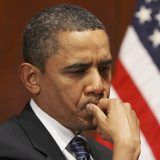
THE TELEGRAPH: President Barack Obama has admitted he failed to unite Americans and change the way Washington works during his first year in office.
With his approval ratings falling below 50 per cent, Mr Obama confessed his disappointment at not delivering key pledges of his campaign.
"What I haven't been able to do in the midst of this crisis is bring the country together in a way that we had done in the inauguration," he told People magazine. "That's what's been lost this year ... that whole sense of changing how Washington works."
Mr Obama, who will mark a year in office next Wednesday, came to power amid a surge of optimism that he could unify Democrats and Republicans at a time of national distress, and reverse the bitter polarity of the George W Bush era.
Instead, there has been little collaboration between the parties in Congress while floating voters who turned out en masse for Mr Obama have deserted him in opinion polls. His approval ratings have tumbled down from the mid-to-high 60s when he took over.
In a Quinnipiac University poll, there was even a narrow margin among respondents of 35 to 37 per cent on whether the United States would have been better off had Obama's Republican opponent John McCain won the 2008 election. Barack Obama admits failure to unite the US >>> Alex Spillius in Washington | Thursday, January 14, 2010
Subscribe to:
Posts (Atom)