Thursday, June 18, 2009

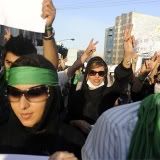
Protesting at Azadi Square (June 2009)

This is a blog entry that was written by a participant in the pro-reformist demonstrations staged by supporters of the opposition in Iran. This dispatch was sent to relatives with an explicit request to disseminate it to as wide an audience as possible, thus circumventing the draconian censorship imposed by Iranian authorities on journalists, particularly foreign correspondents.

HAARETZ:
Defying Iran Censors, a Blogger Reports from Tehran >>> By Yossi Melman, Haaretz Correspondent | Wednesday, June 17, 2009
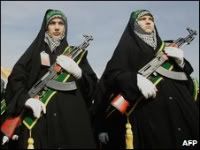
Profile: Basij Militia Force

BBC: The Basij militia is an Iranian volunteer force of Islamic government loyalists which is often called out onto the streets at times of crisis to dispel dissent.

The force was originally set up by Ayatollah Khomeini in 1979 as a resistance force during the Iran-Iraq war.

They received limited training and were used for "human wave" attacks, for example being asked to clear Iraqi minefields by walking across them.

The size of the militia is an open question.

Many Iranian officials cite 20m - the number that Ayatollah Khomeini once suggested would be an invincible force - but independent estimates put the force at as little as 400,000.

A 2005 study by the Centre for Strategic and International Studies in the United States, estimated 90,000 full-time, uniformed, active-duty Basij members and 300,000 reservists.

There are also believed to about a million affiliates who can could be mobilized if need be.

The Basij-e Mostaz'afin, (literally Mobilization of the Oppressed in Farsi), officially known as the Basij Resistance Force (Nirouye Moqavemate Basij), has branches in every town.

It is commanded by a senior cleric and is an auxiliary arm of the powerful Iranian Revolutionary Guard. >>> | Thursday, June 18, 2009
Iran: Two Opposition Rallies Planned for Thursday (June 18, 2009)

On Agenda, Gays Ask, but Obama's Not Telling

TIME: On Jan. 9, the President-elect's spokesman, Robert Gibbs, gave a rare one-word answer. Asked if Barack Obama would "get rid" of the military's "Don't ask, don't tell" policy, which prohibits gays from serving openly, Gibbs replied firmly, "Yes."

Ever since, the relationship between the President and his gay and lesbian supporters has gotten more complicated. Soldiers continue to be discharged from the military for being openly gay, and activists have voiced increasing concern over the Administration's lack of action on other key issues. "The particular and generalized concern is, What's the plan?" says Robert Raben, a Democratic lobbyist for several gay and lesbian groups.

Last week, concern burst into outrage. When the Justice Department filed a legal brief arguing against gay marriage, the head of Human Rights Campaign — the largest gay-rights group in the U.S. — accused the Administration of failing to recognize the "humanity" of homosexuals. Barney Frank called the White House to protest, and several other gay Democrats announced plans to boycott an upcoming fundraiser, forcing the treasurer of the Democratic National Committee, Andrew Tobias, who is also gay, to write donors saying that he understood "all the hurt and anger."

Gays have no real political alternative — it's not like anger will send them running to the warm embrace of the GOP. But the Administration realizes it has angered a crucial constituency and is intent on signaling that it will make good. On June 17, Obama held a signing ceremony in the Oval Office to announce new policies that made a number of minor changes to the benefits offered to the same-sex partners of federal employees and foreign-service officers, including sick leave and long-term-care insurance rights. But the core of the President's message was that work on gay and lesbian equality is just beginning. "We've got more work to do to ensure that government treats all its citizens equally; to fight injustice and intolerance in all its forms; and to bring about that more perfect union," the President announced with a group of gay-rights activists standing at his side. "I'm committed to these efforts." >>> Michael Scherer, Washington | Thursday, June 18, 2009

YOUTUBE: Obama Extends Benefits for Same-sex Partners

Interview: «Man glaubt dieser Führung nicht mehr»: Studenten, Ayatollahs und das «Volk» – Systemkrise in Iran

NZZ Online: Das iranische Regime hat sich mit der offenkundigen Wahlfälschung das Vertrauen grosser Bevölkerungsteile verscherzt. Der Zürcher Orientalist Urs Gösken gibt im Gespräch mit NZZ Online eine Einschätzung der Kräfte, die jetzt aufeinander prallen.

NZZ Online: Sie haben Kontakt mit Leuten in Iran. Was erzählen die?
Urs Gösken: Zuletzt habe ich mit einer Lehrerin in Isfahan telefoniert. Sie berichtet, dass dort die Lage gleich ist wie in Teheran. Es wird protestiert, die Demonstrationen werden verboten, die Spannung ist gross. In allen iranischen Millionenstädten, auch etwa in Täbris oder Shiraz, gab es in den letzten Tagen Massenproteste.

Die Sicherheitskräfte haben offenkundig Mühe, die Proteste zu unterdrücken.
Das wird nicht so einfach sein. Es werden jetzt Protesttraditionen wiederbelebt, die man vor dreissig Jahren beim Aufstand gegen den Shah gesehen hat. Es gibt Aufrufe, auf jeden Fall täglich auf die Strasse zu gehen, also die Strassen mit Menschen zu füllen, auch wenn regelrechte Demonstrationszüge nicht möglich sind. Abends um neun stehen die Leute wieder auf den Dächern der Häuser und rufen: «Gott ist grösser» – das kann niemand verbieten. Es wird auch schon ein Massen-Sit-in am Grabe des Revolutionsführers Khomeiny im Süden von Teheran angekündigt für den Fall, dass Demonstrationen in Teheran nicht mehr möglich sein sollten. Die Polizei kann nicht Pilger vom Grabe Khomeinys vertreiben.

«Die Studenten sind entscheidend»

Wer sind eigentlich die Demonstranten und die Gegendemonstranten?
Auf beiden Seiten ist es ein stark gemischtes Publikum. Für Moussavi demonstrieren Leute, die die islamische Republik reformieren wollen. Und zudem auch Leute, die die islamische Republik ganz abschaffen wollen. Auf der Gegenseite sind es Leute, die in den letzten vier Jahren von Ahmadinejads Herrschaft profitierten, also Günstlinge des Regimes, Beamte, auch Arme, die Geschenke erhielten. Und dazu Leute, die Ahmadinejad schätzen, weil er den Feinden der islamischen Republik im Ausland die Stirn bietet. >>> Interview mit Urs Göskin*: Andres Wysling | Donnerstag, 18. Juni 2009

Urs Gösken ist Doktorand am Orientalischen Seminar der Universität Zürich.
Iran Regime Arrests Ailing Reformer Ebrahim Yazdi in Hospital Bed

TIMES ONLINE: The Iranian regime has arrested an elderly and ailing reformist while he underwent medical tests in a Tehran hospital in its latest attempt to repress protests against electoral fraud.

Unable to find him when they called at his home, officials tracked down Ebrahim Yazdi, the 78-year-old leader of the banned but officially tolerated Freedom Movement, as he was undergoing stomach tests and took him away to Evin prison, his family and colleagues say.

Mr Yazdi was the foreign minister in Iran's first government after the 1979 revolution but has been sidelined since hardliners took control.

Mehdi Noorbaksh, Mr Yazdi’s son-in-law who lives in Harrisburg, Pennsylvania, confirmed that he was arrested at Pars Hospital at around 3pm and taken to Evin Prison, near the Iranian capital. Information was scant because phone lines had been cut off, he added.

Hadi Ghaemi, director of the New York-based International Campaign for Human Rights, said that Mr Yazdi was arrested in the intensive care unit. >>> Jenny Booth, Martin Fletcher and Ella Flaye in Tehran | Thursday, June 18, 2009
Iran: Mussawi taugt nur bedingt zum Freiheitshelden

WELT ONLINE: Den oppositionellen Demonstranten im Iran gilt er als Held: Mir Hussein Mussawi galt als Zögling Ayatollah Khomeinis in den frühen Tagen der Revolution, dann zog er sich aus der Öffentlichkeit zurück. Nun ist er wieder da und hat revolutionäre Ideen im Gepäck. Er könnte den Iran verändern wie kaum jemand sonst.

Zwanzig Jahre lang hat er geschwiegen, jetzt plötzlich, innerhalb von Tagen, hat die Schockwelle einer zweiten iranischen Revolution den 67-jährigen Mir Hussein Mussawi ins Rampenlicht der Weltaufmerksamkeit katapultiert. Mussawi, ein Kaufmannssohn aus der Provinz Aserbaidschan, ist ein völlig anderes Kaliber als das, was man bisher an Reformern im Iran erlebt hat. Ihn identifiziert man nicht mit den Studenten und Intellektuellen, sondern mit den „Barfußjahren“ der Revolution.

Er war der Lieblingssohn von Ayatollah Ruhollah Khomeini in den wüsten, finsteren Jahren des Kriegs gegen den Irak. Er war Ministerpräsident während dieser Zeit – ein Amt, das es heute gar nicht mehr gibt. In Stadt und Land erinnert man sich an das System von Rationierung und Lebensmittelkarten, mit dem er die iranische Wirtschaft, die jetzt vollends in Trümmern liegt, durch die Kriegsjahre steuerte. Familien, nicht nur die der „Märtyrer“, die ihre Söhne zu Hunderttausenden auf die Schlachtfelder schickten, hatten nicht zuletzt durch ihn immer etwas zu essen; das haben sie nicht vergessen.

„Er ist womöglich der einzige Mensch auf der politischen Bühne im Iran, der es von der politischen Statur her mit dem Obersten Revolutionsführer Chamenei aufnehmen kann“, meint die Iran-Expertin Laura Secor. Die Khomeini-Anhänger in den Machtapparaten respektieren ihn, aber auch die Revolutionsgarden und die höhere Geistlichkeit. Traditionelle, religiöse Menschen unterstützen ihn auch.

Mussawi kommt aus dem Milieu der radikalen iranischen Linken; derjenigen, die Ende der Siebzigerjahre an der Seite der Mullahs für den Sturz des Schahs kämpften. „Bei ihnen verband sich Misstrauen gegen den Westen und gegen die Marktwirtschaft“– nicht zuletzt wegen der Erfahrungen mit British Oil und amerikanischen Ölgesellschaften, aber auch wegen der Rolle der CIA beim Sturz des frei gewählten Präsidenten Mossadegh 1953 – ein Ereignis, dessen Bedeutung für die späteren Beziehungen zwischen dem Iran und dem Westen man gar nicht hoch genug veranschlagen kann. >>> Von Mariam Lau | Mittwoch, 17. Juni 2009
Waffentests: Fliegt Nordkoreas nächste Rakete Richtung Hawaii?

WELT ONLINE: In gut zwei Wochen könnte in Nordkorea alles bereit sein für einen weiteren Waffentest. Eine Rakete mit mehr als 6000 Kilometer Reichweite soll von einem Testzentrum im Nordwesten des Landes gestartet werden. Die Flugbahn soll einem Bericht zufolge in Richtung der US-amerikanischen Hawaii-Inseln führen.

Nordkorea könnte einem japanischen Zeitungsbericht zufolge Anfang Juli eine ballistische Langstreckenrakete Richtung Hawaii abschießen. Die Rakete mit einer Reichweite von bis zu 6500 Kilometern würde vom Tentestzentrum Dongchang Ni im Nordwesten des Landes gestartet, berichtete die Zeitung „Yoimuri“. Das Blatt berief sich auf eine Analyse des Verteidigungsministeriums in Tokio und Geheimdienstinformationen.

Als Starttermin komme die Zeit zwischen 4. und 8. Juli infrage, hieß es weiter. Das japanische Verteidigungsministerium äußerte sich nicht zu dem Bericht, und das Verteidigungsministerium und der Geheimdienst in Seoul konnten ihn nicht bestätigen. >>> AP/cn | Donnerstag, 18. Juni 2009

WELT ONLINE: Warnung an Amerika: Nordkorea droht mit "gnadenlosem Militärschlag"

Nordkorea will im Fall eines Angriffs auf seine Souveränität "tausendfache Vergeltung" an den USA und deren Verbündeten üben. Das kündigte das Regime in seiner staatlichen Zeitung an. Südkoreanischen Medienberichten zufolge soll Nordkorea zudem seine Konten im Ausland plündern.

Nordkorea hat den USA und den Verbündeten Amerikas für den Fall eines Angriffs mit tausendfacher Vergeltung gedroht. Sollte die Souveränität Nordkoreas auch nur ein bisschen verletzt werden, würden die Streitkräfte eine „hundert- oder tausendfache Vergeltung mit einem gnadenlosen Militärschlag“ ausführen, hieß es in der staatlichen Zeitung "Minju Joson".

Der Zeitungskommentar, den die amtliche nordkoreanische Nachrichtenagentur KCNA verbreitete, nannte US-Präsident Barack Obama auch einen "Heuchler“. Er werbe für eine Welt ohne Atomwaffen und verfolge zu Hause ein ehrgeiziges Atomprogramm.

Obama, der am Dienstag in Washington mit dem südkoreanischen Präsidenten Lee Myung Bak zusammengetroffen war, hatte das Regime in Pjöngjang als große Bedrohung bezeichnet. Die jüngst vom UN-Sicherheitsrat in Reaktion auf den nordkoreanischen Atomwaffentest beschlossenen Sanktionen sollten mit Nachdruck umgesetzt werden, sagte Obama.

Der UN-Sicherheitsrat hatte am vergangenen Freitag seine Strafmaßnahmen gegen das Land verschärft. Einstimmig votierten die 15 Ratsmitglieder in New York für stärkere Kontrolle von Frachtlieferungen nach und aus Nordkorea sowie für neue Finanzsanktionen. Das UN-Gremium forderte das Land außerdem auf, sein Atomprogramm zu stoppen. >>> AP/AFP/ks | Mittwoch, 17. Juni 2009
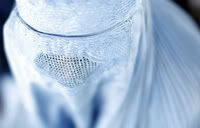
La burqa en débat

leJDD.fr: Une soixantaine de députés de tous bords ont réclamé mercredi la création d'une commission parlementaire sur le port de la burqa en France. Les élus souhaiteraient que ce vêtement porté par certaines musulmanes, et qui les couvre de la tête au pied, soit interdit dans les lieux publics. Dalil Boubakeur, recteur de la Grande mosquée de Paris, a dit son soutien, mais craint "un conflit des lois".

La burqa sera-t-elle bientôt interdite dans les lieux publics en France? Une soixantaine de députés de tous bords (trois communistes, sept socialistes, 43 UMP, deux Nouveau Centre et trois non-inscrits) le souhaitent vivement. Ils ont déposé mercredi à l'initiative de communiste André Gérin une demande de création d'une commission parlementaire sur le sujet. Composée de 30 députés, elle aurait pour mission de "définir des propositions afin de lutter contre ces méthodes qui constituent une atteinte aux libertés individuelles sur le territoire national".

"Nous sommes aujourd'hui confrontés, dans les quartiers de nos villes, au port par certaines femmes musulmanes de la burqa, voilant et enfermant intégralement le corps et la tête dans de véritables prisons ambulantes", écrit André Gérin dans sa proposition. "Il y en a de plus en plus, non seulement dans les grandes villes, mais aussi dans le monde rural. Il faut sortir d'une sorte de silence des responsables politiques de ce pays, a ajouté le député-maire de Vénissieux sur France Info. Il faut qu'on puisse ouvrir un dialogue tout à fait loyal et franc avec l'ensemble des musulmans, avec la question de la place de l'islam dans ce pays (...) par rapport à la dérive fondamentaliste et intégriste". >>> Par R.D (avec Reuters), leJDD.fr | Jeudi 18 Juin 2009
Islamist Al-Muhajiroun Relaunch Ends in Chaos Over Segregation Attempt

Photobucket
Anjem Choudary at the Al-Muhajiroun meeting. Photo: The Guardian

THE GUARDIAN: An attempt to relaunch the controversial Islamist group Al-Muhajiroun ended in chaotic scenes after the management of the London venue that was to host the group's first meeting in five years cancelled proceedings, complaining "fundamentalist thugs" had tried to enforce the segregation of men and women.

Supporters of the group, which wants sharia law in Britain and has praised the 9/11 terrorists as the "Magnificent 19", were ordered to leave Conway Hall in Holborn on Wednesday night when it emerged that Al-Muhajiroun had placed bouncers on the doors and were not letting women into the main hall.

Speakers who had been invited to share a platform with Anjem Choudary, the group's leader, accused Al-Muhajiroun of inviting them under false pretences.

Douglas Murray, director of the Centre for Social Cohesion, said the platform of the planned debate was "completely unacceptable". "I'm perfectly willing to debate Anjem Choudary and Al-Muhajiroun's ideas," he said. "His ideas are not difficult.

They do not stand up. But it's very clear that this debate is not neutral. This was a segregated event, policed by Al-Muhajiroun's guards."

He said he had been invited to the event by a student society, Global Issues Society, but the Islamist group had hijacked proceedings.

Giles Enders, chairman of the South Place Ethical Society which runs the hall, took to the stage and explained that the terms and conditions of Conway Hall do not stipulate segregation. He then declared the meeting cancelled. >>> Robert Booth | Thursday, June 18, 2009
Iran: Green Revolution

Revolution in Iran?


A Lesson from History for Iranian Ideologues Stuck in the Middle Ages

TIMES ONLINE: Beware the end of the decade in Iran. In 1979 it was the Shah who succumbed to the protests and was driven from power. In 1989 it was Ayatollah Khomeini, the father of the Islamic revolution, who died after a long illness. In 2009 his successor is fighting to save the regime from its gravest challenge since Saddam Hussein’s tanks crossed the frontier in 1980.

Ayatollah Ali Khamenei, Iran’s Supreme Leader, spent years in the Shah’s prisons, had his right arm paralysed by a bomb and has led Iran through many crises over the past two decades. But tomorrow, when he mounts the steps to the small stage at Tehran University to deliver the sermon at weekly prayers, he faces the toughest test of his almost 70 years.

If it was the “Great Satan”, as America is known, or even the “Little Satan”, as Britain is named, who were behind the challenge, then the regime would know how to protect itself. The Revolutionary Guards would be deployed along the borders, the Basij, a volunteer force, would patrol the streets. Instead, the challenge comes from within and from people that the Supreme Leader barely has contact with, using unfamiliar weapons — tweets, blogs, satellite television and text messages — that undermine him in ways he cannot imagine.

Two thirds of Iranians are under 30, meaning that they have no direct experience of the Revolution and [a] only passing knowledge of the Iran-Iraq war, which did more than anything to shape the modern country. What they have experienced is a life of missed opportunities caused by an aging clerical leadership, massive corruption and a regime that is increasingly dictatorial.

The mullahs once rigidly controlled access to information but their grasp has slipped. One third of Iranians have internet access. There are satellite dishes on every apartment block in Tehran, even though they are banned. Music channels beam in from California to show young Iranians how other young Iranians live half a world away.

The rulers may be living in the Middle Ages but their children and grandchildren are wired to the 21st century. >>> Richard Beeston, Foreign Editor | Thursday, June 18, 2009
Iran in Tumult: Tehran Energized and Enraged, Unsure and Hopeful

TIMES ONLINE: The Iranian opposition dashed the regime’s hopes that its protests would gradually fade away by staging another huge demonstration against electoral fraud yesterday and calling for an even bigger show of strength today as unrest spread across the country.

The demonstrators’ defiance of bans, violent repression and official pleas for unity is driving the regime towards increasingly extreme measures to enforce President Ahmadinejad’s hotly disputed re-election last Friday. Security forces have arrested dozens of prominent opposition figures in the past two days, detained hundreds of students in raids on universities and threatened legal action against “deviant” websites and bloggers who provoked unrest.

“Everyone is so energised and pumped up but no one knows how it will end,” one Tehran resident said. “The city is burning with equal doses of energy and rage and thugs who look like they’ve been unleashed from the city jail roam the streets wielding sticks and batons. We cannot decide whether to rejoice or despair.”

In an attempt to sway public opinion, the regime is blaming the protests on Western intelligence agencies. Last night it accused the United States — the “Great Satan” — of “intolerable” interference in Iranian affairs. The senior prosecutor in the province of Isfahan threatened demonstrators with execution, claiming that they were controlled by foreigners. Iranian Opposition Vows to Keep Pressure on Regime with Shows of Strength >>> Martin Fletcher and Ella Flaye in Tehran | Thursday, June 18, 2009
Reformist Leaders Arrested as Protesters Continue to Defy Marching Ban

THE TELEGRAPH: Iran's regime arrested leading reformist politicians yesterday as thousands defied an official ban by staging another march against the outcome of last week's presidential election.

Ayatollah Ali Khamenei, the Supreme Leader, appeared on state television to urge "unity" and calm. But another demonstration against President Mahmoud Ahmadinejad's re-election filled central Tehran on the fifth day of protests, with a river of people stretching through the city to Vali Asr Square.

Earlier, the security forces carried out a series of arrests, detaining Mohammed Atrianfar, a leading reformist politician and a close ally of Ali Akbar Hashemi Rafsanjani, a former president who remains one the regime's most powerful figures. Saeed Laylaz, an economist who gives frequent interviews to Western journalists and had predicted bloodshed in the wake of the election, was also arrested.

Reformists fear the regime is trying to weaken protests by silencing their leading voices and Mr Atrianfar's arrest signals that people with powerful connections are not immune. The intelligence ministry said 26 alleged "masterminds" of the post-election unrest had been detained yesterday alone.

Members of the pro-regime Basij militia have also conducted overnight raids on university dormitories, with several students reported to have been killed.

But Mir-Hossein Mousavi, the opposition's leading candidate in last week's election, urged his supporters to gather again today (THURS) and mourn those who have been killed. He asked for a "peaceful rally" against the "shameful fraud" of last week's election.

This openly defies Ayatollah Khamenei, who wields ultimate power in Iran. On Sunday, the Supreme Leader met Mr Mousavi and urged him to refrain from calling any more protests while the Council of Guardians, a committee of hardline clerics, investigated his claims of vote rigging.

But in a blunt letter to the Supreme National Security Council, released on his website, Mr Mousavi also accused pro-regime militias of "savage acts and killing of people who only want to get their rights".

They had attacked peaceful demonstrators with "batons, chains, iron bars or sometimes firearms," said Mr Mousavi, adding that "plainclothes forces" had been responsible for "this evil phenomenon". >>> By David Blair, Diplomatic Editor | Wednesday, June 17, 2009
President Obama Sets Out Biggest Overhaul of Wall Street in Decades

THE TELEGRAPH: President Barack Obama has set out the biggest overhaul of the regulation of Wall Street in more than 50 years in an effort to prevent a repeat of the financial crisis.

Photobucket
President Barack Obama delivers remarks on the new comprehensive regulatory reform plan, Wednesday, June 17, 2009, in the East Room of the White House. Photo: The Telegraph

The central elements of the plan unveiled on Wednesday are:

• An extra layer of regulation for the biggest financial firms in America
• A new agency to scrutinise financial products sold to consumers
• Bringing hedge and private equity funds under federal scrutiny

At the White House, President Obama said that the financial crisis had been a "failure of the entire system." The President went on that "an absence of oversight engendered systematic, and systemic, abuse.”

The proposals, which have been put together by the Treasury, are likely to trigger a political fight in Congress. The financial crisis and the subsequent recession helped propel Obama into the White House and he has said that a 'sweeping overhaul' of the system is one of his top priorities. >>> By Telegraph staff | Wednesday, June 17, 2009

Wednesday, June 17, 2009

Iran Elections: Mousavi Supporters Protest

THE TELEGRAPH: Iran's opposition held another rally and stepped up its challenge to the Islamic regime, as the authorities intensified a crackdown on the media to try to contain the biggest crisis since the 1979 revolution.

Photobucket
Supporters of Iranian Presidential candidate Mir Hossein Mousavi stage a protest against the election results in Iran near the Iranian embassy in Ankara. Photo: The Telegraph

Tens of thousands of supporters of the defeated Iranian presidential candidate Mir Hossein Mousavi took part in what was billed as a "silent" protest rally, marching through central Tehran, witnesses said.

Wearing green wrist- and headbands in the colour of Mousavi's campaign, the demonstrators carried placards accusing re-elected President Mahmoud Ahmadinejad of having "stolen" their votes in Friday's poll.

Iranian state television broadcast footage of the rally. >>> By The Telegraph’s Foreign Staff | Wednesday, June 17, 2009

TIMES ONLINE: More Than 100,000 Join Defiant Silent Protest in Tehran

Photobucket
This picture, posted on Twitter, claims to show the crowd in Krimkhan St today. Photo: TimesOnline

At least 100,000 demonstrators marched silently through the streets of Tehran tonight in a direct challenge to the authority of Iran's clerical regime.

Witnesses said that the protesters, both young and old and many accompanied by children, marched through central Tehran Haft-e Tir square towards Vali Asr square in the heart of the city.

The rally was called by the defeated presidential candidate Mir Hossein Mousavi to protest against the "shameful fraud" that saw Mahmoud Ahmadinejad re-elected by a landslide in last Friday's election.

Mr Mousavi's appeal to supporters, issued via his website, flew in the face of a declaration by Ayatollah Ali Khamenei, Iran's Supreme Leader, that the former prime minister should pursue his objectives through the electoral system and not on the streets. >>> Ella Flaye in Tehran and Philippe Naughton | Wednesday, June 17, 2009
New Dark Age Alert! Shameful! Racist Attacks Against Romanians in Northern Ireland

THE TELEGRAPH: More than 100 Romanians sought shelter in a church hall after fleeing their homes in Belfast because of racist attacks.

Romanians flee homes

Around 20 families were helped by police to evacuate their homes in the Lisburn Road area of south Belfast and seek safety on Tuesday night.

Police and community leaders condemned racism in the area which culminated in an attack on a rally in support of the east European migrants on Monday night.

Youths hurled bottles and made Nazi salutes at those taking part in the anti-racism rally.

The men, women and children, including a five-day-old baby girl, first sought shelter in a house where they thought they would be safe.

But there were so many trying to cram in a local church offered them the use of the church hall.

Pastor Malcolm Morgan claimed the church had been happy to help, saying: "It is a sad indictment of our society, but hopefully we can show them a different side to Northern Ireland and a caring side to Northern Ireland."

Pastor Morgan later said he believed a "small group of racist thugs" were behind the attacks. Romanians Fleeing Racism Seek Sanctuary in Belfast Church Hall >>> | Wednesday, June 17, 2009
Comment les journalistes peuvent travailler en Iran

Depuis mardi, les autorités iraniennes ont interdit aux journalistes travaillant pour des médias étrangers de sortir dehors pour couvrir les manifestations. Georges Malbrunot, envoyé spécial du Figaro à Téhéran explique de quels autres moyens les journalistes disposent pour continuer à suivre les événements

Le BLOG d’envoyé spécial du Figaro, Georges Malbrunot >>>
Iran: Mousavi Spoke to Al Jazeera Before the Contested Election