Sunday, January 16, 2011
THE OBSERVER – EDITORIAL: Presidents-for-life offering bogus protection against phantom terrorists are not reliable friends
The fall from power of Tunisian president Zine al-Abidine ben Ali is one of those widely unpredicted turns of events that hindsight quickly labels inevitable.
Corrupt authoritarian regimes are generally brittle and Mr Ben Ali's was no exception. But few anticipated how quickly a spate of angry demonstrations could become a regime-changing rebellion. Other governments across the region, with populations hardly less repressed than Tunisia's, will look on in fear.
Mr Ben Ali was considered by western diplomats to be a relatively reliable fixture. Under his 23-year rule, the country had the status of a minor player in North Africa – avoiding involvement in wider Middle East disputes and carving out an economic niche as a Mediterranean holiday destination.
Meanwhile, the president, his wife and their extended family built a lucrative commercial empire. Political dissent has been crushed and media stifled. In a dispatch sent in July 2009 – one of the secret cables published earlier this year by WikiLeaks – the US ambassador to Tunis described rising frustration among ordinary Tunisians as a result of "First Family corruption, high unemployment and regional inequities". He also noted that major change would "have to wait for Ben Ali's departure".
Tunisians clearly shared that view. >>> Editor | Sunday, January 16, 2011

LE POINT: La star du Front national succède à son père à la tête du parti. 2012 à l'esprit, elle doit déjà apaiser les tensions au sein du FN.

Triomphante, le sourire aux lèvres, Marine Le Pen monte sur la tribune sous un tonnerre d'applaudissements. À 42 ans, la fille cadette de Jean-Marie Le Pen a été officiellement proclamée présidente du Front national dimanche matin. C'est son père et prédécesseur qui a annoncé les résultats du vote interne devant les 2.000 adhérents frontistes réunis en congrès à Tours ce week-end. Marine Le Pen a recueilli 67,65 % des suffrages contre son rival Bruno Gollnisch (32,35 %). La participation au vote - qui s'est fait par correspondance - a été forte, puisque 76,45 % des 22.403 adhérents à jour de leur cotisation se sont exprimés. >>> D’envoyée special du Point à Tours, Ségolène Gros de Larquier | Dimanche 16 Janvier 2011
Lien en anglais en relation avec l’article >>>

THE SUNDAY TELEGRAPH: As Tunisia's President Ben Ali is granted leave to remain in Saudi Arabia, the lavish lifestyle enjoyed by the president and his family is coming into the spotlight.
Their preferred title was "Tunisia's First Family". To the people they ruled over, though, president Zine el-Abidine Ben Ali and his clan were known as "The Mafia" - a ruling clique whose greed and nepotism ultimately caused their downfall.
Following in the footsteps of Ugandan dictator Idi Amin and numerous other deposed dictators, Mr Ben Ali was granted refuge in Saudi Arabia on Saturday, starting what will likely be a comfortable, if less than dignified, political retirement.
But as millions of Tunisians celebrated the end of his 23-year-long authoritarian rule, it was not just the 74-year-old president they were glad to see the back of.
Far more reviled, it seems, was his second wife Laila, a feisty brunette more than 20 years his junior, who was dubbed "The Regent of Carthage" for her power behind the throne.
A former hairdresser from a humble background, she stands accused of using her marriage to Mr Ben Ali to turn her family, the Trabelsis, into the desert nation's most powerful business clique.
As of Saturday night, the former first couple were keeping a low profile. Mr Ben Ali was reported to have flown into the Saudi Arabian port city of Jeddah, where Idi Amin spent his final years.
Meanwhile rumours circulated that his wife, who is thought to have fled the country separately and beforehand, had headed for Dubai - a destination with which she is said to be well acquainted through shopping trips. >>> Colin Freeman | Sunday, January 16, 2011
FOREIGN POLICY: Greed Is Global: A world of corruption revealed by WikiLeaks. – TUNISIA >>> Elizabeth Dickinson, Joshua E. Keating | Saturday, December 18, 2011
THE GUARDIAN: WikiLeaks cables: Tunisia blocks site reporting 'hatred' of first lady: US embassy warns Tunisian anger over corruption and unemployment, as well as 'intense dislike' for president's wife, threaten country's stability >>> Ian Black, Middle East editor | Tuesday, December 07, 2011
BBC: France's far right National Front has chosen Marine Le Pen as its new leader, replacing her father Jean-Marie Le Pen, party officials say.
The results will be officially announced on Sunday, but party sources said she had secured about two-thirds of members' votes.
Mr Le Pen is stepping down after leading the ultra-nationalist party, which he founded, for almost 40 years.
In 2002 he came a shock second in the first round of presidential elections.
Mr Le Pen lost the second round to incumbent Jacques Chirac.
A count of votes cast ahead of the annual FN congress in the central city of Tours showed Ms Le Pen, 42, who had the backing of her father, had easily beaten her rival, Bruno Gollnisch. >>> | Sunday, January 15, 2011
Saturday, January 15, 2011
TRIBUNE DE GENÈVE: Des milliers de manifestants, dont 8.000 à Paris, ont défilé samedi après-midi dans les grandes villes françaises à Paris pour célébrer la chute du président tunisien Zine El Abdine Ben Ali et réclamer l’avènement de la démocratie.
A Paris, 8.000 manifestants selon la police, essentiellement des Tunisiens, des Franco-Tunisiens ainsi que des représentants des partis de gauche français, se sont rassemblés place de la République dans le centre de Paris.
Un groupe de jeunes gens portaient des cercueils recouverts de drapeaux tunisiens avec des pancartes "Merci à nos martyrs, nous ne vous oublierons jamais".
"On a fait la révolution, rien ne doit plus être pareil, on ne va pas se laisser voler la victoire du peuple", a témoigné Hedi, un étudiant de 17 ans. >>> AFP | Samedi 15 Janvier 2011

LE FIGARO: Certains spécialistes estiment que la «Révolution du jasmin» pourrait créer un effet d'entraînement dans les régimes autoritaires de la région. Mais des disparités locales demeurent.
Faut-il y voir un signe ? Les journaux du monde arabophone étaient nombreux, ce samedi, à saluer le départ du président tunisien Ben Ali sous la pression de la rue. «La révolte populaire des Tunisiens est à présent le nouveau phare du monde arabe», estimait le quotidien algérien El-Watan, tandis que le libanais An-Nahar prévoyait des répercussions « dans plus d'un pays de la région». Vendredi soir, des dizaines d'Egyptiens se sont joints au Caire à un groupe de Tunisiens pour célébrer le départ de Ben Ali, scandant «Ecoutez les Tunisiens, c'est votre tour les Egyptiens !»
Samedi, hormis quelques pays comme l'Egypte ou le Qatar, la plupart des gouvernements arabes restaient prudents ou silencieux samedi après la chute du président tunisien. >>> Par lefigaro.fr | Samedi 15 Janvier 2011
THE DAILY TELEGRAPH: Armed gangs loyal to Tunisia's ousted president began random shooting sprees on the streets, raising fears that the country's pro-democracy uprising could erupt into a violent power struggle.
As thousands of British holidaymakers fled the North African nation, its cities echoed to the sound of gunfire and looters continued to go on the rampage, despite a heavy security presence.
In the capital, Tunis, gunmen in plain clothes drove around spraying the streets with bullets, in an apparent effort to intimidate protesters off the streets.
At least two people were believed to have been killed, with eyewitnesses reporting bodies left lying in a city centre square. Senior Tunisian military sources said the gunmen belonged to factions still loyal to the country's strongman leader, President Zine al-Abidine Ben Ali, who fled to Saudi Arabia on Friday night.
"It is certain the presidential police are behind all this," added Taoufik Ayachi, a Tunisian analyst. "They still hope to regain power."
In a symbolic celebration of the end of Mr Ben Ali's rule, cheering crowds tore a portrait of the former president outside the headquarters of his ruling party on Mohamed V Avenue in the centre of Tunis.
"We are very happy to be free after 23 years of prison," said Fahmi Bouraoui, who was drinking coffee in the Mozart cafe, one of a few businesses that re-opened on Saturday morning.
But others feared that such optimism could be short-lived as large parts of the country descended in to chaos. >>> Colin Freeman and Robert Mendick | Saturday, January 15, 2011
THE SUNDAY TIMES: Army awakes to calm frenzied Tunisia: As rioters smash and pillage every symbol of the exiled president’s 'ancien regime', the military is reasserting itself >>> James Bone in Carthage | Sunday, January 16, 2011 (£)
THE DAILY TELEGRAPH – EXTRACT: The shooting of Gabrielle Giffords shows why it is time to rethink America's gun laws, says Harold Evans.
…
A law-abiding American citizen is far more likely to die with a bullet in his body than a British citizen. All the comparable Western countries with reasonable gun laws have long had vastly fewer gun homicides. The murder rate per 100,000 people for the US is 5.2. For Australia it is 0.07, for Japan, 0.05, and for the UK 0.06.
… Gabrielle Giffords shooting: Why it is time to change gun laws >>> Harold Evans | Saturday, January 15, 2011
THE INDEPENDENT: Rioters burned the Tunisian capital's main train station to the ground and sacked and looted shops in a wave of unrest after the North African nation's president was forced from power by protesters.
The departure of President Zine El Abidine Ben Ali after 23 years of iron-fisted rule — demanded by protesters — appeared not to be enough to quell the unrest over soaring unemployment and corruption that has swept Tunisia for nearly a month.
An Associated Press photographer saw soldiers intervening this morning to try to stop looters from sacking a huge supermarket in the Ariana area, 20 miles north of the capital.
A helicopter circled low over the capital, apparently acting as a spotter for fires or pillaging. Gunfire was heard crackling anew in the mid-morning. >>> Elaine Ganley and Ben Bouazza, Associated Press | Saturday, January 15, 2011
THE INDEPENDENT: Is it a real revolution in Tunisia or will another member of the ruling elite succeed in replacing President Zine el-Abidine Ben Ali who took flight yesterday?
It is a crucial question for the rest of the Arab world where other corrupt police states face the same political, social and economic problems as Tunisia.
A striking feature of the whole Middle East for more than 30 years has been the unpopularity of the regimes combined with their depressing ability to stay in power. Most have found ways of preventing revolutions or military coup d'etats through ferocious security services protecting rickety state machines that mainly function as a source of jobs and patronage.
In Tunisia, Mr Ben Ali, along with other Arab leaders, presented himself as an opponent of Muslim fundamentalism and therefore won tolerance if not plaudits in Western capitals.
But the revolution that is brewing across the Middle East is of a traditional model springing from high unemployment, particularly among better educated young men, and a ruling class unable to resolve any of their countries' economic problems. The most obvious parallel with Tunisia is Egypt where the sclerotic regime of President Hosni Mubarak clings to power. Read on and comment >>> Patrick Cockburn | Saturday, January 15, 2011
THE WALL STREET JOURNAL: Middle East governments watched uneasily as events in Tunisia snowballed to a stunning climax Friday, while millions of their citizens followed on satellite television and the Internet the sudden departure of Tunisia's long-time leader amid growing street protests.
Tunisia's strong-man president, President Zine al-Abidine Ben Ali, fled the North African country yesterday after a month of popular protests gained strong momentum in recent days. His departure was broadcast to the region across a collection of media outlets, such as al Jazeera, that hardly existed a decade ago, as well as on the Internet and social networks such as Twitter and Facebook.
Scores of Arab Facebook users have changed their profile pictures to the Tunisian flag and sent congratulatory messages to the Tunisian people. One message asked, "can we Egyptians dare to dream of freedom next?"
Immediate official reaction was limited around the region. Qatar, a small Gulf emirate that has tried to exercise a voice in the region despite its tiny population, released a statement saying: "Qatar respects the will and wishes of the Tunisian people."
Response from other regional players was muted. Some of these countries, especially Egypt, Syria and Iran, share similar festering social and economic problems similar to those in Tunisia: high youth unemployment, lack of affordable housing and political freedom.
Last week in Algeria crowds of young people rioted over rising food prices and concerns about jobs. On Tuesday, the Jordanian government attempted to pre-empt possible public outcry by cutting fuel taxes and imposing food price controls. And on Wednesday, Egypt's trade minister was quoted in local press as saying he ruled out a "Tunisia Scenario" in his country.
On Thursday, the Arab League held a hastily called special session on the developments in Tunisia during their regular meeting in Qatar, reflecting concern about the instability there, according to an Arab official.
Mr. Ben Ali arrived early Saturday in Saudi Arabia, after what appeared to be a scramble to find a country to host him. >>> Margaret Coker, Summer Said and Jay Solomon | Friday, January 14, 2011
AL JAZEERA ENGLISH: Thousands vent anger in Amman and other cities against government's inability to rein in prices and poverty.
Thousands of Jordanians have taken to the streets of the capital Amman and other cities to protest against rising commodity prices, unemployment and poverty.
The protesters are calling on the government headed by Samir Rifai, the prime minister, to step down.
Demonstrators, including trade unionists and leftist party members, carried national flags and chanted anti-government slogans in downtown Amman.
They called Rifai a "coward" and demanded his resignation.
"Prices, particularly gasoline and food, are getting out of hand,'' Buthaina Iftial, a 24-year-old civil servant, said.
"We're becoming poorer every day,'' she said, holding a poster with a piece of Arabic flatbread attached.
Police and plainclothes officers formed rings around the demonstrators to contain the protests. There were no reports of arrests or violence. >>> Source: Agencies | Friday, January 14, 2011
LIBÉRATION.fr: Le président tunisien en fuite Zine El Abidine Ben Ali est en Arabie Saoudite avec sa famille, a confirmé un communiqué du palais royal cité par l’agence officielle saoudienne SPA.
«Le gouvernement saoudien a accueilli le président Zine El Abidine Ben Ali et sa famille dans le royaume» et ce «en considération pour les circonstances exceptionnelles que traverse le peuple tunisien», indique le communiqué.
Son arrivée à Jeddah, une ville saoudienne sur la mer Rouge, avait été annoncée peu auparavant à l’AFP par une source saoudienne.
Zine El Abidine Ben Ali, au pouvoir depuis 23 ans, a quitté vendredi la Tunisie après des manifestations populaires sans précédent contre son régime qui ont été réprimées dans le sang.
Ryad exprime «son soutien à toute mesure bénéfique au peuple tunisien frère» et apporte «sa solidarité totale avec ce peuple et espère la cohésion de tous ses enfants pour surmonter cette conjoncture difficile», selon le texte.
Plusieurs rumeurs avaient précédemment fait état de l’atterrissage de l’avion transportant le président en fuite à Malte, puis en Italie.
L’identité des membres de sa famille qui se trouvent avec lui en Arabie saoudite n’a pas été précisée.
Selon des informations non confirmées, son épouse Leila Ben Ali serait arrivée avant lui à Dubaï où elle avait déjà séjourné fin décembre. >>> Source AFP | Samedi 15 Janvier 2011
BBC: Tunisia: Ex-President Ben Ali flees to Saudi Arabia – Tunisian President Zine al-Abidine Ben Ali has fled with his family to Saudi Arabia, after being forced from office after 23 years in power. >>> | Friday, January 14, 2011
THE DAILY TELEGRAPH: Tunisia riots: more protests threatened as President Ben Ali flees to Saudi Arabia – Protesters behind the mass uprising in Tunisia threatened more demonstrations today, as officials confirmed that ousted President Zine al-Abidine Ben Ali had fled to Saudi Arabia. >>> Colin Freeman | Saturday, January 15, 2011
THE TIMES: Tanks take to the streets of Tunis to quell riots, arson and looting >>> James Bone in Tunis | Saturday, January 15, 2011 (£)
So where's the Jahiliyyah* now, then, O fundamentalist ones? – © Mark
* Jahiliyyah is the term used by Muslims to describe a state of pre-Islamic chaos.
LE POINT: Le chef d'État tunisien, qui a quitté son pays vendredi en fin d'après-midi, a atterri à Djeddah, en Arabie saoudite, dans la nuit de vendredi à samedi.

Le président Ben Ali, en fuite, a finalement atterri à Djeddah en Arabie saoudite. Cette annonce fait suite à un énorme imbroglio autour de la destination de Zine el-Abidine Ben Ali. Peu de temps auparavant, on annonçait qu'un avion, supposé être celui du président tunisien, faisait escale à Cagliari en Sardaigne pour faire le plein de kérosène. Mais, coup de théâtre, selon des sources gouvernementales italiennes, Ben Ali n'était pas à bord. >>> Le Point.fr | Vendredi 14 Janvier 2011
 SUEDDEUTSCHE: Betonhart und unerschütterlich erschien die Herrschaft des 74-jährigen Ben Ali bis vor wenigen Tagen. Doch das tunesische Volk hatte die Nase von ihm und seinem Regime voll.
Spötter nannten Tunesiens langjährigen Präsidenten "den Ceausescu der Sanddünen", denn so betonhart und unerschütterlich wie einst die Diktatur des Rumänen erschien die Herrschaft des 74-jährigen Zine el-Abidine Ben Ali noch bis vor wenigen Tagen. Bei seinem Amtsantritt vor 23 Jahren hatte Ben Ali einst "Demokratie" versprochen. Doch nach einer kurzen Periode der Öffnung baute der vormalige Geheimdienstchef sein Land rasch zum perfekten Polizeistaat aus. "Ich weiß alles, bin über alles auf dem Laufenden", lautet ein oft zitiertes Wort des Informatik-Fanatikers.
Dass sein Volk die Nase von seinem Regime voll hatte - das aber wollte er lange nicht wahrhaben. Nach Massenprotesten und Dutzenden von Toten war der Druck nun so groß geworden, dass Ben Ali reagieren musste: Am Freitag entließ er seine Regierung und kündigte Neuwahlen an. Er selbst wollte da eigentlich noch bis zum Ende seiner letzten Amtszeit, bis 2014, die Geschicke des Landes lenken. Am Abend aber teilte das Staatsfernsehen in Tunis mit, Ben Ali sei zurückgetreten und habe das Land verlassen. >>> Von Rudolph Chimelli | Freitag, 14. Januar 2011
 MAIL ONLINE: Former President Ronald Reagan would have been 100 years old on February 6, and in celebration of the centennial, his youngest son Ron has released a new book about his father.
Titled Ron Reagan - My Father at 100, Ron suggests in the new tome that his father suffered from Alzheimer's disease while in the White House.
'Had the diagnosis been made in, say, 1987, would he have stepped down?', Ron asks in the book released next Tuesday. 'I believe he would have'.
In excerpts of the memoir released by U.S. News, Ron says he saw hints of confusion and 'an out-of-touch president' during the 1984 campaign and again in 1986 where he claimed his father could not remember the names of the familiar California canyons he was flying over.
Mr Reagan was formally diagnosed with Alzheimer's disease in August 1994 at the age of 83.
But while some people suggested they knew Reagan had the disease while in office, his four White House doctors said they saw no evidence of it.
52-year-old Ron writes in the memoir that doctors have more of an understanding of the disease now than back when his father was diagnosed and appreciate that the signs of the disease can be in evidence before it is acutally recognised.
'The question, then, of whether my father suffered from the beginning stages of Alzheimer's while in office more or less answers itself', Ron writes. >>> Daily Mail Reporter | Friday, January 14, 2011
THE DAILY TELEGRAPH: France's National Front is set to widen its support base if Marine Le Pen is chosen to succeed her father as the far-Right party's new leader this weekend, posing a growing threat to President Nicolas Sarkozy.

The 42-year old mother of three is the runaway favourite to succeed her 82-year-old father Jean-Marie Le Pen, who founded the National Front (FN) in 1972 and will remain its honorary president.
On Friday, vote counting took place from a mail ballot among the FN's 24,000 members and the official result is due to be announced on Sunday at a party congress in Tours.
The firebrand Mr Le Pen was in no doubt of the outcome. "I have been unable to enact the programme that I believe salutatory for France, (but) the second stage of the Le Pen rocket is Marine," he told Le Parisien.
His daughter is up against Bruno Gollnisch, 60, a white-haired, bookish euro MP who represents the party old guard, and whose supporters include ex-colonialists, anti-Semites and pagan white supremacists.
One FN party member told the Libération newspaper that a Gollnisch victory would "set the party back 30 years". "It would be the Soviet Union under Brezhnev," he said. >>> Henry Samuel, Paris | Friday, January 14, 2011
THE DAILY TELEGRAPH: Voters must stop seeking to “take revenge” on banks and accept they are vital to the economic recovery, David Cameron has said.

Signalling he is prepared to defy public opinion, the Prime Minister indicated he will reject demands for punitive action on bankers bonuses and admitted his approach could be unpopular.
Taxpayers are “rightly angry” about bankers getting huge bonuses, Mr Cameron said.
But he insisted he will not court short-term popularity by trying to “hammer” the financial sector.
Instead, he said, the Coalition will try to strike a balance between heeding calls to impose tough rules on the banks and allowing them to get on with lending to British businesses.
“It’s about getting the balance right. It’s not going to be easy and it won’t satisfy everybody,” Mr Cameron said.
"But we’ve got to try to work for that balance rather than just think, let’s take revenge on people because they’ve made us mad as hell."
City investment banks are beginning their bonus season, informing staff about their payments for 2010, with total bonuses expected to be £7 billion.
It emerged yesterday that JP Morgan, a US bank, will pay £1.87 billion in salary and bonuses to its London staff. They will enjoy an average payout of £234,180.
Other large payments will be announced in the coming weeks, including bonuses at state-owned RBS. >>> James Kirkup, Political Correspondent | Friday, January 14, 2011
THE SUNDAY TIMES: Golden goodbye for bank bosses: Outgoing chief executives at HSBC, Lloyds and Barclays will pocket millions from highly lucrative advisory contracts >>> Iain Dey | Sunday, January 16, 2011 (£)
THE DAILY TELEGRAPH: The niece of Diana, Princess of Wales, has been charged with assault in South Africa after a row over a place in the queue to a drive-through McDonald's burger bar.

Lady Amelia Spencer, the daughter of Earl Spencer, the Princess’s brother, is due to appear in court in Cape Town next month over the incident in which a taxi passenger was allegedly knocked unconscious.
The 18-year-old is also understood to be pressing charges after herself allegedly being injured in the dispute which also involved a male friend.
Lady Amelia, who grew up in South Africa with her three siblings from the Earl’s first marriage, is said to have been angered after a taxi cut in in front of her as she waited in the queue at the drive-through in Cape Town on December 22.
She allegedly jumped out of her Mini Cooper car and banged the bodywork of taxi before getting involved in an angry verbal altercation with Ricci Cinti, one of the passengers.
A male friend who was sitting in the passenger seat of Lady Amelia’s car is said to have stepped out and joined in as the row turned into a stand-off on the road.
Mr Cinti, who was on crutches from a sports injury, is understood to have tripped, landed on the ground, hitting his head and briefly being knocked out. >>> John Bingham and Aislinn Laing | Friday, January 14, 2011
Aristocracy isn’t what it used to be: There was a time when ladies were real ladies, and gentlemen, real gentlemen. Today, ladies with titles have forgotten how to be ladies in reality. No longer, it seems. How sad! – © Mark
Friday, January 14, 2011
BBC HARDtalk: Martha Reeves was one of Motown's biggest stars. With the Vandellas, she enjoyed huge success with songs like Dancing in the Street and Jimmy Mack.
While the glory years for Motown and the city of Detroit ended long ago, Martha Reeves still tours the world.
From 2005 to 2009, she also entered politics and served as a councilwoman in Detroit. Martha Reeves tells Stephen Sackur why she feels she did not fit with politicians who, she says, "have to be dishonest". Watch BBC video >>> | Friday, January 14, 2011
BBC NEWS AFRICA: Zine al-Abidine Ben Ali came to power in 1987 through a constitutional coup and he appears to have been removed from power through a constitutional coup.
The key here on both occasions was not the constitution but the army.
In 1987 the army moved to secure stability as an increasingly senile and paranoid President Bourguiba threatened to bring the country to a political and economic crisis.
Today it has moved to restore that same stability by removing a president whose person and family have become synonymous with corruption, growing wealth disparities, and political repression.
The question now is whether the interim leadership council will be used to move the country towards a democratic future through meaningful political reforms, free and fair elections, a liberalised media and a new inclusive approach to rule, or whether this is a stalling tactic by the army and the regime elite to quell protests and then restore their grip on power. >>> Prof Emma Murphy*, Durham University | Friday, January 14, 2011
*Emma Murphy is a professor at the School of Government and International Affairs at Durham University and an expert on Tunisian affairs.
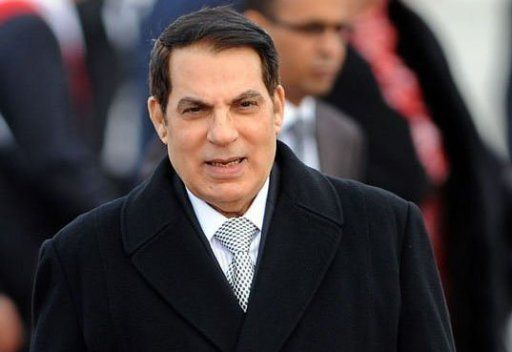
lePARISIEN.fr: La Tunisie a connu vendredi une journée historique. Après un mois d'émeutes, le président Ben Ali a quitté le pouvoir et fui le pays. Mohammed Gannouchi, l'ancien Premier ministre, assurera la présidence par intérim jusqu'à des élections anticipées.
Revivez minute par minute le récit de cette journée. >>> leparisien.fr avec l’envoyé spécial du Parisien à Tunis, Pascal Lemal | Vendredi 14 Janvier 2011
THE NEW YORK TIMES: BAGHDAD — The reported departure of Tunisian President Zine el-Abidine Ben Ali, after popular protests in his North African country, electrified an Arab world whose residents have increasingly complained of governments that seem incapable of meeting their citizens’ demands and bereft of ideology save a motivation to perpetuate themselves in power.
“We hope that what happened in Tunisia could happen in other Arab countries where leaders and kings have rusted on their thrones,” said Abeer Madi al-Halabi, a newscaster on New TV, a Lebanese station that supports leftist causes.
Since their beginning, the protests have been closely followed by Arabic-language networks, as well as social networking sites, like Facebook and Twitter. Hours after Mr. Ben Ali’s departure, messages were posted to Facebook celebrating the fall of one of the Arab world’s heaviest handed dictatorships. >>> Anthony Shadid | Friday, January 14, 2011

AL JAZEERA ENGLISH: President Zine El Abidine Ben Ali leaves country following violent clashes in the capital, Tunis.
Tunisia's long-standing president has left the country amid violent protests and the prime minister has taken over control of the government from him.
"Since the president [Zine El Abidine Ben Ali] is temporarily unable to exercise his duties, it has been decided that the prime minister will exercise temporarily the [presidential] duties," Mohammed Ghannouchi, the Tunisian prime minister, said on state television.
Ghannouchi is now the interim president.
Maltese air traffic controllers have told Al Jazeera that Ben Ali is bound for Paris.
During the televised address, prime minister Ghannouchi vowed to respect the constitution and restore stability, and called on citizens to "maintain patriotic spirit ... in order to brave through these difficult moments".
He also vowed to carry out inflation and unemployment redressal policies "exactly" as they had recently been announced by President Ben Ali. >>> Source: Agencies | Friday, January 14, 2011

LE FIGARO: Le président tunisien serait en route pour la France, selon Al-Jazira, mais l'Elysée dit n'avoir «aucune information» à ce sujet. Le premier ministre assure l'intérim pendant une période indéterminée.
L'annonce de nouvelles élections législatives n'aura pas suffi à calmer les manifestants. Face aux troubles persistants, le président tunisien Zine El Abidine Ben Ali a quitté la Tunisie vendredi après-midi. Selon la chaîne de télévision Al-Jazira, il serait en route vers Paris, mais l'Elysée a affirmé vendredi n'avoir «pas d'information» à ce sujet.
Le premier ministre Mohammed Ghannouchi a annoncé dans la soirée à la télévision qu'il assurait l'intérim de la présidence car Ben Ali «n'est temporairement pas en mesure d'exercer ses responsabilités». Mohammed Ghannouchi a lancé à cette occasion un appel à l'unité des Tunisiens, toutes sensibilités confondues, et promis qu'il respecterait la Constitution. >>> Par lefigaro.fr | Vendredi 14 Janvier 2011
LE MONDE: "Des scènes inimaginables il y a quelques jours en Tunisie" >>> LeMonde pour Le Monde.fr | Vendredi 14 Janvier 2011
LE POINT: Le chef de l'État a quitté son pays, vendredi, au terme d'un mois d'émeutes sanglantes. Le Premier ministre assure l'intérim.

La rue a été plus forte. Le président tunisien Ben Ali a quitté le pays, vendredi. Le Premier ministre Mohamed Ghannouchi a annoncé à la télévision qu'il assurait l'intérim de la présidence jusqu'à la tenue d'élections anticipées.
"Conformément à l'article 56 de la Constitution, j'assume à partir de cet instant la charge de président par intérim", a annoncé Mohamed Ghannouchi, 69 ans. Le nouveau président, filmé dans le palais présidentiel de Carthage, a lu sa déclaration debout, entouré par le président de la Chambre des députés, Fouad Mebazaa, et par celui de la Chambre des conseillers (Sénat), Abdallah Kallel. "Je m'engage à respecter la Constitution et à mettre en oeuvre toutes les réformes sociales et politiques qui ont été annoncées en collaboration avec les partis politiques et les composantes de la société civile", a-t-il déclaré.
Selon des sources proches de la présidence, le scrutin anticipé devrait être ouvert au multipartisme, une première depuis l'indépendance du pays, en 1956. >>> Le Point.fr | Vendredi 14 Janvier 2011
Watch Financial Times video Tunisia riots show a build-up of grievances >>>
Tunisia’s Ben Ali flees the country >>> Heba Saleh in Tunis | Thursday, January 13, 2011
THE GUARDIAN: Bloody street clashes in Tunis trigger fears of a domino effect that could shake other authoritarian states

Echoes of Tunisia's unprecedented mass unrest are reverberating across the Arab world – which is watching in fascination as one of the most repressive regimes in the regions makes far-reaching concessions to people power.
Protests over rising food and fuel prices triggered emergency economic measures from Jordan to Libya and Morocco this week as dramatic scenes of street clashes in the small north African country fuelled official nervousness about a domino effect that could shake other authoritarian states short on jobs, hopes and freedoms.
"Every Arab leader is watching Tunisia in fear," tweeted one Egyptian commentator. "Every Arab citizen is watching Tunisia in hope and solidarity."
The impact of Tunisia's unrest is all the greater because Zine al-Abidine Ben Ali – known to his long-suffering subjects as "Ben A Vie" ("president for life") – had been seen as one of the most effective of Arab autocrats. His announcement on Wednesday that he will not stand for another term is a huge boost for reform, whatever happens next.
The obvious contrast is with Egypt, the most populous of Arab countries. Hosni Mubarak, 82, who like Ben Ali keeps Islamists firmly out of power and tolerates only weak secular opposition, is seeking another presidential term next year- when he will mark three decades in power.
If Ben Ali, 74, is on his way out, that will be a democratic advance and a ringing wake-up call for a region where a trend towards republican dynasties – in Syria, Libya and Egypt – sits alongside the hereditary monarchies and emirates of the Gulf and Morocco. >>> Ian Black, Middle East editor | Friday, January 14, 2011
Related here, here, here, here, and here
SUEDDEUTSCHE: Nach tagelangen blutigen Unruhen hat der autoritäre tunesische Präsident Ben Ali sein Amt aufgegeben und das Land verlassen. Zuvor hatte er die Regierung aufgelöst und den Ausnahmezustand ausgerufen. Das Militär hat den Flughafen der Hauptstadt Tunis abgeriegelt.

Tunesiens Präsident Zine el-Abidine Ben Ali hat nach tagelangen gewaltsamen Protesten gegen ihn das Land verlassen. Dies berichtete der Sender Al-Dschasira am Freitag. Ministerpräsident Mohamed Ghannouchi erklärte, er habe vorübergehend das Amt übernommen.
Er werde die Verfassung respektieren und die Stabilität im Land wiederherstellen. Der Präsident sei derzeit nicht in der Lage, sein Amt auszuüben. Zudem plane er vorgezogene Parlamentswahlen innerhalb der kommenden sechs Monate, hieß es in dem Bericht der amtlichen Nachrichtenagentur TAP weiter. Er äußerte sich jedoch nicht, ob er selbst zurücktreten werde.
Ben Ali hatte am Freitagnachmittag die Regierung aufgelöst, Neuwahlen innerhalb von sechs Monaten angekündigt und den Ausnahmezustand ausgerufen. Anschließend hatte die Armee die Kontrolle über den Flughafen der Hauptstadt übernommen und ihn abgeriegelt. >>> AFP/dpa/dapd/Reuters/liv/segi | Freitag, 14. Januar 2011
THE DAILY TELEGRAPH: Tunisia's president Zine al-Abidine Ben Ali forced out after days of rioting. as troops surround airport.
Prime Minister Mohammed Ghannouchi has gone on state television to say he is assuming power in Tunisia.
The country's airspace was shut down as weeks of unrest escalated.
"I can confirm that the army is at the airport. Armoured vehicles are surrounding the airport," an official source said when asked about rumours that members of President Zine El Abidine Ben Ali's circle were about to flee the country. "The airspace is closed too."
Thomas Cook had begun to evacuate 1,800 tourists from Tunisia on Friday as the unrest that has killed at least 23 people spread.
Tunisian authorities released opposition leader Hamma Hammami of the banned Tunisian Workers' Communist Party, three days after arresting him, the party said in Paris.
Earlier, the Tunisian government declared a national state of emergency, banning public gatherings and authorising security forces to fire on anyone refusing to obey orders. >>> \ Friday, January 14, 2011
DIE PRESSE: Präsident Ben Ali beugt sich dem Druck der Massen und kündigt die Auflösung der Regierung an. Außerdem verhängt er den Ausnahmezustand über das ganze Land.
Unter dem Eindruck der entfesselten Volkswut hat der tunesische Langzeit-Machthaber Zine el Abidine Ben Ali am Freitag seine Regierung entlassen und vorgezogene Parlamentswahlen angesetzt. Außerdem hat das autoritäre Regime den Ausnahmezustand verhängt. Dieser gelte für das ganze Land. >>> Ag. | Freitag, 14. Januar 2011
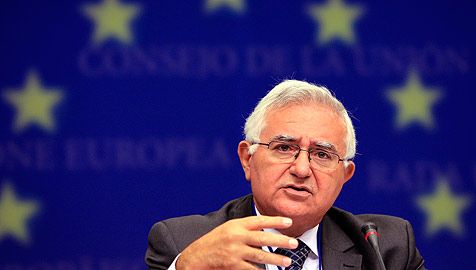
KRONEN ZEITUNG: EU-Kommissar John Dalli hat sich bei der Kirche für die Fehler bei der Erstellung des EU-Schülerkalenders entschuldigt. Die EU-Kommission hat fünf Millionen Euro für Kalender ausgegeben, in denen weder Weihnachten noch irgendein anderer christlicher Feiertag verzeichnet ist (siehe Infobox). Die Feiertage anderer großer Religionen sind in dem Kalender hingegen aufgeführt. >>> | Donnerstag, 13. Januar 2011
THE DAILY TELEGRAPH: As Brisbane's flood deadly dangers held a world class city its its grip, one man succumbed to an unfortunate ending.
Officials last night revealed that an unnamed 24-year-old man was swept into a storm drain while inspecting his father's flooded property in Durack, just south of the city, during the inundation.
The man's body was found by police after being washed through the drain and surfacing on the other side. He has not yet been named.
His death prompted Anna Bligh, the state's premier, to reissue warnings about entering the murky floodwater.
"Right now we don't want to see any more loss of life and we don't want to see any injuries," she said.
"I do understand how keen everybody is to get back into their houses, to go out and have a look at what's happened to their neighbourhoods but these are still rapidly moving, swirling, dangerous waters." >>> Bonnie Malkin, Brisbane | Thursday, January 13, 2011
Related >>>

PARIS MATCH: En réaction au mouvement de protestation inapaisable et sans précédent depuis qu'il est au pouvoir, le président tunisien Ben Ali a fait de nouvelles annonces, concernant des baisses de prix et les droits de l'Homme. Il a aussi promis qu'il ne se représenterait pas en 2014. Jour historique ou simple manipulation du pouvoir? Sur place, les réactions de Tunisiens se contredisent.
«Je vous ai compris», a rabâché Zine el Abidine Ben Ali tout au long de son discours. «Je comprends les Tunisiens, je comprends leurs demandes. Je suis triste de ce qui se passe aujourd'hui, après 50 années au service de ce pays, mon service militaire, tous les différents postes, 23 années de présidence», a déclaré le président tunisien, qui s'exprimait pour la troisième fois depuis le début des émeutes il y a près d’un mois. Quatre jours seulement après avoir pris la parole à la télévision nationale, annonçant tout une série de mesures pour résorber le taux de chômage –cause initiale de la colère du peuple-, notamment la création de 300 000 emplois avant la fin 2012, celui qui dirige le pays d’une main de fer depuis 1987 a réitéré, faute d’accalmie. Cette fois-ci, le président fondateur du Rassemblement constitutionnel démocratique (RCD) est allé beaucoup plus loin, annonçant qu'il ne briguerait pas un sixième mandat en 2014. «J'ai dit en 1987 qu'il n'y aurait pas de présidences à vie. Je le répète à présent: pas de présidences à vie, a-t-il lancé. Je refuse de toucher à la Constitution, je ne changerai pas l'âge inscrit dans la Constitution», à savoir 75 ans alors qu’il en a 74.
En outre, pour réagir aux protestations concernant la cherté de la vie, l’homme fort du pays a promis une baisse des prix sur les produits de première nécessité tels que le sucre, le lait et le pain. Autre mesure importante: après la mort de dizaines de manifestants abattus par la police, qui tire à balles réelles pour disperser la foule, Ben Ali a ordonné aux forces de l’ordre de cesser l’usage d’armes à feu contre les manifestants. S’exprimant en arabe tunisien plutôt qu’en arabe littéraire, ce qui est symbolique car contraire à ses habitudes, il a assuré qu’il n’avait pas été informé de la gravité de la situation, selon Afrik.com. En réponse enfin à l’énorme besoin de liberté qui s’est finalement exprimé dans les rues tunisiennes –alors que tout est partie de l’immolation par le feu d’un jeune diplômé désespéré par le marché de l’emploi- le chef d’Etat s’est engagé à faire respecter la liberté de la presse. Il a promis de rouvrir les sites qui avaient été fermés, et de laisser leur liberté d’expression aux opposants. >>> Marie Desnos, Parismatch.com | Vendredi 14. Janvier 2011
Liens en relation avec l’article >>>
SPIEGEL ONLINE INTERNATIONAL: 'Tunisia Has Become North Africa's Belarus': An unexpected conciliatory speech by Tunisia's president has brought attention to lethal and long-simmering street protests in the repressive North African state. German commentators argue for caution, but say the protesters need to be heard. >>> Michael Scott Moore | Friday, January 14, 2011

THE INDEPENDENT: The Liberal Democrats are making a final attempt to persuade David Cameron to rein in bankers' bonuses amid growing public anger over the imminent payout estimated at £7bn.
Liberal Democrat MPs believe that Mr Cameron, rather than the Chancellor, George Osborne, has emerged as the main obstacle to tough action against the bankers. They are furious that Downing Street signalled a climbdown this week while talks continued with the big banks on a new settlement covering bonuses and lending to small businesses and first-time buyers.
"You don't wave the white flag in the middle of tough negotiations," Baron Oakeshott of Seagrove Bay, a Liberal Democrat Treasury spokesman, told The Independent yesterday. "This is the moment of truth on fairness for our Coalition. We can't allow a bonus bonanza in the age of austerity." >>> Andrew Grice, Political Editor | Friday, January 14, 2011
THE DAILY TELEGRAPH: Thomas Cook, the British tour operator, is evacuating about 1,800 tourists from Tunisia, as unrest spreads across the country.
The company said it had not seen any specific problems for travelers in Tunisia but was asking everyone to leave as a precaution. The evacuation, which was coupled with the cancellation of flights from Britain to Tunisia, was likely to hit the North African nation's tourism industry, a mainstay of its economy, hard. >>> | Friday, January 14, 2011
THE DAILY TELEGRAPH: Tunisia riots: Tunisia, 'the enemy of the internet' – The sunny, modern, welcoming country of Tunisia looks an unlikely bedfellow of North Korea, Burma and Turkmenistan. All, however, feature on Reporters without Borders' list of 12 "enemies of the internet" for their attempts to censor 21st century communication. >>> Richard Spencer | Friday, January 14, 2011
THE GUARDIAN: Thousands of Tunisians take to the streets despite president's vow to quit: Lawyers, doctors and students urge Zine El Abidine Ben Ali to go immediately after leader pledges not to seek re-election in 2014 >>> Angelique Chrisafis in Tunis and Peter Walker | Friday, January 14, 2011
THE GUARDIAN: US embassy warns Tunisian anger over corruption and unemployment, as well as 'intense dislike' for president's wife, threaten country's stability

Tunisia has blocked the website of a Lebanese newspaper that published US cables released by WikiLeaks describing high-level corruption, a sclerotic regime, and deep hatred of President Zine el Abidine Ben Ali's wife and her family.
Deeply unflattering reports from the US embassy in Tunis, released by WikiLeaks, make no bones about the state of the small Maghreb country, widely considered one of the most repressive in a repressive region.
"The problem is clear," wrote ambassador Robert Godec in July 2009, in a secret dispatch released by Beirut's al-Akhbar newspaper. "Tunisia has been ruled by the same president for 22 years. He has no successor. And, while President Ben Ali deserves credit for continuing many of the progressive policies of President Bourguiba, he and his regime have lost touch with the Tunisian people. They tolerate no advice or criticism, whether domestic or international. Increasingly, they rely on the police for control and focus on preserving power.
"Corruption in the inner circle is growing. Even average Tunisians are now keenly aware of it, and the chorus of complaints is rising. Tunisians intensely dislike, even hate, first lady Leila Trabelsi and her family. In private, regime opponents mock her; even those close to the government express dismay at her reported behaviour. Meanwhile, anger is growing at Tunisia's high unemployment and regional inequities. As a consequence, the risks to the regime's long-term stability are increasing." >>> Ian Black, Middle East editor | Tuesday, December 07, 2010
THE GUARDIAN: We've become used to gossiping about the regime and feeling that we're plotting. But now we see the time to rebel has come
I am part of the new generation that has lived in Tunisia under the absolute rule of President Ben Ali.
In high school and college, we are always afraid to talk politics: "There are reporters everywhere," we are told. Nobody dares discussing politics in public; everyone is suspicious. Your neighbour, your friend, your grocer might be Ben Ali's informer: do you or your father want to be forcibly taken to an undefined place one night at 4am?
We grow up with this fear of activism; we continue studying, going out and partying, regardless of politics.
During high school, we begin to find out the intricacies of the "royal" family and hear stories here and there – about a relative of Leila [Trabelsi, the president's wife] who took control of an industry, who has appropriated the land of another person, who dealt with the Italian mafia. We talk and discuss it among ourselves – everybody is aware of what's going on, but there is no action. We quickly learn that Tunisian television is the worst television that exists. Everything is relayed to the glory of President Ben Ali, who's always shown at his best. We all know he dyes his hair black. Nobody likes his wife, who has a wooden smile: she never seemed sincere. >>> Sam | Thursday, January 13, 2011
Related >>>
 AMAZON.fr: La régente de Carthage [Broché] >>>
NAWAAT.org: “La régente de Carthage” : les extraits du livre événement sur Leila Trabelsi épouse Ben Ali >>>
CITY DZ MAGAZINE: La Régente de Carthage: Le livre qui fait trembler Tunis – La Régente de Carthage, une enquête explosive des journalistes Nicolas Beau et Catherine Graciet sur le rôle que jouent en Tunisie Leïla Trabelsi, l’épouse du président Zine El Abidine Ben Ali, et sa famille, vient de sortir aux éditions La Découverte. Un « clan » accusé de contrôler, sur fond de corruption, des secteurs clés de l’économie. >>>
BAKCHICH.info: Tunisie, Hamma Hammami enlevé par les flics de Ben Ali : En Tunisie, le ministre de l’Intérieur a été démissionné et l’armée appelée en renfort. Un des rares opposants historiques, Hamma Hammami, a été enlevé mercredi matin à son domicile. >>> Nicolas Beau | Mercredi 12 Janvier 2011
WIKIPÉDIA: Hamma Hammami >>>
Subscribe to:
Posts (Atom)