Friday, June 04, 2010
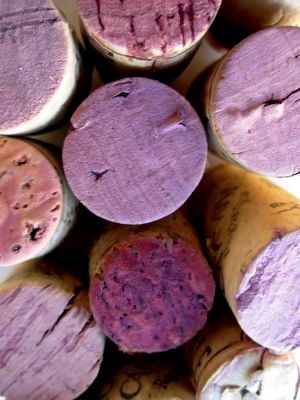
THE TELEGRAPH: French defenders of natural wine corks have launched a multi-million pound offensive to counter the rise of the screw cap and plastic stopper, which they argue kill the mystique of bottle-opening.
Debate has been raging for years over whether the familiar sound of popping corks should be ditched in favour of alternatives that reduce the risk of a "corked" wine.
Cork stoppers have been used for centuries, but their dominance has gradually dropped from 95 per cent of the world wine bottle market to 70 per cent over the past 15 years.
But France's cork federation has hit back at those who say the spongy bark has had its day with a poll suggesting that almost nine out of ten French people prefer the traditional stopper.
They are using the figure to spearhead a massive poster campaign featuring wine and champagne bottles with bizarre alternative stoppers - from a perfume spray top to a plastic duck – with the slogan: "Always imitated, never equalled".
Eight out of ten French people, the Ipsos poll suggests, also equate real cork with quality wine, well-preserved aromas and long conservation. Almost all said cork perpetuated age-old savoir-faire. >>> Henry Samuel in Paris | Thursday, June 03, 2010
THE SHREWD ECONOMIST: Put a cork in it! >>>
WATCH SHORT BBC VIDEO: Cork harvest >>> | Friday, September 05, 2008
LISTEN TO BBC AUDIO: Cork industry under threat: Cork has been described as 'the ultimate green product', but the industry is under threat. >>> Paul Henry | Friday, September 05, 2010

Thursday, June 03, 2010
TIMES ONLINE: Is Turkey a Western outpost in the east or a Muslim country with European aspirations? Unloved in most of the EU, Ankara has been performing an awkward tightrope act in its neighbourhood, preaching Western values to Muslim countries while nurturing close ties with Israel.
Monday’s raid on the Gaza peace flotilla has exposed the flaws in that strategy. As parliament called on the Government yesterday to review military co-operation with Israel, Turkey was drifting where some commentators argue it has always belonged — towards the Middle East.
After cancelling war games and recalling its ambassador, Ankara has become one of Israel’s loudest critics overnight. With the domestic media pumping out ceaseless images of the raid and wounded Turks returning home, security had to be stepped up at Israeli diplomatic missions and across Istanbul to protect the Jewish community from public anger. >>> Analysis: Alexander Christie-Miller | Thursday, June 03, 2010

THE GUARDIAN: New Zealand's prime minister John Key has revealed he's had the snip - and left his audience in embarrassed silence
As a nation, we can let out a well-repressed sigh of relief. There is a country even more prudish about things "down below" than us. John Key, New Zealand's prime minister, has reportedly "silenced a room full of press" by informing them that he'd had – brace yourselves – a vasectomy.
Proceedings ground to a clanging halt as the press mentally processed this horrifying image of the leader of a powerful nation (well, New Zealand) willingly submitting to "the snip".
"Boy, that's slowed things down. Any other questions?" asked the PM, eager to get back to the subject of the press conference: funding for early childhood education centres (he had been asked if his views would change if he were to have another child). But clearly that wasn't going to work – after a pause, the next question was, inevitably: "Did it hurt?" "Not overly," was the measured response. >>> Jon Robins | Tuesday, June 01, 2010
Related: Nick It, Snip It, Cut It >>>
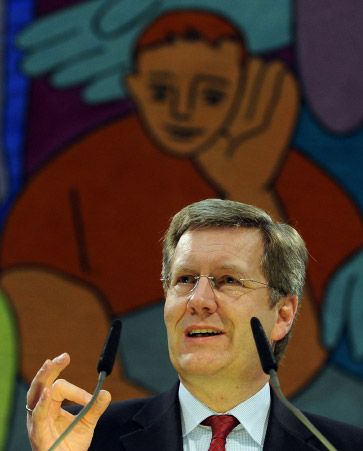
FRANKFURTER ALLGEMEINE ZEITUNG: Christian Wulff ist wie geschaffen für das Amt des Landesvaters: Er scheut Kontroversen, fängt Stimmungen auf und gibt sie wieder. Gegenüber der Kanzlerin ist er zwar loyal - vertraut oder gar herzlich sind seine Beziehungen zu ihr aber nicht.
Christian Wulff schätzt sanfte Töne. Der Kandidat für das Amt des Bundespräsidenten scheint wie geschaffen für das Amt des Landesvaters, auch wenn er das anders sehen mag: Er scheut Kontroversen, fängt Stimmungen auf und gibt sie wieder. Auch in einer großen Versammlung beobachtet er Reaktionen und Anwesende und vermag über viele Stuhlreihen hinweg gezielt Botschaften zu vermitteln. >>> Von Robert von Lucius | Donnerstag, 03. Juni 2010
Verbundener Artikel hier
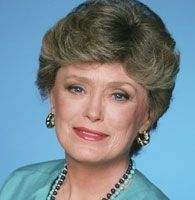
YAHOO! TV: Rue McClanahan, who was best known for her role in 'The Golden Girls', has died at the age of 76.
The actress played man-eater Blanche Deveraux in the hugely popular US sitcom for seven years between 1985 and 1992.
Before finding worldwide fame in the series, McClanahan had acted on Broadway and later co-starred with future 'Golden Girl' Bea Arthur in the US series 'Maude'.
Her manager told People magazine that she passed away earlier today with her family by her side following a massive stroke.
Her death comes just over a year after that of her former co-star Bea Arthur, who played Dorothy in the series. Estelle Getty, who played Dorothy's mother Sophia, died in 2008.
Rue McClanahan's death leaves 88-year-old Betty White the only surviving star of the series.
Leave your tributes to the actress... here >>> Paul Johnston | Thursday, June 03, 2010
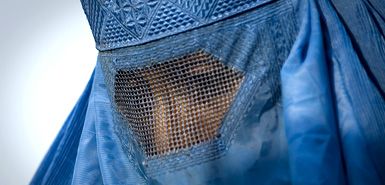
THE TELEGRAPH: A woman has been fined for driving while wearing a burka because the garment "reduced her field of vision".
Police stopped the Muslim woman during routine drink-drive checks on motorists in Louvroil, northern France.
The Islamic driver had not been drinking but instead officers issued her with a £17 fine for breaking road safety rules.
Two months ago, a separate woman was pulled over in Nantes, western France, for driving in a full face veil and also fined.
The latest incident comes as French MPs prepare to vote on whether to impose a full ban on wearing burkas and niqabs later this year.
Moves to ban the burka in France come after a year of heated national debate and mounting public tensions over the issue.
Last month, France's reported its first known case of 'burka rage', when a female lawyer ripped off a Muslim woman's veil in a bust-up in a clothes shop.
And last year a Muslim woman took her local council to court after she was banned from wearing a 'burqini' swimsuit at her local pool for 'hygiene reasons'. >>> | Thursday, June 03, 2010
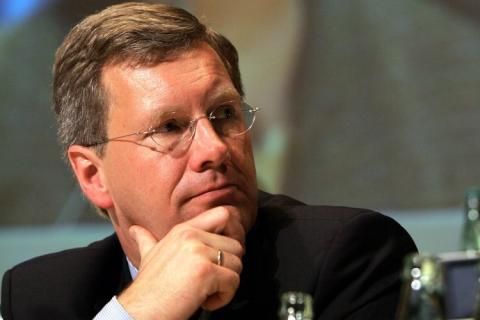
WELT ONLINE: Entscheidung in der Köhler-Nachfolge: Merkel, Seehofer und Westerwelle haben sich auf Niedersachsens Ministerpräsident Wulff (CDU) geeinigt.
Niedersachsens Ministerpräsident Christian Wulff (CDU) soll neuer Bundespräsident werden. Drei Tage nach dem Überraschungs-Rücktritt von Horst Köhler einigten sich Kanzlerin Angela Merkel (CDU), CSU-Chef Horst Seehofer und der FDP-Vorsitzende Guido Westerwelle auf den 50-jährigen Regierungschef, wie aus Koalitionskreisen bekannt wurde.
Am Abend wird Merkel den Unions-Ministerpräsidenten die Personalie abschließend präsentieren.
Bis Mittwoch galt zunächst Bundesarbeitsministerin Ursula von der Leyen (CDU) als Favoritin für das höchste Staatsamt. Gegen sie habe es Widerstände in der Union geben, hieß es. Zudem sei es ein Problem gewesen, sie in ihrem Schlüsselressort zu ersetzen. >>> | Donnerstag, 03. Juni 2010
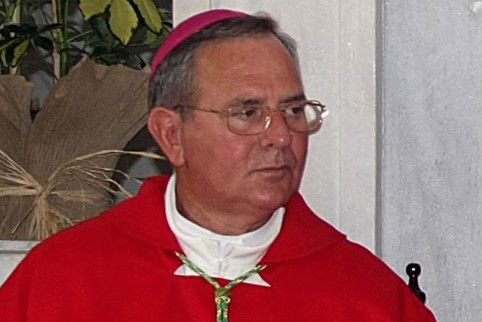
WELT ONLINE: Sein eigener Chauffeur soll den Vorsitzenden der türkischen Bischofs-konferenz erstochen haben. Als Grund werden "psychische Störungen" vermutet.
Der katholische Bischof Luigi Padovese, apostolischer Vikar für Anatolien und Vorsitzender der türkischen Bischofskkonferenz, ist am Donnerstag in seiner Sommerresidenz im südtürkischen Iskenderun ermordet worden. Die Polizei geht davon aus, dass sein Fahrer Murat Altun ihn nach einer Auseinandersetung erstach. Padovese starb auf dem Weg ins Krankenhaus.
Der Tatverdächtige wurde nach kurzer Flucht gefasst und verhaftet. Die Tatwaffe war nach Auskunft der Behörden noch bei ihm. Die Polizei geht nicht von einem politischen oder religiösen Hintergrund für die Tat aus, sondern vermutet „psychische Störungen“ des Täters als Grund für den Mord. >>> Von Boris Kalnóky | Donnerstag, 03. Juni 2010
LE FIGARO: Monseigneur Luigi Padovese, vicaire apostolique d'Anatolie, a été tué par son chauffeur. Ce meurtre n'aurait pas de mobile politique.
Le Vatican s'est dit «consterné et horrifié». Son vicaire apostolique d'Anatolie et président de la conférence épiscopale turque a été mortellement poignardé jeudi dans le jardin de sa maison d'été de Karaagac, dans la banlieue d'Iskenderun au sud de la Turquie. Retrouvé gisant dans une marre de sang, Monseigneur Luigi Padovese, 63 ans, est mort lors de son transfert à l'hôpital.
L'agresseur du prêtre italien a été rapidement interpellé. Selon le gouverneur de la région, il s'agit du chauffeur de Luigi Padovese. Murat A., qui était en possession de l'arme du crime, travaillait pour le religieux depuis 4 ans et demi. Selon les premiers éléments de l'enquête, le meurtre n'aurait pas de mobile politique. Murat A. souffrait de troubles psychiatriques. «Cela relève à priori d'une affaire privée», affirme le gouverneur. Des précédentes attaques contre des religieux >>> Par lefigaro.fr | Jeudi 03 Juin 2010
Wednesday, June 02, 2010
No one should hold his breath that anything will be done about this most vexing of questions in the near future. It takes balls to tackle the problem of immigration; and balls are what most politicians these days sorely lack. – © Mark
THE TELEGRAPH: With Labour at last accepting that immigration is an issue, the Coalition needs to move fast, says Benedict Brogan
It is still just about possible to go through life without spotting how Britain is being changed by immigration – if you are a hermit, or live on one of the more remote of the Hebridean islands, or are insulated from the realities of everyday life by money or power.
If you are a politician, of course, you can choose not to see. Gordon Brown presided, both as chancellor and prime minister, over a record influx of migrants, but was indifferent to the consequences. Isolated in a world bounded by Downing Street, his official Jaguar and his ethnically homogenous Scottish village above the Forth, his was never the experience of most citizens, in particular those in the capital.
When Gillian Duffy tried to raise the issue with him during the campaign, his instinctive response was to dismiss her as a bigot. No matter that six months before, he had found it politically expedient to identify himself with such concerns. "I have never agreed with the lazy elitism that dismisses immigration as an issue, or portrays anyone who has concerns about immigration as a racist," he assured us, before doing just that to Mrs Duffy. "Immigration is … a question about what it means to be British."
In fact, immigration ranks as one of Labour's greatest, most durable failures. Worse than that, it was a wilful failure – as secret documents revealed earlier this year, Labour opened the floodgate for social as well as economic reasons, in an attempt to change the culture of the country and "rub the Right's nose in diversity".
The consequences, in terms of social tensions and pressures on local services, can be seen almost everywhere. During the election campaign, immigration was consistently the most important issue for voters, after the economy. Yet Mr Brown was oblivious to it. He was the dealer who got us hooked on cheap foreign labour, and its artificial highs of unsustainable growth and low inflation. Ministers learned not to ask awkward questions. With no reliable statistics on who was coming in, who was here, and who was going out, "I don't know" become [sic] a legitimate excuse.
Tony Blair set the orthodoxy by proclaiming that we were not a "high-immigration country", and his followers duly repeated it. David Blunkett, who could normally be relied on to speak plainly on behalf of those who knew things were changing but could not say why, pronounced that there was "no obvious upper limit" on immigration.
And until the economic crisis hit, he was right. The numbers say it all. Net immigration jumped in a decade from about 41,000 a year to 233,000 in 2007. It fell to 163,000 in 2008, but only because more people left the country. The number of people entering Britain that year actually rose, from 574,000 to 590,000. Even now, they keep on coming, drawn to a country that offers more opportunities (and even greater welfare support) than just about anywhere else. >>> Benedict Brogan | Wednesday, June 02, 2010
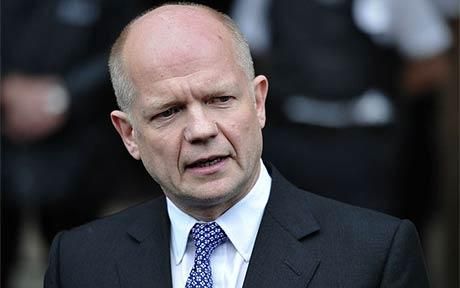
THE TELEGRAPH: William Hague, the Foreign Secretary, has launched an outspoken attack on the Israeli authorities over their arrests of British detainees from the flotilla.
As the detainees were deported from a prison camp via Ben Gurion airport in Tel Aviv, Mr Hague said he was "seriously concerned" at the seizure of British nationals in international waters.
He added that nine had still not been seen by consular staff, and complained of the difficulty in gaining access to the other 28.
"We are urgently pressing the Israeli government to resolve this situation within hours," Mr Hague said. "There is real, understandable and justified anger at the events which have unfolded.
"In some cases consular staff have been having to go to the prison at Beersheva, hammer on doors and ask people if they are British. It has been a chaotic situation, it is completely unsatisfactory."
Earlier in the day the prime minister, David Cameron, used question-time in the House of Commons to call the Israeli attack on the flotilla "completely unacceptable".
Together the attacks on Israel and its government amount to a new low in the rapidly deteriorating relationship between Britain and Israel.
While the Foreign Office has often notoriously been criticised for pro-Arab leanings, the Israelis have always been assured of an understanding ear in Downing Street, particularly under the governments of Margaret Thatcher and Tony Blair. That may now have changed. >>> Richard Spencer and Murray Wardrop | Wednesday, June 02, 2010
THE GUARDIAN: Divided over its commitment to the eurozone, riven by the resignation of its president, Germany is a nation set against itself

Talleyrand once said that the problem with Russia is that it is always both too weak and too strong at the same time. After the upheavals in the eurozone over the Greek bailout and now the resignation of the country's president over military policy, is the same now true of Germany?
Germany's position as primus inter pares in both the eurozone and the European Union always underscores her economic and political strength. The bailout for the Greeks boiled down to whether the Germans, inevitably, were prepared to take on the lion's share of the loans. In the end, in last month's fractious Bundestag vote, they did so. But German taxpayers, who (the British often forget) have spent most of the last 20 years bearing the cost of the economic rescue of East Germany, are fed up of spending so much of their money on bailouts for others.
Last month's Land election in North Rhine-Westphalia proved there is no political reward to be harvested from good deeds for others. The crisis has left Angela Merkel weakened and with few good options. As a result Germany has one large party, the CDU, which vacillates about doing the right thing and is punished, and another, more diminished party, the SPD, which would once have been ready to do the right thing but is now more interested in profiting from voter anger – as its ringing abstention in the Bundestag over Greece proved. A similar uncertainty runs through the saga of President Horst Köhler's resignation this week. >>> Martin Kettle | Wednesday, June 02, 2010
THE GUARDIAN: Germany is increasingly resentful of being seen as the cashpoint for its cash-strapped southern neighbours

At a recent summit of European leaders in Brussels, Angela Merkel was feeling tetchy.
As the 27 government chiefs wrestled with compulsory jobs targets for the decade ahead, the German chancellor balked when asked to stick to the same employment rate as everyone else.
"Not all the member states will reach that target," she answered, according to a note of the summit made available to the Guardian. "If some don't go so far, does this mean Germany has to [go further]?" No one asked Berlin to do more than its partners. But Merkel suspected otherwise. The discussion turned to climate change targets. Again Merkel complained. Germany, she signalled, was getting a raw deal in Europe, a sentiment reinforced by senior people in her entourage such as Uwe Corsepius, her influential European adviser.
The prickliness is symptomatic of the change in how Berlin sees the EU. For 50 years, Europe has been Germany's passport to peace, prosperity and power. When Germany pursued its national interests, it did so effectively, benignly and called it "Europa". Those days are over. The German elite feels maligned and misunderstood. In public, and much more frankly in private, senior figures talk of robustly asserting the German national interest.
"It may be new for Europe that Germany is representing its interests with new vigour," said Thomas de Maizière, the interior minister and a Merkel confidant. "But for Britain, France or Italy, this was always a matter of course."
"The mood among the Germans is quite defensive. They feel people are ganging up on them," said an EU ambassador.
A senior official in Brussels who deals regularly with Merkel added: "The love affair [with Europe] is over. When I meet German journalists, they ask 'what is the added value of Europe for Germany'."
The change – from pushing Europe forward to balking at the sacrifices Germany has to make – is a tectonic shift in the EU.
Nowhere has the new approach been more striking than in the euro crisis, where Merkel's mixture of hectoring and hesitation has shocked fellow EU leaders and generated mutual recrimination. The financial crisis exposed fundamental differences in outlook between northern and southern Europe, and conflicts of national interest between Germany and France. Egged on by both the tabloids and quality newspapers engaging in an orgy of Greece-bashing and injured outrage verging on self-pity, Berlin is slumped in surly resentment at being seen as the cashpoint for cash-strapped southern Europeans. >>> Ian Traynor in Brussels | Wednesday, June 02, 2010
Subscribe to:
Posts (Atom)