The EU should be stronger and more united. Great Britain should belong to the Union.
Die EU sollte stärker und geeinter sein. Großbritannien sollte der Union angehören.
L'UE devrait être plus forte et plus unie. La Grande-Bretagne devrait appartenir à l'Union.
Friday, June 19, 2009
House Condemns Iran's Crackdown on Protests
USA TODAY: The House has voted to condemn Tehran’s crackdown on demonstrators and the government’s interference with Internet and cellphone communications, the Associated Press reports.
The vote was 405-1, with two members voting present, The Hillreports.
Here is the text of the resolution:
The House of Representatives expresses its support for all Iranian citizens who embrace the values of freedom, human rights, civil liberties, and the rule of law; condemns the ongoing violence against demonstrators by the government of Iran and pro-government militias, as well as the ongoing government suppression of independent electronic communication through interference with the Internet and cellphones; and affirms the universality of individual rights and the importance of democratic and fair elections.
The resolution was initiated by Republicans as a veiled criticism of President Obama, the AP says. >>> Posted by Doug Stanglin | Friday, June 19, 2009
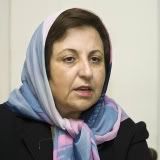
Nobelpreisträgerin Ebadi für Neuwahl in Iran: Uno-Beobachter gefordert
NZZ Online: Die iranische Friedensnobelpreisträgerin Shirin Ebadi hat für den Fall weiterer Demonstrationen in ihrer Heimat eine Wiederholung der Präsidentschaftswahl gefordert.
«Wenn die Menschen weiterhin unzufrieden sind mit dem Ausgang der Wahlen, sollten diese für null und nichtig erklärt und neu angesetzt werden», sagte die Anwältin für Menschenrechte am Freitag in Genf. Die Neuwahl sollte von Beobachtern der Uno oder anderen internationalen Organisationen überwacht werden. >>> sda/dpa | Freitag, 19. Juni 2009
Hugh Hewitt & Christopher Hitchens Discuss Iran Demonstrations
Protest at Iran's 'Evil UK' Claim
BBC: The Foreign Office is in talks with the Iranian ambassador in London after his country's supreme leader called the UK government "evil".
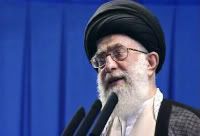
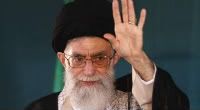
Ayatollah Ali Khamenei denounces the UK government as "evil"
Ayatollah Ali Khamenei made the comments as he appealed for an end to protests about election results.
He said Western nations were showing "their enmity against the Islamic Republic system and the most evil of them is the British government".
Ambassador Rasul Movaheddian is meeting officials at the Foreign Office now.
Officials want to register their displeasure at Ayatollah Khamenei's comments and find out why he made them.
BBC News website world affairs correspondent, Paul Reynolds, says that the summoning of the Iranian ambassador represents a shift of position by the British government which up until now had wanted to avoid getting involved in public arguments with Iran.
He added: "The line had been that it wanted to avoid giving the Iranians any reason to blame Britain for interfering. The US government has taken a similar view.
"However, Ayatollah Khamenei's description of Britain as the most 'evil' of foreign governments was a step too far."
British diplomats are thought to believe Britain is being used as "proxy" for the United States, because Iran does not want to endanger its improving relations with America.
In his first public remarks after days of demonstrations, Ayatollah Khamenei issued a stern warning that protests against the country's disputed presidential election results must end. >>> | Friday, June 19, 2009
Iran : que peut faire Obama ?
Pour Alain Barluet, journaliste au service International du Figaro, la réélection de Mahmoud Ahmadinejad est une «mauvaise nouvelle» pour Barack Obama, qui pourrait être contraint «de revoir toute sa politique iranienne».
Khamenei and the Politics of Denial
THE GUARDIAN: In his address at Friday prayers in Tehran the Supreme Leader offered no new initiatives and no path through the maze
It was billed as the speech of his life. But in many ways Ayatollah Ali Khamenei's address at Friday prayers in Tehran was disappointingly similar to speeches and sermons he has given in the past: pious, defensive, blinkered and fiercely scathing about real or imagined western "enemies" of the Islamic Republic.
Those hoping the Supreme Leader would produce a plan for a way out of the tumultuous political stand-off that has gripped Iran since last Friday's disputed presidential poll were disappointed. Khamenei offered no new initiatives, no explicit offers of compromise, no path through the maze.
Worse, he appeared to show little understanding of the depth of the crisis that he and his protege, President Mahmoud Ahmadinejad, have helped provoke with what looked to many Iranians like a pre-emptive strike last weekend to claim victory before the votes were fully counted.
It was a five-star performance in the politics of denial. And it's tempting to conclude: Khamenei just doesn't get it.
It could have been worse. Even as he told Iranians that street demonstrations and mass protests could not be allowed to continue, Khamenei conceded that genuine differences of political opinion were "natural". Even as he argued that vote-rigging was unthinkable in Iran, he admitted the country had problems with corruption that must be addressed. In a small way, these were concessions to the popular mood.
Although Khamenei appeared to threaten the reformist leader, Mir Hossein Mousavi, and other aggrieved presidential candidates with punitive action should their "illegal" protests continue, Khamenei did not make any explicit threat. Instead he said it was their responsibility to avoid possibly unpleasant outcomes.
Doubts concerning the election results must be investigated through legal channels, he said. Those who ignored this advice "will be responsible for [the] consequences of any chaos ... Arm wrestling in the street must stop. I want everyone to put an end to this."
Considering that Khamenei is the highest unifying authority in a country divided and badly wounded, his failure to offer an apology, or to commiserate with, the family and friends of the at least eight people killed by security forces and militias in the last week was striking. >>> Simon Tisdall | Friday, June 19, 2009
Khamenei Backs Iran Election Results
THE INDEPENDENT: Iran's supreme leader says there was "definitive victory" and no rigging in the disputed presidential elections that set off days of unprecedented protests.
Supreme Leader Ayatollah Ali Khamenei offered no concession to opposition supporters who are demanding the elections be cancelled and held again.
He blamed Great Britain and Iran's external enemies for the unrest, vigorously defending the ruling system in his first public comments since supporters of challenger Mir Hossein Mousavi flooded the streets.
Khamenei had already approved the June 12 election results that gave hard-line President Mahmoud Ahmadinejad a landslide victory, but he has not been able to ignore the powerful defiance of the opposition, which has called the vote rigged, of his authority.
Khamenei praised Iranians for taking part in the election and called it a "a magnificent show of responsibility of the people to determine the fate of their own country."
Khamenei was making his address as part of Friday prayers at Tehran University. Among the throngs of people crowded into the hall to see him speak was Ahmadinejad. It was not known whether Ahmadinejad's main challenger, Mir Hossein Mousavi attended as well.
Press TV, an English-language version of Iranian state television, showed television pictures of the crowded hall where Khamenei was speaking as the crowd and thousands of people assembled outside cheered. >>> By Ali Akbar Dareini and Nasser Karimi, Associated Press | Friday, June 19, 2009
Khamenei Tells Mousavi to Toe the Line over Election or Be Cast Out
TIMES ONLINE: The moderate Iranian leader who says that he was robbed of victory in last week’s presidential election faces a fateful choice today: support the regime or be cast out.
Ayatollah Ali Khamenei, Iran’s Supreme Leader, has told Mir Hossein Mousavi to stand beside him as he uses Friday prayers at Tehran University to call for national unity. An army of Basiji — Islamic volunteer militiamen — is also expected to be bussed in to support the Supreme Leader.
The demand was made at a meeting this week with representatives of all three candidates who claim that the poll was rigged, and it puts Mr Mousavi on the spot. He has become the figurehead of a popular movement that is mounting huge demonstrations daily against the “theft” of last Friday’s election by President Ahmadinejad, the ayatollah’s protégé.
Mr Mousavi, 67, is a creature of the political Establishment — a former revolutionary and prime minister who would like to liberalise Iranian politics but has never challenged the system in the way his followers are doing. It was unclear last night what he would do or even whether the protests would die away if he backed down. Yesterday tens of thousands of demonstrators packed into the Imam Khomeini Square in Tehran — named after the founder of the Islamic Republic — for another massive rally, this one to mourn protesters killed in Monday’s clashes with pro-government militias. >>> Ella Flaye in Tehran, Catherine Philp and Martin Fletcher | Friday, June 19, 2009
Qui sont les femmes qui portent la burqa en France ?
Elles seraient quelques milliers en France à porter un voile intégral, avec ou sans tissu grillagé au niveau des yeux. Crédits photo : Le Figaro
LE FIGARO: Le gouvernement n'exclut pas de légiférer sur le port de ce voile, dont les adeptes en France sont souvent jeunes et proches du mouvement salafiste qui prône un islam rigoriste.
Si certaines femmes souffrent de ce voile qui les ensevelit de la tête au pied, «la majorité a volontairement adopté cette tenue», tranche Bernard Godard, spécialiste de l'islam (1). «Beaucoup ont la nationalité française. Et l'on compte pas mal de converties dans leurs rangs», ajoute cet ancien du Bureau des cultes au ministère de l'Intérieur. «Elles deviennent salafistes comme on entre dans une secte», poursuit-il.
Les salafistes, tenant d'un islam radical, restent minoritaires en France. Ils seraient entre 30 000 et 50 000. Mais ils progressent régulièrement, dopés par leur opposition à l'Occident. Un fondamentalisme qui, comme le tabligh, attire justement des jeunes en mal d'absolu, dont des femmes. Comme dans les sectes, leurs membres passent des heures à peaufiner les règles, à revoir les sourates, mais aussi les milliers de hadiths, ces paroles rapportées du Prophète qu'ils entendent respecter à la lettre. Or ces hadiths sont aussi riches que contradictoires.
Majoritaire en France, l'islam malékite ne prescrit pas de voile intégral. Ce grand voile n'appartient ni aux obligations religieuses classiques ni aux traditions du Maghreb. Pourtant, seul le recteur de la Grande Mosquée de Paris, qui dépend de l'Algérie, s'est clairement prononcé contre ce niqab. Les autres mouvements paraissent gênés, analyse-t-on à la Direction centrale du renseignement intérieur, car ils composent avec une frange fondamentaliste en leur sein. >>> Cécilia Gabizon | Vendredi 19 Juin 2009
History Suggests the Coup Will Fail
THE INDEPENDENT: Patrick Cockburn, who reported from Iran during the 1979 revolution, reflects on the fall of the Shah and explains why the current uprising is very different
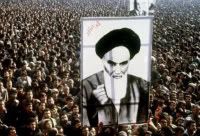
At first sight, what is happening in Tehran today looks very like the extraordinary events of the Islamic Revolution 30 years ago. But how deep do the similarities go? On 2 December 1978, two million Iranians filled the streets of central Tehran to demand an end to the rule of the Shah and the return of Ayatollah Khomeini. It was the most popular revolution in history. At night, people gathered on rooftops to chant "Allahu Akbar – God is Great". In the daytime, mass rallies commemorated as martyrs the protesters who had been killed by the security forces.
The methods of protest are very similar. This is hardly surprising because the demonstrators seeking to get rid of President Mahmoud Ahmadinejad understandably hope the type of unarmed mass protest that worked against the Shah will succeed again. Mass rally and public martyrdom are part of the Iranian revolutionary tradition, just as the barricade is part of the tradition in France. A difference between 1978-9 and today is that the Iranian government has no intention of letting history repeat itself.
Nor is it likely to do so. The Iranian revolution was carried out by a broad coalition from right to left which had religious conservatives at one end and Marxist revolutionaries at the other. The Shah and his regime had a unique ability to alienate simultaneously different parts of the Iranian population which had nothing in common. His cruel but poorly informed Savak security men convinced themselves that communists and revolutionary leftists were the danger to the throne and not the Shia clergy. They were not alone in their delusion. President Jimmy Carter recalls an August 1978 CIA memo, drafted five months before the Shah took flight, firmly concluding that Iran "is not in a revolutionary or even a pre-revolutionary situation".
Crucially, the Iranian revolution had a messianic leader in Ayatollah Khomeini who was a visible alternative to the Shah, a leader whose claims to legitimacy were compromised even before he came to the throne: his father Reza Shah, an army general who seized power in the 1920s, was deposed by British and Soviet troops in 1941. His son was forced to flee in 1953 when Mohammed Mossadeq was elected prime minister, only to be restored by a CIA-run coup for which President Barack Obama has apologised. >>> Patrick Cockburn | Friday, june 19, 2009
U.S. Fortifies Hawaii to Meet Threat From Korea
THE WALL STREET JOURNAL: WASHINGTON -- The U.S. is moving ground-to-air missile defenses to Hawaii as tensions escalate between Washington and Pyongyang over North Korea's recent moves to restart its nuclear-weapon program and resume test-firing long-range missiles.
Defense Secretary Robert Gates said on Thursday that the U.S. is concerned that Pyongyang might soon fire a missile toward Hawaii. Some senior U.S. officials expect a North Korean test by midsummer, even though most don't believe the missile would be capable of crossing the Pacific and reaching Hawaii.
Mr. Gates told reporters that the U.S. is positioning a sophisticated floating radar array in the ocean around Hawaii to track an incoming missile. The U.S. is also deploying missile-defense weapons to Hawaii that would theoretically be capable of shooting down a North Korean missile, should such an order be given, he said.
"We do have some concerns if they were to launch a missile...in the direction of Hawaii," Mr. Gates said. "We are in a good position, should it become necessary, to protect American territory." >>> By Yochi J. Dreazen | Friday, June 19, 2009
Blackout: The Great MPs' Expenses Cover-up
THE TELEGRAPH: MPs face universal condemnation over “disgraceful” censorship of their expenses claims.
MPs expenses: What data published by the Telegraph shows.
Party leaders struggled to explain the decision to publish heavily blacked-out versions of MPs’ claims as public anger mounted.
Despite a pledge from Gordon Brown that “transparency” was the only way to restore public faith in democracy, the files released by the Commons authorities withheld details that would have exposed the worst abuses of the expenses system.
The parliamentary expenses files do not expose MPs who have “flipped” their designated second homes and many of the most controversial claims have been completely blacked out in the documents.
Details that would have allowed the public to identify interest claimed on so-called “phantom mortgages” — such as in the case of Elliot Morley, the former environment minister — or MPs who were able to avoid paying capital gains tax on the sale of properties — such as Kitty Ussher, the Treasury minister forced to resign — were also excluded.
Controversial claims by Tory MPs for the cleaning of a moat and the purchase of a floating duck island were also omitted. >>> By Robert Winnett and James Kirkup | Thursday, June 18, 2009
MAIL Online: As the Nation Fumes at Expenses 'Blackwash' Scandal MPs Are Rewarded with £10,000 Pay Rise
Shameless MPs are set to provoke fresh public anger by pocketing a staggering £10,000-a-year pay rise.
The salary hike comes as MPs faced a backlash today over their blatant attempt to cover up expenses scams.
After weeks of public fury at leaked details, Commons officials unlocked their files yesterday - with crucial details covered in thick black ink.
It meant MPs who 'flipped' homes to claim on different properties - or charged for services such as moat-cleaning - were spared further embarrassment.
Despite growing fury among voters, it has now been revealed that they are to be rewarded for their greed with a £10,000 pay rise.
The head of the body that will now set their pay said they were underpaid by '10 to 15 per cent'.
The astonishing rise - up to five times the rate of inflation - comes as millions of workers across Britain face the threat of redundancy, salary freezes and even pay cuts. >>> By James Chapman | Friday, June 19, 2009
History in the Making: Spark of a New Revolution in Iran
New Dark Age Alert! Bubonic Plague Reported in Libya
BBC: The World Health Organization (WHO) is sending an expert to Libya to look into a reported outbreak of bubonic plague not far from the Egyptian border.
Libyan officials say at least one person has died and several more have been infected in the town of Tubruq.
Cases of the disease, which was known as the Black Death in medieval Europe, are reported quite frequently in sub-Saharan Africa.
Bubonic plague can be treated with antibiotics if diagnosed early.
The WHO received a request from Libya to investigate the suspected cases in Tubruq on Tuesday, spokeswoman Aphaluck Bhatiasevi said.
An expert is on his way to Tubruq where he will help a government team study epidemiological data and check the reported cases.
If confirmed, it would be the first outbreak in that part of Libya for about 25 years, Ms Bhatiasevi said.
The Associated Press news agency quoted a Libyan official as saying that two people had been treated and sent home, and 10 others turned out not to have the disease.
Plague primarily affects wild rodents, and is spread between them by fleas.
Humans who contract the plague through flea bites normally develop a bubonic form - in other words, a form that enters via the skin.
Besides Africa, cases have also been reported in some Asian countries and in the US in recent years. [Source: BBC] | Wednesday, June 17, 2009
Khamenei Tells Mousavi to Toe the Line Over Election or Be Cast Out
TIMES ONLINE: The moderate Iranian leader who says that he was robbed of victory in last week’s presidential election faces a fateful choice today: support the regime or be cast out.
Ayatollah Ali Khamenei, Iran’s Supreme Leader, has told Mir Hossein Mousavi to stand beside him as he uses Friday prayers at Tehran University to call for national unity. An army of Basiji — Islamic volunteer militiamen — is also expected to be bussed in to support the Supreme Leader.
The demand was made at a meeting this week with representatives of all three candidates who claim that the poll was rigged, and it puts Mr Mousavi on the spot. He has become the figurehead of a popular movement that is mounting huge demonstrations daily against the “theft” of last Friday’s election by President Ahmadinejad, the ayatollah’s protégé.
Mr Mousavi, 67, is a creature of the political Establishment — a former revolutionary and prime minister who would like to liberalise Iranian politics but has never challenged the system in the way his followers are doing. It was unclear last night what he would do or even whether the protests would die away if he backed down. Yesterday tens of thousands of demonstrators packed into the Imam Khomeini Square in Tehran — named after the founder of the Islamic Republic — for another massive rally, this one to mourn protesters killed in Monday’s clashes with pro-government militias. >>> Ella Flaye in Tehran, Catherine Philp and Martin Fletcher | Friday, June 19, 2009
Thursday, June 18, 2009
Schah-Sohn erwartet Machtwechsel in Teheran
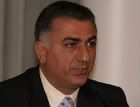
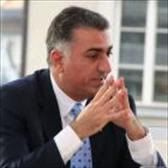
TAGES ANZEIGER: Der frühere Kronprinz von Persien, Reza Pahlewi, sieht die Tage des Regimes im Iran gezählt.
Die Protestbewegung im Iran habe genügend Schubkraft entwickelt, um das Regime ins Wanken bringen zu können, sagte der 48-jährige Reza Pahlewi dem deutschen «Handelsblatt». «Wir haben bereits in vielen Ländern einen Prozess des zivilen Ungehorsams erlebt, wie wir ihn auch heute in Iran sehen, und das war dann nur das Vorspiel zu einem fundamentalen Wandel.» >>> vin/ap | Donnerstag, 18. Juni 2009
HANDELSBLATT: Thronfolger träumt vom Sieg: Schah-Sohn plant Umsturz im Iran
Resa Pahlavi, Sohn des letzten Schah im Iran, will nach 28 Jahren im Exil an die Spitze der Oppositionsgruppen rücken, um den Widerstand gegen das iranische Regime zu organisieren. Seine eigene Rolle in einem neuen Iran lässt er jedoch offen.
HB INNSBRUCK. Von ganz links und schräg unten aus gesehen, reckt sich der Habsburgische Doppeladler direkt über dem Haupt Seiner Majestät. Natürlich ist das garantiert ein Zufall, aber eben einer mit Symbolgehalt. Der Mann sitzt in einem wie ein Glaswürfel konstruierten Gebäude gegenüber der alten Hofburg von Innsbruck. Beifall von vielleicht 20 Gästen, vorwiegend Österreichern und zwei, drei Iranern hat ihn an diesem Morgen, an dem die Berge rundum schon tief verschneit sind und Innsbruck verschlafen wie das Tor zur Provinz daliegt, begrüßt. Reza Pahlavi strahlt.
Reza – wer? Der 48-jährige Mann im taillierten Nadelstreifenanzug, dessen dunkles Haar so akkurat sitzt, als hätte heute Morgen noch sein Hoffriseur Hand angelegt, trägt eine Anstecknadel am Revers mit den Farben des Irans: Grün, Weiß und Rot. In der derzeit verwendeten Version der Flagge lassen sich oberhalb und unterhalb des weißen Streifens der Ruf „Gott ist groß“ lesen sowie das stetig wiederholte Datum der Rückkehr des Religionsführers Ajatollah Khomeini. In der Fahnenmitte befinden sich eigentlich vier angedeutete Halbmonde, die für die Ausbreitung des Islams stehen. Ein Schwert demonstriert Stärke. Bei Reza Pahlavis Version prangt anstelle des Halbmonds und der Schrift ein goldener Löwe auf der Anstecknadel.
Pahlavi ist der Sohn des letzten Schahs von Iran, der den gleichen Namen trug. Der Thronfolger ist auf Einladung des renommierten Management Center Innsbruck hierhergekommen, um vor handverlesenen Gästen seine Vorstellung über die Zukunft jenes Landes auszubreiten, dessen Regime durch sein Atomprogramm, seine Attacken gegen die USA und Israel und seine Äußerungen zum Holocaust die Welt in Atem hält. „Demokratie ist – bei Gott – auch das Beste für uns“, sagt Pahlavi. >>> Von Pierre Heumann und Oliver Stock |Mittwoch, 31. Oktober 2007
Ali Khamenei, l'énigme iranienne
LE FIGARO: PORTRAIT - Il contrôle l'armée, la justice, la télévision, les gardiens de la révolution et les milices. Le guide suprême de la République islamique iranienne va devoir trancher pour mettre un terme aux manifestations qui secouent Téhéran.
Il incarne tous les mystères du régime iranien. Aucun journaliste étranger n'a pu le rencontrer depuis vingt ans. L'ayatollah Ali Khamenei ne reçoit jamais les ambassadeurs accrédités en Iran. Et sa parole est des plus rares. Derrière ses lunettes en écaille, sa barbe blanche et son turban noir des descendants du Prophète, c'est pourtant ce personnage énigmatique qui est au centre de la République islamique - son très officiel Guide suprême - depuis la mort en 1989 de son fondateur, l'ayatollah Khomeyni. Ce septuagénaire, amateur de marche en montagne, doit trouver une issue à la pire crise politique qu'ait connue l'Iran depuis 1979, après la réélection contestée de Mahmoud Ahmadinejad, vendredi, à la présidence de la République. Accéder aux demandes du perdant, Mir Hossein Moussavi, de faire revoter les Iraniens ? Ou céder au rouleau compresseur de la répression, quitte à pousser le vaincu dans la dissidence, en l'érigeant comme chef de l'opposition ?
L'heure du choix va bientôt sonner. Or, choisir n'est pas son fort. Sur le papier, pourtant, le numéro un du régime dispose des quasi-pleins pouvoirs. Il contrôle l'armée, la justice, la télévision, les gardiens de la révolution - donc le nucléaire -, sans oublier les milices bassidjs en charge de la défense du régime. Mais comme en Iran rien n'est jamais simple, le guide est entouré d'une armée de conseillers - 1 700 environ - et placé sous le regard d'une demi-douzaine d'instances de régulation du système. «Khamenei n'est en fait que le primus interpares (le premier parmi les égaux)», souligne un diplomate occidental. En clair, l'ultime arbitre entre factions rivales au sommet de l'État, le défenseur d'un consensus minimum pour sauver un régime, contesté dans la rue depuis bientôt une semaine. >>> Georges Malbrunot, envoyé spécial à Téhéran | Mercredi 17 Juin 2009
When Nahid Persson Sarvestani, an Iranian exile, set out to make a documentary about Farrah, the wife of the shah of Iran, she expected to encounter her opposite. As a child, Persson Sarvestani had lived in dire poverty, watching Farrah’s wedding as if it were a fairy tale. As a teenager, she joined the Communist faction of Khomeini’s revolution that deposed the shah, sending him and his family volleying from country to country. When Khomeini betrayed his promise for democracy, imposing more violent measures than the shah had, Persson Sarvestani was also forced to flee. Thirty years later, she needs key questions answered and goes directly to the source. Surprisingly, Queen Farrah welcomes her as a fellow refugee from their beloved homeland, granting unprecedented access. Over the next year and a half, Persson Sarvestani enters the queen’s world, planning to challenge the shah’s ideology; instead, she must rethink her own. When Persson Sarvestani’s prior opposition to the shah surfaces, the queen shuts down filming. Yet, in the struggle to understand each other’s experiences, an unlikely friendship has blossomed. Confronting Farrah about the shah’s repression has become not only a political conflict but a personal one, and Persson Sarvestani’s objectivity is shaken.In this gripping, poignant consideration of subjectivity as truth, we learn that people write history. And can also heal it. The Queen and I couldn’t be more relevant as we reach across our own political aisles. [Source: 7th Art Releasing]
«Le régime iranien veut gagner du temps»
Pahlavi interviewé en vidéo, à l'occasion de la sortie de son livre