Friday, April 30, 2010

Campaign a Two-horse Race, Says Clegg

BBC: Lib Dem leader Nick Clegg has said the election is now "a two-horse race" between his party and the Tories.

Speaking a day after the final TV prime ministerial debate, he told an audience of students in Leicester that his party offered "real change, not fake change".

He said he would be "going for gold... in getting the most number of people voting for the Liberal Democrats". >>> | Friday, April 30, 2010
Greece Is Just the 'Tip of the Iceberg', Nouriel Roubini Warns

THE TELEGRAPH: Greece is just the "tip of the iceberg” of a sovereign debt crisis that has the potential to derail a global recovery, Nouriel Roubini has warned.

Professor Roubini, the New York-based academic who was one of the few to anticipate the scale of the financial crisis, told a panel in California that the buildup of debt is likely to lead to countries defaulting or resorting to inflation to ease the burden on their populations.

“While today markets are worried about Greece, Greece is just the tip of the iceberg,” Roubini told the Milken Institute Global Conference in Beverly Hills, California. "The thing I worry about is the buildup of sovereign debt.” >>> | Thursday, April 29, 2010
Fresh Hopes of Greek Aid Lift Euro

THE TELEGRAPH: The euro extended gains against the dollar on Friday as fresh hopes of aid for Greece eased fears about Athens' ability to reduce it massive deficit.


By mid-morning, the single currency was trading above $1.33, up from a one-year low against the dollar of $1.31 hit earlier in the week following downgrades on Greek, Portuguese and Spanish debt.

Stock markets in Germany and France also edged higher as investors took heart at speculation that talks on a rescue loan should be completed in the next few days after it seemed Germany had accepted it must act quickly to support a bail-out. >>> | Friday, April 30, 2010
British Conservative Candidate Works to Overcome His Posh Background

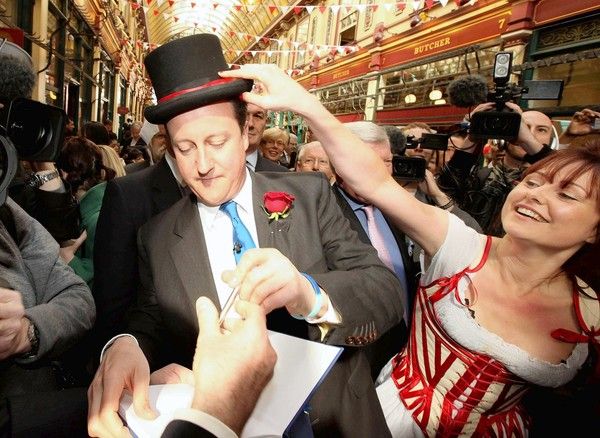
THE LOS ANGELES TIMES: In a nation where class issues often determine how people vote, David Cameron is campaigning for prime minister as an ordinary bloke.

Reporting from Peasemore, England
The man who may be Britain's next leader grew up in a spacious country home in this village of thatched roofs, green fields and classic red phone boxes, playing tennis on the family court and joining the occasional foxhunt.

He got his university degree from Oxford, where he belonged to an exclusive club of young men with a reputation for wearing tails and drinking to excess.

His closest political ally is the son of a baronet, and Queen Elizabeth is a distant cousin.

David Cameron, 43, who first won public office just nine years ago, is a strong contender to become the first Conservative prime minister since 1997 when Britons go to the polls May 6. Out on the campaign trail, he cheerfully promises to usher in a modern, compassionate conservatism that will help Britons help themselves.

What Cameron can't help, though, is his privileged upbringing — and the fact that, even in 21st century Britain, after the free-market revolution of Margaret Thatcher and the "Cool Britannia" of Tony Blair, questions of class still infuse this society like tea in water.

That's one reason why Liam Didsbury can't imagine voting Conservative, no matter how hard Cameron may try to downplay his past and sell himself as an ordinary bloke.

" British people don't like to see posh people pretend not to be who they are," said Didsbury, a Labor Party supporter in the northern English working-class town of Rochdale.

Didsbury described Cameron as a blue-blooded Tory "who's been to Eton" — Britain's toniest prep school — and "went to Oxford."

And not just him. His "front bench," the fellow Tories who would form his Cabinet if Cameron becomes prime minister, is stacked with other privately educated individuals from wealthy, even aristocratic, backgrounds.

Such facts don't go unnoticed here, even if class divisions aren't as rigid as they once were in a nation still peopled with dukes, earls, countesses, knights and dames. Experts say class remains one of the strongest determinants of how voters cast their ballots, an enduring force never far below the surface of the British psyche.

That explains why Prime Minister Gordon Brown of the Labor Party, who is trailing badly in the polls, trumpets himself as a product and champion of the middle class. And why Nick Clegg, the head of the Liberal Democrats, a smaller party that has recently surged in popularity, skates lightly over his education at an expensive prep school and Cambridge.

The preoccupation with class turned a spoof "campaign poster" of Brown challenging Cameron to "step outside, posh boy," into an instant hit. (The Guardian newspaper gag also poked fun at Brown's alleged anger-management issues.) Another takeoff paired Cameron's tanned and smiling face with the statement, "Some of my best friends are poor."

Cameron makes no apology for his background and denies that it's any handicap to his electability. >>> Henry Chu, Los Angeles Times | Sunday, April 25, 2010

Let's Talk About Sex: Johann Hari Grills David Cameron Over Gay Rights

THE INDEPENDENT: Once upon a time, the Tory party set its face gainst gay rights. In the Cameron era, all that's changed. Or has it? Johann Hari puts the would-be PM in the firing line

The great mystery of British politics is striding into the room, 15 minutes ahead of schedule. In the flesh, David Cameron looks thinner and younger and smaller than on television. The caricaturists are wrong: his cheeks don't appear full and ruddy at all. He looks sleek, and wired, with an intense gaze. He knows he could be a few months from Downing Street and the history books – so he is here to woo a crucial electoral bloc that is wary of falling into his arms by giving an interview to Attitude, Britain's best-selling gay magazine. He calls for coffee and dispenses with the photographer briskly: he poses for two minutes before saying, "Right, that's enough," and walking out of the shot. He places himself on his sofa, in the shadow of Big Ben, and says: "Right. Let's start." >>> Johann Hari | Thursday, February 04, 2010
Was Heidi Actually es Meiteli* Called Adelheid from the Big Canton?

THE TELEGRAPH: Heidi, the quintessentially Swiss mountain girl who lived with her grandfather in the Alps, may in fact have been German.

The original Heidi book was written by a Swiss author, Johanna Spyri, but scholars claim that she borrowed heavily from a book written 50 years earlier by a German, Adam von Kamp.

The suggestion of literary plagiarism - or at least heavy borrowing of characters, setting and plot line - in one of the classics of Swiss literature has set off an unseemly squabble between the alpine neighbours.

It has also fueled the traditional animosity among German-speaking Swiss towards what they regard as the "arrogance" of their big northern neighbours in Germany.

Peter Buettner, the researcher who has come up with the claim, has a foot in both camps - he is German but based in Zurich. Swiss Heidi may in fact be German >>> Nick Squires | Thursday, April 29, 2010

*es Meiteli = ein Mädchen in Swiss-German. In English it means ‘a girl’.
Arizona's Illegal Immigrant Crackdown Inspired by 'America's Toughest Sheriff'

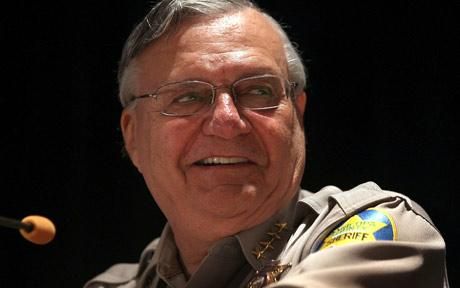
THE TELEGRAPH: A controversial sheriff who inspired Arizona's new immigration rules risked provoking more anger on Thursday as he launched a new sweep on crime and illegal immigrants.

Joe Arpaio, dubbed "America's toughest sheriff'" has risked provoking more anger as he launched a new sweep on crime and illegal immigrants after saying he would concentrate on high-crime areas, targeting immigrant smugglers and the houses where they hide their customers.

The sheriff of Maricopa County, which includes the sprawling city of Phoenix, has already conducted 14 so-called "crime suppression" sweeps since 2008.

Critics have complained that the sweeps invariably take place in Hispanic areas and they have accused his deputies of racially profiling Hispanics while conducting them.

He has countered that people stopped by the patrols were approached simply because officers had probable cause to believe they had committed crimes.

Mr Arpaio - who is being investigated by the Justice Department for alleged civil rights abuses - has never seemed concerned by what his critics say and has still been voted back in as sheriff five times.

His popularity is widely believed to have inspired Janet Brewer, Arizona's governor and a politician fighting for re-election, to sign the new state-wide immigration bill which has sparked protests across America. >>> Tom Leonard in New York | Thursday, April 29, 2010

THE LOS ANGELES TIMES: Obama administration considers challenges to Arizona immigration law: Federal attorneys are examining legal options to prevent the strict new rules from taking effect this summer. A team of top government lawyers has quietly begun studying legal strategies for the Obama administration to mount a challenge to Arizona's new illegal immigration law, including the filing of a federal lawsuit against the state or joining a suit brought by others who believe the bill unfairly targets Latinos. >>> Richard A. Serrano and Peter Nicholas, Tribune Washington Bureau | Thursday, April 29, 2010

Related articles here
US-Saudi Business Forum Gets Under Way in Chicago

Photobucket
Minister of Commerce and Industry Abdullah Zainal Alireza, standing third from left; Deputy Minister for Foreign Trade Abdullah Al-Hamoudi, standing extreme left; Chairman of Riyadh Chamber of Commerce and Industry Abdul Rahman Al-Jeraisy, standing extreme right; with senior US business leaders and officials at the first Saudi-American Business Opportunity Forum in Chicago on Wednesday. Photo: Arab News

ARAB NEWS: CHICAGO: On the banks of the sparkling green Chicago River, overlooking the vast expanse of Lake Michigan, the Sheraton Towers Hotel, venue of the first Saudi-American Business Opportunity Forum, was literally bursting at the seams and the action was as much in the corridors and lobbies as in the meeting halls.

In the lull between plenary sessions, in harmonious counterpart to official presentations, friends and colleagues gathered, relationships were forged or renewed, all in an atmosphere of palpable excitement. These spontaneous exchanges were not a distraction from formal program but rather the embodiment of the forum's primary theme: The commitment to a vital and enduring partnership between the two countries.

A notable aspect of the event was the turnout: over 1,000 attendees (many of whom braved skies tainted with ash and smoke in order to make it to Chicago).

The Organizing Committee had expected something close to 400. The overwhelming response on the part of both the US and Saudi delegates is testament to the sense of how vitally important this relationship is.

When asked about his initial reaction to the event, Omar A. Bahalwa of the Committee for International Trade said, "Marvelous! This event is unique. The number of registrants means that this is the largest-ever forum in the history of our two countries. And for the first time, we're targeting small- and medium-sized entrepreneurs. When someone said large crowds and a jam-packed schedule were 'bad news,' David Chaudron, representing Organized Change, laughed and added, 'It's absolutely wonderful that the bad news is the good news!'"

While the forum's theme of "The US and Saudi Arabia: A New Economic Order" was elaborated through a variety of lenses and business perspectives, the subtext of each panel's presentations was the recent global financial crisis and how the messages of that catastrophe have served to catalyze the need for increased communication and cooperation. >>> Peaco Todd, Arab News | Thursday, April 29, 2010
Opinion: The Euro Zone Needs New Rules

Photobucket
The Parthenon in Athens: The Greek crisis has demonstrated the limitations of the Growth and Stability Pact. Photo: Spiegel Online International

SPIEGEL ONLINE INTERNATIONAL: The current Greek crisis has shown all too starkly the limits of the euro zone's sanction and support mechanisms. If the monetary union is to have a future, it needs new rules to keep members in line and bail them out if necessary.

Europe is in the worst crisis of the postwar era. For months, the governments of the European Union member states have proven to be incapable of developing a convincing solution for the serious debt problems of individual countries, as well as for the reduction of imbalances within the monetary union. Uncertainty among investors has grown in recent weeks, which is primarily attributable to the helplessness of political leaders, and only secondarily to the influence of speculators.

The banking crisis of the fall of 2008 demonstrated that bailout packages approved in response to market pressures fail to have the desired effect in the event of a massive crisis of confidence. At the time, it took the comprehensive approach of the Financial Market Stabilization Act to finally bring about stabilization in Germany. Today, the euro zone needs a common strategy that successfully combines sound public finances with solidarity between member states. On the one hand, the member states must be protected against the excesses of the financial markets. On the other hand, steps must be taken to ensure that the solidarity of member states doesn't undermine efforts to achieve fiscal consolidation in individual countries. In other words, what is needed is the appropriate balance of support and requirements. >>> Peter Bofinger* | Thursday, April 29, 2010

*Peter Bofinger has been a member of the government-appointed German Council of Economic Experts known colloquially here as the "Five Wise Men" since 2004. He is a professor of monetary policy and international economics at the University of Würzburg. His most recent book, published in German, is called "Ist der Markt noch zu retten?" ("Can the Market Still Be Saved?").
2009: Nick Clegg at Anglo-Arab Organisaton

Part 1:


Part 2:

Cameron and Clegg Tie on Final Debate, with Brown Left Behind

TIMES ONLINE: David Cameron and Nick Clegg ended up neck and neck in the final debate, leaving Gordon Brown trailing well behind in third place, according to a Populus online poll for The Times.

The poll, of 1,929 voters who watched last night’s debate, confirms that the Tories have the initiative in the campaign, but the Lib Dems will be delighted that Mr Clegg has held up his level of support for the second week, following his victory a fortnight ago.

Mr Cameron and Mr Clegg were seen as winners by 38 per cent, similar to last week’s 37/36 per cent margin. Mr Brown was seen as the winner by just 25 per cent, against 27 per cent in the second debate. The figures have been rounded up to the nearest point.

The dead heat contrasts with other polls which show Mr Cameron as the winner over Mr Clegg by 2 to 9 points. Mr Clegg is ahead as the leader most of those questioned would most like to see as Prime Minister, by 38 per cent, just ahead of Mr Cameron on 37 per cent. The two were level last week. The Lib Dems may benefit most, with 15 per cent saying they are more likely to vote for the party. Some 16 per cent say they are more likely to vote Tory, and 9 per cent to vote Labour. Mr Clegg remains the most likeable of the three leaders, >>> Peter Riddell | Friday, April 30, 2010
Staatsbankrott: Reiche Griechen bringen ihr Geld ins Ausland

WELT ONLINE: Ausgerechnet die Bezieher kleiner Gehälter und Rentner werden für den griechischen Staatsbankrott aufkommen müssen. Sie zahlen bereits freiwillig in einen Unterstützungsfonds zur Rettung der Nation ein. Die Reichen haben allein in den ersten zwei Monaten dieses Jahres acht Milliarden Euro aus dem Land abgezogen.

Ganz Griechenland wartet darauf, einen ersten Blick aufs Henkerbeil der kommenden Sparmaßnahmen zu werfen. Die Regierung tagte hinter geschlossenen Türen, verhandelte mit den Vertretern vom IMF und der EU. Von produktiven Gesprächen war die Rede und davon, dass man frühestens am Abend, spätestens aber am Sonntag bekanntgeben werde, was auf das Volk zukommt.

Was immer es ist, es wird niemandem gefallen. „Nehmt es von den Reichen“ – so lautet die Standardantwort, wann immer man dieser Tage Griechen fragt, wo denn der Staat Geld für seine horrenden Schulden auftreiben soll. Die Reichen gelten in Griechenland als Profiteure des korrupten Systems, aber zahlen werden sie wohl nicht. Allein in den ersten zwei Monaten des Jahres wurden acht Milliarden Euro Bankeinlagen aus dem Land abgezogen, also etwa so viel wie Griechenland im Mai an Schulden bedienen muss. >>> Von Boris Kalnoky | Donnerstag, 29. April 2010
Baroness Ashton Expected to Quit EU Job within Months

THE: Baroness Ashton is expected to stand down within months after widespread criticism that she has failed in the European Union foreign minister post she had been expected to fill for five years.

Less than six months into the job as EU High Representative for foreign affairs, The Daily Telegraph has learned that colleagues believe Lady Ashton, the best paid female politician in the world, is "on the verge of resignation".

Senior officials predict that the Labour peer, 54, could step down later this year after being politically damaged by accusations that she is too inexperienced and weak to be EU foreign minister, a post created by the Lisbon Treaty.

"Every day is an uphill struggle," said a European Commission official. "No one predicts she can stay five years, not even she."

Lady Ashton has come under fire from powerful countries led by France, for allowing the Commission to seize too much control of a new EU diplomatic service that she is building from scratch.

Her lack of political authority has been blamed for a failure to stamp out bureaucratic Brussels in-fighting over who will control the new European External Action Service, with 7,000 diplomats manning over 130 embassies around the world. >>> Bruno Waterfield in Brussels | Friday, April 30, 2010
In Abuse Crisis, a Church Is Pitted Against Society and Itself

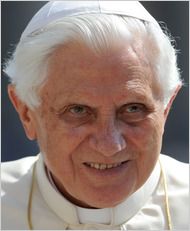
NEW YORK TIMES: VATICAN CITY — As the sexual abuse crisis continues to unfold in the Roman Catholic Church, with more victims coming forward worldwide and three bishops resigning last week alone, it is clear the issue is more than a passing storm or a problem of papal communications.

Instead, the church is undergoing nothing less than an epochal shift: It pits those who hold fast to a more traditional idea of protecting bishops and priests above all against those who call for more openness and accountability. The battle lines are drawn between the church and society at large, which clearly clamors for accountability, and also inside the church itself.

Uncomfortably, the crisis also pits the moral legacies of two popes against each other: the towering and modernizing John Paul II, who nonetheless did little about sexual abuse; and his successor, Benedict XVI, who in recent years, at least, has taken the issue of pedophile priests more seriously.

He has had little choice, given the depth of the scandal and the anger it has unleashed. But when supporters defend Benedict, they are implicitly condemning John Paul and how an entire generation of bishops and the Vatican hierarchy acted in response to criminal behavior.

“The church realizes that it doesn’t have a way out, at least not until it confronts the entirety of its problems,” said Alberto Melloni, the director of the liberal Catholic John XXIII Foundation for Religious Science in Bologna, Italy. >>> Rachel Donadio | Thursday, April 29, 2010
Sarkozy Pushes for Sanctions

Politics At The Pub


Goodbye Kemalism! Turkey Plans Constitutional Reform Granting Prime Minister Unrivalled Power

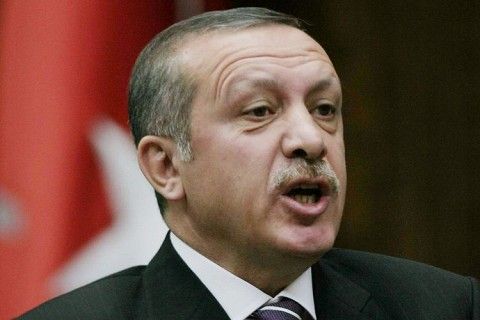
THE TELEGRAPH: Turkey is preparing to hold a referendum next month on key constitutional changes that will grant its Islamist prime minister unrivalled power in a country traditionally dominated by the military.

Parliament finished a debate Thursday on the constitutional package, which marks the culmination of a seven year drive by Recep Tayyip Erdogan. the prime minister, to make the democratically elected government Turkey's most powerful institution.

Mr Erdogan used his AK Party's majority to pass a set of 27 amendments over the opposition of the country's minority parties. Antagonism between the factions escalated during the debate and three politicians, including the Trade Minister and a Kurdish leader, suffered facial injuries in attacks.

President Abdullah Gul is expected to trigger the referendum within two weeks.

Analysts said that the era of untrammelled military power and extensive interference in the political system by the judiciary would be consigned to the past by the vote. >>> Damien McElroy in Istanbul | Thursday, April 29, 2010
Goldman Sachs: US Opens Criminal Investigation into Fraud

THE TELEGRAPH: US federal prosecutors have opened a criminal investigation into whether Goldman Sachs Group Inc or its employees committed securities fraud in connection with its mortgage trading.

The investigation by the Manhattan US Attorney's Office, which is at a preliminary stage, stemmed from a referral from the US Securities and Exchange Commission, the Wall Street Journal reports.

The SEC already has filed a civil fraud lawsuit against Goldman, charging that it hid vital information from investors about a mortgage-related security.

A spokesman for the office of the Manhattan US Attorney said she could "neither confirm nor deny" the existence of any Goldman investigation. >>> | Friday, April 30, 2010
Church Warned that Flag of Jesus Is 'Religious Advertising'

THE TELEGRAPH: A vicar has been warned by council officials about flying a flag depicting Jesus Christ outside his church because it was deemed to be “religious advertising”.

Rev Mark Binney, vicar of St Andrew’s Church, Hampton, Worcs, said he had been told he needed planning permission if he wanted to fly a flag “advertising Christianity” in future.

The flag was put up outside the church in the week preceding Easter Sunday displaying the words 'This is Holy Week' and an image of Jesus on the cross. >>> Richard Savill | Thursday, April 29, 2010
Belgium Decides To Ban The Burqa

Photobucket
Photo: Yahoo! News

YAHOO! NEWS: Belgium is set to become the first ever country in Europe to ban the burqa from being worn in public places.

The vote in Parliament for a nationwide ban on Islamic clothes or veils that do not allow the wearer to be fully identified was almost unanimous.

The full-face niqab and burqa worn by some muslim women are not a mandatory requirement for the religion of Islam, but one of personal choice. >>> Sky News | Friday, April 30, 2010

Belgian MPs Vote to Ban the Burqa

THE TELEGRAPH: Belgium is set to become the first country in Europe to ban the burqa after the country's parliament voted on Thursday night to prohibit the wearing of the face-covering Islamic veil in public.

Not a single MP in the lower house of parliament voted against the ban on clothes or veils that do not allow the wearer to be fully identified, including full-face Muslim dress such as the niqab or burqa. There were two abstentions.

Supporters said the law would help fight terrorism and grant rights to Muslim women.

Daniel Bacquelaine, one of the liberal MPs who originally called for the ban, insisted the new law was "aimed at stopping people from not being identified".

"It's not about introducing any form of discrimination," he said.
The ban, which is thought to affect around 100 women, would be imposed in streets, public gardens and sports grounds or buildings "meant for public use or to provide services".

Those Muslims who ignore the ban could face fines of £22 and a jail sentence of up to seven days unless they have written police permission to wear the garments. >>> Bruno Waterfield in Brussels | Thursday, April 29. 2010

Les députés belges interdisent le port du voile intégral

LE FIGARO: Si le texte est également adopté par le Sénat, la Belgique sera le premier État européen à légiférer sur le sujet.

La Belgique, déchirée entre Flamands et francophones, serre les rangs contre la burqa. Dans un rare moment d'unanimité, la Chambre des représentants a voté jeudi soir l'interdiction totale du voile islamique intégral dans l'espace public, faisant du royaume le premier État européen à légiférer sur le sujet. La loi doit encore être adoptée par le Sénat.

L'image du pays est peut-être écornée mais «on peut être fier d'être belge aujourd'hui, a affirmé l'un des initiateurs de la loi, le député réformateur Denis Ducarme. Nous espérons être rapidement suivis par les Français, les Suisses, les Italiens et les Néerlandais». Le texte, qui devait être voté au pied levé en début de soirée, a survécu contre toute attente à la démission du gouvernement Leterme. >>> Par Jean-Jacques Mevel, Claire Gallen | Jeudi 29 Avril 2010

Erstes Burka-Verbot in Europa in Belgien verabschiedet: Parlament will Regelung für den gesamten öffentlichen Raum durchsetzen

NZZ ONLINE: Belgien hat als erstes europäisches Land ein Burka-Verbot auf den Weg gebracht. Das Parlament in Brüssel stimmte am Donnerstag mehrheitlich für das Verbot der Vollverschleierung von muslimischen Frauen, das an allen öffentlichen Orten gilt.

136 Abgeordnete stimmten für das Gesetz, zwei enthielten sich. Der Text verbietet «das Tragen jedes Kleidungsstücks, welches das Gesicht ganz oder hauptsächlich verhüllt».

Darunter fallen also die Burka, die ein Stoffgitter vor die Augen setzt, und der Nikab, bei dem ein Sehschlitz frei bleibt. Allerdings wird keines der Kleidungsstücke ausdrücklich genannt. Normale Kopftücher sind ohnehin nicht betroffen, Ausnahmen gibt es für Verkleidungen an Karneval oder für Schutzhelme.

Das Verbot gilt an Orten, die der Öffentlichkeit zugänglich sind. Darunter fallen nach Auskunft von Parlamentariern neben Strassen, Parks und öffentlichen Gebäuden auch Geschäfte und Restaurants. Würde eine Frau dort verschleiert angetroffen, drohen ihr Geldstrafen und/oder Haft von einem bis zu sieben Tagen. >>> sda/afp/dpa | Donnerstag, 29. April 2010
Michael Nazir-Ali: The Legal Threat to Our Spiritual Tradition

THE TELEGRAPH: The McFarlane judgment raises fundamental questions about church and state, says Michael Nazir-Ali.

Lord Justice Laws's judgment on the Gary McFarlane case in the Court of Appeal – that legislation for the protection of views held purely on religious ground cannot be justified – has driven a coach and horses through the ancient association of the Christian faith with the constitutional and legal basis of British society.

Everything from the Coronation Oath onwards suggests that there is an inextricable link between the Judaeo-Christian tradition of the Bible and the institutions, the values and the virtues of British society. If this judgment is allowed to stand, the aggressive secularists will have had their way.

It also raises a number of fundamental questions to which answers need to be provided. Will there be, once again, a religious bar to holding office? We have already had a rash of cases involving magistrates unable to serve on the bench because of their Christian beliefs, registrars losing their jobs because they cannot, in conscience, officiate at civil partnerships, paediatricians unable to serve on adoption panels… Will this trickle gradually become a flood, so that rather than conforming to the Church of England, the new discrimination tests will involve conforming to the secular religion as promoted by Lord Justice Laws?

Laws mentions the case of the civil registrar Lillian Ladele – who objected on religious grounds to "gay marriage" and refused to conduct ceremonies – as a precedent for his judgment, and believes that the issues in this case are identical to the ones in the other. In that judgment, the court treated the Christian faith and its tenets as on a par with mere prejudice or bigotry. It attempted to distinguish belief from practice and to identify what is "core belief " from Christian moral teaching. This is not a distinction that those who believe in biblical, historic Christianity would recognise.

Such is Lord Justice Laws's enthusiasm for a secular Britain that he charges on with some even more breathtaking assertions. He claims that religious faith is subjective, irrational and incommunicable. There may be some faiths like that, but the Christian faith is not one of them. It is committed to a proper understanding of how the world is and who we are, but also to what makes for a better world and better people. >>> Michael Nazir-Ali | Friday, April 30, 2010

Related:

THE TELEGRAPH: Gary McFarlane: judge's assault on 'irrational' religious freedom claims in sex therapist case: A senior judge has launched a dramatic assault on religious faith, dismissing it as “subjective” with no basis in fact. >>> John Bingham | Friday, April 30, 2010

THE TELEGRAPH: Special Legal Protection of Christianity 'Divisive, Capricious and Arbitrary' >>> Frances Gibb, Legal Editor | Thursday, April 19, 2010