Thursday, April 22, 2010

Pope Ally Offers Resignation in Germany Over Abuse Claims

THE TELEGRAPH: A close friend and ally of the Pope Benedict XVI, has offered to resign over allegations that he abused children in his care.

Photobucket
Bishop Walter Mixa. Photo: The Telegraph

Bishop Walter Mixa of Augsburg, in southern Germany, denied for weeks that he had used violence against youngsters. But the bishop from the Pope's native Bavaria later admitted that he "may have" slapped the children while a priest decades ago.

Some of the victims, who are now adults, allege that he hit them in the face with full force and beat their bare skin, shouting: "Satan is in you and I must drive him out."

In his letter of resignation to the Pope, the bishop wrote: "I ask the forgiveness of all those to whom I may have been unfair and to those who I may have caused heartache."

The 68-year-old bishop said he was "fully aware of my own weaknesses" and would co-operate with investigators.

A statement released by the diocese said: "With his resignation, he wants to avert further damage to the Church and to allow a new start."

Adding to Bishop Mixa's troubles, a special investigator has found financial irregularities at the children's home he was in charge of at around the same time as the allegations of beatings.

The case does not involve allegations of sexual abuse. However, the bishop, who was appointed by the Pope in 2005, is a controversial figure who has tried to explain paedophilia in the Church by claiming the sexual liberation movement must share a "significant" part of the blame. >>> Nick Squires in Rome | Thursday, April 22, 2010
Belgium to Vote on Islamic Veil Ban

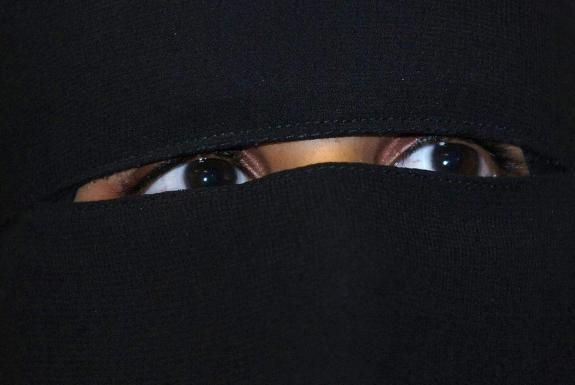
THE TELEGRAPH: Belgium will today vote on whether to ban on wearing the Islamic burka in public, the first such move in Europe, just a day after the French government promised a similar law.

But a political crisis threatening the Belgian government and objections from France's constitutional watchdog mean the controversial measures might not make it into law.

Belgium's parliament was to vote on the law after its home affairs committee unanimously backed a nationwide ban on clothes or veils that do not allow the wearer to be fully identified, including the full-face niqab and burka.

With both the governing parties and the opposition supporting the measure, Thursday's vote is expected to approve the draft law.

It would allow fines of 15-25 euros (£13-£21) and/or a jail sentence of up to seven days, for anyone ignoring it unless they had police permission to wear such garments. Read on (including politically correct video) >>> | Thursday, April 22, 2010
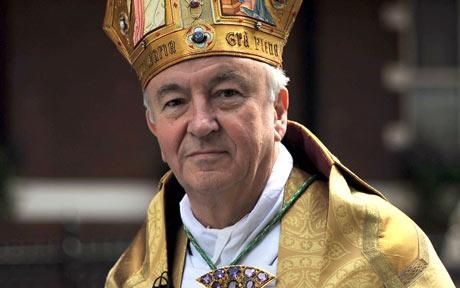
Catholic Church Child Abuse Scandal: Archbishop Vincent Nichols Expresses 'Deep Shame'

THE TELEGRAPH: The leader of Catholics in England and Wales, Archbishop Vincent Nichols, has issued a statement expressing "deep shame" over the child abuse scandals that have rocked the Catholic Church.

The Archbishop of Westminster referred to the "inadequate response by some church leaders" to the "terrible crimes" committed.

He said: "The criminal offences committed by some priests and religious are a profound scandal. They bring deep shame to the whole church."

"We express our heartfelt apology and deep sorrow to those who have suffered abuse, those who have felt ignored, disbelieved or betrayed.

"We ask their pardon, and the pardon of God for these terrible deeds done in our midst. There can be no excuses.

The statement made at the Bishops' Conference in England and Wales said the church would do everything possible to bring the perpetrators to justice.

"We recognise the failings of some Bishops and religious leaders in handling these matters. These, too, are aspects of this tragedy which we deeply regret and for which we apologise. >>> Peter Hutchison | Thursday, April 22, 2010

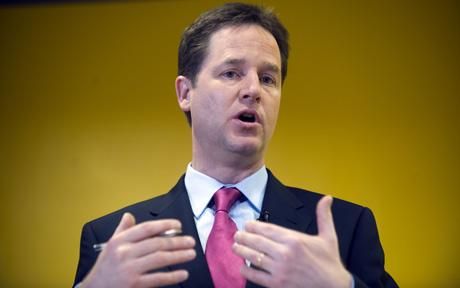
Interview with Nick Clegg

THE MUSLIM NEWS: Clegg backs engagement with Muslims

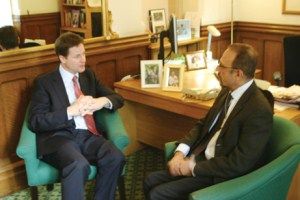
In an exclusive interview with the Editor of The Muslim News, Ahmed J Versi, 
Leader of the Liberal Democrats, Nick Clegg MP, on March 4 at his offices in the House of Commons, answers questions on a wide range issues related to Muslims in the run up to the general election. His central theme is his party’s support for engagement with the community to overcome any tensions and disagreements. “I’ve always felt that engagement is an absolute necessity in order to reach a common understanding,” he said. 


Clegg admits that the Lib Dems are “too white” as well as “too male,” and goes as far as encouraging Muslims to join his party and become potential candidates to widen its diversity. “There’s no prejudice, no hostility. Quite the reverse,” he insists, even though the Lib Dems seems nowhere nearer having their first Muslim MP elected.

The Lib Dem Leader agrees the Government’s discredited Prevent extremism strategy needs changing. “If you really want to re-establish trust in communities you’ve got to start from the bottom up,” he suggests. He also accepts there are many excesses in the country’s anti-terrorism laws saying his party was the only one to vote against renewing control orders. “The Government has used anti-terror powers in a way which diminish all of our freedoms and has a disproportionately worrying effect on those Muslim communities who feel they are being the object of those measures,” he further added. 


With regard to the incitement against religious hatred, the Lib Dem leader insists that his party’s amendment in 2005 improved it rather than watering it down to render prosecutions under the law as virtually impossible. 


On the Middle East conflict, he believes the UK and the EU should be much tougher, but applied evenly on both the Israelis and the Palestinians. “Whilst the Israeli state is very effective at deciding its next military move it seems to me it’s not working towards a long term solution which will actually help safeguard Israeli’s own security,” he said. >>> Ahmed J Versi, Editor of The Muslim News | Friday, March 26, 2010
Catholic Church Will Confront Sex Abuse Scandal, Pope Says

THE TELEGRAPH: The Pope has pledged that the Catholic Church will take action to confront the clerical sex abuse scandal, in his first public remarks calling for change since the crisis erupted.

During his weekly public audience Wednesday in St. Peter's Square, the pontiff recounted his tearful weekend encounter in Malta with eight men who say they were abused as children by priests in a church-run orphanage. Benedict met with the men in the Vatican's embassy for more than 30 minutes, praying with them and listening to their stories.

"I shared with them their suffering, and emotionally prayed with them, assuring them of church action," Benedict told the audience.

He said he told the victims in the tearful meeting "not to be afraid of life's storms or even shipwrecks, because the love of God is greater than storms or shipwrecks." >>> | Wednesday, April 21, 2010
Nick Clegg: Britain Bears Cross 'Bigger Than Germany's Nazi Past'

THE TELEGRAPH: Britain has a more insidious “cross to bear” than Germany does over its Nazi history, according to Nick Clegg.

The Liberal Democrat leader said the British have “a misplaced sense of superiority, sustained by delusions of grandeur”.

In an article written in 2002, Mr Clegg, who was then MEP for the East Midlands, described the shame he felt over an incident on a school exchange trip to Germany.

“A boy called Adrian started it,” Mr Clegg wrote. “He shouted from the back of the coach, 'We own your country, we won the war’.”

The future Lib Dem leader said this was an example of what he described as a “warped” British obsession with Germans and the Second World War. “It is easy enough to explain the mixture of arrogance and insecurity that fuels this peculiar British obsession,” he wrote. “Watching Germany rise from its knees after the war and become a vastly more prosperous nation has not been easy on the febrile British psyche.” >>> Jon Swaine | Thursday, April 22, 2010

Don't Mention the War. Grow Up

THE GUARDIAN: Britain is still stuck in a childish rut of anti-German prejudice, argues Nick Clegg MEP

I still cringe when I remember what happened on the school bus. The shame of it still lingers.

We were all travelling together - a class of 17-year-olds from my school and our German "exchange" partners - on an excursion to the Bavarian mountains. The German teenagers had already endured a month at our school in central London. Now it was our turn to spend a month in Munich, living with our "exchange" families and attending the local school.

A boy called Adrian started it. He shouted from the back of the coach, "we own your country, we won the war". Other boys tittered. One put a finger to his upper lip - the traditional British schoolyard designation for Hitler's moustache - threw his arm out in a Nazi salute, and goose-stepped down the bus aisle. Soon there was a cascade of sneering jokes, most delivered in 'Allo 'Allo German accents.

I remember two things vividly. First, none of the girls in my class joined in. It seemed to be a male thing. Second, the German schoolchildren did not appear angry, or even offended. That was what was so heart wrenching. They just looked confused, utterly bewildered. To a generation of young Germans, raised under the crushing, introspective guilt of postwar Germany, the sight of such facile antics was simply incomprehensible. >>> Nick Clegg MEP | Tuesday, November 19, 2002
New Global 'FAT' Tax to Rein in Banks

THE GUARDIAN: Gordon Brown claims credit for International Monetary Fund plan to impose tough levy on biggest banks' profits and pay

Tough proposals to cut the world's biggest banks down to size by taxing their profits and pay were outlined by the International Monetary Fund tonight in an attempt to spare taxpayers another massive public bailout of the financial sector.

In measures more stringent than Wall Street and the City had expected, the fund called for the introduction of a twin-track approach to the three-year banking crisis that would both force firms to pay for any future support packages and raise new taxes on their profits and remuneration.

The report, prepared by the Washington-based institution for the G20 group of developed and developing nations, was seized upon by Gordon Brown as evidence that his push for an international crackdown on the banking sector was gaining support.

Leaked in advance of the fund's meeting this weekend, the blueprint emerged as the investment bank Goldman Sachs released better than expected first quarter revenues and admitted its bonus and pay pool had reached $5.5bn (£3.3bn) in the first three months of 2010.

The anticipated study called for a financial stability contribution (FSC), which should be paid by all financial institutions, not just banks, and used to bail out weak and failing firms. It would initially be paid at a flat rate but eventually be tailored to suit institutions' size and riskiness.

While banks had been braced for the FSC plan, they were caught unawares by the proposal for a financial activities tax (FAT), which would be based on the profits and the pay structure of the firms. >>> Larry Elliott, Jill Treanor and Patrick Wintour | Tuesday, April 20, 2010
Conservative Party to Send Gay MP to Quell EU Extremists

THE GUARDIAN: Most senior gay member of Conservative party sent to Poland to encourage EU allies to abandon homophobic views

David Cameron is to dispatch the most senior gay member of his frontbench team to Poland to encourage the Tories' rightwing allies in the European parliament to abandon their homophobic views.

In a move designed to defuse criticism in tonight's leaders' television debate that the Tories have allied themselves with extremists in the EU, Cameron has revealed that the shadow environment secretary, Nick Herbert, will attend a gay rights march in Warsaw in July.

Cameron told the Guardian that Herbert's trip to Poland is designed to persuade the highly conservative Law and Justice party to embark on a "journey" to moderate its views on sexuality.

The party was founded by the late Polish president Lech Kaczynski, who died earlier this month in a plane crash in western Russia. Kaczynski banned gay rights marches in Warsaw when he was the city's mayor.

Nick Clegg, who supported British membership of the euro, and Gordon Brown are expected to use the second TV debate tomorrow night to embarrass the Tories by highlighting the party's links with hard-right groups in the European parliament. >>> Nicholas Watt and Patrick Wintour | Wednesday, April 21, 2010
South Park Creators Warned by Islamic Website

THE TELEGRAPH: The creators of South Park, the controversial American cartoon show, have been warned by an Islamic website that they could face violent retribution for depicting the Prophet Mohammed disguised in a bear suit.

Photobucket
The cartoon series made by Matt Stone and Trey Parker has attracted criticism throughout its award-winning run. Photo: The Telegraph

The 200th episode of the show, which was broadcast last week, included a satirical discussion about whether an image of Mohammed could be shown.

An image was not shown and instead other characters suggested that Mohammed was inside the suit.

South Park, which was created by Matt Stone and Trey Parker, previously portrayed a cartoon image of Mohammed in 2001 but the episode is now rarely seen.

A posting on a New York-based website Revolutionmuslim.com was accompanied by a graphic photograph of the Dutch filmmaker Theo Van Gogh. >>> Nick Allen in Los Angeles | Wednesday, April 21, 2010

Wednesday, April 21, 2010

Photobucket
Kollision oder Kollusion der Werte? In Frankreich wird heftig über das Kopftuchverbot debattiert. Bild: NZZ Online

Wie hast du's mit der Religion, Europa? : Ein Interview mit dem französischen Islamexperten Olivier Roy

NZZ ONLINE: Der französische Politologe Olivier Roy zählt zu den herausragendsten Islamexperten in Europa. Sein neues Buch, «Heilige Einfalt – Über die politischen Gefahren entwurzelter Religionen», erscheint demnächst auf Deutsch. Eren Güvercin befragte ihn zu aktuellen Themen in der Debatte um den Islam.

Die Mehrheit der Schweizer Wähler hat sich unlängst für ein Minarettverbot ausgesprochen; in Frankreich und Belgien diskutiert man das Verbot von Burkas; auch in Deutschland ist der Islam ein Dauerthema. Was irritiert die Europäer so sehr an religiösen Symbolen oder «fremden» Religionen?


Die Debatte in Europa hat sich in den letzten 25 Jahren vom Thema Immigration auf die sichtbaren Symbole des Islam verlagert. Das bedeutet, dass sogar die Gegner der Immigration mittlerweile zugestehen, dass die zweite oder dritte Einwanderergeneration sich hier auf Dauer niedergelassen hat und dass damit auch der Islam in Europa Wurzeln schlägt. Die diesbezügliche Diskussion hat nun eine merkwürdige Wendung genommen: Während die Polemik gegen die Immigration in erster Linie von der konservativen Rechten kam, wird der Islam von rechter wie linker Seite her angegriffen, allerdings mit sehr unterschiedlicher Begründung. Die Rechte findet, dass Europa christlich ist und der Islam als eine zwar tolerierte, aber inferiore Religion behandelt werden sollte. Man gesteht – eher widerwillig – zu, dass der Islam aufgrund der verfassungsmässig garantierten Religionsfreiheit nicht verboten werden kann, nimmt aber Möglichkeiten wahr, seine Sichtbarkeit einzuschränken; so hat sich etwa der Europäische Menschenrechtsgerichtshof nicht gegen das Kopftuchverbot in Frankreich ausgesprochen. Die Linke dagegen plädiert für Säkularismus, Frauenrechte und gegen religiösen Fundamentalismus; man kritisiert die Verschleierung, nicht weil sie zum Islam gehört, sondern weil man sie als Verstoss gegen die Rechte der Frau empfindet. Deshalb verbirgt sich hinter der Islamdebatte eine wesentlich komplexere Problematik – die Frage nämlich nach der Beschaffenheit einer europäischen Identität und nach der Rolle des Religiösen in Europa. Und obwohl die Rechte und die Linke in dieser Hinsicht sehr unterschiedliche Positionen vertreten, sehen wir nun neue populistische Bewegungen – etwa Geert Wilders' Freiheitspartei in den Niederlanden –, in denen sich die beiden Denkweisen vermischen; es sind Parteien, die grundsätzlich der Rechten zuneigen, aber linke Argumente verwenden. >>> Olivier Roy | Mittwoch, 21. April 2010
General Election 2010: Nick Clegg, the Lib Dem Donors and Payments into His Private Bank Account

THE TELEGRAPH: Nick Clegg received a series of payments from party donors directly into his private bank account, The Daily Telegraph can disclose.

The Liberal Democrat leader was paid regular monthly sums by three senior businessmen during 2006.

The same account was used to pay his mortgage, shopping and other personal expenditure, documents seen by this newspaper show.

The businessmen bankrolling Mr Clegg were Ian Wright, a senior executive at the drinks firm Diageo; Neil Sherlock, the head of public affairs at the accountants KPMG; and Michael Young, a former gold mining executive. All are registered as Liberal Democrat donors.

Records of Mr Clegg’s personal bank account show the three men each paid up to £250 a month into the account.

The Liberal Democrat leader is likely to face questions over the arrangement.

MPs have historically sought to distance party donors from their personal finances to avoid any potential conflict of interest.

Last night Mr Clegg denied the money had been used for his own personal spending and said that it had subsidised his parliamentary work. >>> Robert Winnett and Jon Swaine | Wednesday, April 21, 2010
Will Christians Swing the 2010 UK Election?

BBC: Tony Blair's spokesman Alastair Campbell famously once said the prime minister didn't "do God" when talking to the media.

Religious pronouncements were kept to a minimum, for fear of risking the broad political support for the New Labour project.

Mr Campbell's simple words illustrate how Christianity is generally treated at Westminster.

Explicit mention of religion is seen as "un-British", a bit "American" and a "turn-off" to the electorate.

But, with a closely fought election in the offing and a desperate fight taking place for marginal seats, might candidates become more open about their beliefs if it means a few more votes? >>> Justin Parkinson | Wednesday, April 21, 2010
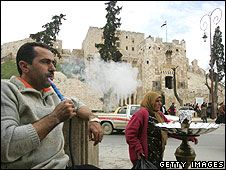
Syria Smoking Ban Enters Into Force

BBC: Syria has become the first Arab state to implement a ban on smoking in public places, such as restaurants and cafes.

The decree also outlaws smoking in educational institutions, health centres, sports halls, cinemas and theatres and on public transport.

Workers must not smoke during meetings and businesses need to provide well-ventilated areas for smokers.

The restrictions include the nargile, or hubble-bubble pipe, which is popular among locals and tourists.

The decree was signed last November by President Bashar al-Assad, a qualified medical doctor.

According to the official news agency SANA, fines for violating the ban range from 500 to 100,000 Syrian pounds (US$11 to $2,169). >>> | Wednesday, April 21, 2010
Philip Johnston: We Need to Consider This: Could Nick Clegg Be Prime Minister?

Photobucket
Are the doors opening for Nick Clegg? Photograph: The Telegraph

THE TELEGRAPH – BLOG: The second televised election debate could be a pivotal event in modern British politics. If Nick Clegg, the Lib Dem leader, performs well and further improves his poll ratings, we could be looking at a totally changed landscape. Instead of musing about the prospect of a Lab-Lib Dem coalition that sustains Gordon Brown in office, we might seriously have to contemplate a Lib Dem win and Clegg himself in Number 10.

The latest opinion polls have the Liberal Democrats on around 33 per cent of the vote, some 10 points ahead of where they normally are. This may be less to do with the party’s policies and more to do with a desire to stick one on the other two parties. But the reasons are less important than the reality of where we are.

In the past, the Lib Dems have found it difficult to pick up support in general elections because it is assumed that in national terms a Lib Dem vote is a wasted vote. David Cameron is playing on this with the Vote Clegg, Get Brown attack. But what if voting Clegg gets Clegg as PM? Once that idea takes hold, what happens then to the Lib Dem vote? >>> Philip Johnston | Wednesday, April 21, 2010

TIMES ONLINE: Prep school, privilege and charm smoothe Clegg’s rise to prominence >>> Sam Coates, Will Pavia | Wednesday, April 21, 2010

THE TELEGRAPH: General Election: the Tories have a fortnight to save themselves from disaster: The nation wants change - and Cameron must show that he's the man to deliver it, says Benedict Brogan. It is customary to wait for the patient to expire before performing the autopsy, but impatience is one of the weaknesses of modern politics, and everyone wants to know why the Tories threw away the election. >>> Benedict Brogan | Wednesday, April 21, 2010
Roots of Islamic Fundamentalism Lie in Nazi Propaganda for Arab World, Book Claims

THE TELEGRAPH: The roots of Islamic fanaticism can be traced to Adolf Hitler's radio messages broadcast around the Arab world during the Second World War, according to a new book.

Photobucket
Roots of Islamic funamentalism lie in Nazi propaganda for Arab world, book claims. Photograph: The Telegraph

"Your only hope for rescue is the destruction of the Jews before they destroy you!" Hitler said in a 1942 message, one of thousands broadcast across the Middle East in an attempt to woo the Arab world.

In a broadcast aimed at provoking an anti-Semitic uprising in Egypt, he said: "A large number of Jews who live in Egypt, along with Poles, Greeks, Armenians and Frenchmen, have guns and ammunition.

"Some Jews in Cairo have even asked the British authorities to set up machine guns on the roofs of their houses," he claimed.

But the Nazi's wartime broadcasts had remained a largely hidden chapter in the history of the war until the transmissions were unearthed by a US scholar, who believes they have fuelled continuing unrest in the Middle East.

"The conflict between Israel and the Palestinians would have been over long ago were it not for the uncompromising, religiously inspired hatred of the Jews that was articulated and given assistance by Nazi propagandists and continued after the war by Islamists of various sorts," said Jeffrey Herf, a history professor at the University of Maryland.

In his new book, "Nazi Propaganda for the Arab World", Mr Herf argues that Nazi propagandists offered a message that neatly dovetailed with underlying prejudice.

"Islamic fundamentalism, like European totalitarianism in the 20th century, was and is a mixture of very old and very modern elements. >>> Allan Hall in Berlin | Wednesday, April 21, 2010
Google Had 1,200 Requests for Data from British Authorities

THE TELEGRAPH: Google was asked by British authorities almost 1,200 times for information about the internet activites of individuals and companies in just six months, the search engine has disclosed.

Britons are among the most spied upon on the web, according to the figures which show only Brazil and the United States asked for more information.

The 1,166 requests for information - which relate to the second half of 2009 - came from agencies such as local and national police, and usually formed part of a criminal investigation. France asked for 846 pieces of information, and Germany for 428.

The search engine also received 59 requests from British government departments and other official sources to remove items from Google's services.

A Google spokesman said that the company regularly gets asked by governments for information relating to users’ emails or on how and where they have logged on. The company added, however, that where broad requests are made it endeavours to release as little information as is necessary by law. It complies with approximately 77 per cent of all British requests for removal.

Google has launched its Government Requests Tool to highlight the extent to which governments are using their legal systems to gather information about citizens or censor the web. However, it admitted it could not provide data for China as Beijing considers such figures as a state secret. >>> Matt Warman, Consumer Technology Editor | Wednesday, April 21, 2010

France Moves Towards Banning Muslim Veil in Public

REUTERS: France is moving toward a ban on wearing face-covering Islamic veils in public, with the government set to examine a draft bill next month amid heated debate over women's rights and religious freedom.

President Nicolas Sarkozy spoke out in favor for a complete ban on Wednesday, and the relevant bill will be presented to the cabinet in May, government spokesman Luc Chatel said on Wednesday.

Sarkozy believed that the full veil, commonly referred to as the burqa in France, "hurts the dignity of women and is not acceptable in French society," he told reporters.

Chatel quoted Sarkozy as saying that everything should be done so that "no one feels stigmatized because of their faith and religious practices."

The proposal has attracted both fierce criticism and praise in the home of the largest Muslim community in the 27-member European Union. Almost 10 percent of France's 62 million population is Muslim.

Most French voters back a ban, polls have shown, but legal experts have warned that it could violate the constitution.

France's highest court, which advises the government on the preparation of new laws, said in March a ban could be unlawful. >>> Reporting by Emmanuel Jarry, writing by Sophie Hardach; Editing by Mark Heinrich | Wednesday, April 21, 2010

Le port de la burqa sera totalement interdit en France

Photobucket
Photo : Le Figaro Magazine

LE FIGARO: INFO LE FIGARO - La décision a été arrêtée mercredi matin à l'Elysée par Nicolas Sarkozy : le gouvernement va déposer un projet de loi mi-mai, qui sera soumis à l'examen du Parlement en juillet.

Nicolas Sarkozy a tranché. Malgré l'avis défavorable rendu par le Conseil d'État en mars, le port de la burqa fera l'objet d'une mesure d'interdiction générale sur le territoire national. Un projet de loi sera présenté par le gouvernement. La décision a été arrêtée, ce mercredi matin, lors d'une réunion à l'Elysée, réunissant autour du chef de l'Etat, le premier ministre François Fillon, les responsables de la majorité et les présidents des groupes parlementaires. >>> Par Bruno Jeudy | Mercredi 21 Avril 2010

THE TELEGRAPH – FRANCE: "We're legislating for the future. Wearing a full veil is a sign of a community closing in on itself and of a rejection of our values," Luc Chatel >>> | Wednesday, April 21, 2010
Iran Could Develop Missile Capable of US Strike by 2015

THE TELEGRAPH: Iran could develop a ballistic missile capable of striking the United States by 2015, a senior US official has warned.

Photobucket
The Shahab 3 missile has a range of 1,100 miles (1,800 kilometre) and capable of hitting Israel and US bases in the region. Photo: The Telegraph

Asked at a senate hearing about Tehran's missile capability, James Miller, principal deputy undersecretary of defence for policy, said current estimates indicate "that it could potentially be as soon as 2015."

But he said that estimate assumed "foreign assistance" to enable Iran to improve its missile technology.

A report last year from the US Air Force National Air and Space Intelligence Centre said Iran could build an intercontinental ballistic missile that could hit US soil by 2015-2018, if it received outside help.

Analysts say Iran's Safir space launch vehicle, which Tehran put into orbit in February 2009, has the potential to be converted into a long-range missile.

Washington closely follows Iran's missile program and has cited threats from Tehran and North Korea as the main impetus for building up missile defences for the United States and allies. >>> | Wednesday, April 21, 2010
Why Are the Conservatives Worried About a Hung Parliament? The Way Things Are Going There’ll Be an Outright Win: For the Lib Dems!

THE TELEGRAPH: The International Monetary Fund may have to step in if the general election results in a hung parliament, the Conservatives have warned.

Photobucket
Conservative leader David Cameron and Shadow Chancellor George Osborne. Photo: The Telegraph

George Osborne, the shadow chancellor, and Ken Clarke, the shadow business secretary, predicted that the bond markets would collapse while the parties “haggled” over possible coalitions, leading to the intervention of the IMF.

Mr Clarke warned that the public had failed to appreciate the seriousness of the election given the troubled state of the economy, and the full consequences of an indecisive result and a hung parliament.

He said: "Bond markets won't wait. Sterling will wobble. We have seen even minor flickers in the opinion polls causing problems with interest rates in the recent past.

"If the British don't decide to put in a government with a working majority, and the markets think that we can't tackle our debt and deficit problems, then the IMF will have to do it for us." General election 2010: Tories warn of risks of hung parliament >>> Rosa Prince, Political Correspondent | Wednesday, April 21, 2010
It’s Amazing How Easy It Is to Change Your Sex on the NHS These Days!

THE TELEGRAPH: The number of sex change operations carried out on the NHS has almost tripled in the last eight years.

Since 2000 a total of 853 men have gone under the knife to become women while in the same time span 12 women have had an operation to become a man.

Back in 2000 there were just 54 sex change operations carried out in the country while last year the figure stood at 143.

The average age for a man having a sex change operation is 42 with only one procedure in the last nine years being carried out on somebody under 21. Number of NHS sex change operations triples >>> | Wednesday, April 21, 2010