Monday, June 29, 2009

EU Threatens Mass Pullout of Ambassadors from Tehran

THE GUARDIAN: European Union members are threatening the collective withdrawal of their ambassadors from Iran to secure the release of the British embassy employees being held by the authorities.

EU diplomats said tonight all the envoys could be recalled "temporarily" in solidarity with staff from the British mission in Tehran who have been accused – entirely falsely, UK officials insist – of involvement in protests over the "stolen" presidential election.

Five of the nine Iranians, who were arrested on Saturday, were freed today, but four others, understood to be the most senior, were still being questioned. None of them have been named.

As the row with Britain continued, Iran's guardian council, the country's top legislative body, confirmed Mahmoud Ahmadinejad's victory in the disputed poll after a partial recount, finally dashing hopes of a different outcome.

Gordon Brown underlined concern over the embassy incident when he called it unacceptable and unjustifiable that the employees were being held. The prime minister was speaking in London alongside the European commission president, José Manuel Barroso, who expressed full solidarity with the UK.

Yesterday, EU foreign ministers warned Iran that any "harassment or intimidation" of embassy staff would be met with a "strong and collective" response. Most of the 27 EU member states have their own ambassadors in Tehran. >>> Ian Black, Middle East editor | Monday, June 29, 2009
Why Iran Hates Britain So Much

THE TELEGRAPH: Britain has taken America's place as Tehran's most loathed nation. The antipathy goes back centuries, says Con Coughlin.

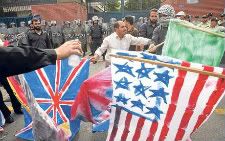
Not so long ago, Britain was held in such low esteem in Iran that it was simply dismissed as the "little Satan". So far as the ayatollahs were concerned, the real enemy was America, the "great Satan", whose love of liberty and free market capitalism was thought to pose the gravest threat to the Islamic revolution's survival.

It was for this reason that the American embassy, rather than the British, was occupied by the Revolutionary Guards in Tehran soon after Ayatollah Khomeini seized power in 1979, and its 66 staff held hostage. The expansive grounds of Britain's diplomatic mission, which hosted Winston Churchill during the Tehran conference in 1943, were briefly occupied by the Guards during Iran's revolutionary turmoil, but then evacuated because the mullahs did not regard Britain as being of sufficient importance to hold it to ransom.

But 30 years later it seems all that has changed as it is now Britain, rather than America, that finds itself on the receiving end of the ayatollahs' ire. After initiating last week's tit-for-tat diplomatic expulsions, which saw two middle-ranking British diplomats expelled from Tehran for allegedly fomenting anti-government demonstrations, the Iranian authorities have arrested a further nine British embassy employees. Although some of the workers have since been released, there has been no let-up in the regime's anti-British rhetoric.

After Ayatollah Ali Khamenei, Iran's supreme leader, launched the initial anti-British tirade by denouncing Britain as the "most treacherous" of the regime's enemies, there has been no shortage of prominent Iranians lining up to denounce the "devious" British. At the heart of the dispute is Tehran's insistence that British spies have been responsible for stirring up the worst street protests Iran has experienced since 1979.

Manouchehr Mottaki, Iran's Foreign Minister, even went so far as to accuse Britain of sending planes filled with agents to Iran "with special intelligence and security ambitions".

In the past, Iran's purges and executions have been directed against those accused of spying for America or Israel. But the emergence of Britain as the mullahs' latest bête noire [sic] suggests Anglo-Iranian relations are about to undergo another period of intense strain. >>> Con Coughlin | Monday, June 29, 2009

Con Coughlan is the author of 'Khomeini's Ghost: Iran Since 1979', published by Macmillan
'Stonewall Gave Me New Gay Role Models'

Photobucket
A protest in San Francisco, California, against the Catholic Church's policies. Photo: BBC

BBC: The Stonewall uprisings 40 years ago brought the gay rights movement to the forefront of American culture. Writer and historian David Carter assesses what progress has been made since that pivotal moment and how far the quest for equal rights has to go.

The end of this month marks the 40th anniversary of the Stonewall Uprising, an anniversary that has been duly marked by a number of events, including a White House reception on Monday.

But because the history of the gay civil rights movement has generally not been taken seriously by educators nor by the media, people are often uncertain about what exactly Stonewall was: why did the Stonewall Riots occur and what do they mean?

There had been a homosexual rights movement in Germany since the 19th century, a movement that regained some momentum after the setback caused by World War I. The movement spread in Europe, including Russia, during the 20th century and suffered further setbacks under Nazi and Communist dictatorships.

After World War II homosexual rights movements made progress in Western democracies. The homosexual rights movement began in an organized way in the United States after World War II during the Cold War when the Mattachine Society was founded.

While there was progress toward decriminalizing homosexuality in Canada and Europe, progress in the US was much slower. But in Europe, severe prejudice against homosexuality remained even in those societies where homosexual sex acts were not illegal.

It was the massive and sustained uprising against the police that erupted at the end of June 1969 when the New York City police raided a popular gay bar named the Stonewall that eventually changed the situation worldwide.

Because the riots broke out in the late 1960s after the successes of the US anti-Vietnam War movement and the black civil rights movement, the organizations that emerged immediately after Stonewall were cast in a New Left mould, which also meant a militant consciousness.

The most successful of these organizations, the Gay Activists Alliance, modelled its actions on guerrilla theatre and added camp humour to create "zaps", demonstrations that were highly creative, highly subversive, and designed to get media attention. The result was that gay people were seen over and over in the media acting from positions of power: challenging power and unafraid. >>> | Monday, June 29, 2009

David Carter is the author of Stonewall: the riots that sparked the gay revolution. He is a consultant for the BBC Radio 2 programme Stonewall: The Riots That Triggered The Gay Revolution, which will be broadcast on Tuesday 30 June 2009 at 2230BST.
Saudi Arabia: Free Wedding for Quitting Smoking

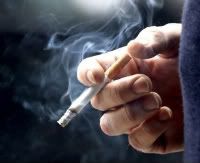
BBC: A charity in the Saudi capital Riyadh has come up with a novel incentive to encourage young men to quit smoking - an all-expenses-paid wedding.

Hundreds of men have expressed interest in the anti-smoking drive, including a non-smoker who was ready to start the habit just so he could take part.

Banners in Riyadh are advertising the campaign slogan: "Kicking the habit is on you, and marriage is on us."

In much of the Arab world, the groom alone bears the cost of a wedding.

The charity Purity says participants will complete a seven-day course to quit smoking. >>> | Monday, June 29, 2009
President Ahmadinejad Orders Inquiry into 'Suspicious' Death of Neda

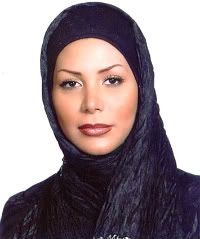
TIMES ONLINE: President Mahmoud Ahmadinejad of Iran has ordered an inquiry in to the "suspicious" death of Neda Soltan, the woman shot by government militiamen during a protest in Tehran.

The President sent a letter to the chief of Iran's judiciary, Ayatollah Mahmoud Hashemi Shahroudi, requesting a serious investigation to help to identify and prosecute “the elements” behind the killing earlier this month.

“Given the many fabricated reports around this heartbreaking incident and the widespread propaganda by the foreign media... it seems there is clear interference by the enemies of Iran who want to misuse the situation politically and tarnish the clean image of the Islamic republic,” the president wrote.

“Therefore I am asking you to order the judicial authorities to probe the killing of this woman with utmost seriousness and identify and prosecute the elements behind the killing." >>> Joanna Sugden | Monday, June 29, 2009
Life in Iran Will Be Worse Than Before the Election

TIMES ONLINE: That's that then. The massive street demonstrations have been crushed. Iran's security and intelligence services have locked up thousands of opponents. Opposition newspapers, websites and bloggers are being systematically shut down. The regime's Orwellian mouthpieces have shamelessly declared the election to be an epic milestone in the 30-year history of the Islamic Republic, and the US and European Union want to resume talks about Iran's nuclear ambitions.

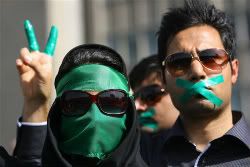
For the millions of Iranians who campaigned with such exuberance before the election, and who are convinced that Mir Hossein Mousavi was robbed of the presidency by blatant electoral fraud, the only way left to vent their anger is to go up to their roofs at night and shout 'Allahu Akbar' (God is great) in one collective wail of despair. Even that is becoming dangerous, with reports that basiji - Islamic volunteer militiamen - are storming the homes of those who dare to sing God's praises.

Those millions do not face a return to the status quo ante, however. Henceforth their lives will be far worse than they were before the June 12 ballot. An extreme, fundamentalist faction has staged a coup against a relatively moderate and pragmatic revolutionary old guard. It controls the security forces, judiciary, media and machinery of government. The social repression of President Ahmadinejad's first term will look mild compared to what is coming, for that is the only way this severely weakened regime can now maintain power.

The authority of Ayatollah Ali Khamenei, the Supreme Leader, has been destroyed. Once regarded as the infallible lynchpin of the entire system, he is now seen as just another ruthless political conspirator. He rules through military, not moral, might. His edicts have been defied. Iranians chant "Death to Khamenei" - unthinkable a month ago. >>> Martin Fletcher: analysis | Monday, June 29, 2009
Iran 'Has Arrested 2,000’ in Violent Crackdown on Dissent

TIMES ONLINE: More than 2,000 Iranians have been arrested and hundreds more have disappeared since the regime decided to crush dissent after the disputed presidential election, a leading human rights organisation said yesterday.

“A climate of terror and of fear reigns in Iran today,” the International Federation for Human Rights, an umbrella body for 155 human rights organisations, said as it released the startling figures.

Last night 3,000 protesters tried to gather outside a mosque in Tehran where they believed that Mir Hossein Mousavi, the defeated presidential candidate, was going to speak. The police rapidly dispersed them and Mr Mousavi never appeared.

Having largely suppressed such protests, the security forces are engaged in a purge of dissidents in an apparent effort to decapitate Mr Mousavi’s so-called green movement.

Prominent Iranian actors, actresses, writers and singers are believed to have been seized at the weekend for supporting the demonstrators. Several opposition bloggers have fallen silent, probably because they have been detained. Almost anyone who dares to challenge President Ahmadinejad’s re-election is now considered an enemy of the state.

At least one senior Mousavi aide and other unidentified Iranians have appeared on state television to “confess” that the demonstrations were part of a foreign conspiracy against the Islamic Republic.

Human Rights Watch says that the Basiji — volunteer Islamic militiamen — are raiding houses, beating civilians and destroying their cars and other property in an effort to silence the nightly rooftop chanting that has become the opposition’s last means of peaceful protest. “The Basiji entered our neighbourhood and started firing live rounds into the air, in the direction of the buildings from which they believe the shouting of ‘Allahu akbar’ [God is greatest] is coming from,” a middle-aged Tehran resident said. >>> Martin Fletcher | Monday, June 29, 2009
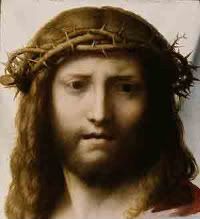
Bone Fragments Confirmed to Be Saint Paul

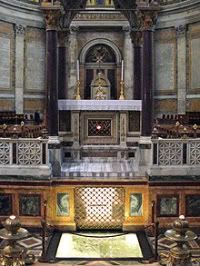
THE TELEGRAPH: Fragments of bone which have been kept in an underground sarcophagus for nearly 2,000 years have been identified as the remains of St Paul.

Pope Benedict XVI said scientific tests confirmed shards found in the underground chamber at the church of St Paul's-Outside-the-Walls in Rome were from the apostle.

Saint Paul was said to have been buried with Saint Peter in a catacomb on the Via Appia, one of the Roman roads which leads out of the city, before being moved to a basilica which was erected in his honour.

For centuries it was believed that his remains were buried beneath the basilica's main altar, which was covered with a slab of marble inscribed in Latin with the words Paulo Apostolo Mart – "Paul, apostle and martyr".

The theory gained credence in 2006, when Vatican archeologists discovered a white marble sarcophagus hidden beneath the floor of the basilica – the largest in Rome after St Peter's at the Vatican – after four years of excavations.

It took three years for archeologists to subject the remains to the first ever scientific tests and establish that they belonged to Saint Paul, a Jewish Roman citizen from Tarsus, in what is now Turkey.

Pope Benedict XVI announced the findings during a service at the basilica, as Rome prepared to celebrate the Feasts of Saint Peter and Saint Paul.

"This seems to confirm the unanimous and undisputed tradition that these are the mortal remains of the Apostle Paul," he said. >>> Nick Squires in Rome | Monday, June 29, 2009

TIMES ONLINE: Oldest Known Portrait of St Paul Revealed by Vatican Archaeologists

Photobucket
The 4th-century portrait was found in the catacombs of St Thecla, not far from the Basilica of St Paul's Outside the Walls. Image: TimesOnline

Vatican archaeologists have uncovered what they say is the oldest known portrait of St Paul. The portrait, which was found two weeks ago but has been made public only after restoration, shows St Paul with a high domed forehead, deep-set eyes and a long pointed beard, confirming the image familiar from later depictions.

L'Osservatore Romano, the Vatican newspaper, which devoted two pages to the discovery, said that the oval portrait, dated to the 4th century, had been found in the catacombs of St Thecla, not far from the Basilica of St Paul’s Outside the Walls, where the apostle is buried. The find was “an extraordinary event”, said Monsignor Gianfranco Ravasi, head of the Pontifical Council for Culture.

Barbara Mazzei, a restorer, said that centuries of grime had been removed with a laser. Fabrizio Bisconti, Professor of Christian Iconography at Rome University and a member of the team that made the discovery, said that it appeared to have decorated the tomb of a nobleman or high church official. >>> Richard Owen in Rome | Monday, June 29, 2009
Analysis: Time for the Queen to Cut the Royal Cloth

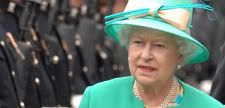
TIMES ONLINE: Read the Queen’s financial accounts, published today, at face value and you may assume that the Sovereign needs more money to keep her, and her entourage, in the manner born. But if Her Majesty reads the looks on the faces of those thousands of subjects enduring financial hardship just now, she will conclude that she must cut the Royal cloth.

The documents posted today suggest that the Royal household, just like any well-run business, shows some signs of wanting to be leaner and meaner. Analysis is complicated by the fact that Queen's cash comes from several sources, but it is clear that the Royal household can be, and should be, more lean and more mean.

Take travel. Exactly 12 months ago today, on the June 30, 2008, the Queen spent £11,258 on a charter flight from RAF Northolt to Edinburgh. Leave aside the question of whether she needed to take up residence at Holyroodhouse. Just wonder why the exercise cost the equivalent of six months’ pay for the average working Briton.

And what about those palaces? No doubt the royal properties are national treasures, in need of repair and maintenance. Fees collected from tourists also provide a welcome cash crutch. But if money is tight, and it is, why risk public outrage? Would it not be better to quietly get the mothballs out? A total of £8 million was spent last year on Buckingham Palace – 35 per cent more than the year before. Did we really have to spend another £1.7 million down the road at St James Palace? >>> Robert Cole | Monday, June 29, 2009
Ecône ordonne des prêtres au mépris des ordres de Rome

TRIBUNE DE GENÈVE: CATHOLICISME | La Conférences des évêques suisses n'est pas surprise: «C'est un signe que la Fraternité n'est pas en lien avec le pape», déclare son porte-parole.

La Fraternité Saint-Pie X a procédé lundi a des ordinations de prêtres, malgré la déclaration du Vatican qui les juge «illégitimes». La Conférence des évêques suisses (CES) n'est pas étonnée que la cérémonie ait eu lieu.

«C'est un signe que la Fraternité n'est pas en lien avec Rome et le pape, dans la situation actuelle», a indiqué Walter Müller, attaché de presse de la CES. «Nous verrons si les entretiens prévus à Rome feront évoluer la situation.» >>> ATS | Lundi 29 Juin 2009
Neue Attacken des Iran auf den Westen

WELT ONLINE: Acht Mitarbeiter der britischen Botschaft festgenommen - Demonstration in Teheran

Teheran - Die iranischen Oppositionsanhänger bieten trotz aller Repressalien der Regierung offenbar weiter die Stirn. In Teheran kam es am Sonntag nach Berichten von Augenzeugen zu Zusammenstößen zwischen etwa 3000 Demonstranten und der Polizei. Diese habe Tränengas und Schlagstöcke eingesetzt, um die Menge aufzulösen, hieß es. Für Empörung im Westen sorgte unterdessen die Festnahme mehrerer Mitarbeiter der britischen Botschaft.

Die Demonstration, an der den Berichten zufolge mehrere tausend Oppositionsanhänger teilnahmen, fand im Norden von Teheran statt. Dieser Teil der iranischen Hauptstadt gilt als eine der Hochburgen des nach offizieller Darstellung unterlegenen Präsidentschaftskandidaten Mir Hossein Mussawi. Es war die erste größere Protestaktion seit fünf Tagen. >>> | Montag, 29. Juni 2009
Baroness Thatcher Returns Home from Hospital

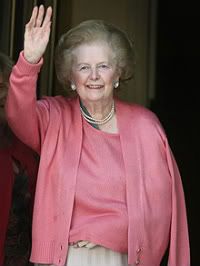
THE TELEGRAPH: Baroness Thatcher, the former Prime Minister, has returned to her London home after 17 days in hospital with a broken arm.

The former Tory party leader smiled broadly and waved enthusiastically with her right arm to a small crowd who had gathered outside her Belgravia house.

Lady Thatcher, 83, whose left arm is in a sling after she fractured her upper shoulder after a heavy fall, underwent surgery at Chelsea and Westminster Hospital after the injury failed to heal.

Even though the operation, involving the insertion of a surgical pin, was a success, doctors insisted on keeping Lady Thatcher in hospital for observation.

Among the regular visitors was her son, Sir Mark, who saw her in hospital before she returned home. Doctors have urged Lady Thatcher to scale back on her engagements and to rest as much as possible to ensure there are no complications with the fracture. >>> Andrew Pierce | Monday, June 29, 2009

Anjem Choudary Converts Young, White Schoolboy to the Religion of Peace, Love, Compassion and Mercy at Birmingham Roadshow

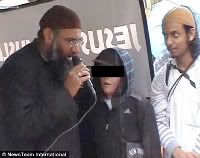
MAIL Online: This is the shocking picture of a young, white schoolboy being converted to Islam by a cleric linked to a radical Muslim hate preacher.

The bewildered 11-year-old, who gives his name as Sean was filmed repeating Arabic chants and swearing allegiance to Allah.

The boy is prompted throughout by controversial cleric Anjem Choudary, a follower of exiled hate-preacher Omar Bakri Mohammed.

The incident was filmed during a demonstration by Choudary's Ahlus Sunnah Wal Jama'ah group in Birmingham city centre earlier this month.

Choudary, 42, was one of the masterminds behind the protests at the homecoming parade of heroic British soldiers in Luton earlier this year.

He praised protesters who branded British troops 'murderers' and later appeared at a press conference flanked by thugs who took part in the demo.

Choudary defended the young boy's 'reversion' to Islam but admitted his parents were not with him and were not consulted.
He said: 'The child was genuinely interested in Islam.'

'The boy told us he wanted to become a Muslim and, of course, some people are intellectually more mature than they are physically. I don't see there is any harm in this. The shocking picture of a white boy aged 11 being 'converted' to Islam by radical preacher >>> | Monday, June 29, 2009
Britain Has 85 Sharia Courts: The Astonishing Spread of the Islamic Justice Behind Closed Doors

MAIL Online: At least 85 Islamic sharia courts are operating in Britain, a study claimed yesterday.
The astonishing figure is 17 times higher than previously accepted.

The tribunals, working mainly from mosques, settle financial and family disputes according to religious principles. They lay down judgments which can be given full legal status if approved in national law courts.

However, they operate behind doors that are closed to independent observers and their decisions are likely to be unfair to women and backed by intimidation, a report by independent think-tank Civitas said.

Commentators on the influence of sharia law often count only the five courts in London, Manchester, Bradford, Birmingham and Nuneaton that are run by the Muslim Arbitration Tribunal, a body whose rulings are enforced through the state courts under the 1996 Arbitration Act.

But the study by academic and Islamic specialist Denis MacEoin estimates there are at least 85 working tribunals.

The spread of sharia law has become increasingly controversial since its role was backed last year by Archbishop of Canterbury Dr Rowan Williams and Lord Phillips, the Lord Chief Justice who stepped down last October.

Dr Williams said a recognised role for sharia law seemed 'unavoidable' and Lord Phillips said there was no reason why decisions made on sharia principles should not be recognised by the national courts.

But the Civitas report said the principles on which sharia courts work are indicated by the fatwas - religious decrees - set out on websites run by British mosques.

Mr MacEoin said: 'Among the rulings we find some that advise illegal actions and others that transgress human rights standards as applied by British courts.'

Examples set out in his study include a ruling that no Muslim woman may marry a non-Muslim man unless he converts to Islam and that any children of a woman who does should be taken from her until she marries a Muslim.

Further rulings, according to the report, approve polygamous marriage and enforce a woman's duty to have sex with her husband on his demand.

The report added: 'The fact that so many sharia rulings in Britain relate to cases concerning divorce and custody of children is of particular concern, as women are not equal in sharia law, and sharia contains no specific commitment to the best interests of the child that is fundamental to family law in the UK.

'Under sharia, a male child belongs to the father after the age of seven, regardless of circumstances.'

It said: 'Sharia courts operating in Britain may be handing down rulings that are inappropriate to this country because they are linked to elements in Islamic law that are seriously out of step with trends in Western legislation.' >>> Steve Doughty | Monday, June 29, 2009

Sunday, June 28, 2009

Iran Takes Step Towards Scrapping Death Penalty for Apostasy and Stoning [sic]

THE CHRISTIAN POST: In a “positive development” Iran’s parliamentary committee has recommended to remove articles stipulating the death penalty for apostasy from the Islamic Penal Code Bill.
The recommendation has been made by the Iranian Government’s Parliamentary Committee, a UK-based Christian Solidarity Worldwide (CSW) reported.

Ali Shahrokhi of the Legal and Judicial Committee of the Parliament reportedly told the Iranian state news agency (IRNA) of this pronouncement according to a BBC Persian news service report on 23 June.

Mr Shahrokhi also stated that stoning was not ‘in the interest of the regime’. He told IRNA that “Islam has set a strict set of conditions for the implementation of punishments such as stoning, that they can rarely be proven. Hence the legal and judicial commission members concluded that some of these laws are unnecessary to mention.” >>> Robert Williams, Christian Post Correspondent | Saturday, June 27, 2009
Ban the Burqa!


Hat tip: The Anti-Jihadist >>>

TIMES ONLINE:
Why not read this ridiculous article by Daisy Goodwin while you’re at it? >>>
The IoS Pink List 2009

THE INDEPENDENT ON SUNDAY: It's back - as controversial and, we believe, as necessary as ever. Here is this year's roster of the 101 most influential gay and lesbian people in Britian today

Before we started work on the 10th annual Independent on Sunday Pink List, we asked ourselves again whether we should be doing it at all. After all, in 2009, equal rights are enshrined in law and there are ‘out’ gay men and women at the top of every profession - or rather, they might argue, just men and women at the top of their professions. So, is the list anachronistic? Is it patronising to gay people? We feared it might be - and went in search of a leading gay or lesbian figure to say so. None of those we contacted wanted to. Their verdict? The Pink List remains indispensable, a celebration of a community that is integral to the British way of life.

On the 40th anniversary of the Stonewall riots - and in the week when the National Portrait Gallery launches a major new exhibition of Gay Icons, this list is a celebration of those people who have struggled to get us from there to here. As such, you won’t see anyone “outed” in these pages. If you don't see someone you think should be on the list, it may be that they have asked not to appear. It is also possible that - believe it or not - we have erred and they have been overlooked. >>> | Sunday, June 28, 2009
Miliband Condemns Iran's 'Imtimidation' [sic] Tactics

THE INDEPENDENT ON SUNDAY: Foreign Secretary David Miliband condemned Iran's "intimidation" tactics today amid reports that eight British embassy staff have been arrested.

Mr Miliband insisted the action against the UK's "hard-working" local employees in Tehran was "quite unacceptable".

"This is harassment and intimidation of a kind which is completely unacceptable," he said.

Mr Miliband indicated that "strong action" would follow if the detentions did not stop.

The comments, at a meeting of foreign ministers in Corfu, came as the diplomatic spat between the UK and Iran intensified in the wake of contested elections.

Tehran has accused the UK and the US of seeking to interfere in its internal affairs after they criticised the heavy-handed reaction to protests by opposition supporters. >>> PA | Sunday, June 28, 2009
Britain's Iranians Add Their Voices

THE INDEPENDENT ON SUNDAY: The brutal security crackdown on the streets of Tehran inflamed feelings on the streets of London last week. Hundreds of demonstrators from the UK's Iranian community besieged Iran's embassy in west London in protest at the repression imposed on their compatriots at home.

Overseas Iranians have rallied in response to the violence in their home country, but the embassy has been the focus of protesters' frustration. Each night, hundreds gathered to denounce Iran's Supreme Leader, Ayatollah Khamenei. Their message was clear. "Down with Khamenei, death to Khamenei," they chanted loudly.

Their numbers have swelled since the turmoil that has enveloped Iran after the 12 June election. The crowds that congregated last week included a mixture of youths, refugees and professional people.

Even as Ayatollah Khamenei blamed everyone from the British Government to the BBC for the bloodshed, several hundred students rallied in Piccadilly Circus in London in a show of solidarity with their Iranian counterparts. Many held candles for the "the martyrs of the election" – those who have died in the recent violence.

If the embassy witnessed the most fervent protests, elsewhere reaction to events did not lack vehemence. Iranian-owned businesses strung green lights and hung posters declaring support for the democracy movement. >>> By Tim Persinko | Sunday, June 28, 2009
New Dark Age Alert! Britain Is No Longer a Christian Nation The Void Islam Has Been Hoping to Fill!

THE TELEGRAPH: If recent trends are any guide, many Church of England parishes will have been cheered by higher attendances at Easter services. The last published statistics for 2006/7 show rises of 7 and 5 per cent in church going at Christmas and Easter.

But these figures are just about the only signs of hope for the church and certainly not the first green shoots of a revival. Other statistics make for gloomy reading.

Annual decline in Sunday attendance is running at around 1 per cent. At this rate it is hard to see the church surviving for more than 30 years though few of its leaders are prepared to face that possibility.

In the short term we are likely to see more closures of buildings as the church battles to meet a big pension bill, pay clergy, and maintain a large bureaucracy.

To its credit, the church has been successful at getting members to give, but larger donations cannot offset the fall in numbers. At present the church is struggling to maintain 16,200 buildings, many of them old and listed with 4,200 listed Grade I.

If decline continues, Christian Research has estimated that in five years' time church closures will accelerate from their present rate of 30 a year to 200 a year as dwindling congregations find the cost of keeping them open too great.

Perhaps the most worrying set of statistics for the Church of England is the decline in baptisms. Out of every 1,000 live births in England in 2006/7 only 128 were baptised as Anglicans. >>> Rt Rev Paul Richardson | Saturday, June 27, 2009