Related article here »
Showing posts with label Liechtenstein. Show all posts
Showing posts with label Liechtenstein. Show all posts
Sunday, August 23, 2026
Why Europe’s Most Powerful Monarchy Is Heading for a Constitutional Crisis
Related article here »

Sunday, August 16, 2026
Le Liechtenstein met fin à la primogéniture masculine pour la succession au trône

LE FIGARO : L’aîné des enfants du souverain, qu’il s’agisse d’une fille ou d’un garçon, sera désormais appelé à devenir prince ou princesse du pays.
La Maison princière du Liechtenstein a annoncé samedi, jour de fête nationale, l'instauration de l'égalité entre les genres dans la succession au trône, faisant désormais de l'aîné des enfants, fille ou garçon, l'héritier puis le prince ou la princesse du pays.
« L'ordre de succession au trône passe de la primogéniture masculine à la primogéniture absolue. Cela signifie qu'à l'avenir, l'aîné des enfants - quel que soit son genre - deviendra l'héritier du trône et, par la suite, princesse ou prince de Liechtenstein », a indiqué la Maison princière dans un communiqué. La décision a été prise par la Maison princière elle-même. » | Par Le Figaro avec AFP | samedi 15 août 2026
Monday, August 03, 2026
Liechtenstein’s Archaic Abortion Laws Need to Be Modernised. But a Prince Is Standing in the Way
THE GUARDIAN: The hurdles for women who have to travel abroad to access abortion are considerable, but Hereditary Prince Alois says he will veto any changes

This screenshot has been taken from this Guardian article. | Hereditary Prince Alois speaking at Liechtenstein's National Day celebrations in Vaduz, 15 August 2024. Photograph: Gian Ehrenzeller/EPA-EFE/Shutterstock
The first person Maria* called when she found out she was pregnant was her doctor. The second person was a lawyer. The single mother of one was in shock, and considering terminating the pregnancy. But she first had to make sure that she wasn’t about to do something illegal, because all she knew was that abortions were forbidden where she lived. “On top of the emotional mountain that was already there, I also had to deal with this,” Maria told me.
She also knew she wouldn’t get any information about abortions in her own country – that’s illegal too. After making her decision, she drove to a clinic across the border. It was a stressful, if short, 45-minute drive, at the end of which another hurdle was waiting: “Oh, you’re from Liechtenstein?” the receptionist said, according to Maria. “Then you have to pay immediately – 680 Swiss francs (£620) please.” She was taken aback and asked: “What if I can’t pay that right now?” The receptionist replied: “Then you’ll have to come back tomorrow.”
Liechtenstein has one of the strictest abortion laws in Europe. This is probably not something you know about my “micro-state” – you might think of its banks, of Alpine scenery and castles fit for a Netflix romance. But in between them live real people with real lives, and every year, an estimated 40 women who wish to terminate their pregnancy on their own terms cannot do so in their country.
But if you ask Liechtenstein’s regent, Hereditary Prince Alois, our prime minister, or random people on the street, many will tell you the same thing: there is no problem at all. Since 2015, women are legally permitted to have an abortion outside the country, and the external border is never more than a 15-minute drive away. And anyway, it is allowed if the woman was raped or if her health is at risk, so what more could you ask for?
What I, and others who are part of a new people’s initiative are simply asking for is what is already standard in most European countries: decriminalisation of abortion up to 12 weeks, repeal of the national ban on information about abortions, and for the procedure to be covered by health insurance. A recent poll shows that 62% of voters would be in favour of it if a vote were held. It should be a done deal. But no matter what the people say: the hereditary prince has already announced that he would veto any change in the law, long before a single vote has been cast. » | Gabriella Alvarez-Hummel | Monday, August 3, 2026

The first person Maria* called when she found out she was pregnant was her doctor. The second person was a lawyer. The single mother of one was in shock, and considering terminating the pregnancy. But she first had to make sure that she wasn’t about to do something illegal, because all she knew was that abortions were forbidden where she lived. “On top of the emotional mountain that was already there, I also had to deal with this,” Maria told me.
She also knew she wouldn’t get any information about abortions in her own country – that’s illegal too. After making her decision, she drove to a clinic across the border. It was a stressful, if short, 45-minute drive, at the end of which another hurdle was waiting: “Oh, you’re from Liechtenstein?” the receptionist said, according to Maria. “Then you have to pay immediately – 680 Swiss francs (£620) please.” She was taken aback and asked: “What if I can’t pay that right now?” The receptionist replied: “Then you’ll have to come back tomorrow.”
Liechtenstein has one of the strictest abortion laws in Europe. This is probably not something you know about my “micro-state” – you might think of its banks, of Alpine scenery and castles fit for a Netflix romance. But in between them live real people with real lives, and every year, an estimated 40 women who wish to terminate their pregnancy on their own terms cannot do so in their country.
But if you ask Liechtenstein’s regent, Hereditary Prince Alois, our prime minister, or random people on the street, many will tell you the same thing: there is no problem at all. Since 2015, women are legally permitted to have an abortion outside the country, and the external border is never more than a 15-minute drive away. And anyway, it is allowed if the woman was raped or if her health is at risk, so what more could you ask for?
What I, and others who are part of a new people’s initiative are simply asking for is what is already standard in most European countries: decriminalisation of abortion up to 12 weeks, repeal of the national ban on information about abortions, and for the procedure to be covered by health insurance. A recent poll shows that 62% of voters would be in favour of it if a vote were held. It should be a done deal. But no matter what the people say: the hereditary prince has already announced that he would veto any change in the law, long before a single vote has been cast. » | Gabriella Alvarez-Hummel | Monday, August 3, 2026
Tuesday, October 25, 2022
Bekommt Liechtenstein Ehe für alle? Für Erzbischof Haas ein «Skandal»
MANNSCHAFT MAGAZIN: Eine Mehrheit von Abgeordneten will im Fürstentum Liechtenstein die Ehe für schwule und lesbische Paare einführen. Die Kirche ist strikt dagegen.
Noch vor zwei Jahren hatte Fürst Hans-Adam II. Schwule mit Pädophilen verglichen (MANNSCHAFT berichtete). Nun haben haben 15 Landtagsabgeordnete aus drei Parteien die Motion zur Öffnung der Ehe für alle unterzeichnet. Sie soll am Mittwoch dem Parlamentsdienst übergeben werden. Das Parlament von Vaduz hat insgesamt 25 Abgeordnete.
Das teilte Daniel F. Seger mit, seit 2017 Abgeordneter im liechtensteinischen Landtag. Zuvor war er Präsident des Vereins «FLay – Schwule und Lesben Liechtenstein und Rheintal».
Der Erzbischof von Vaduz wendete sich Ende letzter Woche angesichts der Übergabe der Motion zur Ehe für alle noch einmal ausdrücklich dagegen: Sie sei für die katholische Kirche unannehmbar. » | Newsdesk | Donnerstag, September 29, 2022
Tuesday, September 07, 2021
Au mariage de la princesse Maria Anunciata de Liechtenstein, nièce du grand-duc Henri

PARIS MATCH : Fille aînée de la princesse Margaretha de Luxembourg et du prince Nikolaus de Liechtenstein, la princesse Maria Anunciata s’est mariée religieusement à Vienne ce samedi, en présence de nombreux membres de la famille grand-ducale luxembourgeoise.
Princes et princesses s’étaient donnés rendez-vous à Vienne ce samedi 4 septembre 2021. Ce jour-là, la capitale autrichienne accueillait, dans la baroque Schottenkirche (l’église écossaise), le mariage religieux de la princesse Maria Anunciata de Liechtenstein et d’Emanuele Musini. Le couple s’était uni civilement en août dernier au Liechtenstein. » | Dominique Bonnet | lundi 6 septembre 2021
L'image à gauche est une capture d'écran de la princesse à Vienne le 4 septembre 2021, jour de leur mariage.
Thursday, July 08, 2021
Nach Brexit: Freihandelsabkommen mit UK unterzeichnet
LIECHTENSTEINER VATERLAND: Regierungsrätin Dominique Hasler hat heute in London das Freihandelsabkommen zwischen den EWR/EFTA-Staaten Island, Liechtenstein und Norwegen und dem Vereinigten Königreich (UK) unterzeichnet.
UK ist einer der wichtigsten Handelspartner Liechtensteins. Nach dem Brexit war es deshalb das Ziel, einen möglichst weitgehenden Marktzugang in UK zu erhalten.
Das am Donnerstag unterzeichnete Abkommen ist das umfassendste Freihandelsabkommen, das Liechtenstein bisher abgeschlossen hat.
Es umfasst neben dem grenzüberschreitenden Dienstleistungsverkehr, einschliesslich Finanzdienstleistungen, auch Bereiche wie Investitionen, Schutz des geistigen Eigentums, Digitaler Handel, Kapitalverkehr und öffentliches Auftragswesen. » | ikr | Donnerstag, 8. Juli 2021
UK ist einer der wichtigsten Handelspartner Liechtensteins. Nach dem Brexit war es deshalb das Ziel, einen möglichst weitgehenden Marktzugang in UK zu erhalten.
Das am Donnerstag unterzeichnete Abkommen ist das umfassendste Freihandelsabkommen, das Liechtenstein bisher abgeschlossen hat.
Es umfasst neben dem grenzüberschreitenden Dienstleistungsverkehr, einschliesslich Finanzdienstleistungen, auch Bereiche wie Investitionen, Schutz des geistigen Eigentums, Digitaler Handel, Kapitalverkehr und öffentliches Auftragswesen. » | ikr | Donnerstag, 8. Juli 2021
Saturday, June 09, 2018
How Does Direct Democracy Work in Liechtenstein? – VisualPolitik EN
Even the right to self-determination can be guaranteed by referendum. This means that any of the 11 municipalities inside of Liechtenstein can hold a popular vote to decide whether they want to stay in the country or become an independent nation. Sounds pretty crazy, right?
How is all of this possible? How can you manage to guarantee such a stable political system when people can vote in any crazy law they want with a referendum? Well… This is what we were wondering here at VisualPolitik.
And we figured the best way to answer these questions is by going to the country and asking. So, we did just that!
Monday, April 30, 2012

Y aura-t-il un «printemps des peuples» jusqu'au Liechtenstein? Un vent de révolte souffle en tout cas sur la minuscule principauté alpine [anglais], qui apparaît comme la dernière monarchie absolue d'Europe. Du haut de son château, qui surplombe sa lilliputienne capitale, Vaduz [anglais], le prince héritier Aloïs [anglais] gronde: «La maison princière n'est prête à assumer ses responsabilités politiques que si elle dispose des instruments nécessaires. Nous nous retirerons sinon complètement de la vie politique.»
L'enjeu du différend? La toute-puissance de la maison princière sur ses 36 000 sujets: elle peut, grâce à son droit de veto, bloquer toute loi ou référendum. «L'ensemble du pays dépend du prince : le Parlement, le gouvernement, la justice», explique le journaliste Sigvard Wohl¬wend, porte-parole du comité de citoyens «Oui, pour que ta voix compte». Le prince, chef de l'État, peut dissoudre le Parlement, révoquer le gouvernement et diriger par décret. Il peut aussi refuser la nomination d'un juge et mettre fin à toute enquête pénale. «Dans la pratique, il n'a même pas besoin d'utiliser ces pouvoirs, car tous s'empressent d'exécuter ses souhaits», souligne Sigvard Wohl¬wend. » | Par Stéphane Kovacs | vendredi 27 avril 2012
Wednesday, March 21, 2012
Sunday, June 19, 2011

Bei einer Stimmbeteiligung von 74,2 Prozent setzten 9239 Stimmberechtigte mit ihrem Ja ein klares Signal für eine offene und liberale Gesellschaft. 4199 Stimmberechtigte oder 31,2 Prozent folgten den Argumenten der Gegner, die darin eine Schwächung der Familie sehen.
Die Regierung und das Parlament, der Landtag, standen geschlossen hinter dem neuen Partnerschaftsgesetz. Es sieht vor, dass homosexuelle Partnerschaften auf dem Zivilstandsamt beurkundet werden. Nicht zulässig sind die Adoption von Kindern und die Anwendung von fortpflanzungsmedizinischen Verfahren wie Samenspende oder Leihmutterschaft. Tolerantes Liechtenstein » | sda/blur | Sonntag 19. Juni 2011
Monday, August 02, 2010
ZEIT ONLINE: Neue Enthüllungen um den verstorbenen Rechtspopulisten Haider: Er soll über Geheimkonten in Liechtenstein Millionen verschoben haben. Geld kam angeblich auch aus Libyen.

"Das dreckige Dutzend": So fasst das österreichische Nachrichtenmagazin profil die neuen Enthüllungen über den verstorbenen Rechtspopulisten und früheren Kärntner Landeshauptmann Jörg Haider zusammen. Es geht um Geld "aus dunklen Kanälen", um ein "dichtes Netz aus Treuhandkonstruktionen", das Staatsanwälte in drei Ländern beschäftigt. Haider soll in Liechtenstein mehr als ein Dutzend Briefkastenfirmen unterhalten und über diese Geheimkonten rund 45 Millionen Euro am Fiskus vorbei geschleust haben.
Wie das Magazin berichtet, stießen Sonderermittler aus Österreich, Deutschland und der Schweiz auf die Konten, als sie in zwei anderen Fällen gegen Haider ermittelt hatten: den Kauf der Hypo Group Alpe Adria Bank (HGAA) durch die deutsche BayernLB im Jahr 2007 sowie die Privatisierung der österreichischen Wohnungsbaugesellschaft Buwog im Jahr 2004. Insgesamt seien 46 von Treuhändern eingerichtete Briefkastengesellschaften gefunden worden, von denen ein Dutzend Haider zugerechnet werden.
Von den einst 45 Millionen seien inzwischen aber nur noch rund fünf Millionen Euro übrig. Der Rest wurde dem Magazin zufolge bereits vor Jahren verspekuliert. Vieles deute darauf hin, dass die Mittel weder der Freiheitlichen Partei (FPÖ) noch dem Bündnis Zukunft Österreich (BZÖ), sondern ausschließlich Haider zur Verfügung gestanden hätten. Schon als der Politiker im Jahr 2000 die Führung der FPÖ abgab, sei die vermeintlich prall gefüllte Parteikasse bis auf die staatliche Parteienfinanzierung leer gewesen. >>> Zeit online, dpa, Reuters, AFP | Montag, 02. August 2010
Verbunden: Das dreckige Dutzend >>> Von Michael Nikbakhsh und Ulla Schmid | Samstag, 31. Juli 2010
Saturday, July 31, 2010

PROFIL ONLINE: Haiders zwölf Briefkästen: Der verstorbene Kärntner Landeshauptmann soll 45 Millionen Euro aus dunklen Kanälen nach Liechtenstein geschleust haben. Bei Kontoöffnungen stießen die Behörden auf ein dichtes Netz an Treuhandkonstruktionen.
Die Geschichte war bisher nicht viel mehr als eine Zote. Aber sie ist so unterhaltsam, dass sie in politischen Zirkeln seit geraumer Zeit als Bonmot kursiert – und das weit über die Kärntner Landesgrenzen hinaus.
Sie geht so: Kurz nach dem Unfalltod von Jörg Haider im Oktober 2008 werden bei dessen Witwe Claudia zwei Herren vorstellig. Die Brüder Kurt und Uwe Scheuch. Der eine ist Klubobmann des BZÖ im Kärntner Landtag, der andere Landesrat. Die langjährigen Weggefährten des Landeshauptmanns plagt eine Frage, die sie der Hinterbliebenen ohne Umschweife stellen: „Claudia, wo ist das Geld?“
Frau Haiders Antwort wird in der Anekdote nicht überliefert. Heute, zwei Jahre später, verdichten sich die Hinweise, dass dahinter sehr viel mehr stecken dürfte.
Jörg Haider hat nach profil-Recherchen im Laufe seiner politischen Karriere ein weit verzweigtes Netzwerk von Treuhandkonten in Liechtenstein aufgezogen, über das er Millionen Euro verschieben ließ. Geld, von dessen Existenz nur ein handverlesener Kreis von Personen wusste. Jetzt beschäftigt es die Staatsanwaltschaften dreier Länder. Exklusiv: Haider soll 45 Millionen Euro nach Liechtenstein geschleust haben >>> Von Michael Nikbakhsh und Ulla Schmid | Samstag, 31. Juli 2010
THE TELEGRAPH: Far-right Austrian leader Joerg Haider secretly had £40 million in Liechtenstein: More than 45 million euros in undeclared cash belonging to Austria’s late far-right leader Joerg Haider has been found in the secretive European principality of Liechtenstein, according to reports. >>> | Sunday, August 01, 2010
Wednesday, March 03, 2010
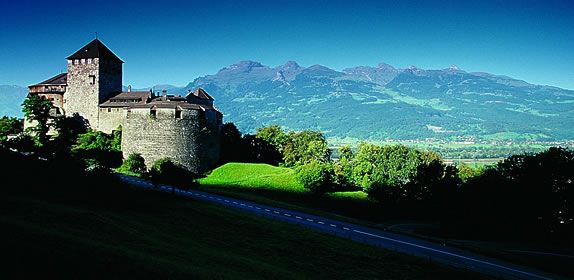
20MINUTEN.ch: Im Fürstentum Liechtenstein ist die heile Welt aus den Fugen geraten. Rechstextreme Kreise gehen immer offener auf Ausländer los. Regierungsvertreter sehen «rechtsextreme Einstellungen bis tief in die Mitte der Gesellschaft in Liechtenstein».
Am letzten Freitag wurde ein Kebap-Bistro in Nendeln kurz vor der Eröffnung durch Molotow-Cocktails verwüstet. Es handelt sich um den zweiten Anschlag mit einfach herstellbaren Brandsätzen im gleichen Ort innert dreier Monate.
Ende November 2009 hatten Unbekannte Molotow-Cocktails gegen zwei Wohnhäuser in Nendeln geworfen. Hausbewohner konnten die Flammen löschen, bevor grösserer Schaden entstand.
Ein weiterer Anschlag ereignete sich vergangenen September in Triesen: Unbekannte sprengten den Briefkasten einer liechtensteinischen Familie und deponierten vor den Trümmern einen abgeschnittenen Schafskopf.
In allen Fällen fand die Polizei keine Hinweise auf die Täterschaft, wie Sprecherin Tina Enz der Nachrichtenagentur SDA sagte. Daher könne man weder eine Verbindung zwischen den drei Fällen noch eine zu rechtsextremen Kreisen bestätigen. Unverkennbare rassistische Tendenz >>> sda | Mittwoch 03 März 2010
Tuesday, August 18, 2009

YNET NEWS: Germany's Central Council of Jews accuses Prince Hans-Adam II of making a 'mockery' of Holocaust by saying bank secrecy in his principality helped save many Jews during WWII
Germany's Central Council of Jews has accused Liechtenstein's Prince Hans-Adam II of making a "mockery" of the Holocaust by saying bank secrecy in his principality had helped save many Jews during World War II.
The prince made the comments in an interview with the Liechtensteiner Volksblatt newspaper, saying Liechtenstein and Switzerland had "saved the lives of many people, especially Jews" thanks to their bank secrecy laws.
He added Germany "should think about its own past" before attacking Liechtenstein and other countries for banking policies that Berlin says encourage tax dodging.
Germany's Central Council of Jews sharply criticized the comments on Monday, describing them as a misrepresentation of the historical record.
"The comments make a mockery of the Holocaust and those that survived it," Stephan Kramer, general secretary of the Council, told the Bild daily.
"It is an attempt to use the Holocaust as a defense for the prince's political failures. Portraying Liechtenstein as a merciful helper of the Jews does not chime with the historical facts."
Liechtenstein remained neutral during World War II. >>> Reuters | Tuesday, August 18, 2009
Liechtensteiner Volksblatt >>>
Friday, April 03, 2009
THE TELEGRAPH: • New Financial Stability Board as global overseer • Tax havens and hedge funds to be punished • Heavy scrutiny for banks
Gordon Brown and his fellow world leaders have pledged the biggest crackdown on tax havens, hedge funds and banks in modern history as the price to be paid for the multi-trillion dollar bail-out of the world economy.
"The era of banking secrecy is over", the Prime Minister declared, as the Group of 20 leading nations agreed to impose a new range of regulations on banks and non-bank financial institutions as a punishment for contributing to the crisis.
Harsh fines and sanctions will be levied on tax havens that refuse to publish details of their accounts; hedge funds will have to provide more detailed accounts in the future; and bankers will have their bonuses more heavily controlled and taxed throughout the world, the communique pledged.
The range of new regulations will be implemented by national governments in the coming months, officials said, after the G20 agreed on more significant and far-reaching reforms than had been expected.
In what will be interpreted as a victory for the French and German factions, which had emphasised the importance of regulation over new fiscal giveaways, the G20 also ordered the creation of a new Financial Stability Board dedicated to monitoring leverage and inter-connectedness of international financial institutions. >>> By Edmund Conway Economics Editor | Friday, April 3, 2009
THE TELEGRAPH: G20 Summit: Blacklisted Tax Havens Face Sanctions
Tax havens that refuse to sign anti-secrecy agreements face expensive sanctions under an unprecedented global effort to catch illegal tax evaders.

Switzerland, Singapore, the Cayman Islands, Monaco, Luxembourg and Hong Kong are among 45 territories blacklisted on Thursday by the Organisation for Economic Co-operation and Development and now threatened with punitive financial retaliation for their banking secrecy.
Among the sanctions being considered by the G20 are the scrapping of tax treaty arrangements, imposing additional taxes on companies that operate in non-compliant countries, and tougher disclosure requirements for individuals and businesses that use shelters.
Of the offending jurisdictions, 40 "have committed to the internationally agreed tax standard" but have yet to implement it. Only Costa Rica, Malaysia, Philippines and Uruguay have refused to sign up altogether. Jersey, Guernsey and the Isle of Man are fully compliant already.
Illegal tax evasion through offshore shelters has been a long-standing irritation for Gordon Brown, President Barack Obama and French President Nicolas Sarkozy. An estimated $7 trillion of assets are held offshore and, according to pressure group Tax Justice Network, developed countries lose $180bn a year in evaded taxes. >>> By Philip Aldrick, Banking Editor | Friday, April 3, 2009
Subscribe to:
Posts (Atom)